
New Seizure Classification New classification of seizure types

- Slides: 34
New Seizure Classification
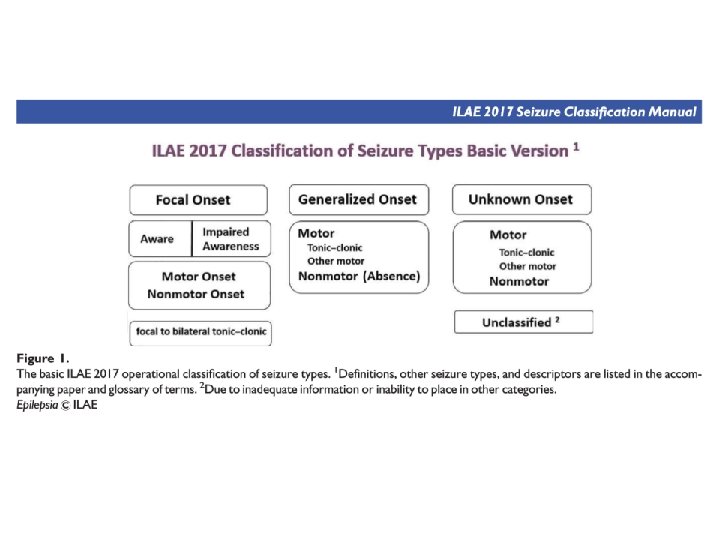
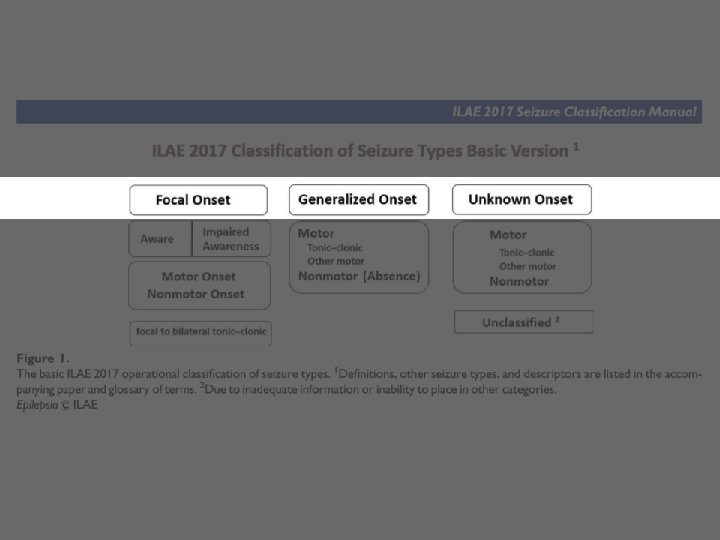
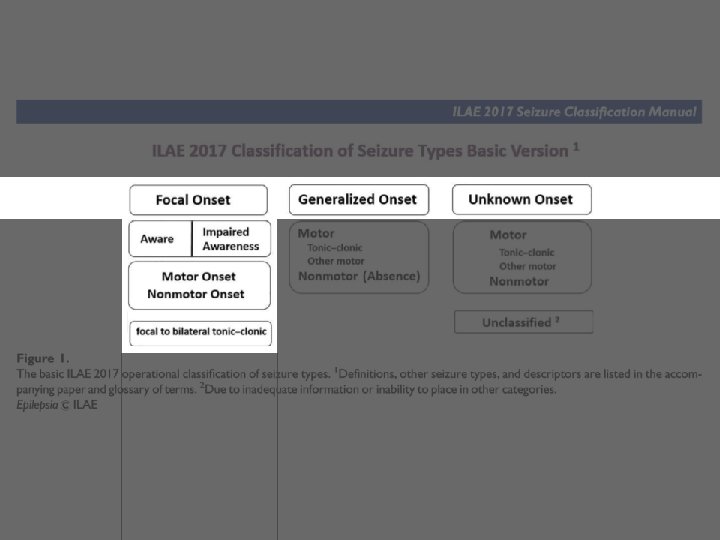
New classification of seizure types • 1981 ILAE • 2017 ILAE (international league against epilepsy)
Reason to revise the classification • “simple partial, ” “complex partial, “ “ dyscognitive, ” “psychic, ” • Hard to determine if patient has impaired consciousness • Some seizure types are missed
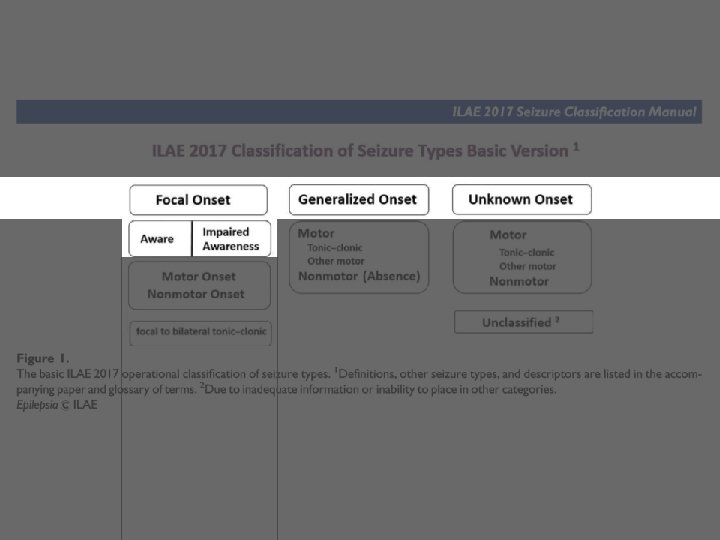
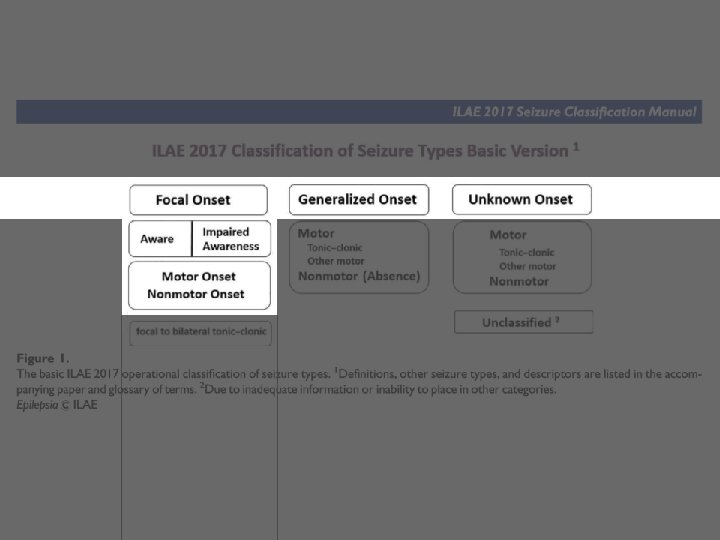
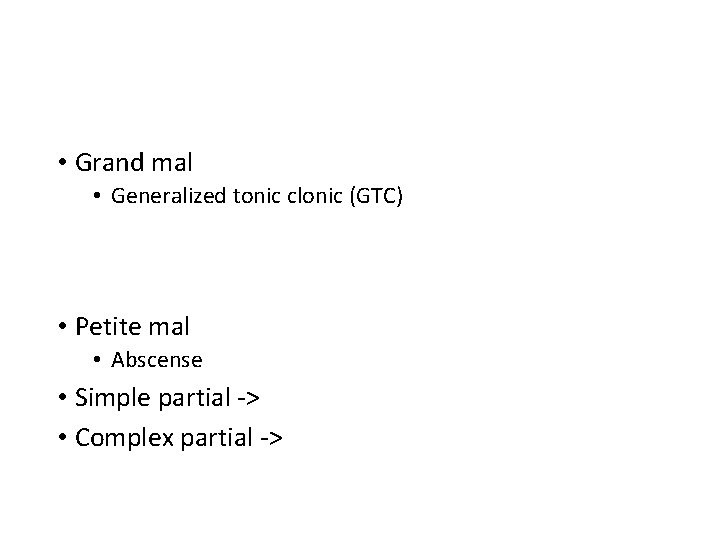
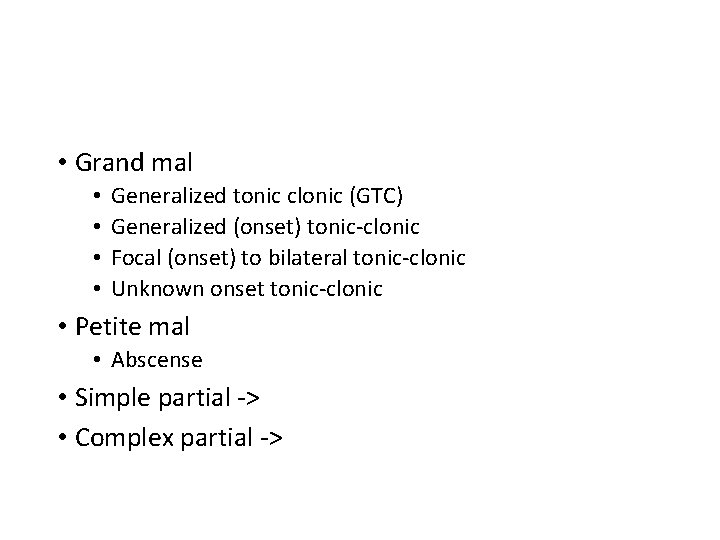
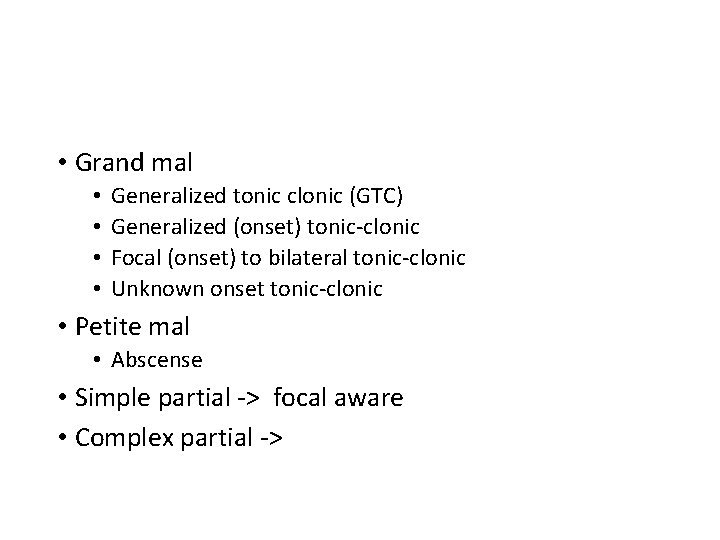
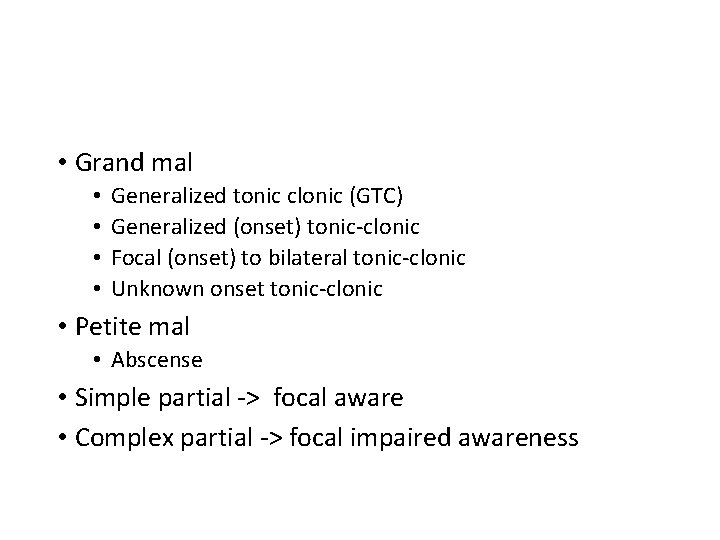
• Grand mal • • Generalized tonic clonic (GTC) Generalized (onset) tonic-clonic Focal (onset) to bilateral tonic-clonic Unknown onset tonic-clonic • Petit mal • Absence • Simple partial -> focal aware • Complex partial -> focal impaired awareness
• Grand mal • • Generalized tonic clonic (GTC) Generalized (onset) tonic-clonic Focal (onset) to bilateral tonic-clonic Unknown onset tonic-clonic • Petite mal • Abscense • Simple partial -> focal aware • Complex partial -> focal impaired awareness
• Grand mal • • Generalized tonic clonic (GTC) Generalized (onset) tonic-clonic Focal (onset) to bilateral tonic-clonic Unknown onset tonic-clonic • Petite mal • Abscense • Simple partial -> focal aware • Complex partial -> focal impaired awareness
• Grand mal • • Generalized tonic clonic (GTC) Generalized (onset) tonic-clonic Focal (onset) to bilateral tonic-clonic Unknown onset tonic-clonic • Petite mal • Abscense • Simple partial -> focal aware • Complex partial -> focal impaired awareness
• Grand mal • • Generalized tonic clonic (GTC) Generalized (onset) tonic-clonic Focal (onset) to bilateral tonic-clonic Unknown onset tonic-clonic • Petite mal • Abscense • Simple partial -> focal aware • Complex partial -> focal impaired awareness
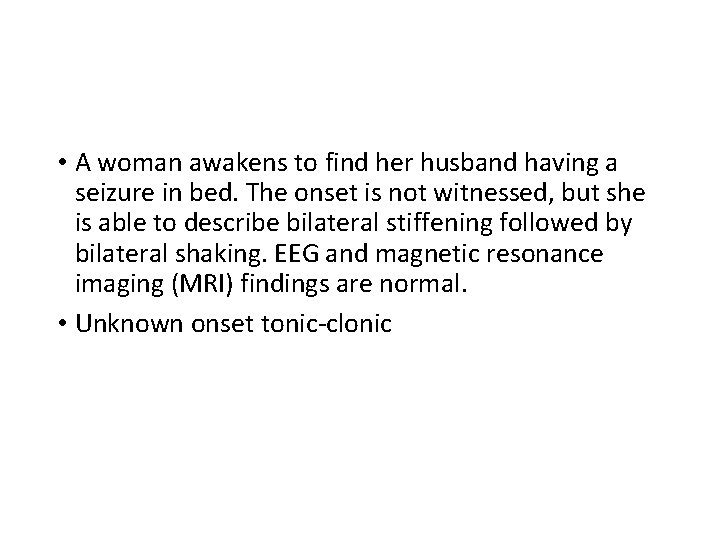
• A woman awakens to find her husband having a seizure in bed. The onset is not witnessed, but she is able to describe bilateral stiffening followed by bilateral shaking. EEG and magnetic resonance imaging (MRI) findings are normal. • Unknown onset tonic-clonic
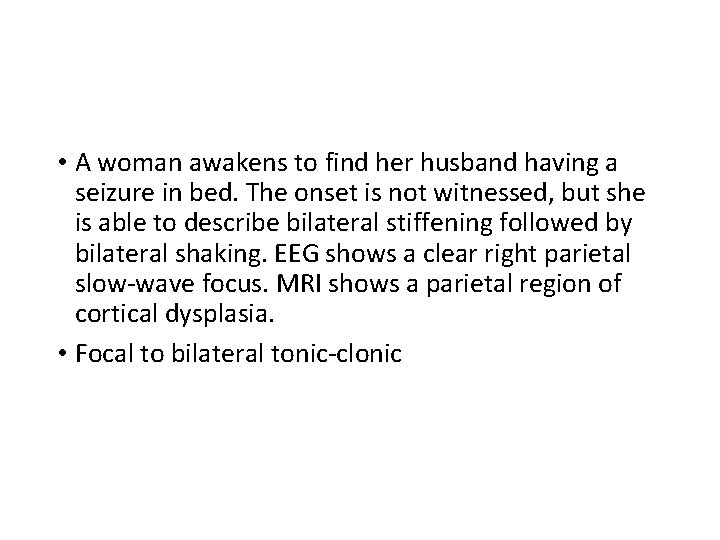
• A woman awakens to find her husband having a seizure in bed. The onset is not witnessed, but she is able to describe bilateral stiffening followed by bilateral shaking. EEG shows a clear right parietal slow-wave focus. MRI shows a parietal region of cortical dysplasia. • Focal to bilateral tonic-clonic
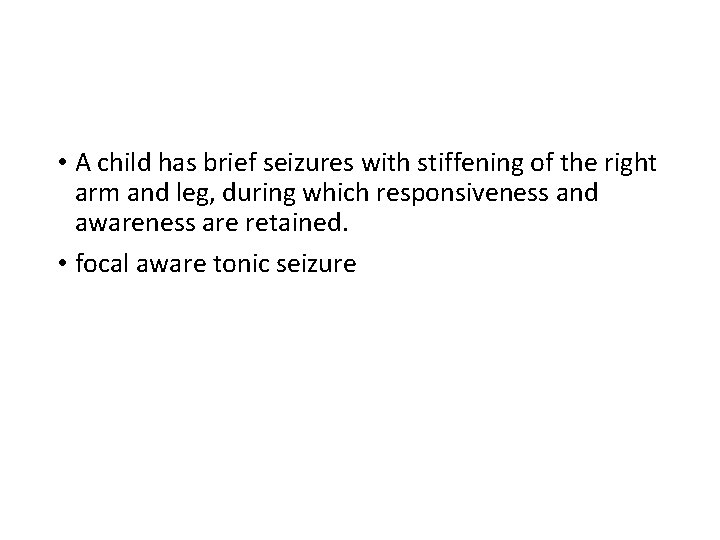
• A child has brief seizures with stiffening of the right arm and leg, during which responsiveness and awareness are retained. • focal aware tonic seizure
First Seizure
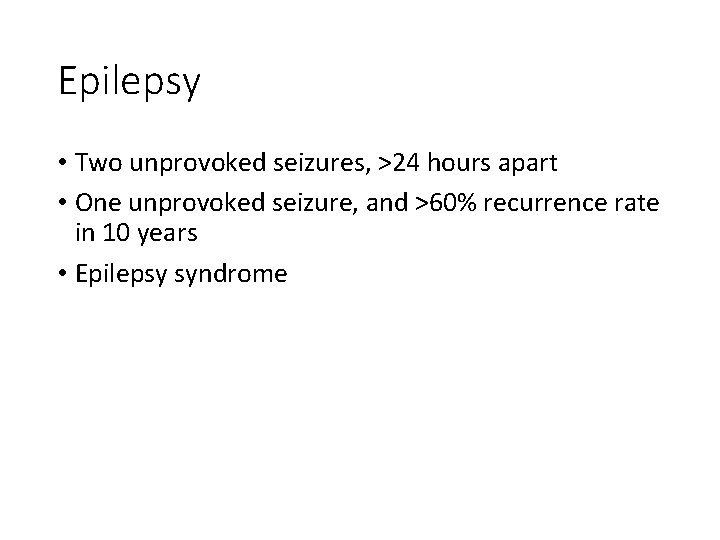
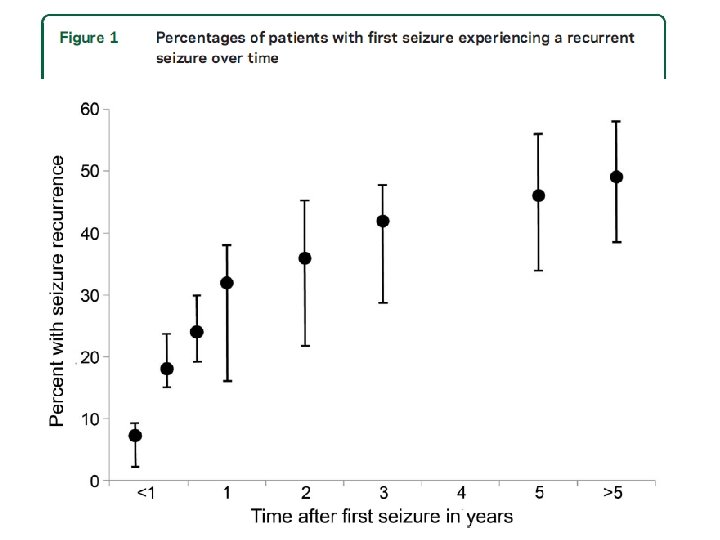
Epilepsy • Two unprovoked seizures, >24 hours apart • One unprovoked seizure, and >60% recurrence rate in 10 years • Epilepsy syndrome
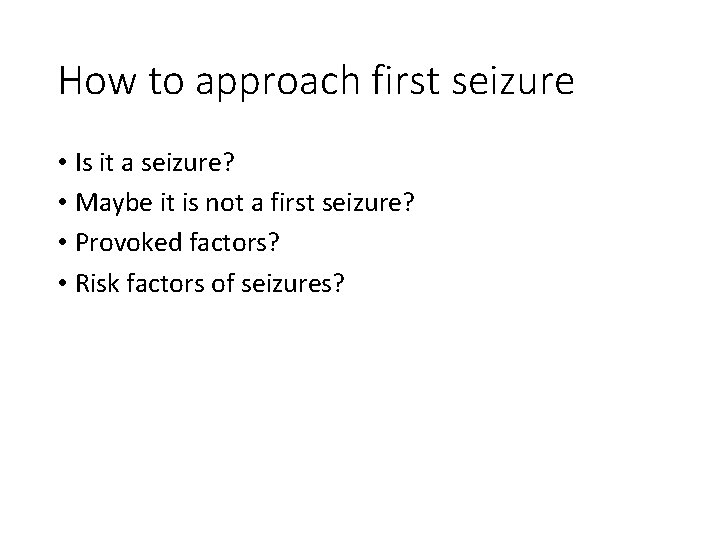
How to approach first seizure • Is it a seizure? • Maybe it is not a first seizure? • Provoked factors? • Risk factors of seizures?
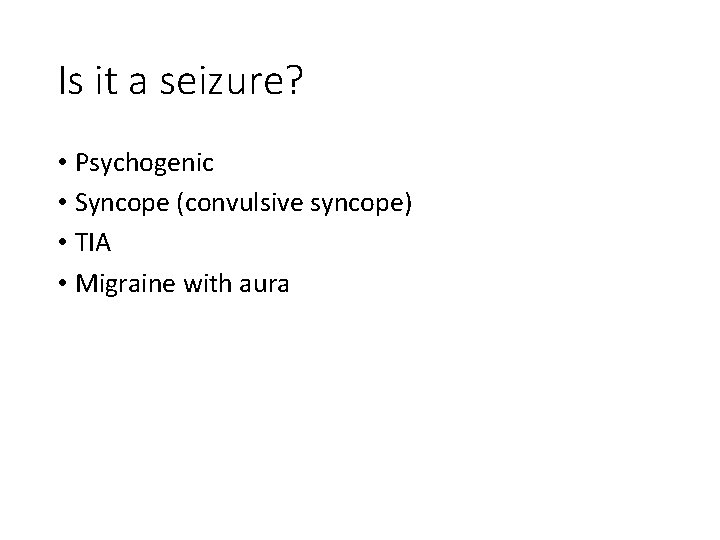
Is it a seizure? • Psychogenic • Syncope (convulsive syncope) • TIA • Migraine with aura
Maybe it is not a first seizure? • Seizure at night?
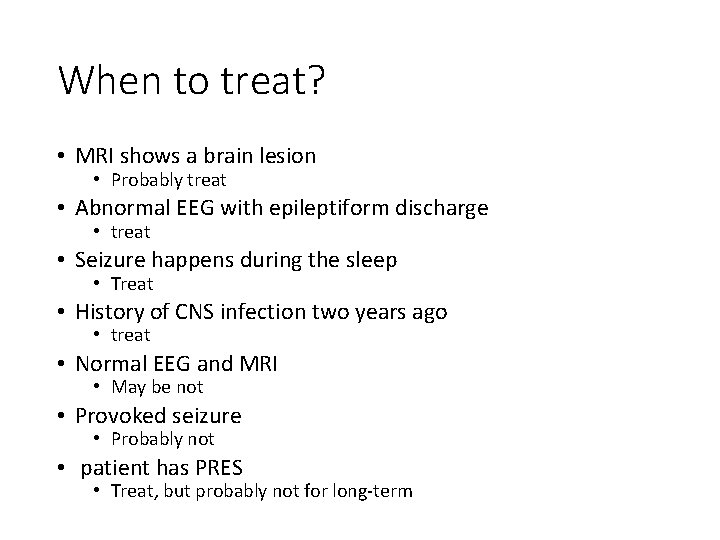
When to treat? • MRI shows a brain lesion • Probably treat • Abnormal EEG with epileptiform discharge • treat • Seizure happens during the sleep • Treat • History of CNS infection two years ago • treat • Normal EEG and MRI • May be not • Provoked seizure • Probably not • patient has PRES • Treat, but probably not for long-term
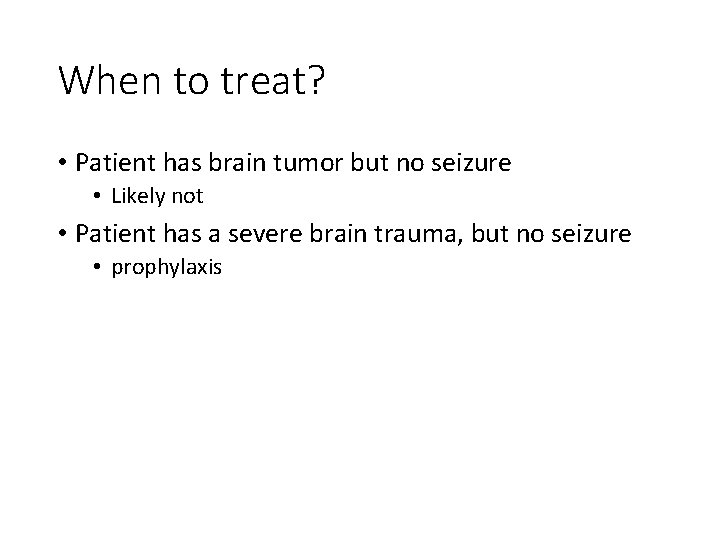
When to treat? • Patient has brain tumor but no seizure • Likely not • Patient has a severe brain trauma, but no seizure • prophylaxis
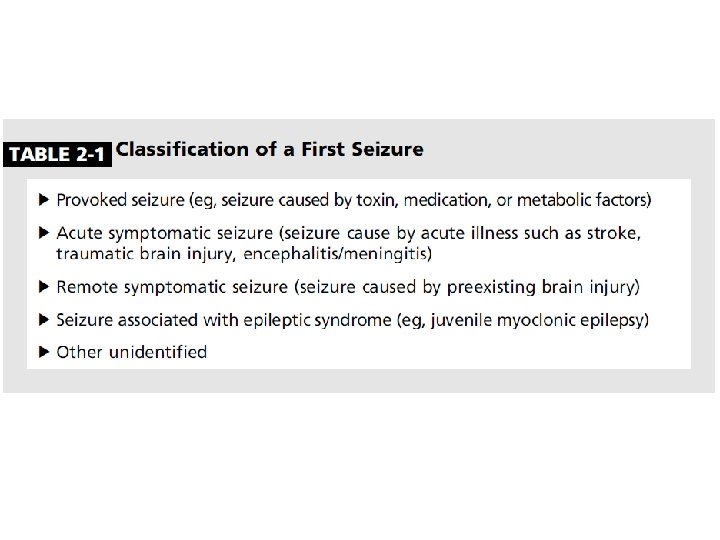
Provoked factors? • Drugs/metabolic/medications • Usually generalized onset seizures • Treat as unprovoked seizure if the seizure is focal onset
Risk factors of recurrent seizures
Risk factors of recurrent seizures • Prior brain insults • Abnormal EEG (spikes or sharp waves) • Abnormal MRI with relevant lesions • Nocturnal seizures
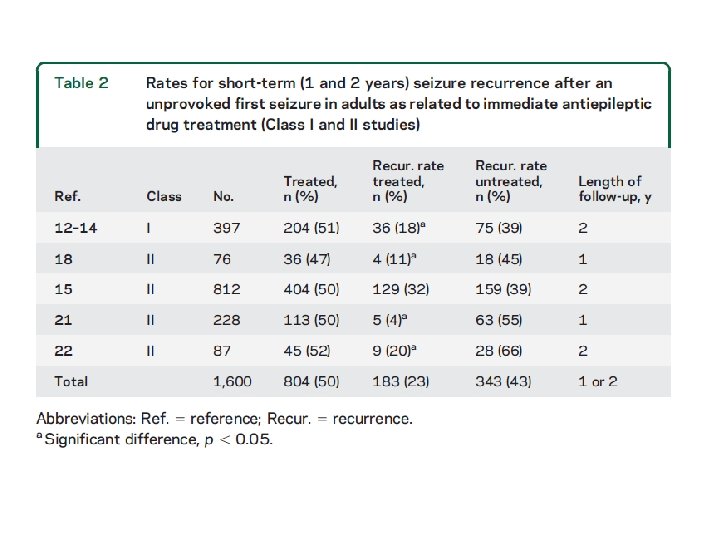
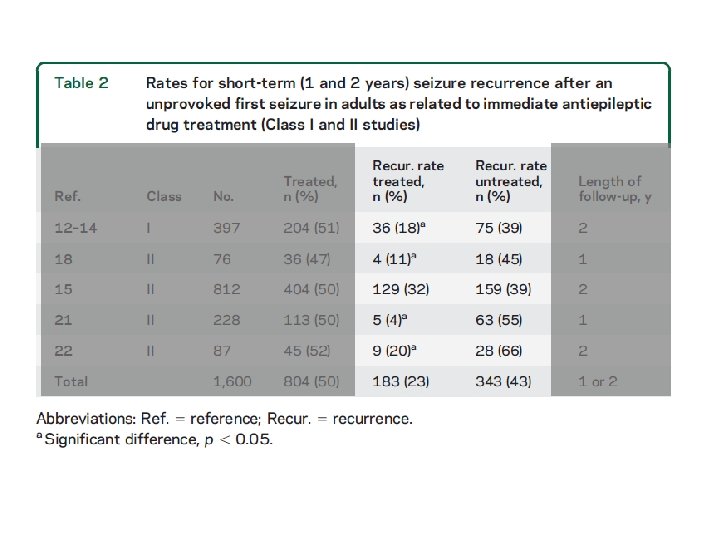
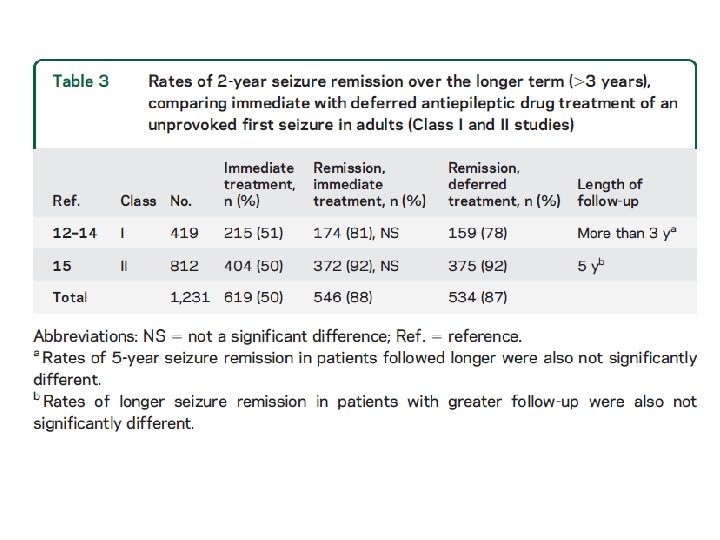
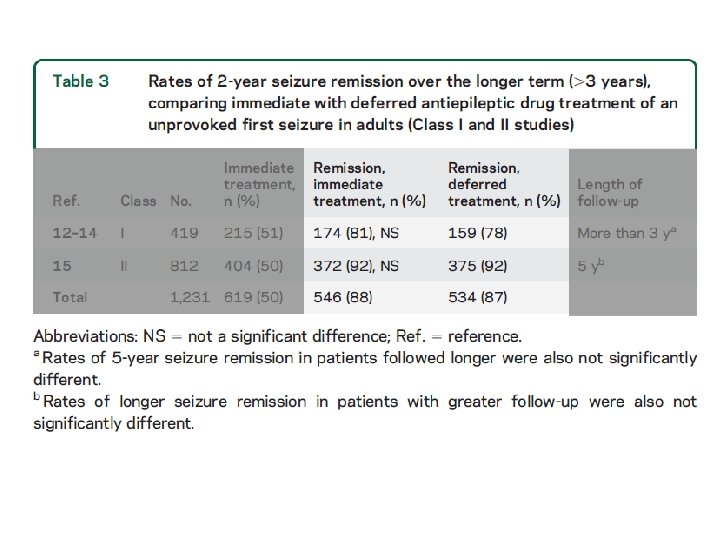
• Does immediate seizure treatment really make a difference ?