
New Science for a Secure and Sustainable Energy
New Science for a Secure and Sustainable Energy Future George Crabtree Marc Kastner Co-chairs, New Era subcommittee Outline • • imported oil and carbon dioxide breakthroughs for next-generation sustainable energy new science: breakthroughs within reach recommendations Basic Energy Sciences http: //www. sc. doe. gov/bes/reports/list. html
The New Era Subcommittee of BESAC George Crabtree, Marc Kastner Co-chairs Michelle Buchanan, Thomas Mallouk, John Sarrao, Michael Klein, Arthur Nozik, Julia Phillips, Sue Clark, Frank Di. Salvo, Don De. Paolo, Simon Bare, Wayne Hendrickson, Wolfgang Eberhardt, Franz Himpsel, Michael Norman, Andrea Cavalleri, Carl Lineberger, Yet-Ming Chiang, Pat Looney Technical Support: Roger Klaffky, Michael Casassa, Jim Horwitz Basic Energy Sciences
The Problem: Dependence on Imported Oil Million barrels per day 25 US Oil consumption 20 15 Cost to economy $700 B/yr at recent peak prices $200 B/yr at current prices 10 5 production 0 1950 1960 1970 1980 1990 transferred to foreign oil producers 2000 US EIA Unpredictable supply Threat of interruption economy, lifestyle, national security find alternatives to imported oil biofuels, electricity, solar fuels Basic Energy Sciences http: //tonto. eia. doe. gov/energy_in_brief/foreign_oil_dependence. cfm
The Problem: Greenhouse Gases and Climate Change °C 0. 5 Global average surface temperature 0. 0 mm - 0. 5 Global average sea level 50 0 - 50 -100 million km 2 -150 4 Northern hemisphere snow cover 2/3 of carbon dioxide emissions come from power plants and autos 0 Permanent changes in weather patterns, agricultural networks and coastal geography -4 1850 1900 1950 2000 IPCC Fourth Assessment 2007 http: //www. ipcc. ch/graphics/gr-ar 4 -syr. htm SPM 1 Basic Energy Sciences Cost of accommodation may be higher than preventive cost of reducing emissions
Oil and Carbon Dioxide: Woven into the Fabric Driving our cars on imported oil Unfettered emission of CO 2 Pillars of decades-long economic success Alternatives require fundamental changes in business as usual more sustainable next-generation energy technology Basic Energy Sciences
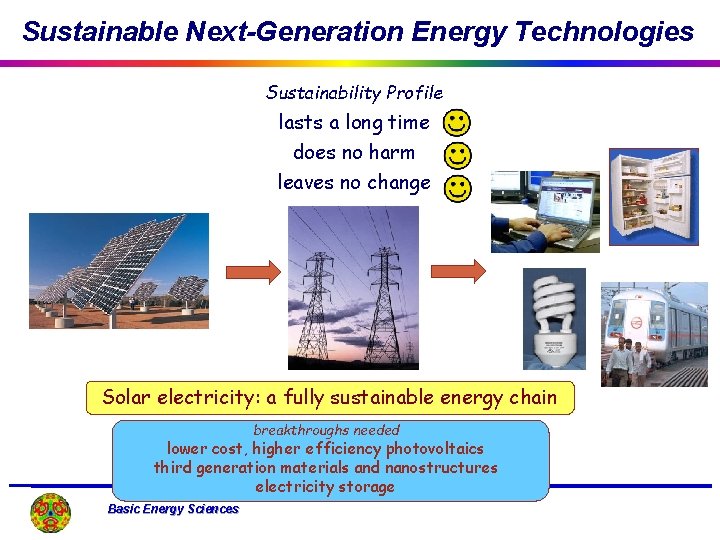
Sustainable Next-Generation Energy Technologies Sustainability Profile lasts a long time does no harm leaves no change Solar electricity: a fully sustainable energy chain breakthroughs needed lower cost, higher efficiency photovoltaics third generation materials and nanostructures electricity storage Basic Energy Sciences
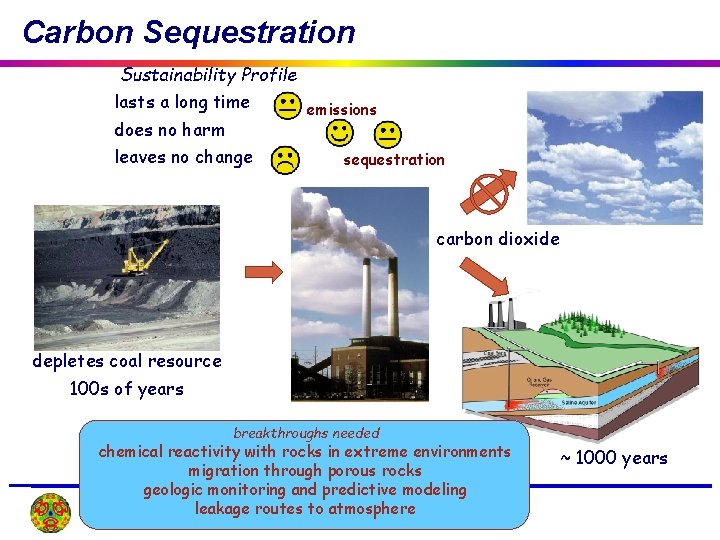
Carbon Sequestration Sustainability Profile lasts a long time does no harm leaves no change emissions sequestration carbon dioxide depletes coal resource 100 s of years breakthroughs needed chemical reactivity with rocks in extreme environments migration through porous rocks geologic monitoring and predictive modeling Basic Energy Sciences leakage routes to atmosphere ~ 1000 years
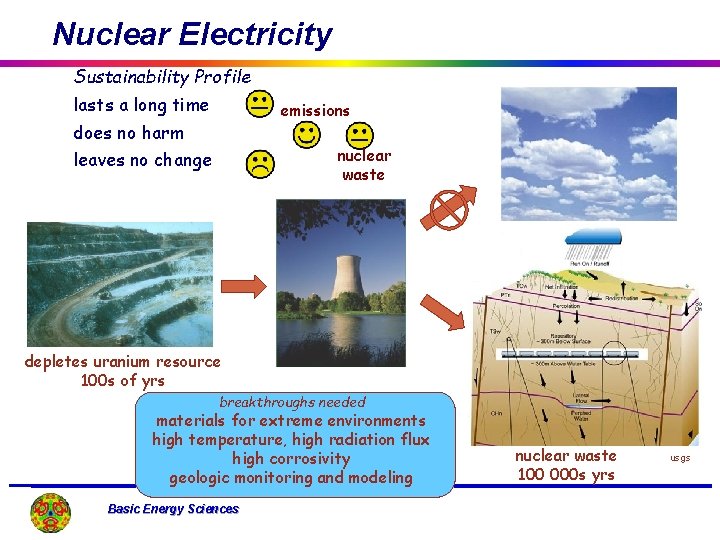
Nuclear Electricity Sustainability Profile lasts a long time emissions does no harm nuclear waste leaves no change depletes uranium resource 100 s of yrs breakthroughs needed materials for extreme environments high temperature, high radiation flux high corrosivity geologic monitoring and modeling Basic Energy Sciences nuclear waste 100 000 s yrs usgs
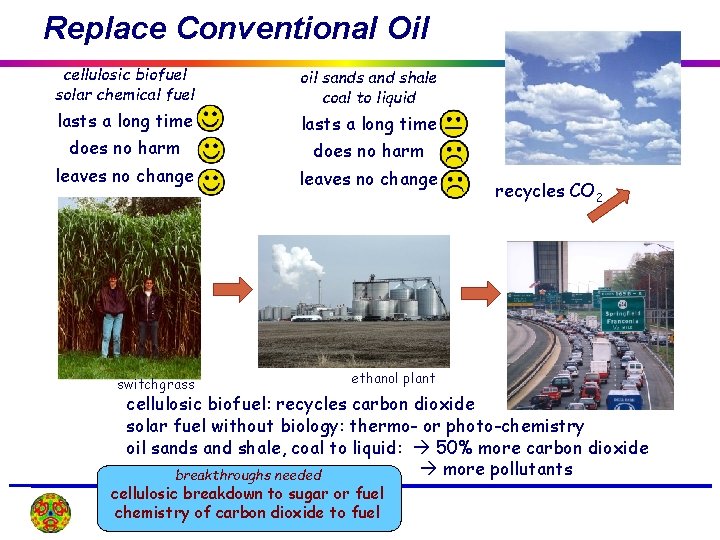
Replace Conventional Oil cellulosic biofuel solar chemical fuel lasts a long time does no harm oil sands and shale coal to liquid lasts a long time does no harm leaves no change switchgrass ethanol plant recycles CO 2 cellulosic biofuel: recycles carbon dioxide solar fuel without biology: thermo- or photo-chemistry oil sands and shale, coal to liquid: 50% more carbon dioxide more pollutants breakthroughs needed cellulosic breakdown to sugar or fuel Basic Energy Sciences chemistry of carbon dioxide to fuel
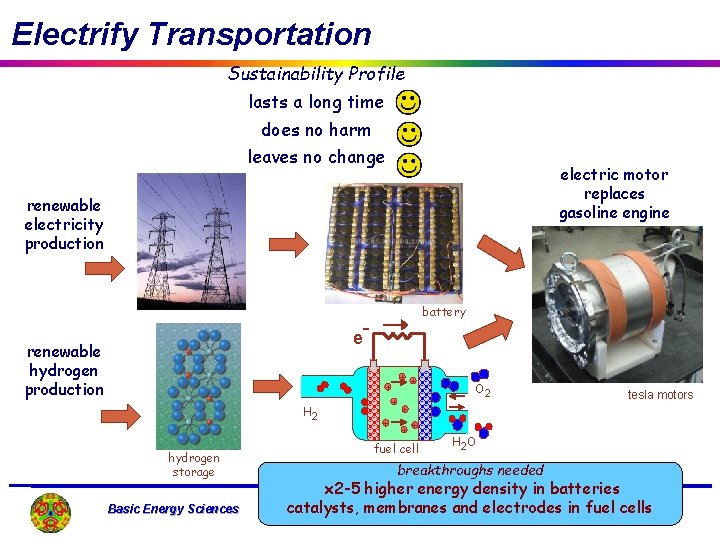
Electrify Transportation Sustainability Profile lasts a long time does no harm leaves no change electric motor replaces gasoline engine renewable electricity production e renewable hydrogen production battery + H 2 hydrogen storage Basic Energy Sciences + + O 2 + + + fuel cell tesla motors H 2 O breakthroughs needed x 2 -5 higher energy density in batteries catalysts, membranes and electrodes in fuel cells
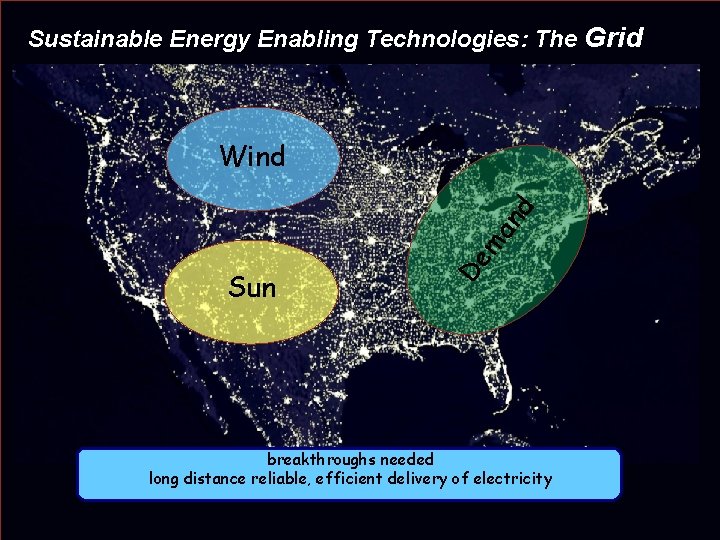
Sustainable Energy Enabling Technologies: The Grid Sun De ma nd Wind breakthroughs needed long distance reliable, efficient delivery of electricity Basic Energy Sciences
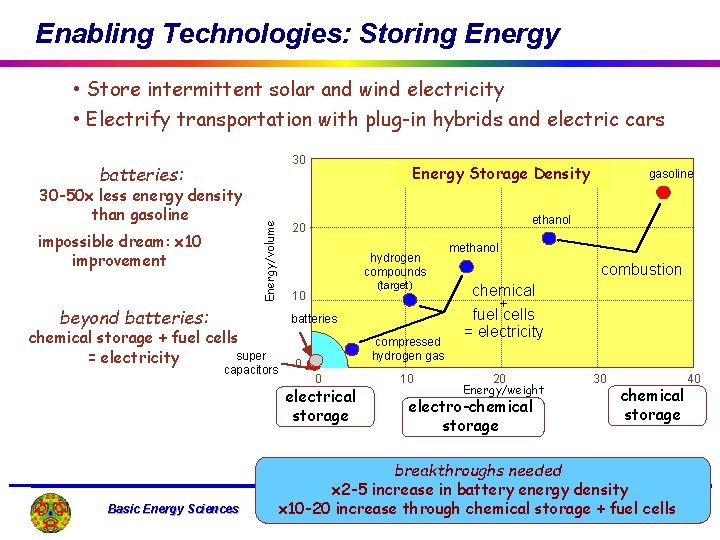
Enabling Technologies: Storing Energy • Store intermittent solar and wind electricity • Electrify transportation with plug-in hybrids and electric cars 30 30 -50 x less energy density than gasoline impossible dream: x 10 improvement Energy/volume batteries: beyond batteries: Energy Storage Density ethanol 20 hydrogen compounds (target) 10 batteries chemical storage + fuel cells super = electricity capacitors compressed hydrogen gas 0 0 electrical storage Basic Energy Sciences gasoline 10 methanol combustion chemical + fuel cells = electricity 20 Energy/weight electro-chemical storage 30 chemical storage breakthroughs needed x 2 -5 increase in battery energy density x 10 -20 increase through chemical storage + fuel cells 40
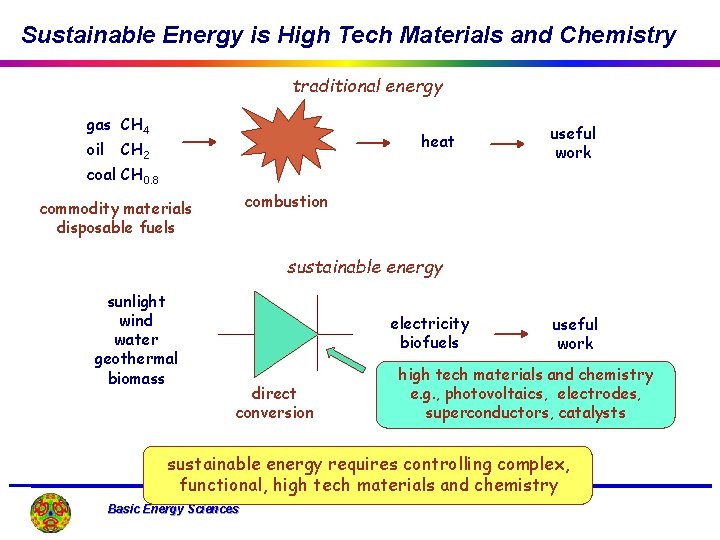
Sustainable Energy is High Tech Materials and Chemistry traditional energy gas CH 4 oil heat CH 2 coal CH 0. 8 useful work combustion commodity materials disposable fuels sustainable energy sunlight wind water geothermal biomass electricity biofuels direct conversion useful work high tech materials and chemistry e. g. , photovoltaics, electrodes, superconductors, catalysts sustainable energy requires controlling complex, functional, high tech materials and chemistry Basic Energy Sciences
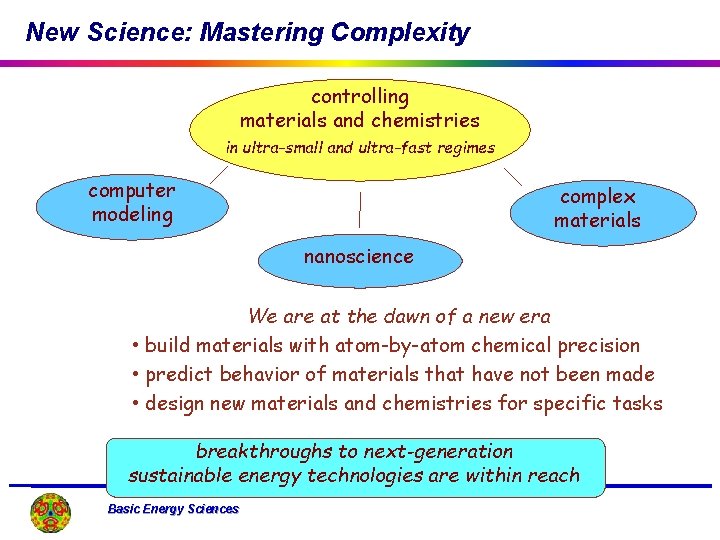
New Science: Mastering Complexity controlling materials and chemistries in ultra-small and ultra-fast regimes computer modeling complex materials nanoscience We are at the dawn of a new era • build materials with atom-by-atom chemical precision • predict behavior of materials that have not been made • design new materials and chemistries for specific tasks breakthroughs to next-generation sustainable energy technologies are within reach Basic Energy Sciences
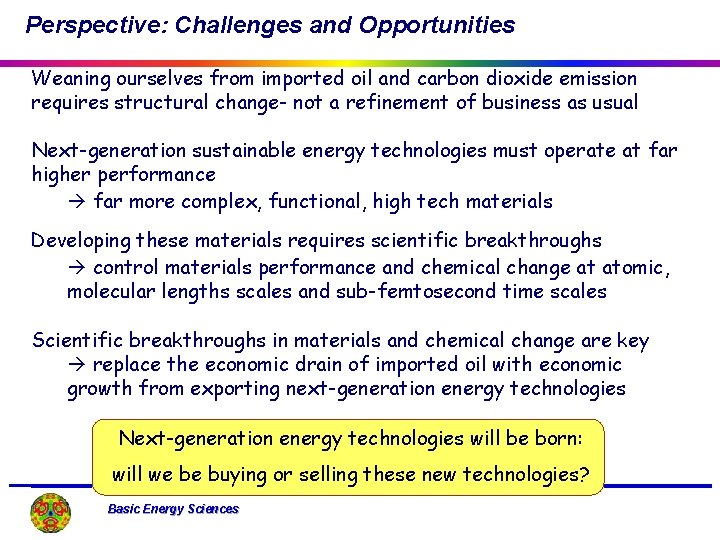
Perspective: Challenges and Opportunities Weaning ourselves from imported oil and carbon dioxide emission requires structural change- not a refinement of business as usual Next-generation sustainable energy technologies must operate at far higher performance far more complex, functional, high tech materials Developing these materials requires scientific breakthroughs control materials performance and chemical change at atomic, molecular lengths scales and sub-femtosecond time scales Scientific breakthroughs in materials and chemical change are key replace the economic drain of imported oil with economic growth from exporting next-generation energy technologies Next-generation energy technologies will be born: will we be buying or selling these new technologies? Basic Energy Sciences
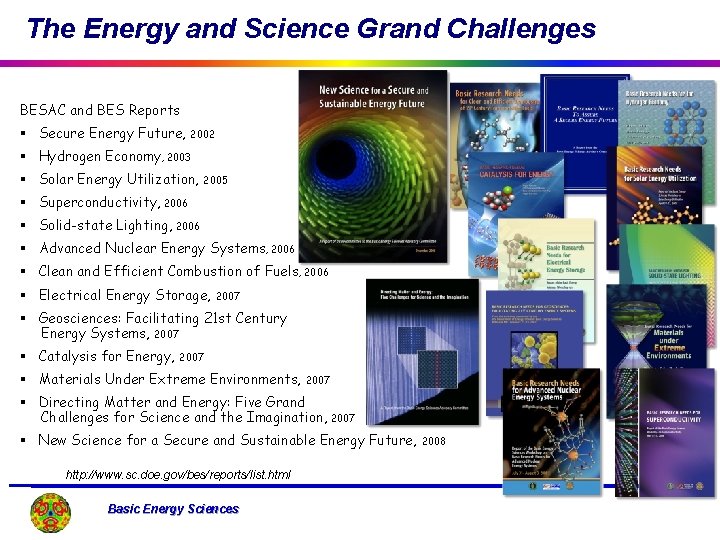
The Energy and Science Grand Challenges BESAC and BES Reports § Secure Energy Future, 2002 § Hydrogen Economy, 2003 § Solar Energy Utilization, 2005 § Superconductivity, 2006 § Solid-state Lighting, 2006 § Advanced Nuclear Energy Systems, 2006 § Clean and Efficient Combustion of Fuels, 2006 § Electrical Energy Storage, 2007 § Geosciences: Facilitating 21 st Century Energy Systems, 2007 § Catalysis for Energy, 2007 § Materials Under Extreme Environments, 2007 § Directing Matter and Energy: Five Grand Challenges for Science and the Imagination, 2007 § New Science for a Secure and Sustainable Energy Future, http: //www. sc. doe. gov/bes/reports/list. html Basic Energy Sciences 2008
Recommendations Dream Teams of the best scientists working with the best tools and focused on the most important problems are needed to achieve breakthroughs and transformational change. The BES Energy Frontier Research Centers will launch these teams: an essential first step http: //www. sc. doe. gov /bes/reports/list. html BES must launch an aggressive program to recruit and train the best and the brightest students and early career scientists. A massive and sustained investment in basic energy science is needed immediately, to achieve the breakthroughs in materials and chemical change needed for next-generation energy technologies. Basic Energy Sciences
- Slides: 17