
New Proposed Silica Standard Jon Nixon Safety Specialist




- Slides: 42
New Proposed Silica Standard Jon Nixon Safety Specialist Center. Point Energy
Acronyms � Permissible Exposure Limits (PELs) � Time Weighted Average (TWA) � American Conference of Governmental Industrial Hygienist (ACGIH) � National Institute for Occupational Safety and Health (NIOSH)
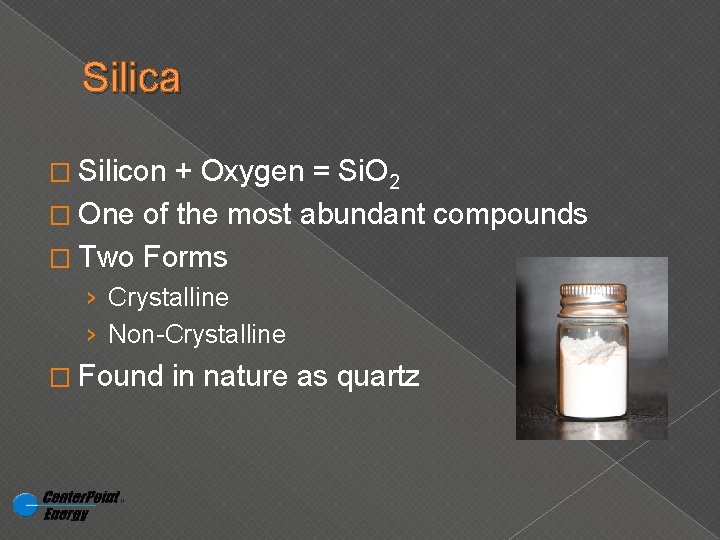
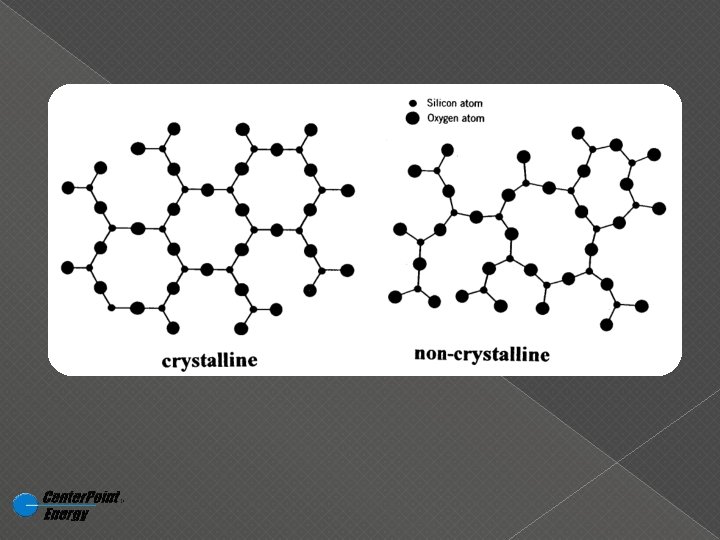
Silica � Silicon + Oxygen = Si. O 2 � One of the most abundant compounds � Two Forms › Crystalline › Non-Crystalline � Found in nature as quartz
Silica � Non-Crystalline (amorphous) � Crystalline › Quartz › Crystobalite › Tridymite
Uses � Glass � Filler for: › Paints › Plastics › Rubber � Fiber Optics
Operations � Glass Workers � Construction Work � Utility Work � Sandblasting � Quartz Mining � Masonry Work � Demolition
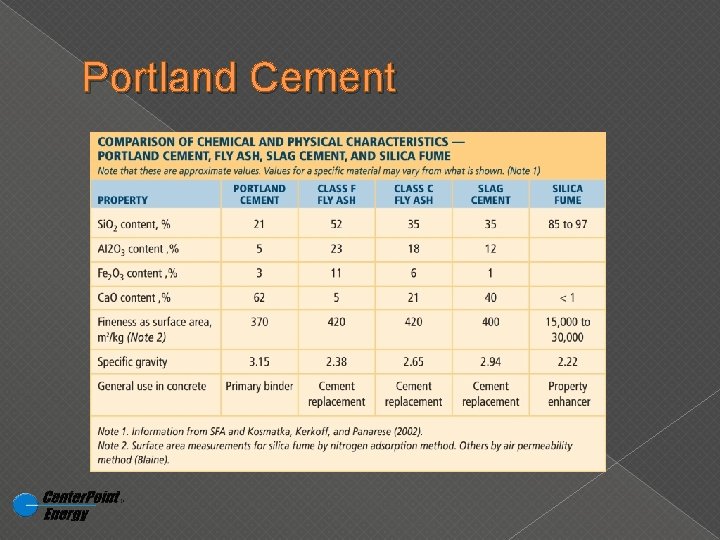
Portland Cement
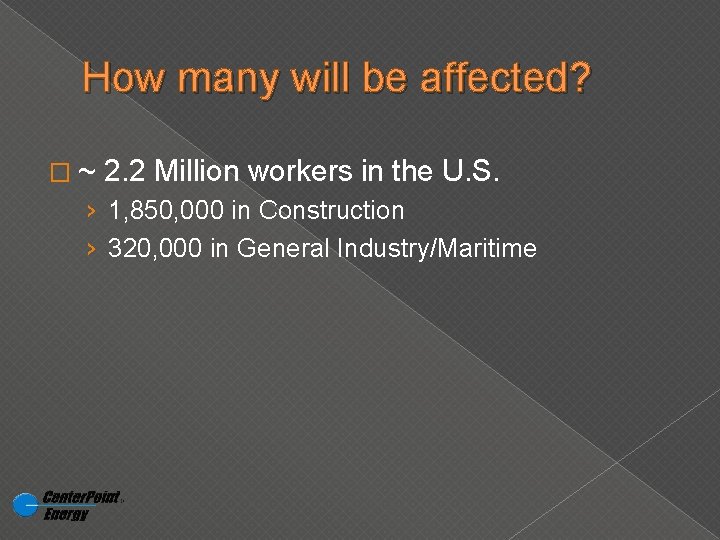
How many will be affected? � ~ 2. 2 Million workers in the U. S. › 1, 850, 000 in Construction › 320, 000 in General Industry/Maritime
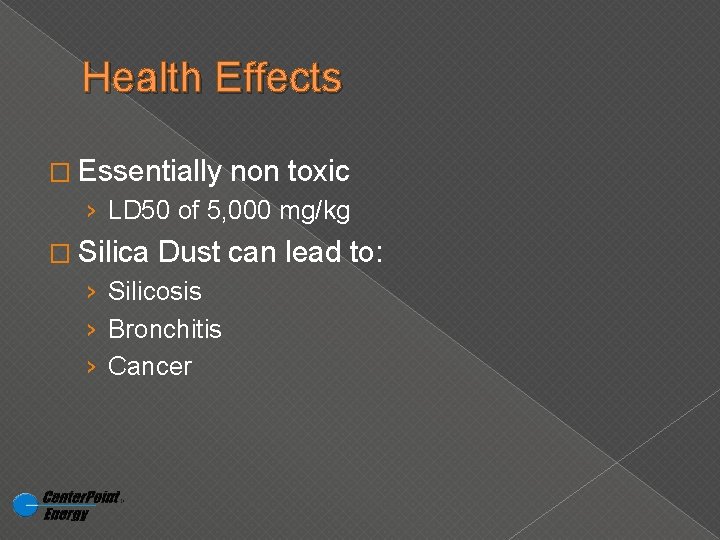
Health Effects � Essentially non toxic › LD 50 of 5, 000 mg/kg � Silica Dust can lead to: › Silicosis › Bronchitis › Cancer
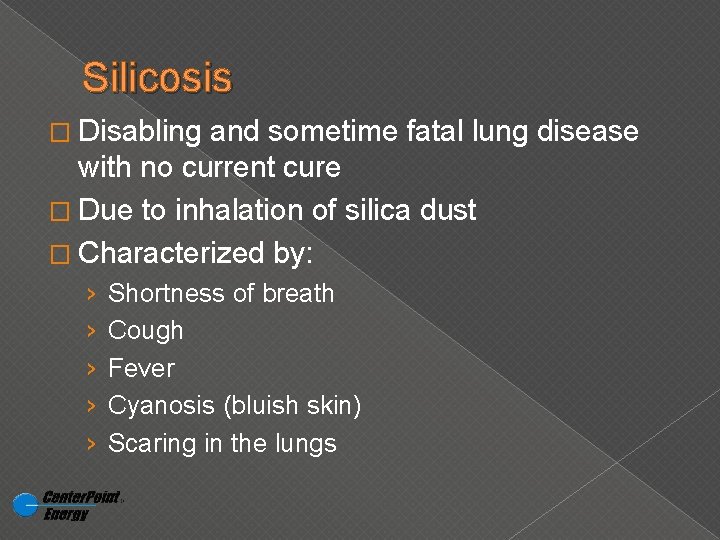
Silicosis � Disabling and sometime fatal lung disease with no current cure � Due to inhalation of silica dust � Characterized by: › › › Shortness of breath Cough Fever Cyanosis (bluish skin) Scaring in the lungs
https: //www. youtube. com/watch? v=6 Fezcz. BUn. I 0
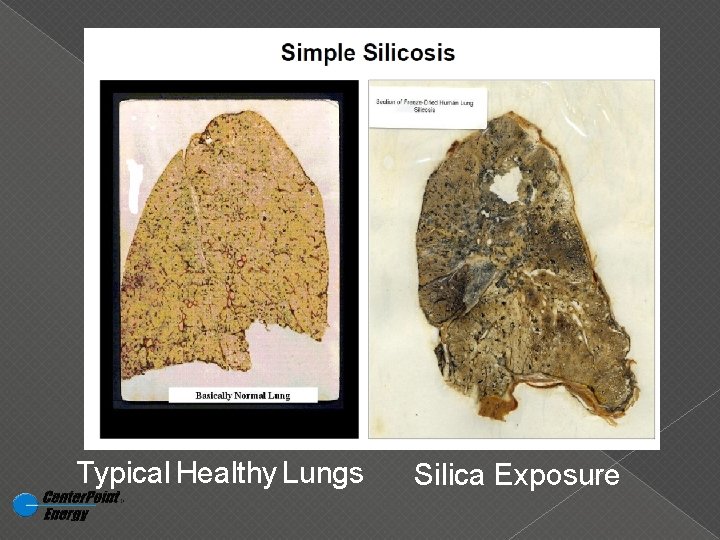
Typical Healthy Lungs Silica Exposure
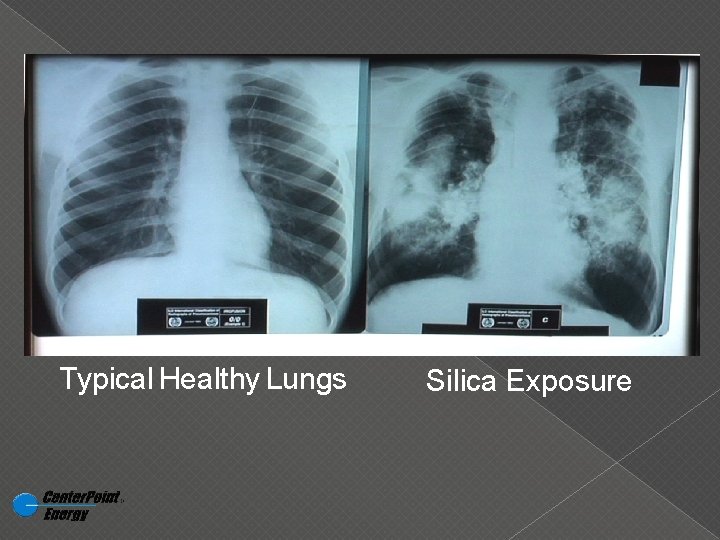
Typical Healthy Lungs Silica Exposure
Silica Exposure � Acute vs Accelerated vs Chronic � Concentration � Duration � Particle Size
Acute Silicosis � Develops after 1 to 3 years of exposure at a very high concentration � Symptoms may show as early as 7 months � Cough, weight loss, and extreme fatigue � Liquid in the alveoli � Fatal with in 2 years
Accelerated Silicosis � Shorter exposure than Chronic, 5 -15 years � Higher concentration � Progresses after employee is removed from the exposure source
Chronic Silicosis � Long term exposure, 20 -45 years, to develop � Dust with 10% or greater silica � Little to no symptoms for the first 20 years � Shortness of Breath, cough, fever � Bluish lips/ear lobes � Chest Pain
History � OSHA current standards adopted in 1971 � OSHA had to promulgate PELs › 425 were created � Silica’s PEL was derived from › Walsh-Healy Public Contacts Act › Contract Work Hours & Safety Standard’s Act › ACGIH
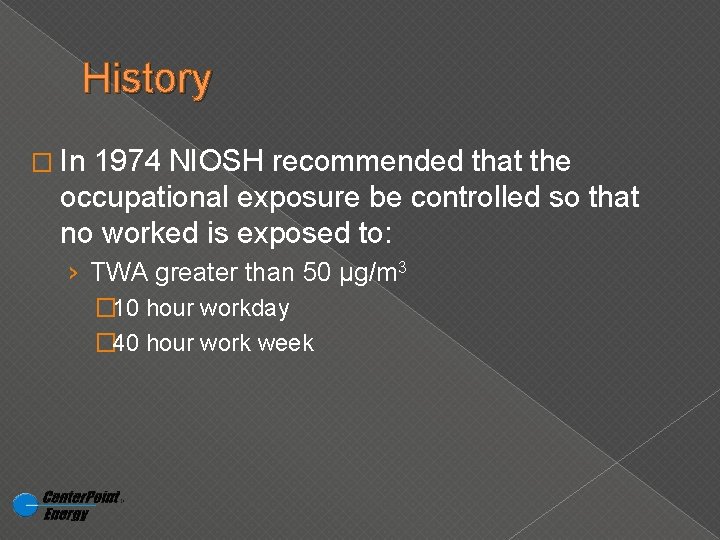
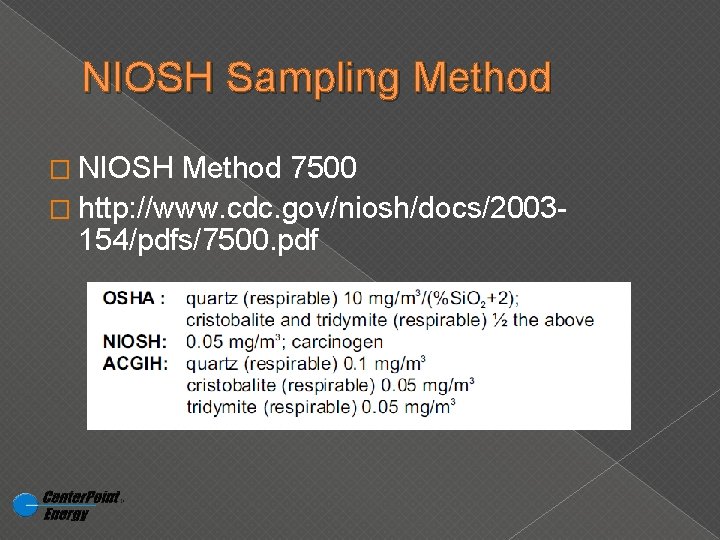
History � In 1974 NIOSH recommended that the occupational exposure be controlled so that no worked is exposed to: › TWA greater than 50 µg/m 3 � 10 hour workday � 40 hour work week
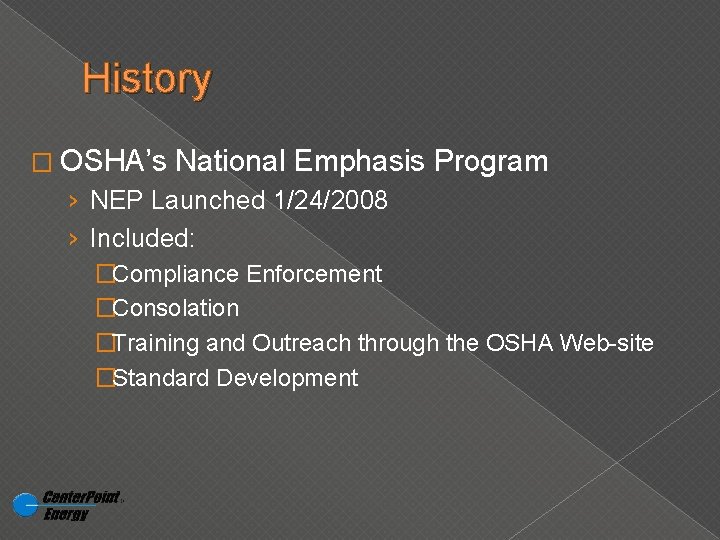
History � OSHA’s National Emphasis Program › NEP Launched 1/24/2008 › Included: �Compliance Enforcement �Consolation �Training and Outreach through the OSHA Web-site �Standard Development
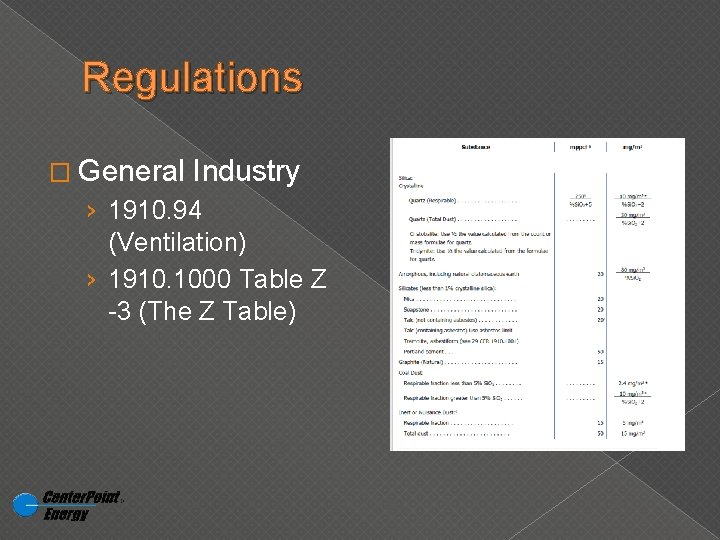
Regulations � General Industry › 1910. 94 (Ventilation) › 1910. 1000 Table Z -3 (The Z Table)
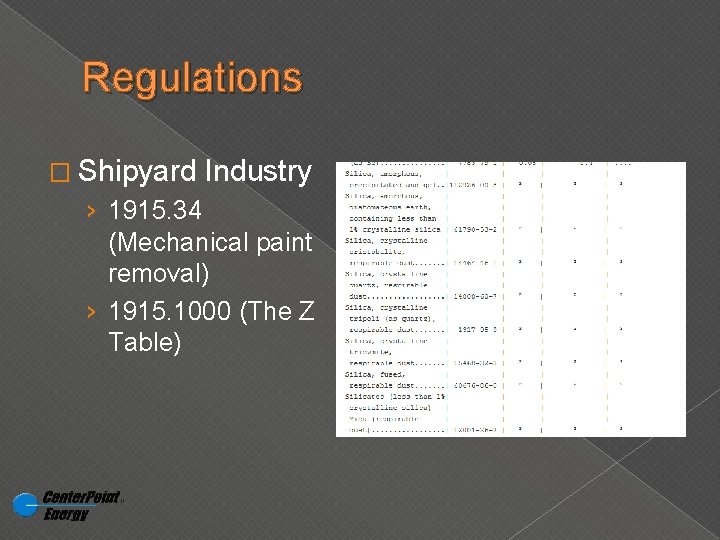
Regulations � Shipyard Industry › 1915. 34 (Mechanical paint removal) › 1915. 1000 (The Z Table)
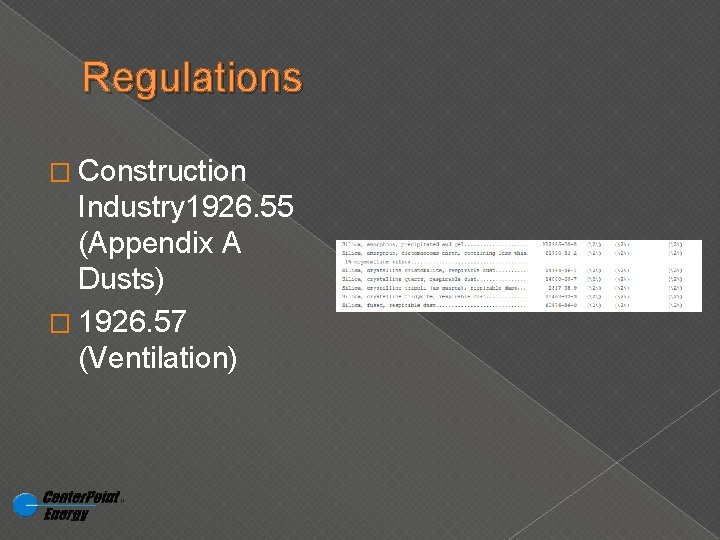
Regulations � Construction Industry 1926. 55 (Appendix A Dusts) � 1926. 57 (Ventilation)
Regulations � Current exposure limits › Adopted for decades ago �U. S. National Toxicology Program, International Agency for Research on Cancer, and NIOSH have identified respireable crystalline silica as a human carcinogen › PELs are difficult to understand › Based on older sampling methods › Shipyard workers PEL is 2 x general industry
OSHA’S Proposed Rule � Two proposed standards: › One for General Industry/Maritime › One for Construction
Why are they considering a change? � OSHA estimates current lung cancer deaths from exposure to silica over a 45 year working life averages: › Between 13 – 60 General Industry deaths per 1, 000 workers �average exposure is estimated to be ~ 100µg/m³ › Between 37 – 635 Construction & Shipyard deaths per 1, 000 workers �Average exposure is estimated to be ~ between 250 – 500 µg/m³
Why are they considering a change? � Supreme Court: “significant risks are present and can be eliminated or lessened by a change in practices” before promulgating any health or safety standard. � After standard implemented: › Estimate between 6 – 26 deaths per 1, 000 workers.
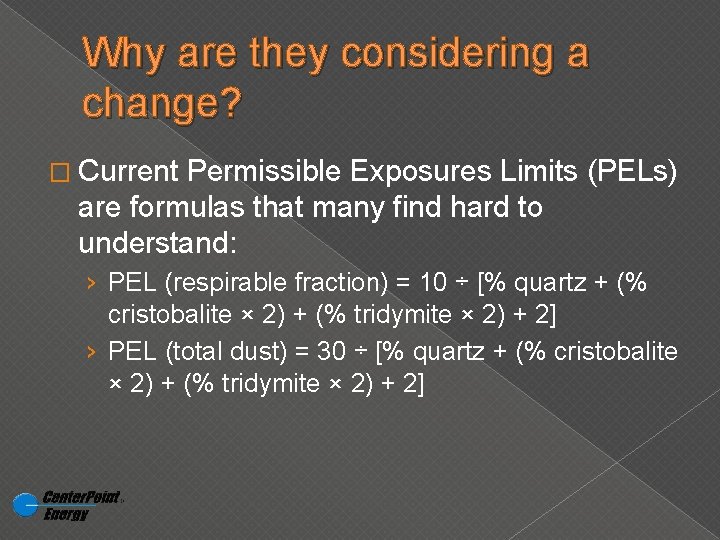
Why are they considering a change? � Current Permissible Exposures Limits (PELs) are formulas that many find hard to understand: › PEL (respirable fraction) = 10 ÷ [% quartz + (% cristobalite × 2) + (% tridymite × 2) + 2] › PEL (total dust) = 30 ÷ [% quartz + (% cristobalite × 2) + (% tridymite × 2) + 2]
Why are they considering a change? � Constriction/shipyard PELs are obsolete particle count limits � Construction/Shipyard formulas are about 250 µg/m 3 � General Industry formula is equal to about 100 µg/m 3
What are other countries doing? � Canada › Alberta – 25 µg/m 3 › Nova Scotia – 25 µg/m 3 › Saskatchewan – 50 µg/m 3 � Italy 25 - µg/m 3 � Ireland – 50 µg/m 3 � Netherlands – 75 µg/m 3
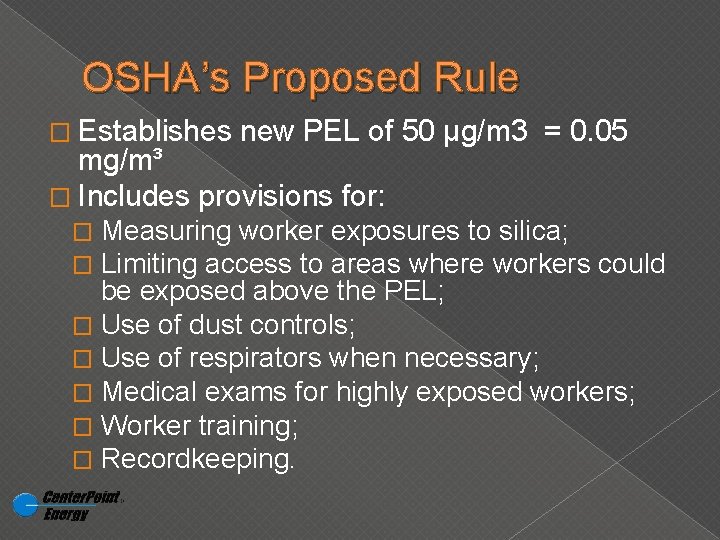
OSHA’s Proposed Rule � Establishes new PEL of 50 μg/m 3 = 0. 05 mg/m³ � Includes provisions for: Measuring worker exposures to silica; Limiting access to areas where workers could be exposed above the PEL; � Use of dust controls; � Use of respirators when necessary; � Medical exams for highly exposed workers; � Worker training; � Recordkeeping. � �
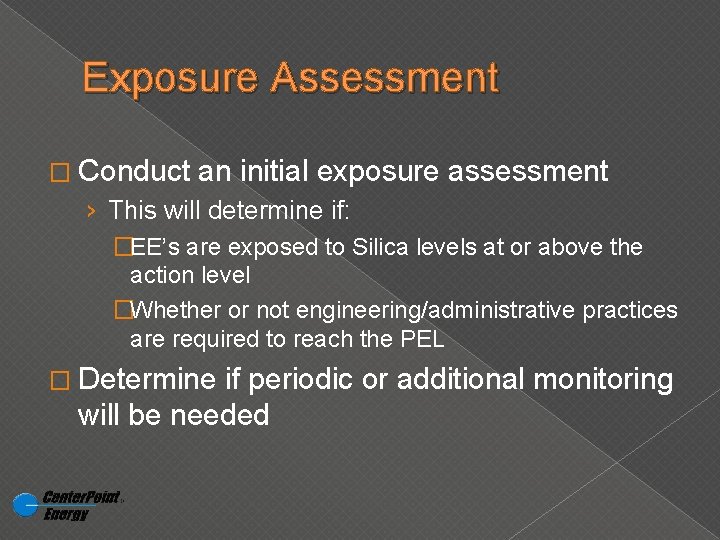
Exposure Assessment � Conduct an initial exposure assessment › This will determine if: �EE’s are exposed to Silica levels at or above the action level �Whether or not engineering/administrative practices are required to reach the PEL � Determine if periodic or additional monitoring will be needed
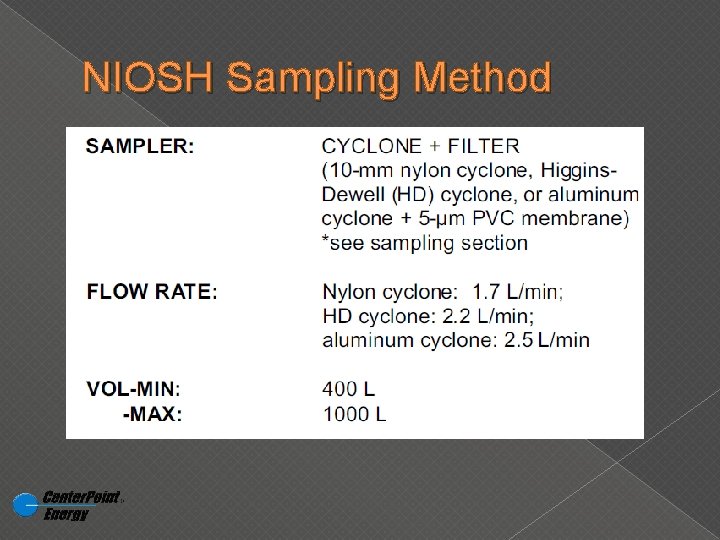
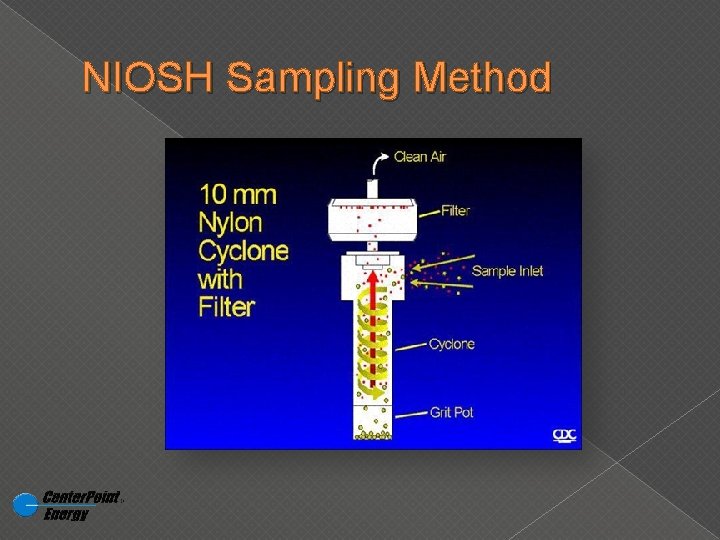
NIOSH Sampling Method � NIOSH Method 7500 � http: //www. cdc. gov/niosh/docs/2003 - 154/pdfs/7500. pdf
NIOSH Sampling Method
NIOSH Sampling Method
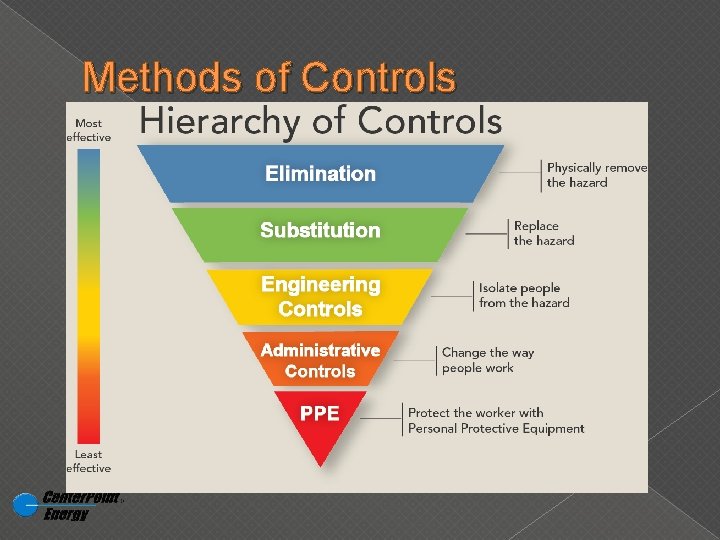
Methods of Controls
Methods of Control � Use engineering controls and work practices to maintain exposure levels at/or below the PEL � If the employer can show that engineering controls are not feasible: › Attempt to reduce the exposure to the lowest achievable level › Supplement with PPE
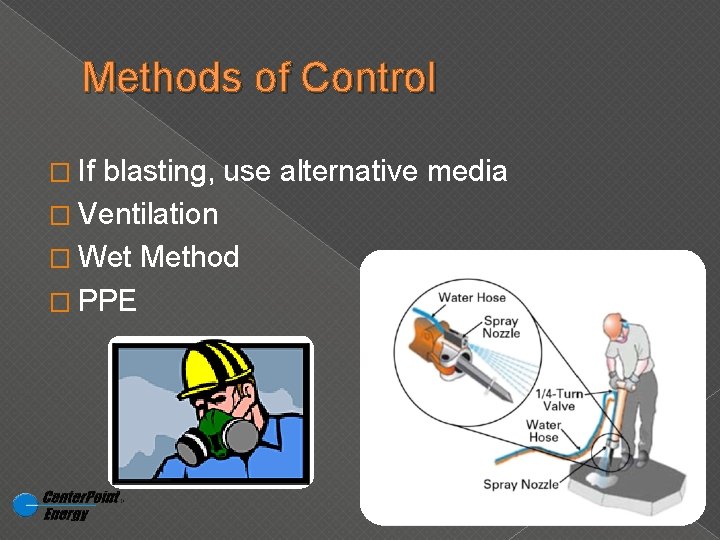
Methods of Control � If blasting, use alternative media � Ventilation � Wet Method � PPE
What is CNP doing? � What are we doing? › Monitoring the “situation” › Gathering information �Historical Sampling Data �Field Interviews › Preparing for NEAs
Where can I get more info? � OSHA › https: //www. osha. gov/dsg/topics/silicacrystalline/ additional_info_silica. html � NIOSH › http: //www. cdc. gov/niosh/npgd 0552. html
Questions? � Thank you for your attention and time. � Jon Nixon � Center. Point Energy � 713. 967. 7073