
New Process Qualification Use of Electrolyte and Corrosion



- Slides: 16
New Process Qualification Use of Electrolyte and Corrosion Models Narasi Sridhar October 2007
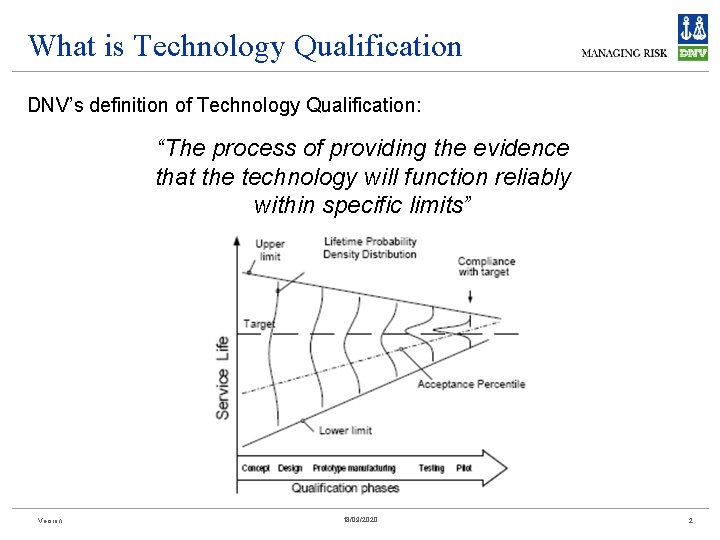
What is Technology Qualification DNV’s definition of Technology Qualification: “The process of providing the evidence that the technology will function reliably within specific limits” Version 18/09/2020 2
Why Technology Qualification? n Manufacturer/Designer of New Technology: Assurance of feasibility and fitness for purpose n Integrator of System: Assessment of system reliability n End-user: Selection of technology, ROI evaluation n Regulator: Confirmation of safety assessments Version 18/09/2020 3
QUALIFICATION OF NEW TECHNOLOGY n DNV-RP-A 203 Qualification Procedures for New Technology - Describes a recommended work process for qualifying technology - A public document which can be applied by anyone - A revised version in draft form – apply to process qualification n DNV-OSS-401 Technology Qualification Management - A description of DNV’s own services directed towards the work process in DNV-RP-A 203 - Internal objective: To unify the services within DNV worldwide - External objective: To support agreement of scope-of-work Version 18/09/2020 4
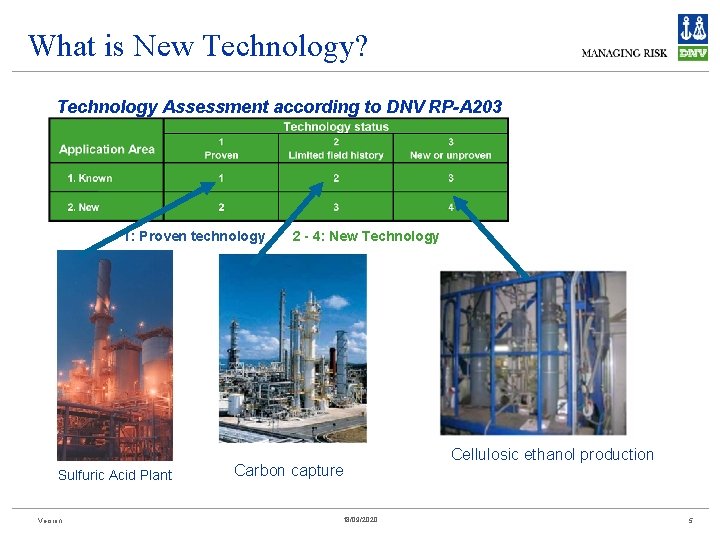
What is New Technology? Technology Assessment according to DNV RP-A 203 1: Proven technology Sulfuric Acid Plant Version 2 - 4: New Technology Carbon capture 18/09/2020 Cellulosic ethanol production 5
Technology Qualification Management Qualification Work Process Milestones DNV deliverables Use of simulation tools Define Qualification Basis Technology Assessment TA Failure Mode Identification and Risk Ranking Technology Assessment Report Statement of Feasibility Concept Improvement Selection of Qualification Methods Technology Qualification Plan Probability of Success Evaluation (Po. S) Statement of Endorsement TQP Analysis and Testing Reliability Assessment Project Execution Phase Version TQ? Yes NT No Technology Qualification Report Certificate of Fitness for Service Fall-back or hold 18/09/2020 6
Application of Models n New processes do not have well established performance history - Reliance on similar process experience - “Generic” equipment experience n Simulations can help - Understand process chemistry, speciation, other stream parameters - Identify materials performance issues through corrosion modeling - Identify data needs n Simulations need to be combined with field experience and laboratory data Version 18/09/2020 7
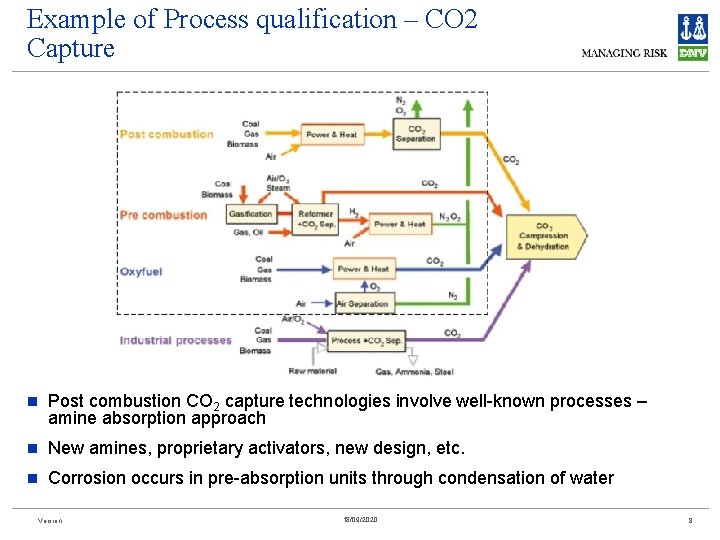
Example of Process qualification – CO 2 Capture n Post combustion CO 2 capture technologies involve well-known processes – amine absorption approach n New amines, proprietary activators, new design, etc. n Corrosion occurs in pre-absorption units through condensation of water Version 18/09/2020 8
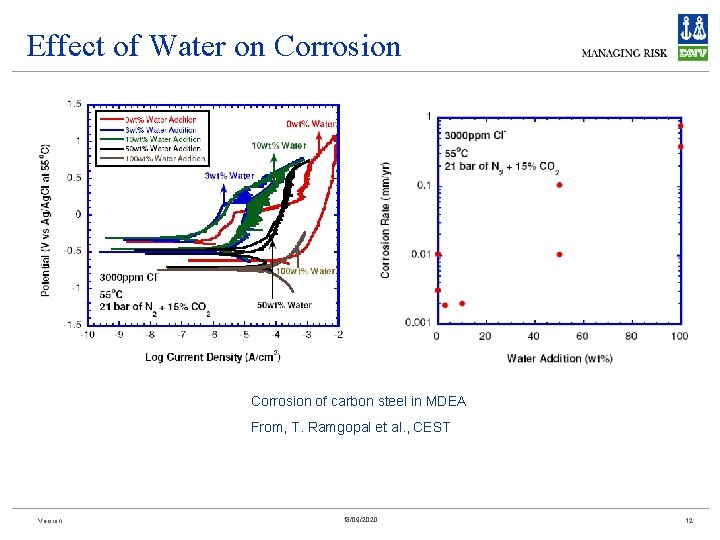
Issues n Effect of CO 2 and water concentration n Effect of other gases (N 2, O 2, SOx, NOx etc. ) n Effect of chlorides, hydrochlorides n Effect of flow and impingement n Effect of activators Version 18/09/2020 9
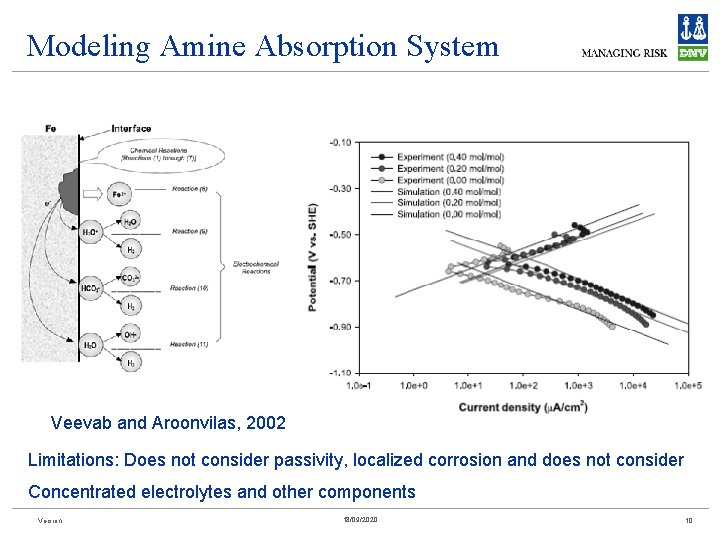
Modeling Amine Absorption System Veevab and Aroonvilas, 2002 Limitations: Does not consider passivity, localized corrosion and does not consider Concentrated electrolytes and other components Version 18/09/2020 10
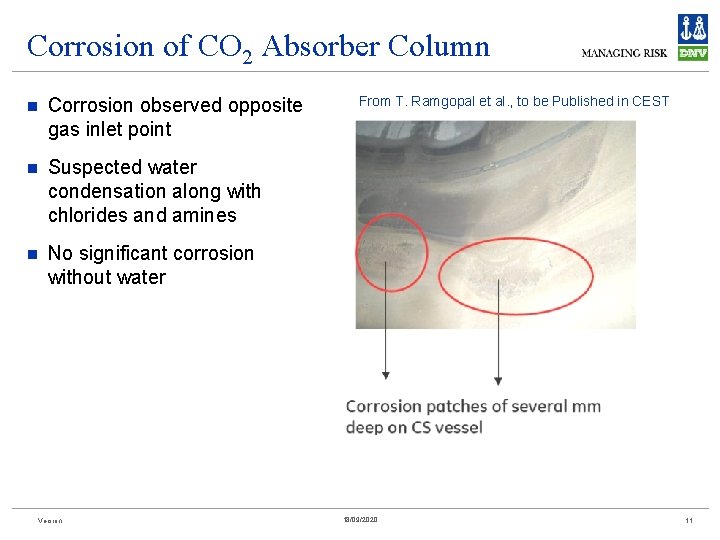
Corrosion of CO 2 Absorber Column n Corrosion observed opposite gas inlet point n Suspected water condensation along with chlorides and amines n No significant corrosion without water Version From T. Ramgopal et al. , to be Published in CEST 18/09/2020 11
Effect of Water on Corrosion of carbon steel in MDEA From, T. Ramgopal et al. , CEST Version 18/09/2020 12
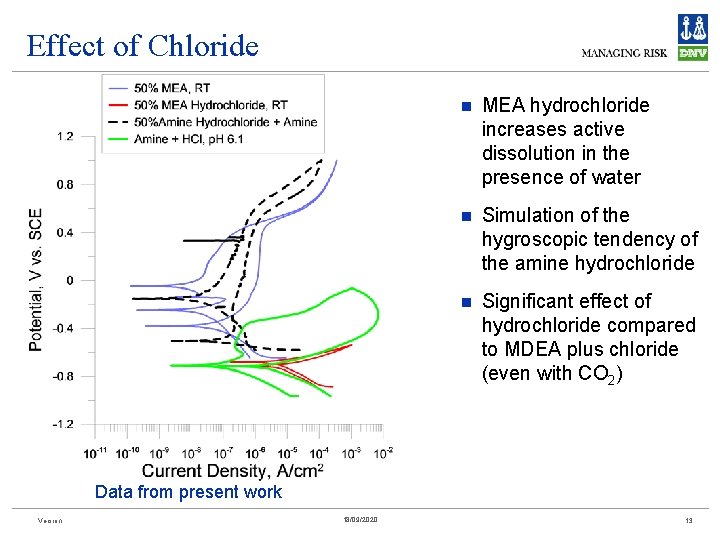
Effect of Chloride n MEA hydrochloride increases active dissolution in the presence of water n Simulation of the hygroscopic tendency of the amine hydrochloride n Significant effect of hydrochloride compared to MDEA plus chloride (even with CO 2) Data from present work Version 18/09/2020 13
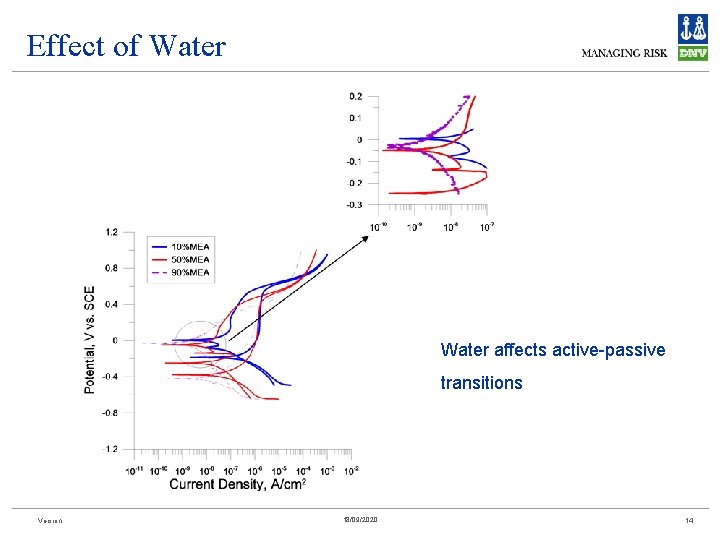
Effect of Water affects active-passive transitions Version 18/09/2020 14
Summary n DNV new technology qualification procedure is being used for process qualification n Electrolyte simulation tools, such as OLI Analyzers are useful in understanding the chemistry of processes n OLI Corrosion Analyzer may be used to simulate corrosion, thus extending the qualification capabilities n Laboratory electrochemical data needed - Populate the parameter database - Verify simulation results Version 18/09/2020 15
Version 18/09/2020 16