
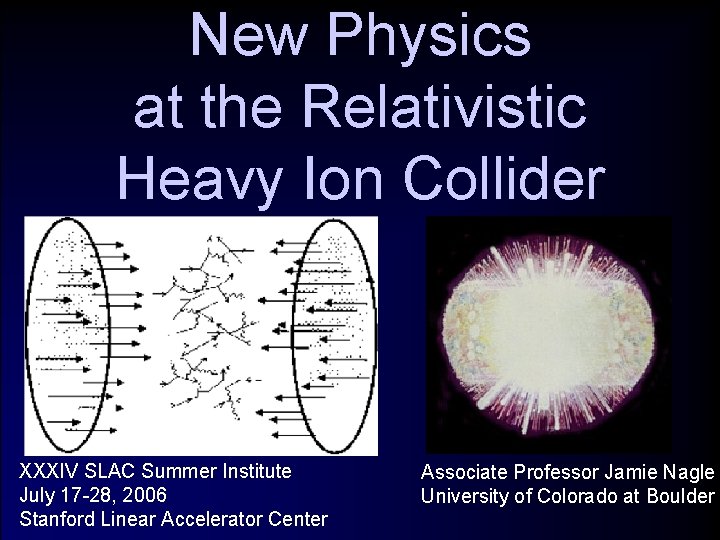
New Physics at the Relativistic Heavy Ion Collider
- Slides: 44
New Physics at the Relativistic Heavy Ion Collider XXXIV SLAC Summer Institute July 17 -28, 2006 Stanford Linear Accelerator Center Associate Professor Jamie Nagle University of Colorado at Boulder
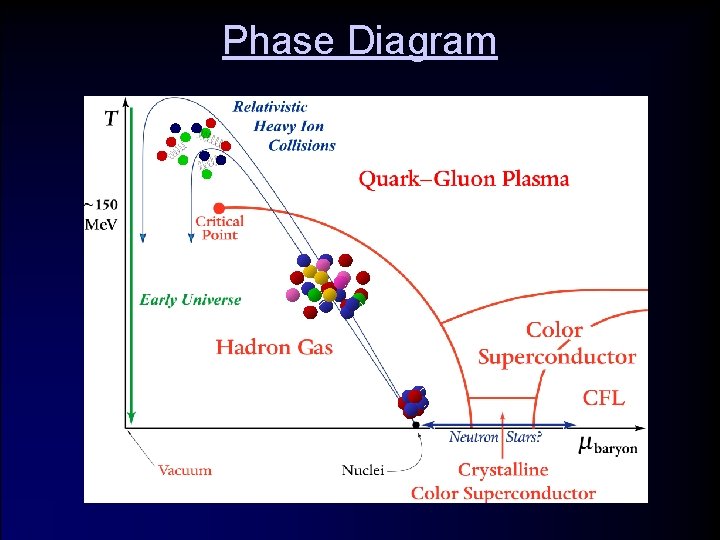
Phase Diagram
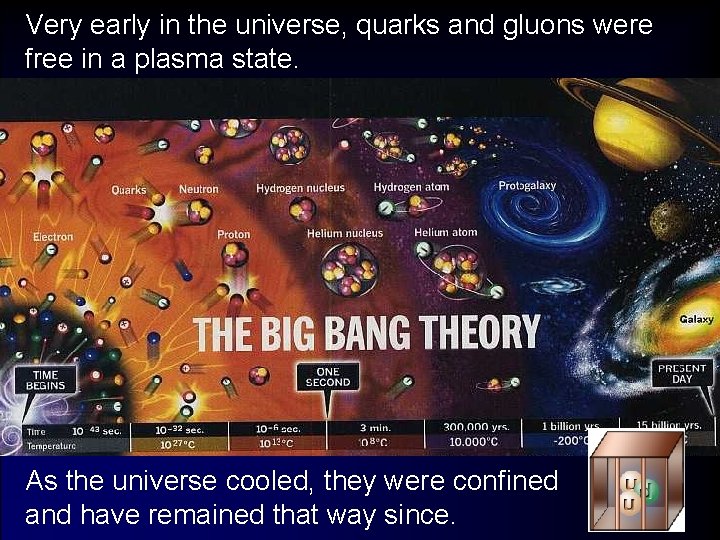
Very early in the universe, quarks and gluons were free in a plasma state. As the universe cooled, they were confined and have remained that way since.
Rich Cosmological Scenario “A first-order QCD phase transition that occurred in the early universe would lead to a surprisingly rich cosmological scenario. ” “Although observable consequences would not necessarily survive, it is at least conceivable that the phase transition would concentrate most of the quark excess in dense, invisible quark nuggets. ” Ed Witten Phys. Rev. D (1984) Over 1000 citations
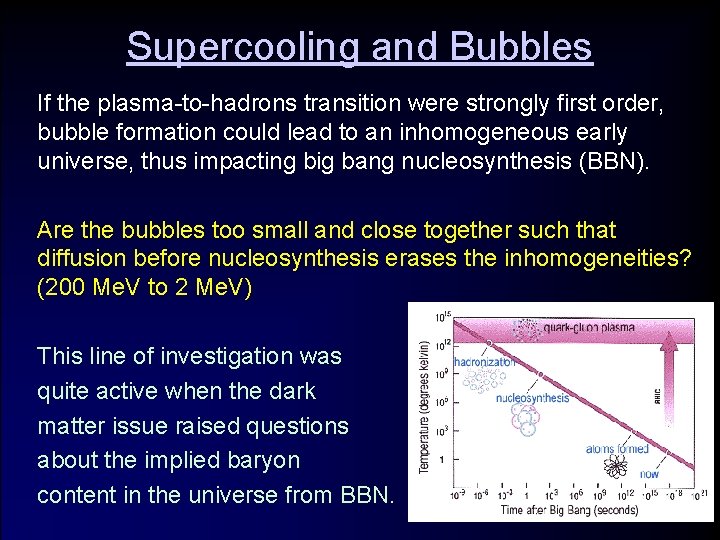
Supercooling and Bubbles If the plasma-to-hadrons transition were strongly first order, bubble formation could lead to an inhomogeneous early universe, thus impacting big bang nucleosynthesis (BBN). Are the bubbles too small and close together such that diffusion before nucleosynthesis erases the inhomogeneities? (200 Me. V to 2 Me. V) This line of investigation was quite active when the dark matter issue raised questions about the implied baryon content in the universe from BBN.
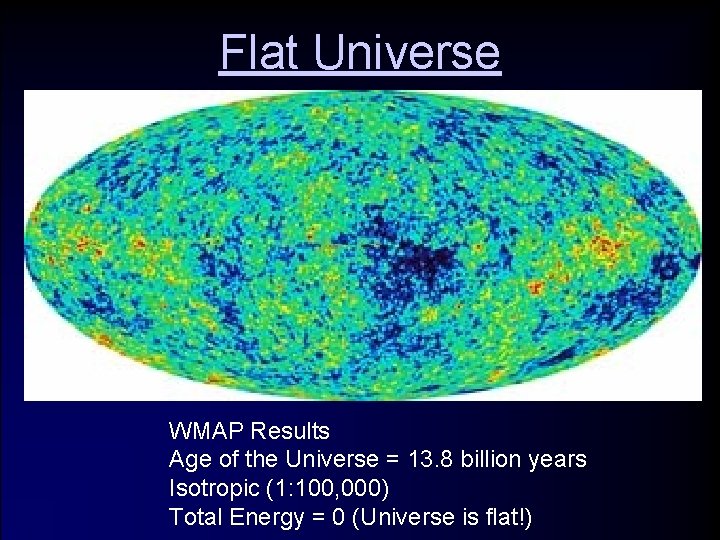
Flat Universe Physics Today, July 2001: Cosmic Microwave Background Observations “The value deduced from the second harmonic in the acoustic oscillations for WB=0. 042 ± 0. 008 (cosmic baryon mass density) is in very good agreement with the value one gets by applying theoretical details of primordial big bang nucleosynthesis to the observations of cosmic abundances of deuterium. ” WMAP Results Age of the Universe = 13. 8 billion years Isotropic (1: 100, 000) Total Energy = 0 (Universe is flat!)
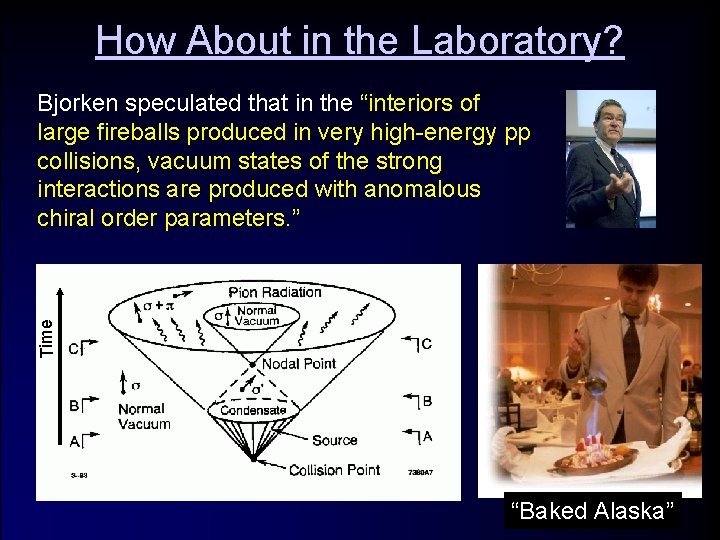
How About in the Laboratory? Time Bjorken speculated that in the “interiors of large fireballs produced in very high-energy pp collisions, vacuum states of the strong interactions are produced with anomalous chiral order parameters. ” “Baked Alaska”
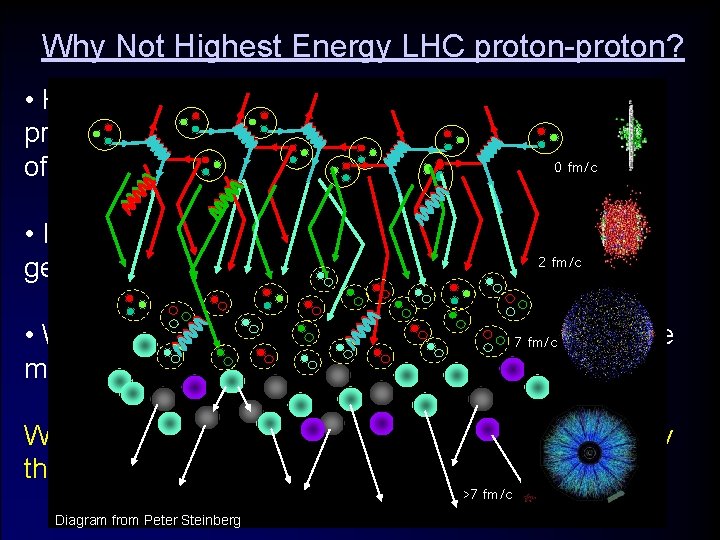
Why Not Highest Energy LHC proton-proton? • Higher energy density may be achieved in proton, but the partonic re-interaction time scale 0 fm/c of order 1 fm/c. • It is difficult to select events with different geometries and avoid autocorrelations. 2 fm/c • We will see that probes with long paths 7 fm/c through the medium are key. We should not rule out pp reactions, but rather study the similarities and differences with AA reactions. >7 fm/c Diagram from Peter Steinberg
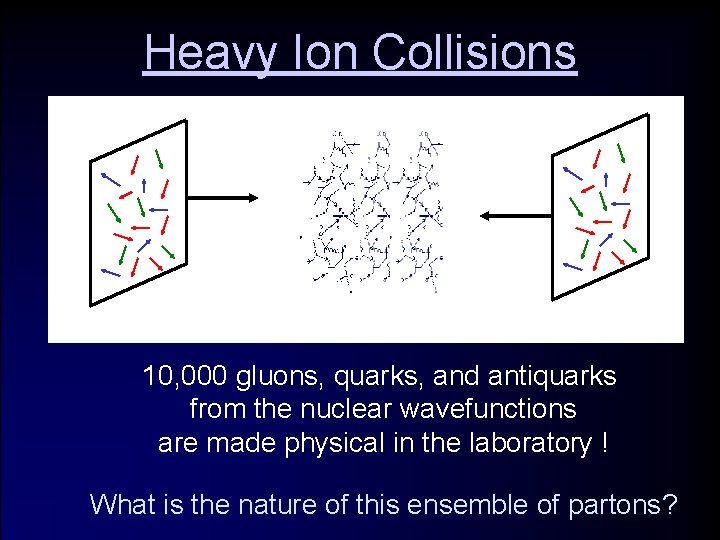
Heavy Ion Collisions 10, 000 gluons, quarks, and antiquarks from the nuclear wavefunctions are made physical in the laboratory ! What is the nature of this ensemble of partons?
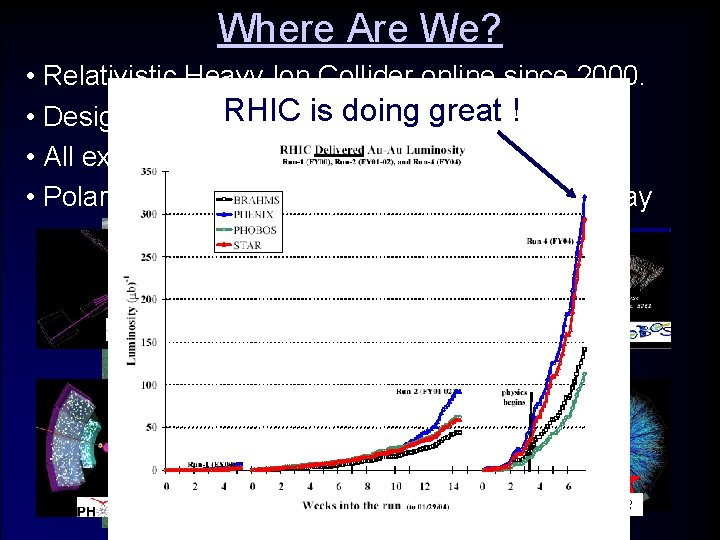
Where Are We? • Relativistic Heavy Ion Collider online since 2000. doing great achieved. ! • Design Au+Au. RHIC energyisand luminosity • All experiments successfully taking data • Polarized proton (spin) program underway STAR
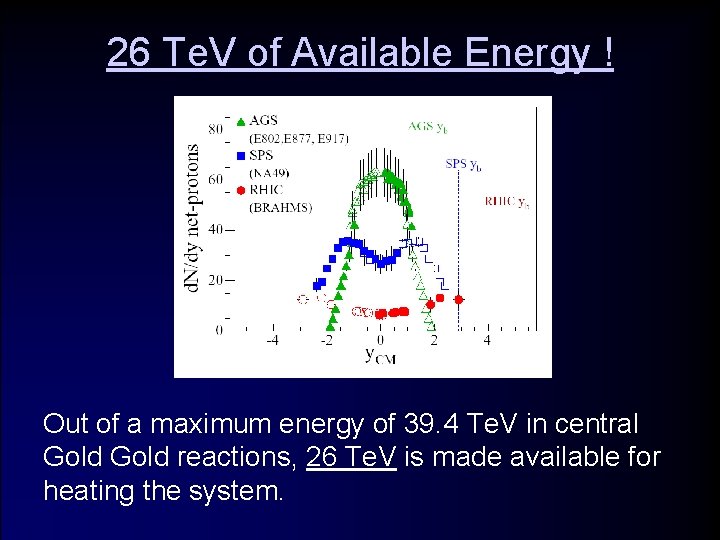
26 Te. V of Available Energy ! Out of a maximum energy of 39. 4 Te. V in central Gold reactions, 26 Te. V is made available for heating the system.
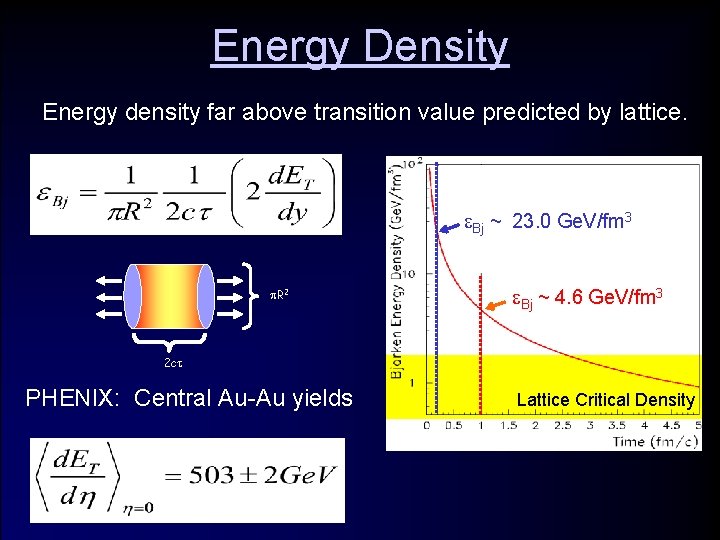
Energy Density Energy density far above transition value predicted by lattice. e. Bj ~ 23. 0 Ge. V/fm 3 p. R 2 e. Bj ~ 4. 6 Ge. V/fm 3 2 ct PHENIX: Central Au-Au yields Lattice ec Lattice Critical Density
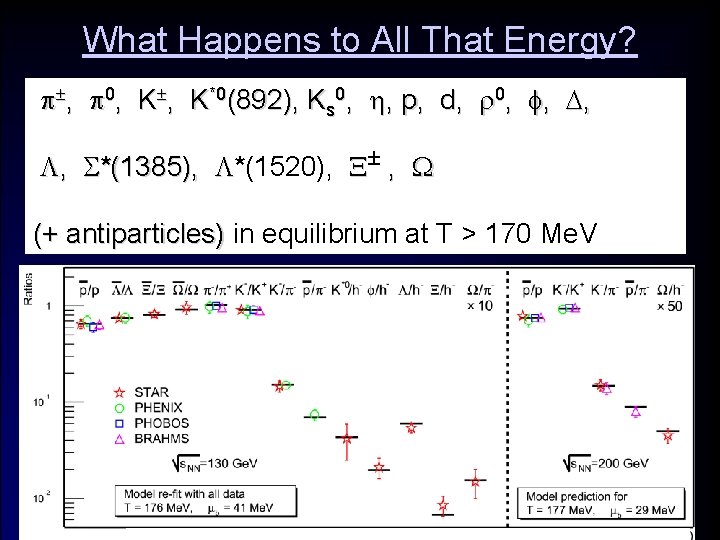
What Happens to All That Energy? p , p 0, K , K*0(892), Ks 0, h, p, d, r 0, f, D, L, S*(1385), L*(1520), X± , W (+ antiparticles) in equilibrium at T > 170 Me. V
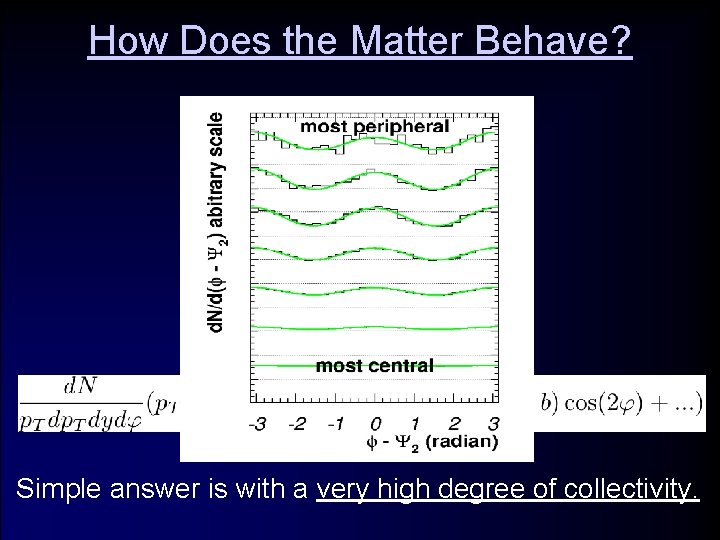
How Does the Matter Behave? Simple answer is with a very high degree of collectivity.
Hydrodynamics • Assume early equilibration • Equations of Motion • Equation of State from lattice QCD
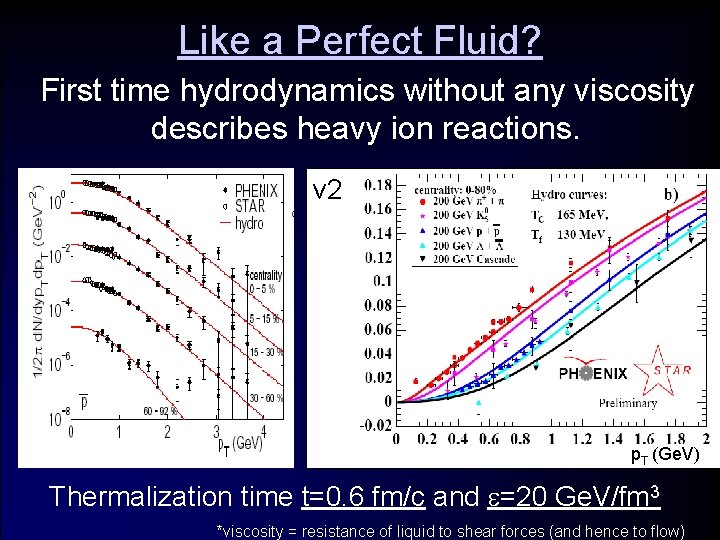
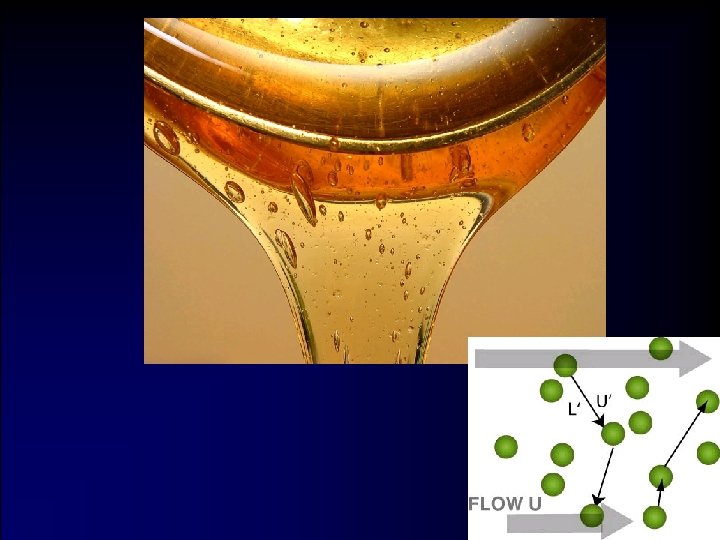
Like a Perfect Fluid? First time hydrodynamics without any viscosity describes heavy ion reactions. v 2 p. T (Ge. V) Thermalization time t=0. 6 fm/c and e=20 Ge. V/fm 3 *viscosity = resistance of liquid to shear forces (and hence to flow)
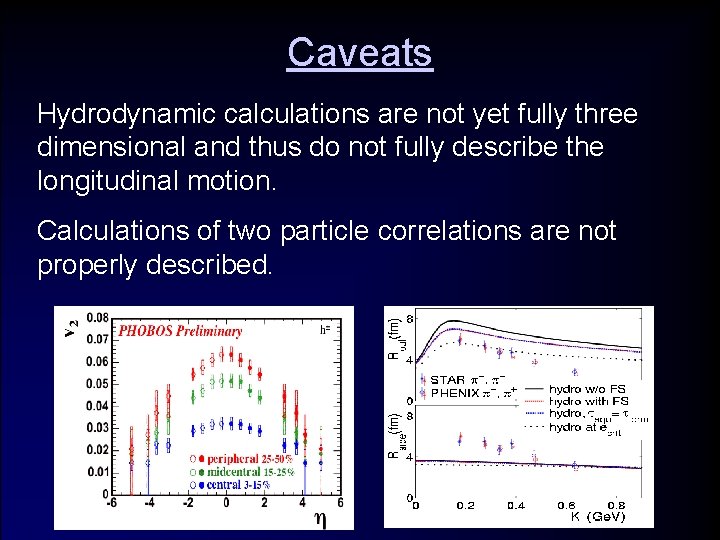
Caveats Hydrodynamic calculations are not yet fully three dimensional and thus do not fully describe the longitudinal motion. Calculations of two particle correlations are not properly described.
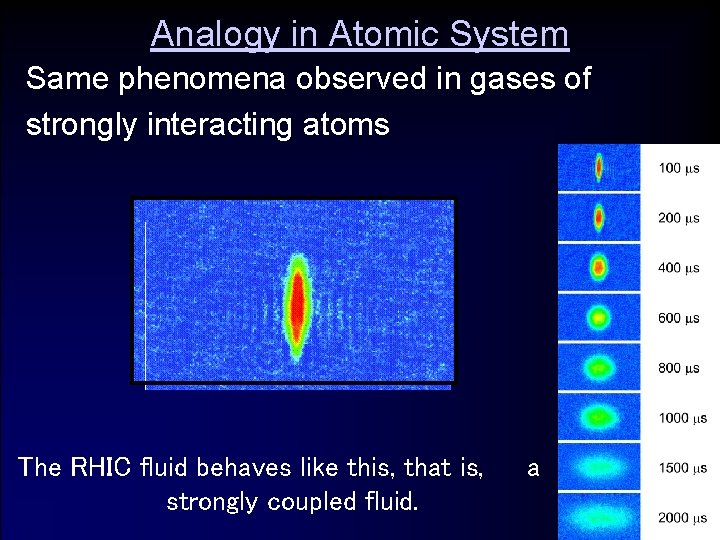
Analogy in Atomic System Same phenomena observed in gases of strongly interacting atoms The RHIC fluid behaves like this, that is, strongly coupled fluid. a
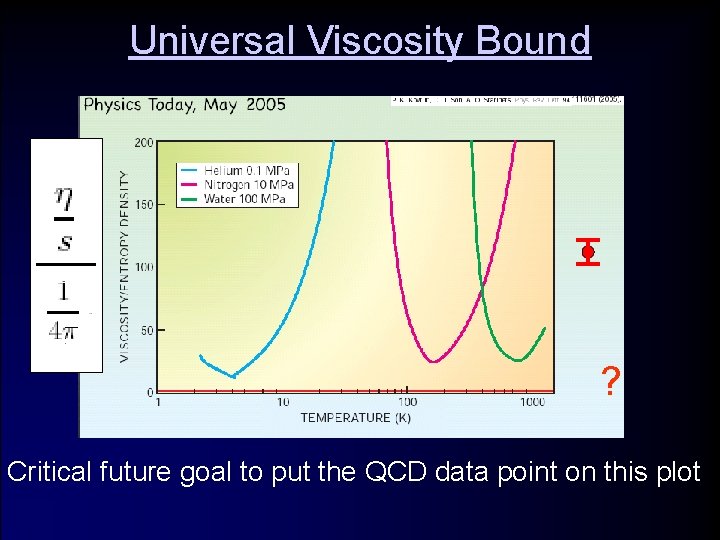
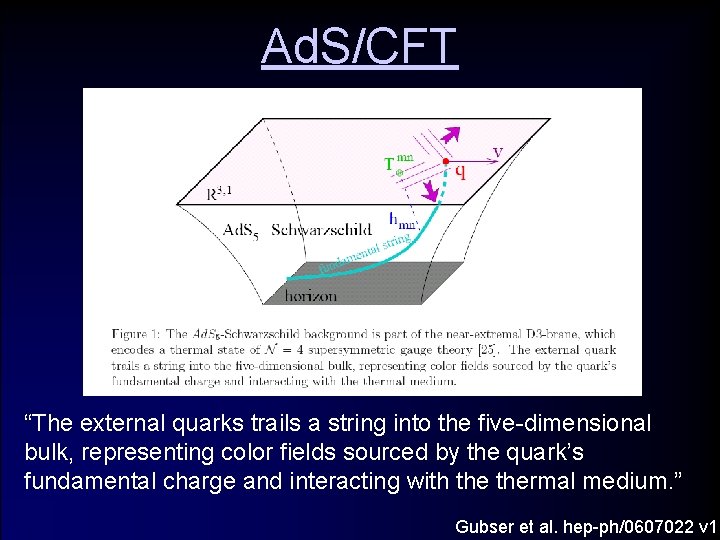
String Theory and Black Hole Physics What could this have to do with quark gluon plasma physics? The Maldacena duality, know also as Ad. S/CFT correspondence, has opened a way to study the strong coupling limit using classical gravity where it is difficult even with lattice Quantum Chromodynamics. It has been postulated that there is a universal lower viscosity bound for all strongly coupled systems, as determined in this dual gravitational system.
Universal Viscosity Bound ? Critical future goal to put the QCD data point on this plot
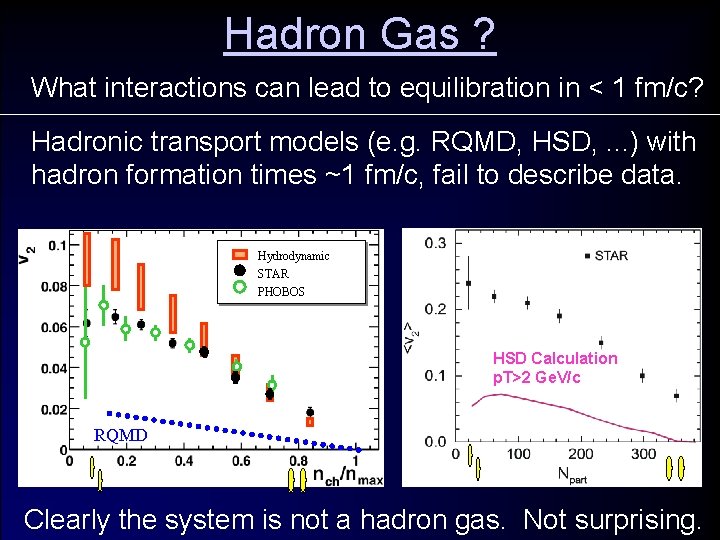
Hadron Gas ? What interactions can lead to equilibration in < 1 fm/c? Hadronic transport models (e. g. RQMD, HSD, . . . ) with hadron formation times ~1 fm/c, fail to describe data. Hydrodynamic STAR PHOBOS HSD Calculation p. T>2 Ge. V/c RQMD Clearly the system is not a hadron gas. Not surprising.
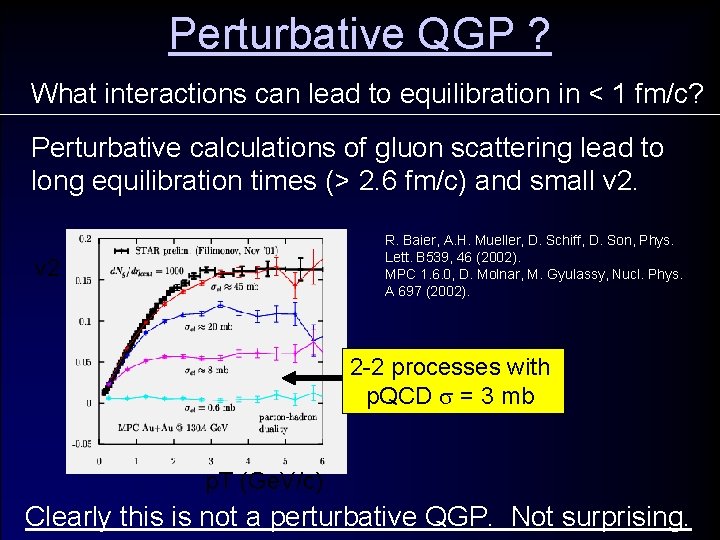
Perturbative QGP ? What interactions can lead to equilibration in < 1 fm/c? Perturbative calculations of gluon scattering lead to long equilibration times (> 2. 6 fm/c) and small v 2. R. Baier, A. H. Mueller, D. Schiff, D. Son, Phys. Lett. B 539, 46 (2002). MPC 1. 6. 0, D. Molnar, M. Gyulassy, Nucl. Phys. A 697 (2002). v 2 2 -2 processes with p. QCD = 3 mb p. T (Ge. V/c) Clearly this is not a perturbative QGP. Not surprising.
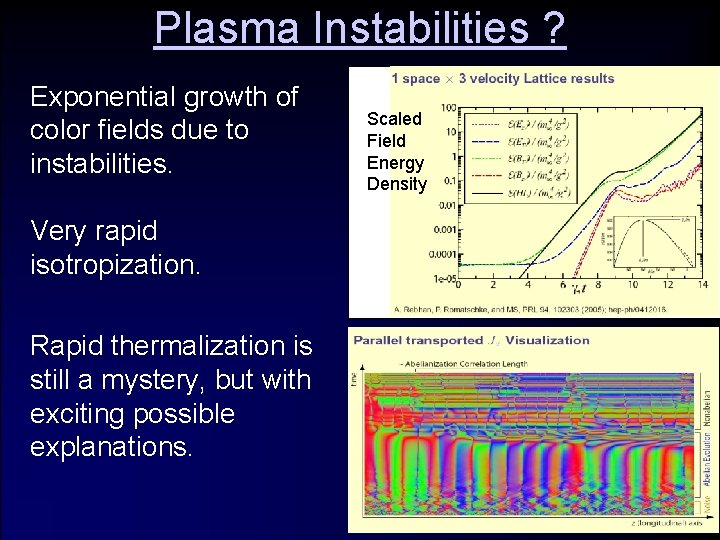
Plasma Instabilities ? Exponential growth of color fields due to instabilities. Very rapid isotropization. Rapid thermalization is still a mystery, but with exciting possible explanations. Scaled Field Energy Density
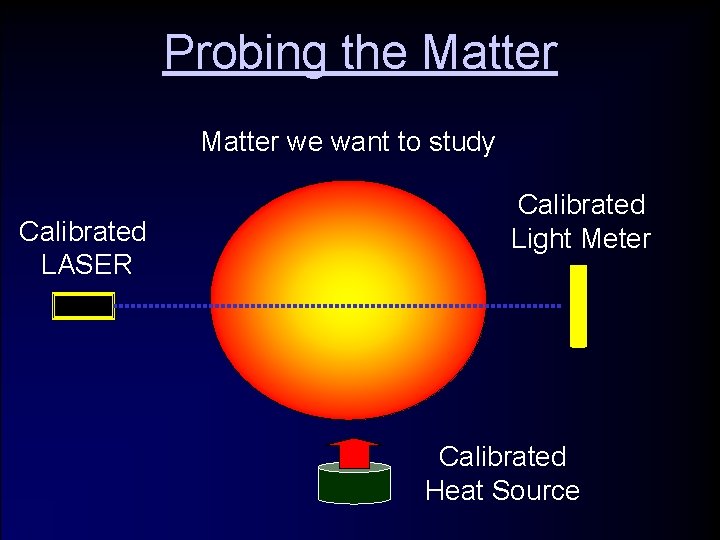
Probing the Matter we want to study Calibrated LASER Calibrated Light Meter Calibrated Heat Source
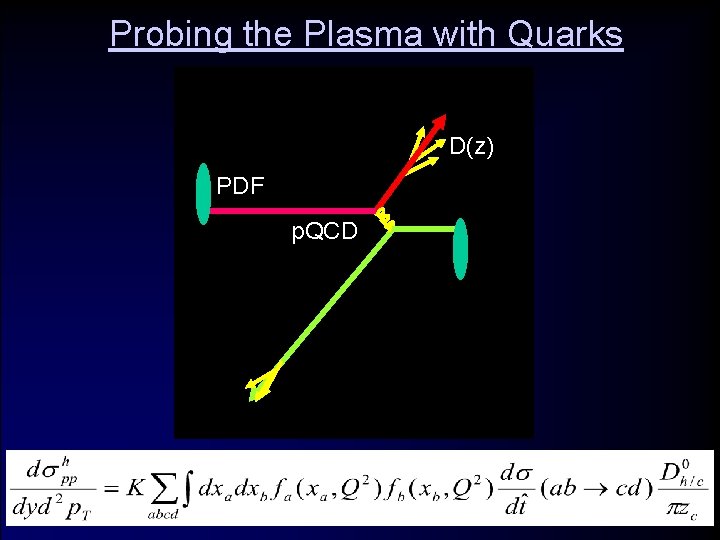
Probing the Plasma with Quarks D(z) PDF p. QCD
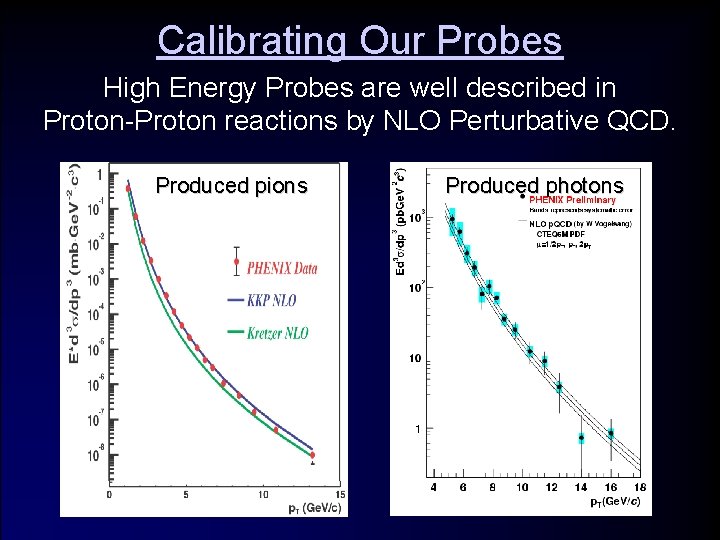
Calibrating Our Probes High Energy Probes are well described in Proton-Proton reactions by NLO Perturbative QCD. Produced pions Produced photons
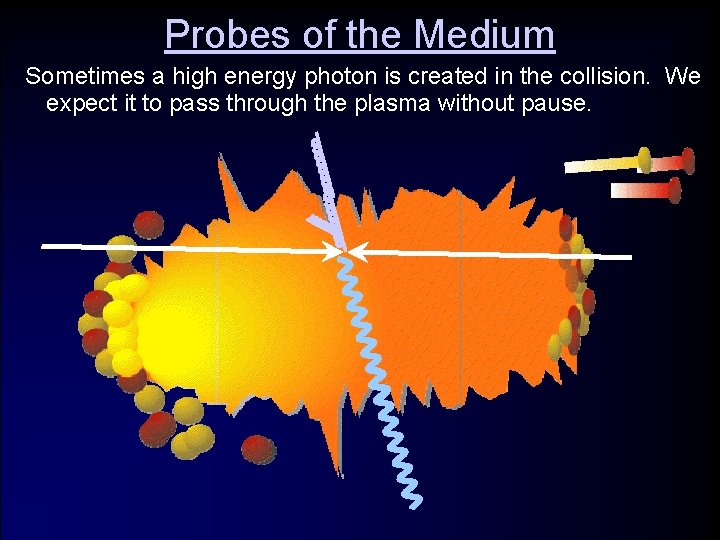
Probes of the Medium Sometimes a high energy photon is created in the collision. We expect it to pass through the plasma without pause.
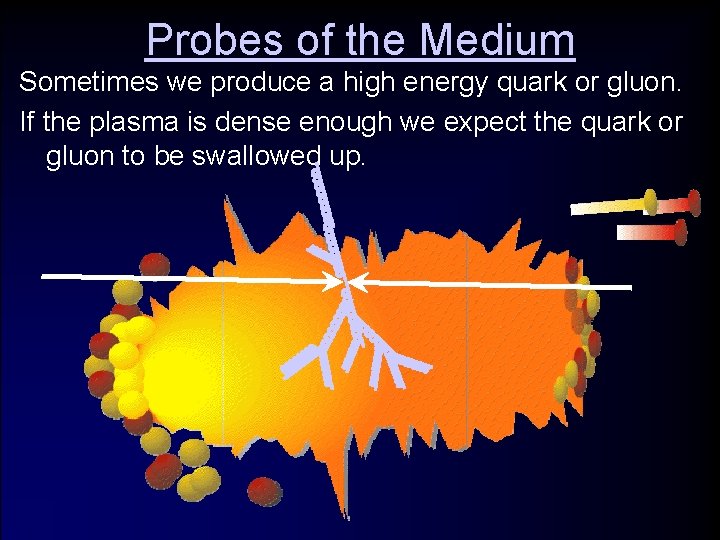
Probes of the Medium Sometimes we produce a high energy quark or gluon. If the plasma is dense enough we expect the quark or gluon to be swallowed up.
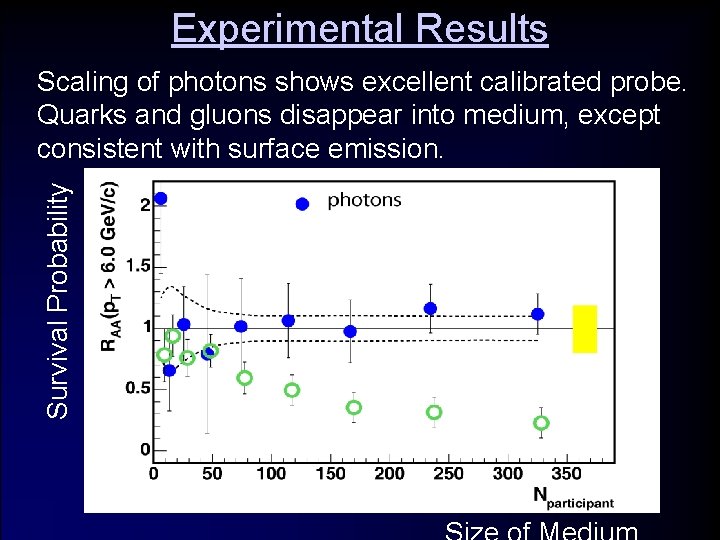
Experimental Results Survival Probability Scaling of photons shows excellent calibrated probe. Quarks and gluons disappear into medium, except consistent with surface emission. (from quark and gluon jets)
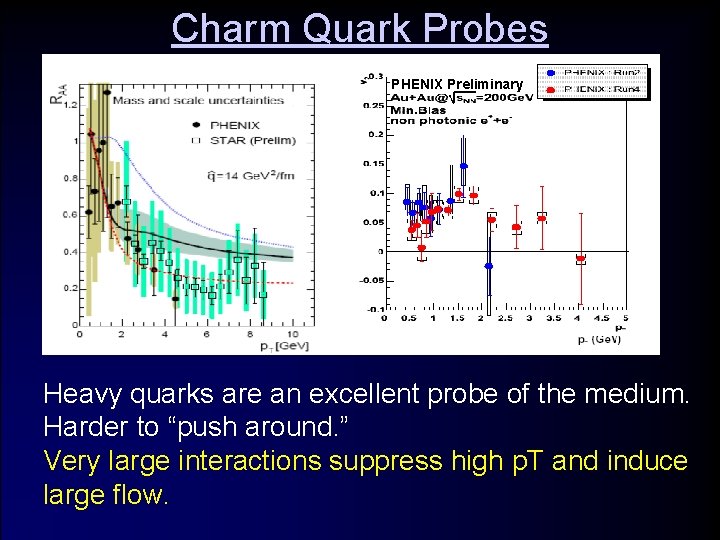
Charm Quark Probes Teaney and Moore PHENIX Preliminary Heavy quarks are an excellent probe of the medium. Harder to “push around. ” Very large interactions suppress high p. T and induce large flow.
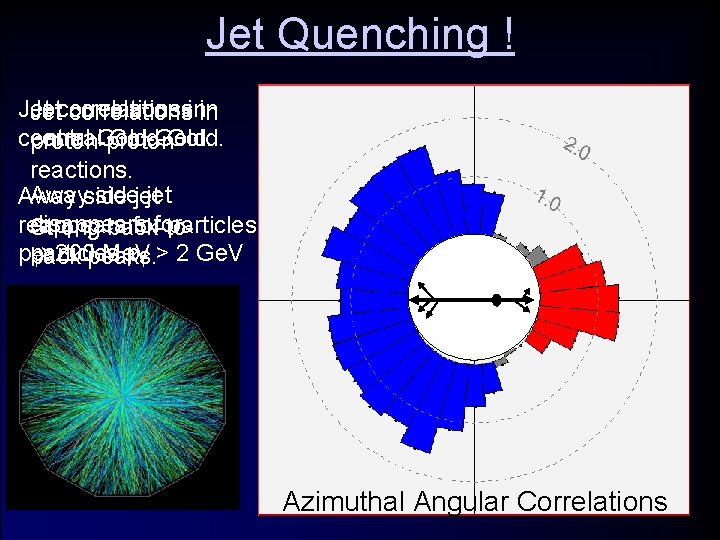
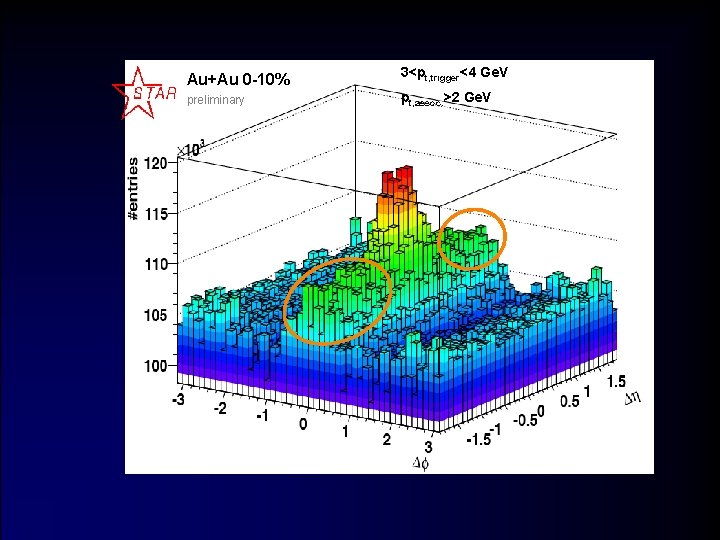
Jet Quenching ! Jetcorrelationsinin Jet central Gold-Gold. proton-proton reactions. Awaysidejet Away disappears reappears forfor particles Strong back-top. T > 2 Ge. V pparticles Me. V back peaks. T>200 Azimuthal Angular Correlations
Au+Au 0 -10% 3<pt, trigger<4 Ge. V preliminary pt, assoc. >2 Ge. V
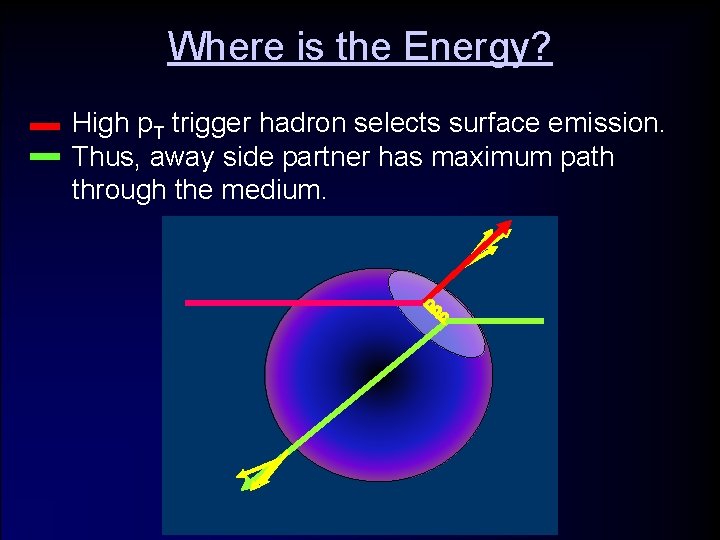
Where is the Energy? High p. T trigger hadron selects surface emission. Thus, away side partner has maximum path through the medium.
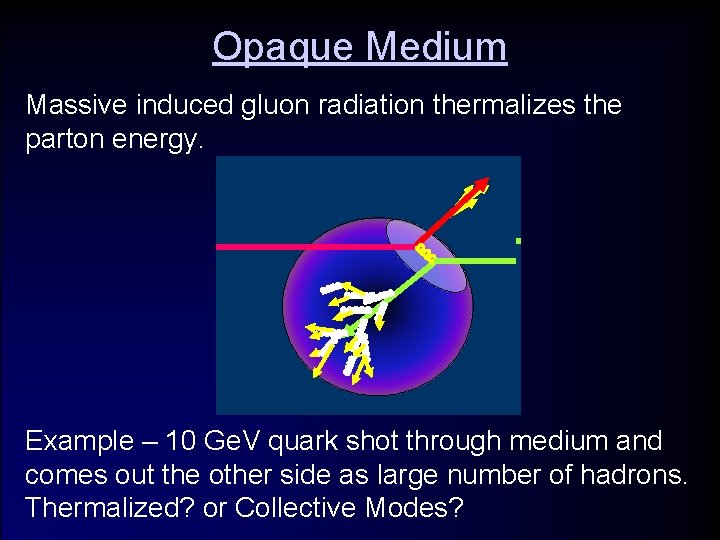
Opaque Medium Massive induced gluon radiation thermalizes the parton energy. Example – 10 Ge. V quark shot through medium and comes out the other side as large number of hadrons. Thermalized? or Collective Modes?
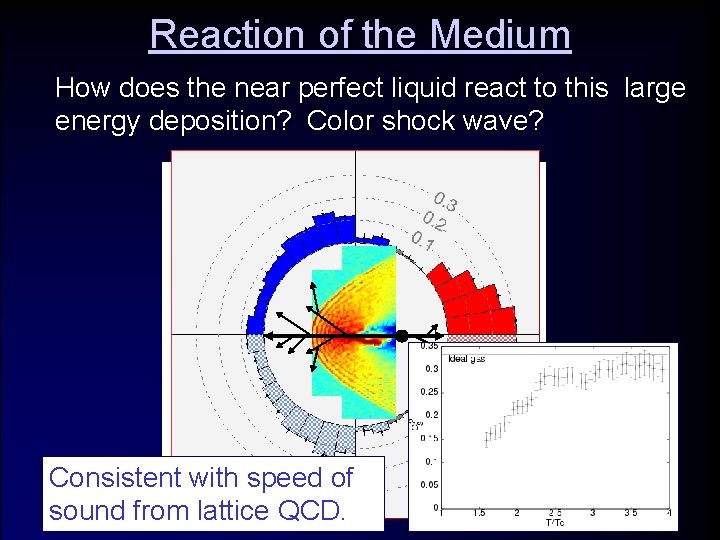
Reaction of the Medium How does the near perfect liquid react to this large energy deposition? Color shock wave? Consistent with speed of Mach Cone measures the speed of sound from lattice QCD.
Ad. S/CFT “The external quarks trails a string into the five-dimensional bulk, representing color fields sourced by the quark’s fundamental charge and interacting with thermal medium. ” Gubser et al. hep-ph/0607022 v 1
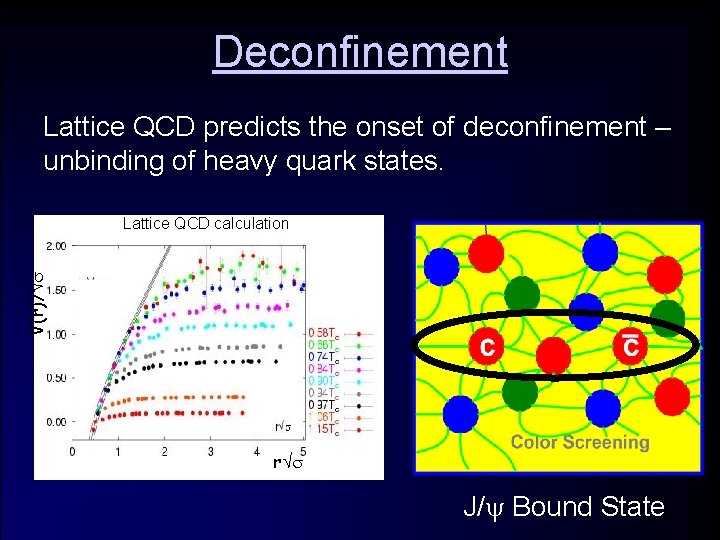
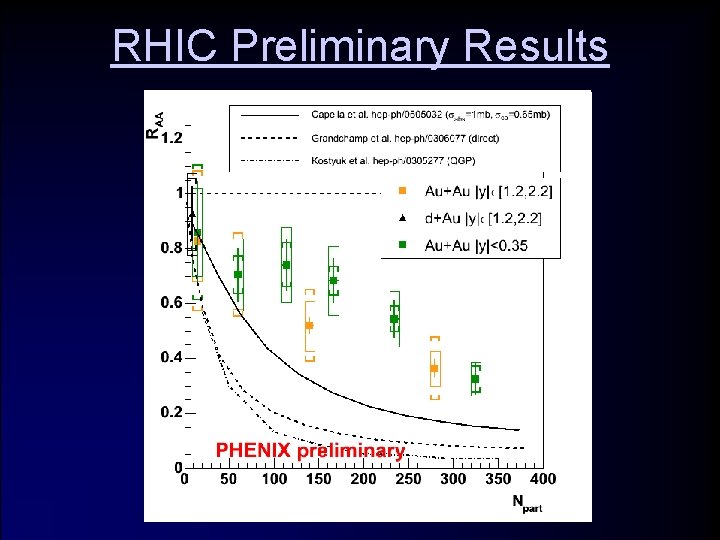
Deconfinement Lattice QCD predicts the onset of deconfinement – unbinding of heavy quark states. V(r)/ Lattice QCD calculation r J/y Bound State
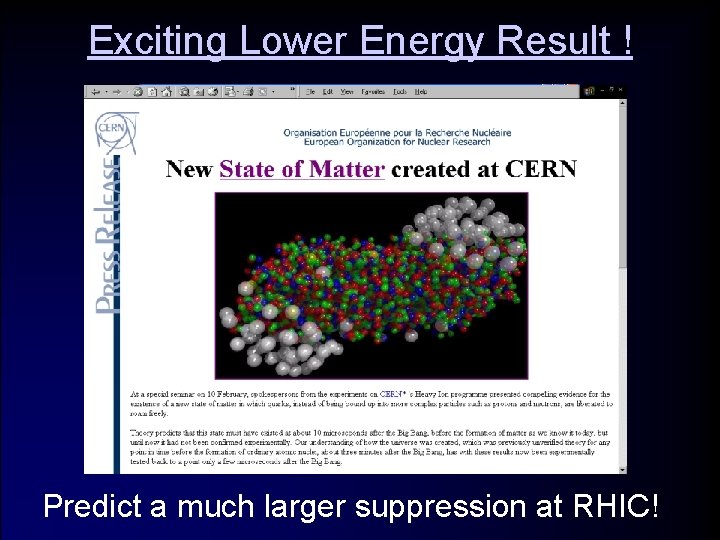
Exciting Lower Energy Result ! Predict a much larger suppression at RHIC!
Suppression RHIC Preliminary Results
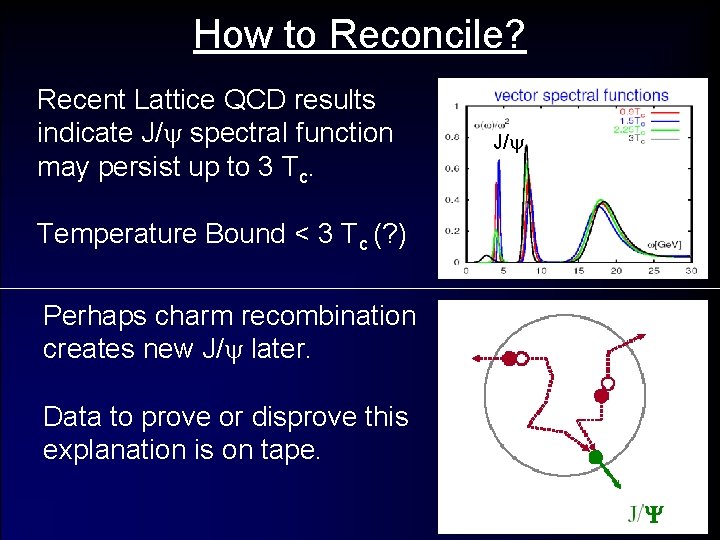
How to Reconcile? Recent Lattice QCD results indicate J/y spectral function may persist up to 3 Tc. Temperature Bound < 3 Tc (? ) Perhaps charm recombination creates new J/y later. Data to prove or disprove this explanation is on tape. J/y
Conclusions RHIC program is operating very successfully. Gluon density well above lattice QCD predicted transition level and behaving as a near perfect fluid. This is the creation of a color opaque, low viscosity nuclear matter (currently best described as the Quark Gluon Plasma). Much more to come from upgrades at RHIC and soon from LHC program (ALICE, ATLAS, CMS).