
New optics for XPert PRO The hybrid monochromator
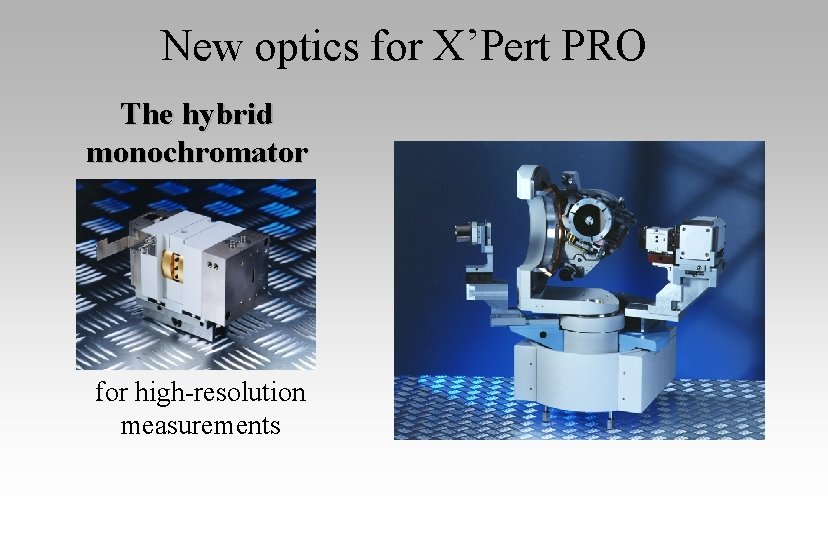
New optics for X’Pert PRO The hybrid monochromator for high-resolution measurements
Contents • What is a hybrid monochromator? • For which applications can it be used? • What is the advantage in the analysis of epitaxial layers?
What is a hybrid monochromator? • A combination of an X-ray mirror and a channel-cut Germanium crystal • Only Cu K 1 is transmitted • The combination gives a high-intensity, parallel, monochromatic X-ray beam • Two varieties: – two bounces in the monochromator – four bounces in the monochromator
For which applications? • Two-bounce type: – Phase analysis on rough samples with complex patterns – Samples in glass capillaries • Four-bounce type: – Measurement of rocking curves and reciprocal space maps
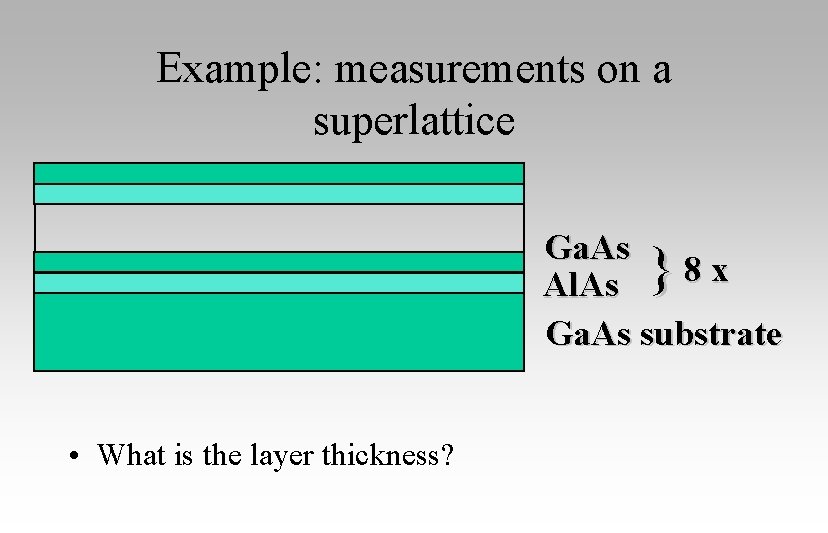
Example: measurements on a superlattice • What is a superlattice? Ga. As Al. As } 8 x Ga. As substrate • What is the layer thickness?
Which instrument? X’Pert PRO MRD: • Standard MRD • Extended MRD
Standard X’Pert PRO MRD • Tube focus: point – Ge(440) monochromator – Ge(220) monochromator • Tube focus: line – four-bounce hybrid monochromator
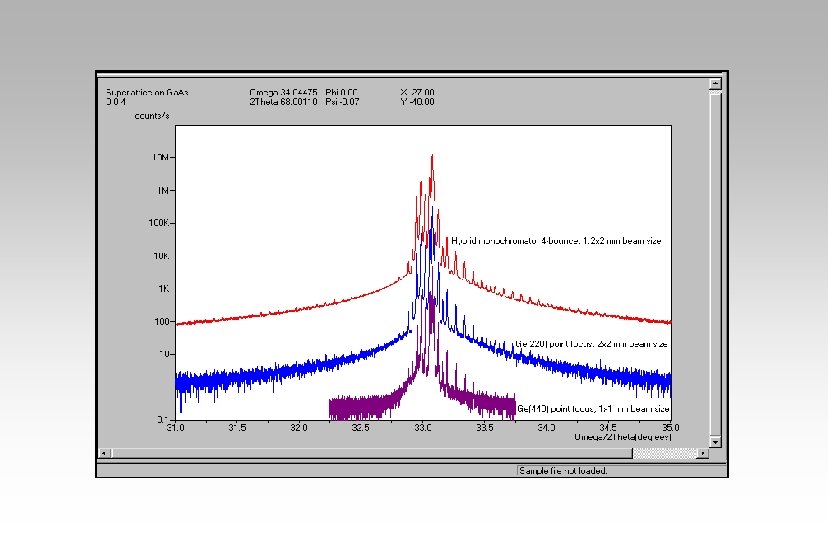
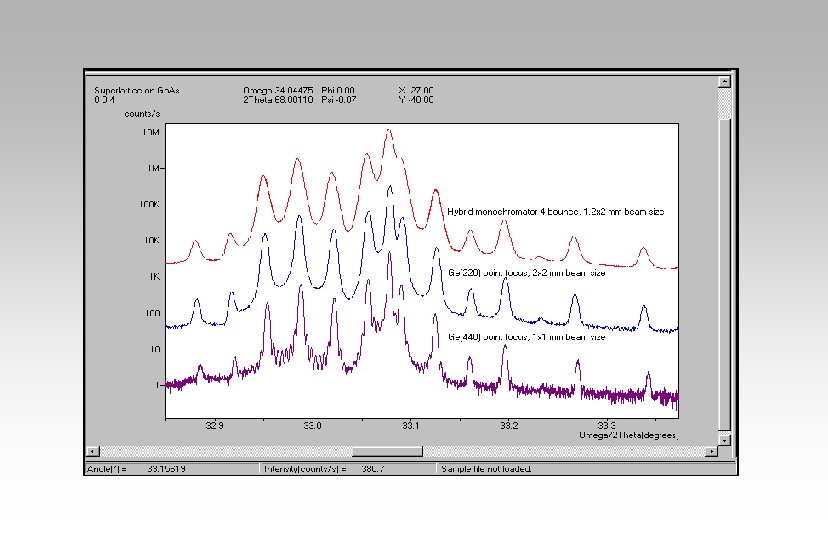
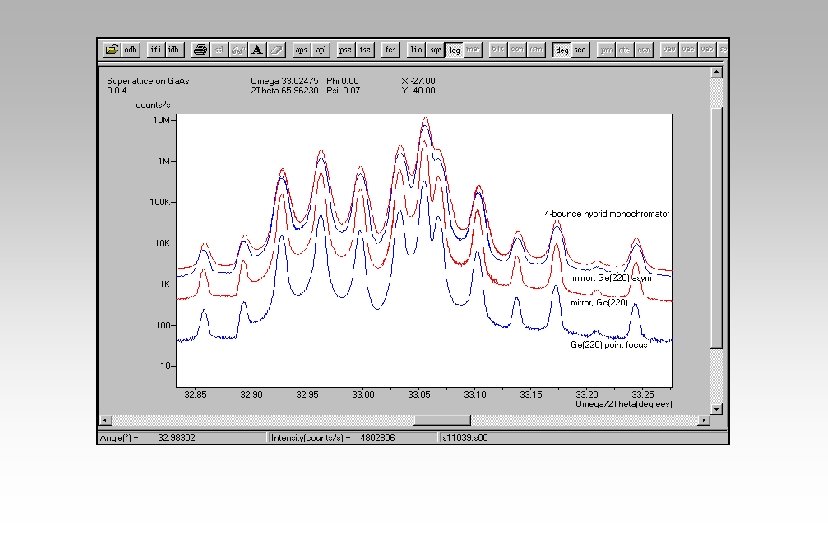
Normal MRD: conclusions • Features of the hybrid monochromator – Intensity increase: • > 30 compared with Ge(220) point focus • > 10 compared with Ge(220) asymm. – Fast, compact tool for reciprocal space maps and rocking curves • How can this be compared with Extended MRD?
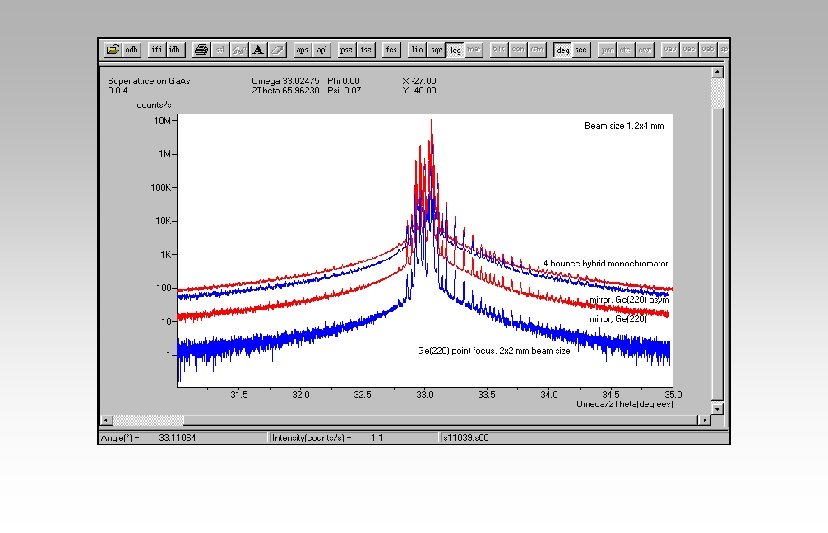
Extended MRD • Mirror with Ge(220) and Ge(220) asymmetrically channel-cut monochromator • Compare with four-bounce hybrid monochromator • and with Ge(220) point focus
Conclusions (1)
Conclusions (2) • The four-bounce hybrid monochromator is an excellent tool for fast measurements of rocking curves and reciprocal space maps • It can best be used when high intensity is required in combination with moderate resolution • When ultra-high resolution is required, it is easy to change to a four-crystal monochromator
- Slides: 15