
NEW OFFSET CALIBRATION ALGORITHM FLORIAN LTTICKE UNIVERSITT BONN
NEW OFFSET CALIBRATION ALGORITHM FLORIAN LÜTTICKE UNIVERSITÄT BONN, PHYSIKALISCHES INSTITUT, NUßALLE 12 luetticke@physik. uni-bonn. de 1
OFFSET ALGORITHM − Task: Compress Pedestal using 2 bit current source. Reach small distribution − Settings: − 2 bit setting for each pixel. Can add 0, I 0, 2 I 0, 3 I 0 − p. DAC: Defines strength of 2 bit setting I 0 − Sub. In: Global subtraction to all pedestals − Pedestal Imeas=Iped – ISub. In + N*I 0 luetticke@physik. uni. bonn. de 2
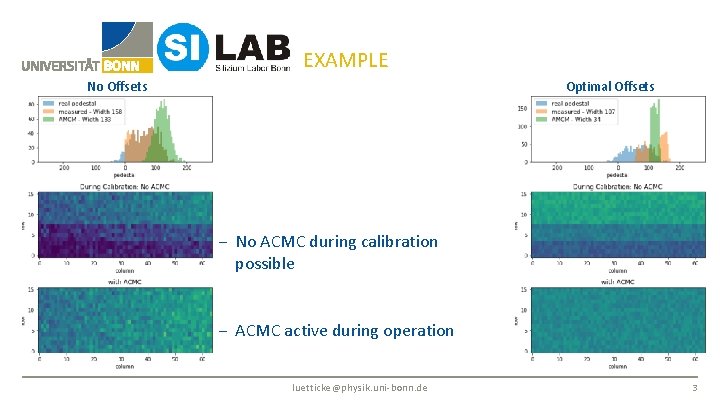
EXAMPLE No Offsets Optimal Offsets − No ACMC during calibration possible − ACMC active during operation luetticke@physik. uni-bonn. de 3
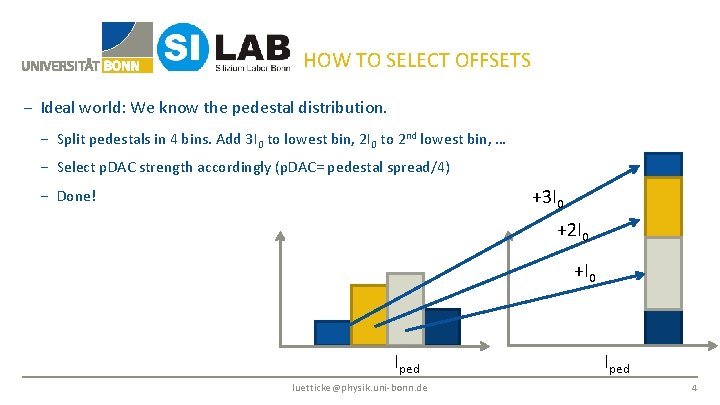
HOW TO SELECT OFFSETS − Ideal world: We know the pedestal distribution. − Split pedestals in 4 bins. Add 3 I 0 to lowest bin, 2 I 0 to 2 nd lowest bin, … − Select p. DAC strength accordingly (p. DAC= pedestal spread/4) +3 I 0 − Done! +2 I 0 +I 0 Iped luetticke@physik. uni-bonn. de Iped 4
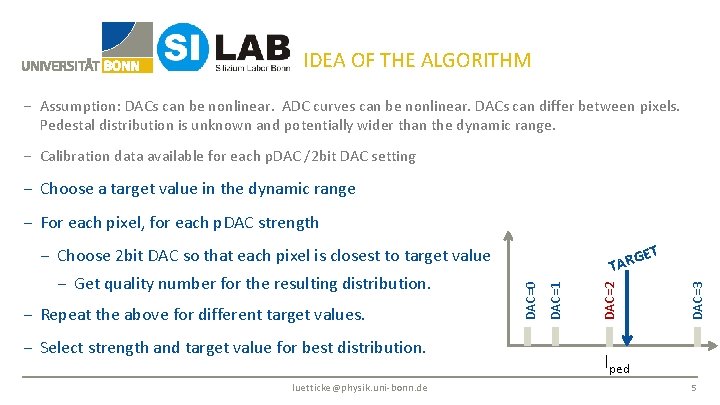
IDEA OF THE ALGORITHM − Assumption: DACs can be nonlinear. ADC curves can be nonlinear. DACs can differ between pixels. Pedestal distribution is unknown and potentially wider than the dynamic range. − Calibration data available for each p. DAC /2 bit DAC setting − Choose a target value in the dynamic range − For each pixel, for each p. DAC strength − Select strength and target value for best distribution. luetticke@physik. uni-bonn. de ET DAC=3 DAC=2 DAC=1 − Repeat the above for different target values. G TAR DAC=0 − Choose 2 bit DAC so that each pixel is closest to target value − Get quality number for the resulting distribution. Iped 5
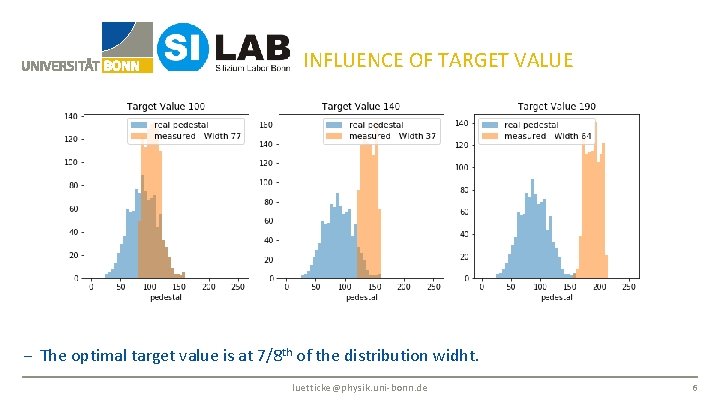
INFLUENCE OF TARGET VALUE − The optimal target value is at 7/8 th of the distribution widht. luetticke@physik. uni-bonn. de 6
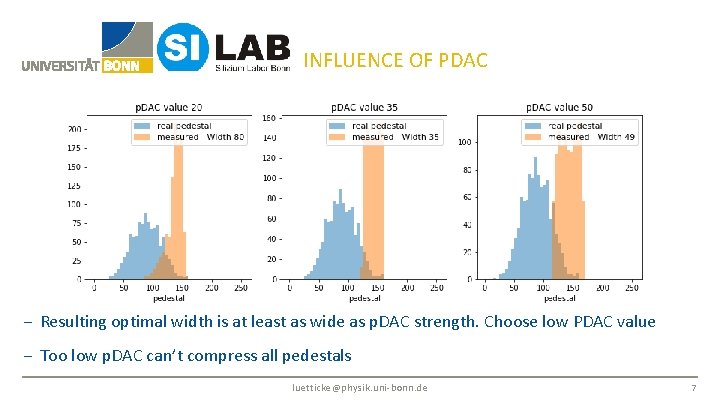
INFLUENCE OF PDAC − Resulting optimal width is at least as wide as p. DAC strength. Choose low PDAC value − Too low p. DAC can’t compress all pedestals luetticke@physik. uni-bonn. de 7
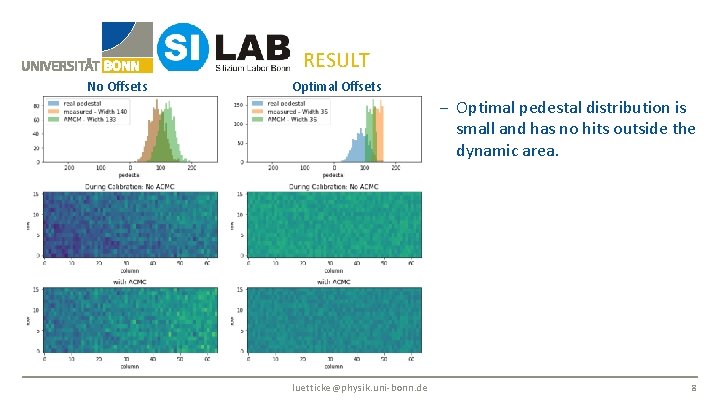
RESULT No Offsets Optimal Offsets − Optimal pedestal distribution is small and has no hits outside the dynamic area. luetticke@physik. uni-bonn. de 8
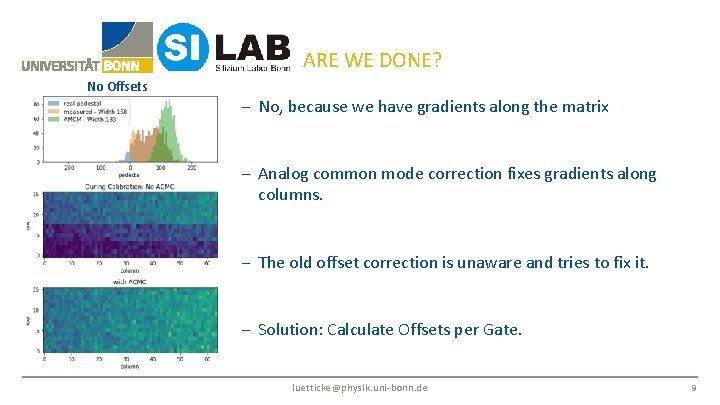
ARE WE DONE? No Offsets − No, because we have gradients along the matrix − Analog common mode correction fixes gradients along columns. − The old offset correction is unaware and tries to fix it. − Solution: Calculate Offsets per Gate. luetticke@physik. uni-bonn. de 9
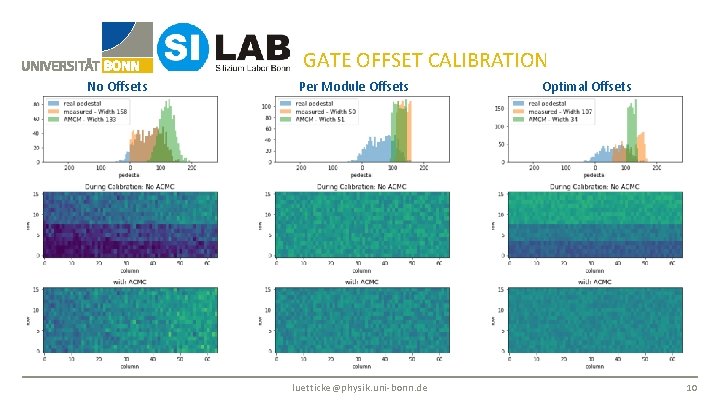
GATE OFFSET CALIBRATION No Offsets Per Module Offsets luetticke@physik. uni-bonn. de Optimal Offsets 10
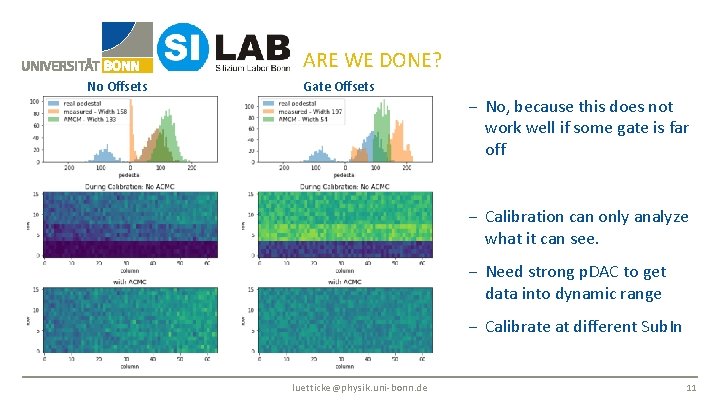
ARE WE DONE? No Offsets Gate Offsets − No, because this does not work well if some gate is far off − Calibration can only analyze what it can see. − Need strong p. DAC to get data into dynamic range − Calibrate at different Sub. In luetticke@physik. uni-bonn. de 11
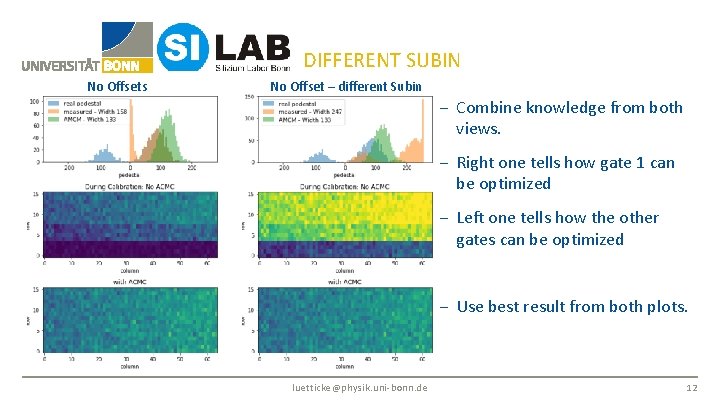
DIFFERENT SUBIN No Offsets No Offset – different Subin − Combine knowledge from both views. − Right one tells how gate 1 can be optimized − Left one tells how the other gates can be optimized − Use best result from both plots. luetticke@physik. uni-bonn. de 12
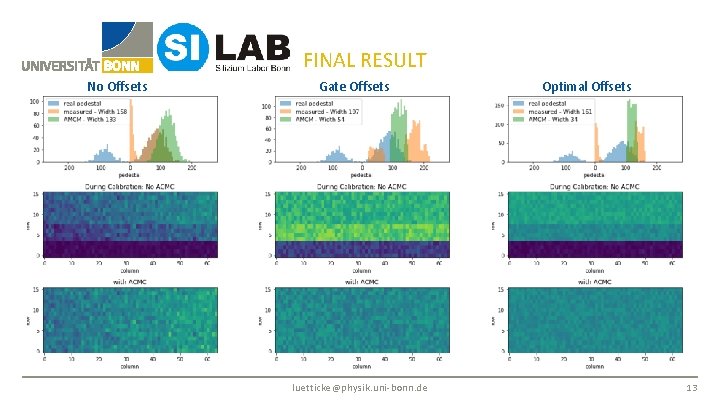
FINAL RESULT No Offsets Gate Offsets luetticke@physik. uni-bonn. de Optimal Offsets 13
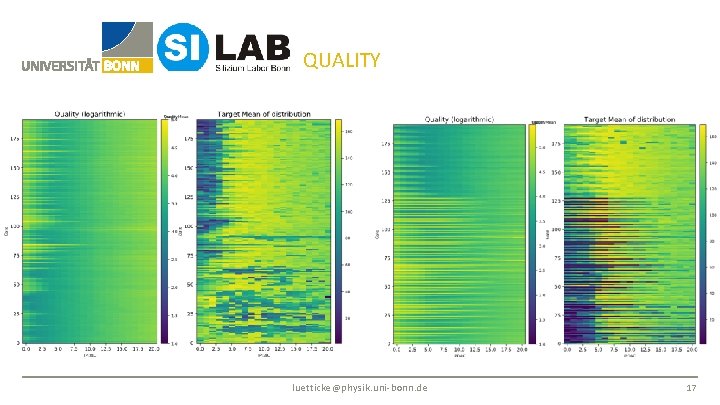
PEDESTAL QUALITY − Pedestal spread should be small. − Pedestal outside the dynamic range can have any value. Penalty given for each bad pedestal. − For per gate calibration: Take quality for each gate − Add? <- Not optimal − Optimize worst gate? <- Not working if we have one bad gate − Optimize N worst gates <- way to go luetticke@physik. uni-bonn. de 14
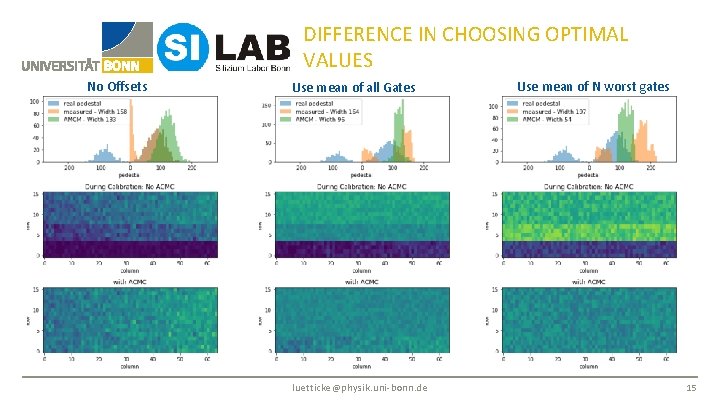
DIFFERENCE IN CHOOSING OPTIMAL VALUES No Offsets Use mean of all Gates luetticke@physik. uni-bonn. de Use mean of N worst gates 15
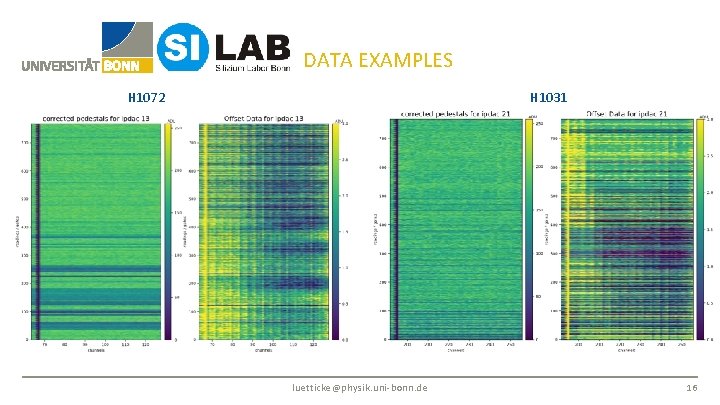
DATA EXAMPLES H 1072 H 1031 luetticke@physik. uni-bonn. de 16
QUALITY luetticke@physik. uni-bonn. de 17
− New Offset calibration algorithm developed − New Offset calibration needs changing Sub. In. Longer data taking (3 -5 x longer) − It only improves the situation when some gates are very different. luetticke@physik. uni-bonn. de 18
- Slides: 18