
New Molecular Abnormalities Recognized in AML Elli Papaemmanuil
New Molecular Abnormalities Recognized in AML Elli Papaemmanuil, Ph. D Associate Director Center of Hematological Malignancies Computational Oncology Service Department of Epidemiology and Biostatistics Memorial Sloan Kettering Cancer Center New York, New York
Use of these Slides • Learners are welcome to use and share these slides in full or in part for educational purposes in noncommercial discussions with colleagues or patients. • The materials presented may discuss uses and dosages for therapeutic products that have not been approved by the United States Food and Drug Administration. Readers should verify all information and data before treating patients or using any therapies described in these materials. • The materials published reflect the views of the authors and not those of Medi. Com Worldwide, Inc. or the companies providing educational grant support. • These slides may not be published, posted online, or used in commercial presentations. Content presented live on 6/3/17
Today’s Talk • Cancer genome introduction • AML diagnosis and clinical challenges • The genomic landscape of AML • Translating recent cancer genome discoveries
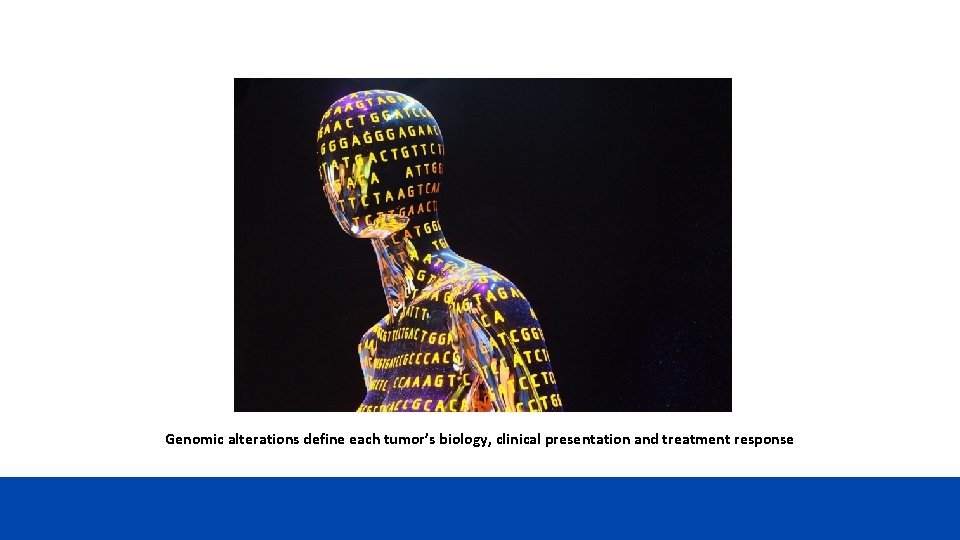
Genomic alterations define each tumor’s biology, clinical presentation and treatment response
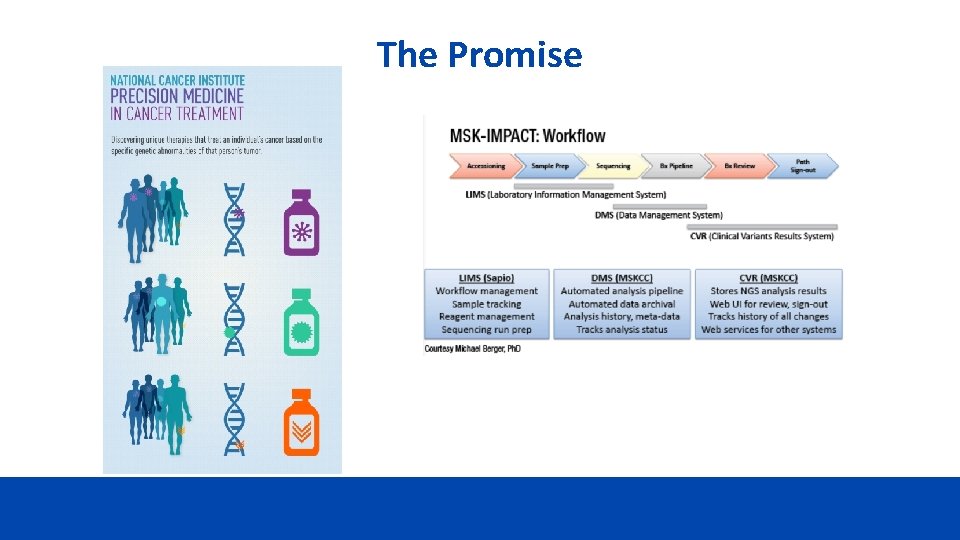
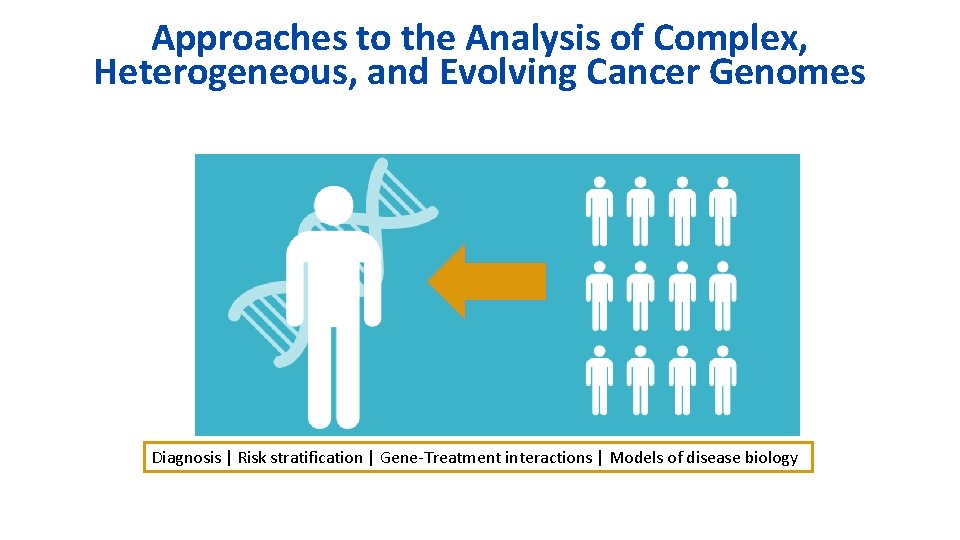
The Promise Translating recent cancer genomic findings to: Understand disease biology Inform clinical practice
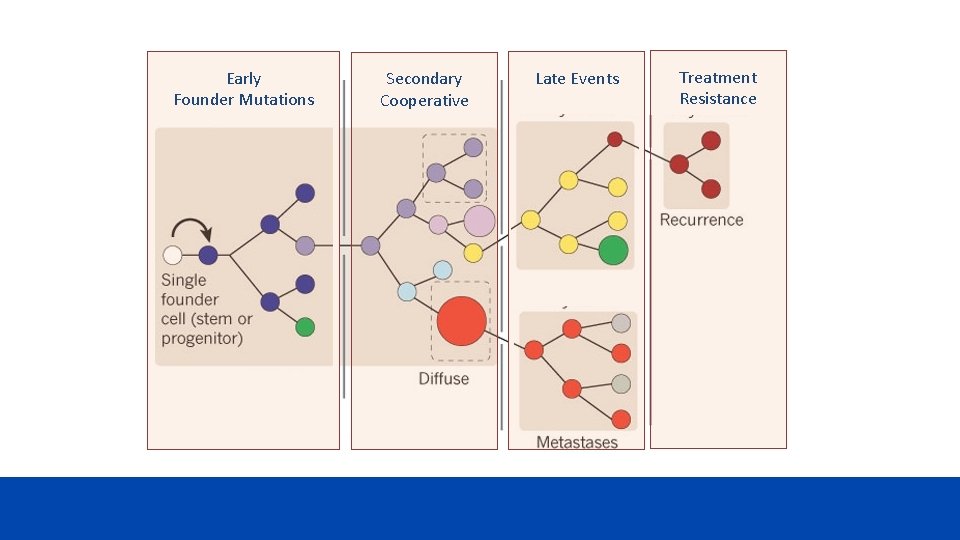
Early Founder Mutations Secondary Cooperative Late Events Treatment Resistance
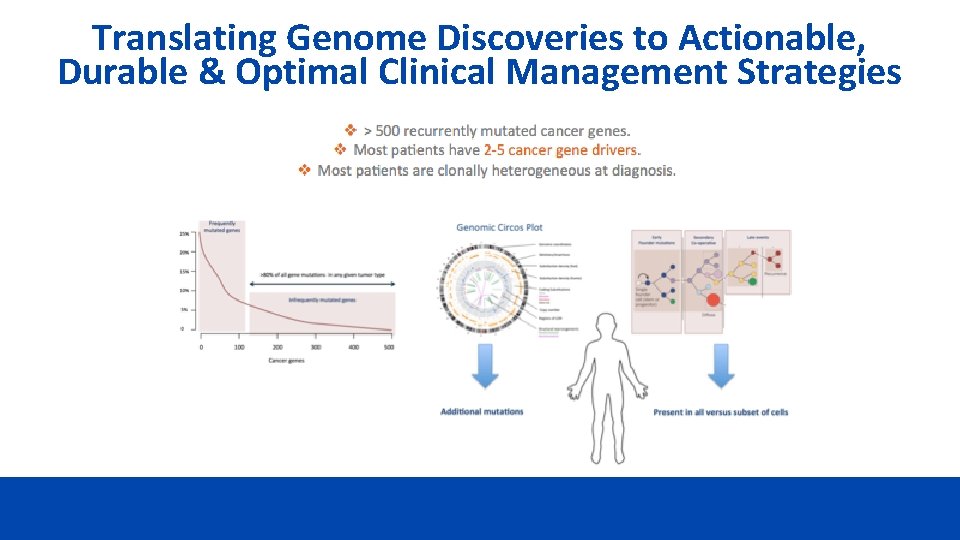
Translating Genome Discoveries to Actionable, Durable & Optimal Clinical Management Strategies
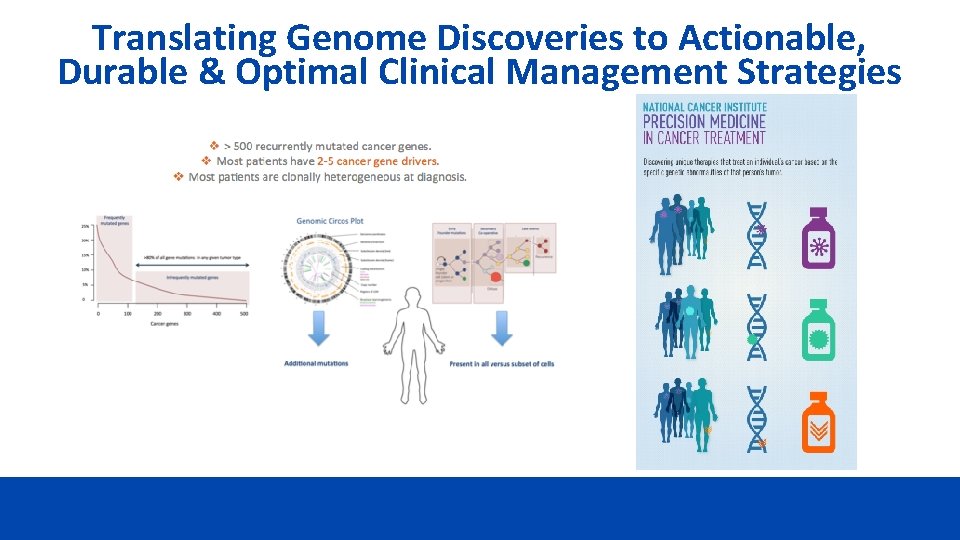
Translating Genome Discoveries to Actionable, Durable & Optimal Clinical Management Strategies
Today’s Talk • Cancer genome introduction • AML diagnosis and clinical challenges • The genomic landscape of AML • Translating recent cancer genome discoveries
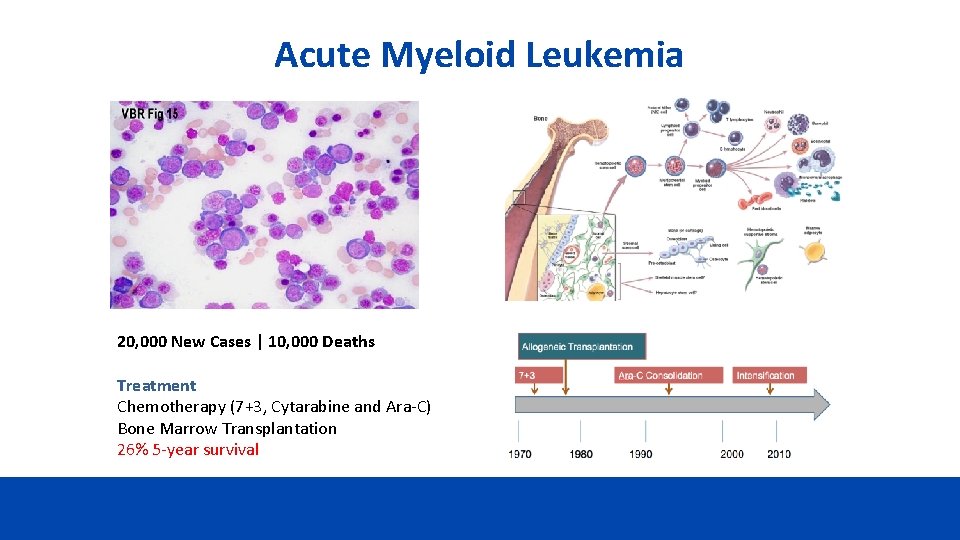
Acute Myeloid Leukemia 20, 000 New Cases | 10, 000 Deaths Treatment Chemotherapy (7+3, Cytarabine and Ara-C) Bone Marrow Transplantation 26% 5 -year survival
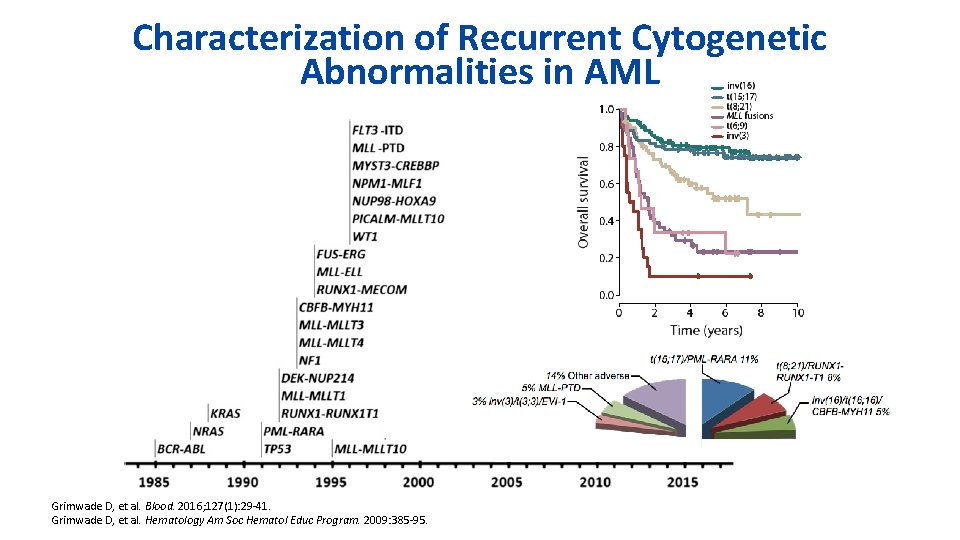
Characterization of Recurrent Cytogenetic Abnormalities in AML Grimwade D, et al. Blood. 2016; 127(1): 29 -41. Grimwade D, et al. Hematology Am Soc Hematol Educ Program. 2009: 385 -95.
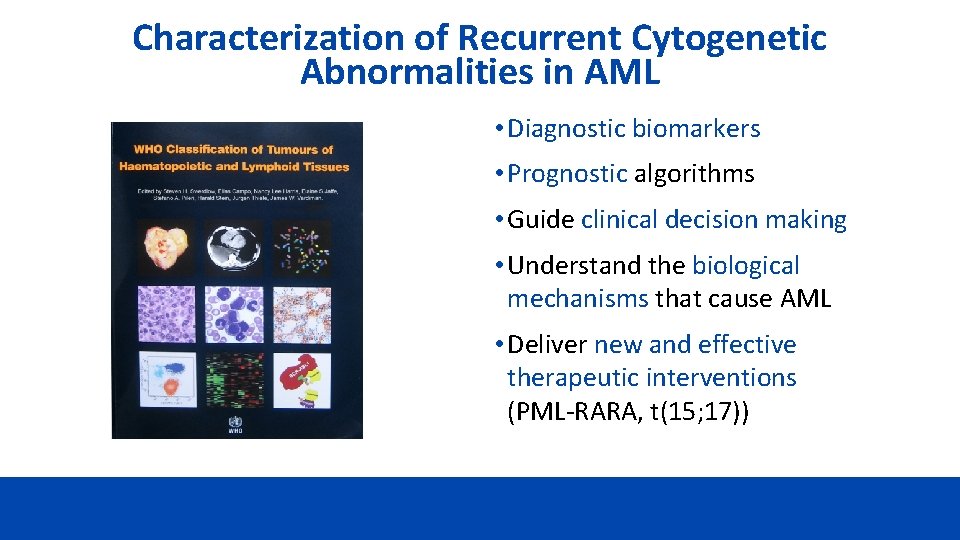
Characterization of Recurrent Cytogenetic Abnormalities in AML • Diagnostic biomarkers • Prognostic algorithms • Guide clinical decision making • Understand the biological mechanisms that cause AML • Deliver new and effective therapeutic interventions (PML-RARA, t(15; 17))
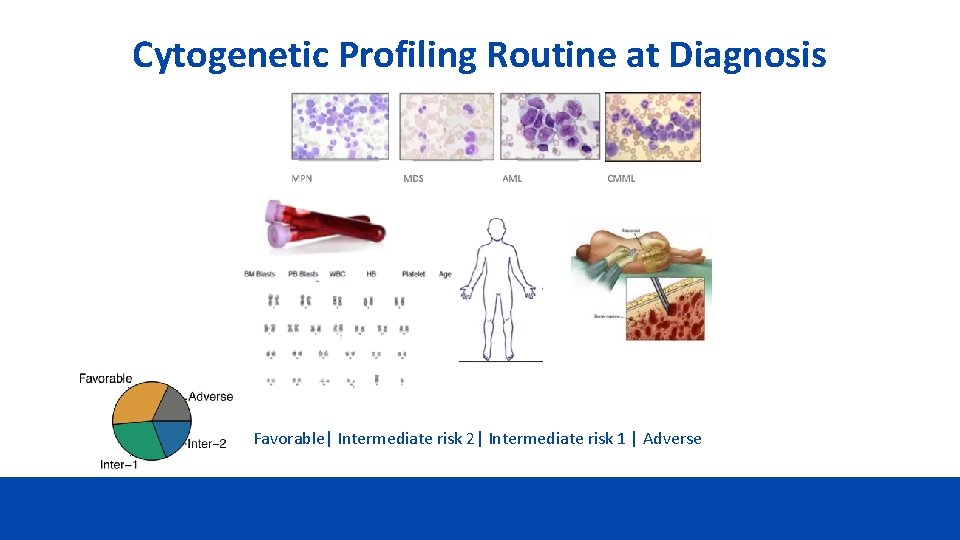
Cytogenetic Profiling Routine at Diagnosis Favorable| Intermediate risk 2| Intermediate risk 1 | Adverse
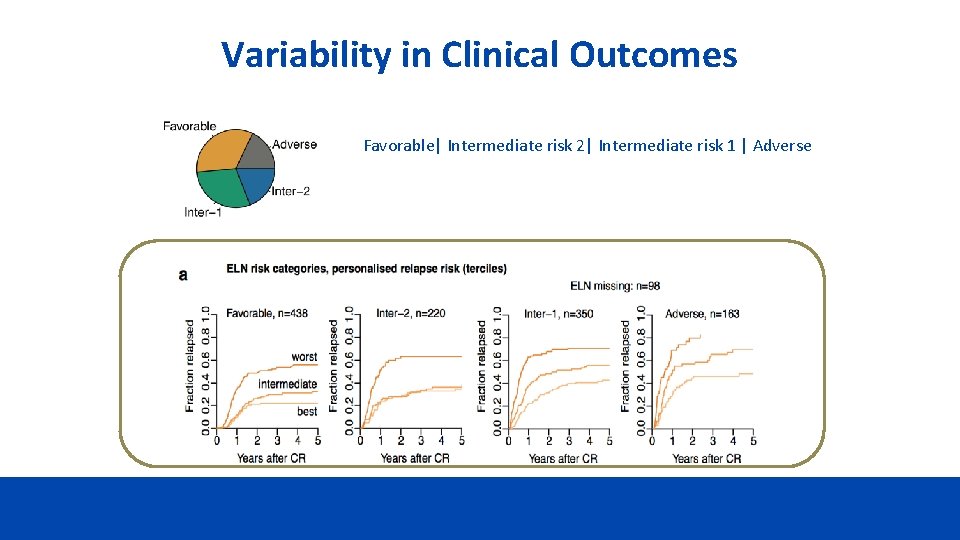
Variability in Clinical Outcomes Favorable| Intermediate risk 2| Intermediate risk 1 | Adverse
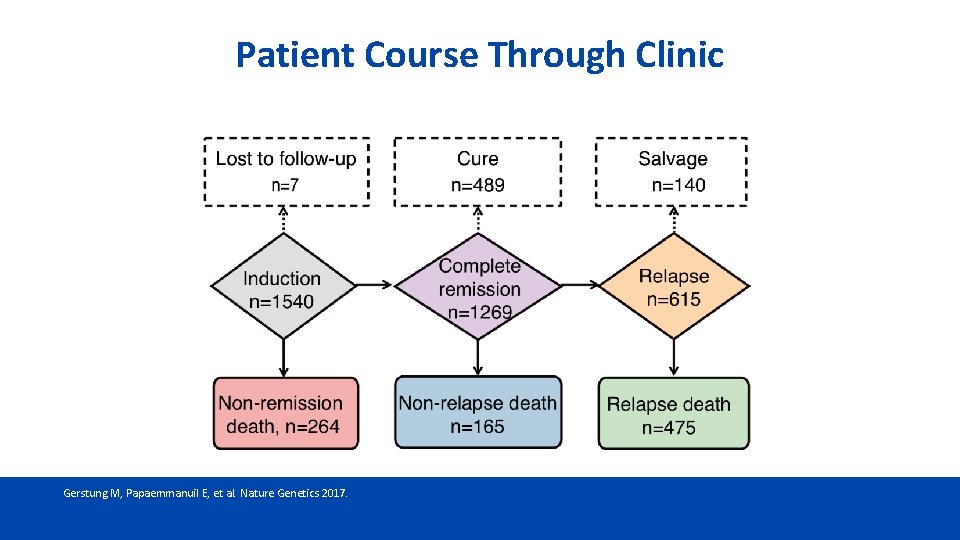
Patient Course Through Clinic Gerstung M, Papaemmanuil E, et al. Nature Genetics 2017.
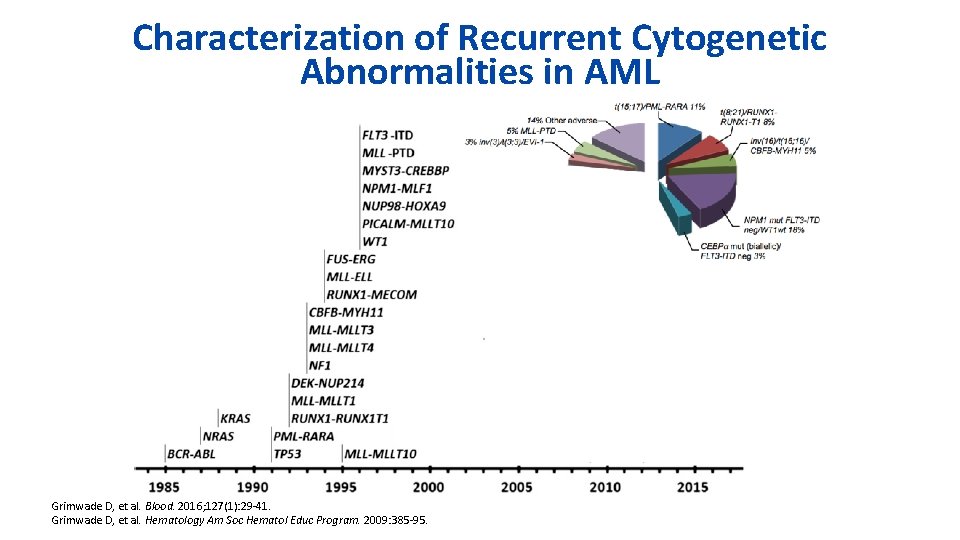
Characterization of Recurrent Cytogenetic Abnormalities in AML Grimwade D, et al. Blood. 2016; 127(1): 29 -41. Grimwade D, et al. Hematology Am Soc Hematol Educ Program. 2009: 385 -95.

The AML Genome 2013 TCGA 200 AML pts, median age: 55 yrs, only de novo AML; whole genome (n=50) and whole exome (n=150) sequencing The Cancer Genome Atlas (TCGA) Research Network. N Engl J Med. 2013; 368(22): 2059 -2074.
How Do We Incorporate Gene Mutations • >100 recurrently mutated genes • Many genes per patient • Diverse prognostic relationships
Today’s Talk • Cancer genome introduction • AML diagnosis and clinical challenges • The genomic landscape of AML • Translating recent cancer genome discoveries
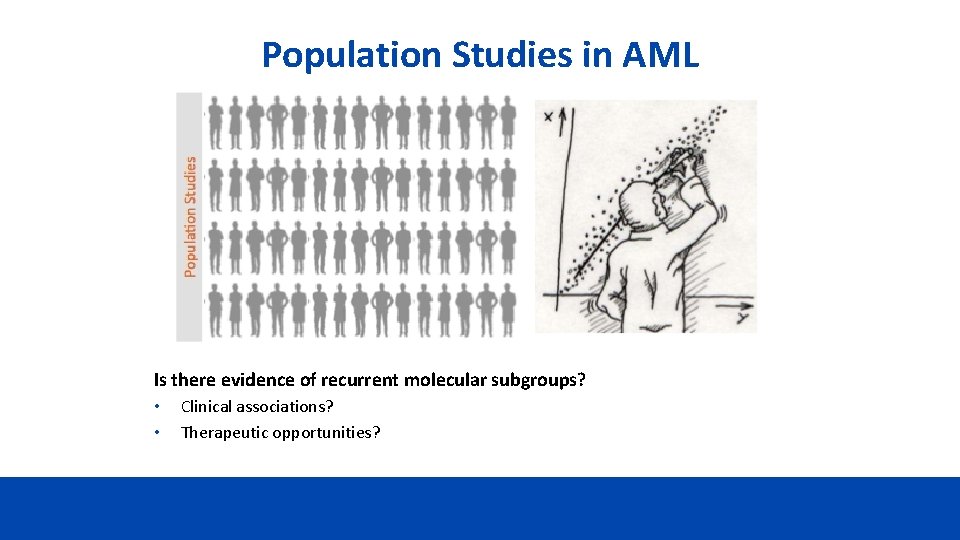
Population Studies in AML Is there evidence of recurrent molecular subgroups? • • Clinical associations? Therapeutic opportunities?
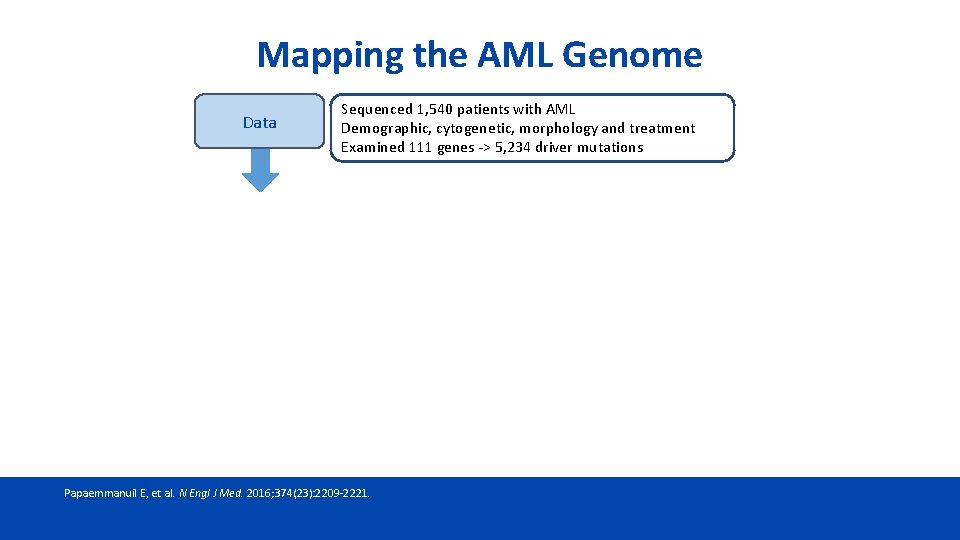
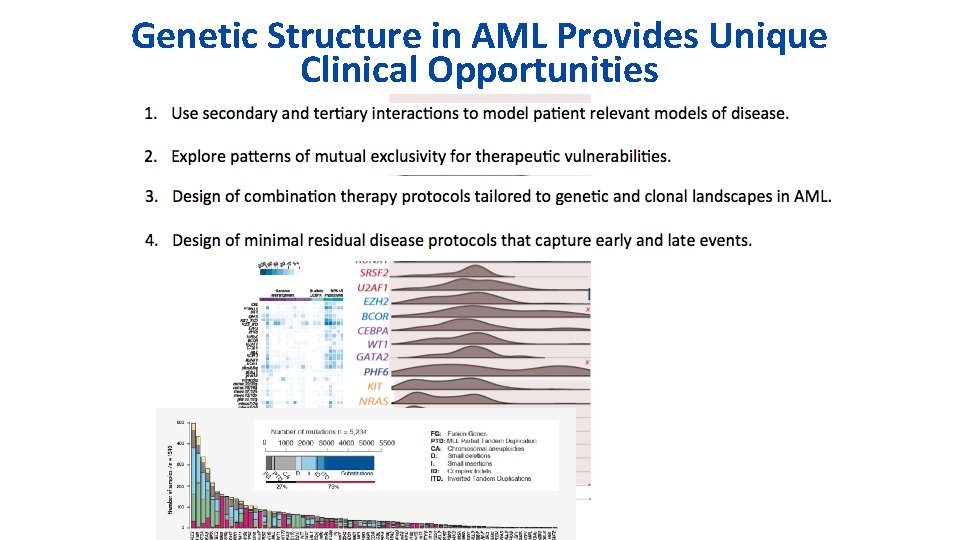
Mapping the AML Genome Extend molecular classification in AML by considering gene mutations Data Durable Reproducible Clinically Relevant Sequenced 1, 540 patients with AML Demographic, cytogenetic, morphology and treatment Examined 111 genes -> 5, 234 driver mutations Unsupervised de-novo classification of AML Consideration of extended molecular structure to include patterns of co-mutation and mutual exclusivity Validated in TCGA AML database and AML MRC trial (n=2, 923, unpublished data ) Combined genomic-based categories and overall survival data to evaluate risk for the new subcategories Papaemmanuil E, et al. N Engl J Med. 2016; 374(23): 2209 -2221.
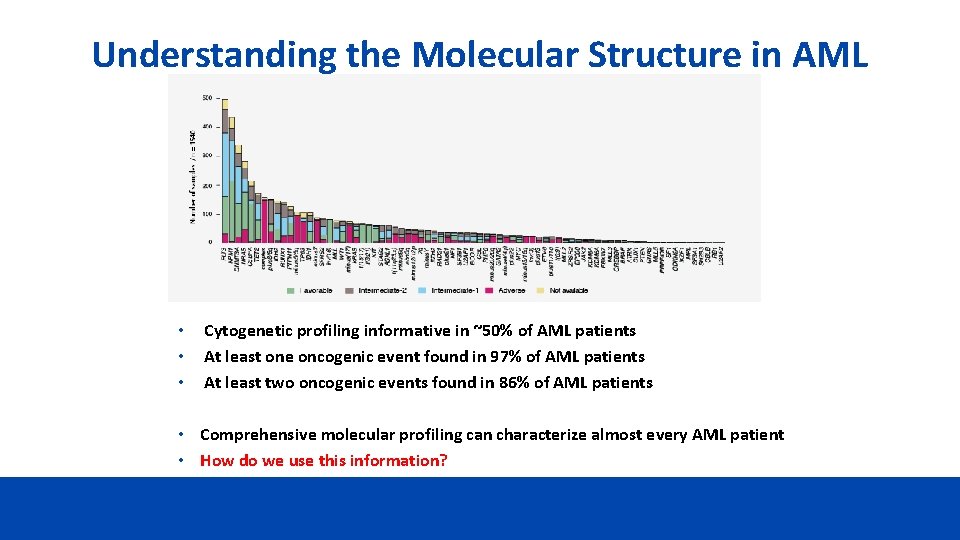
Understanding the Molecular Structure in AML • • • Cytogenetic profiling informative in ~50% of AML patients At least one oncogenic event found in 97% of AML patients At least two oncogenic events found in 86% of AML patients • Comprehensive molecular profiling can characterize almost every AML patient • How do we use this information?
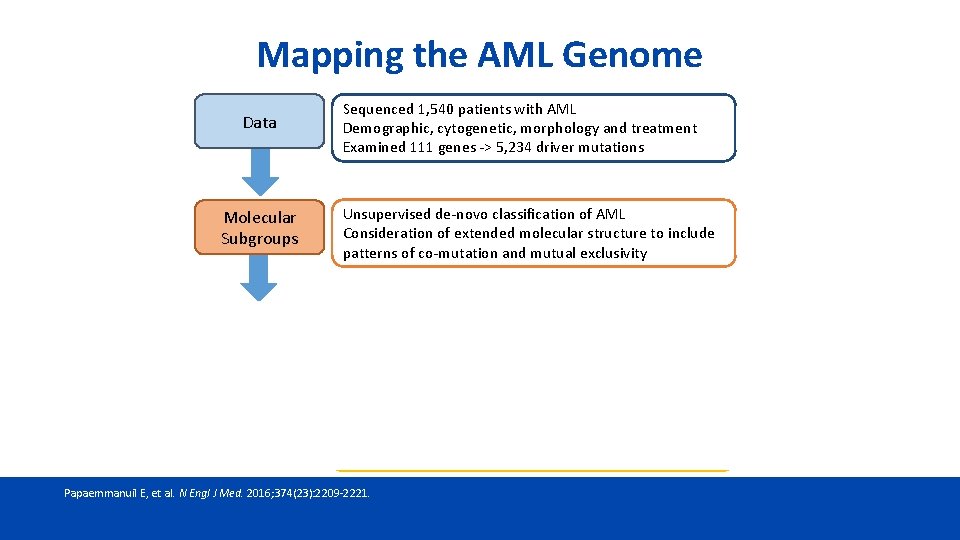
Mapping the AML Genome Data Sequenced 1, 540 patients with AML Demographic, cytogenetic, morphology and treatment Examined 111 genes -> 5, 234 driver mutations Molecular Subgroups Unsupervised de-novo classification of AML Consideration of extended molecular structure to include patterns of co-mutation and mutual exclusivity Validation Validated in TCGA AML database and AML MRC trial (n=2, 923, unpublished data ) Clinical Relevance Combined genomic-based categories and overall survival data to evaluate risk for the new subcategories Papaemmanuil E, et al. N Engl J Med. 2016; 374(23): 2209 -2221.
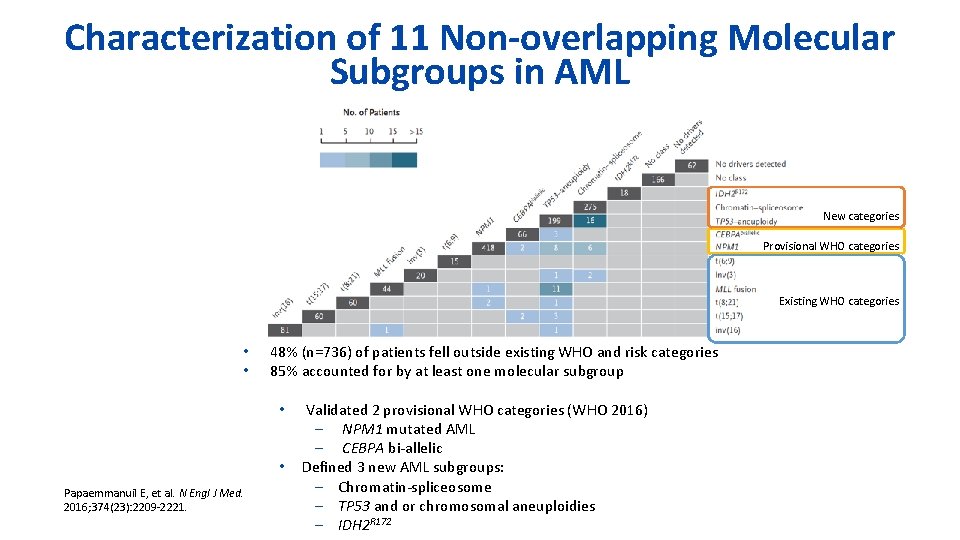
x Characterization of 11 Non-overlapping Molecular Subgroups in AML New categories Provisional WHO categories Existing WHO categories • • 48% (n=736) of patients fell outside existing WHO and risk categories 85% accounted for by at least one molecular subgroup • • Papaemmanuil E, et al. N Engl J Med. 2016; 374(23): 2209 -2221. Validated 2 provisional WHO categories (WHO 2016) ‒ NPM 1 mutated AML ‒ CEBPA bi-allelic Defined 3 new AML subgroups: ‒ Chromatin-spliceosome ‒ TP 53 and or chromosomal aneuploidies ‒ IDH 2 R 172
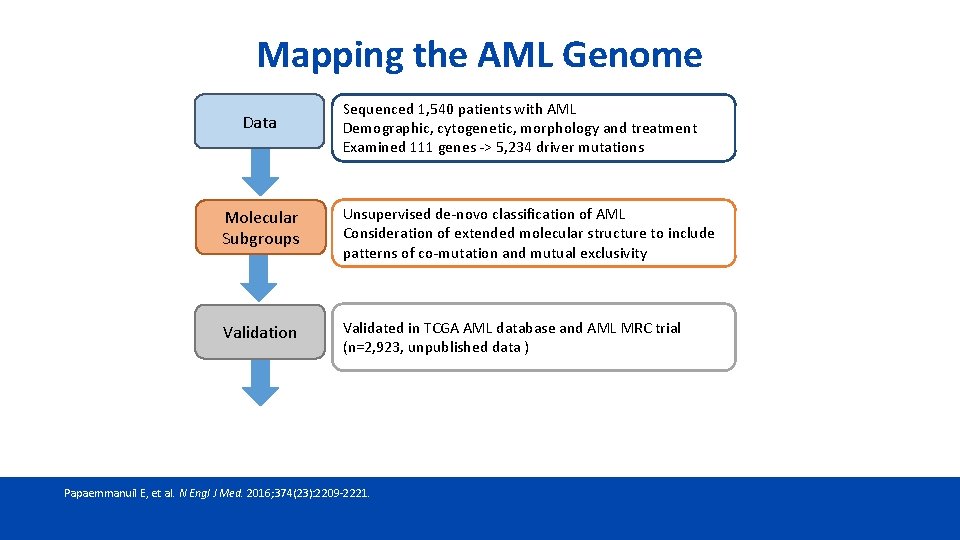
Mapping the AML Genome Extend molecular classification in AML by considering gene mutations Data Sequenced 1, 540 patients with AML Demographic, cytogenetic, morphology and treatment Examined 111 genes -> 5, 234 driver mutations Molecular Subgroups Unsupervised de-novo classification of AML Consideration of extended molecular structure to include patterns of co-mutation and mutual exclusivity Validation Validated in TCGA AML database and AML MRC trial (n=2, 923, unpublished data ) Clinical Relevance Combined genomic-based categories and overall survival data to evaluate risk for the new subcategories Papaemmanuil E, et al. N Engl J Med. 2016; 374(23): 2209 -2221.
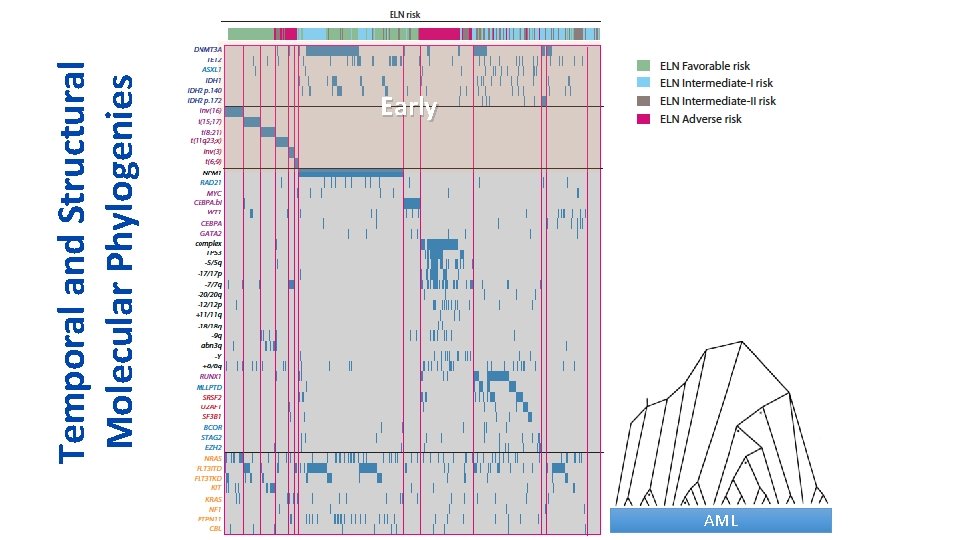
Temporal and Structural Molecular Phylogenies Early AML
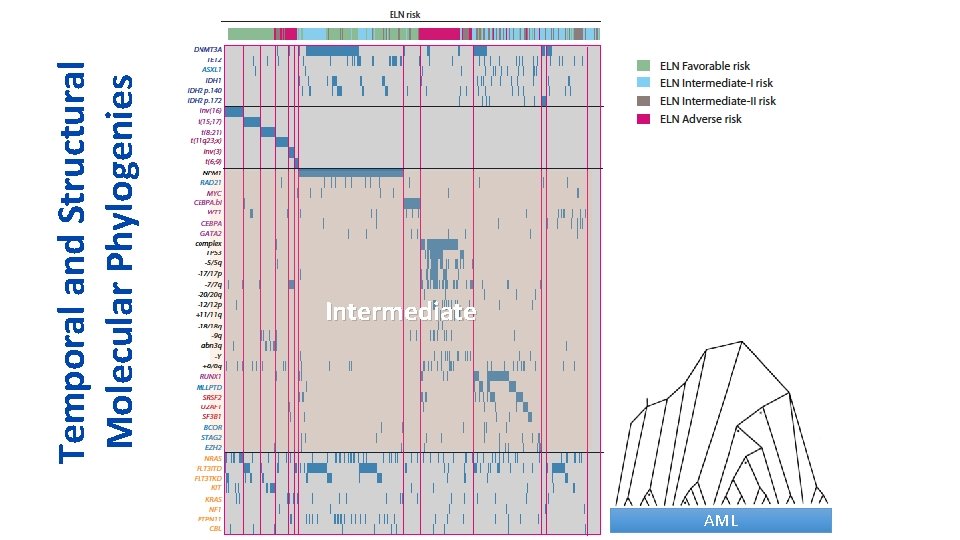
Temporal and Structural Molecular Phylogenies Intermediate AML
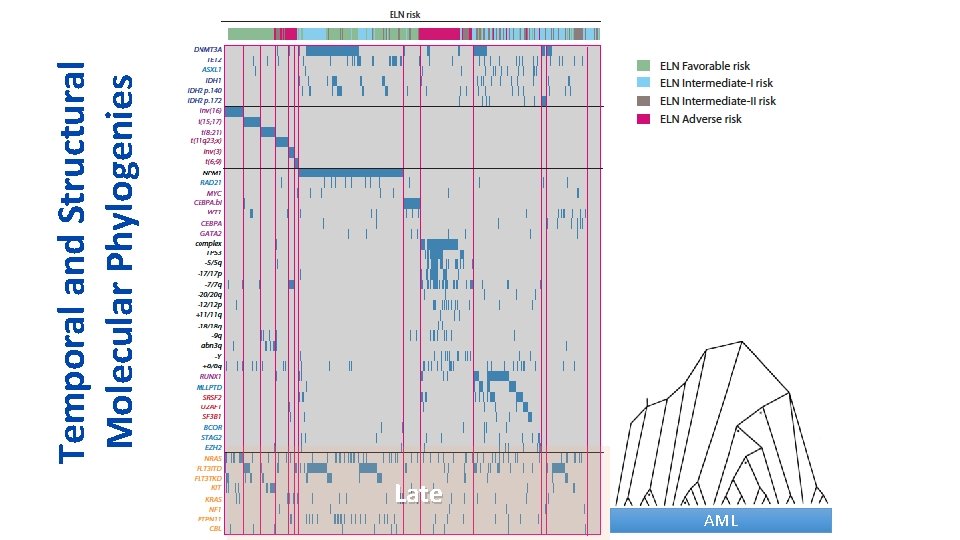
Late AML Temporal and Structural Molecular Phylogenies
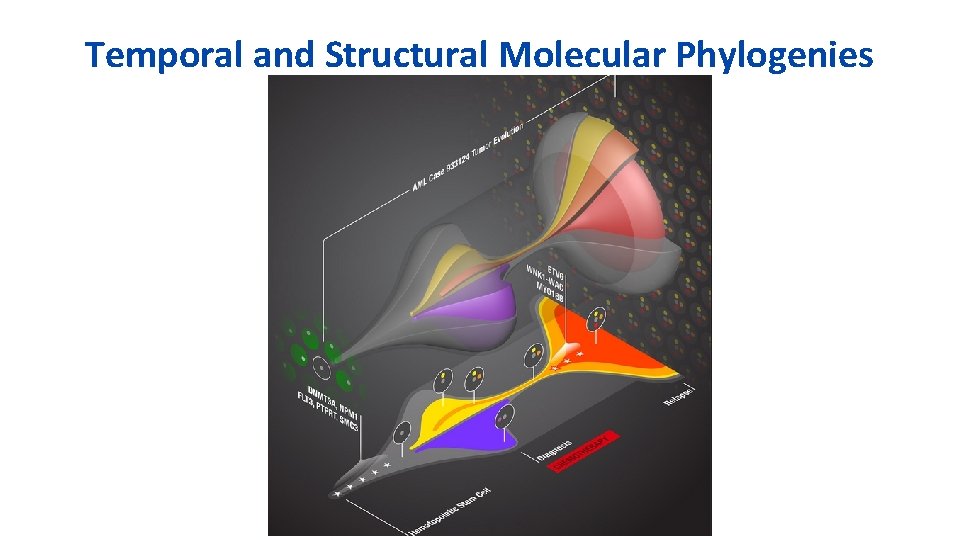
Temporal and Structural Molecular Phylogenies
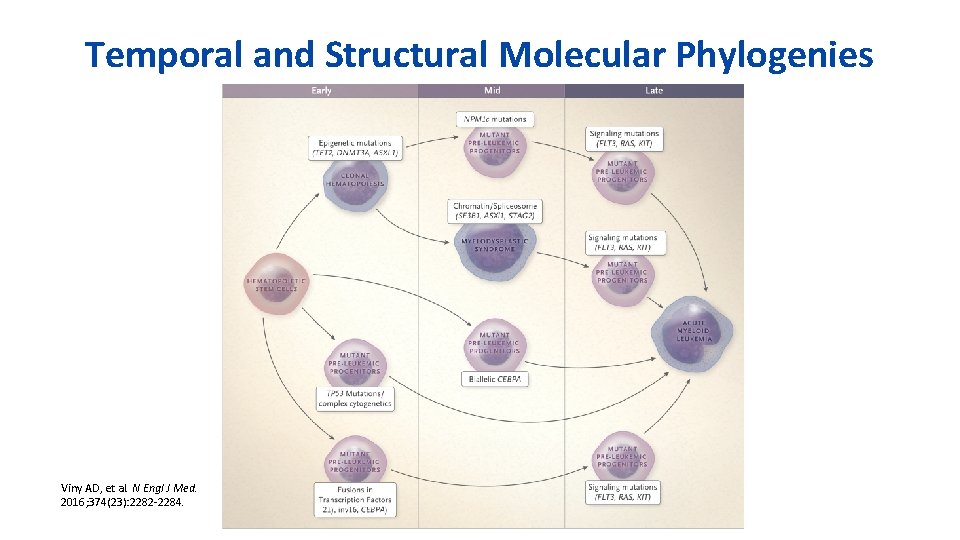
Temporal and Structural Molecular Phylogenies Viny AD, et al. N Engl J Med. 2016; 374(23): 2282 -2284.
Today’s Talk • Cancer genome introduction • AML diagnosis and clinical challenges • The genomic landscape of AML • Translating recent cancer genome discoveries ‒ Diagnosis ‒ Prognosis – risk assessment ‒ New therapies
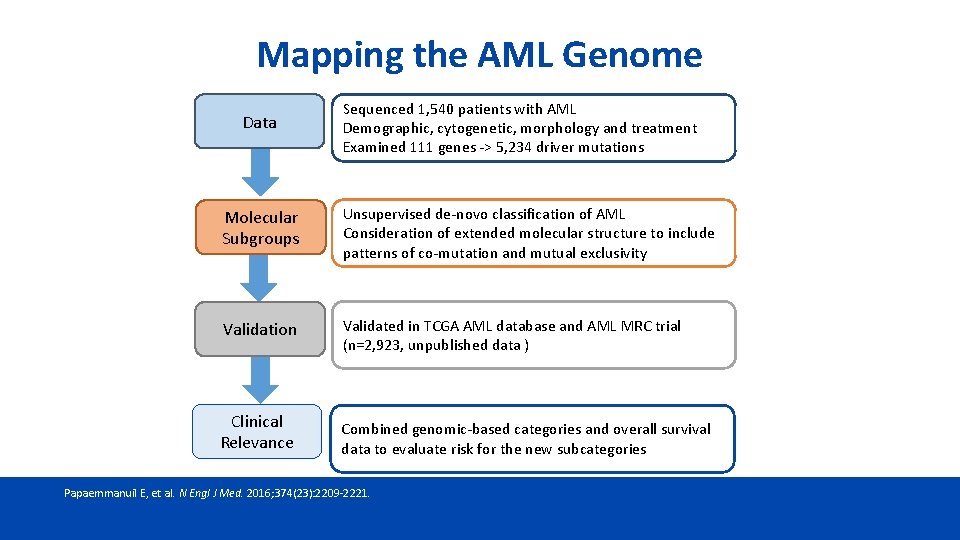
Mapping the AML Genome Extend molecular classification in AML by considering gene mutations Data Sequenced 1, 540 patients with AML Demographic, cytogenetic, morphology and treatment Examined 111 genes -> 5, 234 driver mutations Molecular Subgroups Unsupervised de-novo classification of AML Consideration of extended molecular structure to include patterns of co-mutation and mutual exclusivity Validation Validated in TCGA AML database and AML MRC trial (n=2, 923, unpublished data ) Clinical Relevance Combined genomic-based categories and overall survival data to evaluate risk for the new subcategories Papaemmanuil E, et al. N Engl J Med. 2016; 374(23): 2209 -2221.
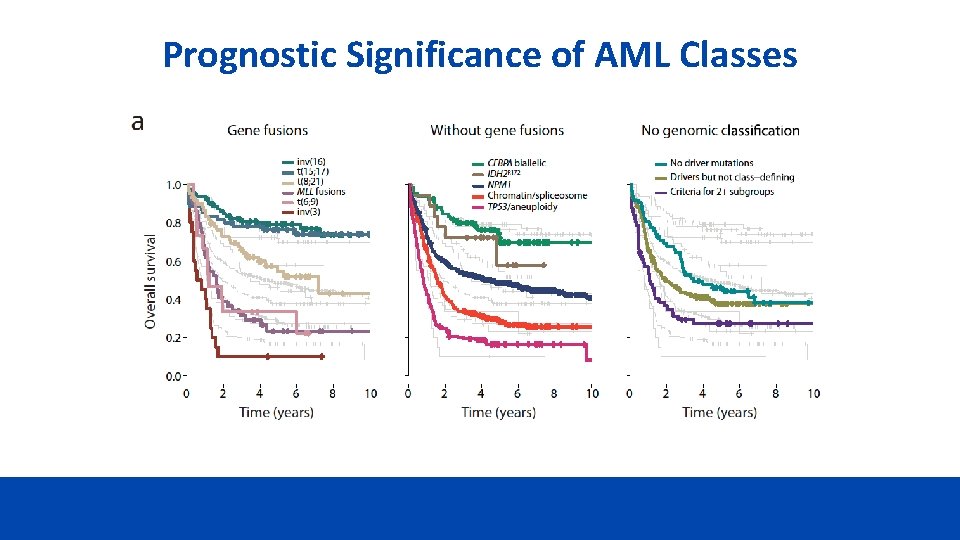
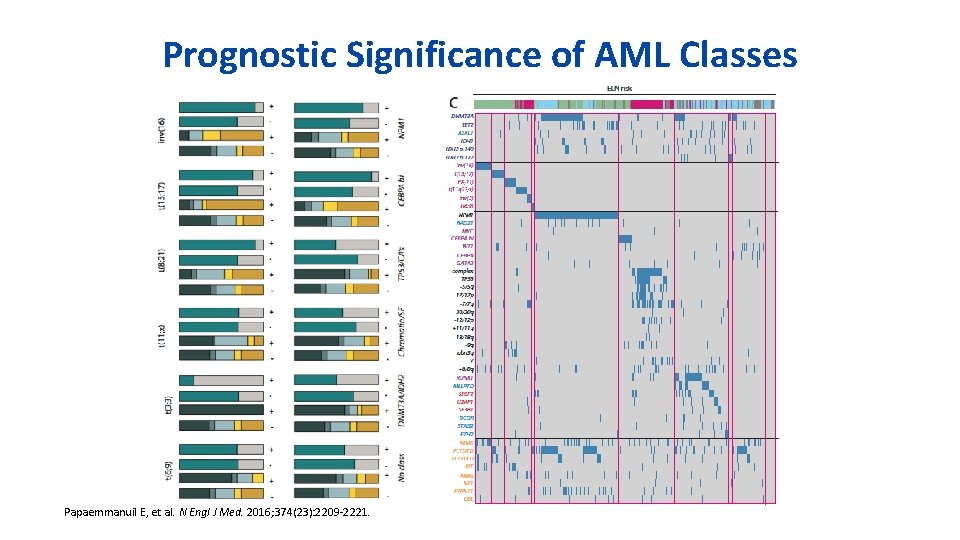
Prognostic Significance of AML Classes
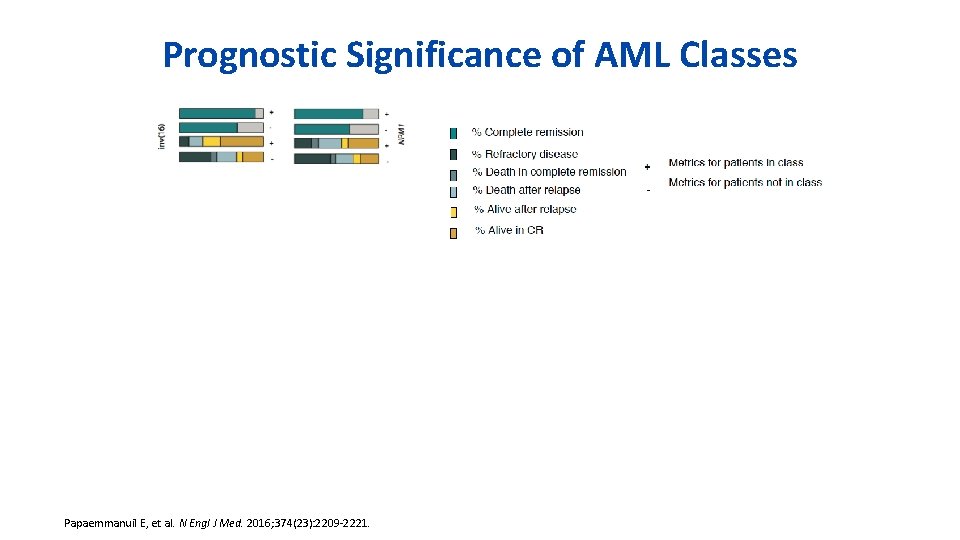
Prognostic Significance of AML Classes Papaemmanuil E, et al. N Engl J Med. 2016; 374(23): 2209 -2221.
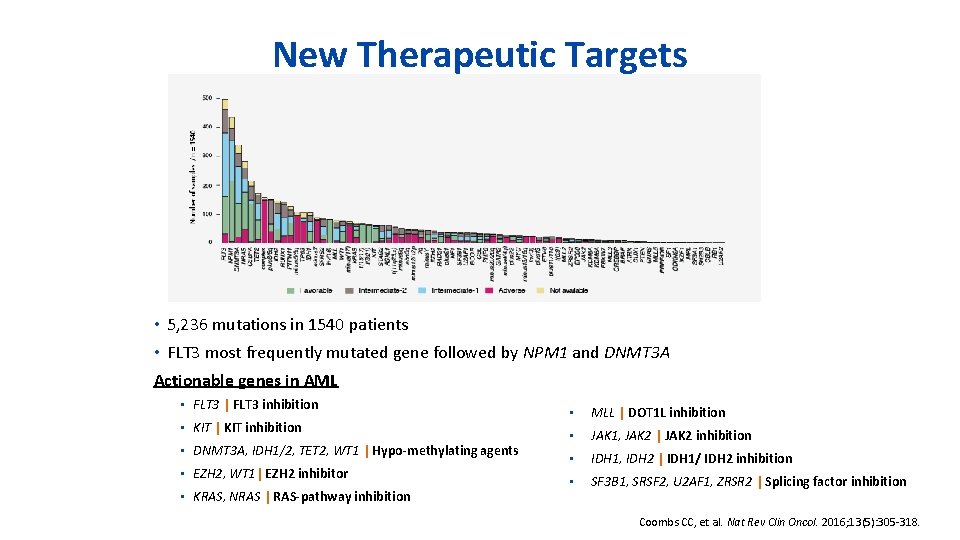
New Therapeutic Targets • 5, 236 mutations in 1540 patients • FLT 3 most frequently mutated gene followed by NPM 1 and DNMT 3 A Actionable genes in AML • FLT 3 | FLT 3 inhibition • KIT | KIT inhibition • DNMT 3 A, IDH 1/2, TET 2, WT 1 | Hypo-methylating agents • EZH 2, WT 1| EZH 2 inhibitor • KRAS, NRAS | RAS-pathway inhibition • MLL | DOT 1 L inhibition • JAK 1, JAK 2 | JAK 2 inhibition • IDH 1, IDH 2 | IDH 1/ IDH 2 inhibition • SF 3 B 1, SRSF 2, U 2 AF 1, ZRSR 2 | Splicing factor inhibition Coombs CC, et al. Nat Rev Clin Oncol. 2016; 13(5): 305 -318.
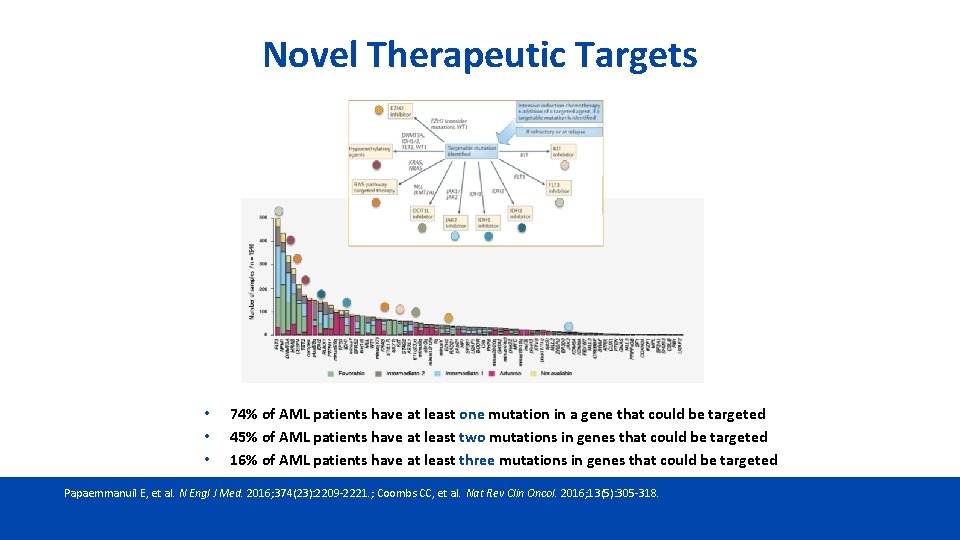
Novel Therapeutic Targets • • • 74% of AML patients have at least one mutation in a gene that could be targeted 45% of AML patients have at least two mutations in genes that could be targeted 16% of AML patients have at least three mutations in genes that could be targeted Papaemmanuil E, et al. N Engl J Med. 2016; 374(23): 2209 -2221. ; Coombs CC, et al. Nat Rev Clin Oncol. 2016; 13(5): 305 -318.
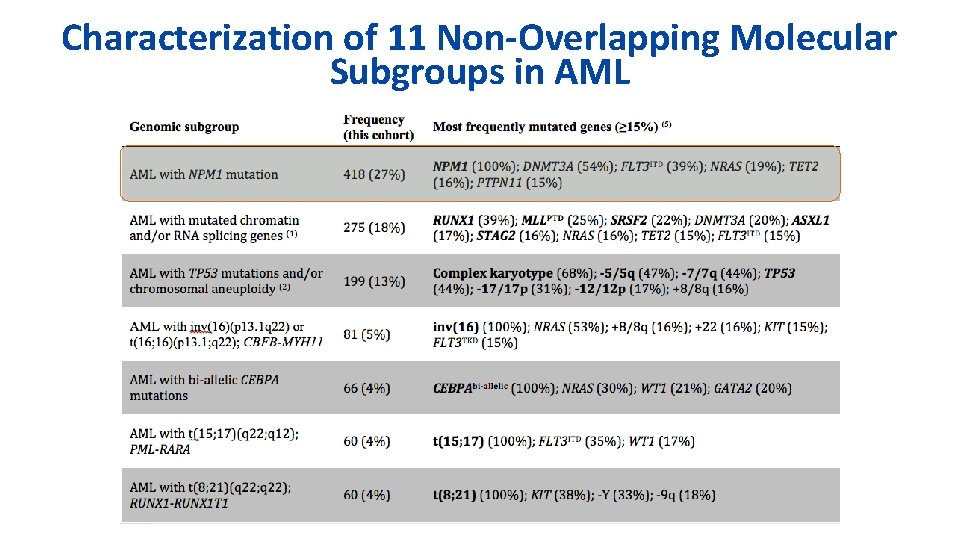
Characterization of 11 Non-Overlapping Molecular Subgroups in AML
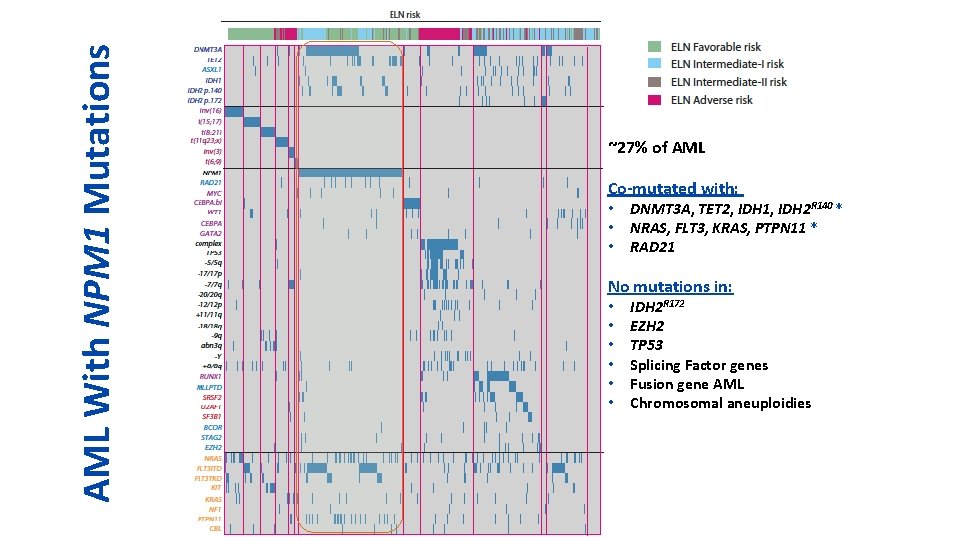
AML With NPM 1 Mutations ~27% of AML Co-mutated with: • • • DNMT 3 A, TET 2, IDH 1, IDH 2 R 140 * NRAS, FLT 3, KRAS, PTPN 11 * RAD 21 No mutations in: • • • IDH 2 R 172 EZH 2 TP 53 Splicing Factor genes Fusion gene AML Chromosomal aneuploidies
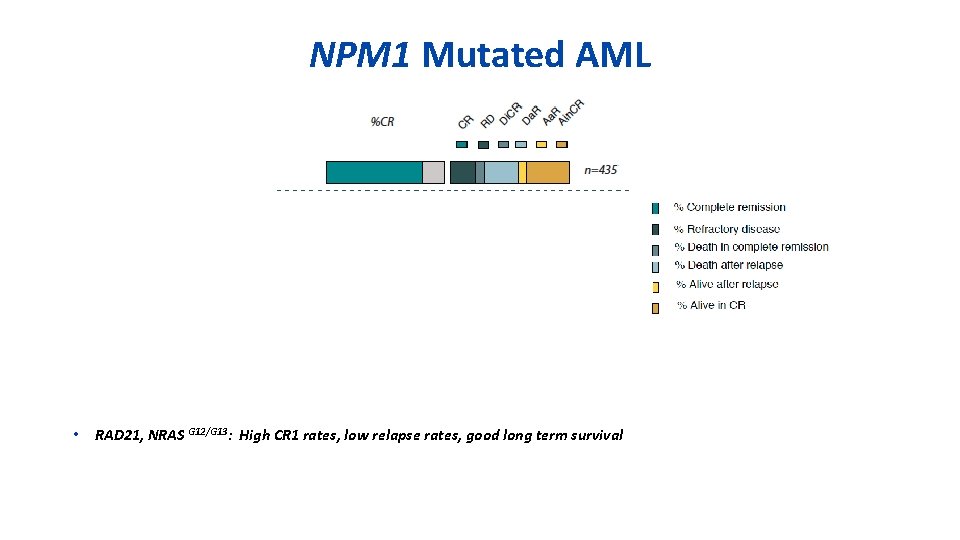
NPM 1 Mutated AML • • • RAD 21, NRAS G 12/G 13: High CR 1 rates, low relapse rates, good long term survival IDH 1, IDH 2 & chromatin spliceosome: Lower CR rates / Primary refractory DNMT 3 A & FLT 3 ITD: Lower CR rates, increase in relapse /refractory disease * Validation required in larger cohorts
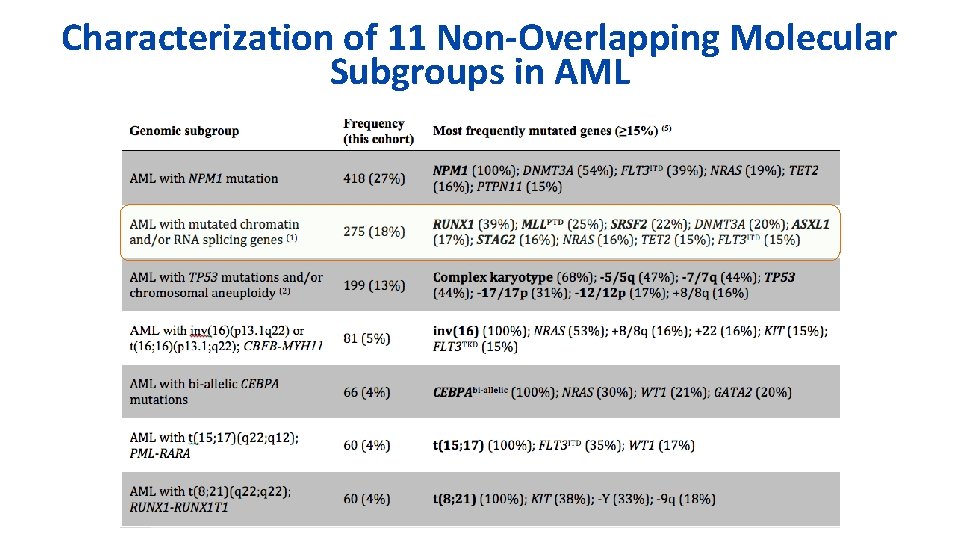
Characterization of 11 Non-Overlapping Molecular Subgroups in AML
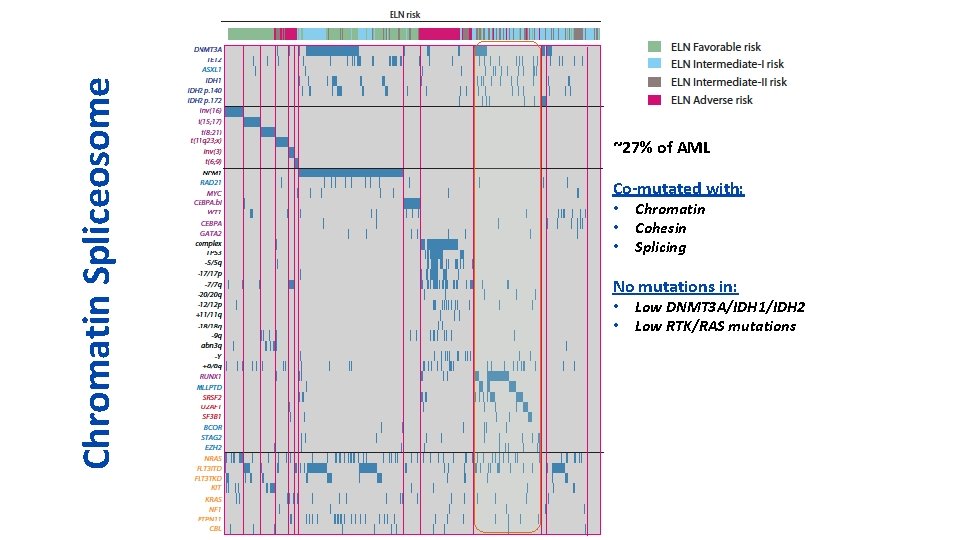
Chromatin Spliceosome ~27% of AML Co-mutated with: • • • Chromatin Cohesin Splicing No mutations in: • • Low DNMT 3 A/IDH 1/IDH 2 Low RTK/RAS mutations
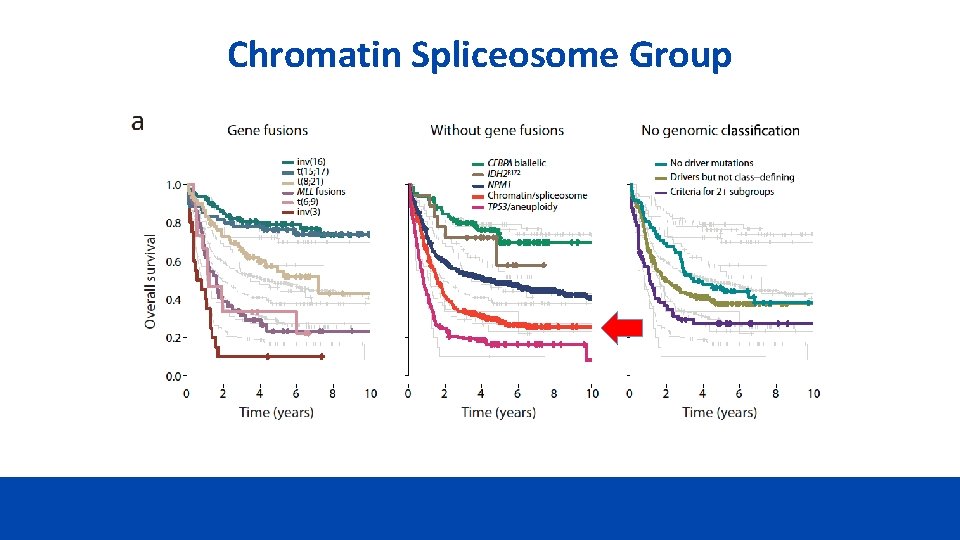
Chromatin Spliceosome Group
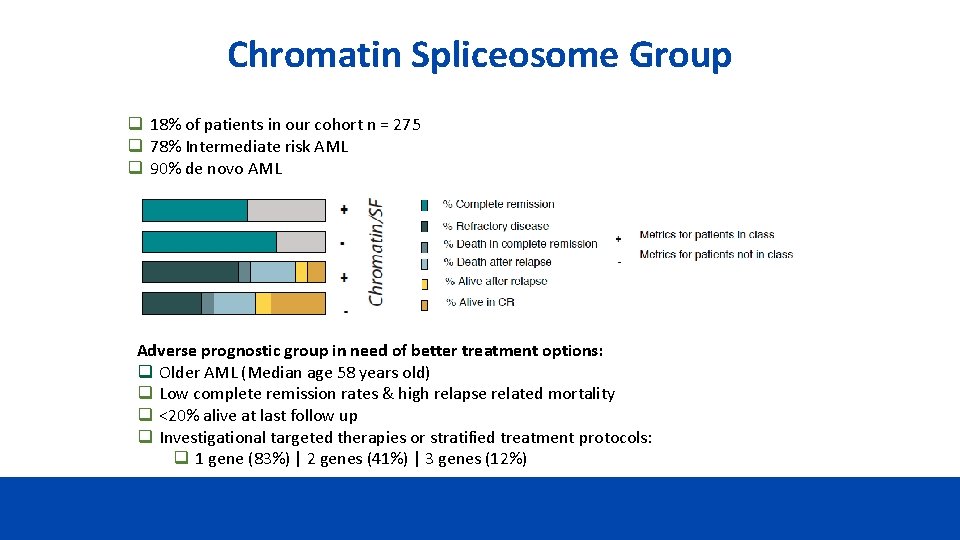
Chromatin Spliceosome Group q 18% of patients in our cohort n = 275 q 78% Intermediate risk AML q 90% de novo AML Adverse prognostic group in need of better treatment options: q Older AML (Median age 58 years old) q Low complete remission rates & high relapse related mortality q <20% alive at last follow up q Investigational targeted therapies or stratified treatment protocols: q 1 gene (83%) | 2 genes (41%) | 3 genes (12%)
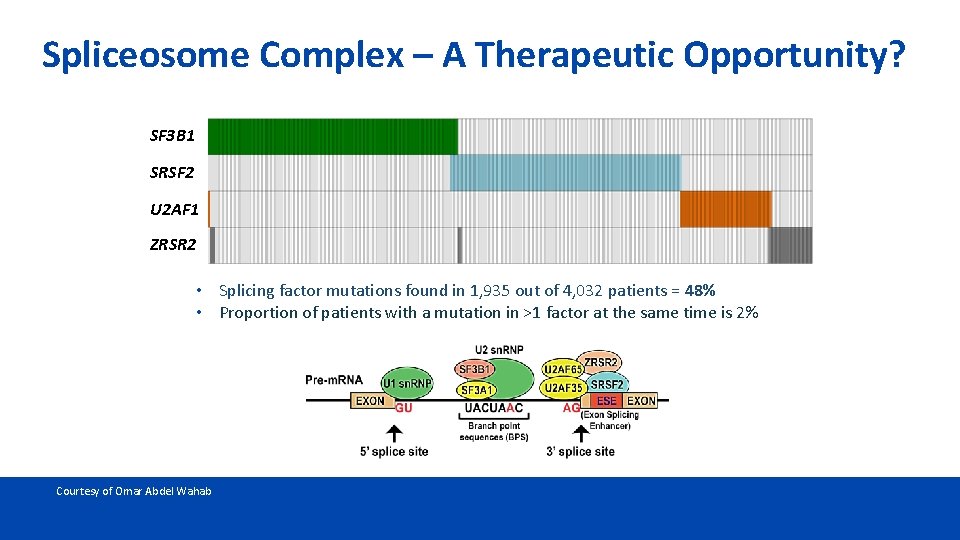
Splicing factor mutations are disease defining in MDS Spliceosome Complex – A Therapeutic Opportunity? SF 3 B 1 SRSF 2 U 2 AF 1 ZRSR 2 • Splicing factor mutations found in 1, 935 out of 4, 032 patients = 48% • Proportion of patients with a mutation in >1 factor at the same time is 2% Courtesy of Omar Abdel Wahab
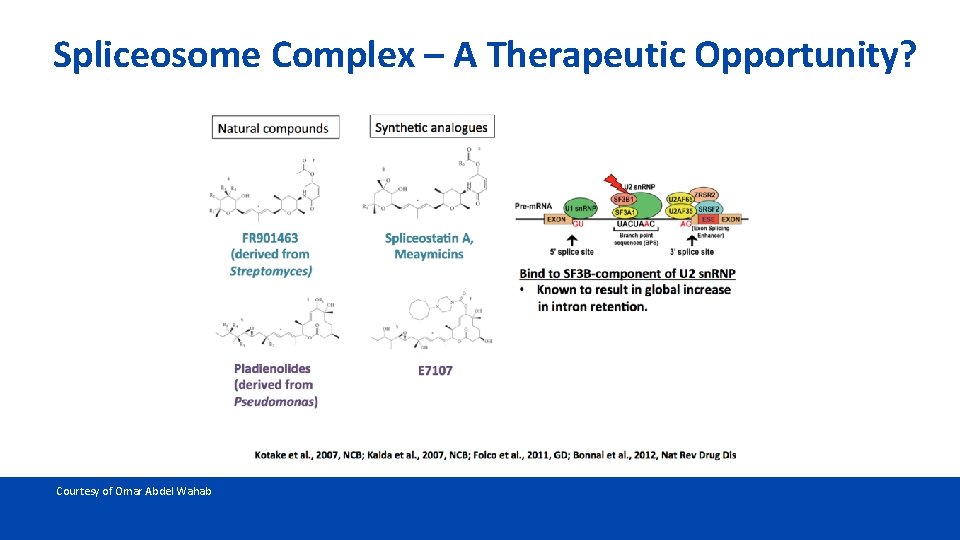
Spliceosome Complex – A Therapeutic Opportunity? Courtesy of Omar Abdel Wahab
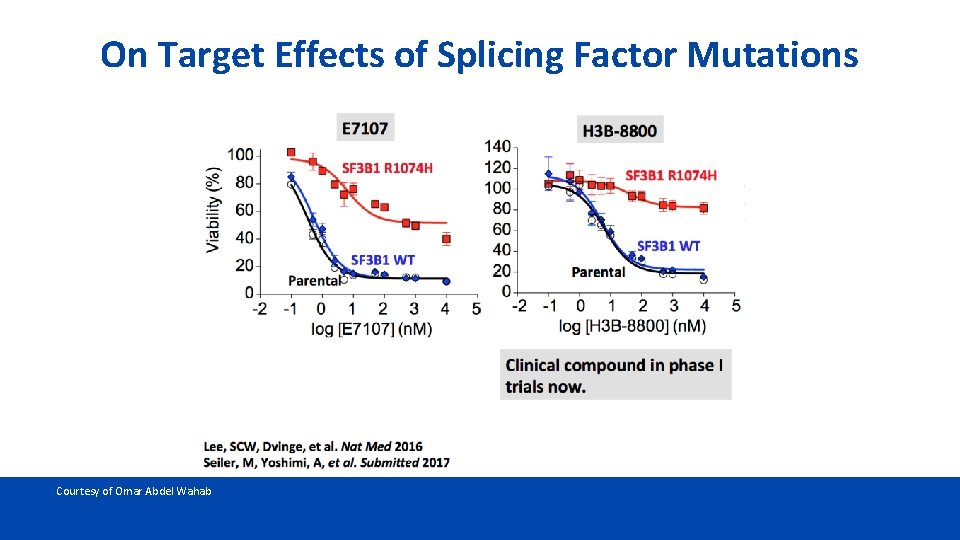
On Target Effects of Splicing Factor Mutations Courtesy of Omar Abdel Wahab
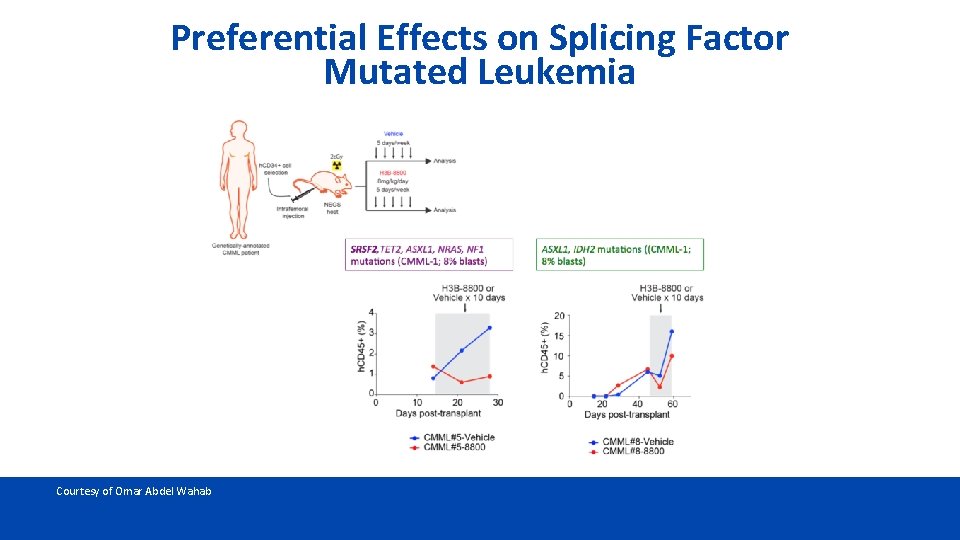
Preferential Effects on Splicing Factor Mutated Leukemia Courtesy of Omar Abdel Wahab
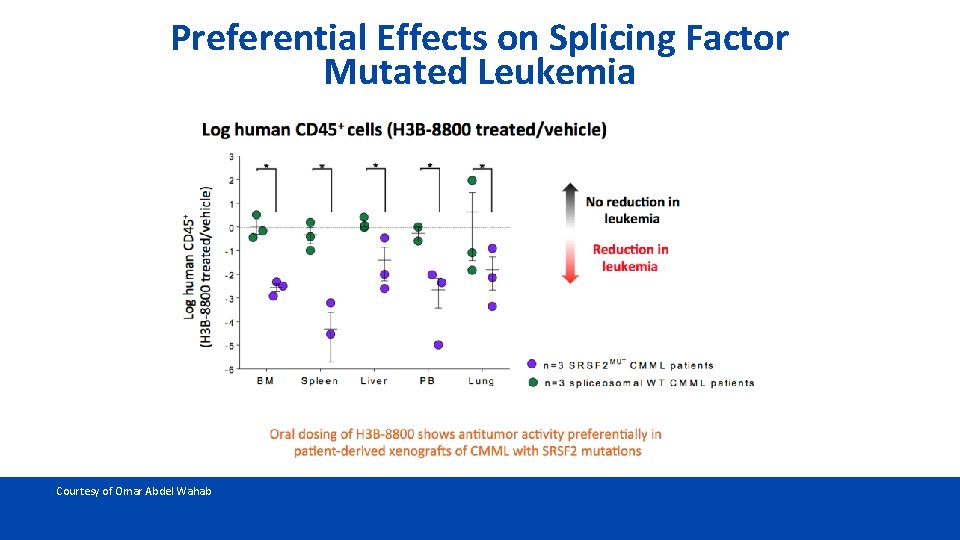
Preferential Effects on Splicing Factor Mutated Leukemia Courtesy of Omar Abdel Wahab
Summary
Genetic Structure in AML Provides Unique Clinical Opportunities
Prognostic Significance of AML Classes Papaemmanuil E, et al. N Engl J Med. 2016; 374(23): 2209 -2221.
Approaches to the Analysis of Complex, Heterogeneous, and Evolving Cancer Genomes Translating recent cancer genomic findings to: Understand disease biology Inform clinical practice Diagnosis | Risk stratification | Gene-Treatment interactions | Models of disease biology
& Pap Lab: Gunes Gundem | Matahi Moarrii | Elsa Bernard Kelly Bolton| Dan Leongamornlert | Andrés Deslaulier | Adi Deshpante Leukemia genomics MSK: Franck Rapaport | Juan Medina| Noushin Farnoud | Venkata Yellapantula|Mathieu Najm CHM Translation team: Minal Patel | Erin Mc. Govern | Chris Famulare Akshar Patel Working Groups: v International Working Group MDS v Pan Myeloid working group v UK –ALL clinical trials working group Ph. D, Post-doc and laboratory positions available papaemme@mskcc. org https: //www. mskcc. org/research-areas/labs/elli-papaemmanuil

www. Managing. AML. com A Resource for Information and Education in AML
- Slides: 55