
New Medications Presentation Jayne S Reuben Ph D
New Medications Presentation Jayne S. Reuben, Ph. D jreuben@bcd. tamhsc. edu 2008 National Primary Oral Health Care Conference November 13, 2008
Objectives After review of this material, the dental professional should be able to: • Recognize the clinical indications of recent drugs approved by the FDA • Explain the mechanism of actions of the drugs discussed in this presentation • Identify their clinically relevant adverse reactions and drug interactions
Outline • • • Diabetes CNS Cancer Pulmonary/CVS HIV-1 Infection Misc
New Medications-Diabetes • DPP 4 (Dipeptidyl Peptidase IV ) inhibitors sitagliptin phosphate* (JANUVIA) vildagliptin (not approved) sitagliptin and metformin* (JANUMET) • Incretin mimetics exenatide* (BYETTA) • Antihyperglycemic analogues pramlintide acetate* (SYMLIN)
Incretin Hormones • GLP-1: glucagon-like peptide-1 • GIP: glucose-dependent insulinotropic polypeptide (aka gastic inhibitory peptide) • Both promote -cell proliferation in pancreas, inhibit apoptosis • GLP-1 also stimulates insulin secretion, inhibits gastric emptying, inhibits glucagon secretion, promotes satiety • Release is stimulated by nutrient ingestion and degraded by dipeptidyl peptidase-4 (DPP-4).
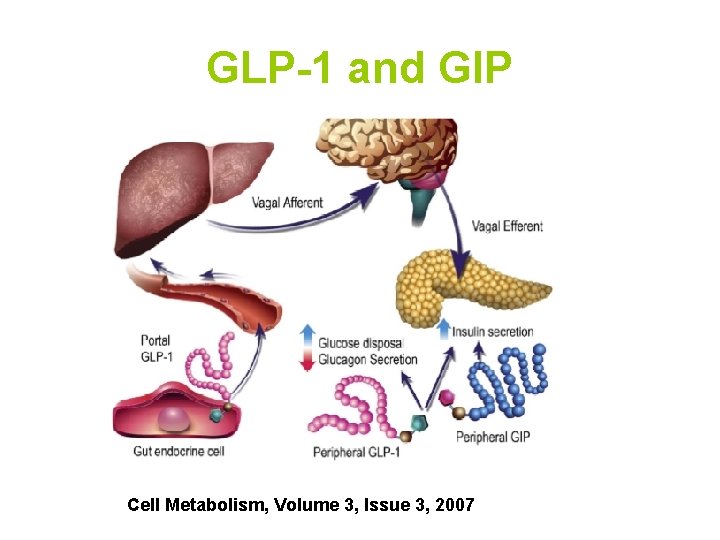
GLP-1 and GIP Cell Metabolism, Volume 3, Issue 3, 2007
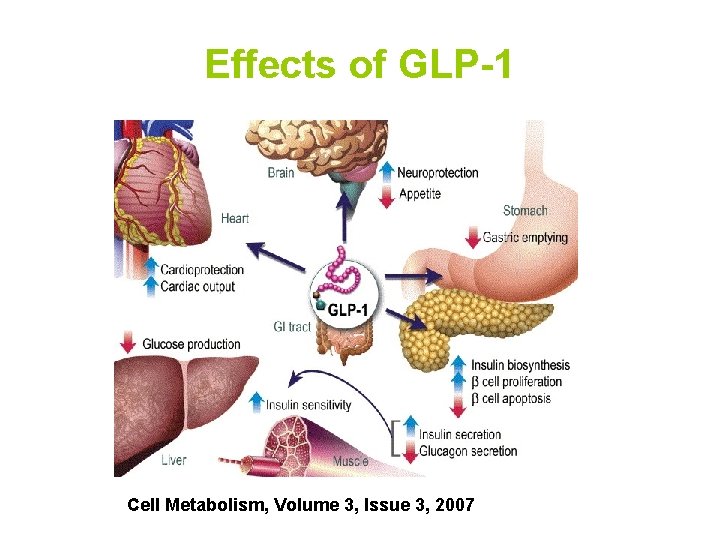
Effects of GLP-1 Cell Metabolism, Volume 3, Issue 3, 2007
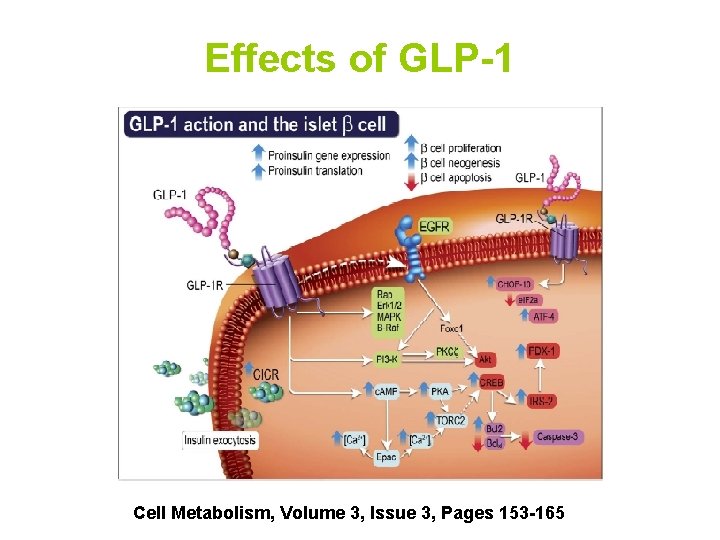
Effects of GLP-1 Cell Metabolism, Volume 3, Issue 3, Pages 153 -165
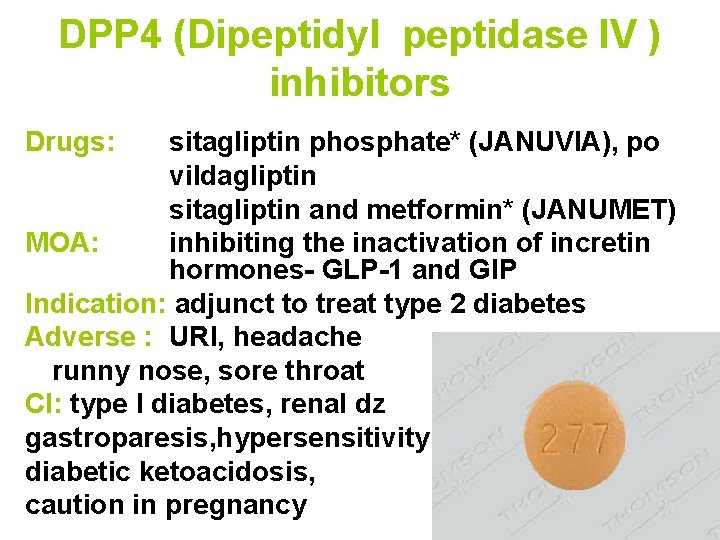
DPP 4 (Dipeptidyl peptidase IV ) inhibitors Drugs: sitagliptin phosphate* (JANUVIA), po vildagliptin sitagliptin and metformin* (JANUMET) MOA: inhibiting the inactivation of incretin hormones- GLP-1 and GIP Indication: adjunct to treat type 2 diabetes Adverse : URI, headache runny nose, sore throat CI: type I diabetes, renal dz gastroparesis, hypersensitivity diabetic ketoacidosis, caution in pregnancy
Incretin Mimetic • exenatide* (BYETTA), sc pen • Synthetic GLP-1 receptor agonist • MOA: Binding results in glucose- dependent insulin synthesis and secretion, glucagon secretion, gastric emptying and food intake • Used for type 2 diabetes alone or with other meds (not insulin) • Adverse: N&V, diarrhea, hypoglycemia, antibodies • CI: hypersensitivity, type 1 or diabetic ketoacidosis severe renal impairment
Antihyperglycemic Analog • pramlintide acetate* (SYMLIN), sc • Synthetic analog of human amylin-secreted by cells to control postprandial [glucose] • MOA: glucagon, gastric emptying, satiety • Indication: adjunct with insulin for type 1 and 2 (with sulfonylureas & metformin in type 2) • Adverse: severe hypoglycemia, N&V, diarrhea • CI: hypersensitivity, gastroparesis, hypoglycemic unawareness • DI: anticholinergics, -glucosidase inhibitors, oral agents
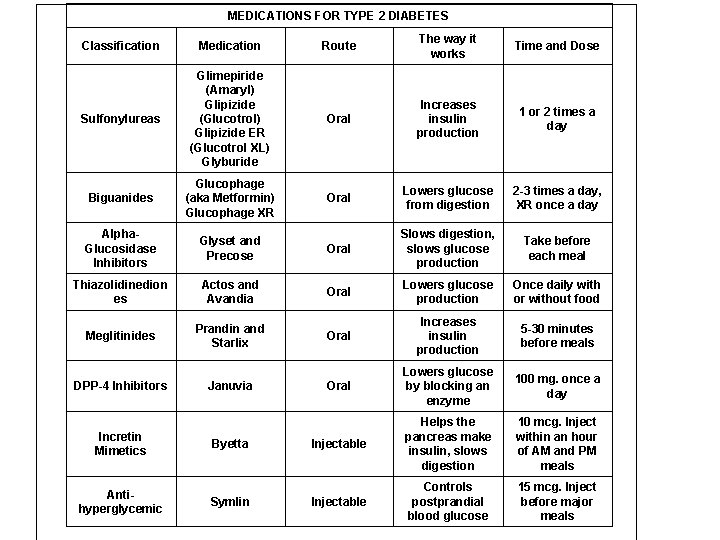
MEDICATIONS FOR TYPE 2 DIABETES Classification Medication Route The way it works Time and Dose Sulfonylureas Glimepiride (Amaryl) Glipizide (Glucotrol) Glipizide ER (Glucotrol XL) Glyburide Oral Increases insulin production 1 or 2 times a day Biguanides Glucophage (aka Metformin) Glucophage XR Oral Lowers glucose from digestion 2 -3 times a day, XR once a day Alpha. Glucosidase Inhibitors Glyset and Precose Oral Slows digestion, slows glucose production Take before each meal Thiazolidinedion es Actos and Avandia Oral Lowers glucose production Once daily with or without food Meglitinides Prandin and Starlix Oral Increases insulin production 5 -30 minutes before meals DPP-4 Inhibitors Januvia Oral Lowers glucose by blocking an enzyme 100 mg. once a day Injectable Helps the pancreas make insulin, slows digestion 10 mcg. Inject within an hour of AM and PM meals Injectable Controls postprandial blood glucose 15 mcg. Inject before major meals Incretin Mimetics Antihyperglycemic Byetta Symlin
Dental Implications • DI: Propoxyphene, NSAIDs enhance hypoglycemia – Also, -blockers and ACE inhibitors • Morning appointments to minimize stressrelated hypoglycemia • Keep glucose on hand -if hypoglycemia becomes severe, pt may become unconscious.
CNS Parkinson’s: Rotigotine (NEUPRO)- RECALLED Rasagiline (AZILECT) ADHD: Lisdexamfetamine Dimesylate (VYVANSE) Epilepsy: Levetiracetam (KEPPRA) Oxcarbazepine (TRILEPTAL) Schizophrenia: Paliperidone (INVEGA)
Parkinson’s Disease: Agents that Increase Dopamine functions • Replacing the synthesis of dopamine - L-Dopa • Combination Pills: L-dopa + carbidopa (SINEMET) • Inhibiting the catabolism of dopamine – selegiline (ELDERPRYL) rasagiline (AZILECT) entacapone (COMTAN) tolcapone (TASMAR) SE: Orthostatic Hypotention
Parkinson’s Disease: Agents that Increase Dopamine functions • Stimulating the dopamine receptor sites directly – bromocriptine (PARLODEL) pramipexole (MIRAPEX) ropinrole (REQUIP, REQUIP XL rotigotine (NEUPRO)-RECALLED • Blocks uptake and enhances dopamine release– amantadine (SYMMETREL) • Stimulating the release of dopamine - amphetamine
Rotigotine (NEUPRO) • Transdermal Patch system for early-stage parkinson’s • Common side effects: N&V, dizziness, allergy sleep, disturbances, headache • Serious Adverse effects: falling asleep, low BP, fainting, hallucinations, compulsive behavior RECALLED on May 1, 2008
Agents that decrease Acetylcholine function • Blocking Acetylcholine receptors: Atropine benztropine (COGENTIN) biperiden (AKINETON) procyclidine (KEMADRIN) • Inhibit Acetylcholine production: trihexyphenidyl (formally ARTANE) • Side effects from blocking Acetylcholine: – Dry mouth, Urinary retention, Blurred vision, Constipation
Lisdexamfetamine Dimesylate (VYVANSE) • 1 st prodrug ADHD but not for long term use (>4 wk) • High potential for abuse • Some dry mouth • growth suppression, pyrexia sudden death, stroke, MI, • The effects of tricyclic antidepressants, meperidine, phenobarbital and phenytoin may be potentiated by amphetamines. • CI: hypertension, hyperthyroidism, glaucoma history of drug abuse, MAOIs w/in 14 d
Antipychotics/Schizophrenia Typical: block DA Atypical- block DA & 5 -HT Haloperidol (HALDOL) clozapine (CLOZARIL, FASACLO ODT) Loxapine (LOXITANE) olanzepine (ZYPREXA) Molindone (MOBAN) quetiapine (SEROQUEL) aripirazole (ABILIFY) respiridone (RESPERDAL) paliperidone (INVEGA)* ziprasidone (GEODON) Newer Atypicals block DA and 5 -HT receptors.
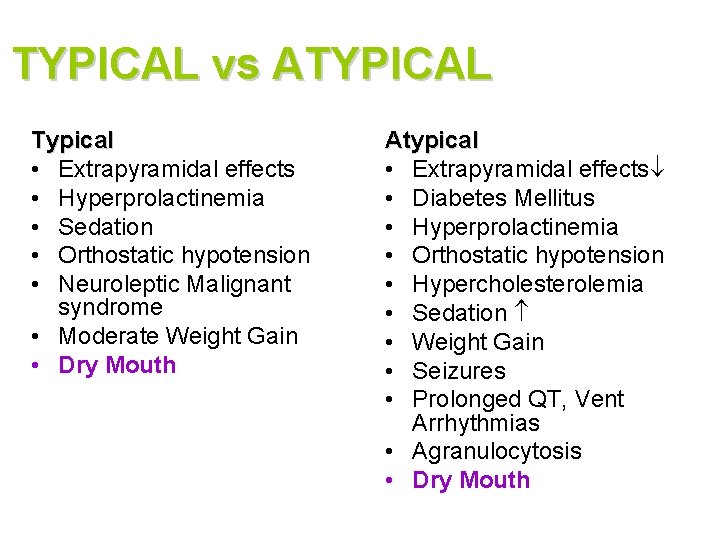
TYPICAL vs ATYPICAL Typical • Extrapyramidal effects • Hyperprolactinemia • Sedation • Orthostatic hypotension • Neuroleptic Malignant syndrome • Moderate Weight Gain • Dry Mouth Atypical • Extrapyramidal effects • Diabetes Mellitus • Hyperprolactinemia • Orthostatic hypotension • Hypercholesterolemia • Sedation • Weight Gain • Seizures • Prolonged QT, Vent Arrhythmias • Agranulocytosis • Dry Mouth
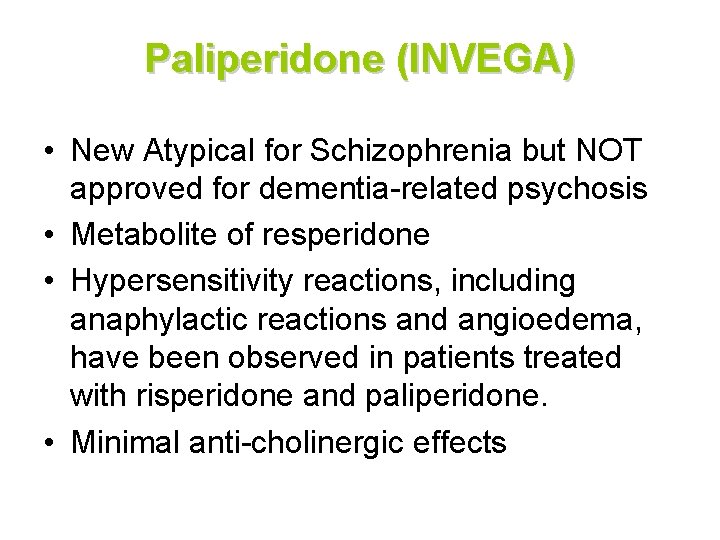
Paliperidone (INVEGA) • New Atypical for Schizophrenia but NOT approved for dementia-related psychosis • Metabolite of resperidone • Hypersensitivity reactions, including anaphylactic reactions and angioedema, have been observed in patients treated with risperidone and paliperidone. • Minimal anti-cholinergic effects
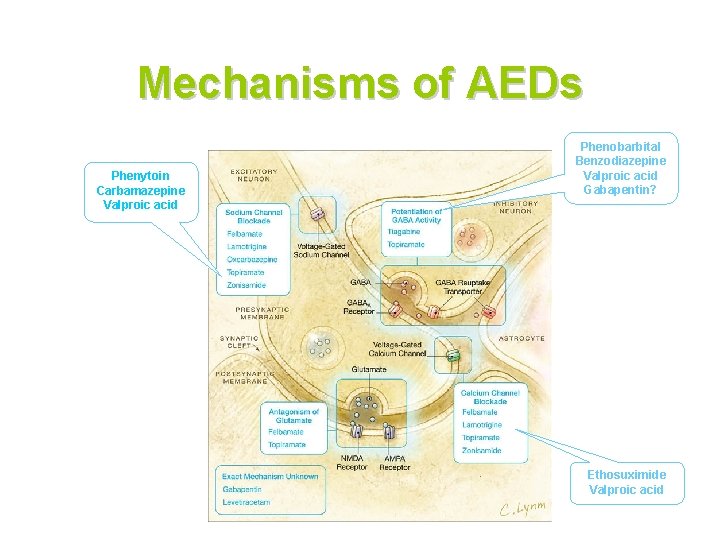
Mechanisms of AEDs Phenytoin Carbamazepine Valproic acid Phenobarbital Benzodiazepine Valproic acid Gabapentin? Ethosuximide Valproic acid
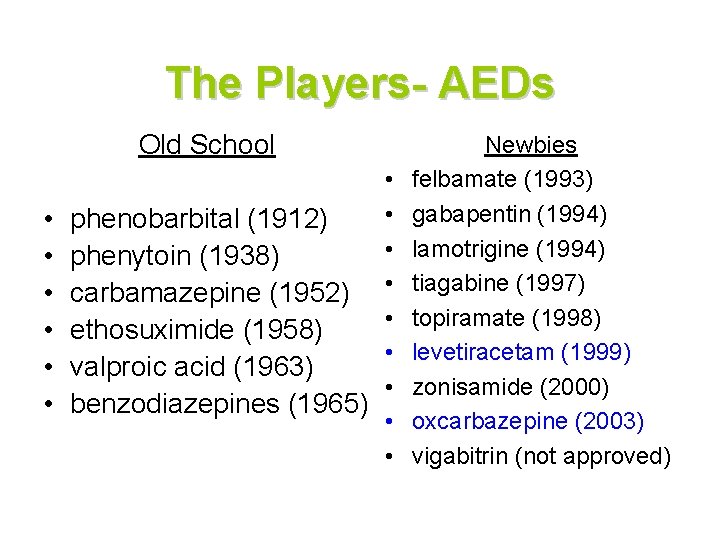
The Players- AEDs Old School • • phenobarbital (1912) • phenytoin (1938) carbamazepine (1952) • • ethosuximide (1958) • valproic acid (1963) • benzodiazepines (1965) • • Newbies felbamate (1993) gabapentin (1994) lamotrigine (1994) tiagabine (1997) topiramate (1998) levetiracetam (1999) zonisamide (2000) oxcarbazepine (2003) vigabitrin (not approved)
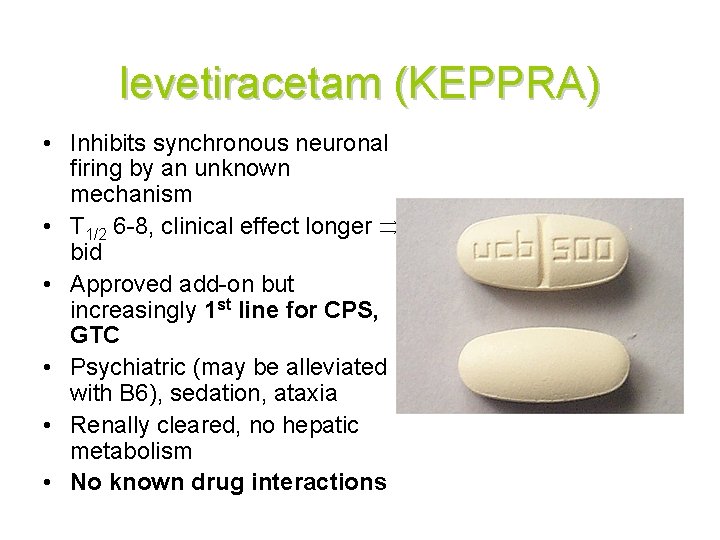
levetiracetam (KEPPRA) • Inhibits synchronous neuronal firing by an unknown mechanism • T 1/2 6 -8, clinical effect longer bid • Approved add-on but increasingly 1 st line for CPS, GTC • Psychiatric (may be alleviated with B 6), sedation, ataxia • Renally cleared, no hepatic metabolism • No known drug interactions
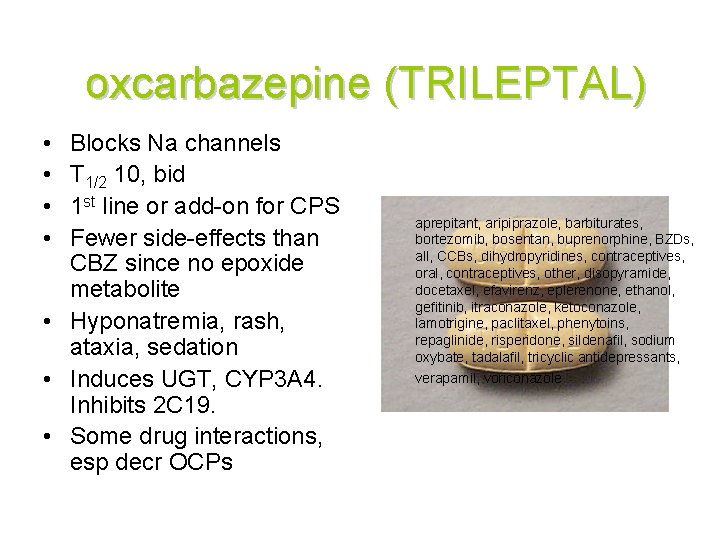
oxcarbazepine (TRILEPTAL) • • Blocks Na channels T 1/2 10, bid 1 st line or add-on for CPS Fewer side-effects than CBZ since no epoxide metabolite • Hyponatremia, rash, ataxia, sedation • Induces UGT, CYP 3 A 4. Inhibits 2 C 19. • Some drug interactions, esp decr OCPs aprepitant, aripiprazole, barbiturates, bortezomib, bosentan, buprenorphine, BZDs, all, CCBs, dihydropyridines, contraceptives, oral, contraceptives, other, disopyramide, docetaxel, efavirenz, eplerenone, ethanol, gefitinib, itraconazole, ketoconazole, lamotrigine, paclitaxel, phenytoins, repaglinide, risperidone, sildenafil, sodium oxybate, tadalafil, tricyclic antidepressants, verapamil, voriconazole
Cancer • Granisetron Transdermal System (SANCUSO) similar to Ondansetron (ZOFRAN) (5 -HT 3) receptor antagonist – N & V • Nilotinib HCl Monohydrate (TASIGNA): CML Bcr-Abl kinase inhibitor see also imatinib (GLEEVEC)
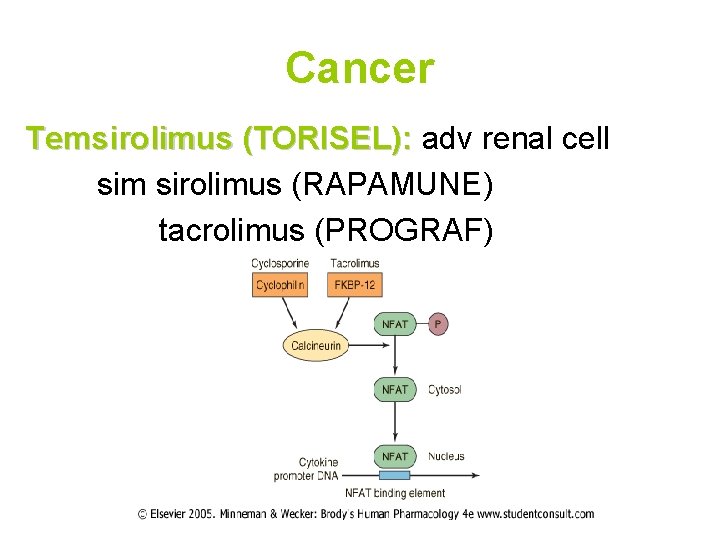
Cancer Temsirolimus (TORISEL): adv renal cell sim sirolimus (RAPAMUNE) tacrolimus (PROGRAF)
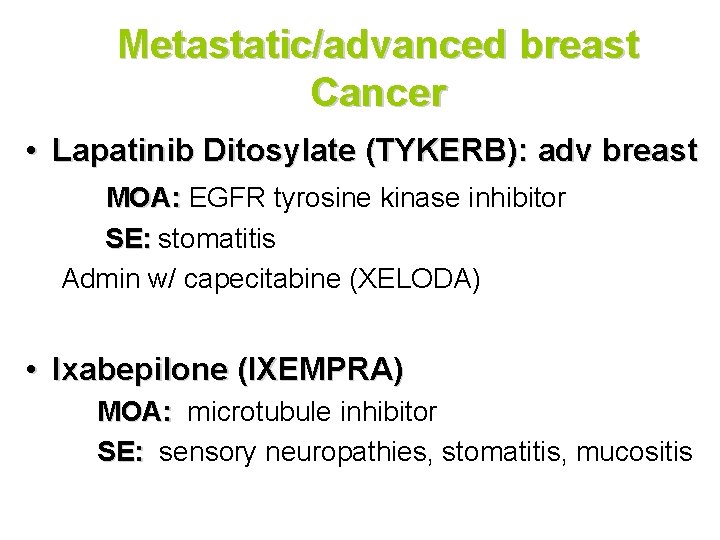
Metastatic/advanced breast Cancer • Lapatinib Ditosylate (TYKERB): adv breast MOA: EGFR tyrosine kinase inhibitor MOA: SE: stomatitis Admin w/ capecitabine (XELODA) • Ixabepilone (IXEMPRA) MOA: microtubule inhibitor MOA: SE: sensory neuropathies, stomatitis, mucositis
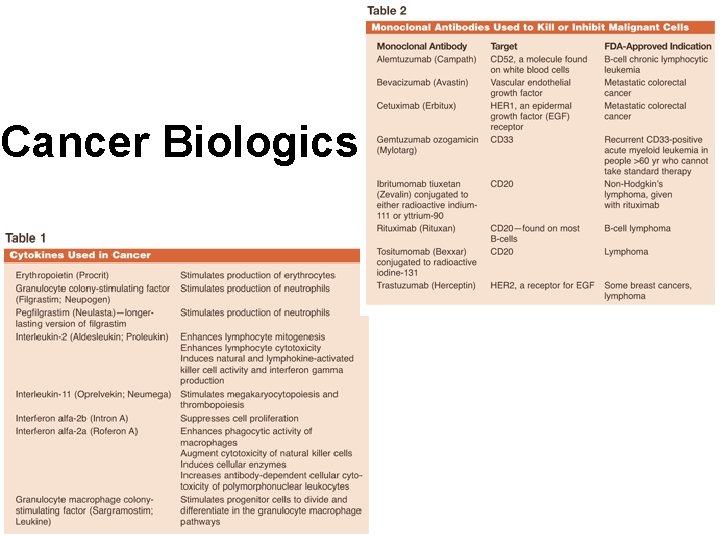
Cancer Biologics
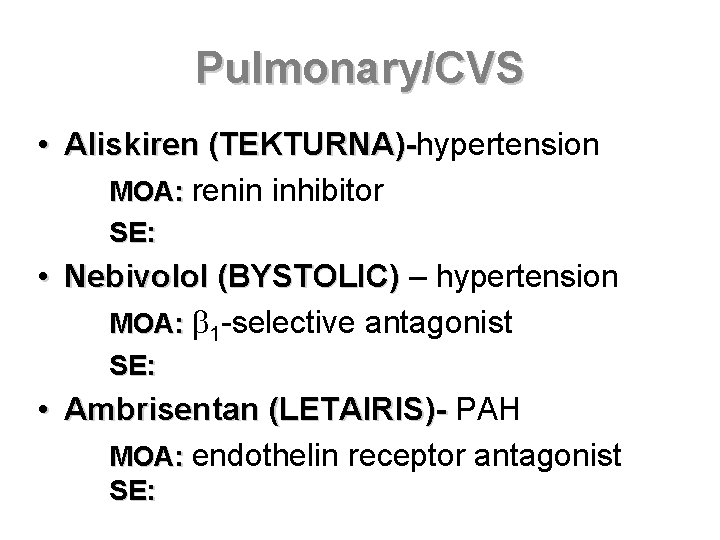
Pulmonary/CVS • Aliskiren (TEKTURNA)-hypertension Aliskiren (TEKTURNA)MOA: renin inhibitor SE: • Nebivolol (BYSTOLIC) – hypertension MOA: 1 -selective antagonist SE: • Ambrisentan (LETAIRIS)- PAH MOA: endothelin receptor antagonist SE:
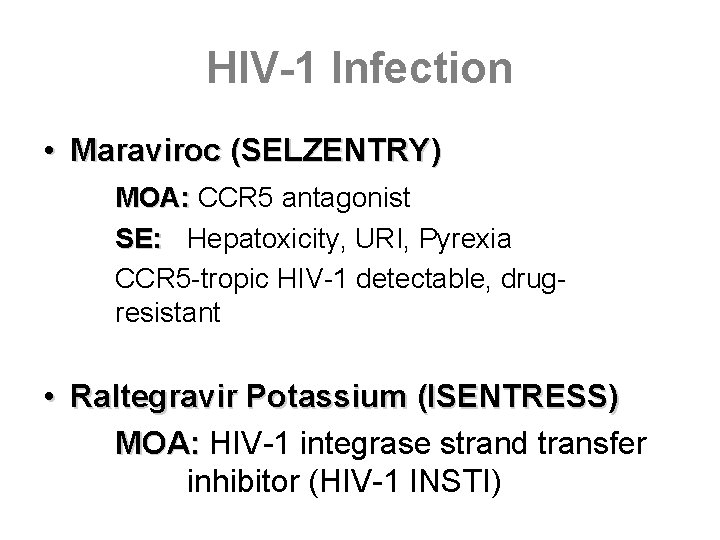
HIV-1 Infection • Maraviroc (SELZENTRY) MOA: CCR 5 antagonist SE: Hepatoxicity, URI, Pyrexia CCR 5 -tropic HIV-1 detectable, drugresistant • Raltegravir Potassium (ISENTRESS) MOA: HIV-1 integrase strand transfer inhibitor (HIV-1 INSTI)
Miscellaneous • Doripenem (DORIBAX): Intra-ab and UTIs • Methoxypolyethylene glycol-epoetin eta (MIRCERA) – Patients w/ chronic renal failure
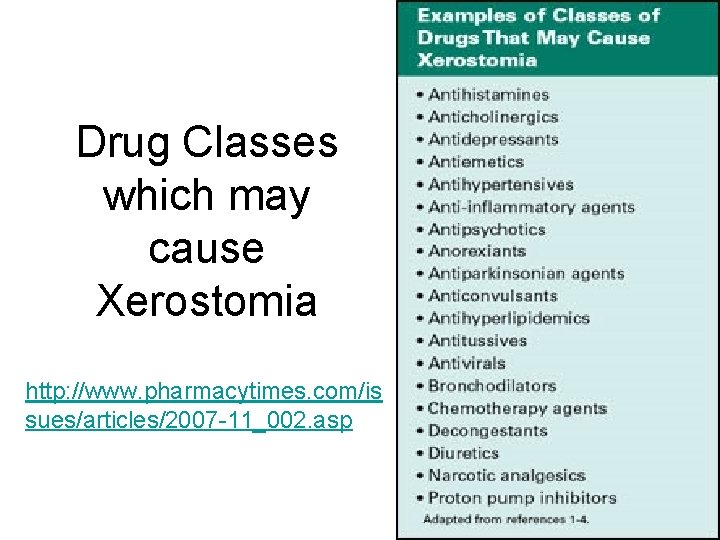
Drug Classes which may cause Xerostomia http: //www. pharmacytimes. com/is sues/articles/2007 -11_002. asp
References • Pharmacy Times http: //www. pharmacytimes. com • Drugs@FDA http: //www. accessdata. fda. gov/scripts/cder/ drugsatfda/index. cfm • Mosby’s Dental Drug Reference 2008 • NIH Institute websites www. nih. gov
- Slides: 35