
New Magnetic Observatory Installation In Oaxaca Mexico IAGA

New Magnetic Observatory Installation In Oaxaca, Mexico IAGA 2008 Golden, Colorado, USA Ivan Hrvoic, Enrique Cabral, Esteban Hernandez, Gerardo Cifuentes, Mike Wilson, Francisco Lopez
Overview • Overview of Super. Gradiometer Installation • Introduction of Potassium d. Id. D • Summary and Conclusions
Overview of Super. Gradiometer Installation – Instrumentation – Super. Gradiometer Features – Super. Gradiometer Array – UNAM-GEM Cooperation – Site Location, Selection and Data – Sensor Installation – Sample of Data Records – Sensor Field Inclinations and Declinations

Instrumentation • Most Sensitive Scalar Magnetometer • Based on Optically Pumped Potassium • Very high sampling (up to 20 samples / second) • Designed for minimal heading error, high absolute accuracy and reliability

Super. Gradiometer Features • Delivers sensitivity needed for Short Base or Gradiometric work in Earthquake Studies • Background noise is 50 f. T for 1 reading / second • Can increase sensitivity further by placing sensors at specific distances, say 50 to 100 m, which gives 1 f. T/m gradient sensitivity

Super. Gradiometer Array • 3 sensors arranged according to terrain (horizontal or vertical) • Sensor spacing up to 140 m • Long term integration is promising

UNAM-GEM Cooperation • Geophysics Department of UNAM expressed interest in deployment in Mexico • Discussions about experimental deployment of Super. Gradiometer for Earthquake studies • Site selection possibilities
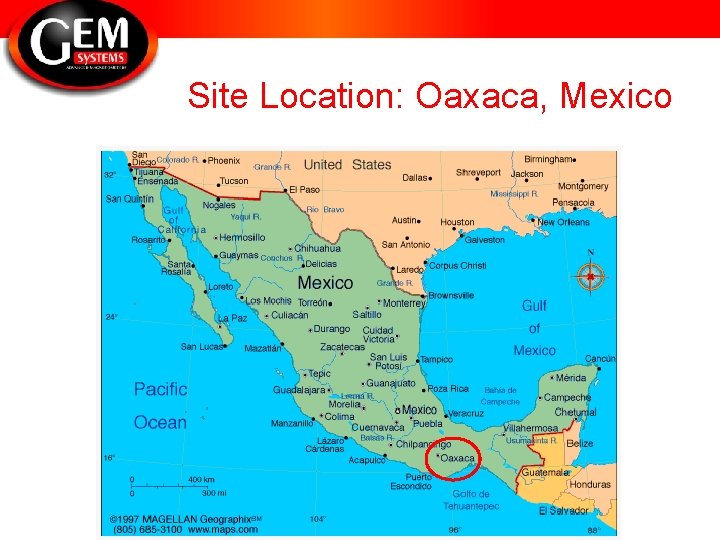
Site Location: Oaxaca, Mexico
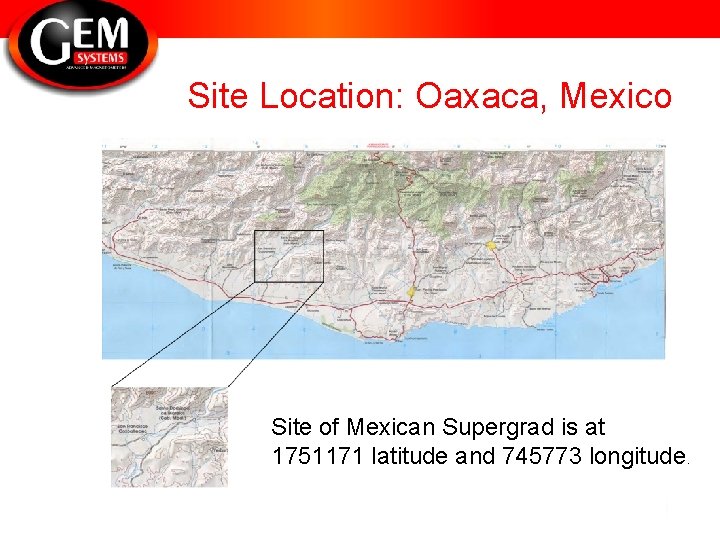
Site Location: Oaxaca, Mexico Site of Mexican Supergrad is at 1751171 latitude and 745773 longitude.
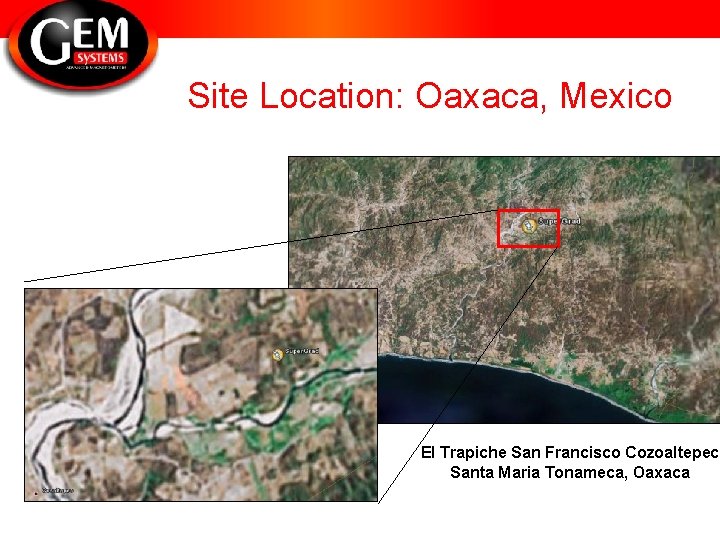
Site Location: Oaxaca, Mexico El Trapiche San Francisco Cozoaltepec Santa Maria Tonameca, Oaxaca
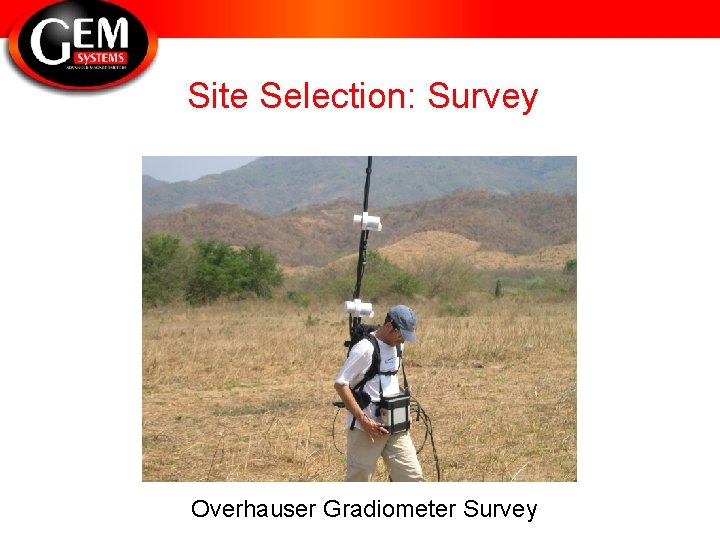
Site Selection: Survey Overhauser Gradiometer Survey
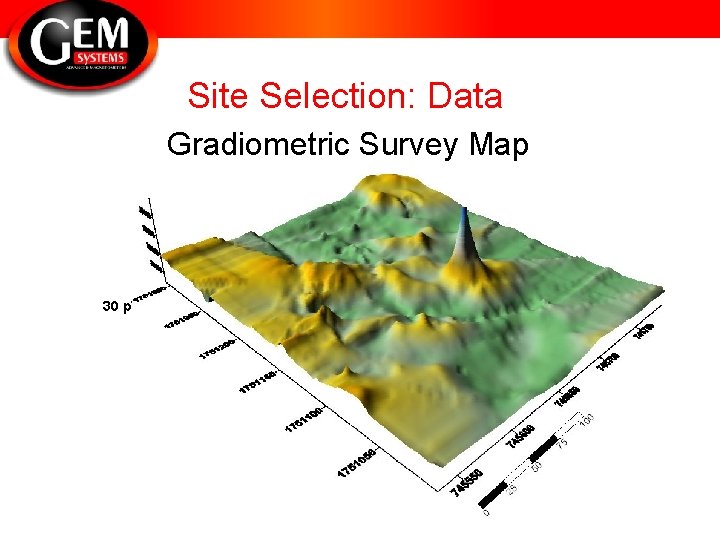
Site Selection: Data Gradiometric Survey Map 30 p. T
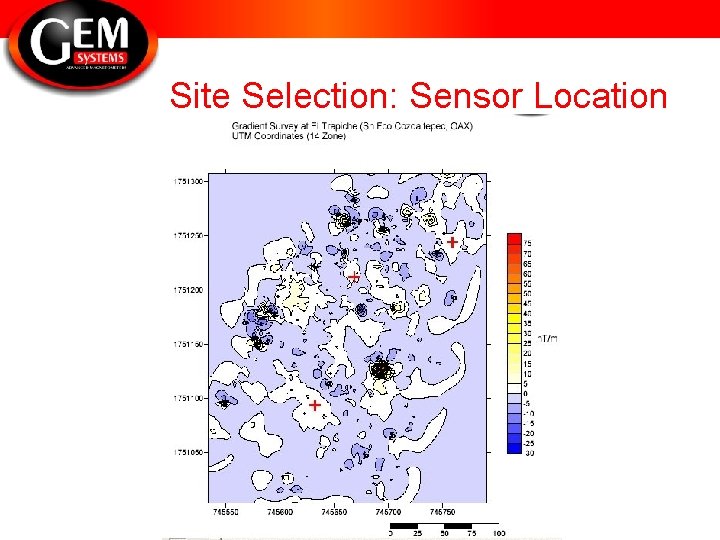
Site Selection: Sensor Location
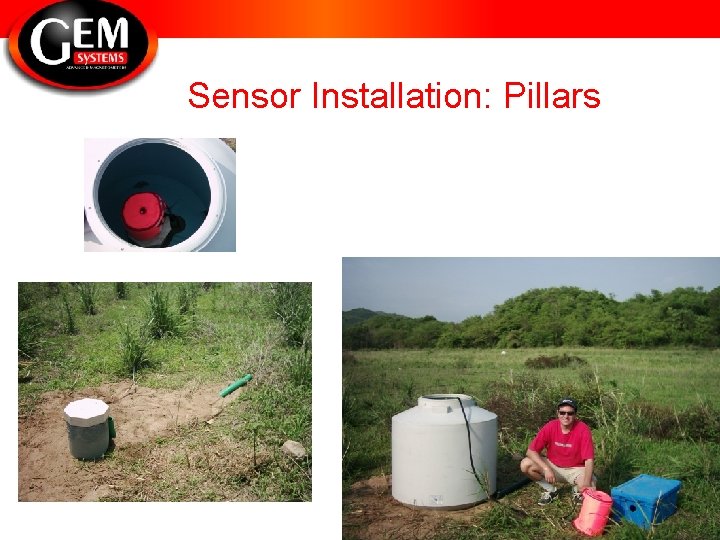
Sensor Installation: Pillars
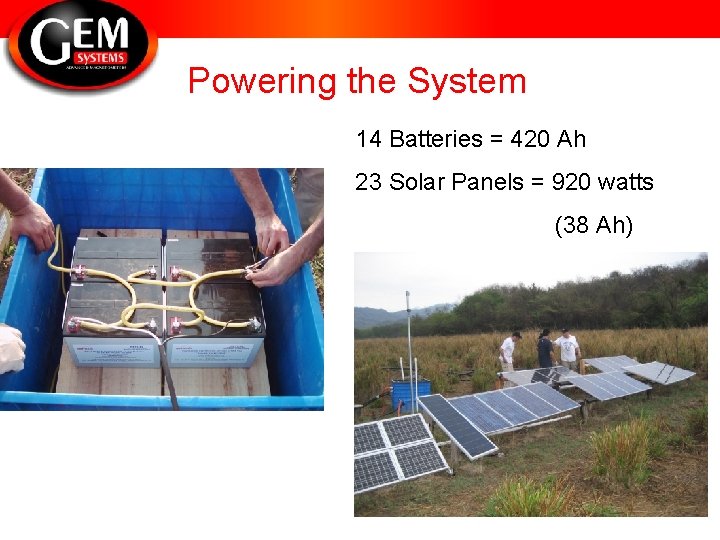
Powering the System 14 Batteries = 420 Ah 23 Solar Panels = 920 watts (38 Ah)
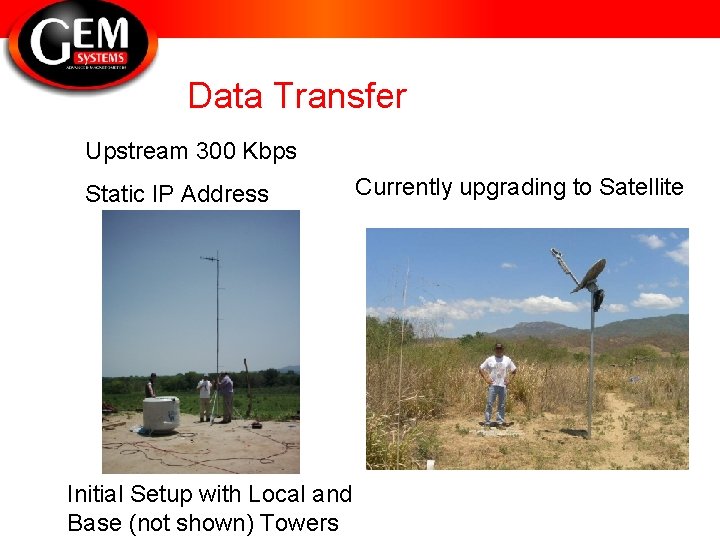
Data Transfer Upstream 300 Kbps Static IP Address Initial Setup with Local and Base (not shown) Towers Currently upgrading to Satellite
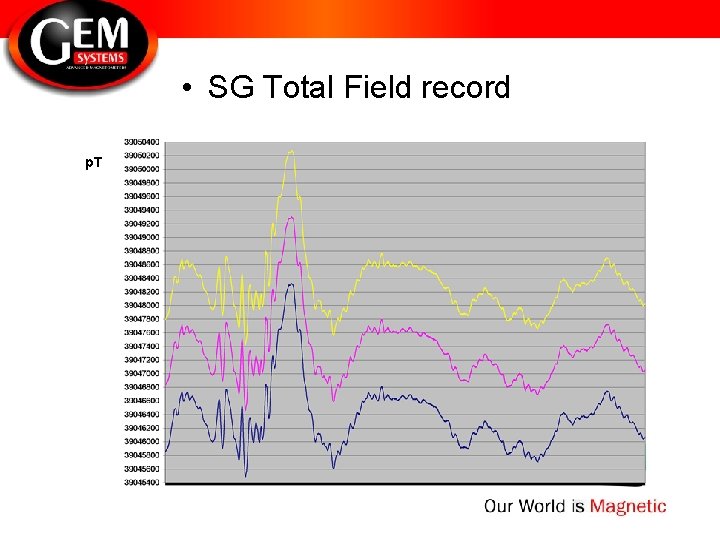
• SG Total Field record p. T
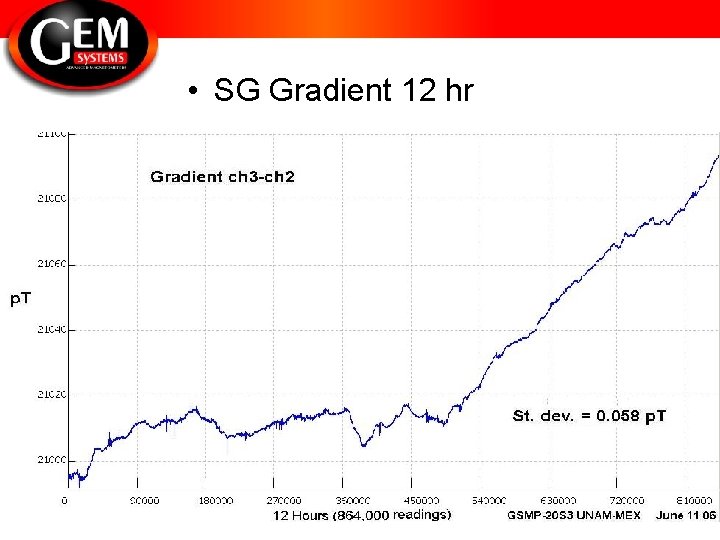
• SG Gradient 12 hr
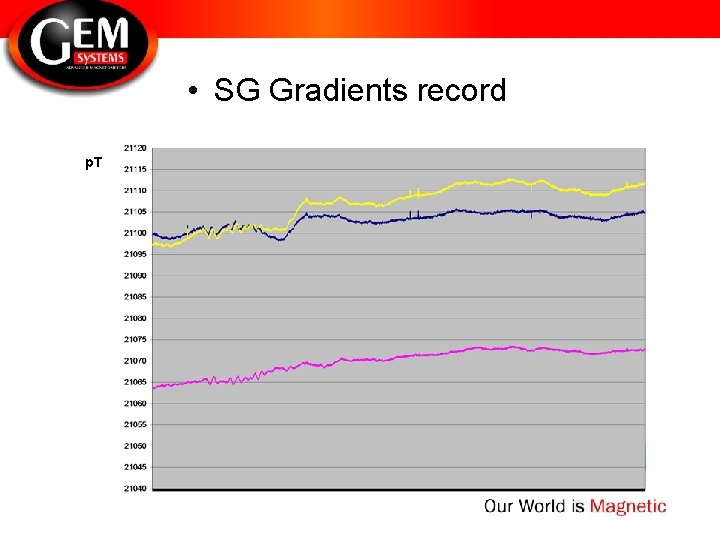
• SG Gradients record p. T
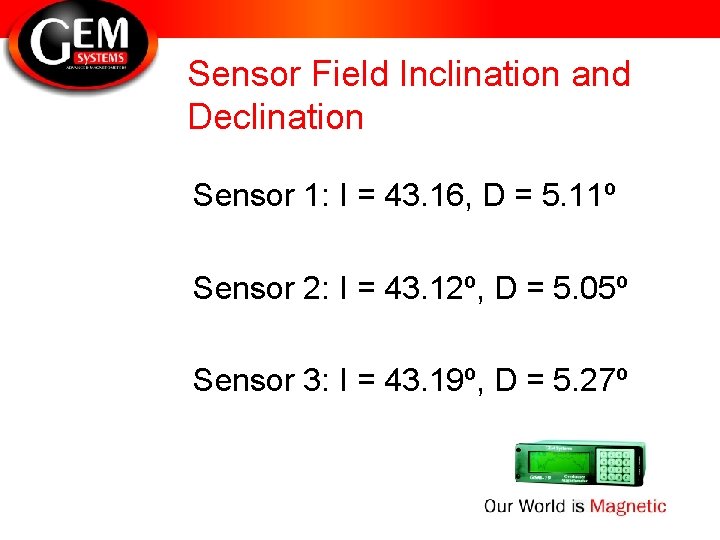
Sensor Field Inclination and Declination Sensor 1: I = 43. 16, D = 5. 11º Sensor 2: I = 43. 12º, D = 5. 05º Sensor 3: I = 43. 19º, D = 5. 27º
Introduction of Potassium d. Id. D – Correction of Diurnals in Gradients & Israeli Experience – Potassium d. Id. D – Site Selection – Sensor Installation – Satellite View of Site – Experimental Results
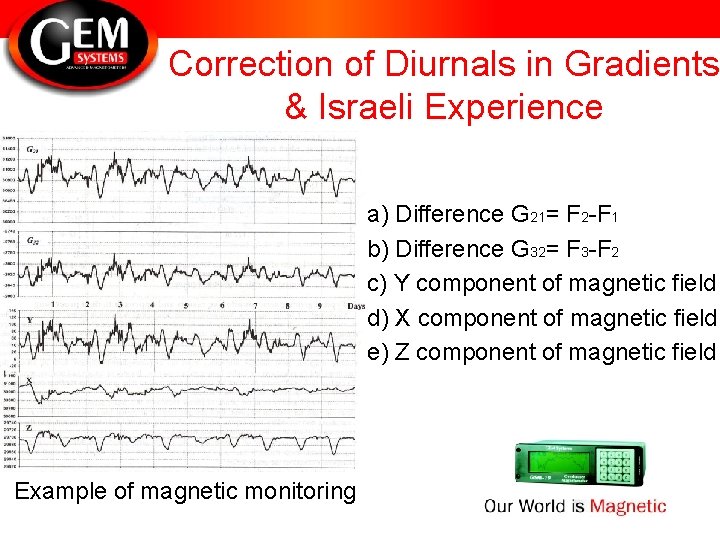
Correction of Diurnals in Gradients & Israeli Experience a) Difference G 21= F 2 -F 1 b) Difference G 32= F 3 -F 2 c) Y component of magnetic field d) X component of magnetic field e) Z component of magnetic field Example of magnetic monitoring
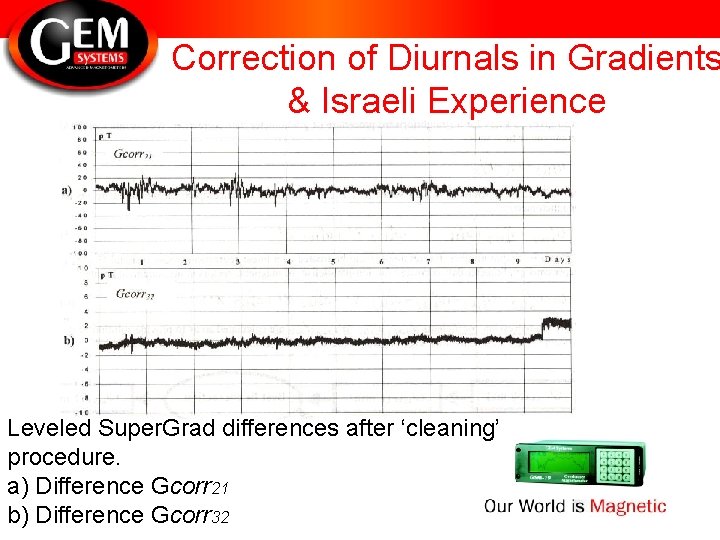
Correction of Diurnals in Gradients & Israeli Experience Leveled Super. Grad differences after ‘cleaning’ procedure. a) Difference Gcorr 21 b) Difference Gcorr 32

Potassium d. Id. D GSMP-35 d. Id. D In the past, some magnetic observatories relied on a combination of Overhauser d. Id. D, and theodolite instruments for obtaining measurements. GEM introduces new GSMP-35 d. Id. D (delta Inclination / delta Declination) system for high precision results (maximum 5 readings per second, 15 p. T sensitivity at 1 reading per second). Now, the d. Id. D has been enhanced significantly with the development of the Suspended d. Id. D system with potassium sensor.
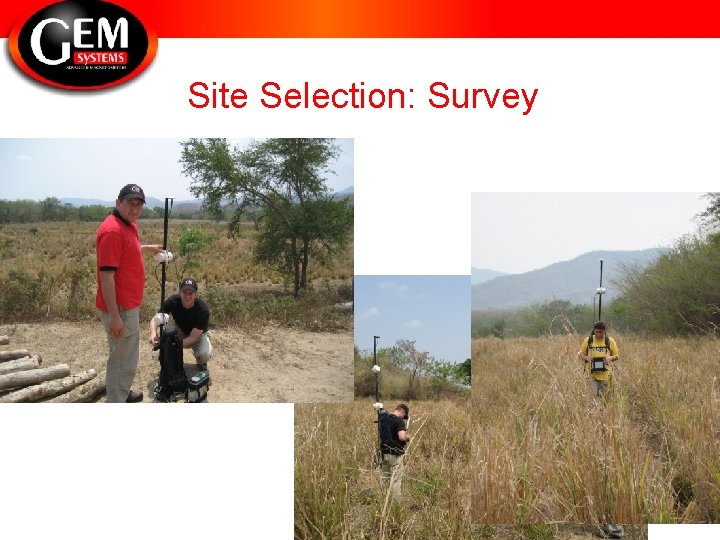
Site Selection: Survey
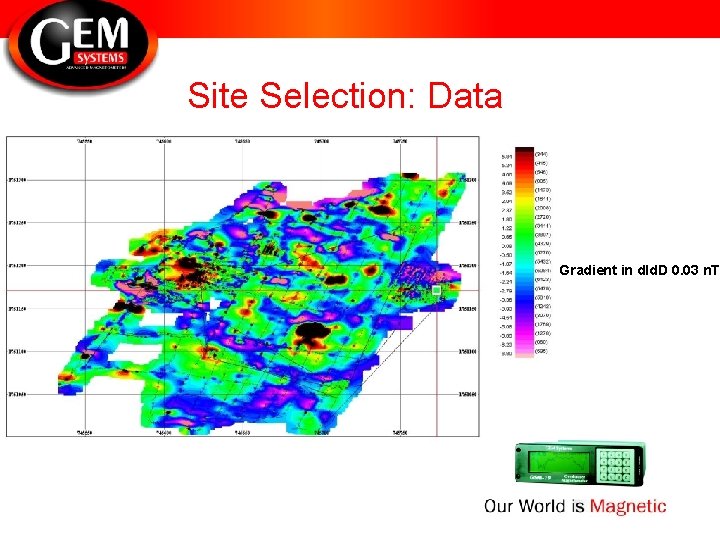
Site Selection: Data Gradient in d. Id. D 0. 03 n. T
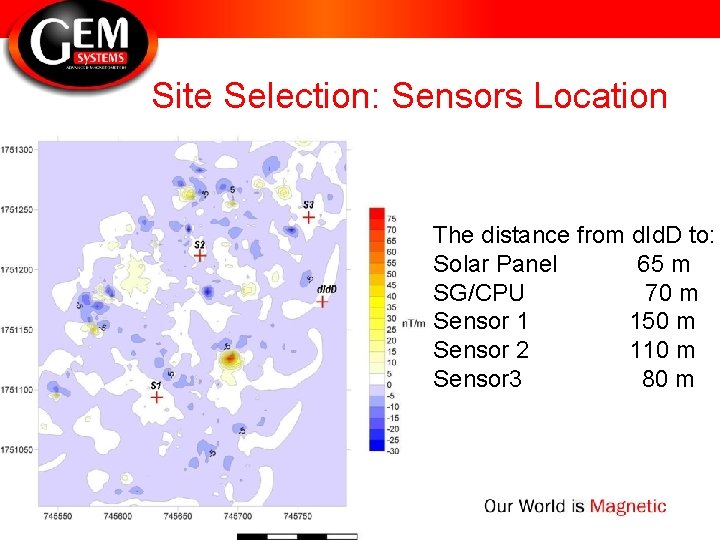
Site Selection: Sensors Location The distance from d. Id. D to: Solar Panel 65 m SG/CPU 70 m Sensor 1 150 m Sensor 2 110 m Sensor 3 80 m
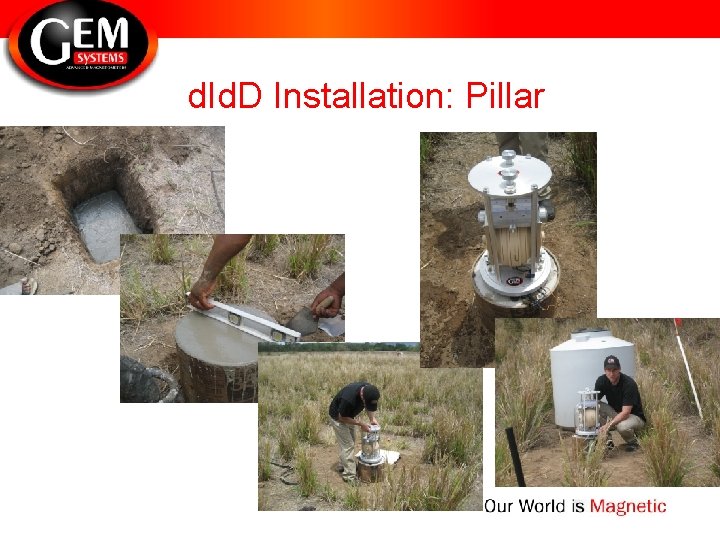
d. Id. D Installation: Pillar
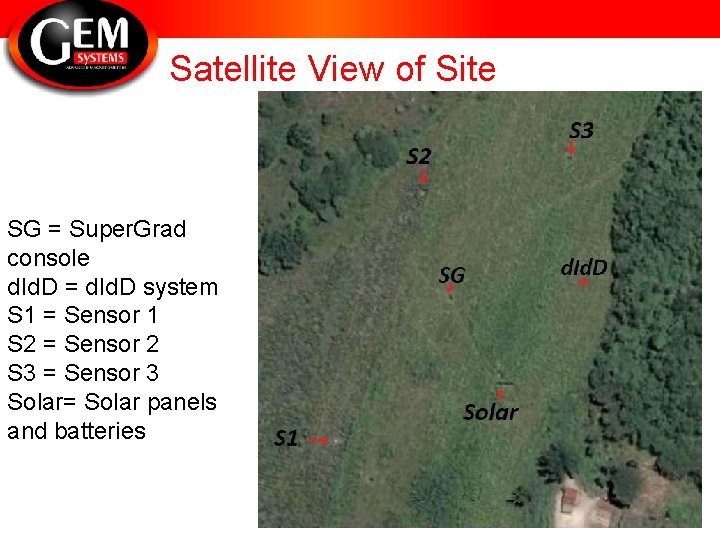
Satellite View of Site SG = Super. Grad console d. Id. D = d. Id. D system S 1 = Sensor 1 S 2 = Sensor 2 S 3 = Sensor 3 Solar= Solar panels and batteries
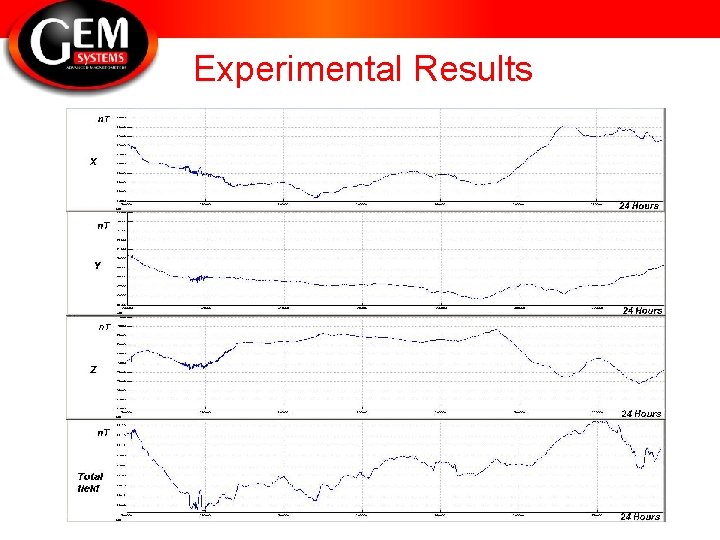
Experimental Results
Summary and Conclusions • We have tried to establish reference conditions to detect magnetic precursors of Earthquakes based on known precursors. • While trying to eliminate influence of diurnal variations of magnetic field, a need for a high sensitivity measurement of components arose. • We introduced a Potassium DIDD with some 15 p. T sensitivity, thus setting up possible new standards for a high sensitivity magnetic observatory
- Slides: 31