
New Immigration 1865 1896 Europeans Flood into America
- Slides: 17
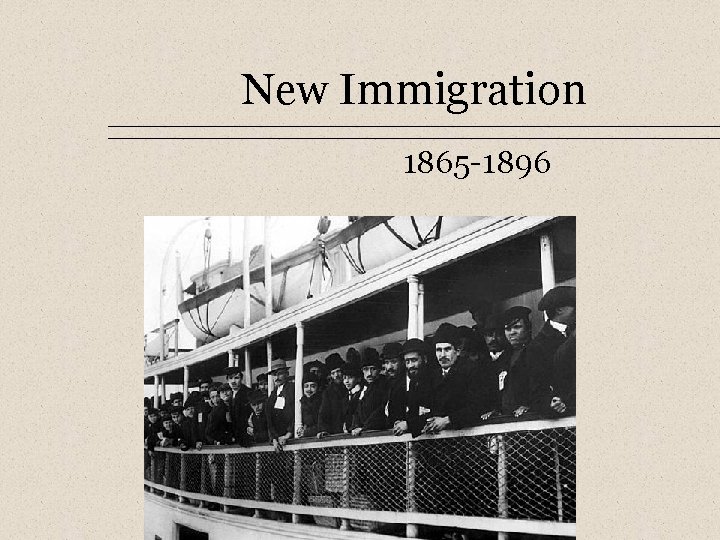
New Immigration 1865 -1896
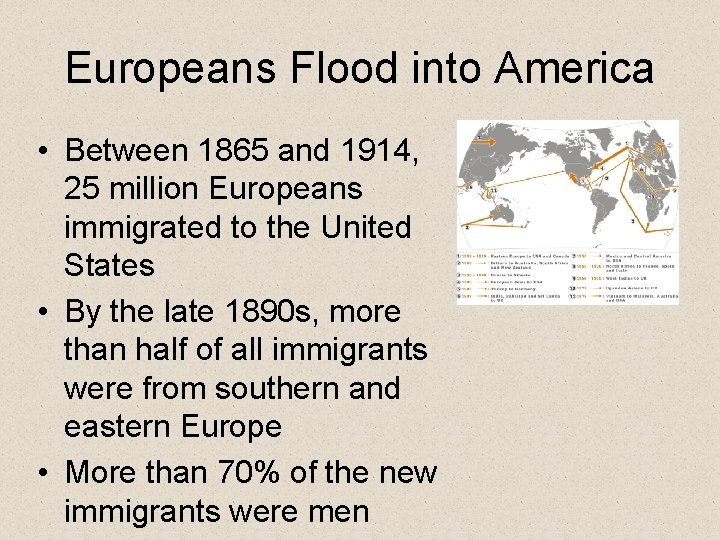
Europeans Flood into America • Between 1865 and 1914, 25 million Europeans immigrated to the United States • By the late 1890 s, more than half of all immigrants were from southern and eastern Europe • More than 70% of the new immigrants were men
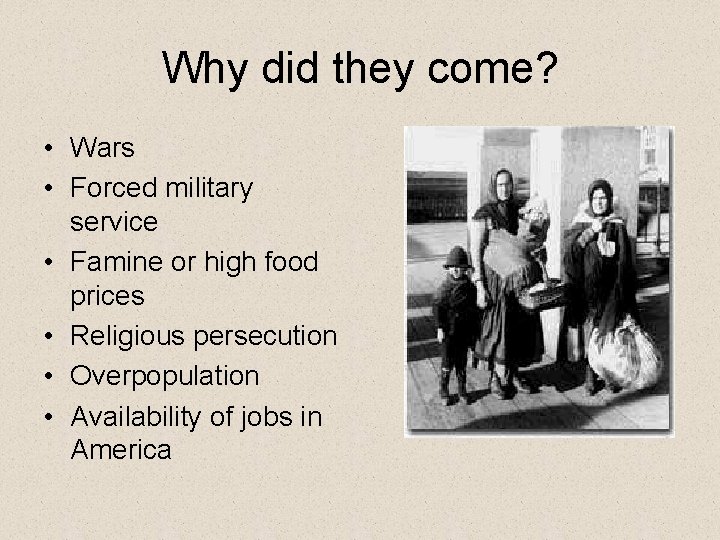
Why did they come? • Wars • Forced military service • Famine or high food prices • Religious persecution • Overpopulation • Availability of jobs in America
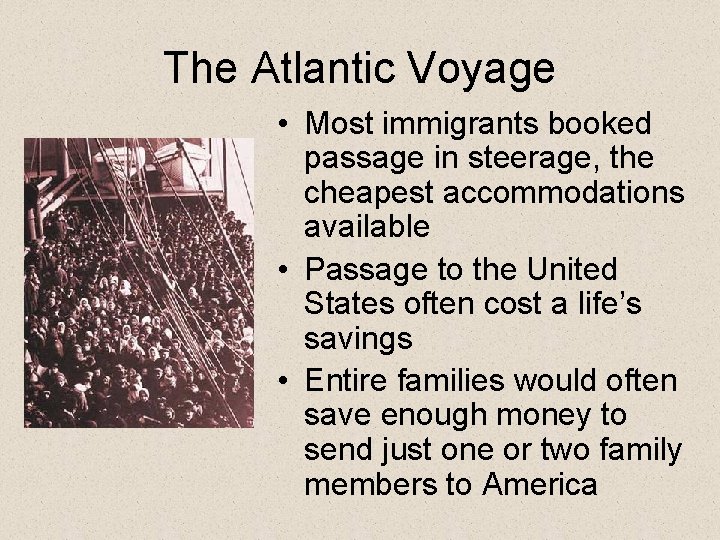
The Atlantic Voyage • Most immigrants booked passage in steerage, the cheapest accommodations available • Passage to the United States often cost a life’s savings • Entire families would often save enough money to send just one or two family members to America
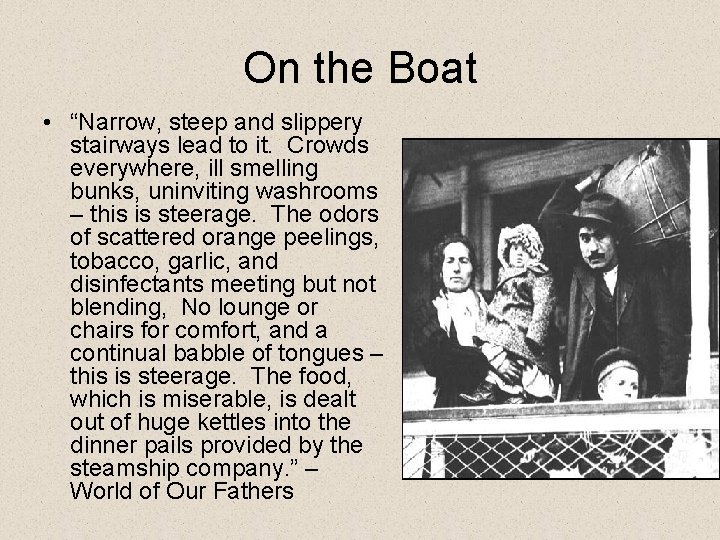
On the Boat • “Narrow, steep and slippery stairways lead to it. Crowds everywhere, ill smelling bunks, uninviting washrooms – this is steerage. The odors of scattered orange peelings, tobacco, garlic, and disinfectants meeting but not blending, No lounge or chairs for comfort, and a continual babble of tongues – this is steerage. The food, which is miserable, is dealt out of huge kettles into the dinner pails provided by the steamship company. ” – World of Our Fathers
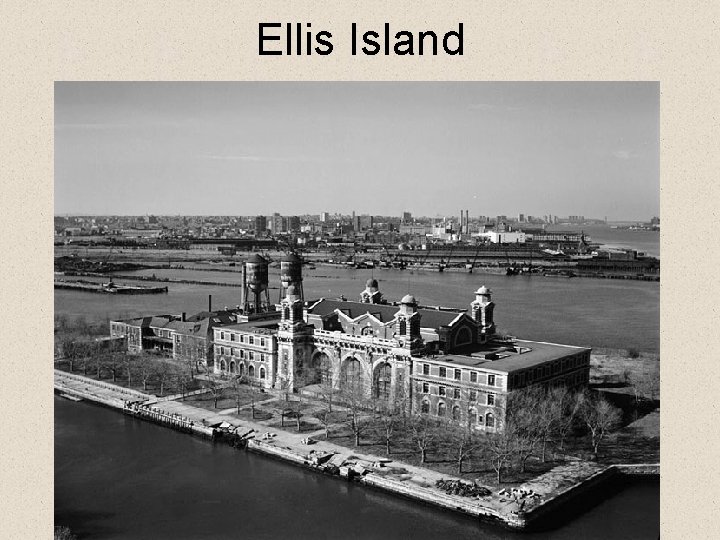
Ellis Island • Most immigrants coming from Europe passed through Ellis Island in New York City • A huge three-story building served as the processing center for many of the immigrants after 1892 • Immigrants filed past a doctor for an initial inspection – “Whenever a case aroused suspicion, the alien was set aside in a cage apart from the rest… and his coat or shirt marked with colored chalk. ” – If an immigrant failed the inspection, they risked the chance of being sent back to Europe
Ellis Island
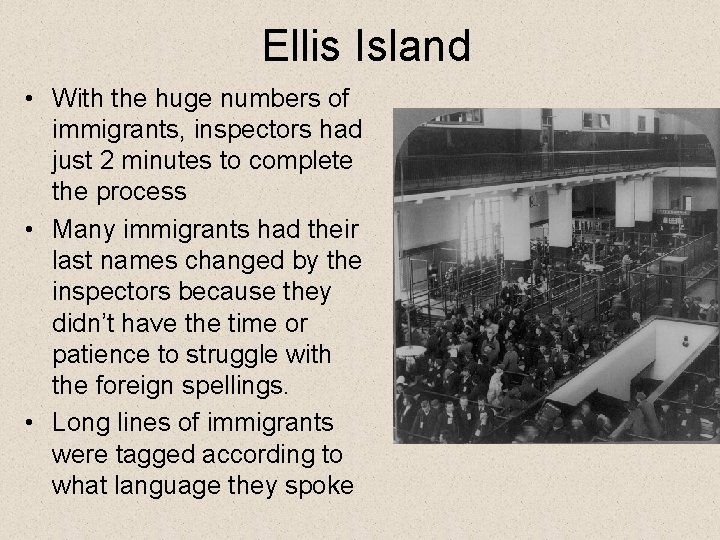
Ellis Island • With the huge numbers of immigrants, inspectors had just 2 minutes to complete the process • Many immigrants had their last names changed by the inspectors because they didn’t have the time or patience to struggle with the foreign spellings. • Long lines of immigrants were tagged according to what language they spoke
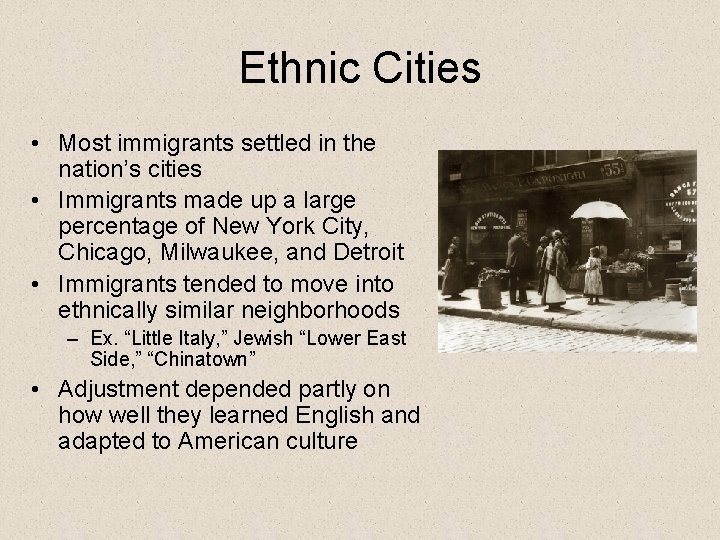
Ethnic Cities • Most immigrants settled in the nation’s cities • Immigrants made up a large percentage of New York City, Chicago, Milwaukee, and Detroit • Immigrants tended to move into ethnically similar neighborhoods – Ex. “Little Italy, ” Jewish “Lower East Side, ” “Chinatown” • Adjustment depended partly on how well they learned English and adapted to American culture
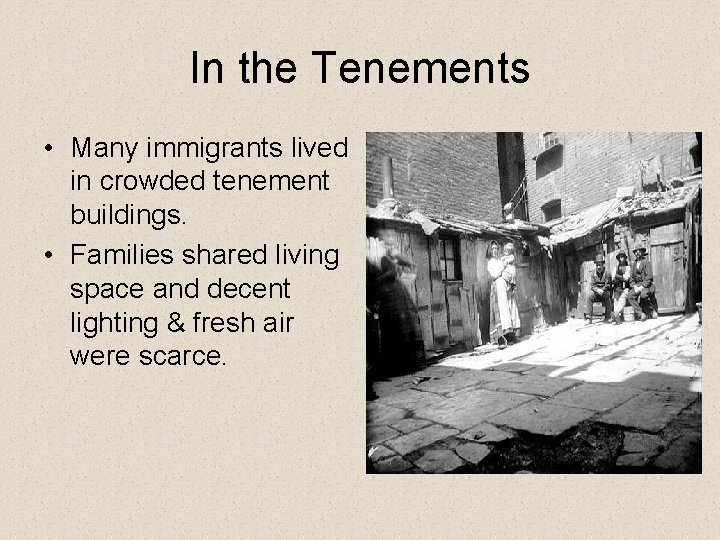
In the Tenements • Many immigrants lived • * in crowded tenement buildings. • Families shared living space and decent lighting & fresh air were scarce.
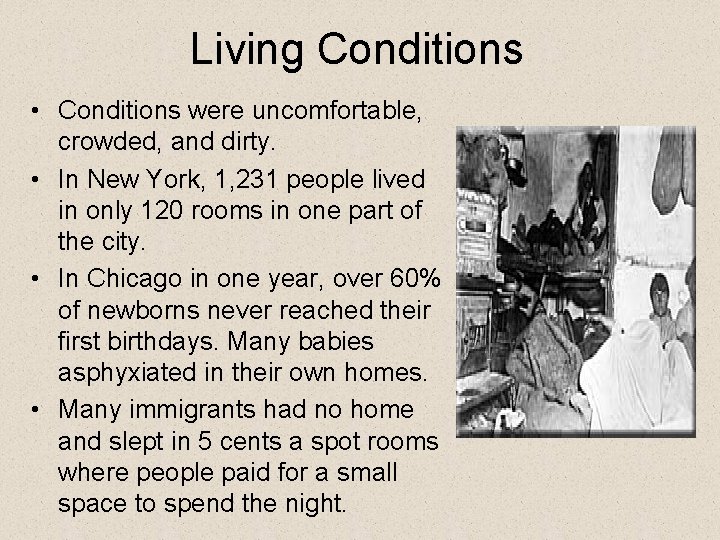
Living Conditions • Conditions were uncomfortable, crowded, and dirty. • In New York, 1, 231 people lived in only 120 rooms in one part of the city. • In Chicago in one year, over 60% of newborns never reached their first birthdays. Many babies asphyxiated in their own homes. • Many immigrants had no home and slept in 5 cents a spot rooms where people paid for a small space to spend the night.
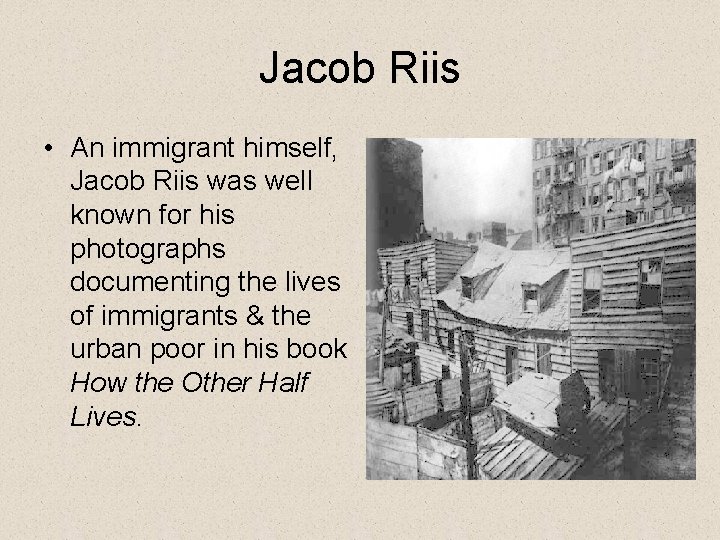
Jacob Riis • An immigrant himself, Jacob Riis was well known for his photographs documenting the lives of immigrants & the urban poor in his book How the Other Half Lives.
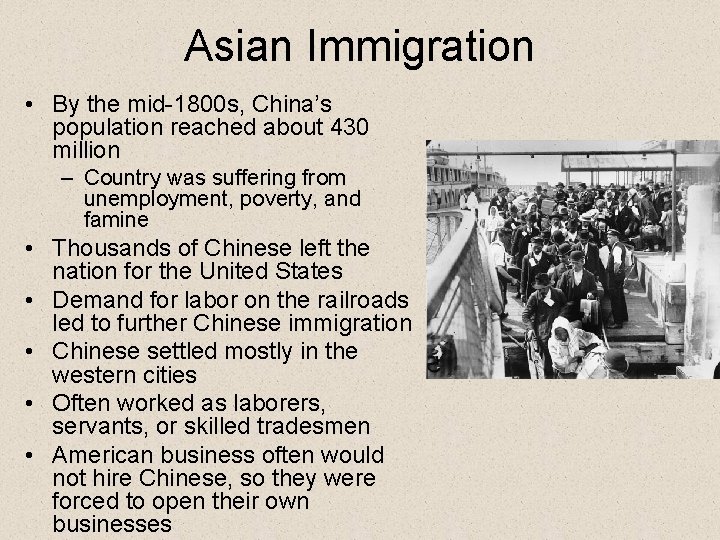
Asian Immigration • By the mid-1800 s, China’s population reached about 430 million – Country was suffering from unemployment, poverty, and famine • Thousands of Chinese left the nation for the United States • Demand for labor on the railroads led to further Chinese immigration • Chinese settled mostly in the western cities • Often worked as laborers, servants, or skilled tradesmen • American business often would not hire Chinese, so they were forced to open their own businesses
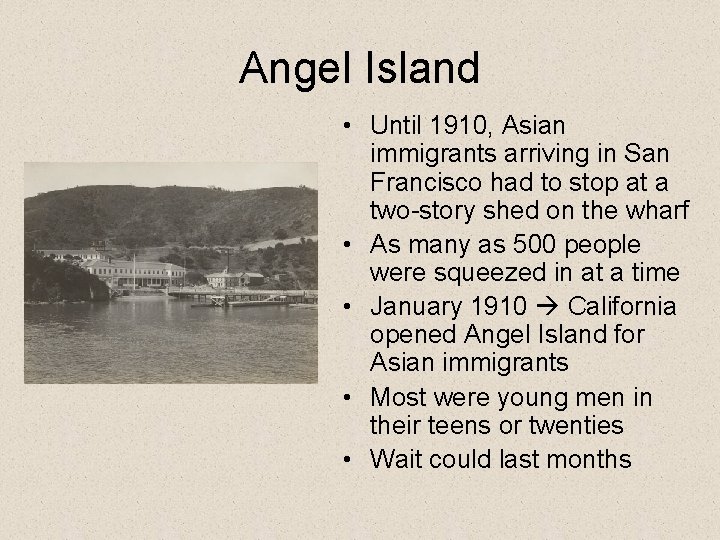
Angel Island • Until 1910, Asian immigrants arriving in San Francisco had to stop at a two-story shed on the wharf • As many as 500 people were squeezed in at a time • January 1910 California opened Angel Island for Asian immigrants • Most were young men in their teens or twenties • Wait could last months
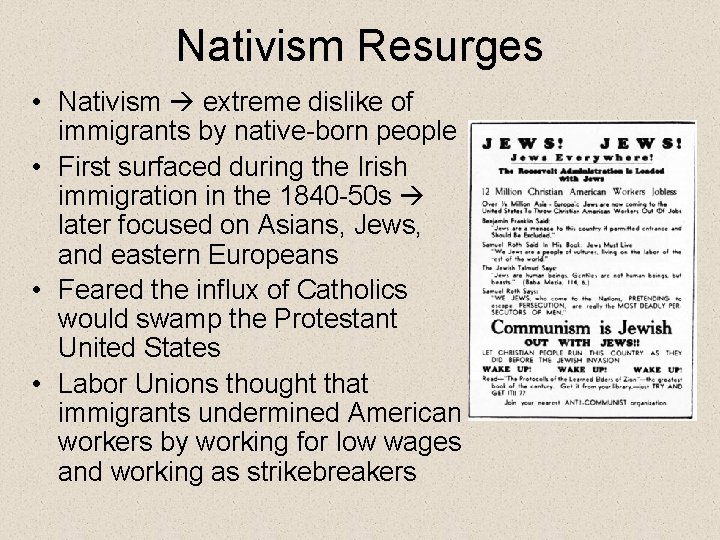
Nativism Resurges • Nativism extreme dislike of immigrants by native-born people • First surfaced during the Irish immigration in the 1840 -50 s later focused on Asians, Jews, and eastern Europeans • Feared the influx of Catholics would swamp the Protestant United States • Labor Unions thought that immigrants undermined American workers by working for low wages and working as strikebreakers
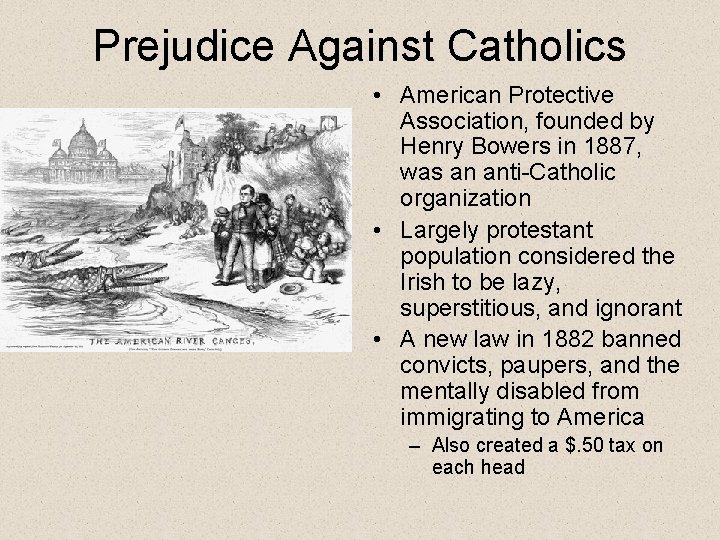
Prejudice Against Catholics • American Protective Association, founded by Henry Bowers in 1887, was an anti-Catholic organization • Largely protestant population considered the Irish to be lazy, superstitious, and ignorant • A new law in 1882 banned convicts, paupers, and the mentally disabled from immigrating to America – Also created a $. 50 tax on each head
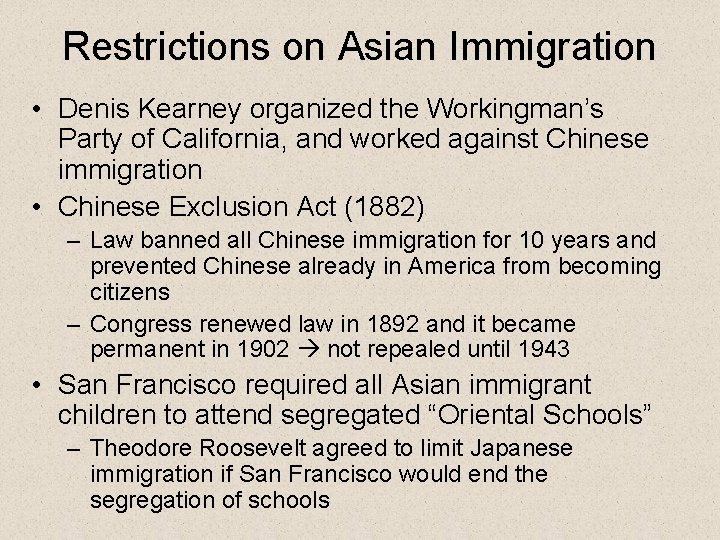
Restrictions on Asian Immigration • Denis Kearney organized the Workingman’s Party of California, and worked against Chinese immigration • Chinese Exclusion Act (1882) – Law banned all Chinese immigration for 10 years and prevented Chinese already in America from becoming citizens – Congress renewed law in 1892 and it became permanent in 1902 not repealed until 1943 • San Francisco required all Asian immigrant children to attend segregated “Oriental Schools” – Theodore Roosevelt agreed to limit Japanese immigration if San Francisco would end the segregation of schools