
New drugs in clinical trials targeting breast cancer
New drugs in clinical trials targeting breast cancer oncogenic pathways Antonino Grassadonia Università «G. D’Annunzio» Chieti - Pescara
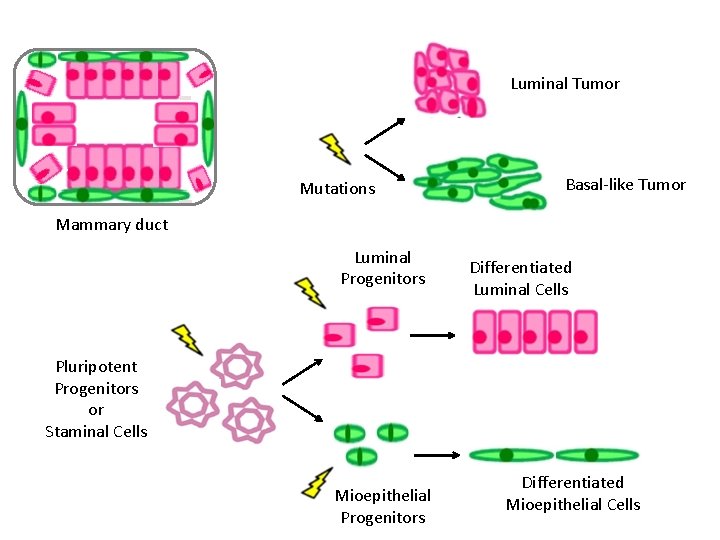
Luminal Tumor Mutations Basal-like Tumor Mammary duct Luminal Progenitors Differentiated Luminal Cells Pluripotent Progenitors or Staminal Cells Mioepithelial Progenitors Differentiated Mioepithelial Cells
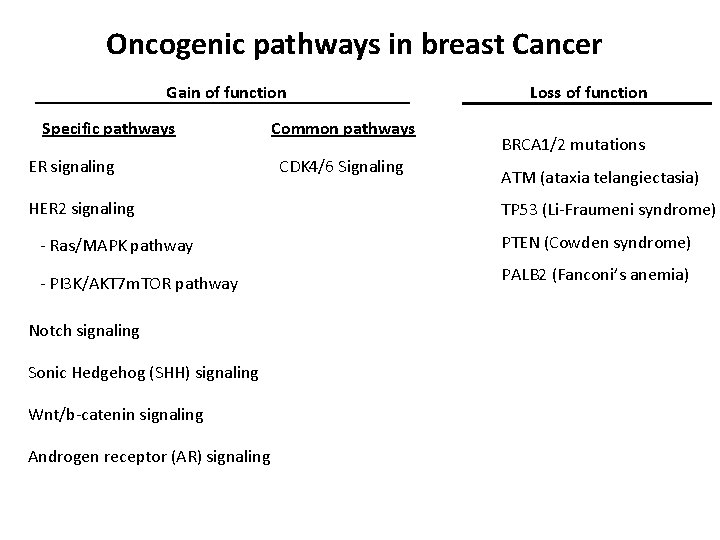
Oncogenic pathways in breast Cancer Gain of function Specific pathways ER signaling HER 2 signaling Common pathways CDK 4/6 Signaling Loss of function BRCA 1/2 mutations ATM (ataxia telangiectasia) TP 53 (Li-Fraumeni syndrome) - Ras/MAPK pathway PTEN (Cowden syndrome) - PI 3 K/AKT 7 m. TOR pathway PALB 2 (Fanconi’s anemia) Notch signaling Sonic Hedgehog (SHH) signaling Wnt/b-catenin signaling Androgen receptor (AR) signaling
Timeline of FDA Drug Approvals for MBC
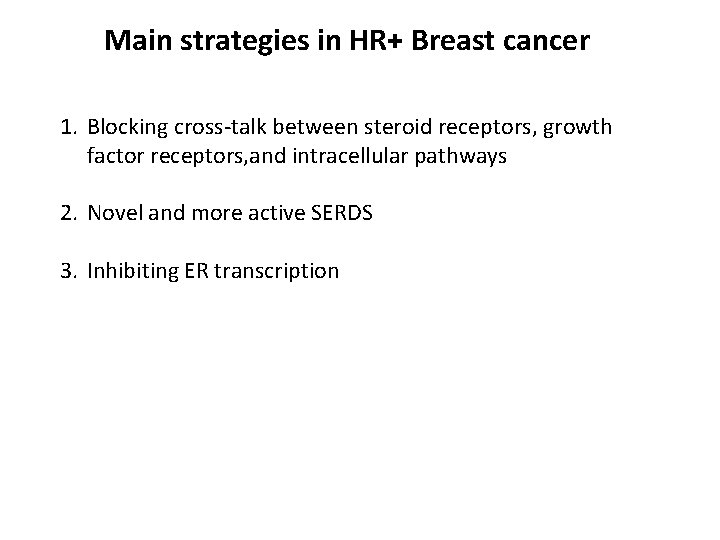
Main strategies in HR+ Breast cancer 1. Blocking cross-talk between steroid receptors, growth factor receptors, and intracellular pathways 2. Novel and more active SERDS 3. Inhibiting ER transcription
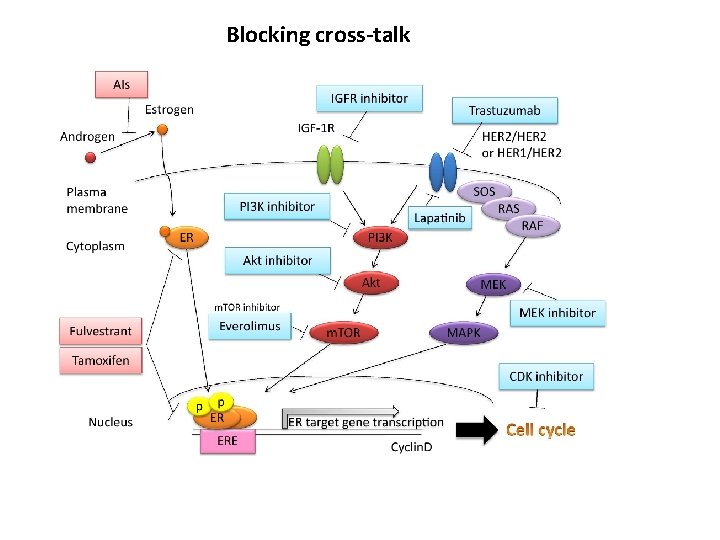
Blocking cross-talk

Mutational analyses of PIK 3 CA in cancer
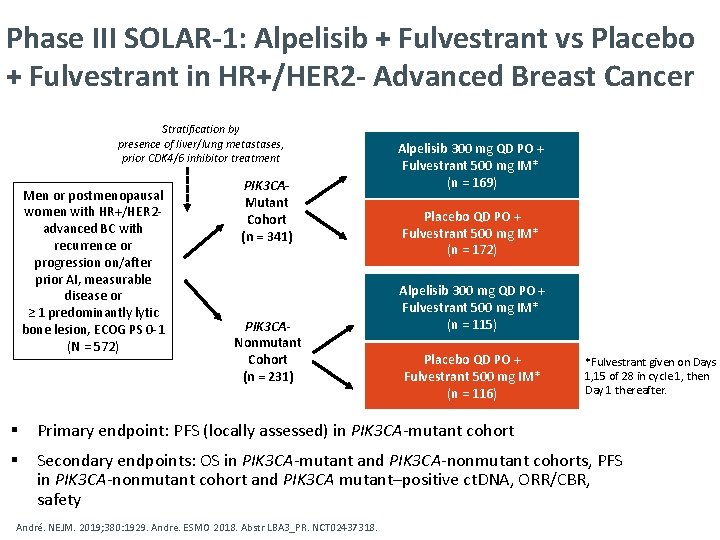
Phase III SOLAR-1: Alpelisib + Fulvestrant vs Placebo + Fulvestrant in HR+/HER 2 - Advanced Breast Cancer Stratification by presence of liver/lung metastases, prior CDK 4/6 inhibitor treatment Men or postmenopausal women with HR+/HER 2 advanced BC with recurrence or progression on/after prior AI, measurable disease or ≥ 1 predominantly lytic bone lesion, ECOG PS 0 -1 (N = 572) PIK 3 CAMutant Cohort (n = 341) PIK 3 CANonmutant Cohort (n = 231) Alpelisib 300 mg QD PO + Fulvestrant 500 mg IM* (n = 169) Placebo QD PO + Fulvestrant 500 mg IM* (n = 172) Alpelisib 300 mg QD PO + Fulvestrant 500 mg IM* (n = 115) Placebo QD PO + Fulvestrant 500 mg IM* (n = 116) *Fulvestrant given on Days 1, 15 of 28 in cycle 1, then Day 1 thereafter. § Primary endpoint: PFS (locally assessed) in PIK 3 CA-mutant cohort § Secondary endpoints: OS in PIK 3 CA-mutant and PIK 3 CA-nonmutant cohorts, PFS in PIK 3 CA-nonmutant cohort and PIK 3 CA mutant–positive ct. DNA, ORR/CBR, safety André. NEJM. 2019; 380: 1929. Andre. ESMO 2018. Abstr LBA 3_PR. NCT 02437318.
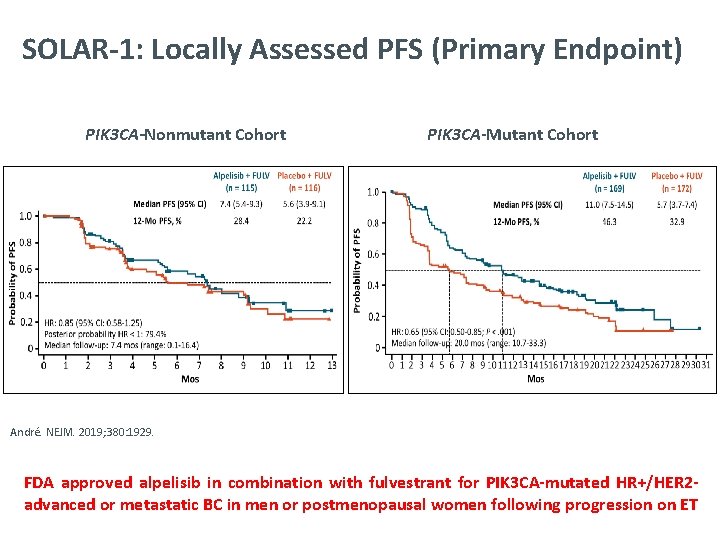
SOLAR-1: Locally Assessed PFS (Primary Endpoint) PIK 3 CA-Nonmutant Cohort PIK 3 CA-Mutant Cohort André. NEJM. 2019; 380: 1929. FDA approved alpelisib in combination with fulvestrant for PIK 3 CA-mutated HR+/HER 2 advanced or metastatic BC in men or postmenopausal women following progression on ET

Clinical trials with CDK 4/6 inhibitors in combination with inhibitors of PI 3 kinase pathway and endocrine therapy in advanced HR+HER 2 - breast cancer

Clinical trials with PI 3 K or CDK 4/6 inhibitors in combination with anti-HER 2 and endocrine therapy in advanced HR+HER 2+ breast cancer STUDY INTERVENTION RECRUITMENT PHASE NCT 03767335 MEN 1611 + Trastuzumab +/-Fulvestrant (after >2 lines of anti-HER 2 txt) Recruiting I NCT 02947685 Palbociclib + trastuzumab/pertuzumab + Endocrine Therapy vs trastuzumab/pertuzumab + Endocrine Therapy Recruiting III NCT 03709082 Palbociclib, +Letrozole +T-DM 1 (after I line with Trast +/-Pert. ) Recruiting II
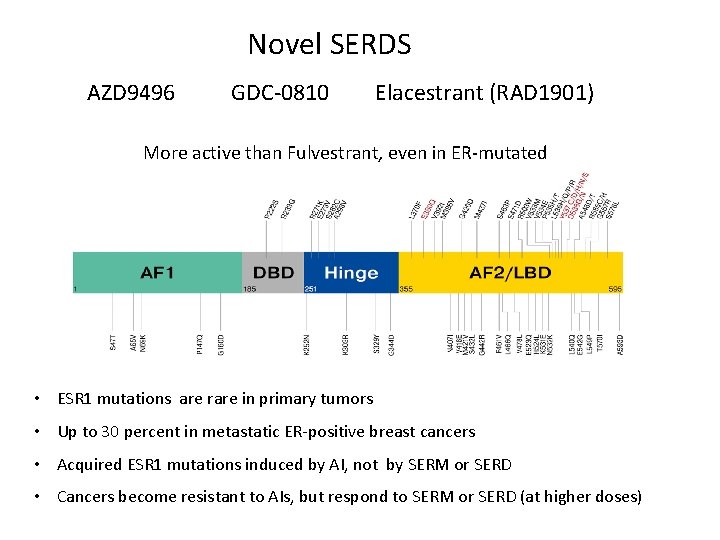
Novel SERDS AZD 9496 GDC-0810 Elacestrant (RAD 1901) More active than Fulvestrant, even in ER-mutated • ESR 1 mutations are rare in primary tumors • Up to 30 percent in metastatic ER-positive breast cancers • Acquired ESR 1 mutations induced by AI, not by SERM or SERD • Cancers become resistant to AIs, but respond to SERM or SERD (at higher doses)

Novel SERDS: Clinical Trials AZD 9496 short half-life and GDC 0810 low activity are limitations for clinical development Elacestrant (RAD 1901) is in phase 3 clinical trial (EMERALD trial; NCT 03778931)
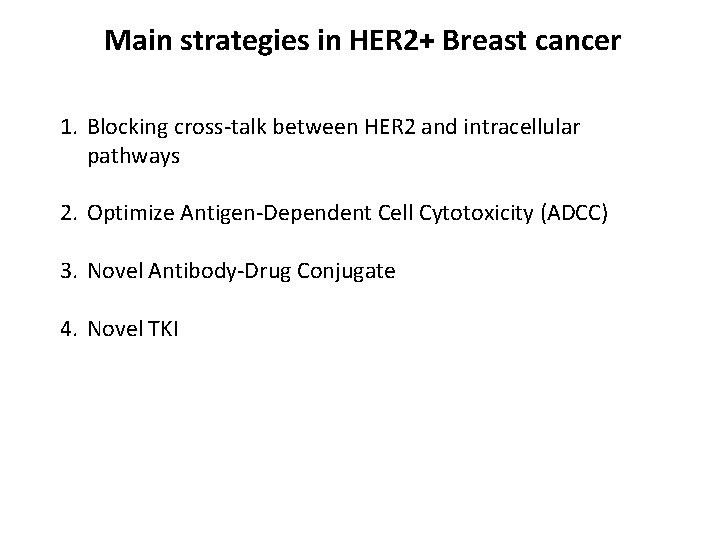
Main strategies in HER 2+ Breast cancer 1. Blocking cross-talk between HER 2 and intracellular pathways 2. Optimize Antigen-Dependent Cell Cytotoxicity (ADCC) 3. Novel Antibody-Drug Conjugate 4. Novel TKI
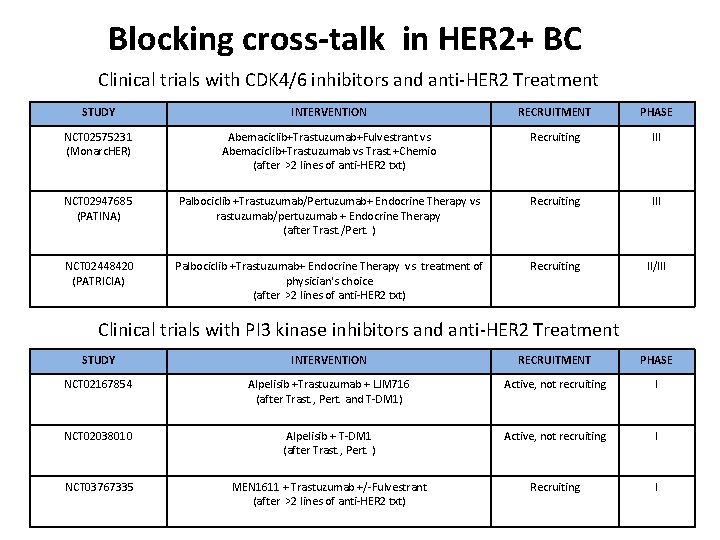
Blocking cross-talk in HER 2+ BC Clinical trials with CDK 4/6 inhibitors and anti-HER 2 Treatment STUDY INTERVENTION RECRUITMENT PHASE NCT 02575231 (Monarc. HER) Abemaciclib+Trastuzumab+Fulvestrant vs Abemaciclib+Trastuzumab vs Trast. +Chemio (after >2 lines of anti-HER 2 txt) Recruiting III NCT 02947685 (PATINA) Palbociclib +Trastuzumab/Pertuzumab+ Endocrine Therapy vs rastuzumab/pertuzumab + Endocrine Therapy (after Trast. /Pert. ) Recruiting III NCT 02448420 (PATRICIA) Palbociclib +Trastuzumab+ Endocrine Therapy vs treatment of physician's choice (after >2 lines of anti-HER 2 txt) Recruiting II/III Clinical trials with PI 3 kinase inhibitors and anti-HER 2 Treatment STUDY INTERVENTION RECRUITMENT PHASE NCT 02167854 Alpelisib +Trastuzumab + LJM 716 (after Trast. , Pert. and T-DM 1) Active, not recruiting I NCT 02038010 Alpelisib + T-DM 1 (after Trast. , Pert. ) Active, not recruiting I NCT 03767335 MEN 1611 + Trastuzumab +/-Fulvestrant (after >2 lines of anti-HER 2 txt) Recruiting I
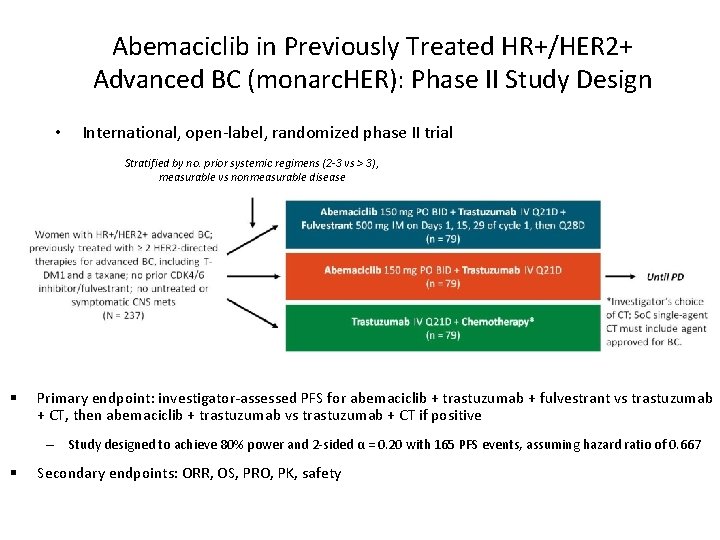
Abemaciclib in Previously Treated HR+/HER 2+ Advanced BC (monarc. HER): Phase II Study Design • International, open-label, randomized phase II trial Stratified by no. prior systemic regimens (2 -3 vs > 3), measurable vs nonmeasurable disease § Primary endpoint: investigator-assessed PFS for abemaciclib + trastuzumab + fulvestrant vs trastuzumab + CT, then abemaciclib + trastuzumab vs trastuzumab + CT if positive ‒ Study designed to achieve 80% power and 2 -sided α = 0. 20 with 165 PFS events, assuming hazard ratio of 0. 667 § Secondary endpoints: ORR, OS, PRO, PK, safety
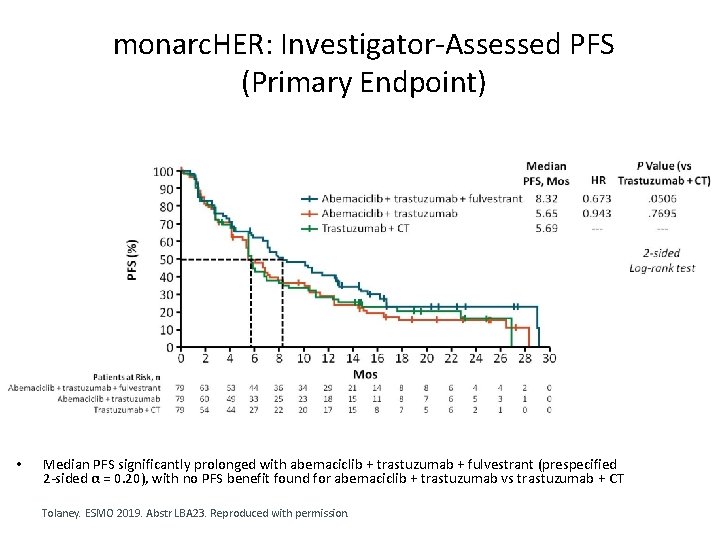
monarc. HER: Investigator-Assessed PFS (Primary Endpoint) • Median PFS significantly prolonged with abemaciclib + trastuzumab + fulvestrant (prespecified 2 -sided α = 0. 20), with no PFS benefit found for abemaciclib + trastuzumab vs trastuzumab + CT Tolaney. ESMO 2019. Abstr LBA 23. Reproduced with permission.
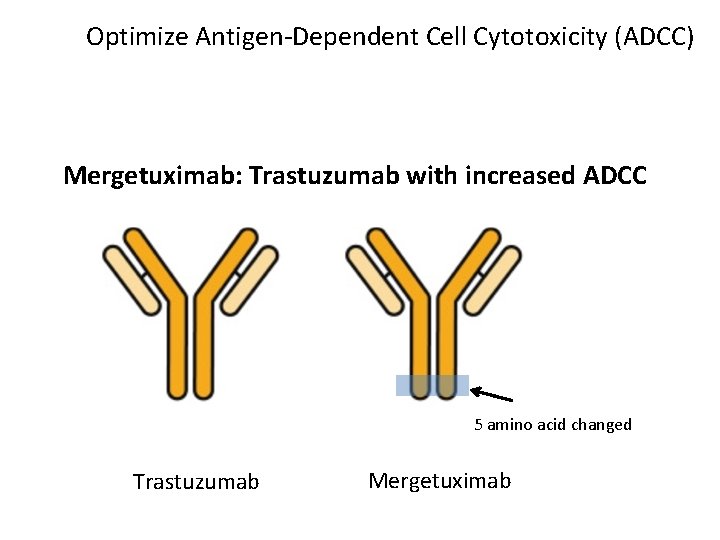
Optimize Antigen-Dependent Cell Cytotoxicity (ADCC) Mergetuximab: Trastuzumab with increased ADCC 5 amino acid changed Trastuzumab Mergetuximab
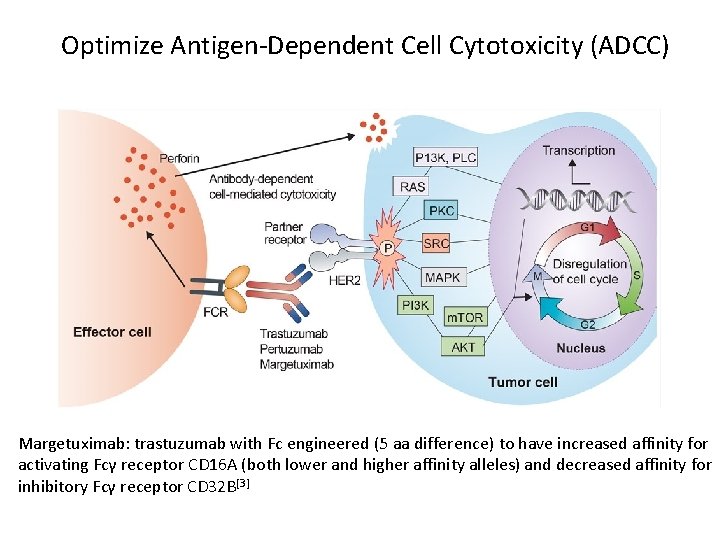
Optimize Antigen-Dependent Cell Cytotoxicity (ADCC) Margetuximab: trastuzumab with Fc engineered (5 aa difference) to have increased affinity for activating Fcγ receptor CD 16 A (both lower and higher affinity alleles) and decreased affinity for inhibitory Fcγ receptor CD 32 B[3]
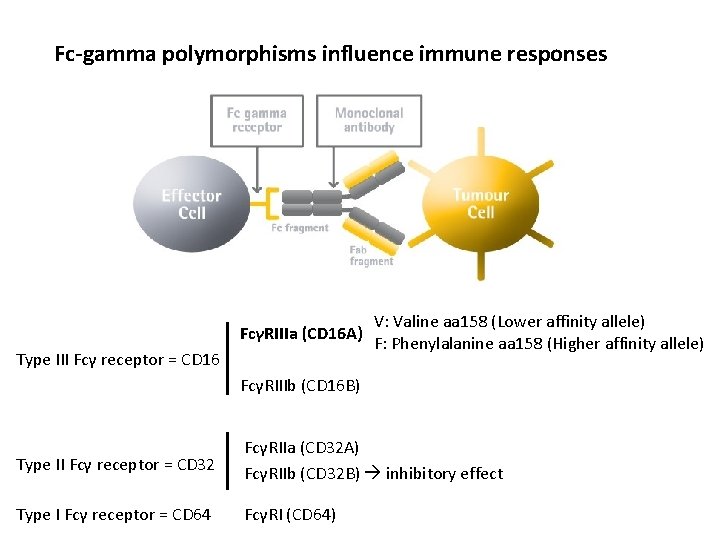
Fc-gamma polymorphisms influence immune responses FcγRIIIa (CD 16 A) Type III Fcγ receptor = CD 16 V: Valine aa 158 (Lower affinity allele) F: Phenylalanine aa 158 (Higher affinity allele) FcγRIIIb (CD 16 B) Type II Fcγ receptor = CD 32 FcγRIIa (CD 32 A) FcγRIIb (CD 32 B) inhibitory effect Type I Fcγ receptor = CD 64 FcγRI (CD 64)
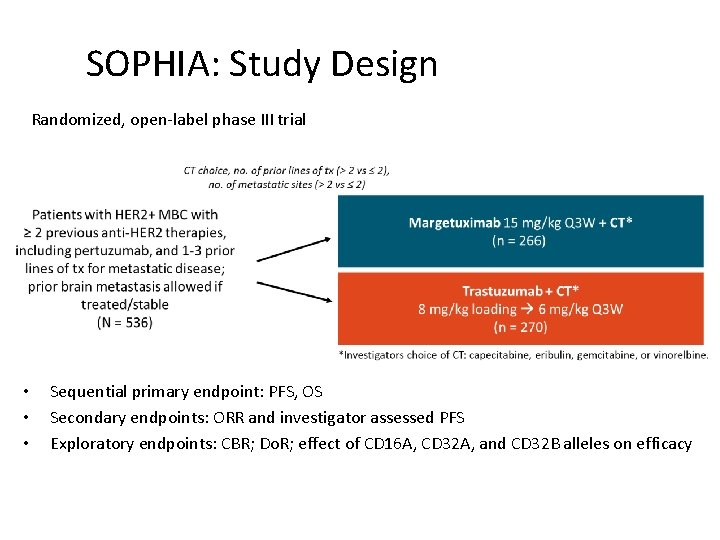
SOPHIA: Study Design Randomized, open-label phase III trial • • • Sequential primary endpoint: PFS, OS Secondary endpoints: ORR and investigator assessed PFS Exploratory endpoints: CBR; Do. R; effect of CD 16 A, CD 32 A, and CD 32 B alleles on efficacy
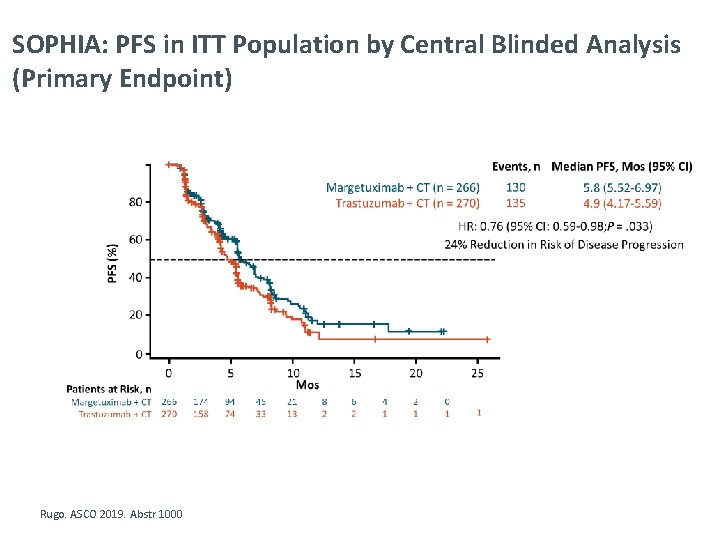
SOPHIA: PFS in ITT Population by Central Blinded Analysis (Primary Endpoint) Rugo. ASCO 2019. Abstr 1000
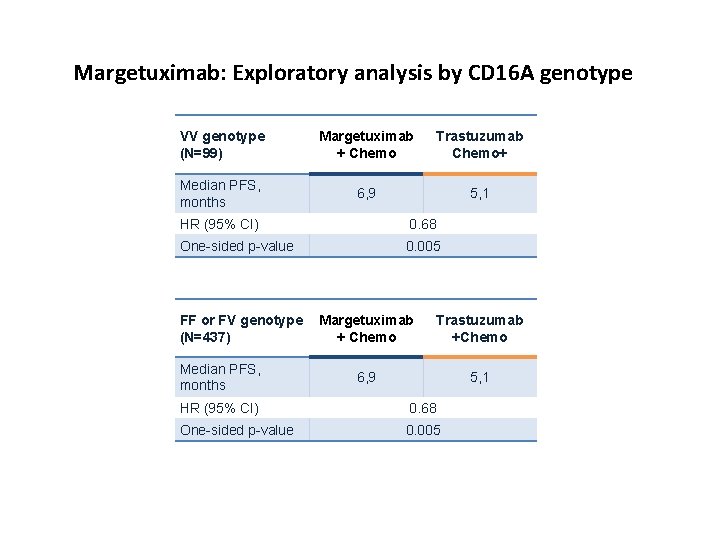
Margetuximab: Exploratory analysis by CD 16 A genotype VV genotype (N=99) Margetuximab + Chemo Trastuzumab Chemo+ Median PFS, months 6, 9 5, 1 HR (95% CI) 0. 68 One-sided p-value 0. 005 FF or FV genotype (N=437) Median PFS, months Margetuximab + Chemo Trastuzumab +Chemo 6, 9 5, 1 HR (95% CI) 0. 68 One-sided p-value 0. 005
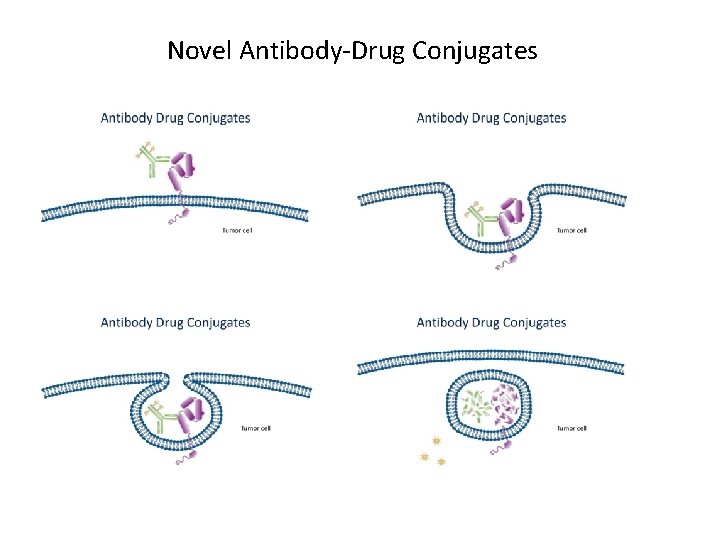
Novel Antibody-Drug Conjugates
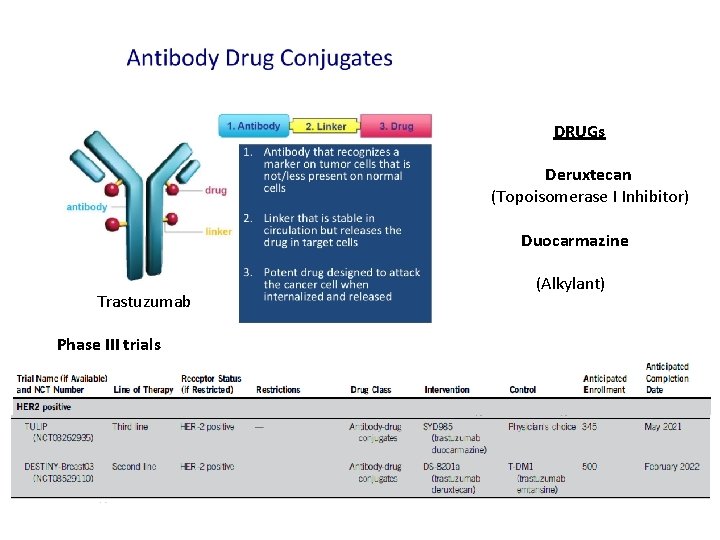
DRUGs Deruxtecan (Topoisomerase I Inhibitor) Duocarmazine Trastuzumab Phase III trials (Alkylant)
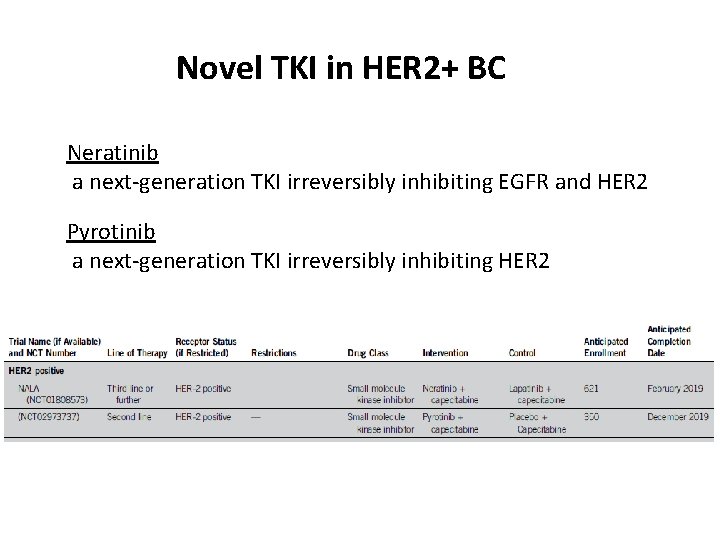
Novel TKI in HER 2+ BC Neratinib a next-generation TKI irreversibly inhibiting EGFR and HER 2 Pyrotinib a next-generation TKI irreversibly inhibiting HER 2
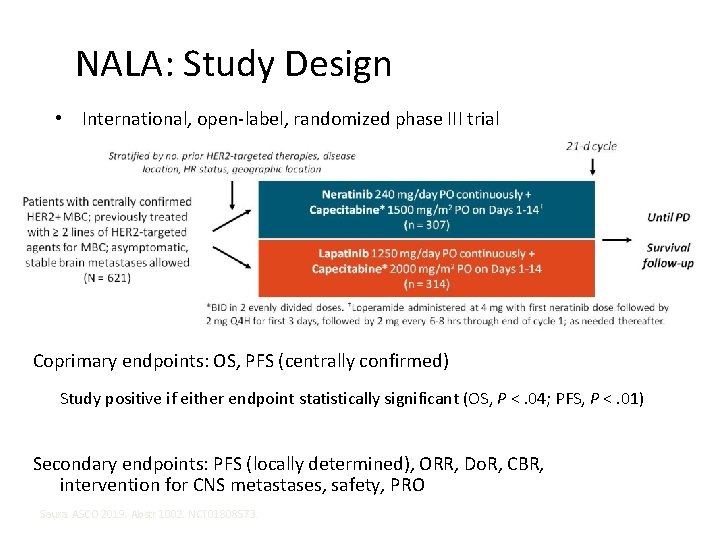
NALA: Study Design • International, open-label, randomized phase III trial Coprimary endpoints: OS, PFS (centrally confirmed) Study positive if either endpoint statistically significant (OS, P <. 04; PFS, P <. 01) Secondary endpoints: PFS (locally determined), ORR, Do. R, CBR, intervention for CNS metastases, safety, PRO Saura. ASCO 2019. Abstr 1002. NCT 01808573.
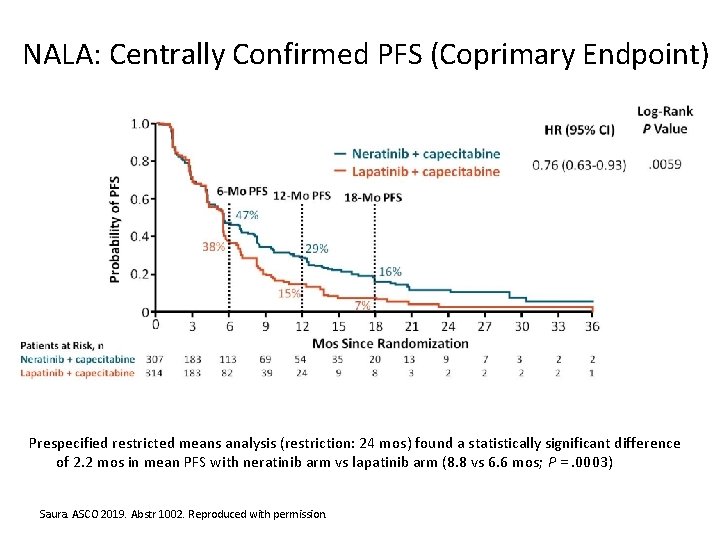
NALA: Centrally Confirmed PFS (Coprimary Endpoint) Prespecified restricted means analysis (restriction: 24 mos) found a statistically significant difference of 2. 2 mos in mean PFS with neratinib arm vs lapatinib arm (8. 8 vs 6. 6 mos; P =. 0003) Saura. ASCO 2019. Abstr 1002. Reproduced with permission.
Main strategies in Triple-Negative Breast cancer 1. Immune checkpoint Inhibitors 2. Novel Antibody-Drug Conjugate 3. Targeting novel oncogeniv pathways
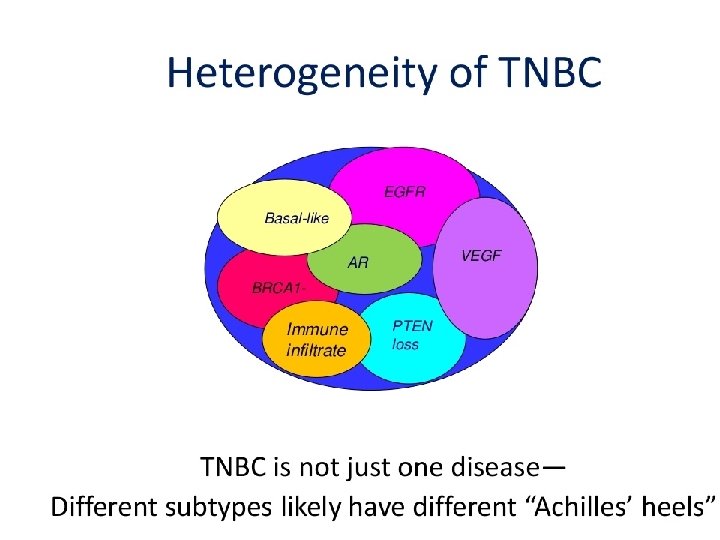
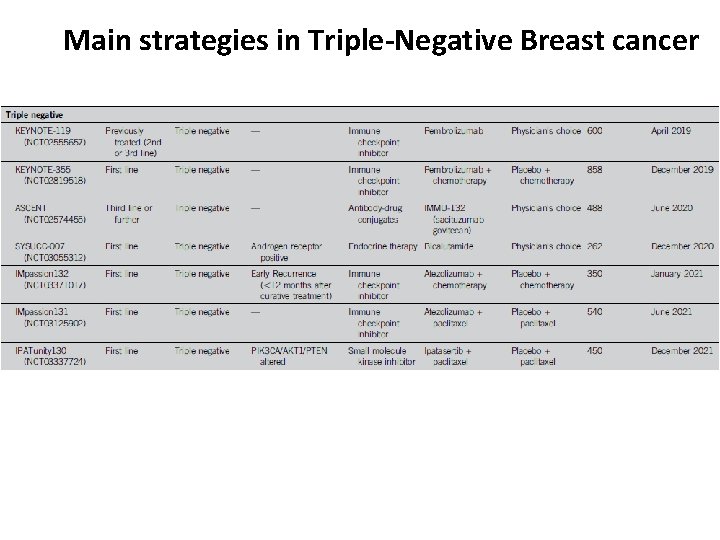
Main strategies in Triple-Negative Breast cancer
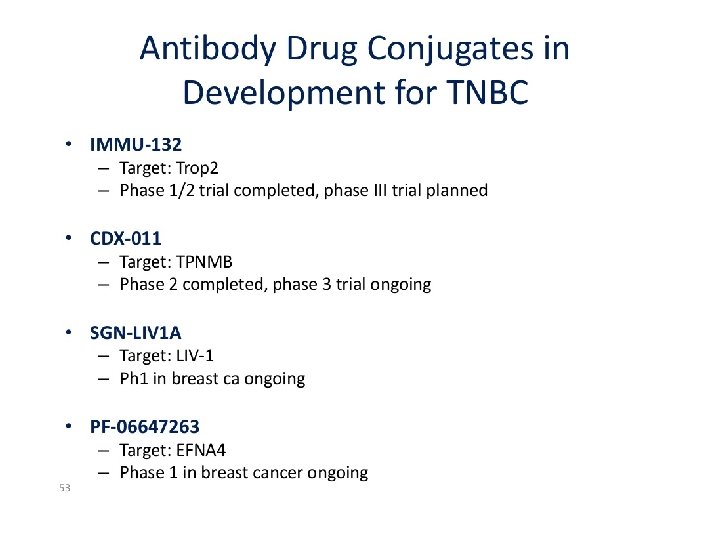
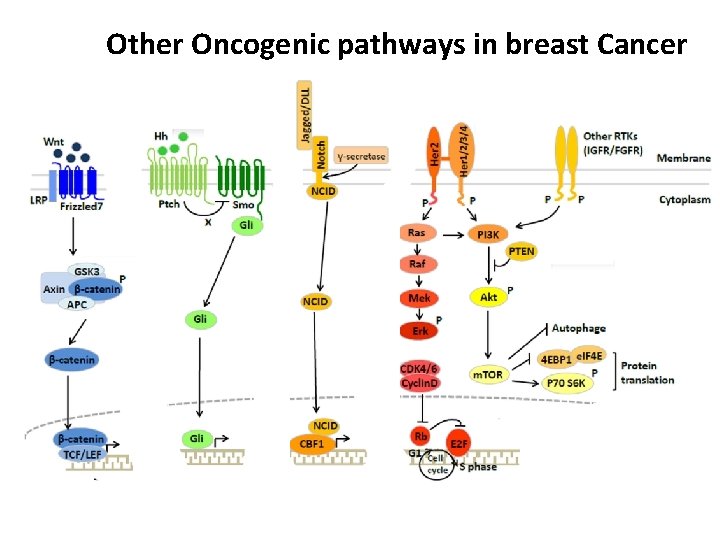
Other Oncogenic pathways in breast Cancer
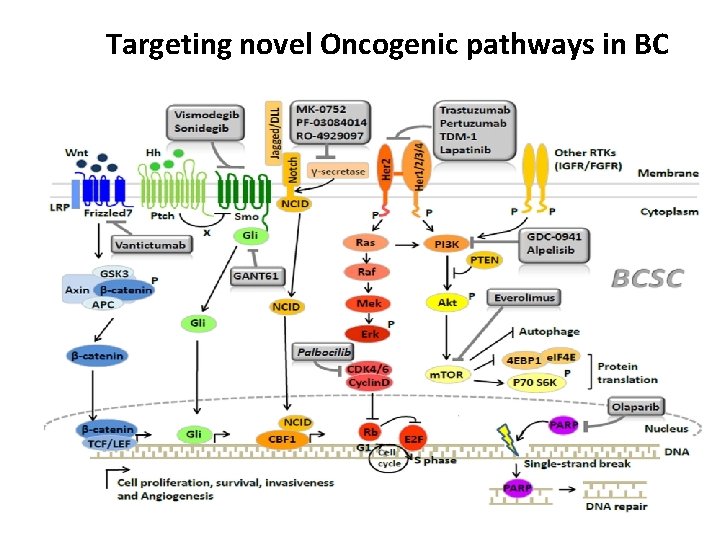
Targeting novel Oncogenic pathways in BC
New therapeutic strategies rely on identifying the key biomarkers driving treatment resistance and cancer progression Thank You
- Slides: 35