
New Directions in STD Testing and Treatment Stephanie





- Slides: 73
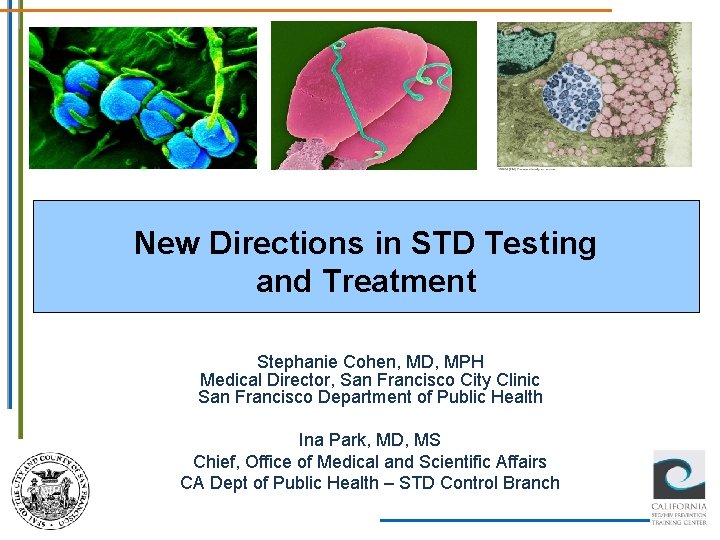
New Directions in STD Testing and Treatment Stephanie Cohen, MD, MPH Medical Director, San Francisco City Clinic San Francisco Department of Public Health Ina Park, MD, MS Chief, Office of Medical and Scientific Affairs CA Dept of Public Health – STD Control Branch
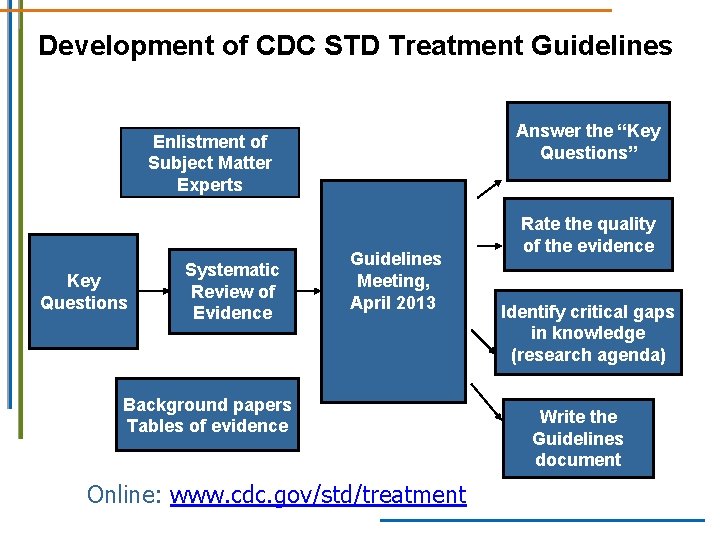
Development of CDC STD Treatment Guidelines Answer the “Key Questions” Enlistment of Subject Matter Experts Key Questions Systematic Review of Evidence Guidelines Meeting, April 2013 Background papers Tables of evidence Online: www. cdc. gov/std/treatment Rate the quality of the evidence Identify critical gaps in knowledge (research agenda) Write the Guidelines document
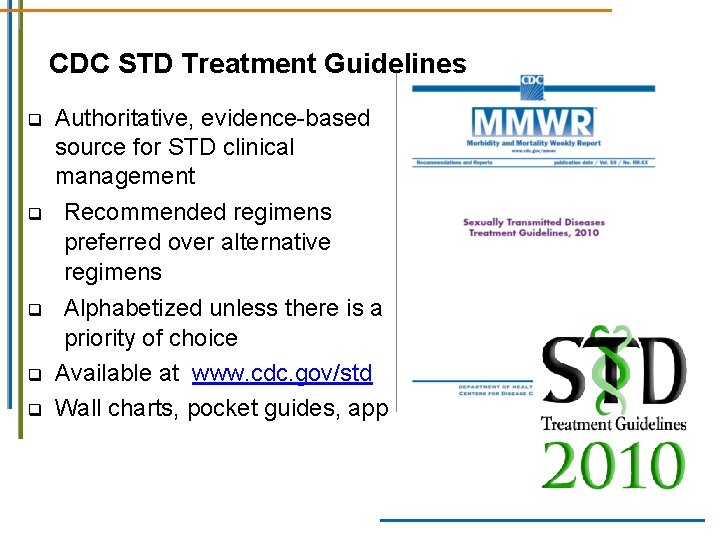
CDC STD Treatment Guidelines q q q Authoritative, evidence-based source for STD clinical management Recommended regimens preferred over alternative regimens Alphabetized unless there is a priority of choice Available at www. cdc. gov/std Wall charts, pocket guides, app
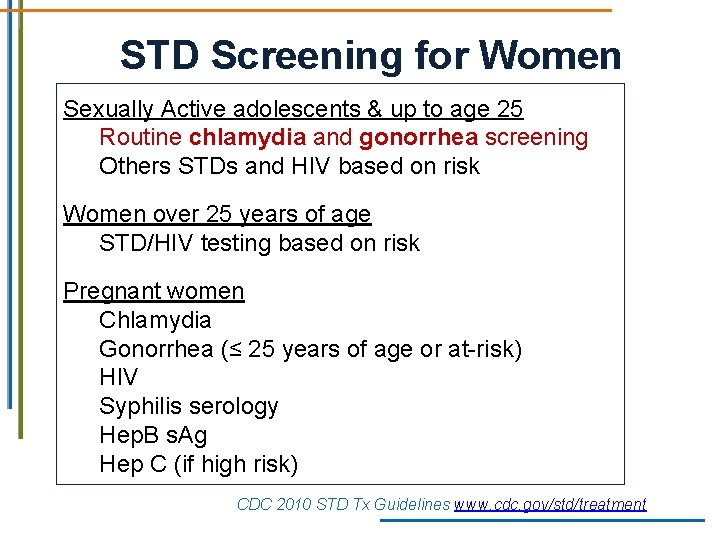
STD Screening for Women Sexually Active adolescents & up to age 25 Routine chlamydia and gonorrhea screening Others STDs and HIV based on risk Women over 25 years of age STD/HIV testing based on risk Pregnant women Chlamydia Gonorrhea (≤ 25 years of age or at-risk) HIV Syphilis serology Hep. B s. Ag Hep C (if high risk) CDC 2010 STD Tx Guidelines www. cdc. gov/std/treatment
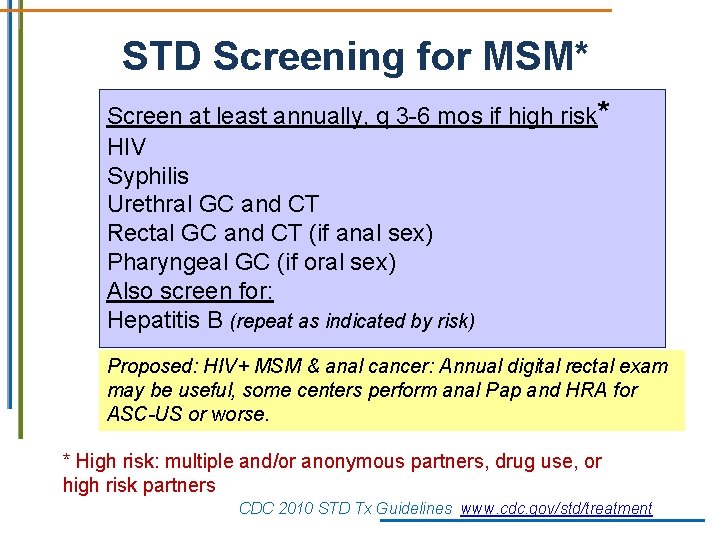
STD Screening for MSM* Screen at least annually, q 3 -6 mos if high risk* HIV Syphilis Urethral GC and CT Rectal GC and CT (if anal sex) Pharyngeal GC (if oral sex) Also screen for: Hepatitis B (repeat as indicated by risk) Proposed: HIV+ MSM & anal cancer: Annual digital rectal exam may be useful, some centers perform anal Pap and HRA for ASC-US or worse. * High risk: multiple and/or anonymous partners, drug use, or high risk partners CDC 2010 STD Tx Guidelines www. cdc. gov/std/treatment
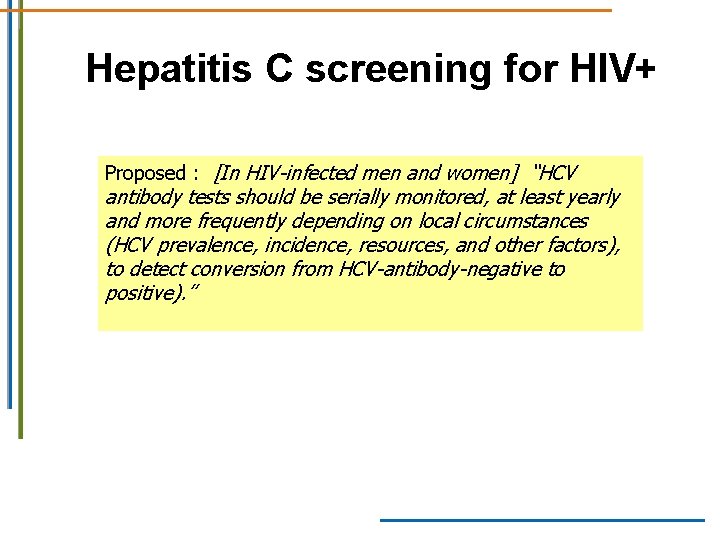
Hepatitis C screening for HIV+ Proposed : [In HIV-infected men and women] “HCV antibody tests should be serially monitored, at least yearly and more frequently depending on local circumstances (HCV prevalence, incidence, resources, and other factors), to detect conversion from HCV-antibody-negative to positive). ”
Chlamydia
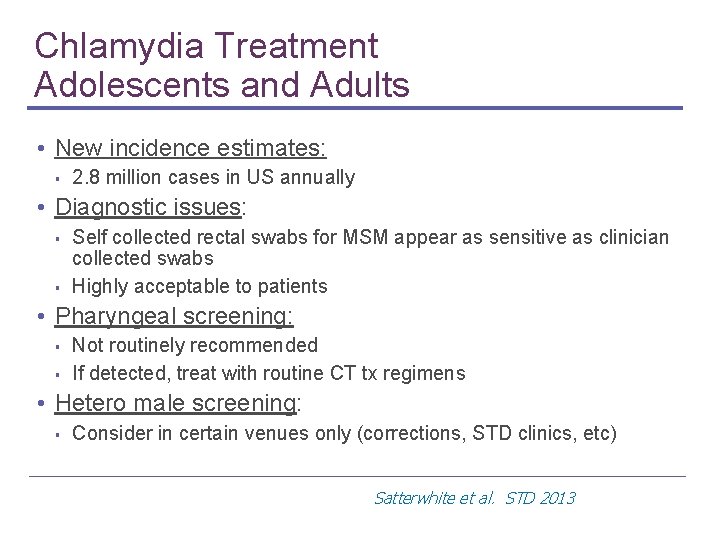
Chlamydia Treatment Adolescents and Adults • New incidence estimates: ▪ 2. 8 million cases in US annually • Diagnostic issues: ▪ ▪ Self collected rectal swabs for MSM appear as sensitive as clinician collected swabs Highly acceptable to patients • Pharyngeal screening: ▪ ▪ Not routinely recommended If detected, treat with routine CT tx regimens • Hetero male screening: ▪ Consider in certain venues only (corrections, STD clinics, etc) Satterwhite et al. STD 2013
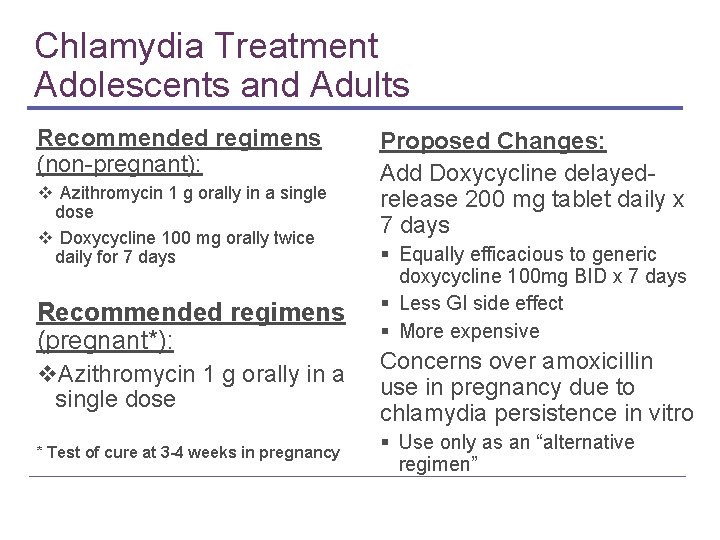
Chlamydia Treatment Adolescents and Adults Recommended regimens (non-pregnant): v Azithromycin 1 g orally in a single dose v Doxycycline 100 mg orally twice daily for 7 days Recommended regimens (pregnant*): Proposed Changes: Add Doxycycline delayedrelease 200 mg tablet daily x 7 days § Equally efficacious to generic doxycycline 100 mg BID x 7 days § Less GI side effect § More expensive v. Azithromycin 1 g orally in a single dose Concerns over amoxicillin use in pregnancy due to chlamydia persistence in vitro * Test of cure at 3 -4 weeks in pregnancy § Use only as an “alternative regimen”
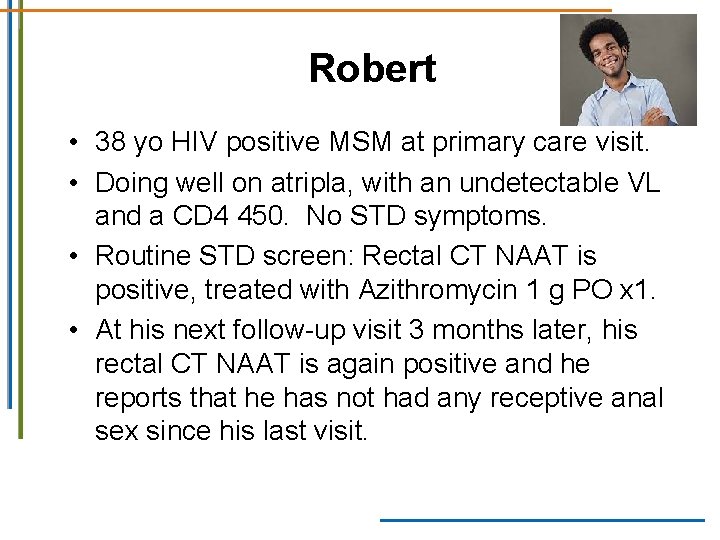
Robert • 38 yo HIV positive MSM at primary care visit. • Doing well on atripla, with an undetectable VL and a CD 4 450. No STD symptoms. • Routine STD screen: Rectal CT NAAT is positive, treated with Azithromycin 1 g PO x 1. • At his next follow-up visit 3 months later, his rectal CT NAAT is again positive and he reports that he has not had any receptive anal sex since his last visit.
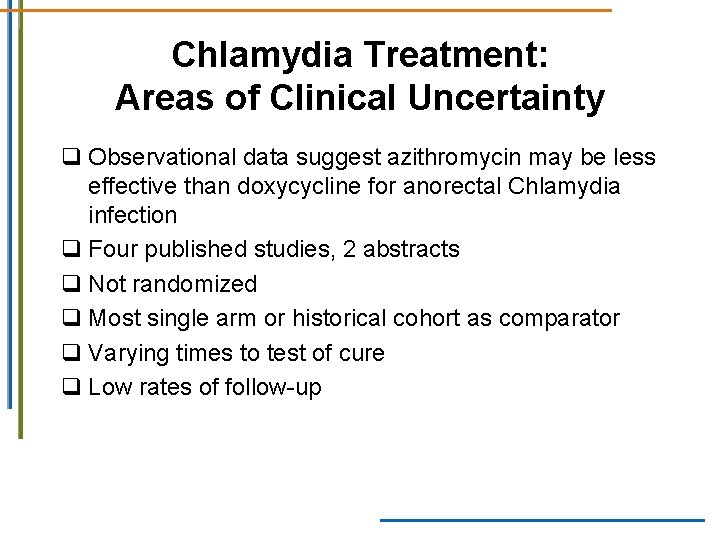
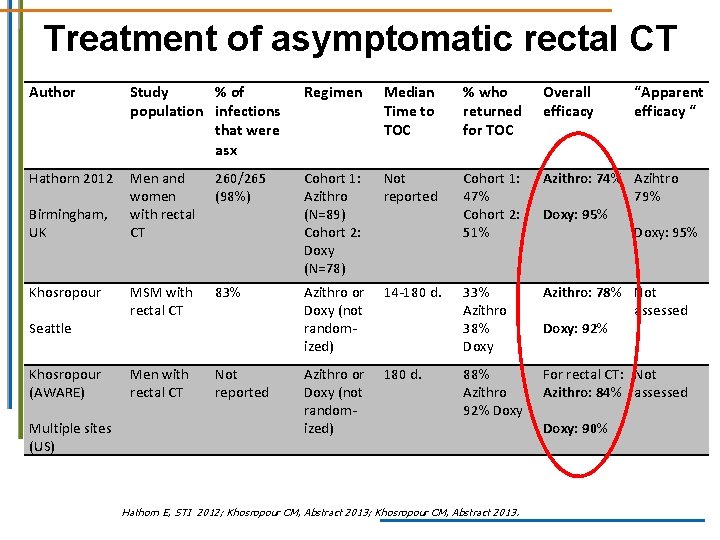
Chlamydia Treatment: Areas of Clinical Uncertainty q Observational data suggest azithromycin may be less effective than doxycycline for anorectal Chlamydia infection q Four published studies, 2 abstracts q Not randomized q Most single arm or historical cohort as comparator q Varying times to test of cure q Low rates of follow-up
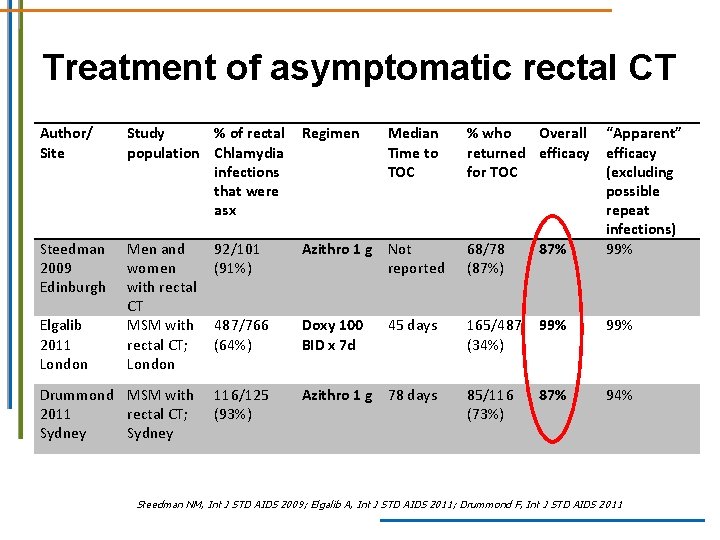
Treatment of asymptomatic rectal CT Author/ Site Study % of rectal population Chlamydia infections that were asx Regimen Steedman 2009 Edinburgh Men and women with rectal CT MSM with rectal CT; London 92/101 (91%) Azithro 1 g Not reported % who Overall “Apparent” returned efficacy for TOC (excluding possible repeat infections) 68/78 87% 99% (87%) 487/766 (64%) Doxy 100 BID x 7 d 165/487 (34%) 99% 116/125 (93%) Azithro 1 g 78 days 85/116 (73%) 87% 94% Elgalib 2011 London Drummond MSM with 2011 rectal CT; Sydney Median Time to TOC 45 days Steedman NM, Int J STD AIDS 2009; Elgalib A, Int J STD AIDS 2011; Drummond F, Int J STD AIDS 2011
Treatment of asymptomatic rectal CT Author Study % of population infections that were asx Regimen Median Time to TOC % who returned for TOC Overall efficacy Hathorn 2012 Men and women with rectal CT 260/265 (98%) Cohort 1: Azithro (N=89) Cohort 2: Doxy (N=78) Not reported Cohort 1: 47% Cohort 2: 51% Azithro: 74% Azihtro 79% Doxy: 95% MSM with rectal CT 83% Azithro or Doxy (not randomized) 14 -180 d. 33% Azithro 38% Doxy Azithro: 78% Not assessed Doxy: 92% Men with rectal CT Not reported Azithro or Doxy (not randomized) 180 d. 88% Azithro 92% Doxy For rectal CT: Not Azithro: 84% assessed Birmingham, UK Khosropour Seattle Khosropour (AWARE) Multiple sites (US) Hathorn E, STI 2012; Khosropour CM, Abstract 2013. Doxy: 90% “Apparent efficacy “
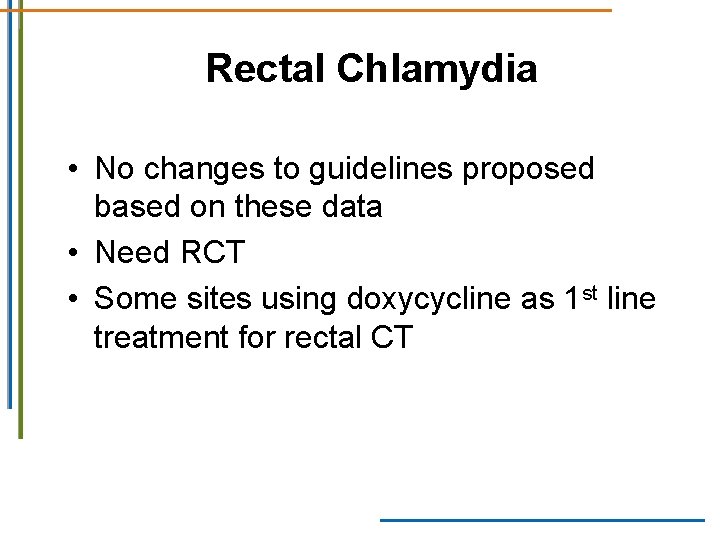
Rectal Chlamydia • No changes to guidelines proposed based on these data • Need RCT • Some sites using doxycycline as 1 st line treatment for rectal CT
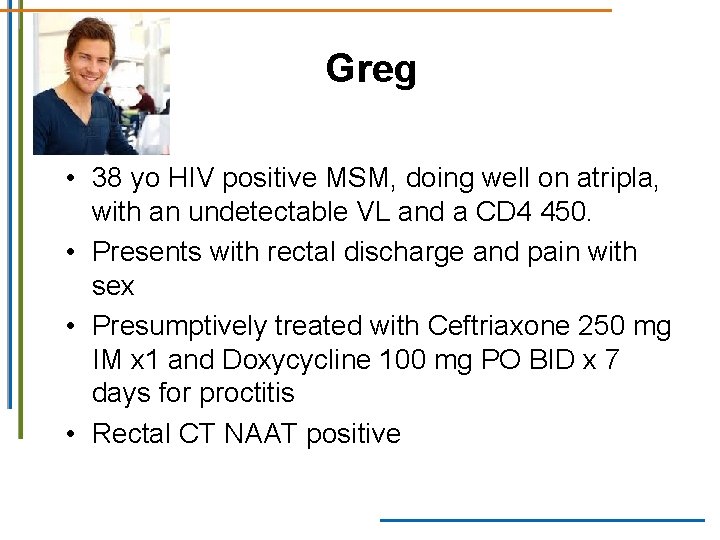
Greg • 38 yo HIV positive MSM, doing well on atripla, with an undetectable VL and a CD 4 450. • Presents with rectal discharge and pain with sex • Presumptively treated with Ceftriaxone 250 mg IM x 1 and Doxycycline 100 mg PO BID x 7 days for proctitis • Rectal CT NAAT positive
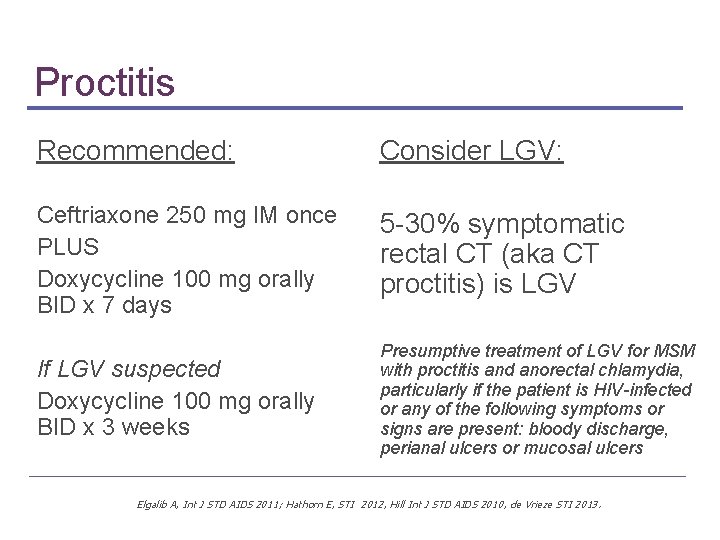
Proctitis Recommended: Consider LGV: Ceftriaxone 250 mg IM once PLUS Doxycycline 100 mg orally BID x 7 days 5 -30% symptomatic rectal CT (aka CT proctitis) is LGV If LGV suspected Doxycycline 100 mg orally BID x 3 weeks Presumptive treatment of LGV for MSM with proctitis and anorectal chlamydia, particularly if the patient is HIV-infected or any of the following symptoms or signs are present: bloody discharge, perianal ulcers or mucosal ulcers Elgalib A, Int J STD AIDS 2011; Hathorn E, STI 2012, Hill Int J STD AIDS 2010, de Vrieze STI 2013.
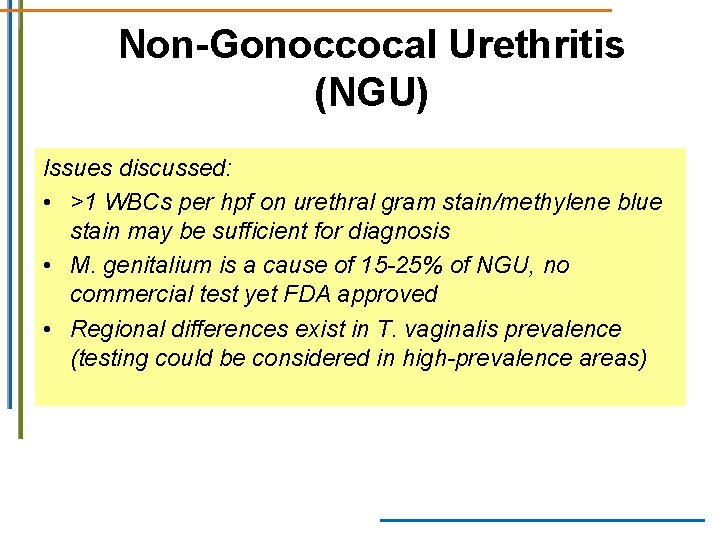
Non-Gonoccocal Urethritis (NGU) Issues discussed: • >1 WBCs per hpf on urethral gram stain/methylene blue stain may be sufficient for diagnosis • M. genitalium is a cause of 15 -25% of NGU, no commercial test yet FDA approved • Regional differences exist in T. vaginalis prevalence (testing could be considered in high-prevalence areas)
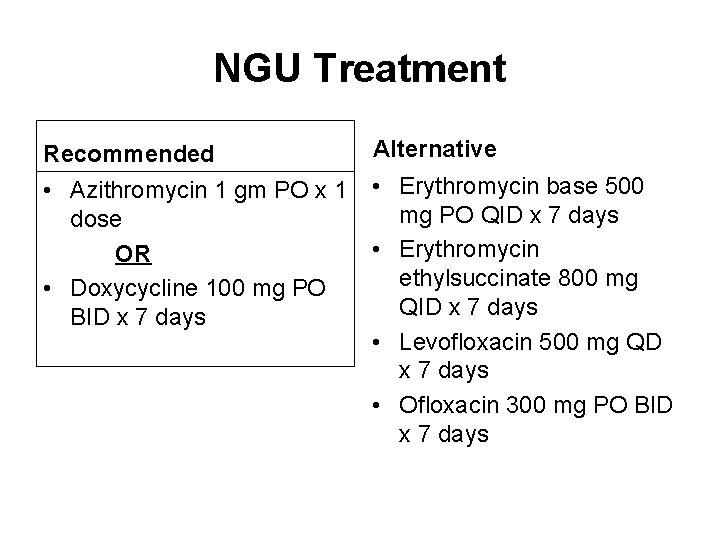
NGU Treatment Recommended • Azithromycin 1 gm PO x 1 dose OR • Doxycycline 100 mg PO BID x 7 days Alternative • Erythromycin base 500 mg PO QID x 7 days • Erythromycin ethylsuccinate 800 mg QID x 7 days • Levofloxacin 500 mg QD x 7 days • Ofloxacin 300 mg PO BID x 7 days
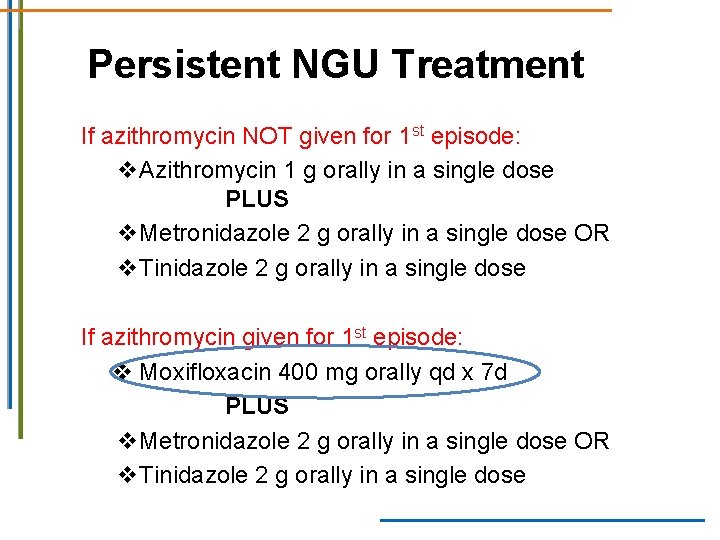
Persistent NGU Treatment If azithromycin NOT given for 1 st episode: v. Azithromycin 1 g orally in a single dose PLUS v. Metronidazole 2 g orally in a single dose OR v. Tinidazole 2 g orally in a single dose If azithromycin given for 1 st episode: v Moxifloxacin 400 mg orally qd x 7 d PLUS v. Metronidazole 2 g orally in a single dose OR v. Tinidazole 2 g orally in a single dose
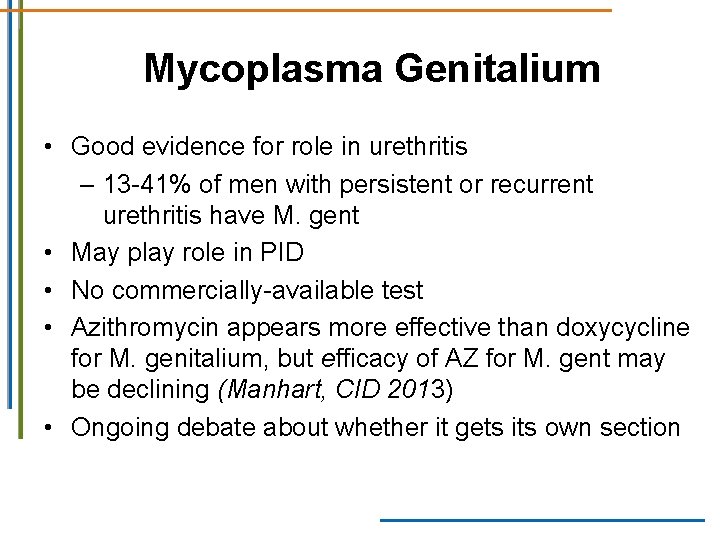
Mycoplasma Genitalium • Good evidence for role in urethritis – 13 -41% of men with persistent or recurrent urethritis have M. gent • May play role in PID • No commercially-available test • Azithromycin appears more effective than doxycycline for M. genitalium, but efficacy of AZ for M. gent may be declining (Manhart, CID 2013) • Ongoing debate about whether it gets its own section
Gonorrhea
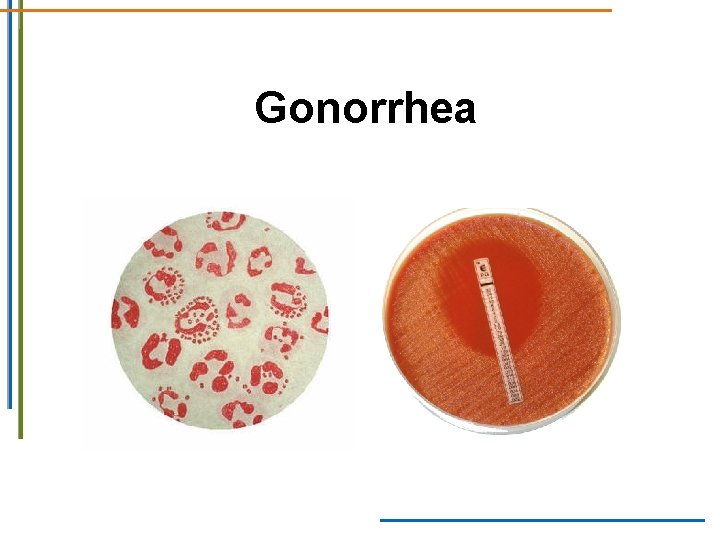
Gonorrhea • New incidence estimates: 820, 000 cases in US annually • Diagnostic issues: – Self collected pharyngeal swabs: data look favorable but not enough data to recommend (less data than rectal) – Self collected rectal swabs (language similar to CT) Satterwhite et al. STD 2013
Evolution of Criteria for GC Treatment Recommendations q Antimicrobial resistance surveillance has guided treatment decisions (GISP, GASP) § Change in antimicrobial if resistance prevalence >5% q (MMWR 1987) GC treatment efficacy § >95% and 95% CI lower bound 95% (Moran, 1995) q Pharmacokinetic/pharmacodynamic factors § Serum concentration at least 4 x MIC 90 x 10 hr after peak (Jaffe 1987) § At least twice the minimum efficacious dose q Other factors § Mechanism of action § Side effects and safety § Cost
Alternative Treatment Approaches Until Newer Agents Available q q Increase dose or duration of cephalosporin Antimicrobial susceptibility profile directed therapy Antibiotic cycling Dual therapy
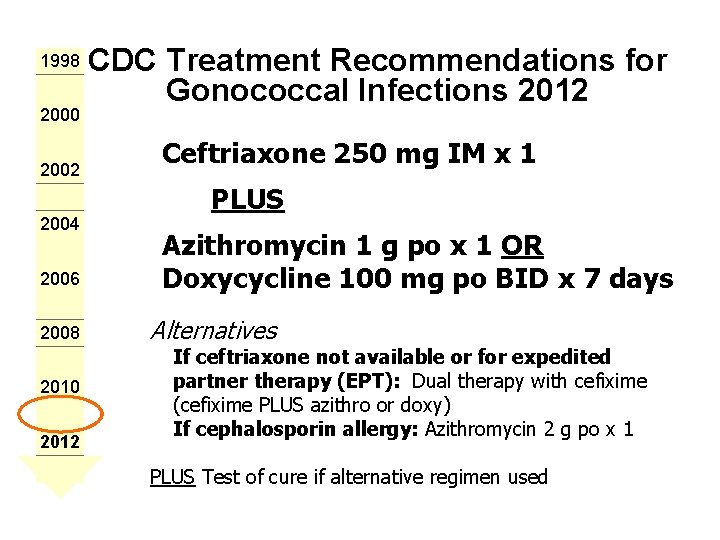
1998 2000 2002 2004 2006 2008 2010 2012 CDC Treatment Recommendations for Gonococcal Infections 2012 • Ceftriaxone 250 mg IM x 1 PLUS • Azithromycin 1 g po x 1 OR • Doxycycline 100 mg po BID x 7 days Alternatives • If ceftriaxone not available or for expedited partner therapy (EPT): Dual therapy with cefixime (cefixime PLUS azithro or doxy) • If cephalosporin allergy: Azithromycin 2 g po x 1 PLUS Test of cure if alternative regimen used
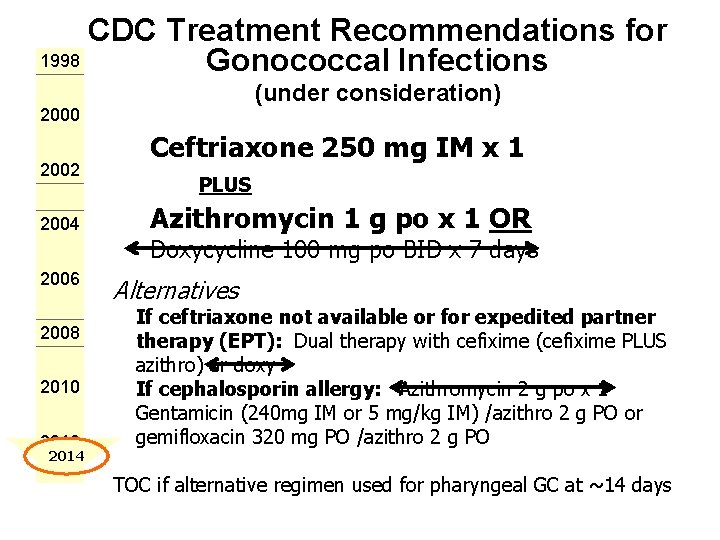
CDC Treatment Recommendations for 1998 Gonococcal Infections (under consideration) 2000 2002 2004 2006 2008 2010 2012 2014 • Ceftriaxone 250 mg IM x 1 PLUS • Azithromycin 1 g po x 1 OR • Doxycycline 100 mg po BID x 7 days Alternatives • If ceftriaxone not available or for expedited partner therapy (EPT): Dual therapy with cefixime (cefixime PLUS azithro) or doxy • If cephalosporin allergy: Azithromycin 2 g po x 1 • Gentamicin (240 mg IM or 5 mg/kg IM) /azithro 2 g PO or gemifloxacin 320 mg PO /azithro 2 g PO TOC if alternative regimen used for pharyngeal GC at ~14 days
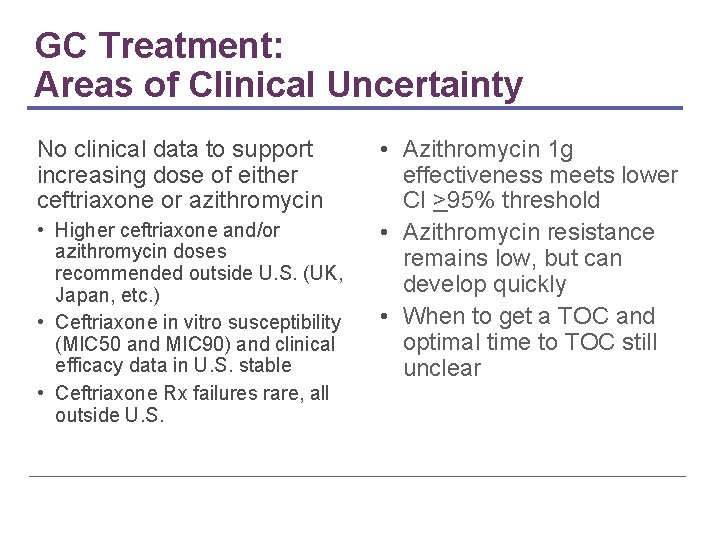
GC Treatment: Areas of Clinical Uncertainty No clinical data to support increasing dose of either ceftriaxone or azithromycin • Higher ceftriaxone and/or azithromycin doses recommended outside U. S. (UK, Japan, etc. ) • Ceftriaxone in vitro susceptibility (MIC 50 and MIC 90) and clinical efficacy data in U. S. stable • Ceftriaxone Rx failures rare, all outside U. S. • Azithromycin 1 g effectiveness meets lower CI >95% threshold • Azithromycin resistance remains low, but can develop quickly • When to get a TOC and optimal time to TOC still unclear
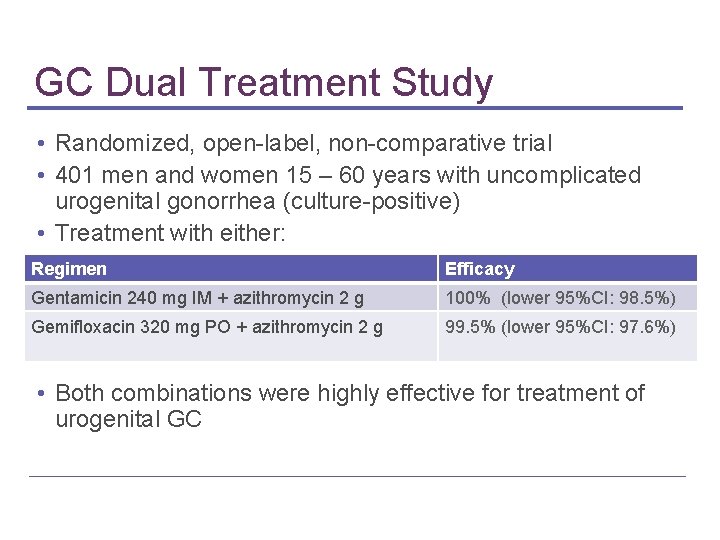
GC Dual Treatment Study • Randomized, open-label, non-comparative trial • 401 men and women 15 – 60 years with uncomplicated urogenital gonorrhea (culture-positive) • Treatment with either: Regimen Efficacy Gentamicin 240 mg IM + azithromycin 2 g 100% (lower 95%CI: 98. 5%) Gemifloxacin 320 mg PO + azithromycin 2 g 99. 5% (lower 95%CI: 97. 6%) • Both combinations were highly effective for treatment of urogenital GC
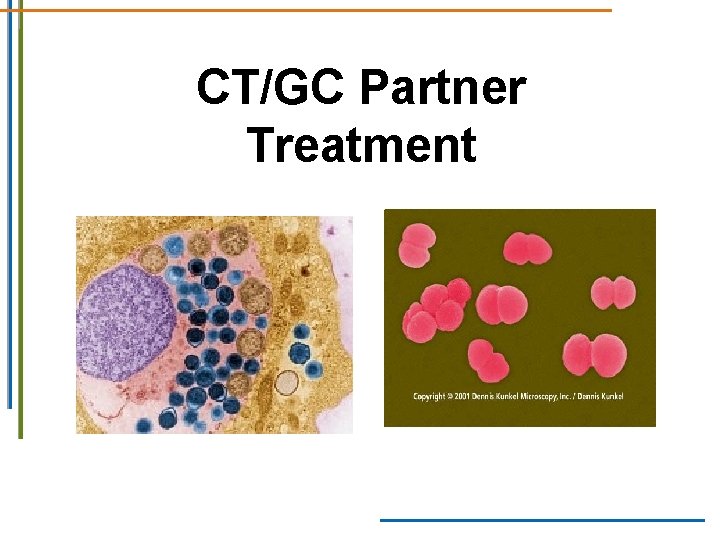
CT/GC Partner Treatment
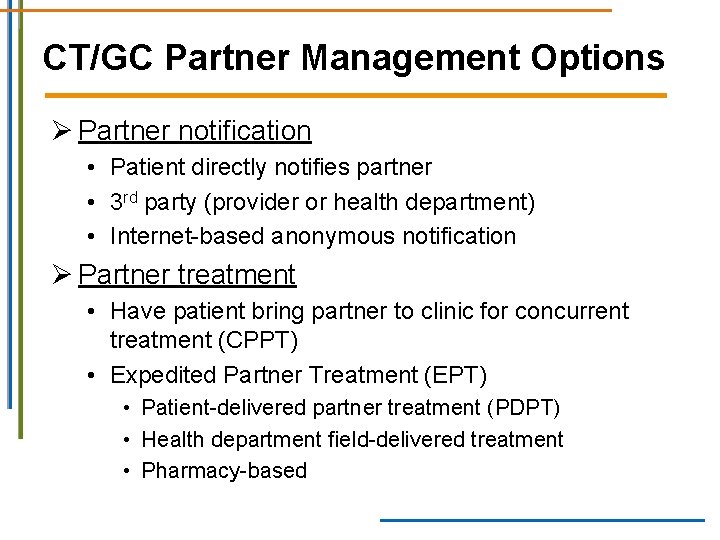
CT/GC Partner Management Options Ø Partner notification • Patient directly notifies partner • 3 rd party (provider or health department) • Internet-based anonymous notification Ø Partner treatment • Have patient bring partner to clinic for concurrent treatment (CPPT) • Expedited Partner Treatment (EPT) • Patient-delivered partner treatment (PDPT) • Health department field-delivered treatment • Pharmacy-based
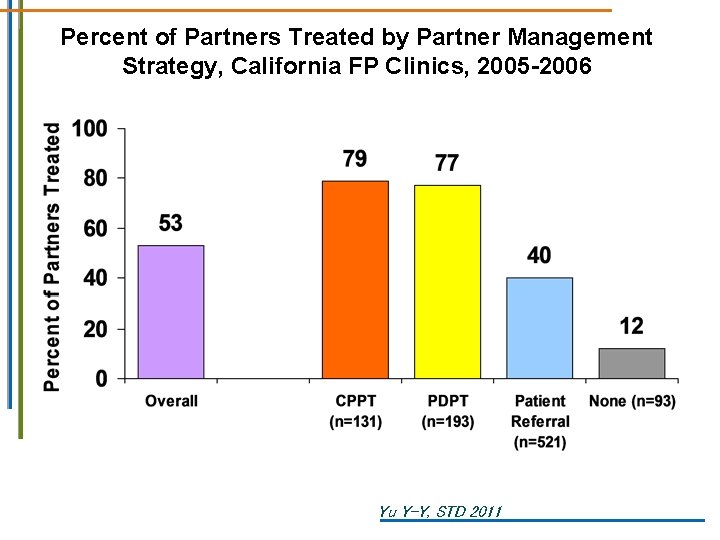
Percent of Partners Treated by Partner Management Strategy, California FP Clinics, 2005 -2006 Yu Y-Y, STD 2011
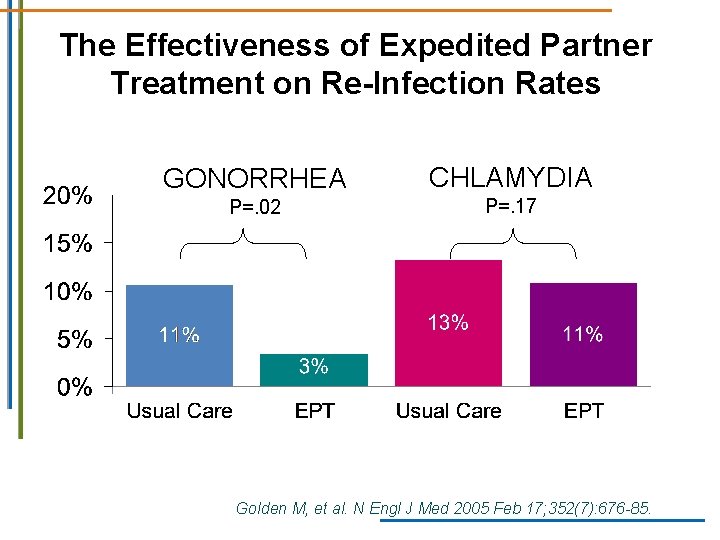
The Effectiveness of Expedited Partner Treatment on Re-Infection Rates GONORRHEA CHLAMYDIA P=. 02 P=. 17 Golden M, et al. N Engl J Med 2005 Feb 17; 352(7): 676 -85.
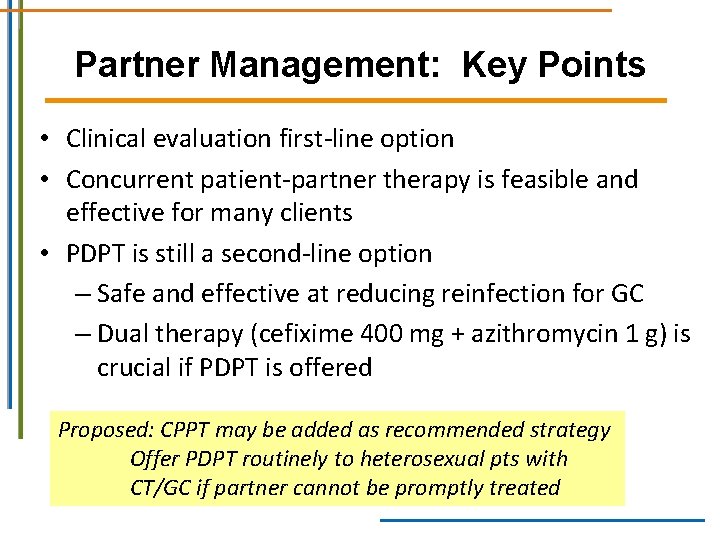
Partner Management: Key Points • Clinical evaluation first-line option • Concurrent patient-partner therapy is feasible and effective for many clients • PDPT is still a second-line option – Safe and effective at reducing reinfection for GC – Dual therapy (cefixime 400 mg + azithromycin 1 g) is crucial if PDPT is offered Proposed: CPPT may be added as recommended strategy Offer PDPT routinely to heterosexual pts with CT/GC if partner cannot be promptly treated
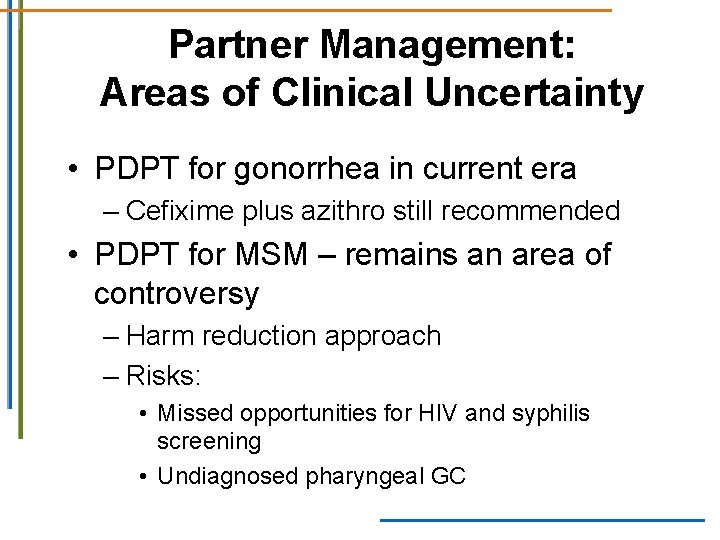
Partner Management: Areas of Clinical Uncertainty • PDPT for gonorrhea in current era – Cefixime plus azithro still recommended • PDPT for MSM – remains an area of controversy – Harm reduction approach – Risks: • Missed opportunities for HIV and syphilis screening • Undiagnosed pharyngeal GC
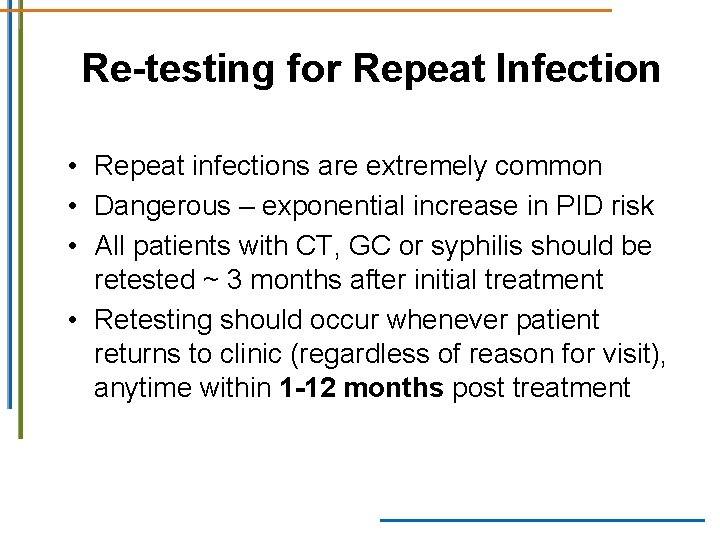
Re-testing for Repeat Infection • Repeat infections are extremely common • Dangerous – exponential increase in PID risk • All patients with CT, GC or syphilis should be retested ~ 3 months after initial treatment • Retesting should occur whenever patient returns to clinic (regardless of reason for visit), anytime within 1 -12 months post treatment
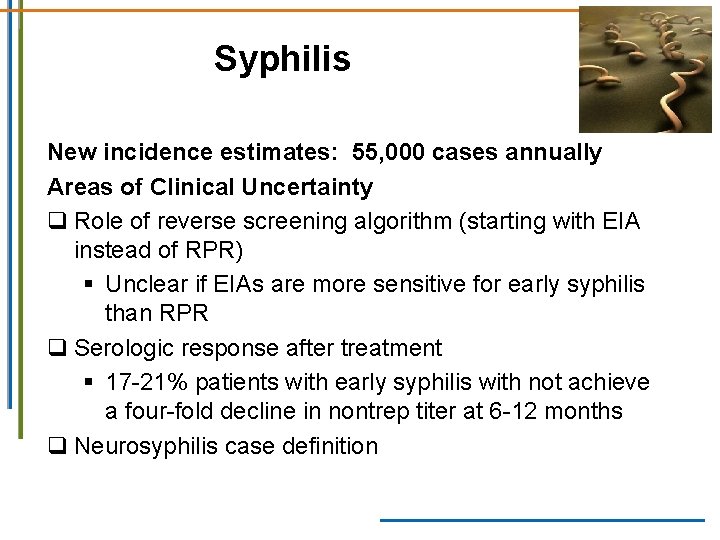
Syphilis New incidence estimates: 55, 000 cases annually Areas of Clinical Uncertainty q Role of reverse screening algorithm (starting with EIA instead of RPR) § Unclear if EIAs are more sensitive for early syphilis than RPR q Serologic response after treatment § 17 -21% patients with early syphilis with not achieve a four-fold decline in nontrep titer at 6 -12 months q Neurosyphilis case definition
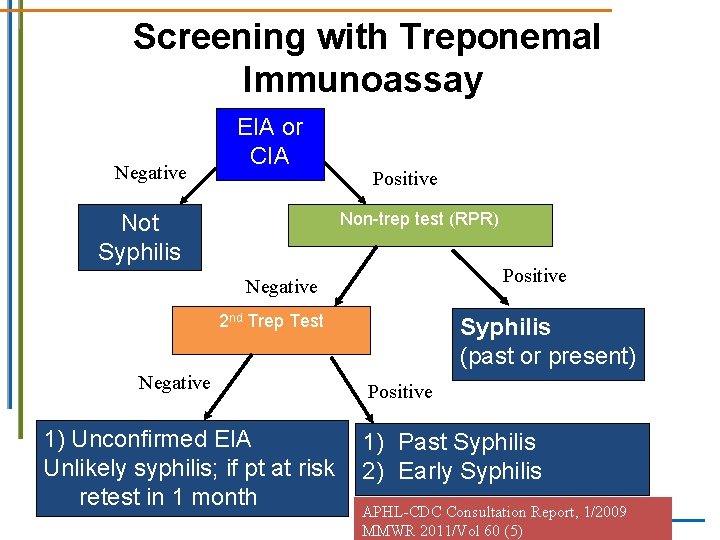
Screening with Treponemal Immunoassay Negative EIA or CIA Positive Non-trep test (RPR) Not Syphilis Positive Negative 2 nd Trep Test Negative 1) Unconfirmed EIA Unlikely syphilis; if pt at risk retest in 1 month Syphilis (past or present) Positive 1) Past Syphilis 2) Early Syphilis APHL-CDC Consultation Report, 1/2009 MMWR 2011/Vol 60 (5)
Syphilis Treatment Primary, Secondary & Early Latent: v. Benzathine penicillin G 2. 4 million units IM in a single dose Latent and Unknown Duration: v. Benzathine Penicillin G 7. 2 million units total, given as 3 doses of 2. 4 million units each at 1 week intervals Neurosyphilis: v. Aqueous Crystalline Penicillin G 18 -24 million units IV daily administered as 3 -4 million IV q 4 hr for 10 -14 d Only one dose of PCN Is recommended for early syphilis in HIV-infected persons, extra doses not needed
Syphilis Treatment Primary, Secondary & Early Latent Alternatives (non-pregnant penicillin-allergic adults): v. Doxycycline 100 mg po bid x 2 weeks v. Tetracycline 500 mg po qid x 2 weeks v. Ceftriaxone 1 g IV (or IM) qd x 10 -14 d If penicillin or doxycycline not feasible, consider: v. Azithromycin 2 g po in a single dose* * Do NOT use azithromycin in MSM or pregnant women In pregnancy, benzathine penicillin is the only recommended therapy. No alternatives
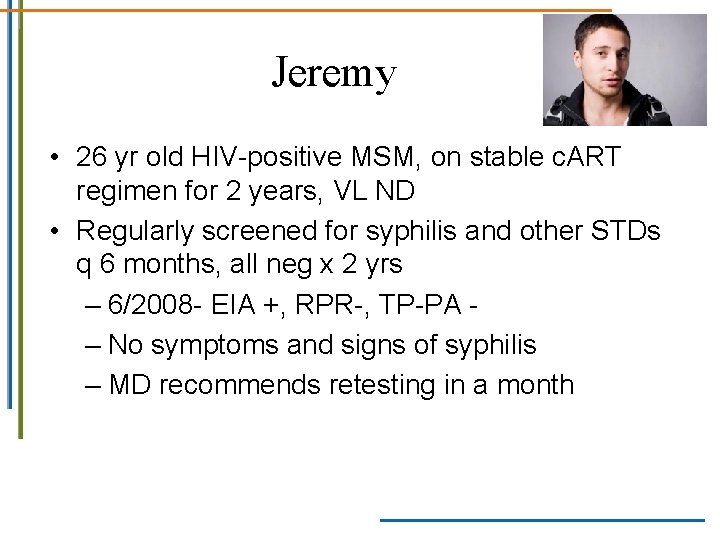
Jeremy • 26 yr old HIV-positive MSM, on stable c. ART regimen for 2 years, VL ND • Regularly screened for syphilis and other STDs q 6 months, all neg x 2 yrs – 6/2008 - EIA +, RPR-, TP-PA – No symptoms and signs of syphilis – MD recommends retesting in a month
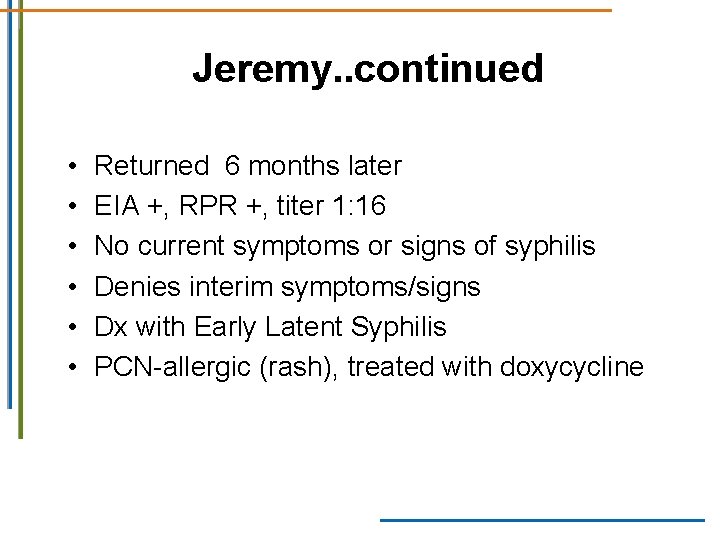
Jeremy. . continued • • • Returned 6 months later EIA +, RPR +, titer 1: 16 No current symptoms or signs of syphilis Denies interim symptoms/signs Dx with Early Latent Syphilis PCN-allergic (rash), treated with doxycycline
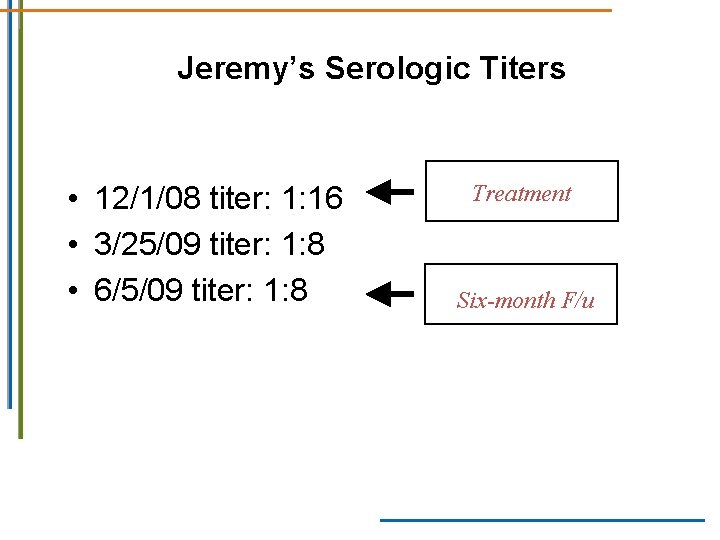
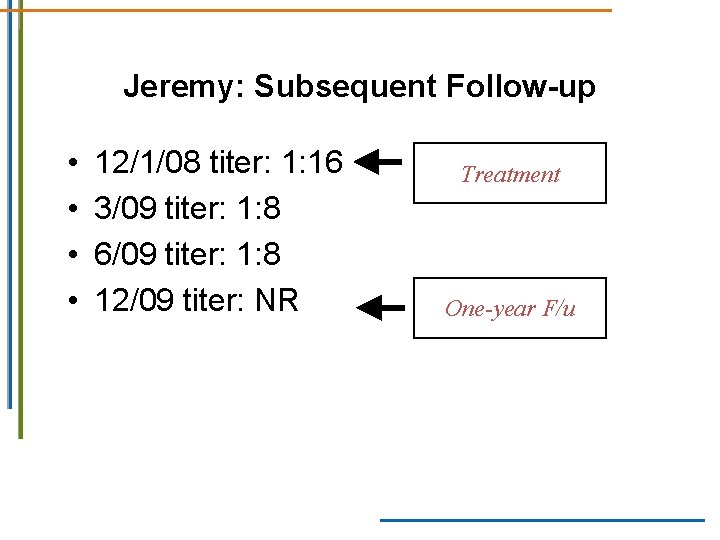
Jeremy’s Serologic Titers • 12/1/08 titer: 1: 16 • 3/25/09 titer: 1: 8 • 6/5/09 titer: 1: 8 Treatment Six-month F/u
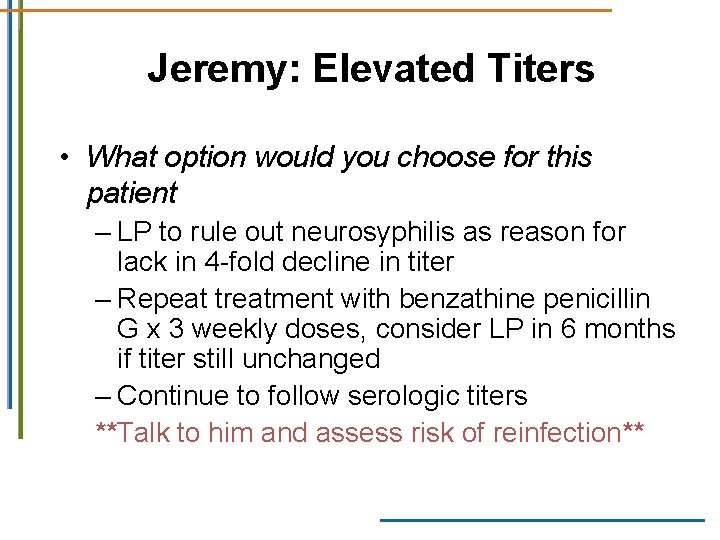
Jeremy: Elevated Titers • What option would you choose for this patient – LP to rule out neurosyphilis as reason for lack in 4 -fold decline in titer – Repeat treatment with benzathine penicillin G x 3 weekly doses, consider LP in 6 months if titer still unchanged – Continue to follow serologic titers **Talk to him and assess risk of reinfection**
Jeremy: Subsequent Follow-up • • 12/1/08 titer: 1: 16 3/09 titer: 1: 8 6/09 titer: 1: 8 12/09 titer: NR Treatment One-year F/u
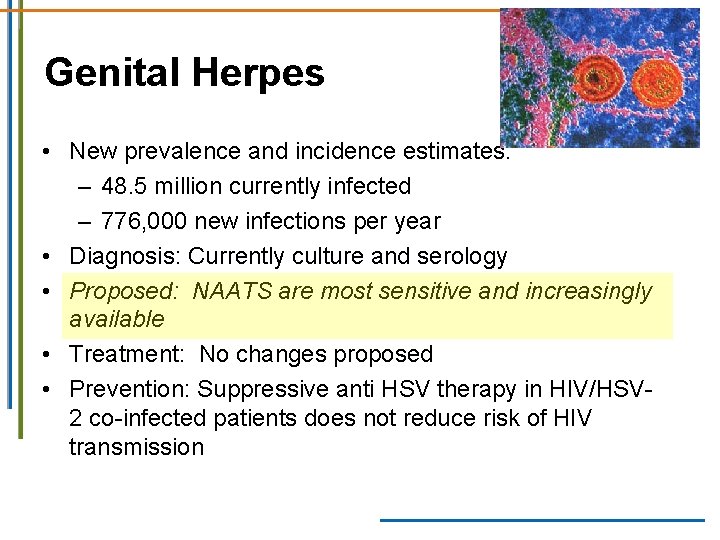
Genital Herpes • New prevalence and incidence estimates: – 48. 5 million currently infected – 776, 000 new infections per year • Diagnosis: Currently culture and serology • Proposed: NAATS are most sensitive and increasingly available • Treatment: No changes proposed • Prevention: Suppressive anti HSV therapy in HIV/HSV 2 co-infected patients does not reduce risk of HIV transmission
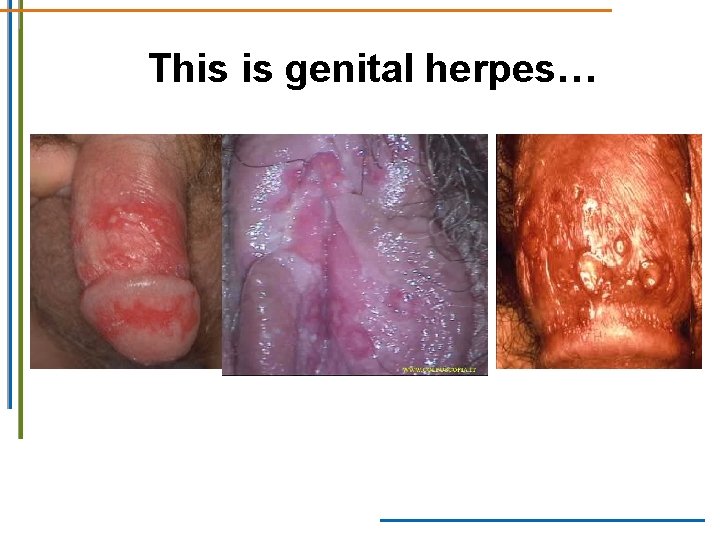
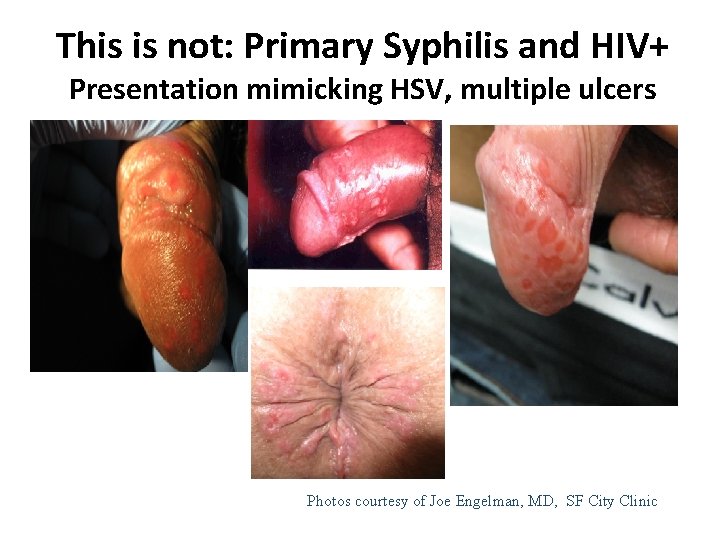
This is genital herpes…
This is not: Primary Syphilis and HIV+ Presentation mimicking HSV, multiple ulcers San Francisco City Clinic Photos courtesy of Joe Engelman, MD, SF City Clinic
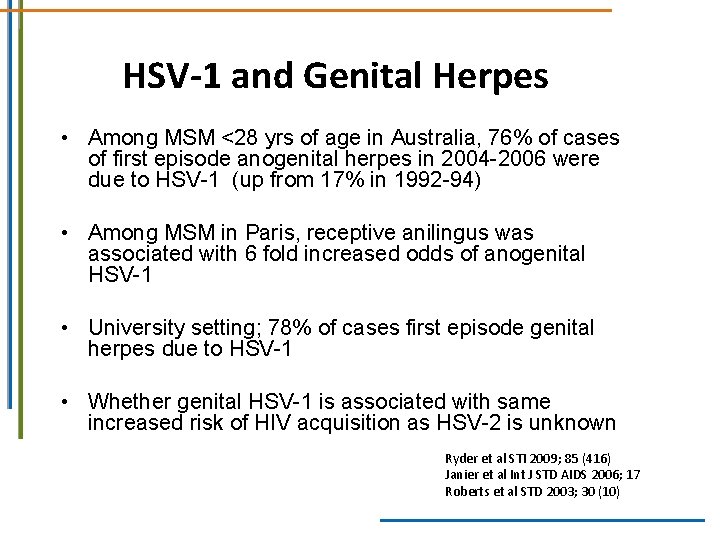
HSV-1 and Genital Herpes • Among MSM <28 yrs of age in Australia, 76% of cases of first episode anogenital herpes in 2004 -2006 were due to HSV-1 (up from 17% in 1992 -94) • Among MSM in Paris, receptive anilingus was associated with 6 fold increased odds of anogenital HSV-1 • University setting; 78% of cases first episode genital herpes due to HSV-1 • Whether genital HSV-1 is associated with same increased risk of HIV acquisition as HSV-2 is unknown Ryder et al STI 2009; 85 (416) Janier et al Int J STD AIDS 2006; 17 Roberts et al STD 2003; 30 (10)
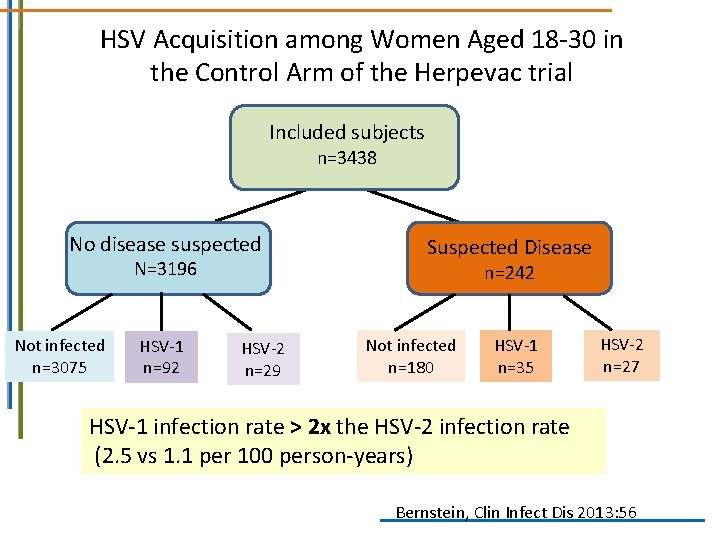
HSV Acquisition among Women Aged 18 -30 in the Control Arm of the Herpevac trial Included subjects n=3438 No disease suspected N=3196 Not infected n=3075 HSV-1 n=92 Suspected Disease n=242 HSV-2 n=29 Not infected n=180 HSV-1 n=35 HSV-2 n=27 HSV-1 infection rate > 2 x the HSV-2 infection rate (2. 5 vs 1. 1 per 100 person-years) Bernstein, Clin Infect Dis 2013: 56
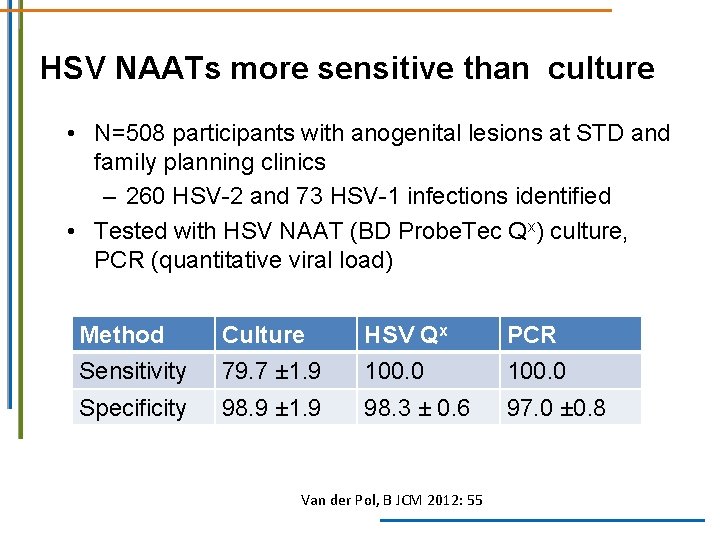
HSV NAATs more sensitive than culture • N=508 participants with anogenital lesions at STD and family planning clinics – 260 HSV-2 and 73 HSV-1 infections identified • Tested with HSV NAAT (BD Probe. Tec Qx) culture, PCR (quantitative viral load) Method Culture HSV Qx PCR Sensitivity 79. 7 ± 1. 9 100. 0 Specificity 98. 9 ± 1. 9 98. 3 ± 0. 6 97. 0 ± 0. 8 Van der Pol, B JCM 2012: 55
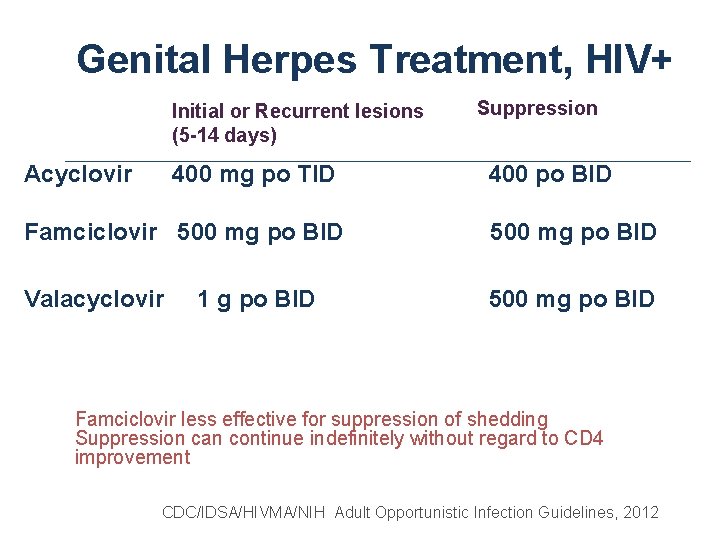
Genital Herpes Treatment, HIV+ Initial or Recurrent lesions (5 -14 days) Acyclovir 400 mg po TID Suppression 400 po BID Famciclovir 500 mg po BID Valacyclovir 500 mg po BID 1 g po BID Famciclovir less effective for suppression of shedding Suppression can continue indefinitely without regard to CD 4 improvement CDC/IDSA/HIVMA/NIH Adult Opportunistic Infection Guidelines, 2012
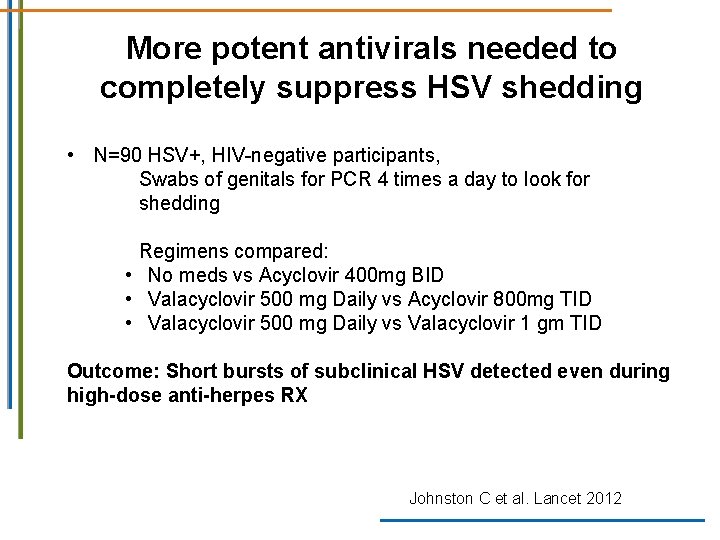
More potent antivirals needed to completely suppress HSV shedding • N=90 HSV+, HIV-negative participants, Swabs of genitals for PCR 4 times a day to look for shedding Regimens compared: • No meds vs Acyclovir 400 mg BID • Valacyclovir 500 mg Daily vs Acyclovir 800 mg TID • Valacyclovir 500 mg Daily vs Valacyclovir 1 gm TID Outcome: Short bursts of subclinical HSV detected even during high-dose anti-herpes RX Johnston C et al. Lancet 2012
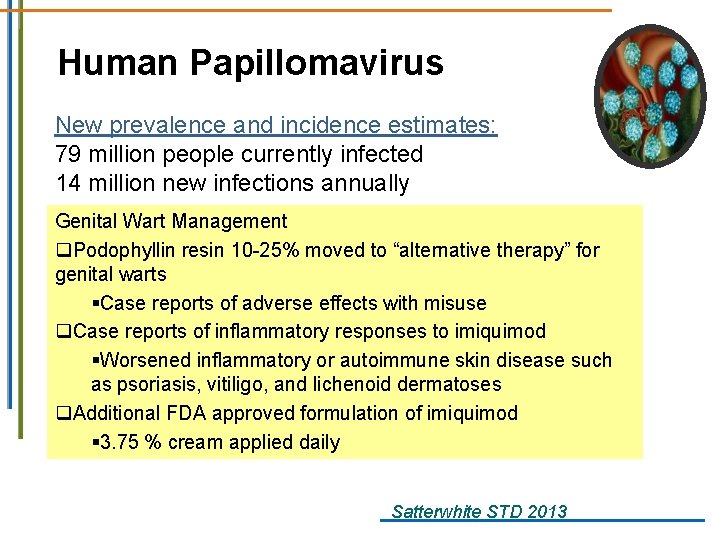
Human Papillomavirus New prevalence and incidence estimates: 79 million people currently infected 14 million new infections annually Genital Wart Management q. Podophyllin resin 10 -25% moved to “alternative therapy” for genital warts §Case reports of adverse effects with misuse q. Case reports of inflammatory responses to imiquimod §Worsened inflammatory or autoimmune skin disease such as psoriasis, vitiligo, and lichenoid dermatoses q. Additional FDA approved formulation of imiquimod § 3. 75 % cream applied daily Satterwhite STD 2013
Sharon • 38 yr old G 2 P 1 • Presents to early care HIV-clinic for intake visit, was diagnosed 2 months ago • Not currently taking antiretroviral medications • No history of HPV-related disease, no prior abnormal Paps
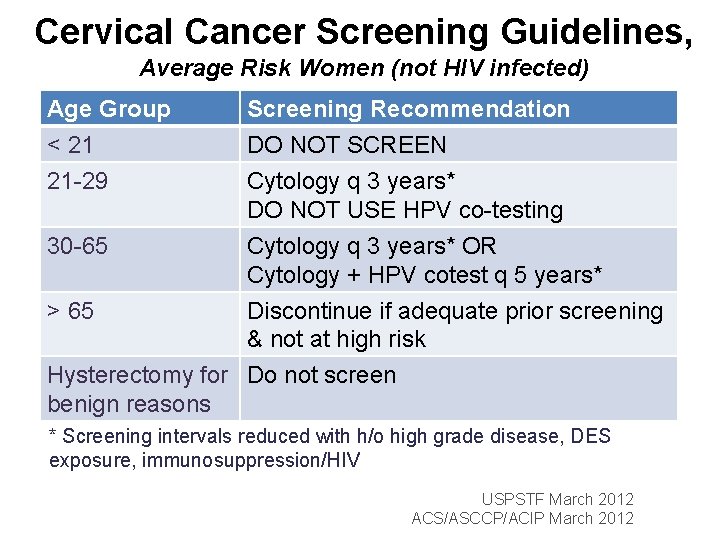
Cervical Cancer Screening Guidelines, Average Risk Women (not HIV infected) Age Group Screening Recommendation < 21 DO NOT SCREEN 21 -29 Cytology q 3 years* DO NOT USE HPV co-testing 30 -65 Cytology q 3 years* OR Cytology + HPV cotest q 5 years* > 65 Discontinue if adequate prior screening & not at high risk Hysterectomy for Do not screen benign reasons * Screening intervals reduced with h/o high grade disease, DES exposure, immunosuppression/HIV USPSTF March 2012 ACS/ASCCP/ACIP March 2012
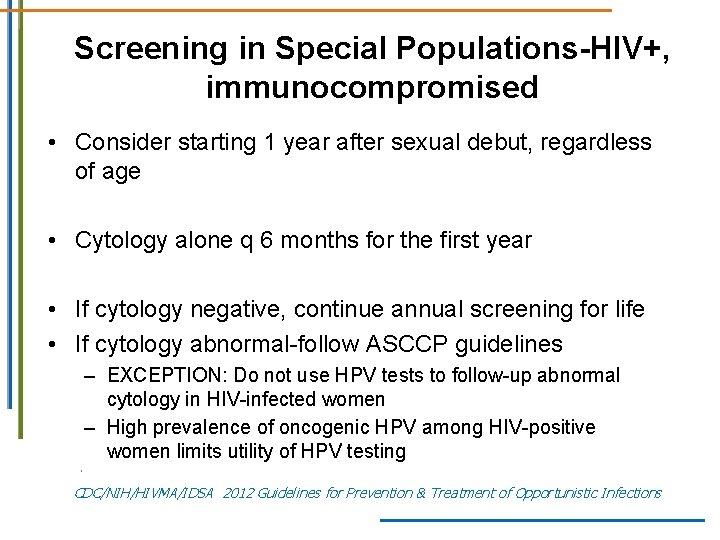
Screening in Special Populations-HIV+, immunocompromised • Consider starting 1 year after sexual debut, regardless of age • Cytology alone q 6 months for the first year • If cytology negative, continue annual screening for life • If cytology abnormal-follow ASCCP guidelines . – EXCEPTION: Do not use HPV tests to follow-up abnormal cytology in HIV-infected women – High prevalence of oncogenic HPV among HIV-positive women limits utility of HPV testing CDC/NIH/HIVMA/IDSA 2012 Guidelines for Prevention & Treatment of Opportunistic Infections
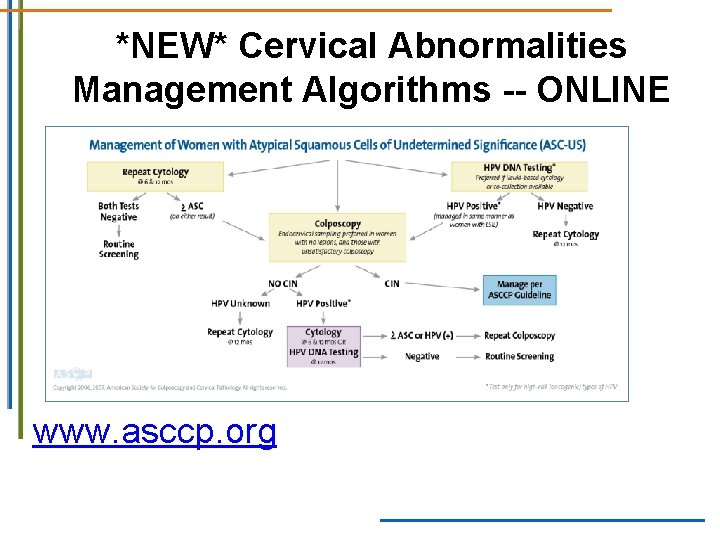
*NEW* Cervical Abnormalities Management Algorithms -- ONLINE www. asccp. org
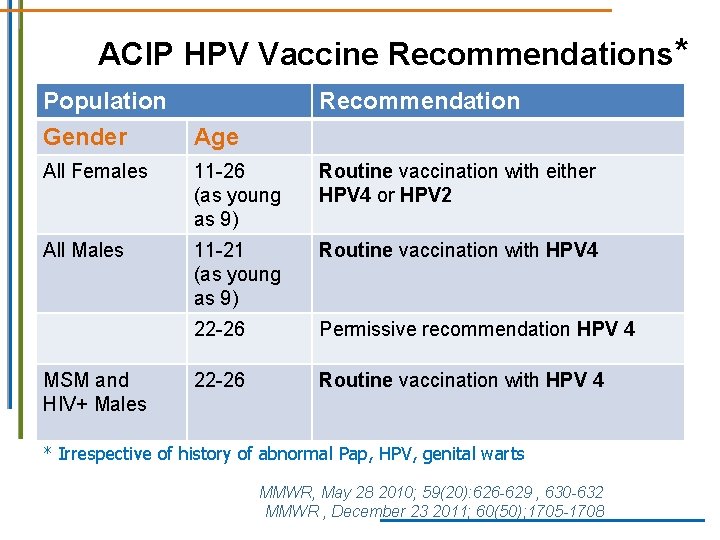
ACIP HPV Vaccine Recommendations* Population Gender Recommendation Age All Females 11 -26 (as young as 9) Routine vaccination with either HPV 4 or HPV 2 All Males 11 -21 (as young as 9) Routine vaccination with HPV 4 22 -26 Permissive recommendation HPV 4 22 -26 Routine vaccination with HPV 4 MSM and HIV+ Males * Irrespective of history of abnormal Pap, HPV, genital warts MMWR, May 28 2010; 59(20): 626 -629 , 630 -632 MMWR , December 23 2011; 60(50); 1705 -1708
Trichomonas • Incidence estimates: 1 million new infections • Prevalence: 3% nationwide, 10% African American women, 20 -30% among incarcerated women Proposed: • Retesting recommended 3 months after treatment • Consider screening those at high risk for infection or negative sequelae (receiving care in corrections or STD clinic settings)
Management of TV with HIV coinfection q. HIV-infected women should receive periodic screening for TV including at entry to care and annually q. HIV-infected, pregnant women should be screened for TV, ? at mid-gestation q. HIV-infected women diagnosed with TV should receive metronidazole 500 mg BID for 7 days to improve cure rates HIV-infected women with TV randomized to 7 days of metronidazole 500 mg BID (vs. 2 g once) had less TV at TOC and at 3 months RR 0. 46, CI: 0. 21– 0. 98 (Kissinger, 2010)
HIV/STD Prevention Slides courtesy of Susan Philip, MD, MPH
Advances in HIV Prevention HPTN 052 • Among serodiscordant couples, treating HIV positive partner decreases transmission risk by 96% Pr. EP • i. Pr. EX, Partners Pr. EP, TDF-2, Thai IDU Study Proposed: Antiretroviral treatment should be offered to HIV-infected persons not only to provide benefit to individual health but also to reduce transmission to sex partners. Proposed: HIV Pre-Exposure Prophylaxis should be available to sexually active MSM and to adults at high risk of HIV infection per the current CDC recommendations. All clients requesting Pr. EP should be counseled that high levels of adherence are needed for the best efficacy.
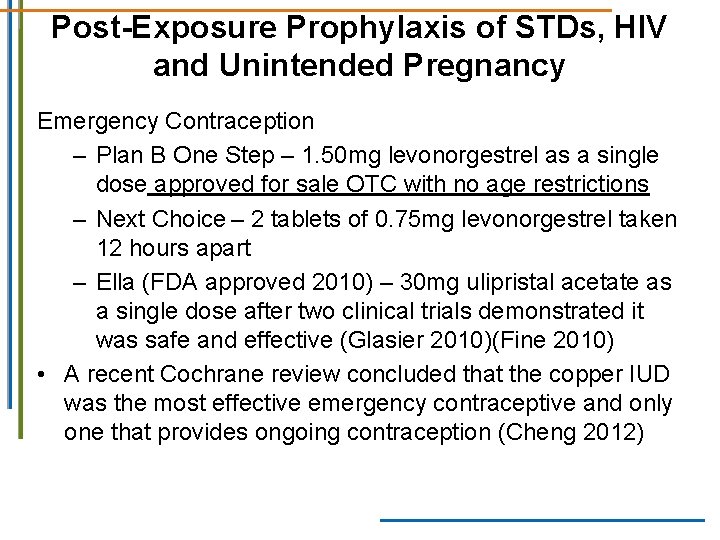
Post-Exposure Prophylaxis of STDs, HIV and Unintended Pregnancy Emergency Contraception – Plan B One Step – 1. 50 mg levonorgestrel as a single dose approved for sale OTC with no age restrictions – Next Choice – 2 tablets of 0. 75 mg levonorgestrel taken 12 hours apart – Ella (FDA approved 2010) – 30 mg ulipristal acetate as a single dose after two clinical trials demonstrated it was safe and effective (Glasier 2010)(Fine 2010) • A recent Cochrane review concluded that the copper IUD was the most effective emergency contraceptive and only one that provides ongoing contraception (Cheng 2012)
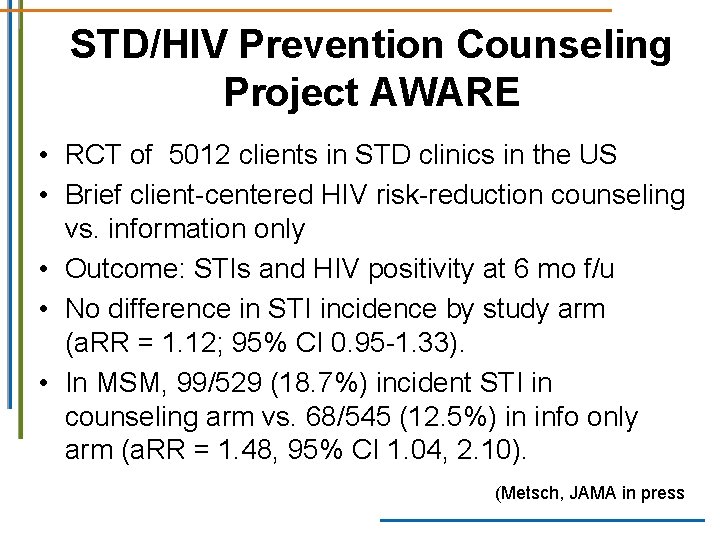
STD/HIV Prevention Counseling Project AWARE • RCT of 5012 clients in STD clinics in the US • Brief client-centered HIV risk-reduction counseling vs. information only • Outcome: STIs and HIV positivity at 6 mo f/u • No difference in STI incidence by study arm (a. RR = 1. 12; 95% CI 0. 95 -1. 33). • In MSM, 99/529 (18. 7%) incident STI in counseling arm vs. 68/545 (12. 5%) in info only arm (a. RR = 1. 48, 95% CI 1. 04, 2. 10). (Metsch, JAMA in press
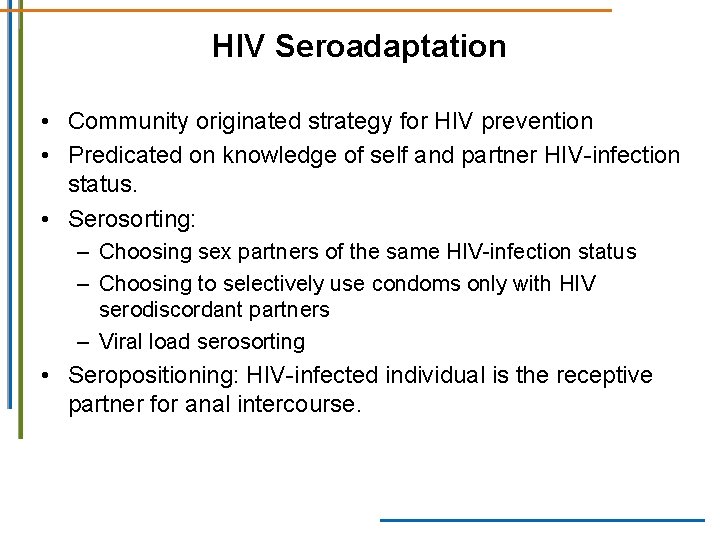
HIV Seroadaptation • Community originated strategy for HIV prevention • Predicated on knowledge of self and partner HIV-infection status. • Serosorting: – Choosing sex partners of the same HIV-infection status – Choosing to selectively use condoms only with HIV serodiscordant partners – Viral load serosorting • Seropositioning: HIV-infected individual is the receptive partner for anal intercourse.
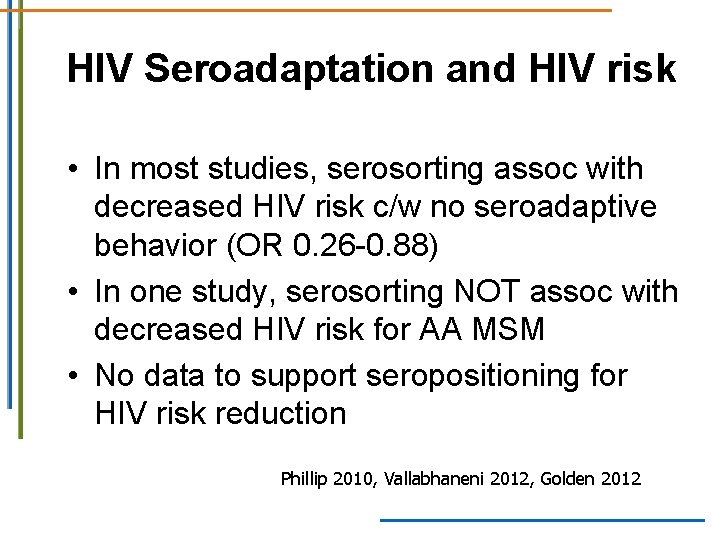
HIV Seroadaptation and HIV risk • In most studies, serosorting assoc with decreased HIV risk c/w no seroadaptive behavior (OR 0. 26 -0. 88) • In one study, serosorting NOT assoc with decreased HIV risk for AA MSM • No data to support seropositioning for HIV risk reduction Phillip 2010, Vallabhaneni 2012, Golden 2012
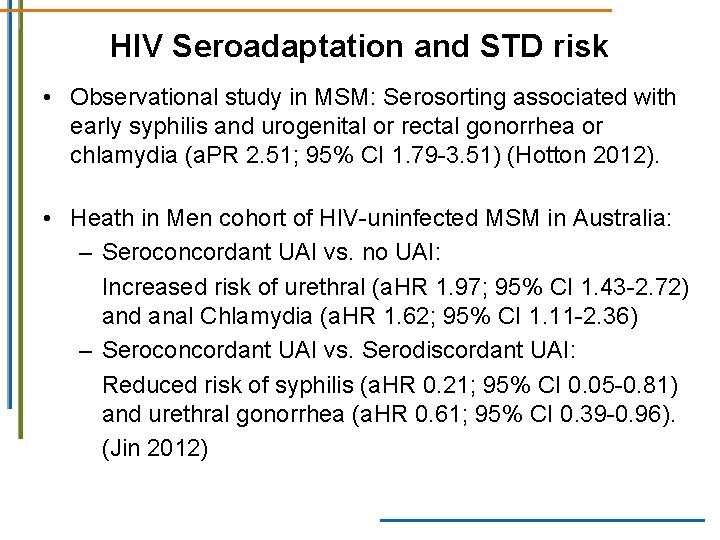
HIV Seroadaptation and STD risk • Observational study in MSM: Serosorting associated with early syphilis and urogenital or rectal gonorrhea or chlamydia (a. PR 2. 51; 95% CI 1. 79 -3. 51) (Hotton 2012). • Heath in Men cohort of HIV-uninfected MSM in Australia: – Seroconcordant UAI vs. no UAI: Increased risk of urethral (a. HR 1. 97; 95% CI 1. 43 -2. 72) and anal Chlamydia (a. HR 1. 62; 95% CI 1. 11 -2. 36) – Seroconcordant UAI vs. Serodiscordant UAI: Reduced risk of syphilis (a. HR 0. 21; 95% CI 0. 05 -0. 81) and urethral gonorrhea (a. HR 0. 61; 95% CI 0. 39 -0. 96). (Jin 2012)
HIV Seroadaptation Discussed: Providers should counsel HIV-uninfected MSM patients that seroadaptive strategies, including serosorting and seropositioning have shown some efficacy as an HIV risk reduction strategy but are not fully protective. However, these strategies do increase the risk of STD transmission and therefore are not a best practice to maintain overall sexual health.
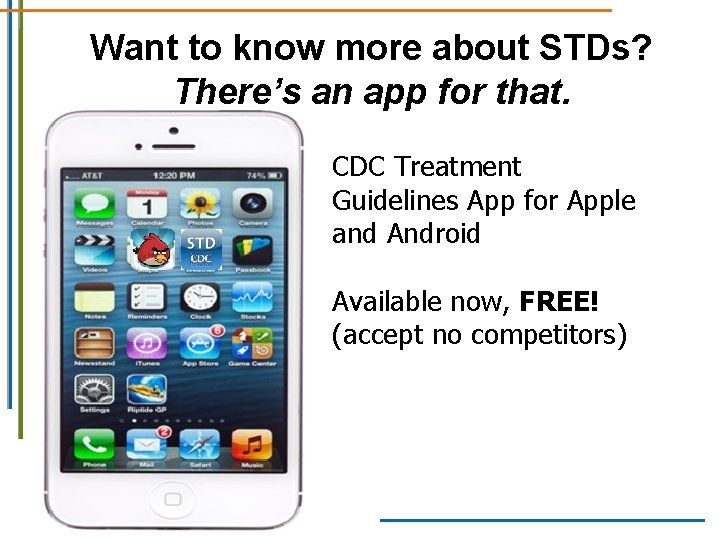
Want to know more about STDs? There’s an app for that. CDC Treatment Guidelines App for Apple and Android Available now, FREE! (accept no competitors)
Download the app now…
Thank you!! Contact information ina. park@cdph. ca. gov stephanie. cohen@sfdph. org
Parking lot
What is the maximum time allowed between Bicillin doses? • Clinical experience suggests 10 -14 days ok for nonpregnant adults • <9 days is best based on limited pharmacologic data • In pregnancy, must adhere to strict 7 days between doses • 40% of pregnant women are below treponemicidal levels after 9 days • If a dose is missed, the entire series must be restarted