
New Directions in Schoolbased Interventions for Children with
New Directions in School-based Interventions for Children with ADHD TIES Meeting Pennsylvania State University May, 2011 William E. Pelham, Jr. , Center for Children and Families Florida International University
Disclosures Past Consultant, scientific advisor, speaker, grant recipient: Mc. Neil/Alza (Concerta) Abbott Shire (Adderall, Adderall XR, guanfacine) Noven (Daytrana) Lilly (Strattera) Cephalon (Sparlon) Noven (Current) MTA principal investigator

Center for Children and Families Florida International University FIU: Erika Coles, Jessica Robb, , James Waxmonsky, Daniel Waschbusch, Stacy Frazier, Maggie Sibley, Meghan Ross, Kat Hart, Karen Derefinko, Paolo Graziano, Tuma Biswas, Sarah Helseth, Krissy Kent, Dara Babinski, Pete Belin, Kat Hart, Elizabeth Gnagy, Andrew Greiner, Becca Marshall, Miriam Rio, Alberto Fernandez, Edda Juarez Buffalo: Greg Fabiano Larry Hawk, Rebecca Vuchinovich, Jihnhee Yu, Jessica Verley, Karen Morris, Michele Bubnik, Meaghan Summerlee, Sarah Haas Pittsburgh: Brooke Molina, Tracey Wilson, Heidi Kipp, Carol Walker, Joanne Bethune, Kellie Seles, Vicki Krug, Jason Duin, Barb Postal, Mike Marshal, Kevin King (UW), Catherine Bagwell (UR), Kate Flory (USC), Brian Wymbs (UW), Kat Belendiuk, Allison Looby, Sarah Pederson, Jee. Won Cheong, Christine Walther MTA Cooperative Group (Pittsburgh, UC Berkeley/Irvine, Columbia, NYU, Duke) IES/CDC SACD Collaborative Group (Rochester, NYU, U. Md, UNC, Vanderbilt, UICC, Greta Massetti, CDC) Mc. Master: Chuck Cunningham UNC: Mike Foster, Patrick Curran, Mike Willoughby Chicago: Benjamin Lahey Current Funding Sources: NIMH (6) NIAAA, NIDA, IES (2), NICHD, ACF (2), FIU, APA, The Children’s Trust, Mc. Neil, Shire
ADHD: Importance to Professionals Prevalence: 2 -9% of population in the U. S. --higher in boys— similar prevalence across many countries Children dealt with by: – – Health Care Professionals Mental Health Professionals Allied Health Professionals Educators Most common behavioral referral to health care professionals Most common referral/diagnosis in special education Most common behavior problem in regular education classrooms Most common diagnosis in child mental health facilities


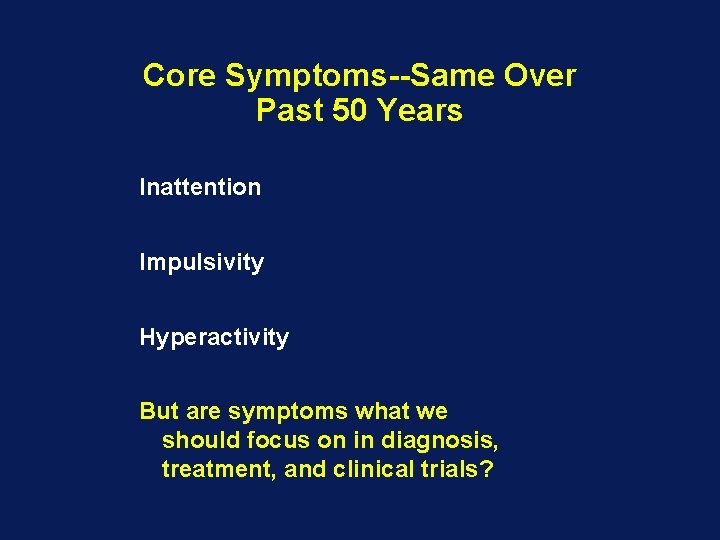
Core Symptoms--Same Over Past 50 Years Inattention Impulsivity Hyperactivity But are symptoms what we should focus on in diagnosis, treatment, and clinical trials?
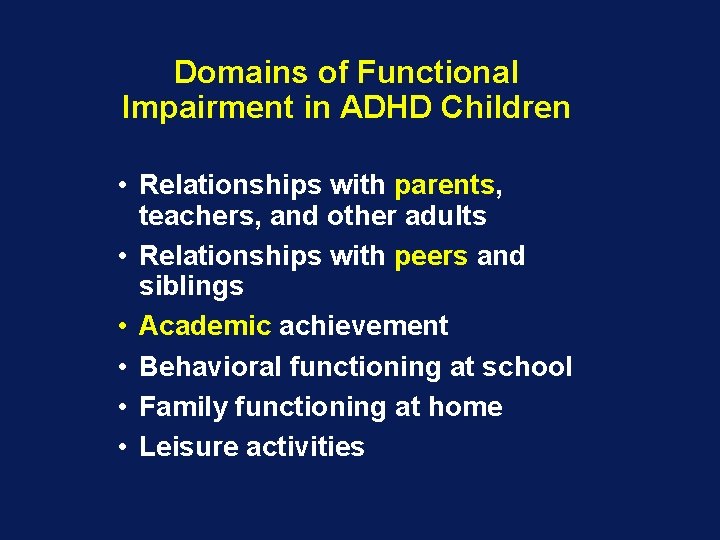
Domains of Functional Impairment in ADHD Children • Relationships with parents, teachers, and other adults • Relationships with peers and siblings • Academic achievement • Behavioral functioning at school • Family functioning at home • Leisure activities
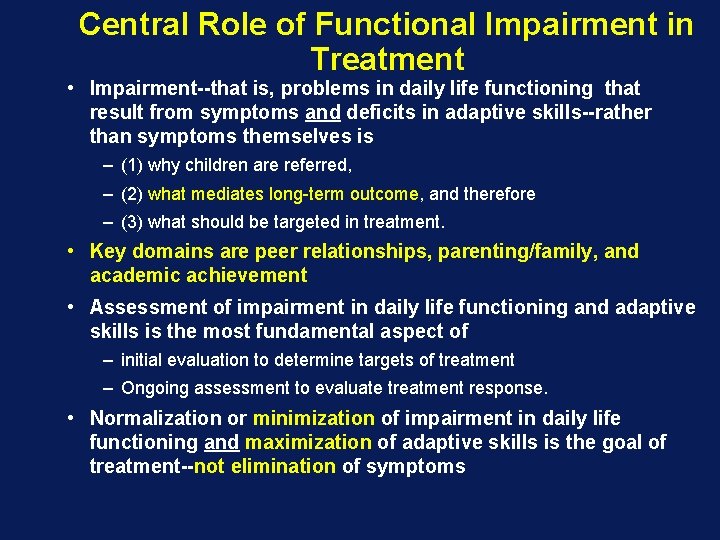
Central Role of Functional Impairment in Treatment • Impairment--that is, problems in daily life functioning that result from symptoms and deficits in adaptive skills--rather than symptoms themselves is – (1) why children are referred, – (2) what mediates long-term outcome, and therefore – (3) what should be targeted in treatment. • Key domains are peer relationships, parenting/family, and academic achievement • Assessment of impairment in daily life functioning and adaptive skills is the most fundamental aspect of – initial evaluation to determine targets of treatment – Ongoing assessment to evaluate treatment response. • Normalization or minimization of impairment in daily life functioning and maximization of adaptive skills is the goal of treatment--not elimination of symptoms
Why Is it Important to Treat ADHD in Childhood?
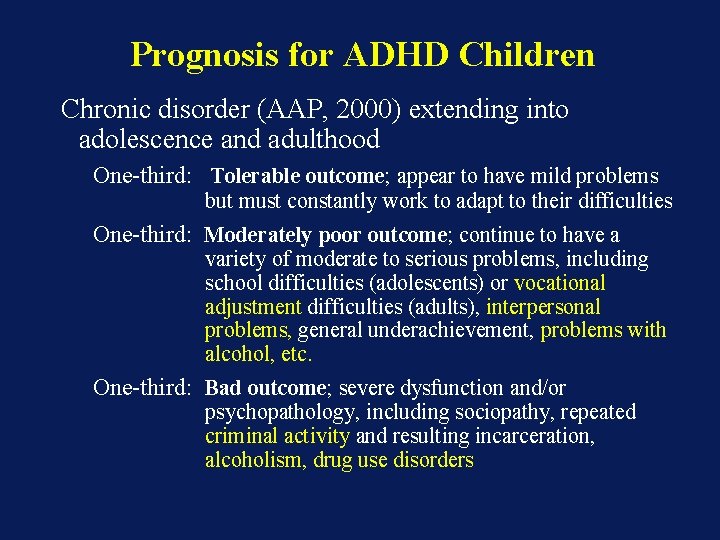
Prognosis for ADHD Children Chronic disorder (AAP, 2000) extending into adolescence and adulthood One-third: Tolerable outcome; appear to have mild problems but must constantly work to adapt to their difficulties One-third: Moderately poor outcome; continue to have a variety of moderate to serious problems, including school difficulties (adolescents) or vocational adjustment difficulties (adults), interpersonal problems, general underachievement, problems with alcohol, etc. One-third: Bad outcome; severe dysfunction and/or psychopathology, including sociopathy, repeated criminal activity and resulting incarceration, alcoholism, drug use disorders
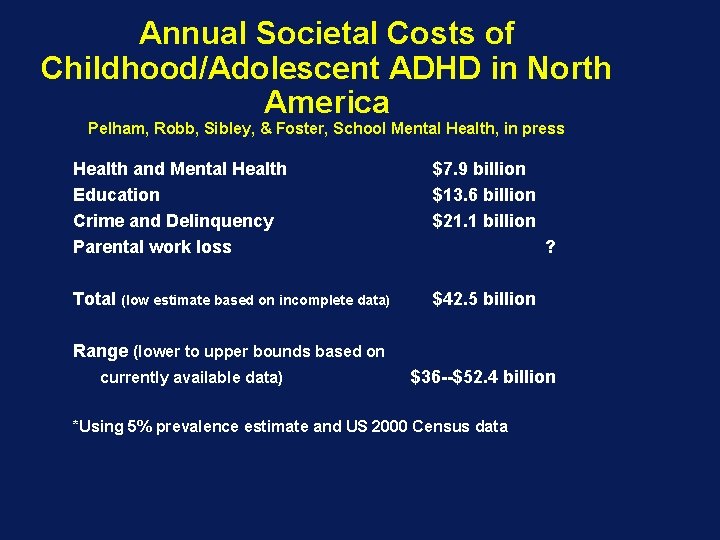
Annual Societal Costs of Childhood/Adolescent ADHD in North America Pelham, Robb, Sibley, & Foster, School Mental Health, in press Health and Mental Health Education Crime and Delinquency Parental work loss $7. 9 billion $13. 6 billion $21. 1 billion Total (low estimate based on incomplete data) $42. 5 billion ? Range (lower to upper bounds based on currently available data) $36 --$52. 4 billion *Using 5% prevalence estimate and US 2000 Census data
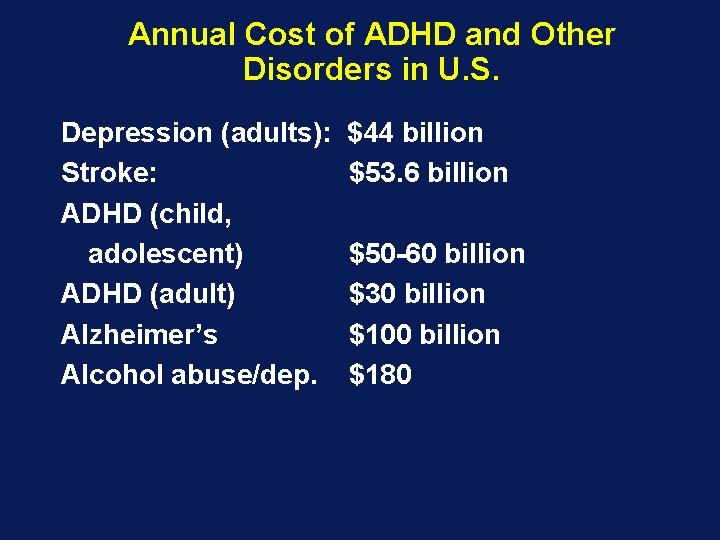
Annual Cost of ADHD and Other Disorders in U. S. Depression (adults): Stroke: ADHD (child, adolescent) ADHD (adult) Alzheimer’s Alcohol abuse/dep. $44 billion $53. 6 billion $50 -60 billion $30 billion $100 billion $180
What is Effective, Evidence-based Treatment for ADHD in Children?
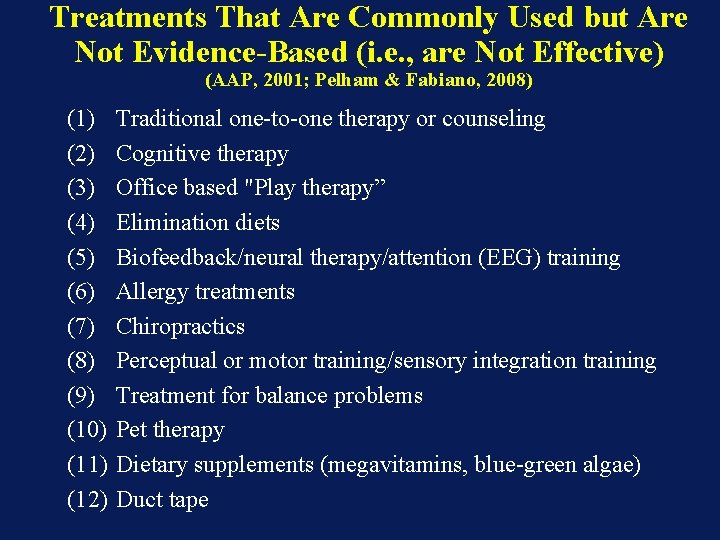
Treatments That Are Commonly Used but Are Not Evidence-Based (i. e. , are Not Effective) (AAP, 2001; Pelham & Fabiano, 2008) (1) (2) (3) (4) (5) (6) (7) (8) (9) (10) (11) (12) Traditional one-to-one therapy or counseling Cognitive therapy Office based "Play therapy” Elimination diets Biofeedback/neural therapy/attention (EEG) training Allergy treatments Chiropractics Perceptual or motor training/sensory integration training Treatment for balance problems Pet therapy Dietary supplements (megavitamins, blue-green algae) Duct tape
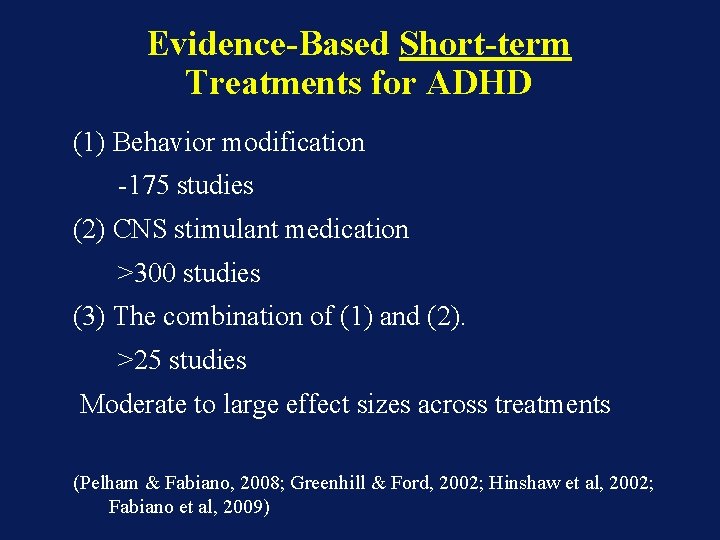
Evidence-Based Short-term Treatments for ADHD (1) Behavior modification -175 studies (2) CNS stimulant medication >300 studies (3) The combination of (1) and (2). >25 studies Moderate to large effect sizes across treatments (Pelham & Fabiano, 2008; Greenhill & Ford, 2002; Hinshaw et al, 2002; Fabiano et al, 2009)
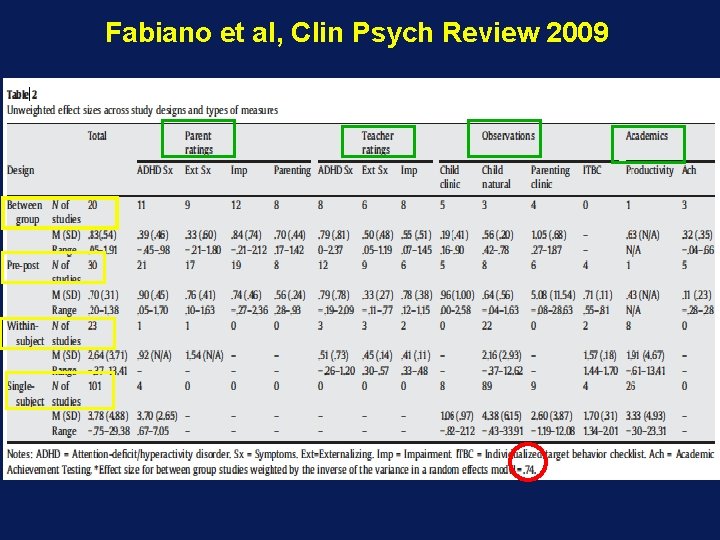
Fabiano et al, Clin Psych Review 2009
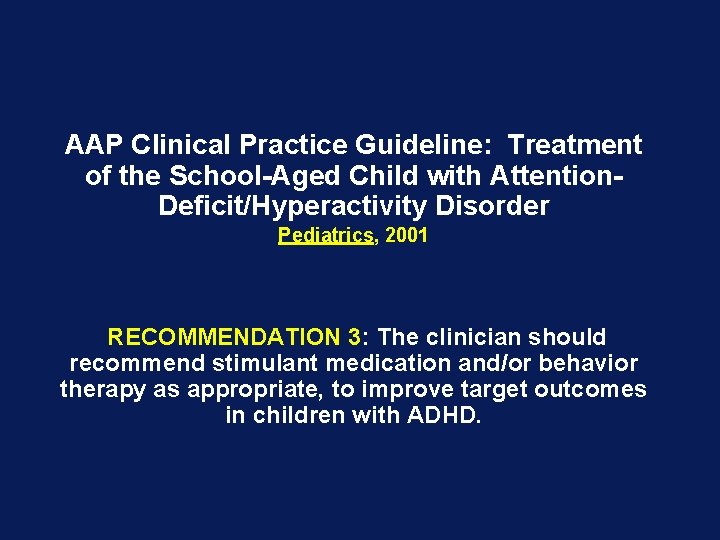
AAP Clinical Practice Guideline: Treatment of the School-Aged Child with Attention. Deficit/Hyperactivity Disorder Pediatrics, 2001 RECOMMENDATION 3: The clinician should recommend stimulant medication and/or behavior therapy as appropriate, to improve target outcomes in children with ADHD.
Given that Two Modalities of Treatment Work (Medication, and Behavioral Treatment), Which Should be Used as First Line Treatment?
Guidelines on Treatment Sequencing? • AAP gives none • Task Force of APA (2007) says psychosocial first • Guidelines of the AACAP (2007) say medication first • Japanese guidelines (2008) say behavioral/educational first • British NICE guidelines (2009) say behavioral first in mild to moderate cases • CHADD says both and simultaneous • Studies of sequencing?
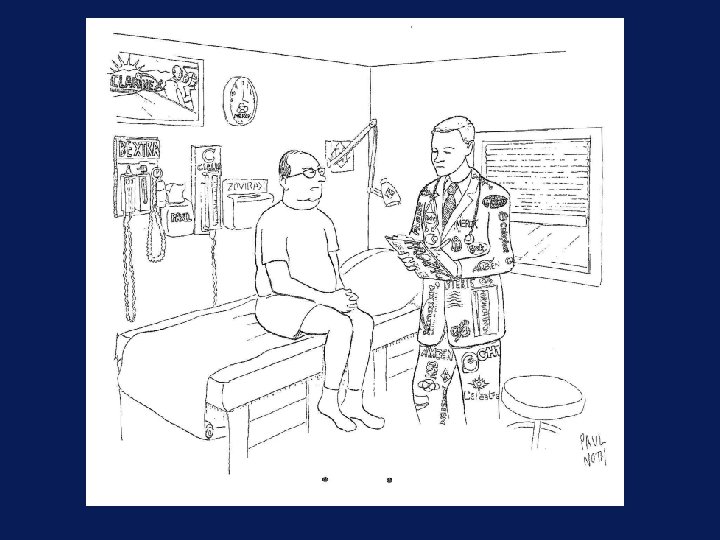
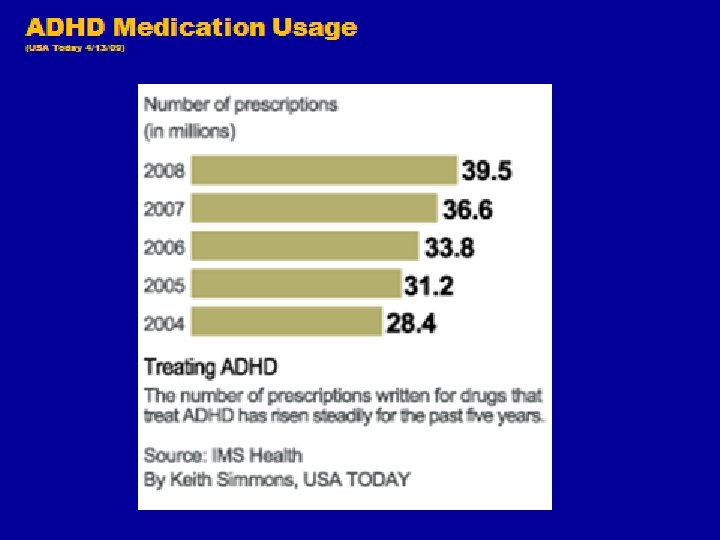
Medication Business is Booming • In 1997, FDA extended patent life of drug by 6 months if performed pediatric trials • Insurance plans now spend more money on psychotropics than antibiotics or asthma meds (17% total drug costs) • 6+% of children took at least one psychotropic in 2005, with 1/5 of those taking 2+meds • Recent increases in use of antipsychotic medications (10% increase in 2008) • Stimulants are the most prescribed child psychotropic and the most prescribed drug in adolescents. • Pediatric drugs are typically more expensive than in adults because of lack of generics
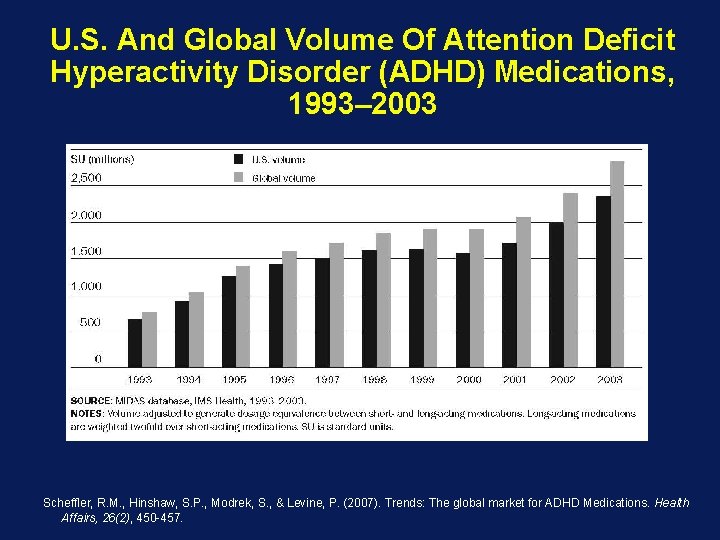
U. S. And Global Volume Of Attention Deficit Hyperactivity Disorder (ADHD) Medications, 1993– 2003 Scheffler, R. M. , Hinshaw, S. P. , Modrek, S. , & Levine, P. (2007). Trends: The global market for ADHD Medications. Health Affairs, 26(2), 450 -457.
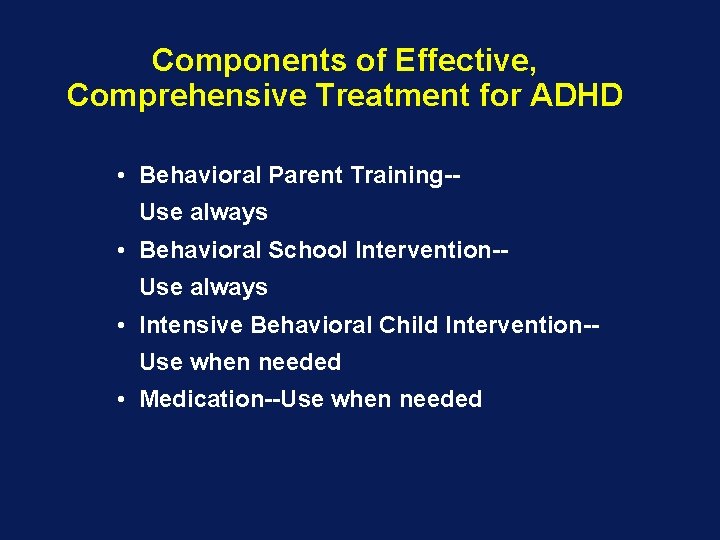
Components of Effective, Comprehensive Treatment for ADHD • Behavioral Parent Training-Use always • Behavioral School Intervention-Use always • Intensive Behavioral Child Intervention-Use when needed • Medication--Use when needed
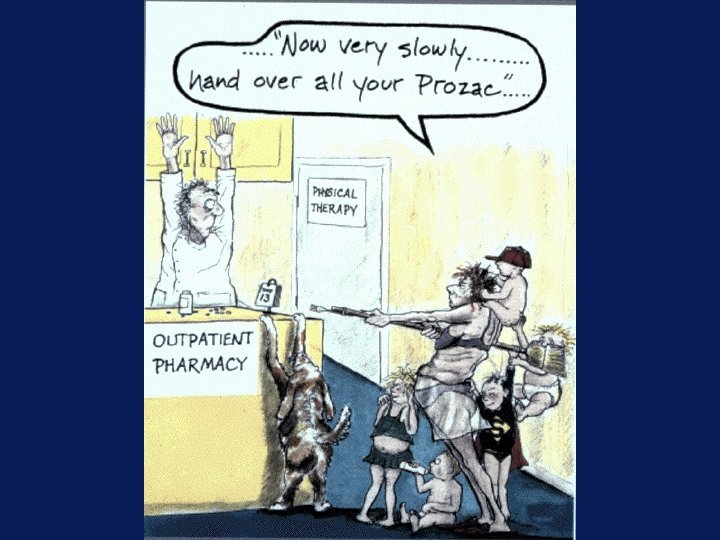
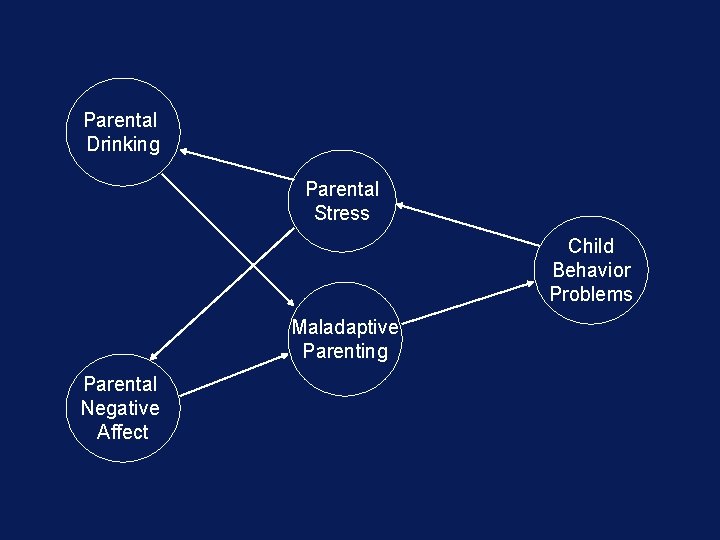
Why is it Important to Include Parent Training in Treatment? • No one is taught how to be a parent • Parents of ADHD children have significant stress, psychopathology, and poor parenting skills • ADHD children contribute greatly to parental stress and disturbed parent-child relationships • Parenting styles characteristic of ADHD parents predict and mediate long term negative outcomes for children
Do Your Children Cause You Stress?
Parental Drinking Parental Stress Child Behavior Problems Maladaptive Parenting Parental Negative Affect
Components of Evidence-based Treatment for ADHD Parent Training Behavioral approach Focus on parenting skills, child’s behavior, and family relationships Parents learn skills and implement treatment with child, modifying interventions as necessary using ongoing functional analysis Group-based or individual weekly sessions with therapist initially (8 -16 sessions), then contact faded Don’t expect instant changes in child--improvement (learning) often gradual Continued support and contact as long as necessary (e. g. , 2 or 3 years and/or when deterioration occurs) Program for maintenance and relapse prevention (e. g. , develop plans for dealing with concurrent cyclic parental problems, such as maternal depression, parental substance abuse, and divorce; make programs palatable and feasible) Reestablish contact for major developmental transitions (e. g. , adolescence) Can be offered in MH, primary care, schools, churches, community centers by individuals with wide variety of training--very cost effective Many studies documenting benefits of
Why is it also important to use behavioral treatments in school settings?
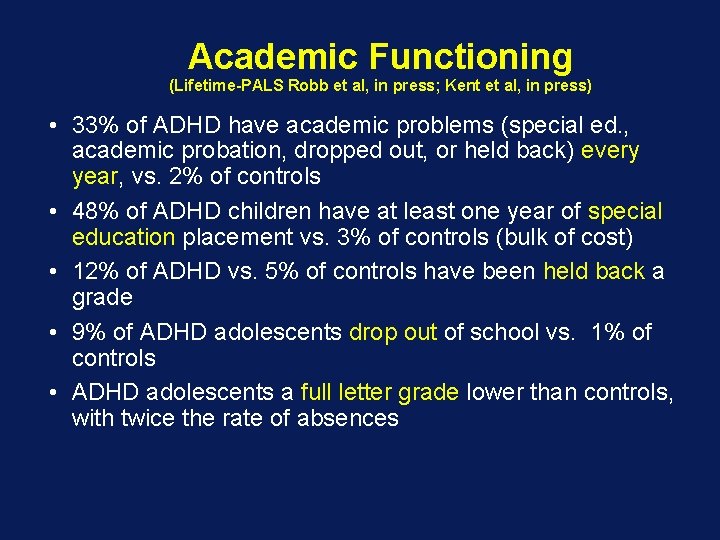
Academic Functioning (Lifetime-PALS Robb et al, in press; Kent et al, in press) • 33% of ADHD have academic problems (special ed. , academic probation, dropped out, or held back) every year, vs. 2% of controls • 48% of ADHD children have at least one year of special education placement vs. 3% of controls (bulk of cost) • 12% of ADHD vs. 5% of controls have been held back a grade • 9% of ADHD adolescents drop out of school vs. 1% of controls • ADHD adolescents a full letter grade lower than controls, with twice the rate of absences
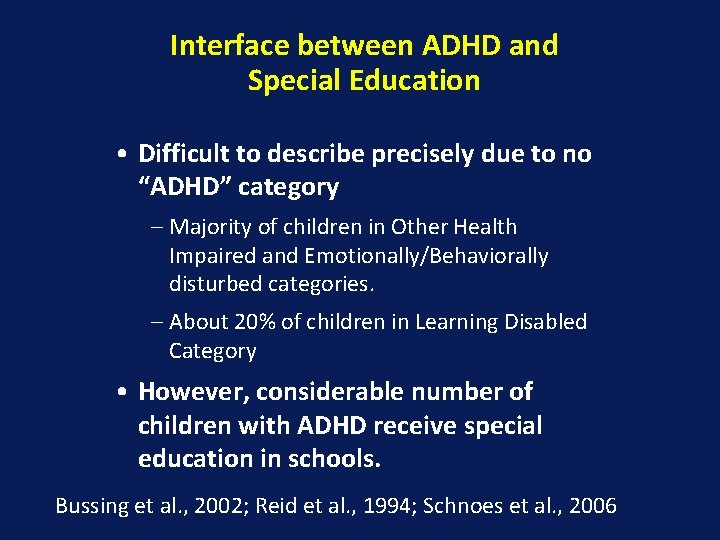
Interface between ADHD and Special Education • Difficult to describe precisely due to no “ADHD” category – Majority of children in Other Health Impaired and Emotionally/Behaviorally disturbed categories. – About 20% of children in Learning Disabled Category • However, considerable number of children with ADHD receive special education in schools. Bussing et al. , 2002; Reid et al. , 1994; Schnoes et al. , 2006
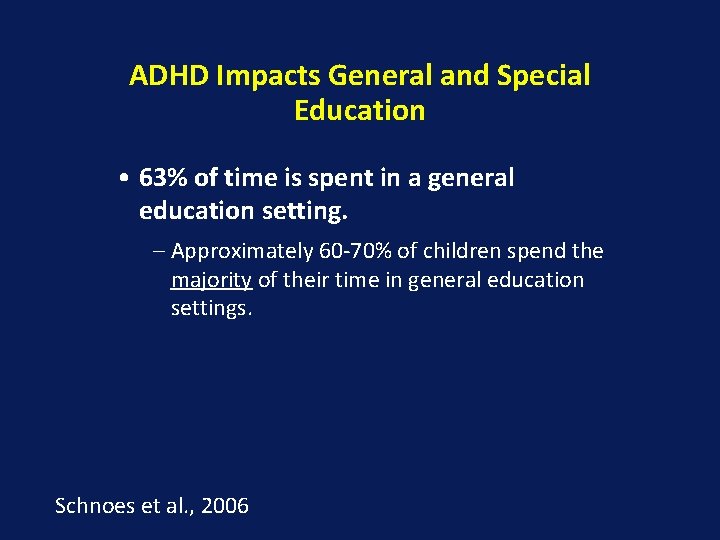
ADHD Impacts General and Special Education • 63% of time is spent in a general education setting. – Approximately 60 -70% of children spend the majority of their time in general education settings. Schnoes et al. , 2006
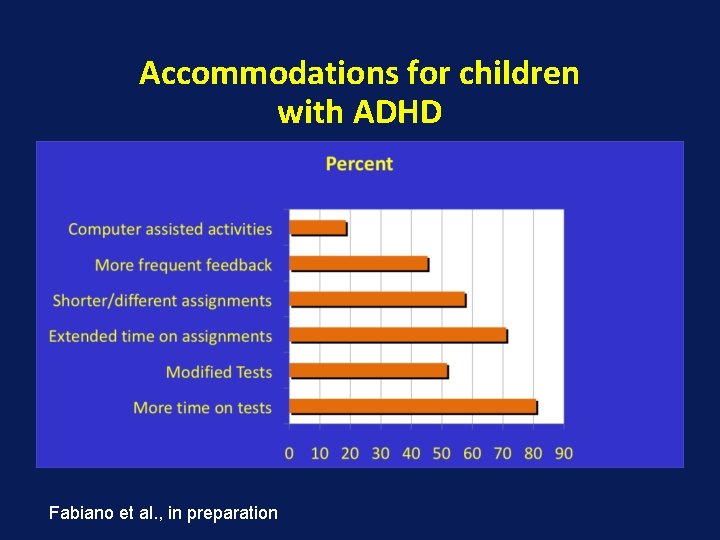
Accommodations for children with ADHD Fabiano et al. , in preparation
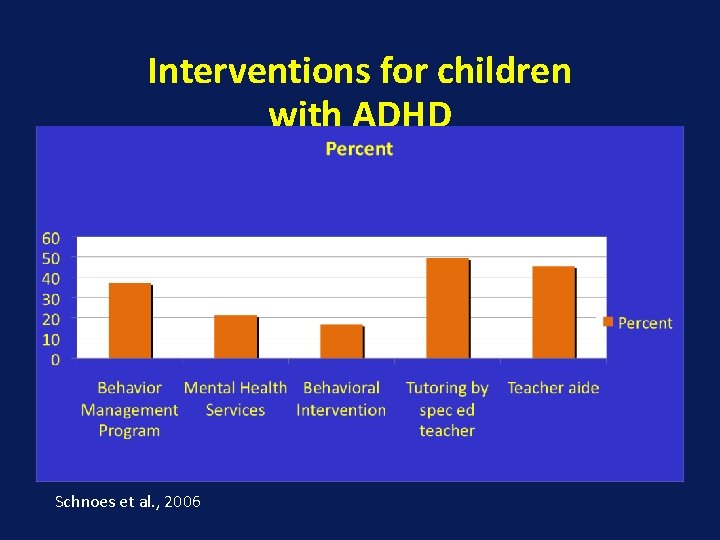
Interventions for children with ADHD Schnoes et al. , 2006
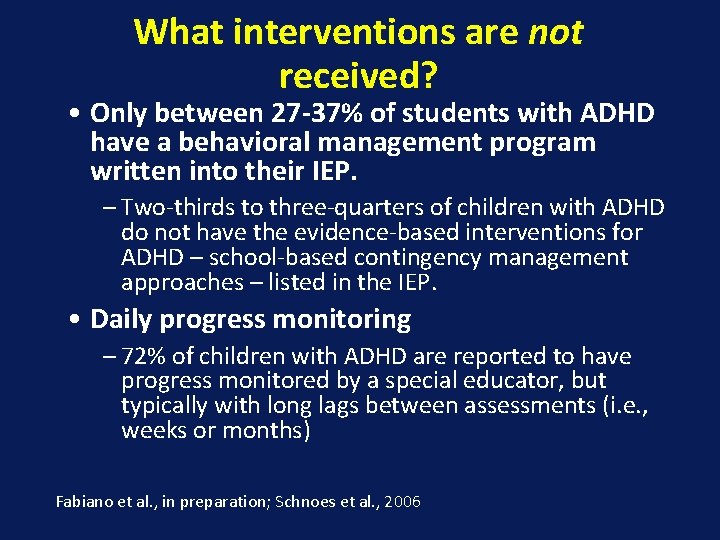
What interventions are not received? • Only between 27 -37% of students with ADHD have a behavioral management program written into their IEP. – Two-thirds to three-quarters of children with ADHD do not have the evidence-based interventions for ADHD – school-based contingency management approaches – listed in the IEP. • Daily progress monitoring – 72% of children with ADHD are reported to have progress monitored by a special educator, but typically with long lags between assessments (i. e. , weeks or months) Fabiano et al. , in preparation; Schnoes et al. , 2006
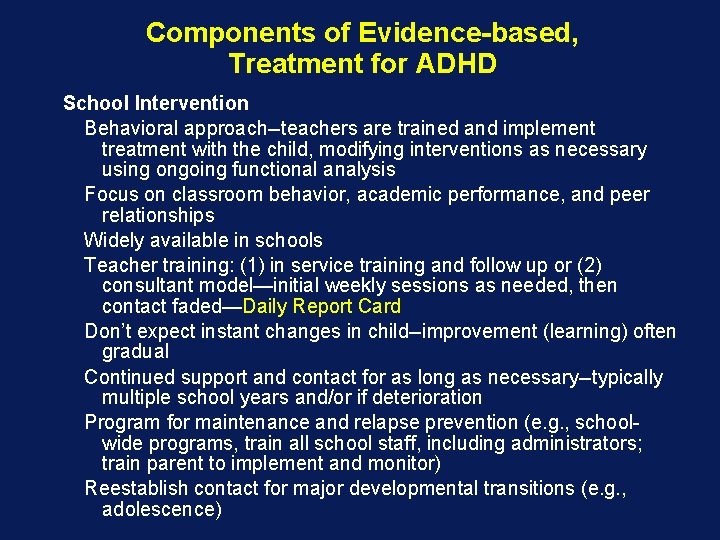
Components of Evidence-based, Treatment for ADHD School Intervention Behavioral approach--teachers are trained and implement treatment with the child, modifying interventions as necessary using ongoing functional analysis Focus on classroom behavior, academic performance, and peer relationships Widely available in schools Teacher training: (1) in service training and follow up or (2) consultant model—initial weekly sessions as needed, then contact faded—Daily Report Card Don’t expect instant changes in child--improvement (learning) often gradual Continued support and contact for as long as necessary--typically multiple school years and/or if deterioration Program for maintenance and relapse prevention (e. g. , schoolwide programs, train all school staff, including administrators; train parent to implement and monitor) Reestablish contact for major developmental transitions (e. g. , adolescence)
Why is it Important to Use Behavioral Treatments for ADHD Peer Relationships?
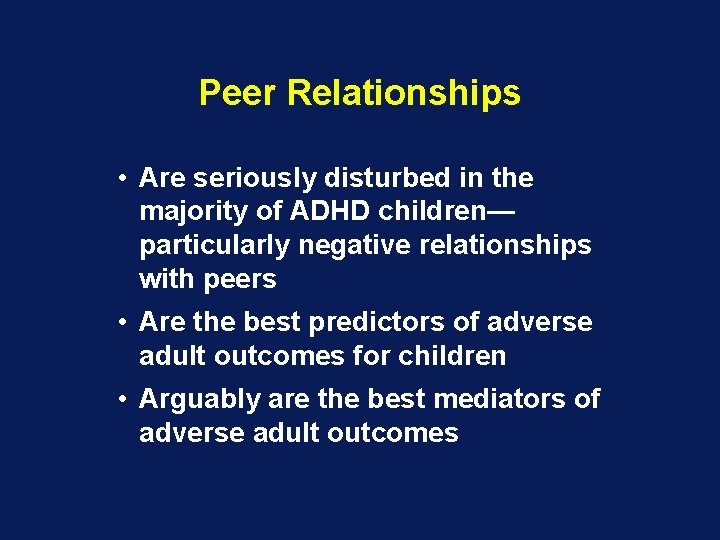
Peer Relationships • Are seriously disturbed in the majority of ADHD children— particularly negative relationships with peers • Are the best predictors of adverse adult outcomes for children • Arguably are the best mediators of adverse adult outcomes
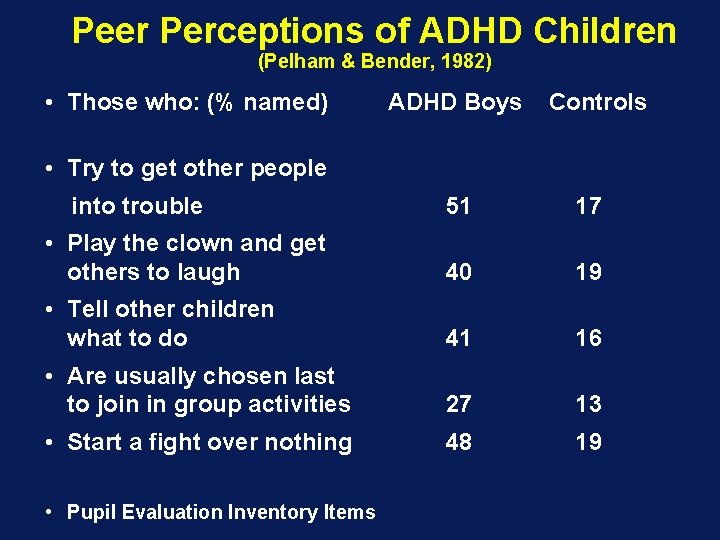
Peer Perceptions of ADHD Children (Pelham & Bender, 1982) • Those who: (% named) ADHD Boys Controls • Try to get other people into trouble 51 17 • Play the clown and get others to laugh 40 19 • Tell other children what to do 41 16 • Are usually chosen last to join in group activities 27 13 • Start a fight over nothing 48 19 • Pupil Evaluation Inventory Items
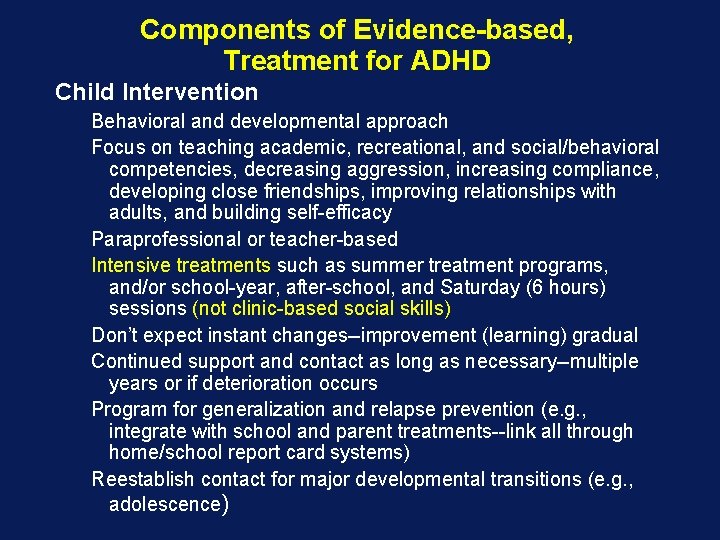
Components of Evidence-based, Treatment for ADHD Child Intervention Behavioral and developmental approach Focus on teaching academic, recreational, and social/behavioral competencies, decreasing aggression, increasing compliance, developing close friendships, improving relationships with adults, and building self-efficacy Paraprofessional or teacher-based Intensive treatments such as summer treatment programs, and/or school-year, after-school, and Saturday (6 hours) sessions (not clinic-based social skills) Don’t expect instant changes--improvement (learning) gradual Continued support and contact as long as necessary--multiple years or if deterioration occurs Program for generalization and relapse prevention (e. g. , integrate with school and parent treatments--link all through home/school report card systems) Reestablish contact for major developmental transitions (e. g. , adolescence)
Why Treat ADHD in a Summer Setting? • Work on peer relationships in an ecologically valid setting (e. g. , playing common games in peer group settings) • Teach sports skills and knowledge and team cooperation • Build friendships with other ADHD children • Minimize summer learning loss that characterizes low achieving children • Teach compliance skills to child and parents • Teach daily report card concept to child and parents
STP Program Development • Many current and former STP staff members have contributed to the development and continuation of the STP, and the following individuals have been prominent among them (in approximately chronological order): Mary Bender, Marc Atkins, Charlotte Johnston, James Sturges, Jo. Ann Hoza, Debra Murphy, Douglas Nangle, Joseph Clinton, Andrew Greiner, Mary Vodde. Hamilton, Karen Greenslade, Elizabeth Gnagy, Jason Walker, Patricia Donovan, Lynn Martin, Tracey Wilson, Jonathan Greenstein, Betsy Hoza, Richard Milich, Joanne Dixon, Susan Sams, Caryn Carlson, Steven Evans, Cynthia Hartung, Jodi Polaha, Kristi Meisinger, Linda Johnson, Rosanne Javorsky, Leanna Labowski, Heidi Kipp, Jeannine French, Bradley Smith, Cheri Shapiro, David Myers, David Meichenbaum, Daniel Waschbusch, Adia Onyango, Andrea Chronis, Gregory Fabiano, Lisa Burrows-Mc. Lean, Erika Coles, Anil Chacko, Katie Walker, Fran Arnold, Brian Wymbs, Jess Robb, Briannon O’Connor, Maggie Sibley.
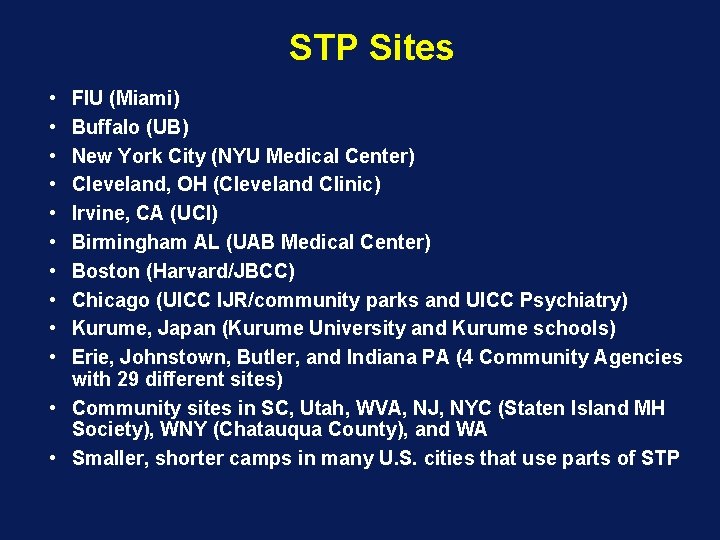
STP Sites • • • FIU (Miami) Buffalo (UB) New York City (NYU Medical Center) Cleveland, OH (Cleveland Clinic) Irvine, CA (UCI) Birmingham AL (UAB Medical Center) Boston (Harvard/JBCC) Chicago (UICC IJR/community parks and UICC Psychiatry) Kurume, Japan (Kurume University and Kurume schools) Erie, Johnstown, Butler, and Indiana PA (4 Community Agencies with 29 different sites) • Community sites in SC, Utah, WVA, NJ, NYC (Staten Island MH Society), WNY (Chatauqua County), and WA • Smaller, shorter camps in many U. S. cities that use parts of STP
Components of Effective, Comprehensive Treatment for ADHD Concurrent Psychostimulant Medication Rarely should be used as first treatment implemented Need determined following initiation of behavioral treatments; timing depends on severity and responsiveness Cycle through methylphenidate and amphetamine-based compounds and atomoxetine before other drug classes Need based on objective data regarding impairment at home and school independently Use at minimal rather than maximal effective dose –so minimal times of day and days of week Continue for as long as need exists (typically years--evaluate need and dose annually) Plan for possible emergent iatrogenic effects (e. g. , growth suppression)
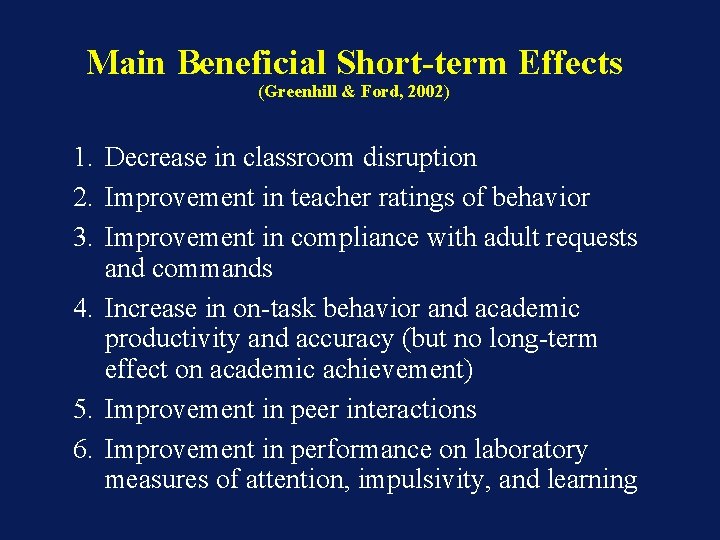
Main Beneficial Short-term Effects (Greenhill & Ford, 2002) 1. Decrease in classroom disruption 2. Improvement in teacher ratings of behavior 3. Improvement in compliance with adult requests and commands 4. Increase in on-task behavior and academic productivity and accuracy (but no long-term effect on academic achievement) 5. Improvement in peer interactions 6. Improvement in performance on laboratory measures of attention, impulsivity, and learning
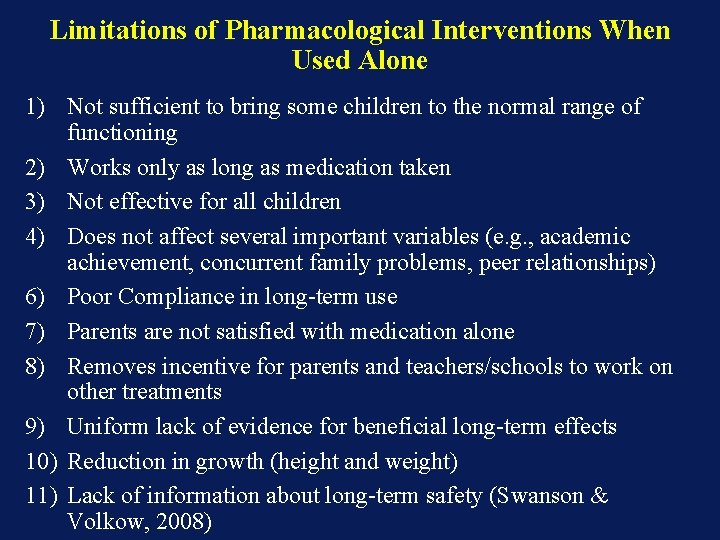
Limitations of Pharmacological Interventions When Used Alone 1) Not sufficient to bring some children to the normal range of functioning 2) Works only as long as medication taken 3) Not effective for all children 4) Does not affect several important variables (e. g. , academic achievement, concurrent family problems, peer relationships) 6) Poor Compliance in long-term use 7) Parents are not satisfied with medication alone 8) Removes incentive for parents and teachers/schools to work on other treatments 9) Uniform lack of evidence for beneficial long-term effects 10) Reduction in growth (height and weight) 11) Lack of information about long-term safety (Swanson & Volkow, 2008)
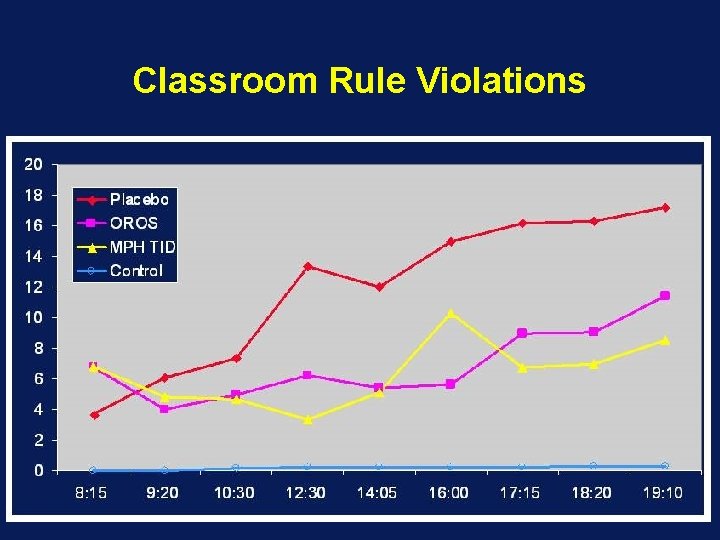
Classroom Rule Violations
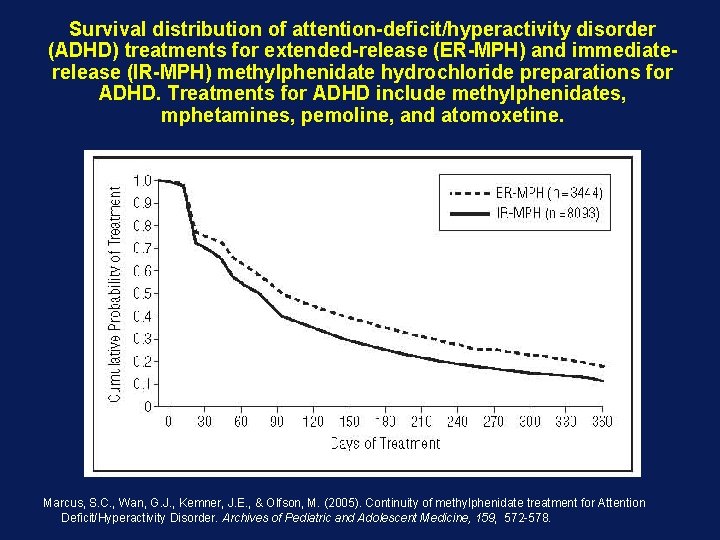
Survival distribution of attention-deficit/hyperactivity disorder (ADHD) treatments for extended-release (ER-MPH) and immediaterelease (IR-MPH) methylphenidate hydrochloride preparations for ADHD. Treatments for ADHD include methylphenidates, mphetamines, pemoline, and atomoxetine. Marcus, S. C. , Wan, G. J. , Kemner, J. E. , & Olfson, M. (2005). Continuity of methylphenidate treatment for Attention Deficit/Hyperactivity Disorder. Archives of Pediatric and Adolescent Medicine, 159, 572 -578.
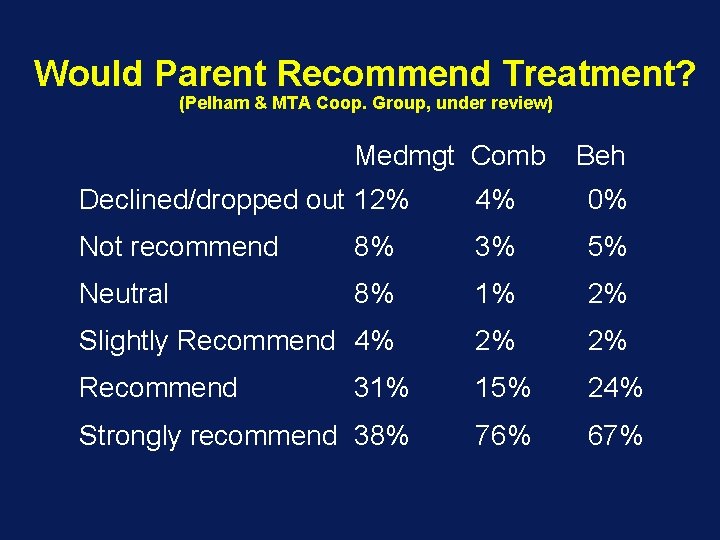
Would Parent Recommend Treatment? (Pelham & MTA Coop. Group, under review) Medmgt Comb Beh Declined/dropped out 12% 4% 0% Not recommend 8% 3% 5% Neutral 8% 1% 2% Slightly Recommend 4% 2% 2% Recommend 31% 15% 24% Strongly recommend 38% 76% 67%
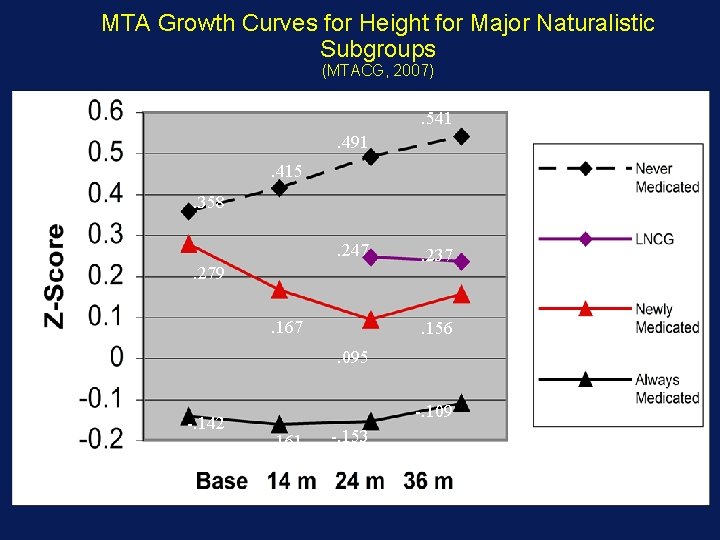
MTA Growth Curves for Height for Major Naturalistic Subgroups (MTACG, 2007) . 541. 491. 415. 358. 247. 279. 167 . 237 . 156. 095 -. 142 -. 109 -. 161 -. 153
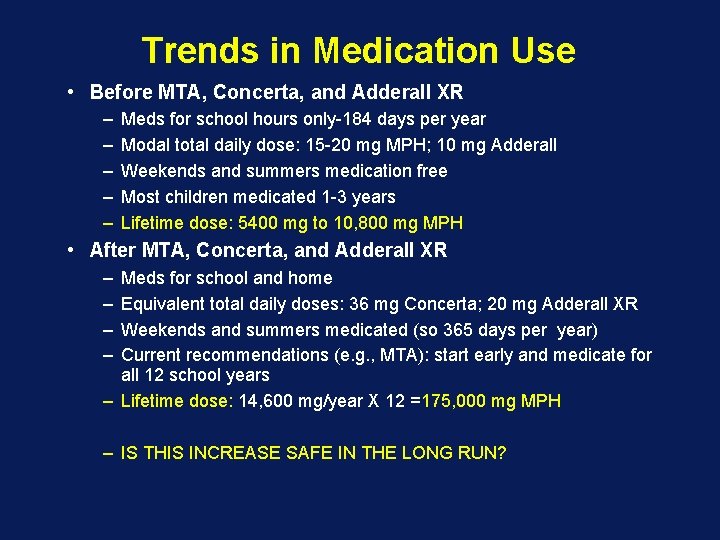
Trends in Medication Use • Before MTA, Concerta, and Adderall XR – – – Meds for school hours only-184 days per year Modal total daily dose: 15 -20 mg MPH; 10 mg Adderall Weekends and summers medication free Most children medicated 1 -3 years Lifetime dose: 5400 mg to 10, 800 mg MPH • After MTA, Concerta, and Adderall XR – – Meds for school and home Equivalent total daily doses: 36 mg Concerta; 20 mg Adderall XR Weekends and summers medicated (so 365 days per year) Current recommendations (e. g. , MTA): start early and medicate for all 12 school years – Lifetime dose: 14, 600 mg/year X 12 =175, 000 mg MPH – IS THIS INCREASE SAFE IN THE LONG RUN?
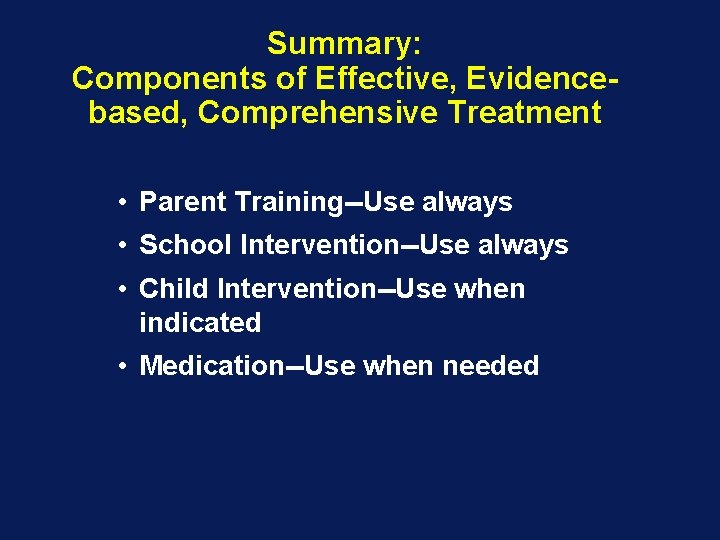
Summary: Components of Effective, Evidencebased, Comprehensive Treatment • Parent Training--Use always • School Intervention--Use always • Child Intervention--Use when indicated • Medication--Use when needed
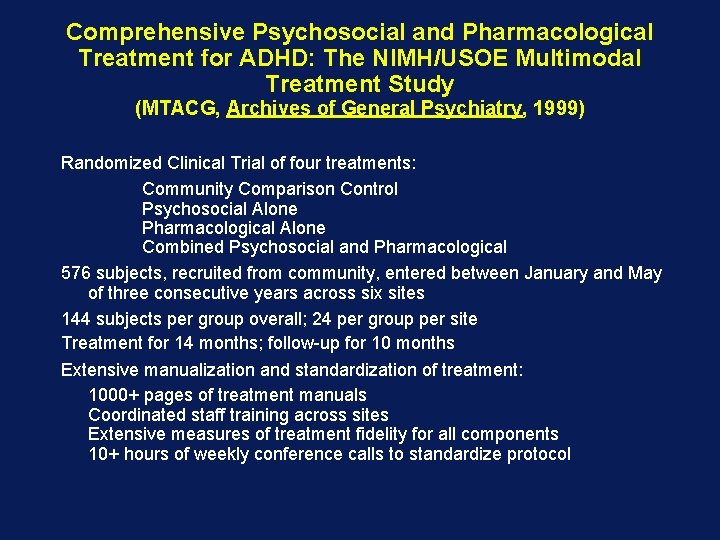
Comprehensive Psychosocial and Pharmacological Treatment for ADHD: The NIMH/USOE Multimodal Treatment Study (MTACG, Archives of General Psychiatry, 1999) Randomized Clinical Trial of four treatments: Community Comparison Control Psychosocial Alone Pharmacological Alone Combined Psychosocial and Pharmacological 576 subjects, recruited from community, entered between January and May of three consecutive years across six sites 144 subjects per group overall; 24 per group per site Treatment for 14 months; follow-up for 10 months Extensive manualization and standardization of treatment: 1000+ pages of treatment manuals Coordinated staff training across sites Extensive measures of treatment fidelity for all components 10+ hours of weekly conference calls to standardize protocol
What Does the MTA Study Tell us about Treating ADHD?

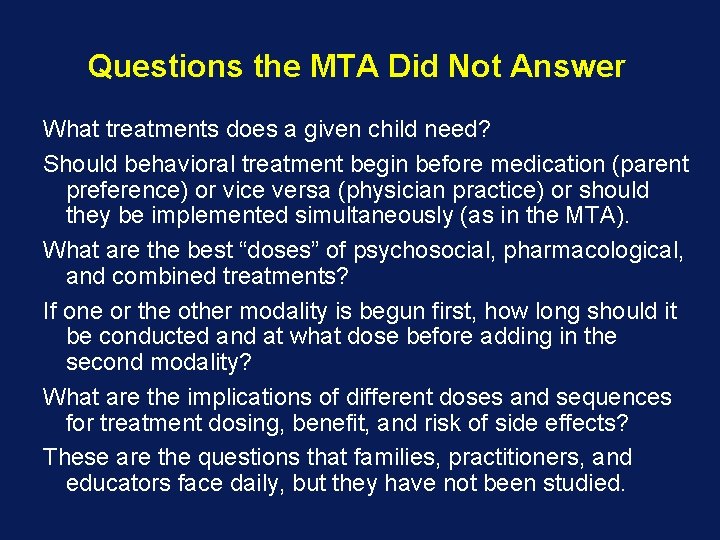
Questions the MTA Did Not Answer What treatments does a given child need? Should behavioral treatment begin before medication (parent preference) or vice versa (physician practice) or should they be implemented simultaneously (as in the MTA). What are the best “doses” of psychosocial, pharmacological, and combined treatments? If one or the other modality is begun first, how long should it be conducted and at what dose before adding in the second modality? What are the implications of different doses and sequences for treatment dosing, benefit, and risk of side effects? These are the questions that families, practitioners, and educators face daily, but they have not been studied.
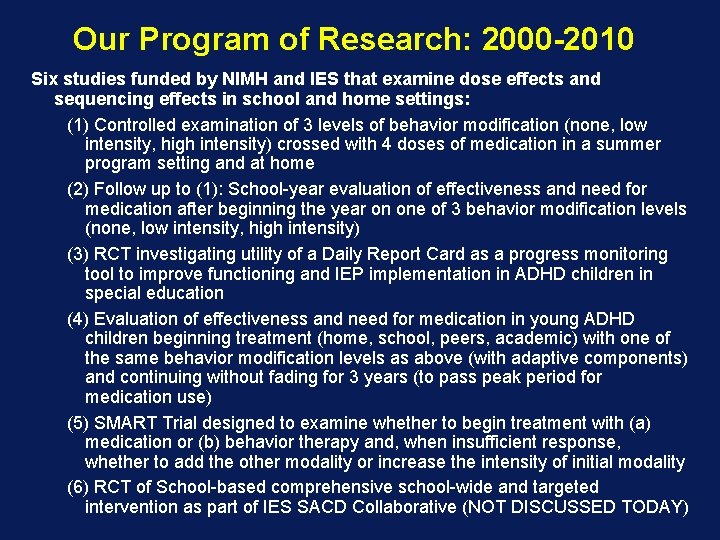
Our Program of Research: 2000 -2010 Six studies funded by NIMH and IES that examine dose effects and sequencing effects in school and home settings: (1) Controlled examination of 3 levels of behavior modification (none, low intensity, high intensity) crossed with 4 doses of medication in a summer program setting and at home (2) Follow up to (1): School-year evaluation of effectiveness and need for medication after beginning the year on one of 3 behavior modification levels (none, low intensity, high intensity) (3) RCT investigating utility of a Daily Report Card as a progress monitoring tool to improve functioning and IEP implementation in ADHD children in special education (4) Evaluation of effectiveness and need for medication in young ADHD children beginning treatment (home, school, peers, academic) with one of the same behavior modification levels as above (with adaptive components) and continuing without fading for 3 years (to pass peak period for medication use) (5) SMART Trial designed to examine whether to begin treatment with (a) medication or (b) behavior therapy and, when insufficient response, whether to add the other modality or increase the intensity of initial modality (6) RCT of School-based comprehensive school-wide and targeted intervention as part of IES SACD Collaborative (NOT DISCUSSED TODAY)
Dose-Response Effects of Behavior Modification, Medication, and their Combination in ADHD Children in a Summer Setting Pelham, Burrows-Mc. Lean, Gnagy, Fabiano, Coles, Hoffman, Massetti, Waxmonsky, Waschbusch, Chacko, Walker, Wymbs, Robb, Arnold, Garefino (NIMH 2001 -2006)
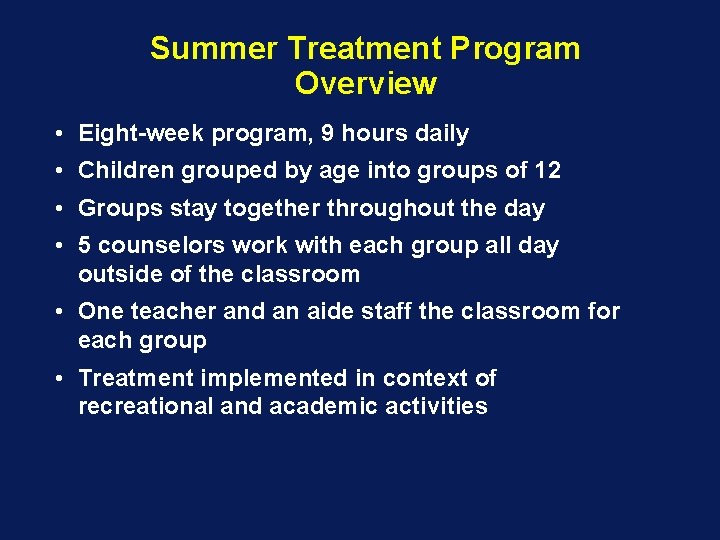
Summer Treatment Program Overview • Eight-week program, 9 hours daily • Children grouped by age into groups of 12 • Groups stay together throughout the day • 5 counselors work with each group all day outside of the classroom • One teacher and an aide staff the classroom for each group • Treatment implemented in context of recreational and academic activities
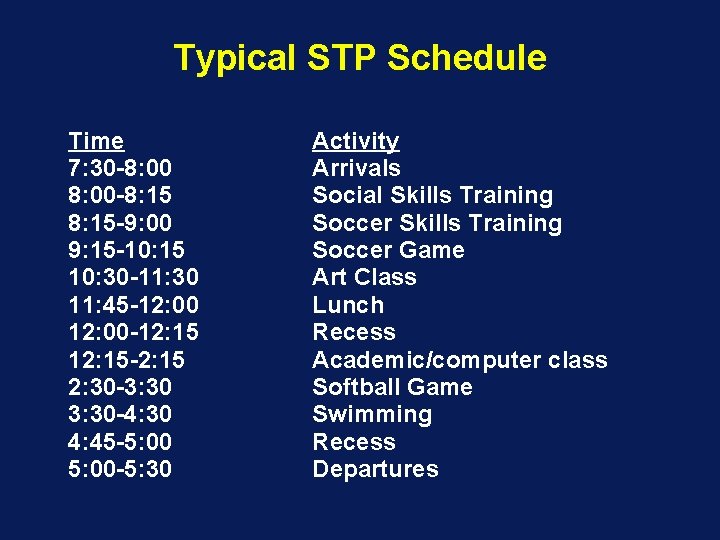
Typical STP Schedule Time 7: 30 -8: 00 -8: 15 -9: 00 9: 15 -10: 15 10: 30 -11: 30 11: 45 -12: 00 -12: 15 -2: 15 2: 30 -3: 30 -4: 30 4: 45 -5: 00 -5: 30 Activity Arrivals Social Skills Training Soccer Game Art Class Lunch Recess Academic/computer class Softball Game Swimming Recess Departures
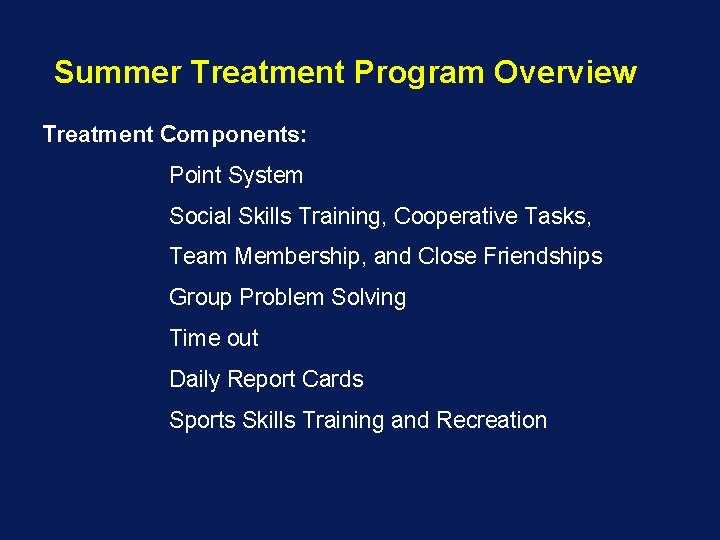
Summer Treatment Program Overview Treatment Components: Point System Social Skills Training, Cooperative Tasks, Team Membership, and Close Friendships Group Problem Solving Time out Daily Report Cards Sports Skills Training and Recreation
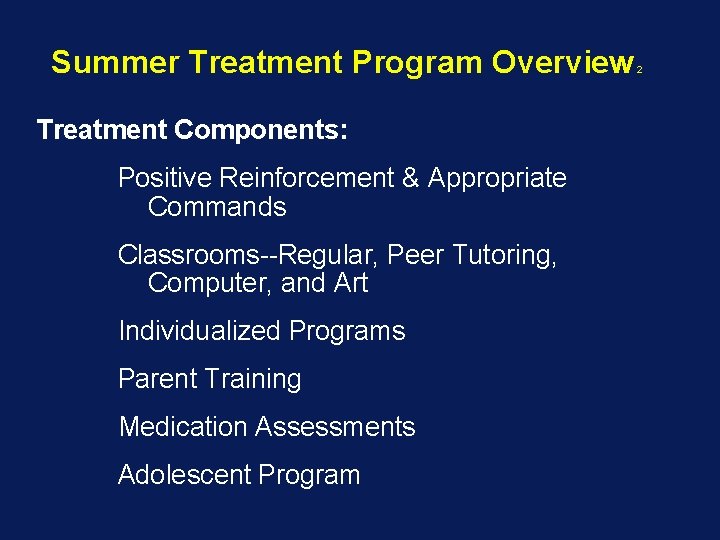
Summer Treatment Program Overview Treatment Components: Positive Reinforcement & Appropriate Commands Classrooms--Regular, Peer Tutoring, Computer, and Art Individualized Programs Parent Training Medication Assessments Adolescent Program 2
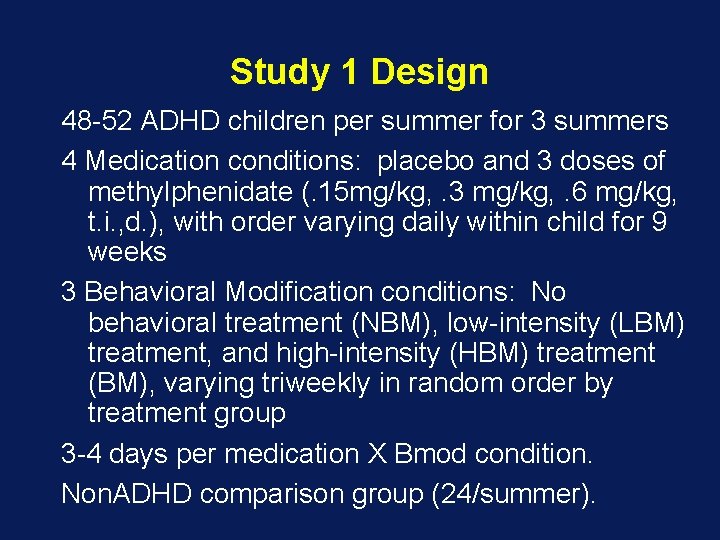
Study 1 Design 48 -52 ADHD children per summer for 3 summers 4 Medication conditions: placebo and 3 doses of methylphenidate (. 15 mg/kg, . 3 mg/kg, . 6 mg/kg, t. i. , d. ), with order varying daily within child for 9 weeks 3 Behavioral Modification conditions: No behavioral treatment (NBM), low-intensity (LBM) treatment, and high-intensity (HBM) treatment (BM), varying triweekly in random order by treatment group 3 -4 days per medication X Bmod condition. Non. ADHD comparison group (24/summer).
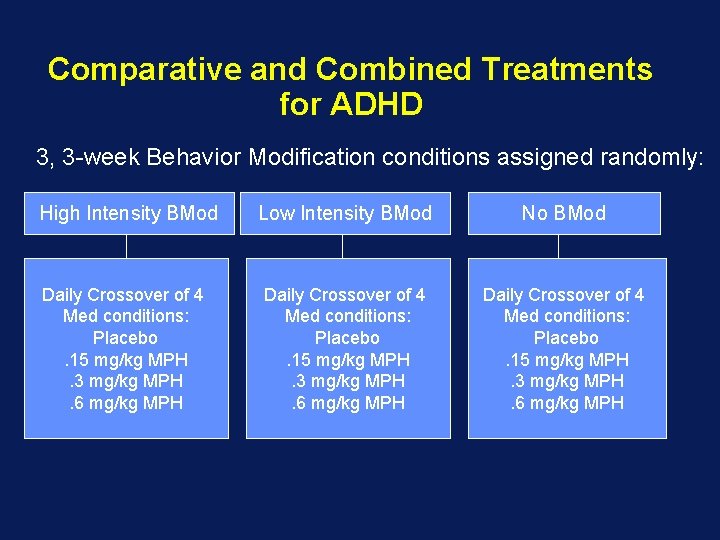
Comparative and Combined Treatments for ADHD 3, 3 -week Behavior Modification conditions assigned randomly: High Intensity BMod Daily Crossover of 4 Med conditions: Placebo. 15 mg/kg MPH. 3 mg/kg MPH. 6 mg/kg MPH Low Intensity BMod No BMod Daily Crossover of 4 Med conditions: Placebo. 15 mg/kg MPH. 3 mg/kg MPH. 6 mg/kg MPH

(Fabiano et al, School Psychology Review, 2007)

(Fabiano et al, School Psychology Review, 2007)
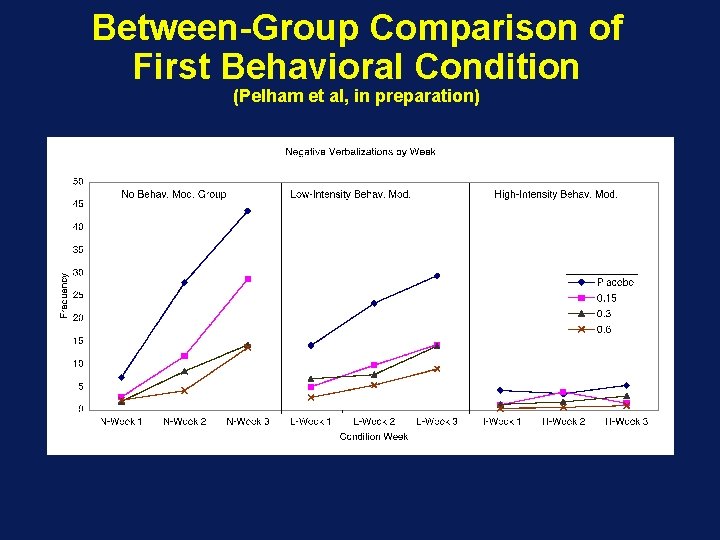
Between-Group Comparison of First Behavioral Condition (Pelham et al, in preparation)
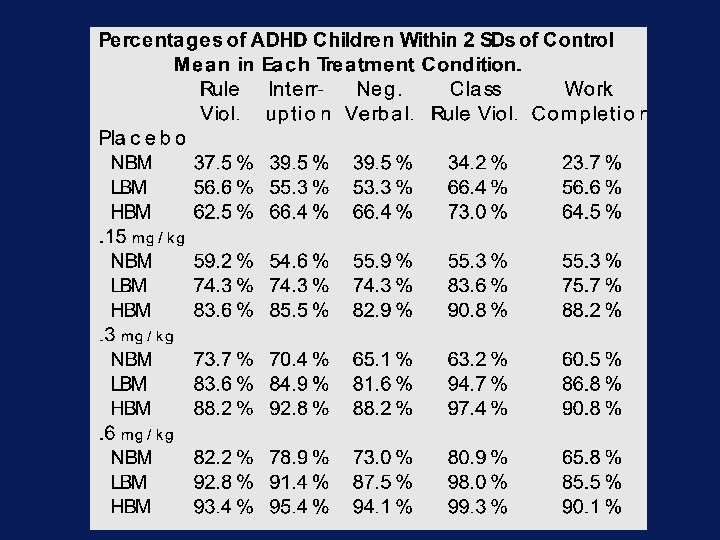
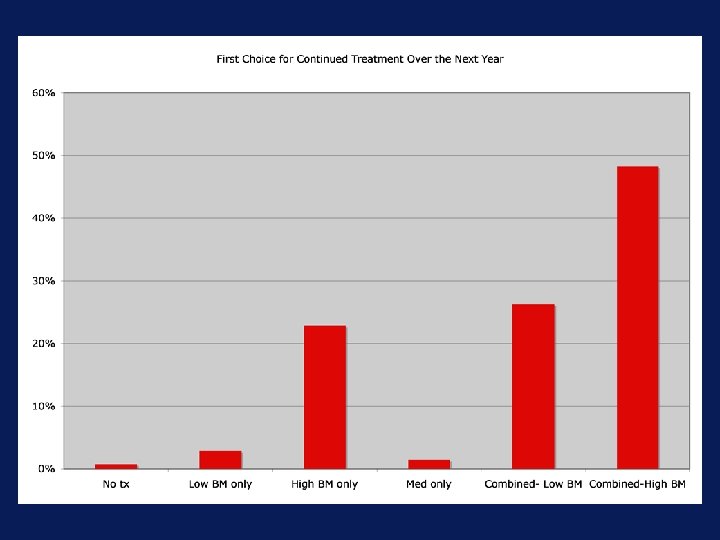


Conclusions Both medication and behavioral treatment produced significant and generally comparable effects (moderate to large effect sizes) on nearly all measures of functioning in recreational and classroom settings. On most measures, the combination of the lowest dose of medication (a very low dose) and LBM produced as much and sometimes more change than did the four-times-higher doses of medication in the NBM condition and more change than LBM and HBM alone. There were no side effects at this dose and many side effects at the higher doses. Thus, combined treatment allows low doses of medication
Conclusions The highest dose, which was necessary to optimize effects in the absence of BM, was twice that utilized in the MTA combined treatment group and 50% greater than the Medmgt group, suggesting that optimal doses of medication in the absence of all behavioral treatments requires very high doses. Notably, at the high dose levels of either condition, there were little incremental benefits of adding the other intervention. High doses of either treatment make the other unnecessary. Finally, parents strongly preferred psychosocial approaches or combined approaches--never medication alone. Limitation: Analogue setting and treatments were implemented simultaneously. What would have happened in natural settings and if BM were implemented first?
School-based Behavioral Interventions Following a Summer Treatment Program for Children with ADHD: Impact on Need for Medication Coles, Fabiano, Pelham, Burrows. Mc. Lean, Gnagy, Hoffman, Massetti, Waxmonsky, Waschbusch, Chacko, Walker, Wymbs, Robb, Arnold, Garefino (NIMH 2003 -2007)
Study 2 Design 128 participants from the Study 1 were randomly assigned to one of two groups for follow-up treatment: Behavior modification consultation (BM; N=87) No behavior modification consultation (NBC; N=41)
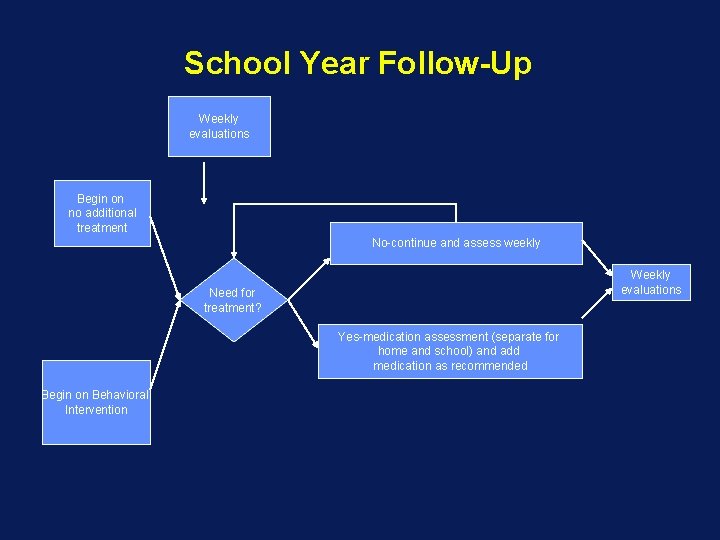
School Year Follow-Up Weekly evaluations Begin on no additional treatment No-continue and assess weekly Weekly evaluations Need for treatment? Yes-medication assessment (separate for home and school) and add medication as recommended Begin on Behavioral Intervention
Procedures BC group: teachers received three initial consultation visits at the beginning of the school year aimed to improve existing classroom behavior modification programs and to institute a daily report card. Parents also received monthly group booster parent training meetings. Teachers and parents eligible to receive additional individual meetings if behavior ratings indicated impairment or as otherwise needed. NBC group: received no consultation from the study staff.
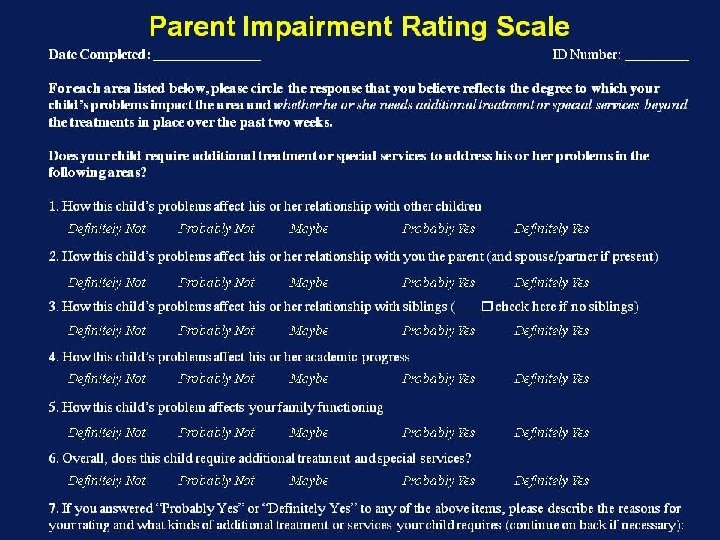
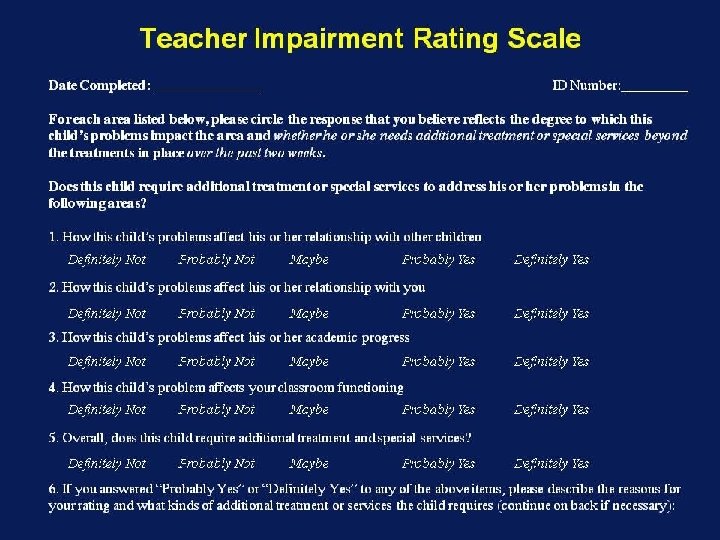
Procedures Teachers and parents in both groups completed weekly ratings of ADHD symptoms and impairment. If ratings (ITBE and IRS) indicated the need for additional treatment or special services for two weeks in a row, and both parents and teachers agreed that medication was indicated, a medication assessment (Pelham, 1993) was conducted to select the optimal dose and children began a medication regimen. Medication was introduced in a step-wise manner. Only after a medication regimen was established in school could a medication trial be initiated in the home.
How Did We Assess Functioning Weekly? • Individualized Target Behavior Evaluation – School DRC for children in the behavioral condition – Same form done by teacher in No. Bemod condition but no feedback to child/parents and no reward • Impairment Rating Scale – Adapted for ongoing evaluation of need for additional treatment
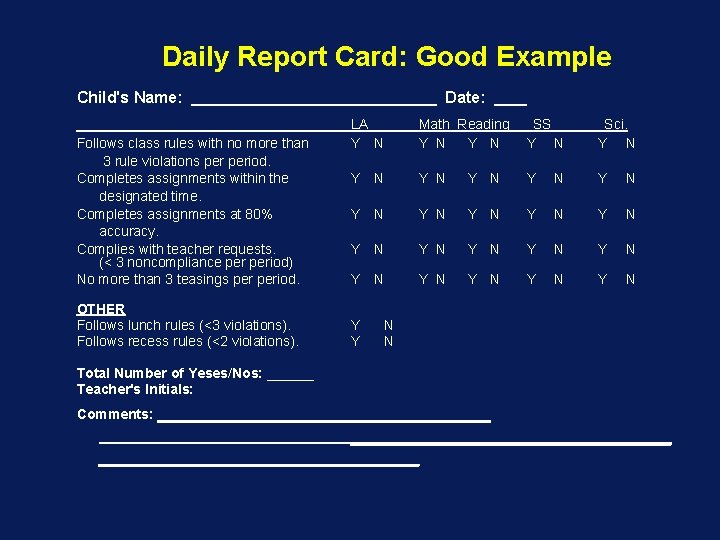
Daily Report Card: Good Example Child's Name: Follows class rules with no more than 3 rule violations period. Completes assignments within the designated time. Completes assignments at 80% accuracy. Complies with teacher requests. (< 3 noncompliance period) No more than 3 teasings period. OTHER Follows lunch rules (<3 violations). Follows recess rules (<2 violations). Date: LA Y N Math Reading Y N SS Y N Sci. Y N Y N Y N Y N Y N Y N Y Y N N Total Number of Yeses/Nos: ______ Teacher's Initials: Comments: ________________________
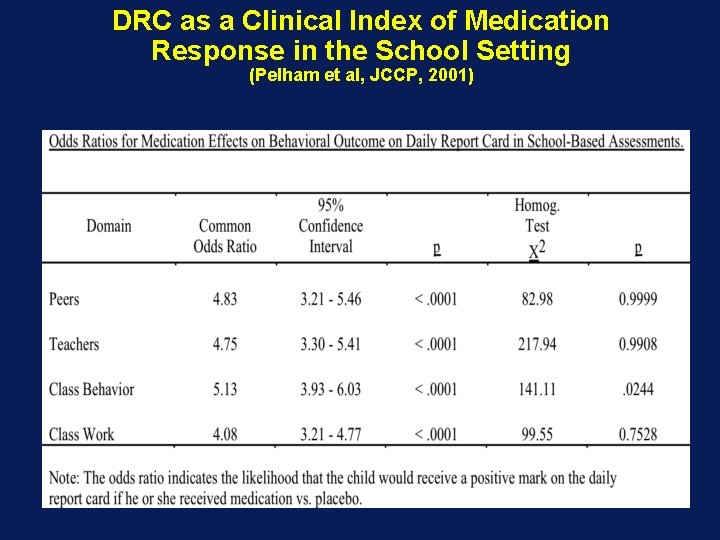
DRC as a Clinical Index of Medication Response in the School Setting (Pelham et al, JCCP, 2001)
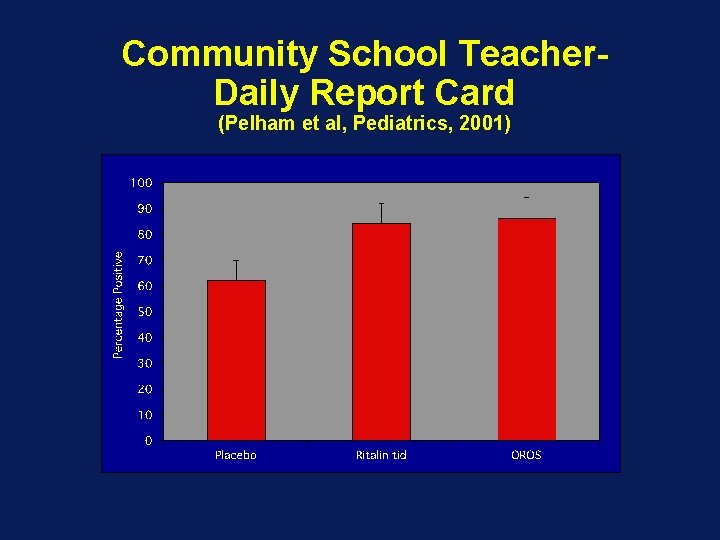
Community School Teacher. Daily Report Card (Pelham et al, Pediatrics, 2001)
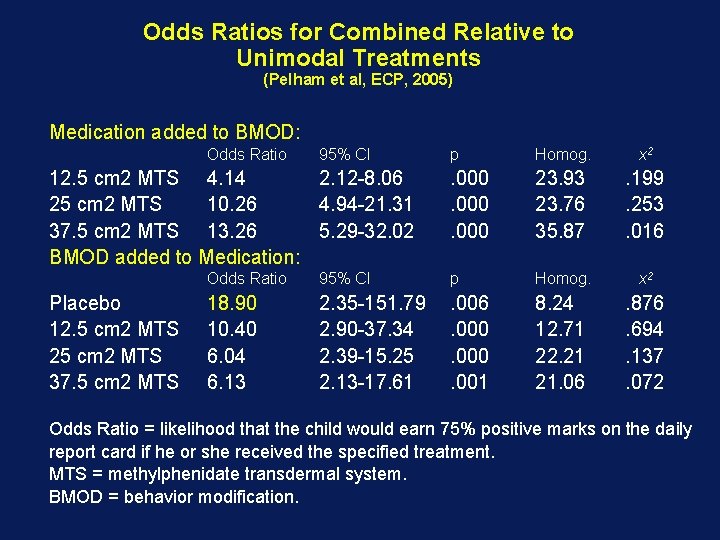
Odds Ratios for Combined Relative to Unimodal Treatments (Pelham et al, ECP, 2005) Medication added to BMOD: Odds Ratio 95% CI 12. 5 cm 2 MTS 4. 14 2. 12 -8. 06 25 cm 2 MTS 10. 26 4. 94 -21. 31 37. 5 cm 2 MTS 13. 26 5. 29 -32. 02 BMOD added to Medication: Placebo 12. 5 cm 2 MTS 25 cm 2 MTS 37. 5 cm 2 MTS p Homog. x 2 . 000 23. 93 23. 76 35. 87 . 199. 253. 016 Odds Ratio 95% CI p Homog. x 2 18. 90 10. 40 6. 04 6. 13 2. 35 -151. 79 2. 90 -37. 34 2. 39 -15. 25 2. 13 -17. 61 . 006. 000. 001 8. 24 12. 71 22. 21 21. 06 . 876. 694. 137. 072 Odds Ratio = likelihood that the child would earn 75% positive marks on the daily report card if he or she received the specified treatment. MTS = methylphenidate transdermal system. BMOD = behavior modification.
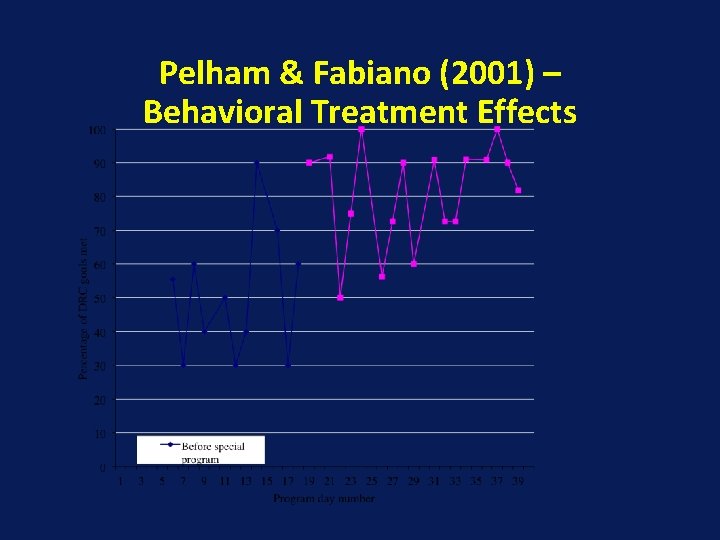
Pelham & Fabiano (2001) – Behavioral Treatment Effects
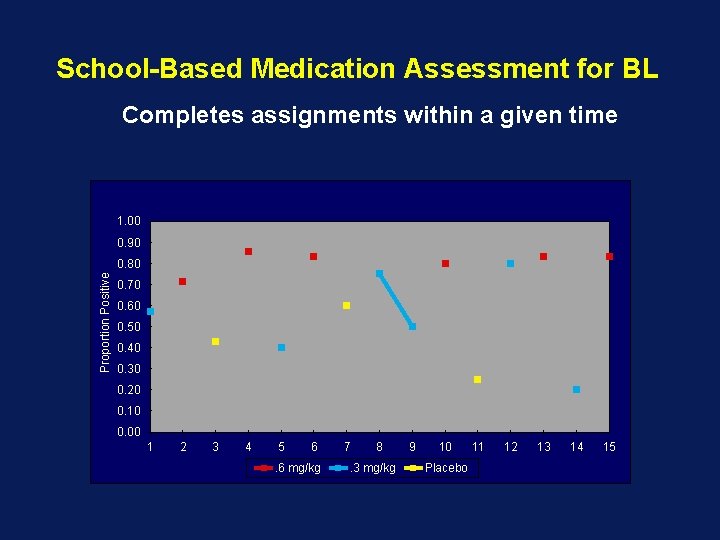
School-Based Medication Assessment for BL Completes assignments within a given time 1. 00 0. 90 Proportion Positive 0. 80 0. 70 0. 60 0. 50 0. 40 0. 30 0. 20 0. 10 0. 00 1 2 3 4 5 6 . 6 mg/kg 7 8 . 3 mg/kg 9 10 Placebo 11 12 13 14 15
Results Mean numbers of individual consultation sessions actually received ranged from 0. 83 to 1. 23 across settings and conditions, indicating that very few of the teachers and parents took advantage of the additional possible individual consultations. Mean number of parent training booster groups attended was 2. 5 (out of 9 over 10 months).
Results Survival analyses were conducted separately for school and home settings to evaluate whether continued BMOD reduced the need for medication. Previous medication status was a moderator
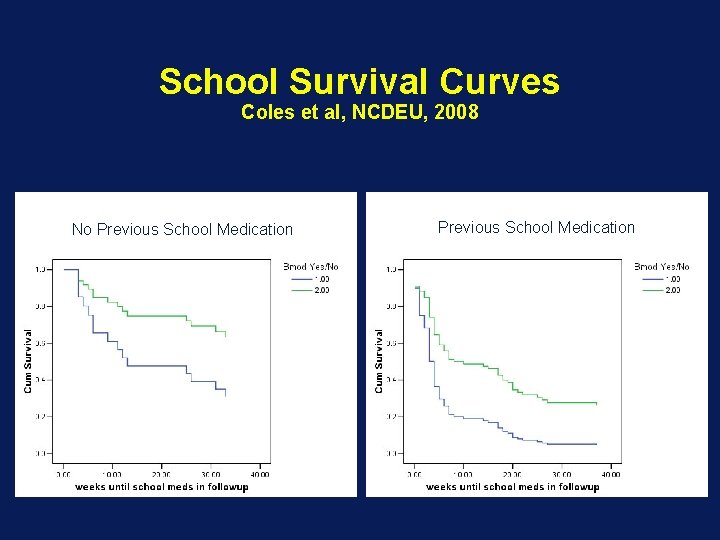
School Survival Curves Coles et al, NCDEU, 2008 No Previous School Medication
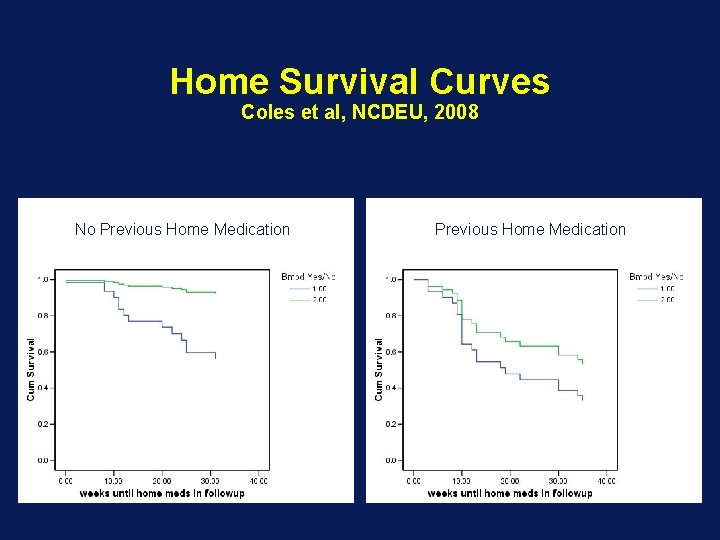
Home Survival Curves Coles et al, NCDEU, 2008 No Previous Home Medication
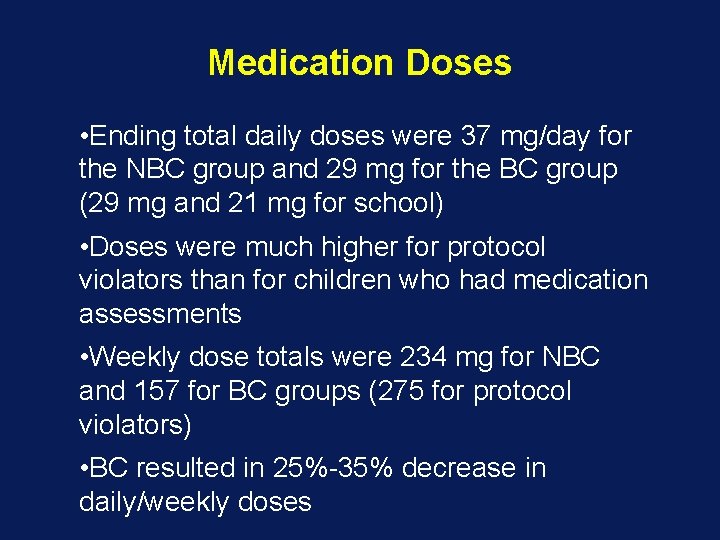
Medication Doses • Ending total daily doses were 37 mg/day for the NBC group and 29 mg for the BC group (29 mg and 21 mg for school) • Doses were much higher for protocol violators than for children who had medication assessments • Weekly dose totals were 234 mg for NBC and 157 for BC groups (275 for protocol violators) • BC resulted in 25%-35% decrease in daily/weekly doses
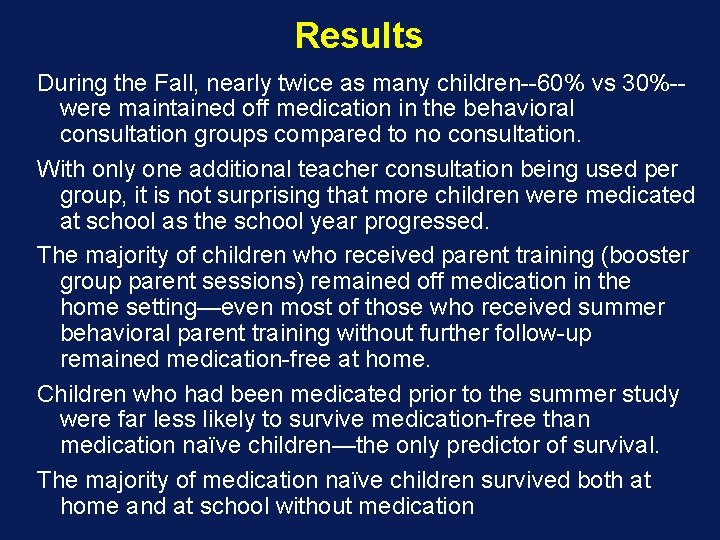
Results During the Fall, nearly twice as many children--60% vs 30%-were maintained off medication in the behavioral consultation groups compared to no consultation. With only one additional teacher consultation being used per group, it is not surprising that more children were medicated at school as the school year progressed. The majority of children who received parent training (booster group parent sessions) remained off medication in the home setting—even most of those who received summer behavioral parent training without further follow-up remained medication-free at home. Children who had been medicated prior to the summer study were far less likely to survive medication-free than medication naïve children—the only predictor of survival. The majority of medication naïve children survived both at home and at school without medication
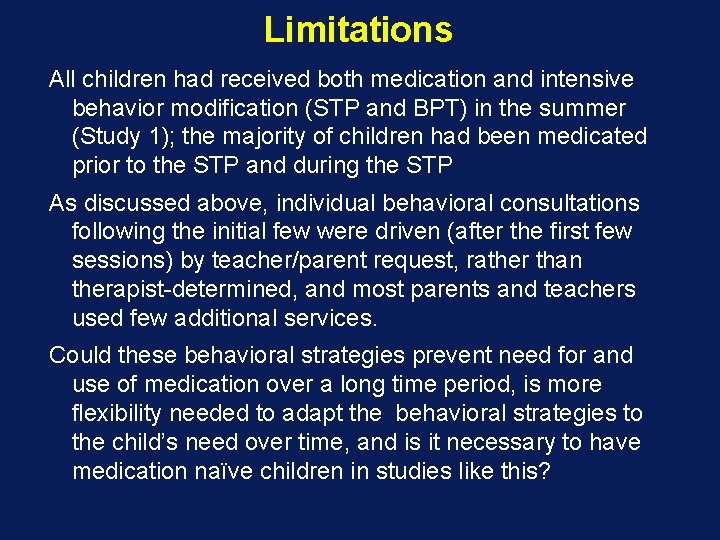
Limitations All children had received both medication and intensive behavior modification (STP and BPT) in the summer (Study 1); the majority of children had been medicated prior to the STP and during the STP As discussed above, individual behavioral consultations following the initial few were driven (after the first few sessions) by teacher/parent request, rather than therapist-determined, and most parents and teachers used few additional services. Could these behavioral strategies prevent need for and use of medication over a long time period, is more flexibility needed to adapt the behavioral strategies to the child’s need over time, and is it necessary to have medication naïve children in studies like this?
Enhancing Progress Monitoring and the Effectiveness of Special Education Services for Children with ADHD Using a Daily Report Card Program Gregory Fabiano, William Pelham, Daniel Waschbusch, Greta Massetti Institute of Education Sciences (R 324 J 06024) (Fabiano, Vujnovic, Pelham, Waschbusch, Massetti, Pariseau, et al. , in press)
Contributors Co-Investigators Clinicians William E. Pelham, Jr. Justin Naylor Daniel A. Waschbusch Rebecca Vujnovic Greta M. Massetti Research Assistants Jihnhee Yu Martin Volker Christopher J. Lopata Meaghan Summerlee Tarah Carnefix Melissa Robins Jenna Rennemann
Progress Monitoring • With the advent of the Response to Intervention (Rt. I) approach, progress monitoring has become emphasized. • Progress monitoring is complicated for children with ADHD. – Represented at all tiers – Behavior is variable – Typically in general and special education settings working with multiple teachers
Typical progress monitoring approach • Progress monitoring – 72% of children with ADHD are reported to have progress monitored by a special educator, but typically with long lags between assessments (i. e. , weeks or months) Fabiano et al. , in preparation; Schnoes et al. , 2006
Progress Monitoring Needs • A hallmark of ADHD is behavioral variability • Assessments need to be fluid, socially valid, and tied to important functional outcomes. • These assessments cannot be static, but need to be ongoing and frequent • Must work on an individual/idiographic level • Based on these issues/criteria, the Daily Report Card may be a useful approach to progress monitoring
What is a Daily Report Card (DRC)? • The DRC is an operationalized list of a child’s target behaviors – Specific criteria – Immediate feedback – Communication tool – Home-based privileges contingent on meeting DRC goals
Why Use a DRC? • Lack of evidence based interventions specified in the IEP’s of students diagnosed with ADHD (Fabiano et al. , in preparation) • The DRC is an evidence-based intervention for ADHD in schools (Pelham & Fabiano, 2008; Du. Paul & Eckert, 1997; Du. Paul & Stoner, 2004; Evans & Youngstrom, 2006; Pelham, Wheeler, & Chronis, 1998; U. S. Department of Education, 2004) • Time & cost effective for teachers • Students receive immediate feedback – Explicit feedback from the teacher may also serve as an antecedent to future appropriate behavior (Sugai & Colvin, 1997)
Why Use a DRC? • Provides daily communication – Important for an intervention to facilitate communication (Pisecco, et al, 1999) – May contribute to amenable parent-teacher relationships (Dussault, 1996). – May enhance relationships between teacher, parent and child (e. g. , Pianta, 1996) • Allow for continued progress monitoring & monitoring outcomes (e. g. , Chafouleas, Riley- Tillman, & Mc. Dougal, 2002; Cheney, Flower, & Templeton, 2008; Du. Paul & Stoner, 2003; Evans et al. , 1995; Pelham, Fabiano, & Massetti, 2005; Riley-Tillman, Chafouleas, & Breisch, 2007)
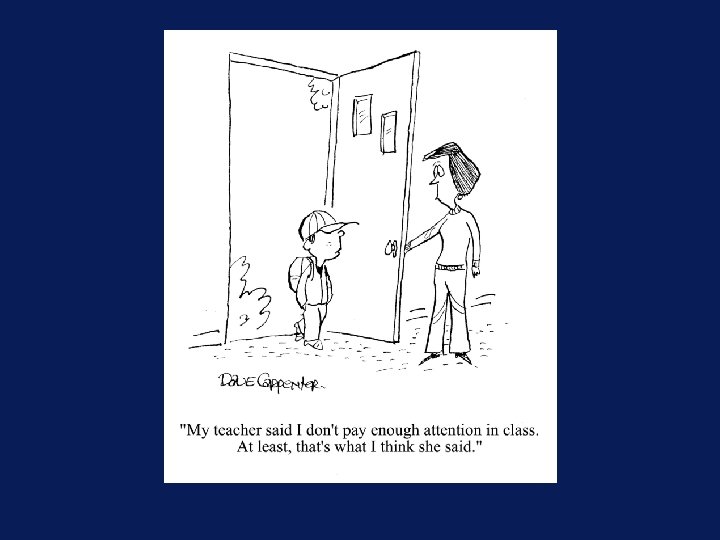
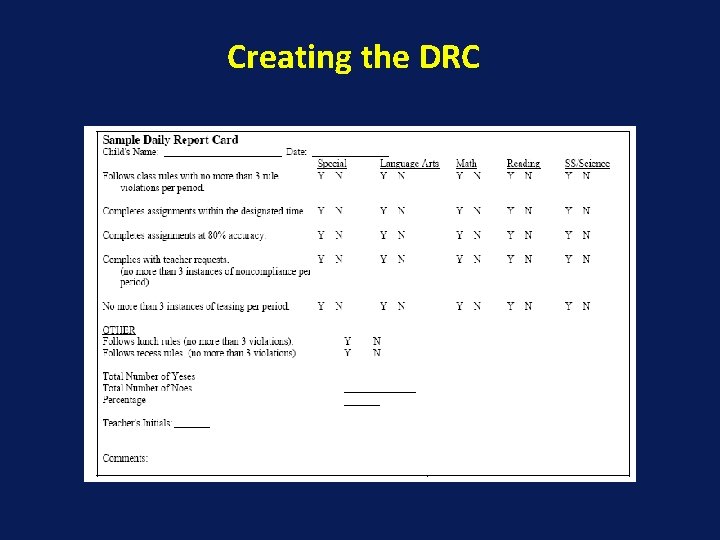
Creating the DRC
Pelham, Fabiano, & Massetti (2005) – Evidence-based assessment for ADHD • DRCs have adequate psychometric properties: – Alpha =. 77 -. 88 – r =. 62 for test-retest – Correlates with symptom-based ratings of ADHD • r =. 51 -. 72 – Correlates with objective measures of behavior (i. e. , observations) • r =. 47 -. 84 – Discriminates between treatment conditions
Long History of Using Targeted Behavior Lists as Measures of Outcome • Patterson (1975) – Used targeted behaviors listed by parents at referral (noncompliance, temper tantrum, teasing) as measures of treatment outcome – Parent Daily Report (PDR) is a psychometrically sound measure (Chamberlain & Reid, 1987).
Examples of Existing Studies of the DRC as a Progress Monitoring Measure • Cheney, Flower, and Templeton (2008) • Used a Daily Progress Report • Classified Students as responders/nonresponders in an Rt. I model • Used the DRC as a measure of on-going progress monitoring for students on Tier 2
• Pelham – Developed the DRC as an intervention (e. g. , O’Leary, Pelham, Rosenbaum, & Price, 1976; O’Leary & Pelham, 1978) – More recently used the DRC has been used as a method of progress monitoring • Medication effects (Pelham et al. , 2001; Pelham et al. , 2005) • Behavior Modification effects (Pelham et al. , 2005) • Combined treatment effects (Pelham et al. , 2005)
• Chafouleas, Riley-Tillman, Christ, & Briesch • Direct Behavior Ratings (DBRs) • Conducted a sophisticated and comprehensive program of research to validate DBRs as a measure of screening, progress monitoring, and outcome • DBRs are reliable, valid, and sensitive to treatment (Chafouleas, Christ, Riley-Tillman, Briesch, & Chanese, 2007; Chafouleas, Riley. Tillman, & Christ, 2009; Christ, Riley-Tillman, & Chafouleas, 2009)
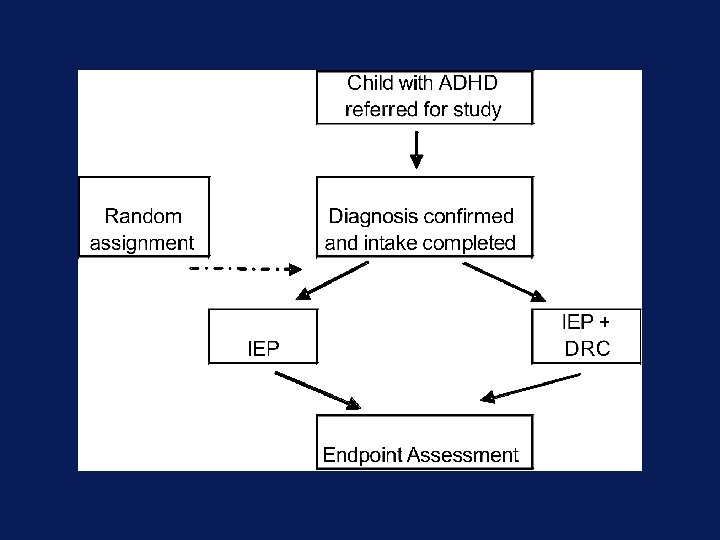
Summary and Main Findings of Goal 2 Project (Fabiano, et al. , 2010) • 63 children with ADHD and IEPs were randomly assigned to: – Business as Usual (BAU) – BAU + a DRC with targets based on IEP goals and objectives • Children were assessed in October and May of the school year.
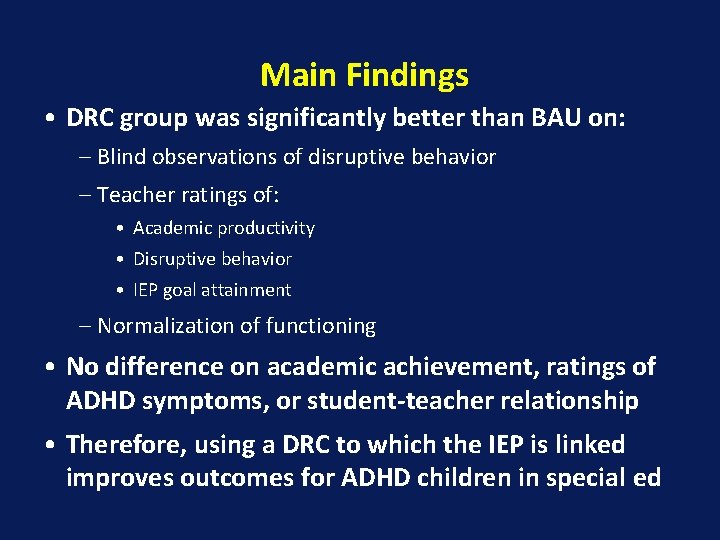
Main Findings • DRC group was significantly better than BAU on: – Blind observations of disruptive behavior – Teacher ratings of: • Academic productivity • Disruptive behavior • IEP goal attainment – Normalization of functioning • No difference on academic achievement, ratings of ADHD symptoms, or student-teacher relationship • Therefore, using a DRC to which the IEP is linked improves outcomes for ADHD children in special ed
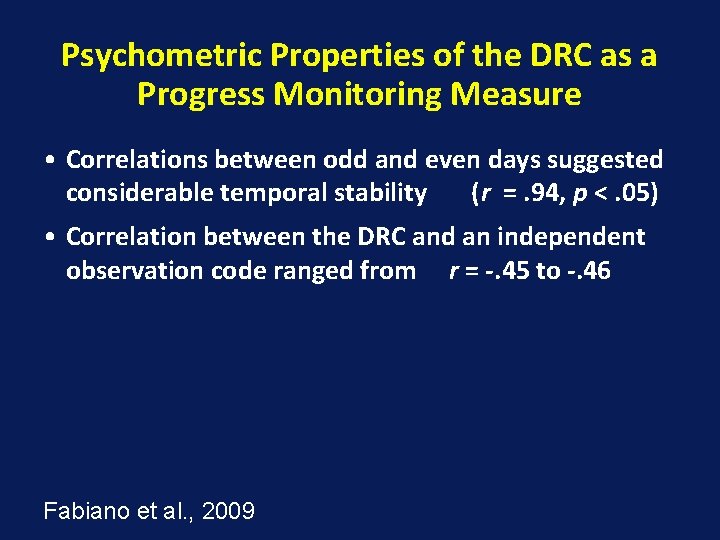
Psychometric Properties of the DRC as a Progress Monitoring Measure • Correlations between odd and even days suggested considerable temporal stability (r =. 94, p <. 05) • Correlation between the DRC and an independent observation code ranged from r = -. 45 to -. 46 Fabiano et al. , 2009
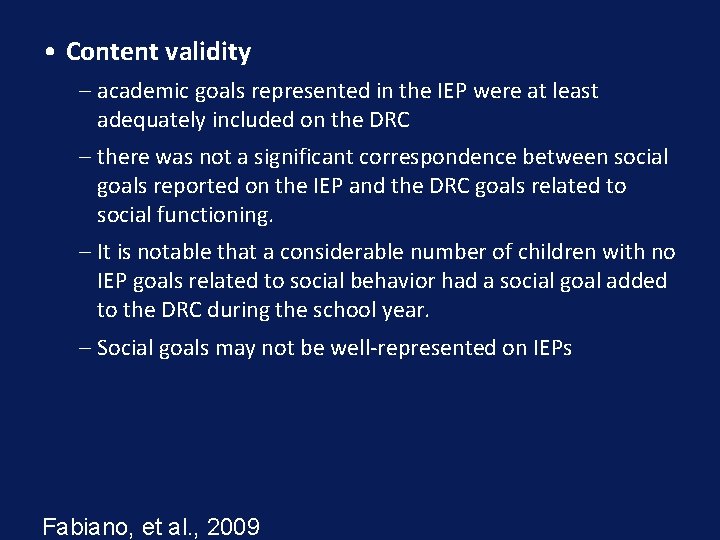
• Content validity – academic goals represented in the IEP were at least adequately included on the DRC – there was not a significant correspondence between social goals reported on the IEP and the DRC goals related to social functioning. – It is notable that a considerable number of children with no IEP goals related to social behavior had a social goal added to the DRC during the school year. – Social goals may not be well-represented on IEPs Fabiano, et al. , 2009
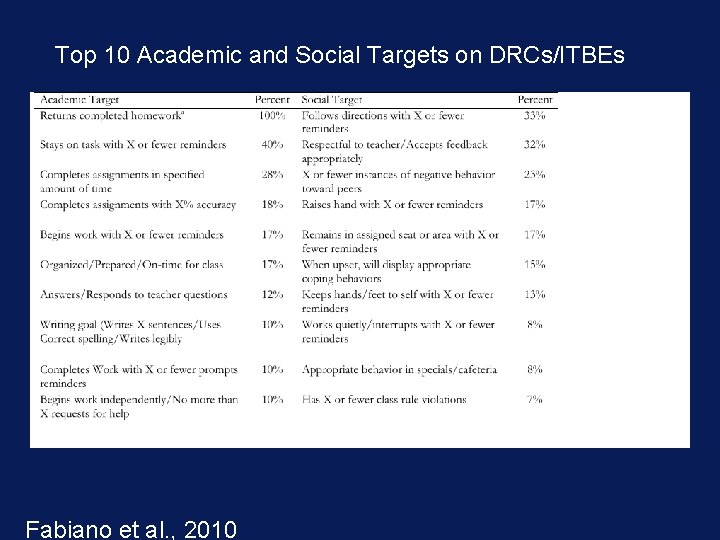
Top 10 Academic and Social Targets on DRCs/ITBEs Fabiano et al. , 2010
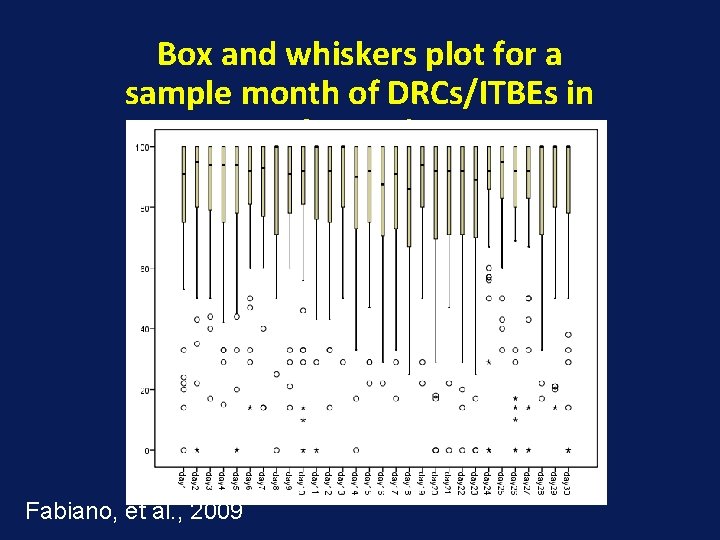
Box and whiskers plot for a sample month of DRCs/ITBEs in the study Fabiano, et al. , 2009
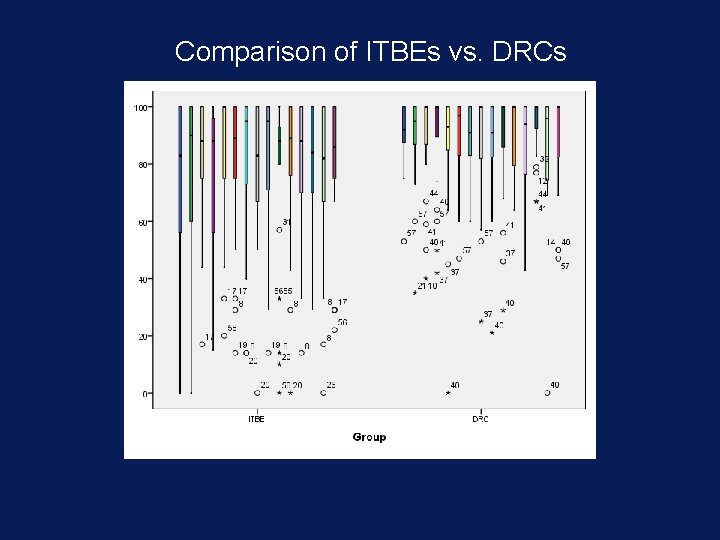
Comparison of ITBEs vs. DRCs
Discussion • DRC is supported as a psychometrically sound progress monitoring tool. • May be better for monitoring progress for social behavior relative to typical methods such as IEP goals/objectives. • Due to significant behavioral variability, daily implementation is preferred frequency of measurement. • Background intervention may impact variability • Enhances functioning in IEP-related goals in special ed students
Dosage of Behavioral Interventions and Long-term Treatment with Young ADHD Children: Can Medication use Be Prevented and at What Cost? William E. Pelham, Jr. , Lisa Burrows-Mac. Lean, James Waxmonsky, Greta Massetti, Daniel Waschbusch, Gregory Fabiano, Martin Hoffman, E. Michael Foster, Elizabeth Gnagy, Jihnhee Yu (NIMH 2005 -2010)
Study Aims To expand findings from the STP study to regular classroom settings with young (K and first grade) treatment-naïve ADHD children To evaluate whether medication need and dose can be minimized by beginning treatment with behavioral intervention and continuing treatment over the long term To determine the dose of behavioral treatment necessary to minimize medication usage and associated cost: benefit tradeoffs
Design • Young (k or 1 grade), medication naïve, ADHD children, N=145 • Randomly assigned to –(1) Treatment as usual (no intervention from study) –(2) Standard clinical behavioral intervention school and home and peers –(3) Enhanced behavioral intervention school and home and peers • Treat for 3 years • Weekly assessments, as in previous study • As in previous study, continue treatment if success, add medication if need exists • Behavioral treatment includes multiple components that differ across dose (e. g. , STP, academic intervention) and are tailored to the child.
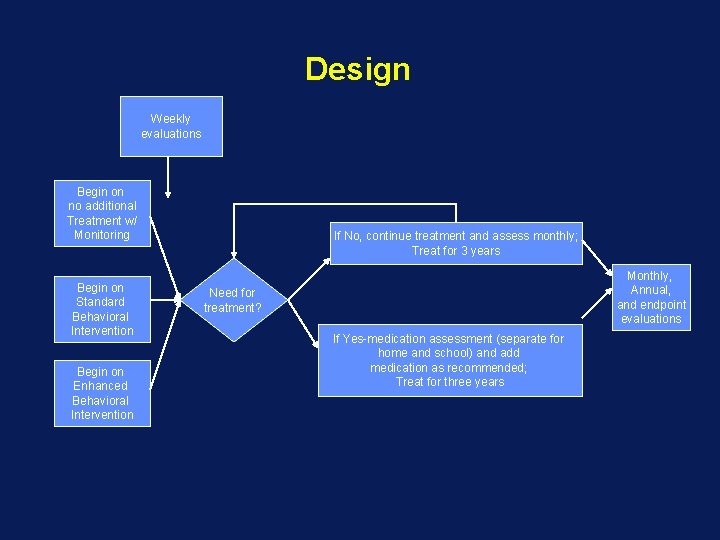
Design Weekly evaluations Begin on no additional Treatment w/ Monitoring Begin on Standard Behavioral Intervention Begin on Enhanced Behavioral Intervention If No, continue treatment and assess monthly; Treat for 3 years Monthly, Annual, and endpoint evaluations Need for treatment? If Yes-medication assessment (separate for home and school) and add medication as recommended; Treat for three years
Behavior Modification Enhanced: 16 sessions of group behavioral parent training (COPE/COPE+) followed by 8 sessions of father-child training and monthly booster sessions and phone calls over 3 years Up to 8 individual parent sessions per year, initiated when problems arise School intervention including daily report card and classroom management practices analogous to the HBM procedures in the STP (response-cost, Premack contingencies, time out). 6 initial meetings with teacher annually to establish program + up to 8 individual sessions per year Paraprofessional aides available temporarily to assist with high -intensity procedure initiation (e. g. , RECESS) 7 -week summer treatment program for 2 summers including intensive peer-group social skills and sports skills training with weekly Saturday program with parent involvement as follow up Academic supplement with phonological awareness training
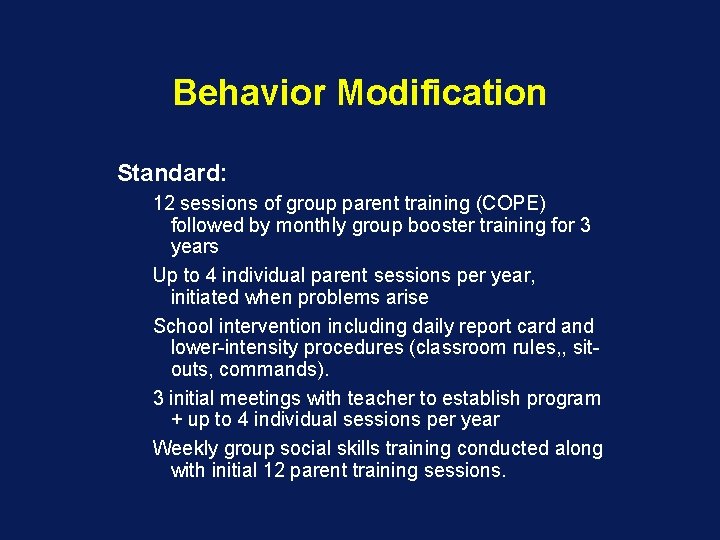
Behavior Modification Standard: 12 sessions of group parent training (COPE) followed by monthly group booster training for 3 years Up to 4 individual parent sessions per year, initiated when problems arise School intervention including daily report card and lower-intensity procedures (classroom rules, , sitouts, commands). 3 initial meetings with teacher to establish program + up to 4 individual sessions per year Weekly group social skills training conducted along with initial 12 parent training sessions.
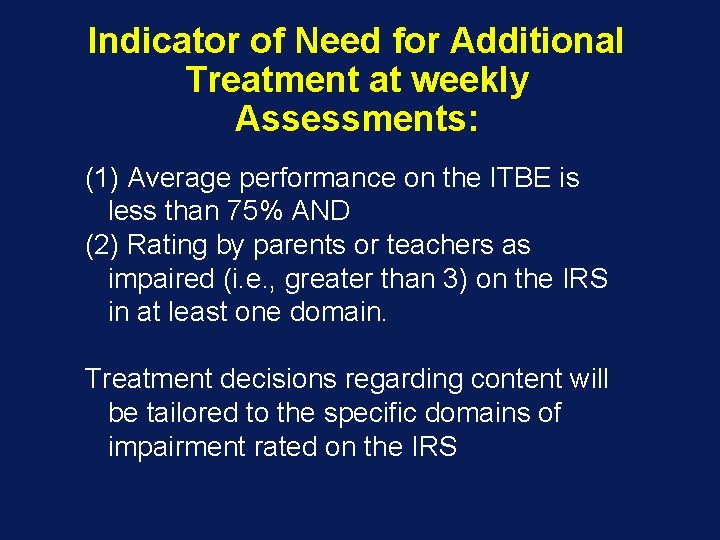
Indicator of Need for Additional Treatment at weekly Assessments: (1) Average performance on the ITBE is less than 75% AND (2) Rating by parents or teachers as impaired (i. e. , greater than 3) on the IRS in at least one domain. Treatment decisions regarding content will be tailored to the specific domains of impairment rated on the IRS
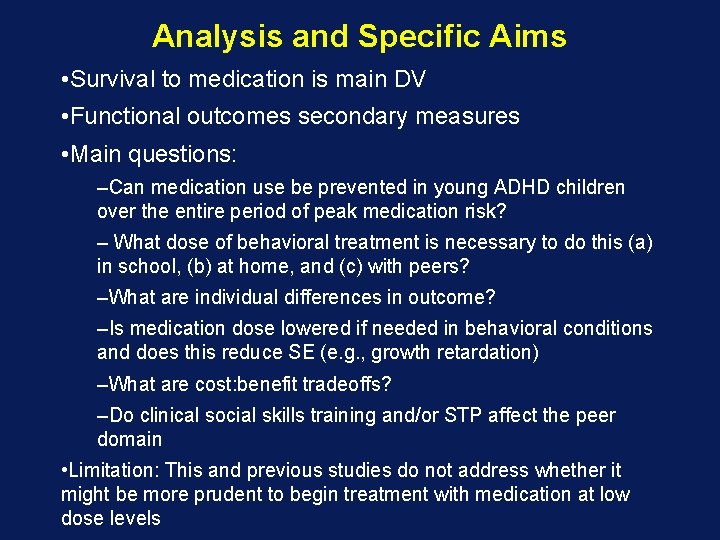
Analysis and Specific Aims • Survival to medication is main DV • Functional outcomes secondary measures • Main questions: –Can medication use be prevented in young ADHD children over the entire period of peak medication risk? – What dose of behavioral treatment is necessary to do this (a) in school, (b) at home, and (c) with peers? –What are individual differences in outcome? –Is medication dose lowered if needed in behavioral conditions and does this reduce SE (e. g. , growth retardation) –What are cost: benefit tradeoffs? –Do clinical social skills training and/or STP affect the peer domain • Limitation: This and previous studies do not address whether it might be more prudent to begin treatment with medication at low dose levels
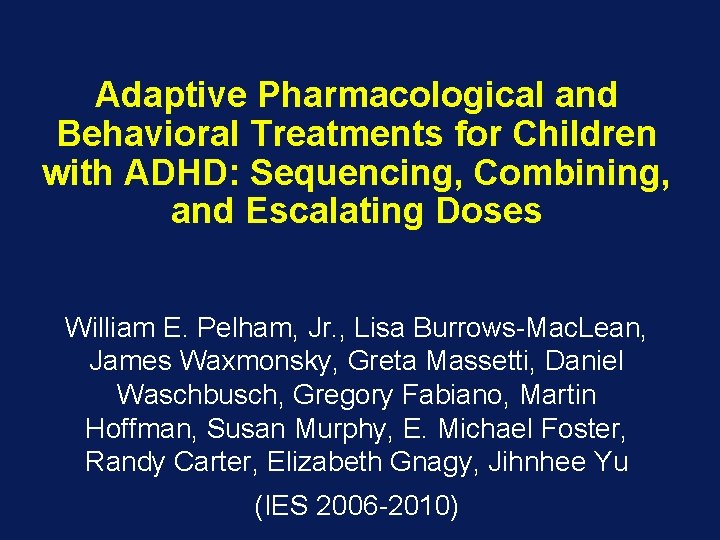
Adaptive Pharmacological and Behavioral Treatments for Children with ADHD: Sequencing, Combining, and Escalating Doses William E. Pelham, Jr. , Lisa Burrows-Mac. Lean, James Waxmonsky, Greta Massetti, Daniel Waschbusch, Gregory Fabiano, Martin Hoffman, Susan Murphy, E. Michael Foster, Randy Carter, Elizabeth Gnagy, Jihnhee Yu (IES 2006 -2010)
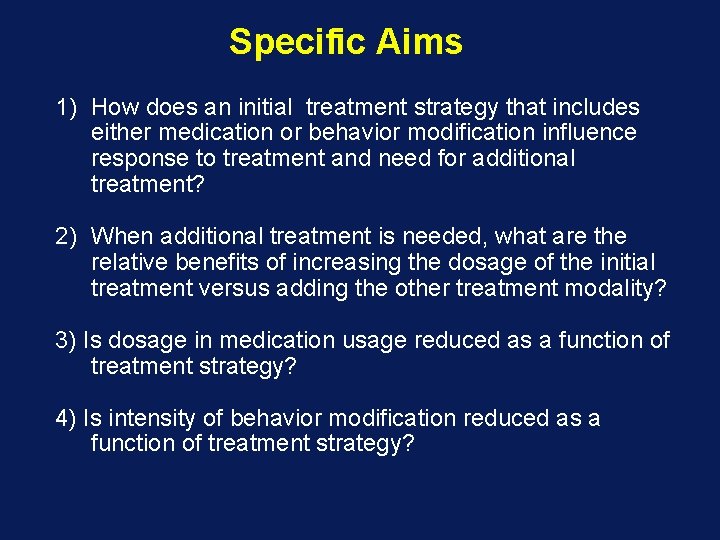
Specific Aims 1) How does an initial treatment strategy that includes either medication or behavior modification influence response to treatment and need for additional treatment? 2) When additional treatment is needed, what are the relative benefits of increasing the dosage of the initial treatment versus adding the other treatment modality? 3) Is dosage in medication usage reduced as a function of treatment strategy? 4) Is intensity of behavior modification reduced as a function of treatment strategy?
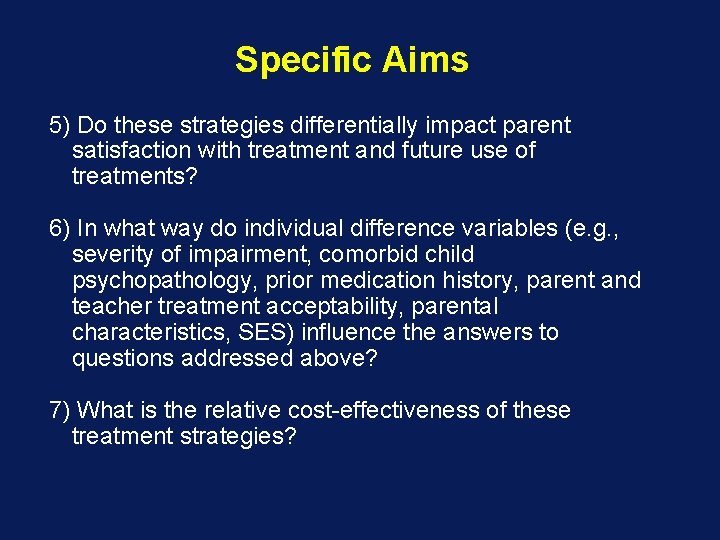
Specific Aims 5) Do these strategies differentially impact parent satisfaction with treatment and future use of treatments? 6) In what way do individual difference variables (e. g. , severity of impairment, comorbid child psychopathology, prior medication history, parent and teacher treatment acceptability, parental characteristics, SES) influence the answers to questions addressed above? 7) What is the relative cost-effectiveness of these treatment strategies?
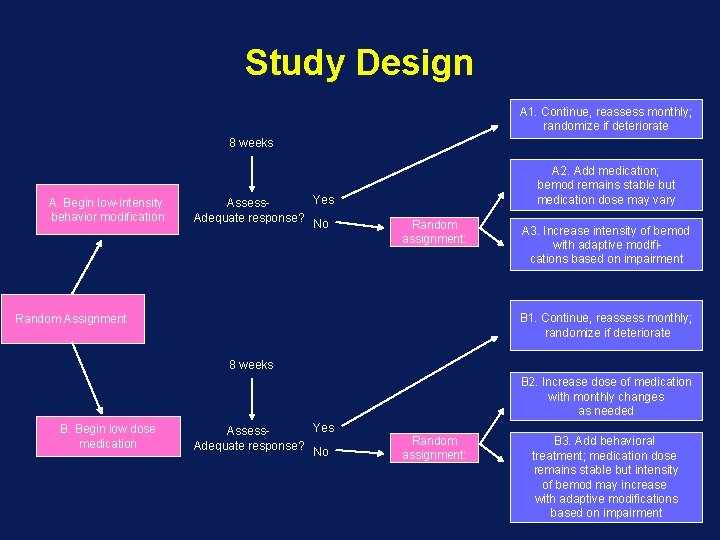
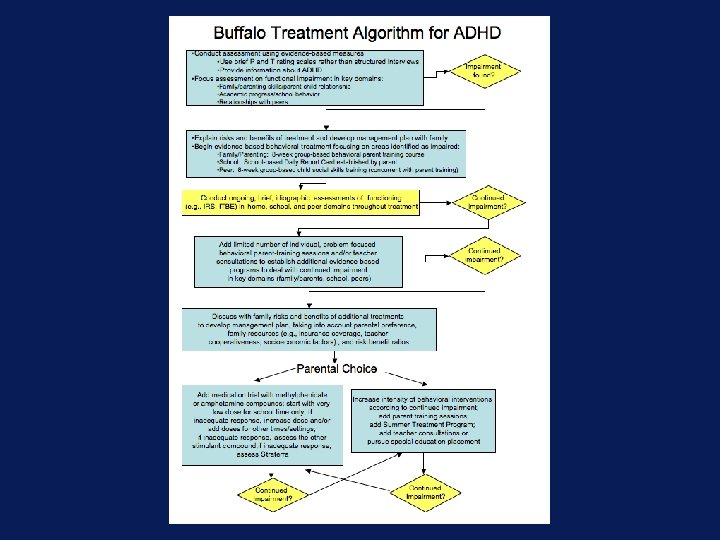
Study Design A 1. Continue, reassess monthly; randomize if deteriorate 8 weeks A. Begin low-intensity behavior modification Yes Assess. Adequate response? No A 2. Add medication; bemod remains stable but medication dose may vary Random assignment: A 3. Increase intensity of bemod with adaptive modifications based on impairment B 1. Continue, reassess monthly; randomize if deteriorate Random Assignment 8 weeks B 2. Increase dose of medication with monthly changes as needed B. Begin low dose medication Yes Assess. Adequate response? No Random assignment: B 3. Add behavioral treatment; medication dose remains stable but intensity of bemod may increase with adaptive modifications based on impairment
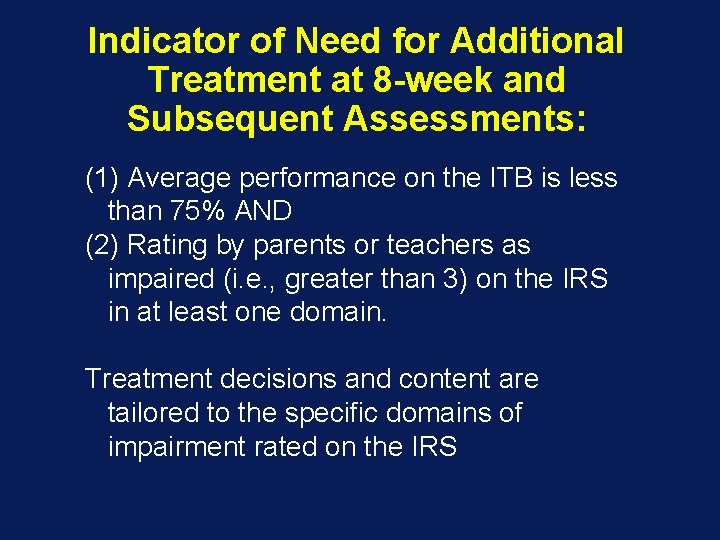
Indicator of Need for Additional Treatment at 8 -week and Subsequent Assessments: (1) Average performance on the ITB is less than 75% AND (2) Rating by parents or teachers as impaired (i. e. , greater than 3) on the IRS in at least one domain. Treatment decisions and content are tailored to the specific domains of impairment rated on the IRS
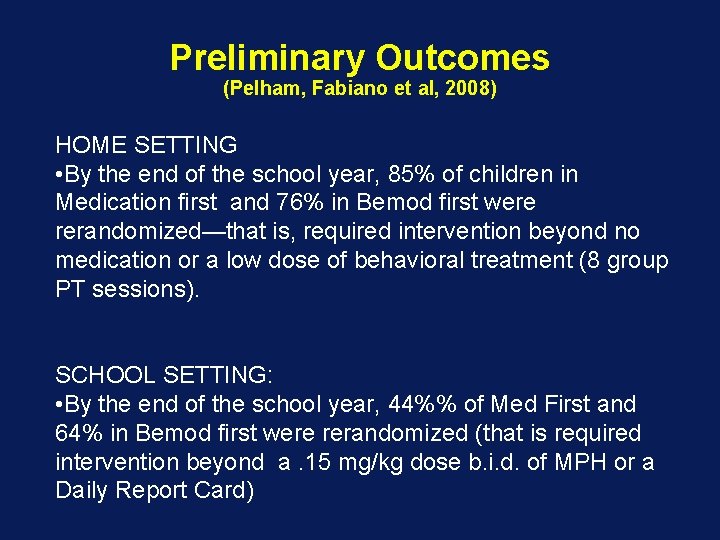
Preliminary Outcomes (Pelham, Fabiano et al, 2008) HOME SETTING • By the end of the school year, 85% of children in Medication first and 76% in Bemod first were rerandomized—that is, required intervention beyond no medication or a low dose of behavioral treatment (8 group PT sessions). SCHOOL SETTING: • By the end of the school year, 44%% of Med First and 64% in Bemod first were rerandomized (that is required intervention beyond a. 15 mg/kg dose b. i. d. of MPH or a Daily Report Card)
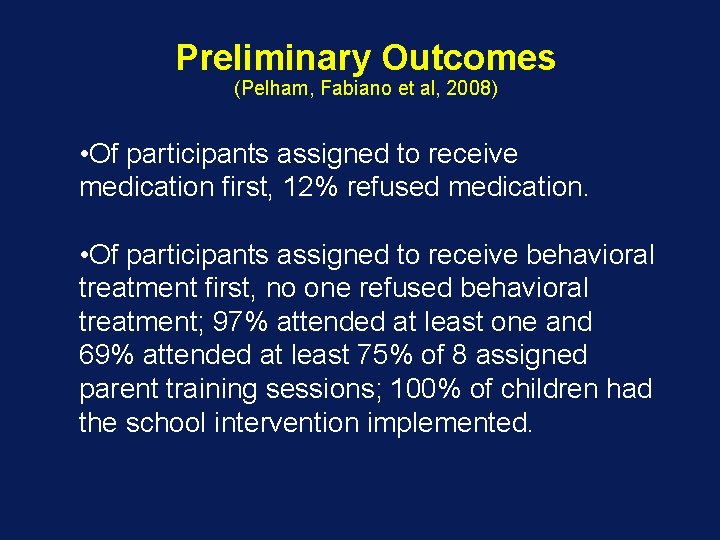
Preliminary Outcomes (Pelham, Fabiano et al, 2008) • Of participants assigned to receive medication first, 12% refused medication. • Of participants assigned to receive behavioral treatment first, no one refused behavioral treatment; 97% attended at least one and 69% attended at least 75% of 8 assigned parent training sessions; 100% of children had the school intervention implemented.
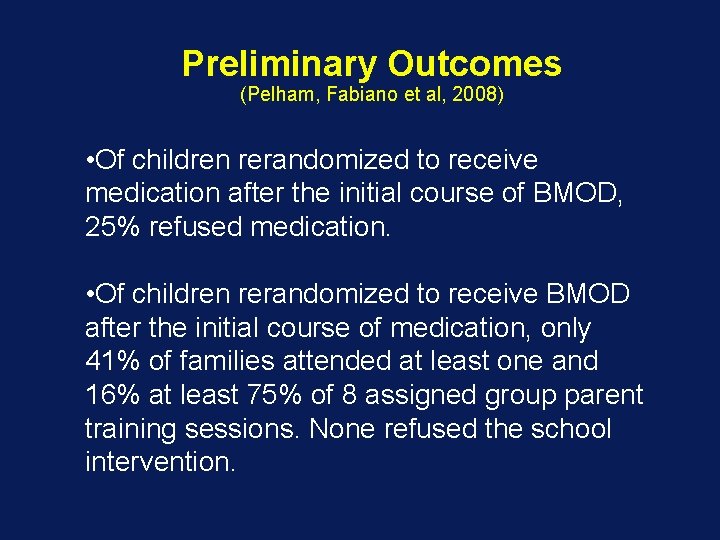
Preliminary Outcomes (Pelham, Fabiano et al, 2008) • Of children rerandomized to receive medication after the initial course of BMOD, 25% refused medication. • Of children rerandomized to receive BMOD after the initial course of medication, only 41% of families attended at least one and 16% at least 75% of 8 assigned group parent training sessions. None refused the school intervention.
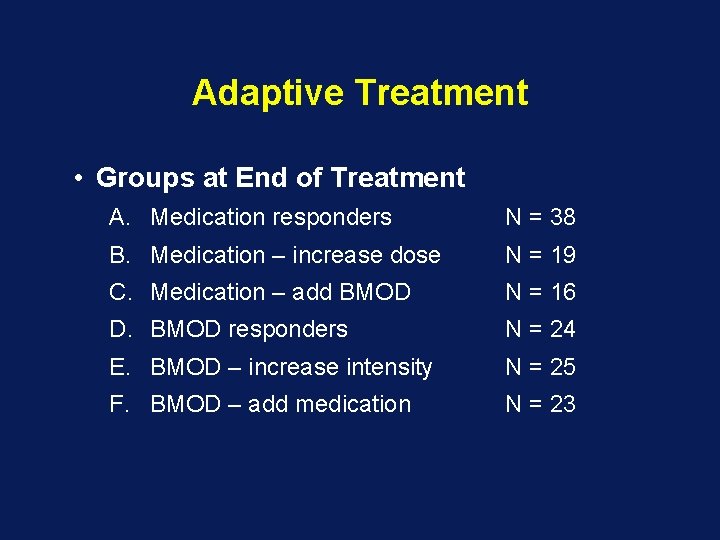
Adaptive Treatment • Groups at End of Treatment A. Medication responders N = 38 B. Medication – increase dose N = 19 C. Medication – add BMOD N = 16 D. BMOD responders N = 24 E. BMOD – increase intensity N = 25 F. BMOD – add medication N = 23
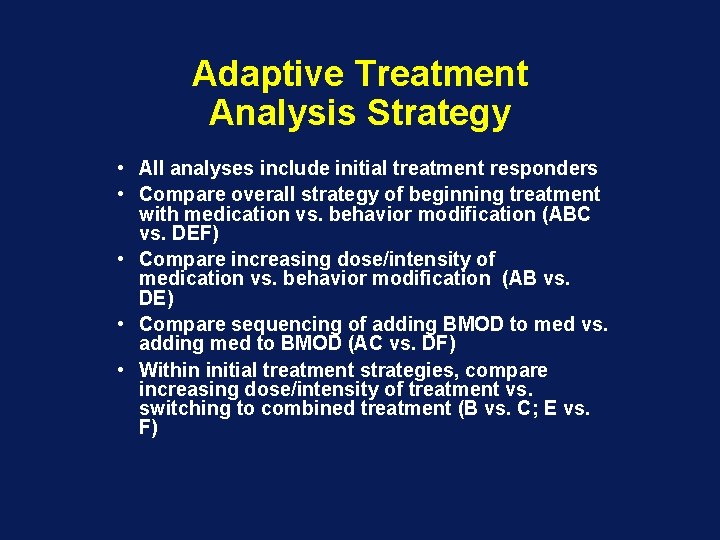
Adaptive Treatment Analysis Strategy • All analyses include initial treatment responders • Compare overall strategy of beginning treatment with medication vs. behavior modification (ABC vs. DEF) • Compare increasing dose/intensity of medication vs. behavior modification (AB vs. DE) • Compare sequencing of adding BMOD to med vs. adding med to BMOD (AC vs. DF) • Within initial treatment strategies, compare increasing dose/intensity of treatment vs. switching to combined treatment (B vs. C; E vs. F)
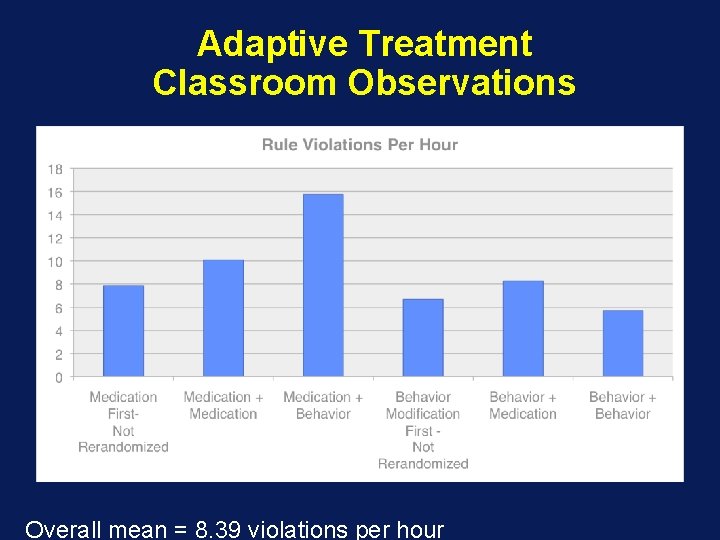
Adaptive Treatment Classroom Observations Overall mean = 8. 39 violations per hour
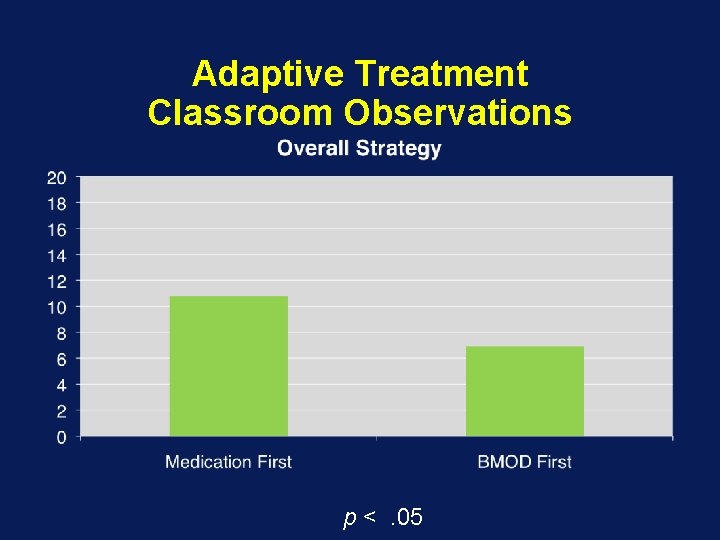
Adaptive Treatment Classroom Observations p <. 05
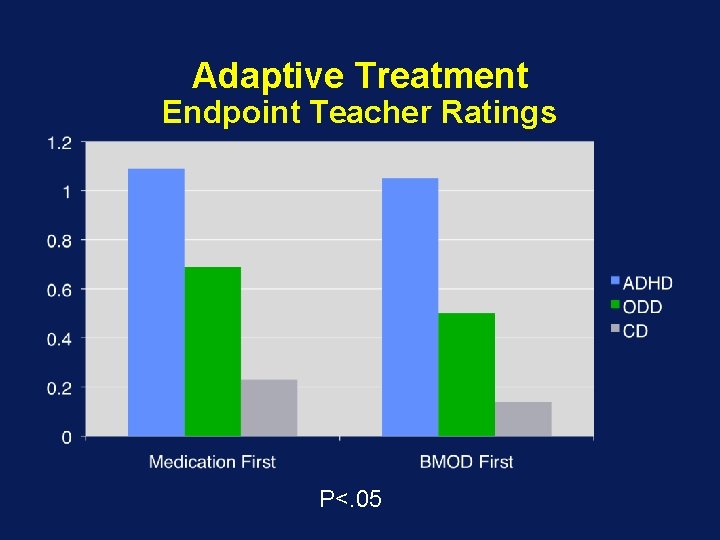
Adaptive Treatment Endpoint Teacher Ratings P<. 05
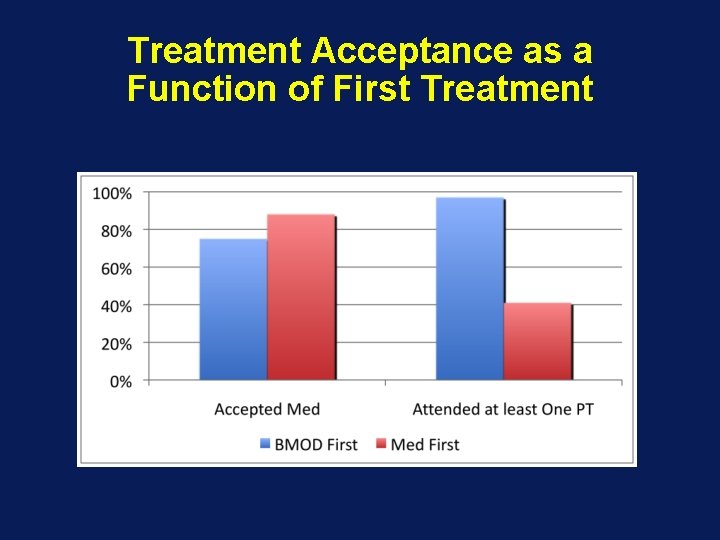
Treatment Acceptance as a Function of First Treatment
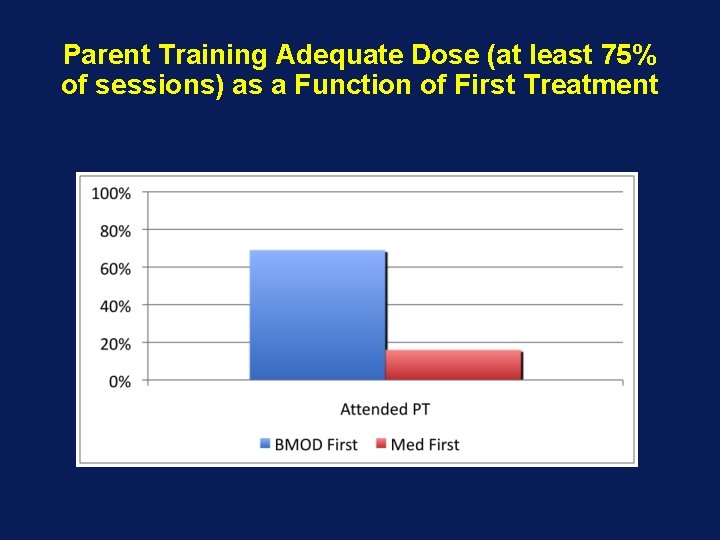
Parent Training Adequate Dose (at least 75% of sessions) as a Function of First Treatment
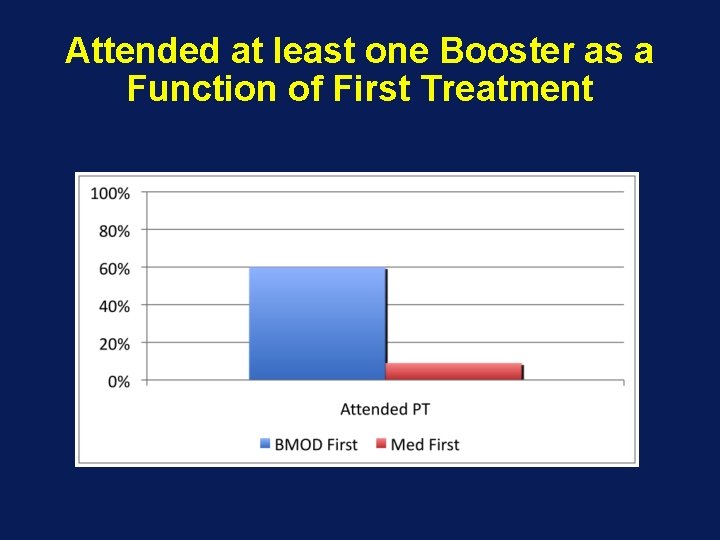
Attended at least one Booster as a Function of First Treatment
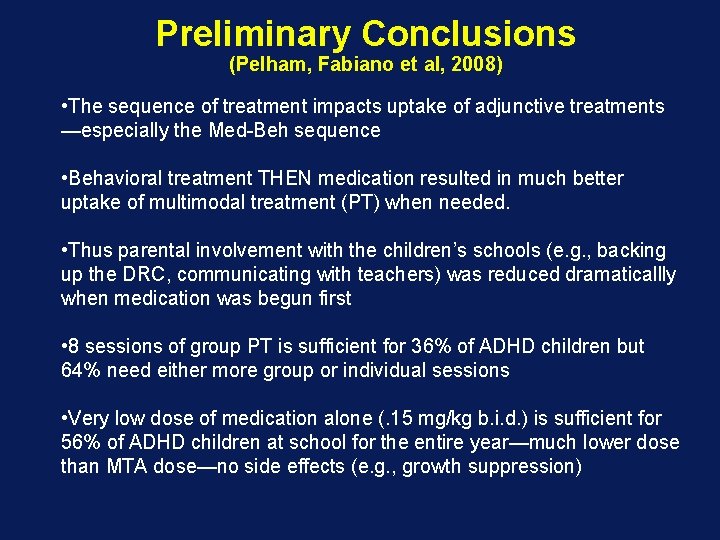
Preliminary Conclusions (Pelham, Fabiano et al, 2008) • The sequence of treatment impacts uptake of adjunctive treatments —especially the Med-Beh sequence • Behavioral treatment THEN medication resulted in much better uptake of multimodal treatment (PT) when needed. • Thus parental involvement with the children’s schools (e. g. , backing up the DRC, communicating with teachers) was reduced dramaticallly when medication was begun first • 8 sessions of group PT is sufficient for 36% of ADHD children but 64% need either more group or individual sessions • Very low dose of medication alone (. 15 mg/kg b. i. d. ) is sufficient for 56% of ADHD children at school for the entire year—much lower dose than MTA dose—no side effects (e. g. , growth suppression)
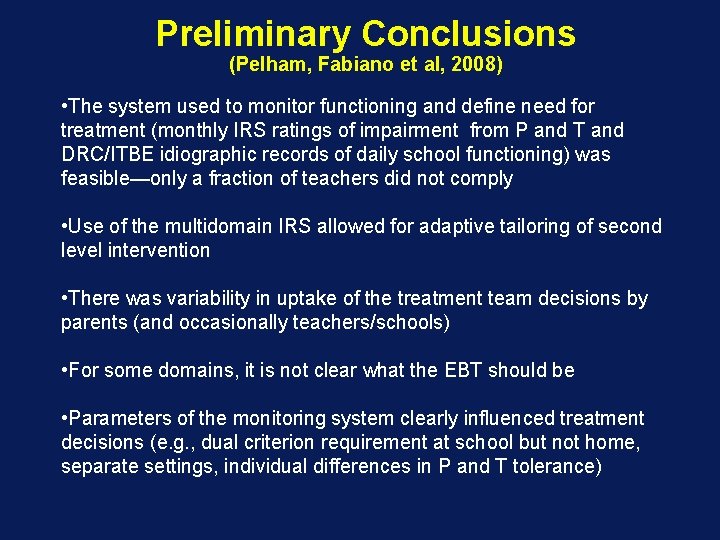
Preliminary Conclusions (Pelham, Fabiano et al, 2008) • The system used to monitor functioning and define need for treatment (monthly IRS ratings of impairment from P and T and DRC/ITBE idiographic records of daily school functioning) was feasible—only a fraction of teachers did not comply • Use of the multidomain IRS allowed for adaptive tailoring of second level intervention • There was variability in uptake of the treatment team decisions by parents (and occasionally teachers/schools) • For some domains, it is not clear what the EBT should be • Parameters of the monitoring system clearly influenced treatment decisions (e. g. , dual criterion requirement at school but not home, separate settings, individual differences in P and T tolerance)
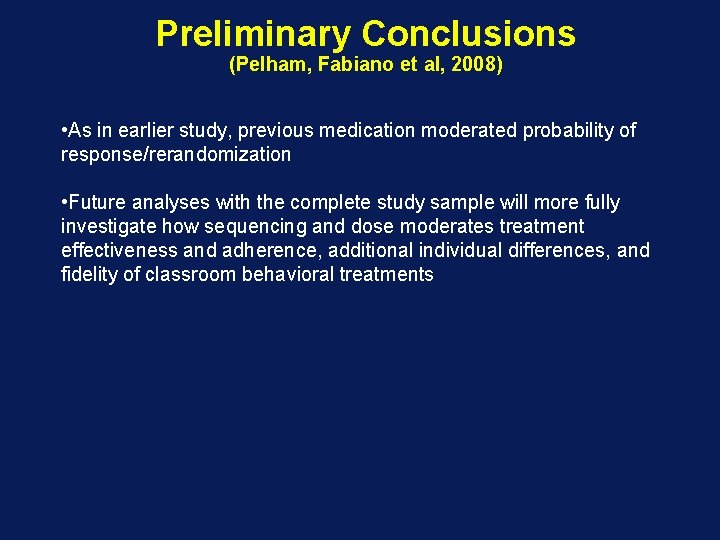
Preliminary Conclusions (Pelham, Fabiano et al, 2008) • As in earlier study, previous medication moderated probability of response/rerandomization • Future analyses with the complete study sample will more fully investigate how sequencing and dose moderates treatment effectiveness and adherence, additional individual differences, and fidelity of classroom behavioral treatments
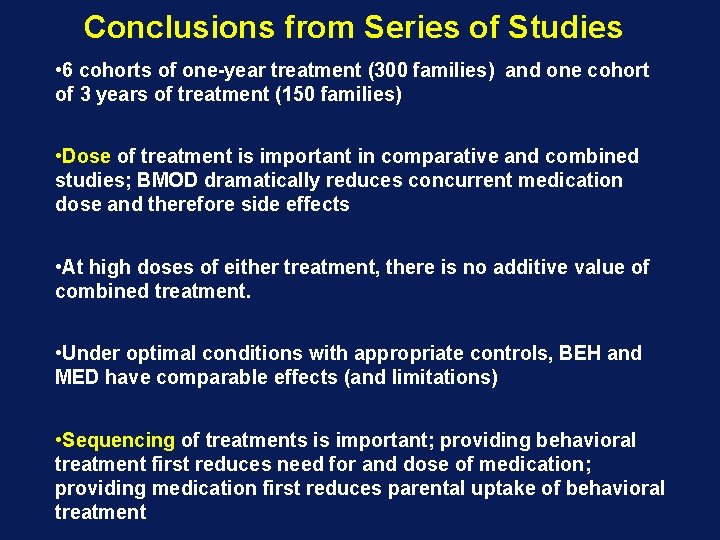
Conclusions from Series of Studies • 6 cohorts of one-year treatment (300 families) and one cohort of 3 years of treatment (150 families) • Dose of treatment is important in comparative and combined studies; BMOD dramatically reduces concurrent medication dose and therefore side effects • At high doses of either treatment, there is no additive value of combined treatment. • Under optimal conditions with appropriate controls, BEH and MED have comparable effects (and limitations) • Sequencing of treatments is important; providing behavioral treatment first reduces need for and dose of medication; providing medication first reduces parental uptake of behavioral treatment
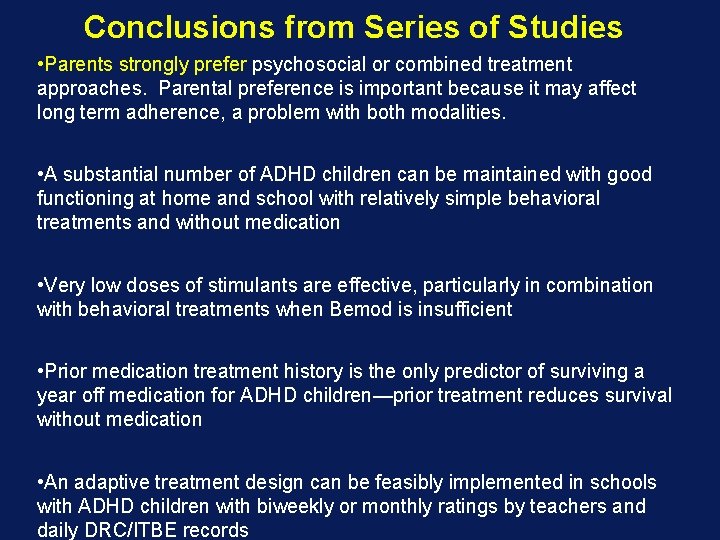
Conclusions from Series of Studies • Parents strongly prefer psychosocial or combined treatment approaches. Parental preference is important because it may affect long term adherence, a problem with both modalities. • A substantial number of ADHD children can be maintained with good functioning at home and school with relatively simple behavioral treatments and without medication • Very low doses of stimulants are effective, particularly in combination with behavioral treatments when Bemod is insufficient • Prior medication treatment history is the only predictor of surviving a year off medication for ADHD children—prior treatment reduces survival without medication • An adaptive treatment design can be feasibly implemented in schools with ADHD children with biweekly or monthly ratings by teachers and daily DRC/ITBE records
Conclusions from Series of Studies Dose and sequencing questions utilizing SMART designs with ongoing monitoring and adaptive treatment decisions mimic the questions that face practitioners daily and are the next wave of treatment outcome research in ADHD and other child MH problems At the same time, we suggest that the field consider the question of whether the sole focus should be on the child and family for treatment tailoring in personalized treatment Alternatively, we can ask whether it is the child MH system that needs to be changed to adapt to the needs of children and families and to fit with what we know about EBTs Examples: COACHES, BGC/School-basd STPs, Community based PT w/ child care, School-based interventions, Saturday recreational programs, child respite evenings/days
Most ADHD Children Can be Satisfactorily Maintained without Medication—Will the Use of Medication for ADHD Decrease? What About Other Disorders?
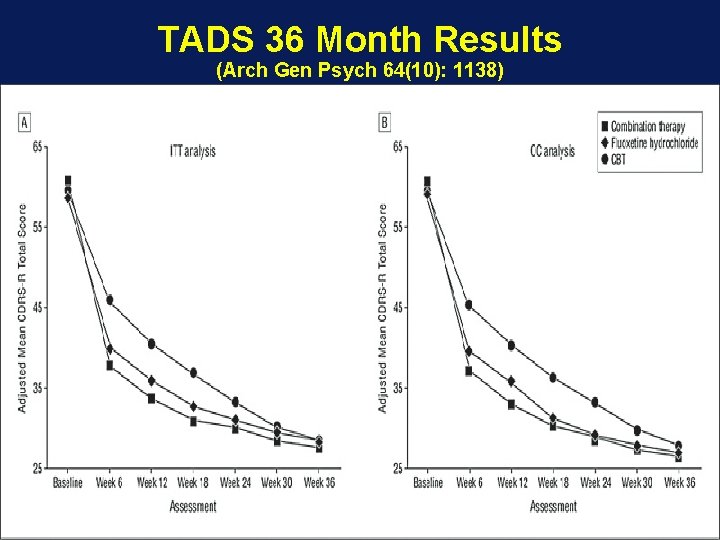
TADS 36 Month Results (Arch Gen Psych 64(10): 1138)
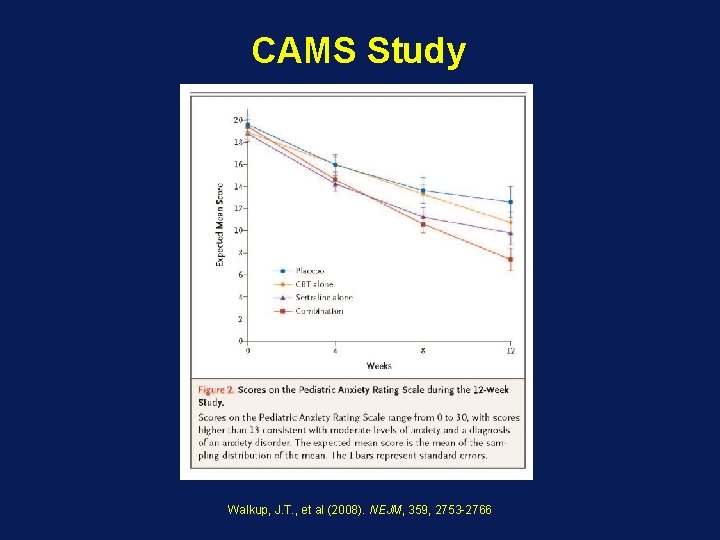
CAMS Study Walkup, J. T. , et al (2008). NEJM, 359, 2753 -2766
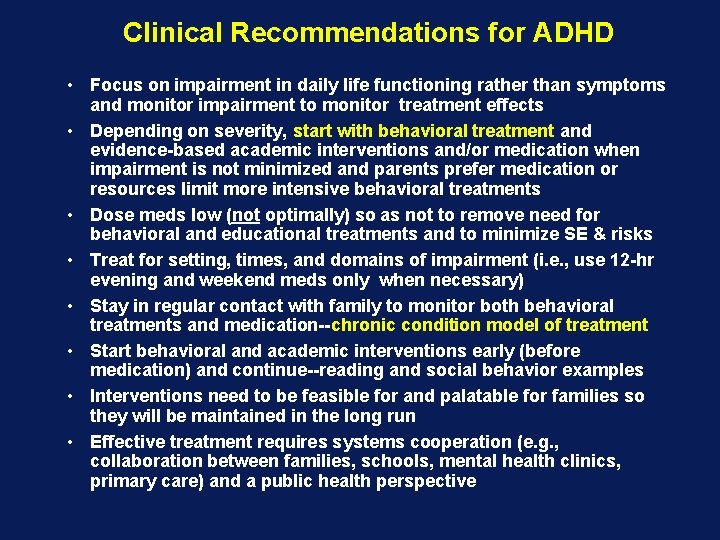
Clinical Recommendations for ADHD • Focus on impairment in daily life functioning rather than symptoms and monitor impairment to monitor treatment effects • Depending on severity, start with behavioral treatment and evidence-based academic interventions and/or medication when impairment is not minimized and parents prefer medication or resources limit more intensive behavioral treatments • Dose meds low (not optimally) so as not to remove need for behavioral and educational treatments and to minimize SE & risks • Treat for setting, times, and domains of impairment (i. e. , use 12 -hr evening and weekend meds only when necessary) • Stay in regular contact with family to monitor both behavioral treatments and medication--chronic condition model of treatment • Start behavioral and academic interventions early (before medication) and continue--reading and social behavior examples • Interventions need to be feasible for and palatable for families so they will be maintained in the long run • Effective treatment requires systems cooperation (e. g. , collaboration between families, schools, mental health clinics, primary care) and a public health perspective

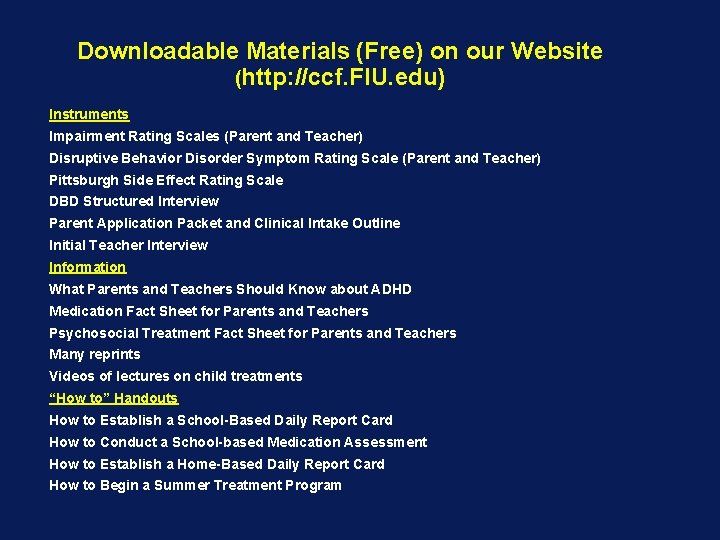
Downloadable Materials (Free) on our Website (http: //ccf. FIU. edu) Instruments Impairment Rating Scales (Parent and Teacher) Disruptive Behavior Disorder Symptom Rating Scale (Parent and Teacher) Pittsburgh Side Effect Rating Scale DBD Structured Interview Parent Application Packet and Clinical Intake Outline Initial Teacher Interview Information What Parents and Teachers Should Know about ADHD Medication Fact Sheet for Parents and Teachers Psychosocial Treatment Fact Sheet for Parents and Teachers Many reprints Videos of lectures on child treatments “How to” Handouts How to Establish a School-Based Daily Report Card How to Conduct a School-based Medication Assessment How to Establish a Home-Based Daily Report Card How to Begin a Summer Treatment Program
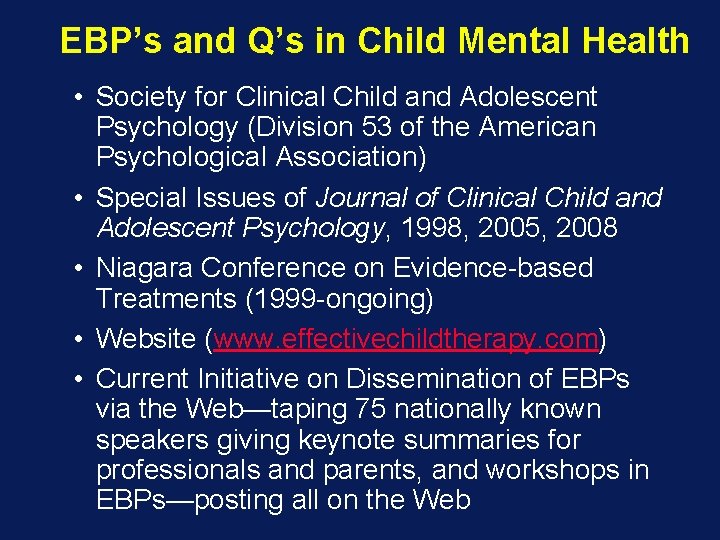
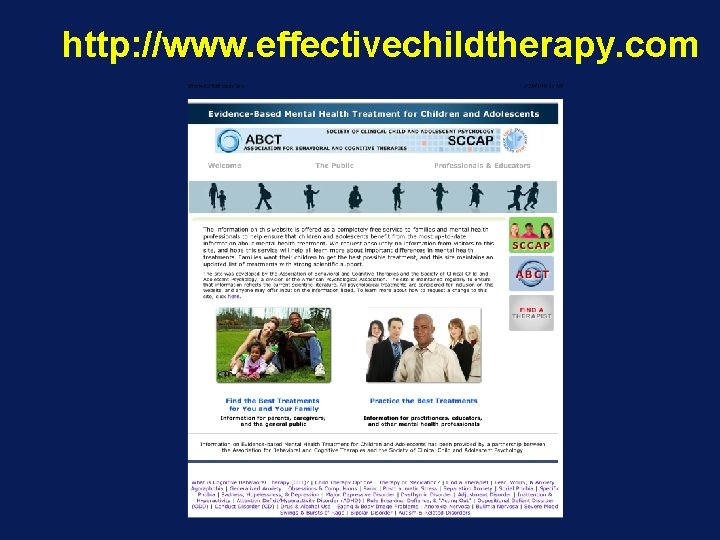
EBP’s and Q’s in Child Mental Health • Society for Clinical Child and Adolescent Psychology (Division 53 of the American Psychological Association) • Special Issues of Journal of Clinical Child and Adolescent Psychology, 1998, 2005, 2008 • Niagara Conference on Evidence-based Treatments (1999 -ongoing) • Website (www. effectivechildtherapy. com) • Current Initiative on Dissemination of EBPs via the Web—taping 75 nationally known speakers giving keynote summaries for professionals and parents, and workshops in EBPs—posting all on the Web
http: //www. effectivechildtherapy. com

Thank you!
- Slides: 163