
New Development of Silicon Drift Detectors for the

- Slides: 22
New Development of Silicon Drift Detectors for the SIDDHARTA-2 experiment upgrade Carlo Fiorini, Riccardo Quaglia Politecnico di Milano, Dipartimento di Elettronica, Informazione e Bioingegneria, Milano, Italy. INFN, Sezione di Milano, Italy.
Outline • The Silicon Drift Detectors (SDDs) in SIDDHARTA-1 • New development of SDDs for SIDDHARTA-2 upgrade • Present and future work
SIDDHARTA SIlicon Drift Detector for Hadronic Atom Research by Timing Applications • • • LNF- INFN, Frascati, Italy SMI- ÖAW, Vienna, Austria IFIN – HH, Bucharest, Romania Politecnico, Milano, Italy MPE, Garching, Germany PNSensors, Munich, Germany RIKEN, Japan Univ. Tokyo, Japan Victoria Univ. , Canada
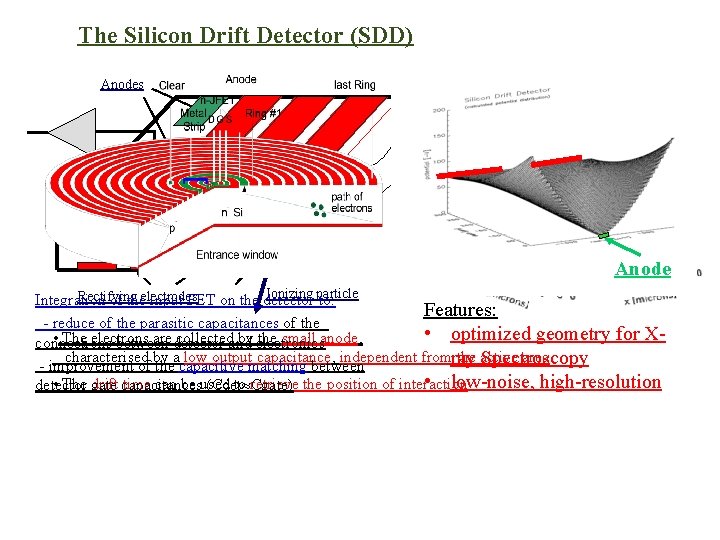
The Silicon Drift Detector (SDD) Anodes Anode Ionizing particle Rectifying Integration of theelectrodes input FET on the detector to: Features: - reduce of the parasitic capacitances of the • optimized geometry for X • The electrons are detector collectedand by electronics the small anode, connections between characterised by a low output capacitance, independent fromray the active area Spectroscopy - improvement of the capacitive matching between • low-noise, high-resolution • The gate drift capacitances time can be used to retrieve the position of interaction detector (Cdet Cgate)
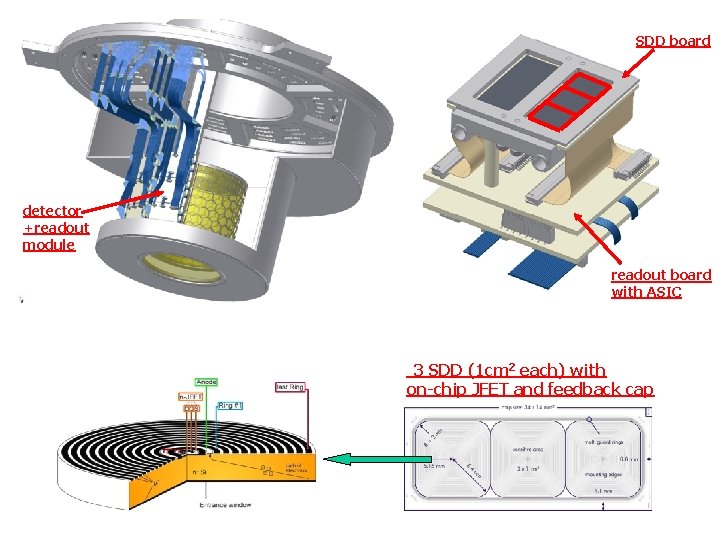
SDD board detector +readout module readout board with ASIC 3 SDD (1 cm 2 each) with on-chip JFET and feedback cap
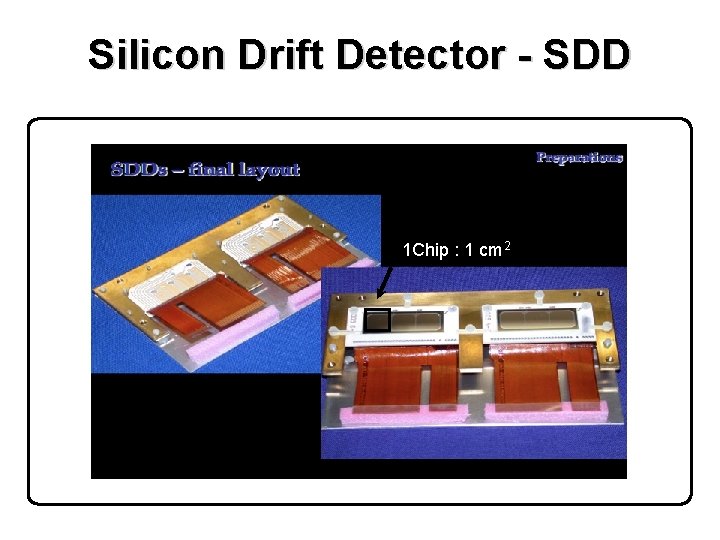
Silicon Drift Detector - SDD 1 Chip : 1 cm 2
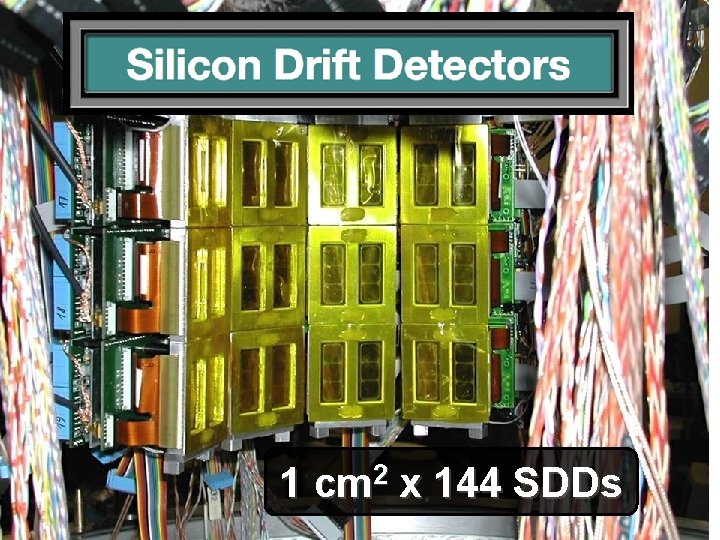
2 cm 1 cm x 144 SDDs
What have we learned about the SDDs of SIDDHARTA-1? • SDDs are a valuable X-ray spectroscopy detector for exotic atoms measurements but: • latch-up of JFET integrated in the SDD during beam injection • very fine tuning of bias of individual SDD was required • dead-area of the detection module may be further minimized • low-energy detection (<3 ke. V) limited because of technical issues (electronics, thresholds, pick-up noise, …). …but no intrinsic SDD limitations (>200 e. V) • …. . (our friends in Frascati may have learned much more than us…. )
The SIDDHARTA-2 setup upgrade • new target design • new SDD arrangement • vacuum chamber • more cooling power • improved trigger scheme • shielding and anti-coincidence (veto) • New SDDs – Milano – 200 cm 2 9
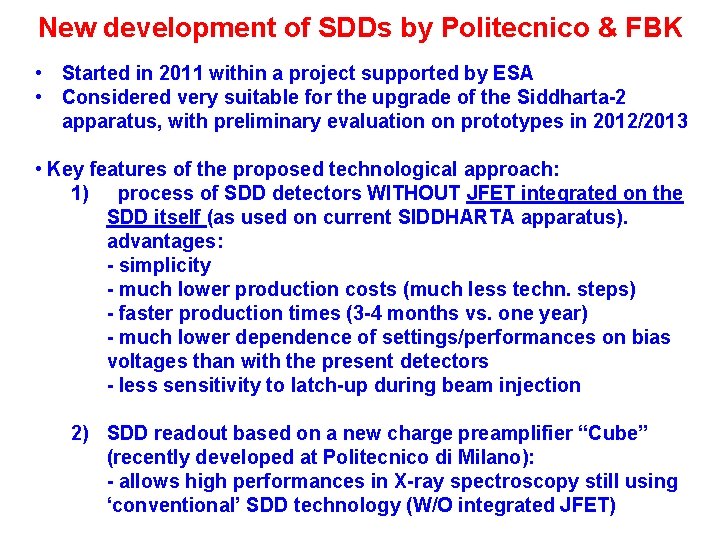
New development of SDDs by Politecnico & FBK • Started in 2011 within a project supported by ESA • Considered very suitable for the upgrade of the Siddharta-2 apparatus, with preliminary evaluation on prototypes in 2012/2013 • Key features of the proposed technological approach: 1) process of SDD detectors WITHOUT JFET integrated on the SDD itself (as used on current SIDDHARTA apparatus). advantages: - simplicity - much lower production costs (much less techn. steps) - faster production times (3 -4 months vs. one year) - much lower dependence of settings/performances on bias voltages than with the present detectors - less sensitivity to latch-up during beam injection 2) SDD readout based on a new charge preamplifier “Cube” (recently developed at Politecnico di Milano): - allows high performances in X-ray spectroscopy still using ‘conventional’ SDD technology (W/O integrated JFET)
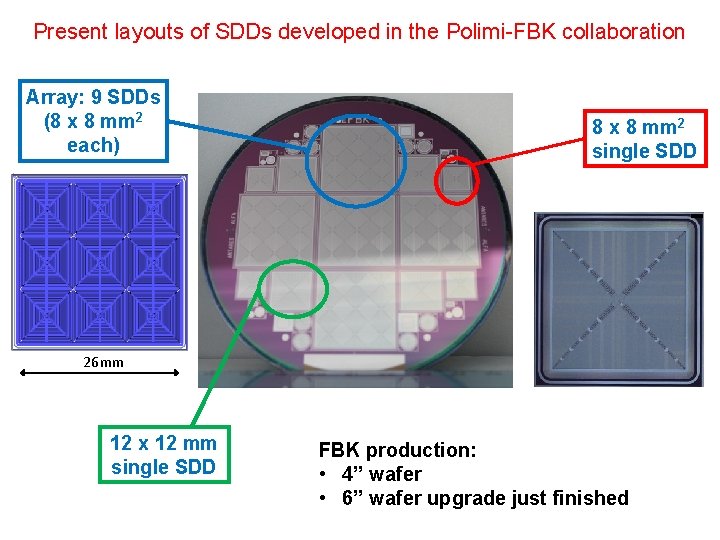
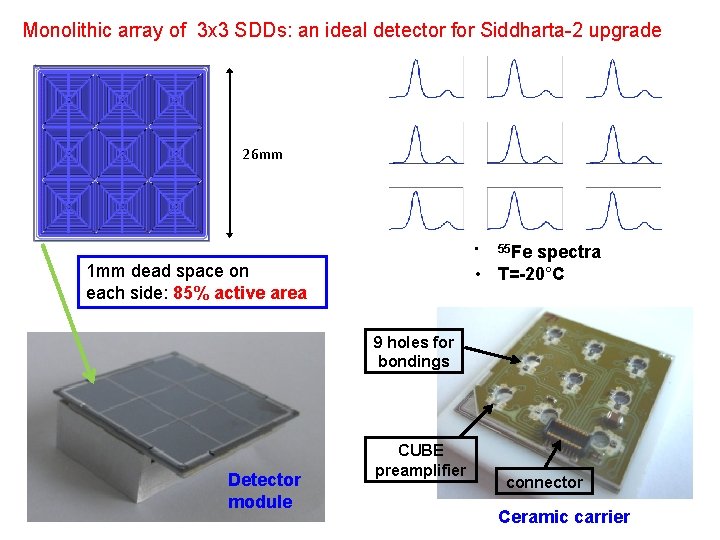
Present layouts of SDDs developed in the Polimi-FBK collaboration Array: 9 SDDs (8 x 8 mm 2 each) 8 x 8 mm 2 single SDD 26 mm 12 x 12 mm single SDD FBK production: • 4’’ wafer • 6’’ wafer upgrade just finished
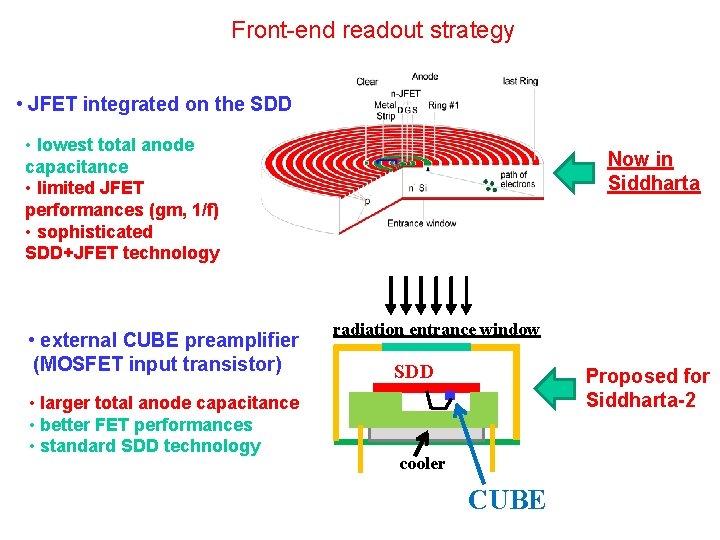
Front-end readout strategy • JFET integrated on the SDD • lowest total anode capacitance • limited JFET performances (gm, 1/f) • sophisticated SDD+JFET technology • external CUBE preamplifier (MOSFET input transistor) • larger total anode capacitance • better FET performances • standard SDD technology Now in Siddharta radiation entrance window SDD Proposed for Siddharta-2 cooler CUBE
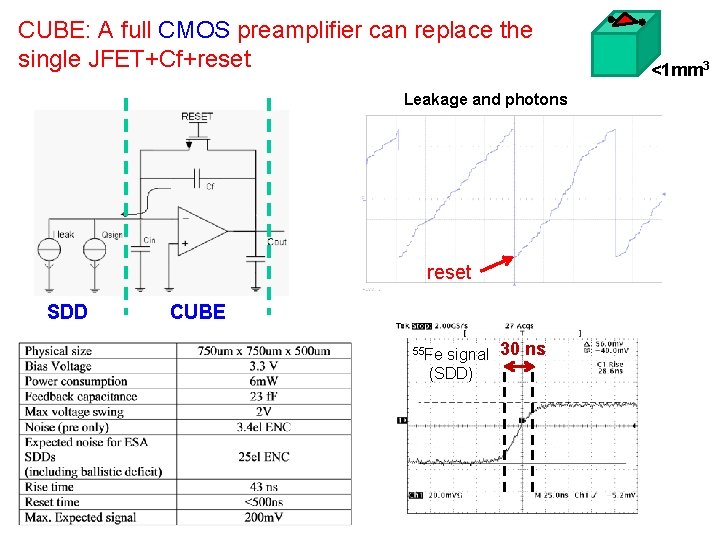
CUBE: A full CMOS preamplifier can replace the single JFET+Cf+reset Leakage and photons reset SDD CUBE signal 30 ns (SDD) 55 Fe <1 mm 3
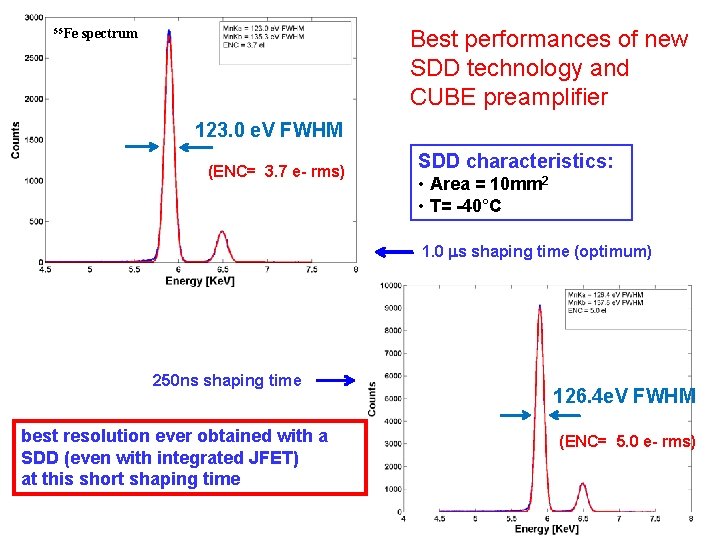
55 Fe Best performances of new SDD technology and CUBE preamplifier spectrum 123. 0 e. V FWHM (ENC= 3. 7 e- rms) SDD characteristics: • Area = 10 mm 2 • T= -40°C 1. 0 ms shaping time (optimum) 250 ns shaping time best resolution ever obtained with a SDD (even with integrated JFET) at this short shaping time 126. 4 e. V FWHM (ENC= 5. 0 e- rms)
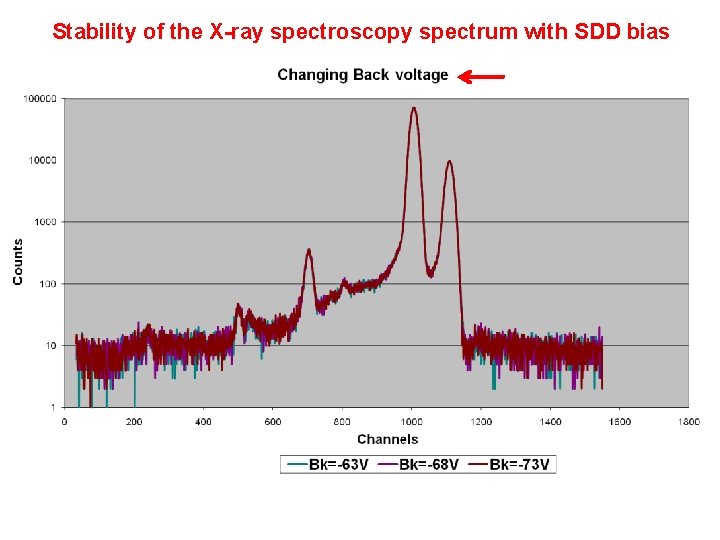
Stability of the X-ray spectroscopy spectrum with SDD bias
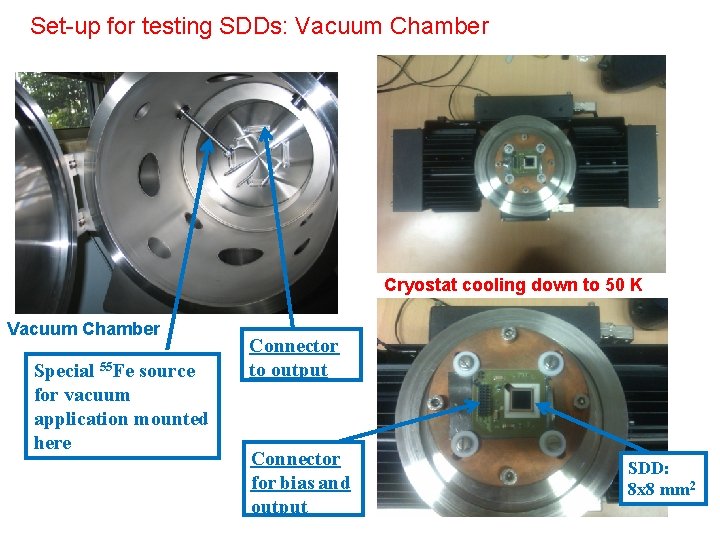
Set-up for testing SDDs: Vacuum Chamber Cryostat cooling down to 50 K Vacuum Chamber Special 55 Fe source for vacuum application mounted here Connector to output Connector for bias and output SDD: 8 x 8 mm 2
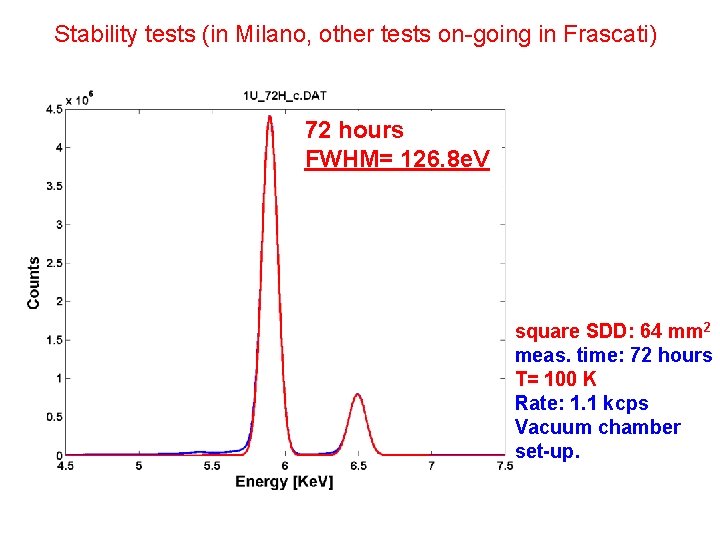
Stability tests (in Milano, other tests on-going in Frascati) 72 hours FWHM= 126. 8 e. V square SDD: 64 mm 2 meas. time: 72 hours T= 100 K Rate: 1. 1 kcps Vacuum chamber set-up.
Monolithic array of 3 x 3 SDDs: an ideal detector for Siddharta-2 upgrade 26 mm • spectra • T=-20°C 1 mm dead space on each side: 85% active area 55 Fe 9 holes for bondings Detector module CUBE preamplifier connector Ceramic carrier
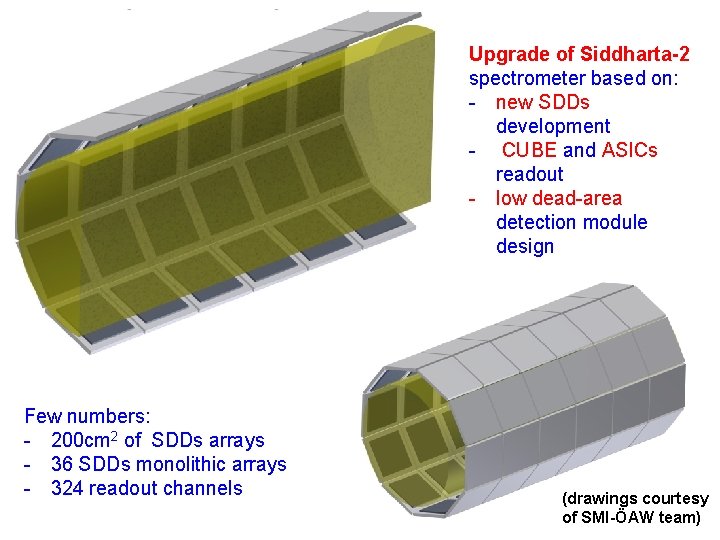
Upgrade of Siddharta-2 spectrometer based on: - new SDDs development - CUBE and ASICs readout - low dead-area detection module design Few numbers: - 200 cm 2 of SDDs arrays - 36 SDDs monolithic arrays - 324 readout channels (drawings courtesy of SMI-ÖAW team)
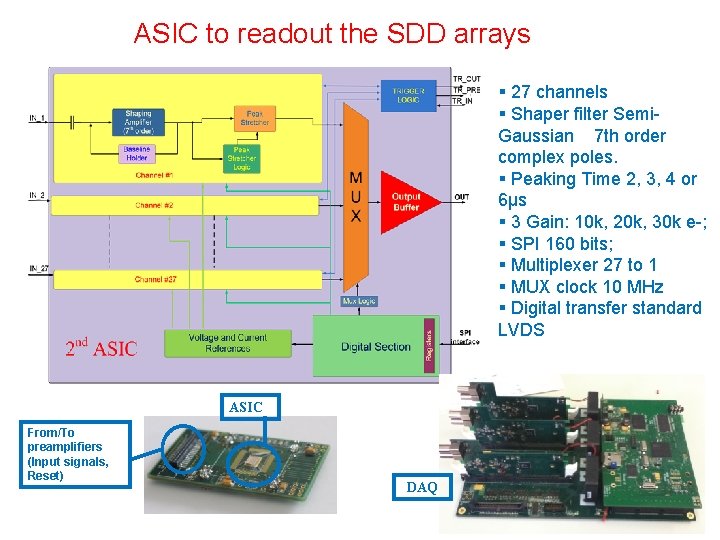
ASIC to readout the SDD arrays § 27 channels § Shaper filter Semi. Gaussian 7 th order complex poles. § Peaking Time 2, 3, 4 or 6µs § 3 Gain: 10 k, 20 k, 30 k e-; § SPI 160 bits; § Multiplexer 27 to 1 § MUX clock 10 MHz § Digital transfer standard LVDS ASIC From/To preamplifiers (Input signals, Reset) DAQ
Present and future work • Experimentation of single SDD (8 x 8 mm 2) almost completed (resolution, stability, linearity…. ) • Experimentation of 3 x 3 SDDs array on the way: • mounting and bonding optimization, yield • test at low temperatures (100 K) • qualification as for the single SDD (Milano, Frascati) • Design of a readout ASIC for the new SDD arrays • Revision/design of the DAQ system • Revision of components (detector layout, hybrids, module, …) for the SIDDHARTA-2 upgrade and production (depending on financing and support to man-power)
The new SDD development collaboration Politecnico di Milano and INFN, Milano, Italy C. Fiorini, R. Quaglia, P. Busca, R. Peloso, M. Occhipinti, L. Bombelli , A. Geraci Fondazione Bruno Kessler - FBK, Trento, Italy P. Bellutti, M. Boscardin, F. Ficorella, G. Giacomini, A. Picciotto, C. Piemonte, N. Zorzi LNF - INFN, Frascati, Italy M. Bazzi, M. Iliescu, F. Sirghi, C. Curceanu, ….