
New Course Format AOCMF CourseManagement of New Course
- Slides: 10
New Course Format AOCMF Course–Management of New Course Facial Trauma Format AOCMF Course–Management of Facial Trauma
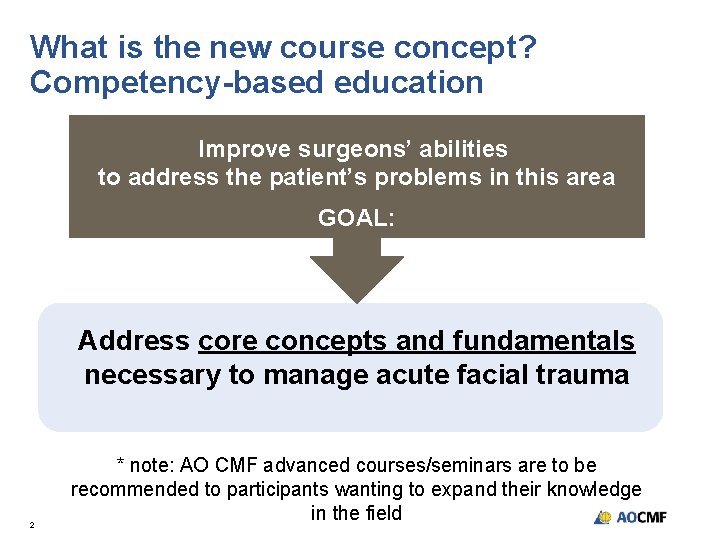
What is the new course concept? Competency-based education Improve surgeons’ abilities to address the patient’s problems in this area GOAL: Address core concepts and fundamentals necessary to manage acute facial trauma 2 * note: AO CMF advanced courses/seminars are to be recommended to participants wanting to expand their knowledge in the field
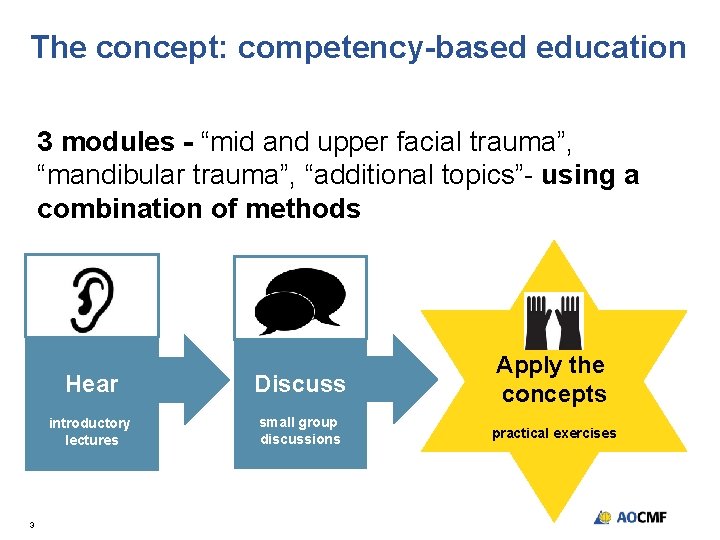
The concept: competency-based education 3 modules - “mid and upper facial trauma”, “mandibular trauma”, “additional topics”- using a combination of methods 3 Hear Discuss Apply the concepts introductory lectures small group discussions practical exercises
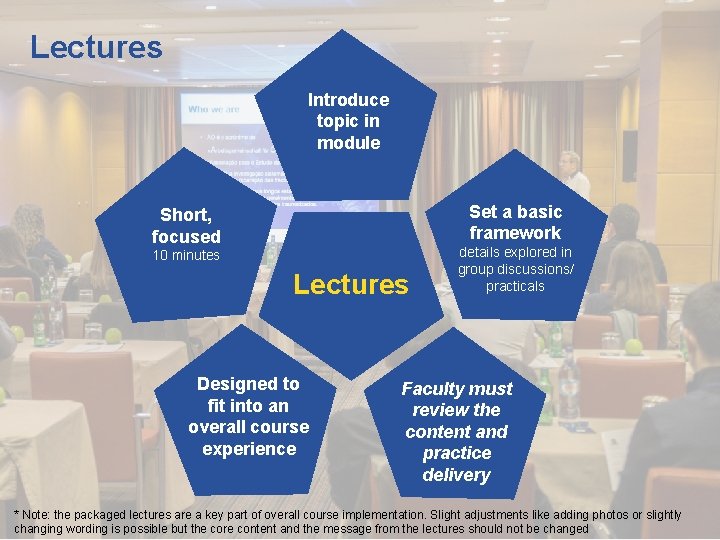
Lectures Introduce topic in module Set a basic framework Short, focused 10 minutes Lectures Designed to fit into an overall course experience details explored in group discussions/ practicals Faculty must review the content and practice delivery * Note: the packaged lectures are a key part of overall course implementation. Slight adjustments like adding photos or slightly changing wording is possible but the core content and the message from the lectures should not be changed
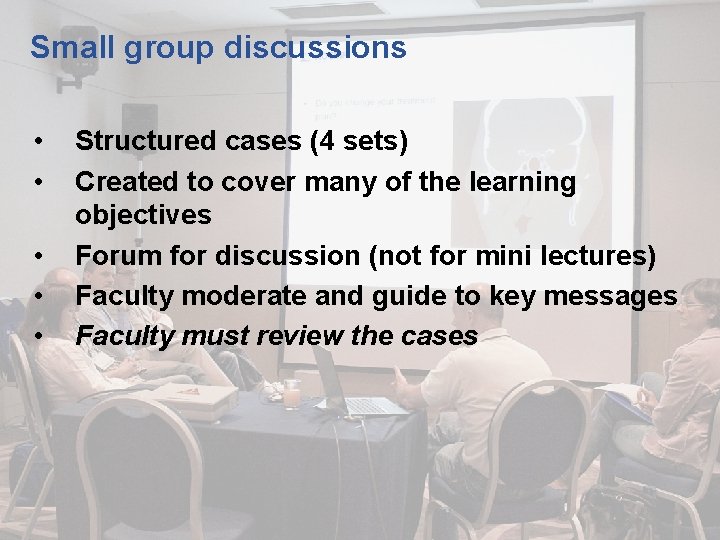
Small group discussions • • • Structured cases (4 sets) Created to cover many of the learning objectives Forum for discussion (not for mini lectures) Faculty moderate and guide to key messages Faculty must review the cases
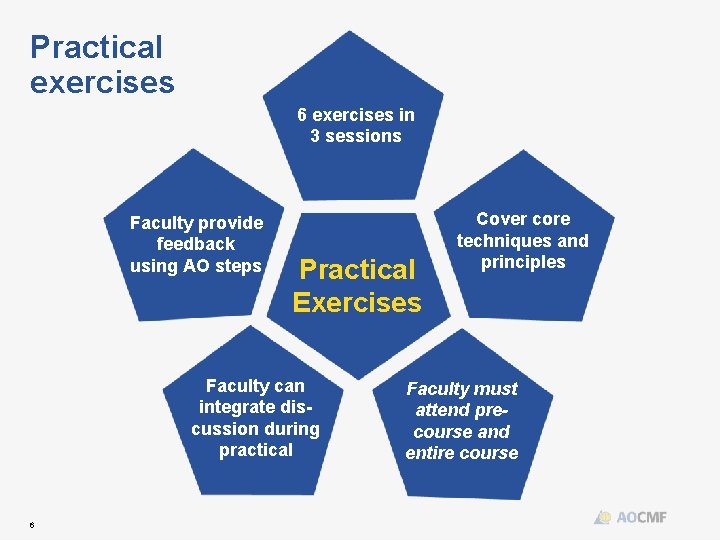
Practical exercises 6 exercises in 3 sessions Faculty provide feedback using AO steps Practical Exercises Faculty can integrate discussion during practical 6 Cover core techniques and principles Faculty must attend precourse and entire course
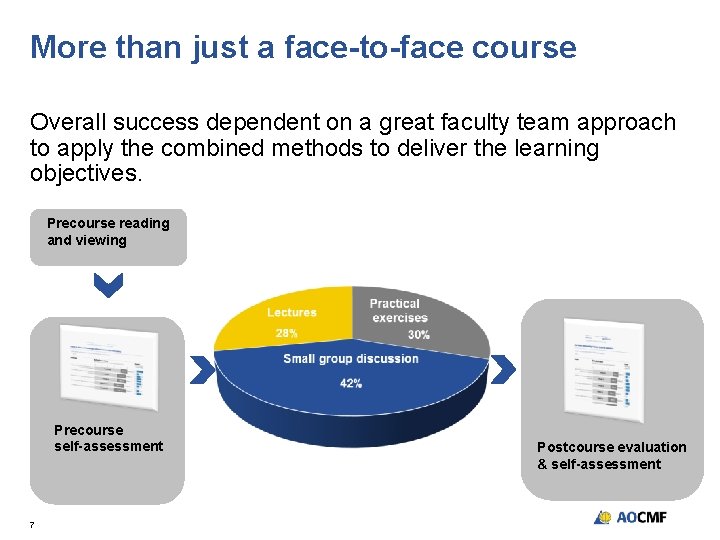
More than just a face-to-face course Overall success dependent on a great faculty team approach to apply the combined methods to deliver the learning objectives. Precourse reading and viewing Precourse self-assessment 7 Postcourse evaluation & self-assessment
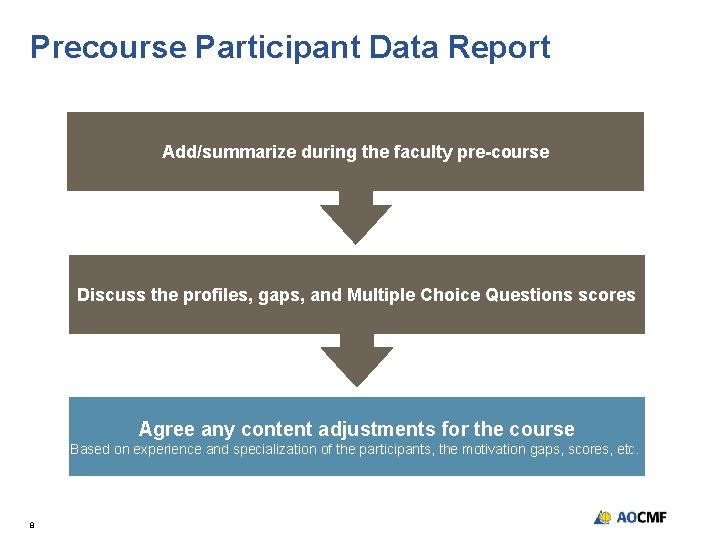
Precourse Participant Data Report Add/summarize during the faculty pre-course Discuss the profiles, gaps, and Multiple Choice Questions scores Agree any content adjustments for the course Based on experience and specialization of the participants, the motivation gaps, scores, etc. 8
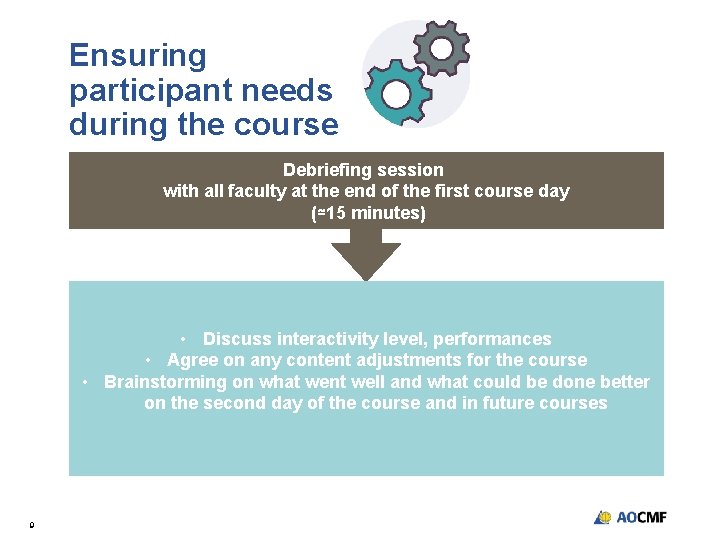
Ensuring participant needs during the course Debriefing session with all faculty at the end of the first course day (≃15 minutes) • Discuss interactivity level, performances • Agree on any content adjustments for the course • Brainstorming on what went well and what could be done better on the second day of the course and in future courses 9
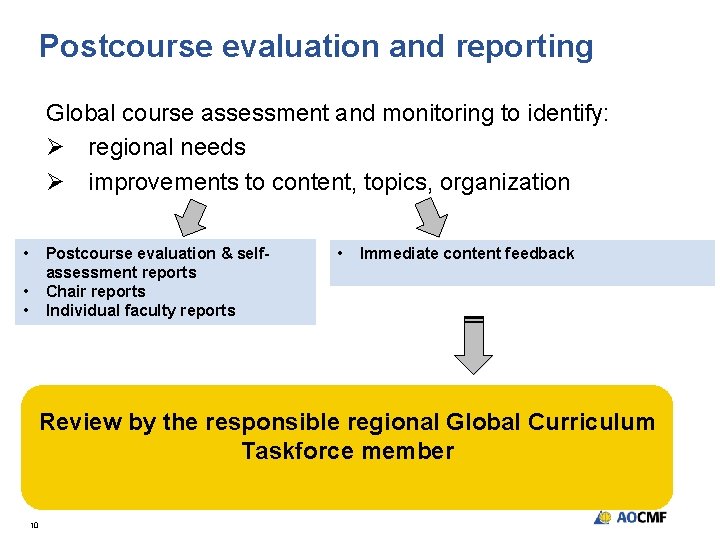
Postcourse evaluation and reporting Global course assessment and monitoring to identify: Ø regional needs Ø improvements to content, topics, organization • Postcourse evaluation & selfassessment reports Chair reports Individual faculty reports • • • Immediate content feedback Review by the responsible regional Global Curriculum Taskforce member 10