
NEW CLINICIAN LEADERSHIP PROGRAM PATIENT SAFETY HIGH RELIABILITY
NEW CLINICIAN LEADERSHIP PROGRAM PATIENT SAFETY / HIGH RELIABILITY
“We Are First and Foremost, A Safe Clinical Enterprise”
Safety Story https: //www. toerrishumanfilm. com/ https: //www. nbcnews. com/healthnews/getting-it-wrong-everyone-sufferswrong-or-late-diagnosis-n 431496 https: //www. cdc. gov/ncbddd/jaundice/calsstory. html
Overview • Scope of Problem • What is a High Reliability Organization • Culture • Models of Safety • Types of Safety Errors • Safety Behaviors
STAND UP IF… • YOU have suffered harm as a patient at a hospital or other care facility (an infection, fall, delayed diagnosis causing delay in treatment, other …) • A FAMILY MEMBER has suffered harm in a hospital or other care facility • A FRIEND or COLLEAGUE has suffered harm in a hospital or other care facility
The Prevalence of Medical Errors are Third Leading Cause of Death in the U. S. 10 percent of U. S. deaths are due to preventable medical mistakes. • Second only to heart disease and cancer • In 1999 the IOM estimated between 48, 000 and 95, 000 preventable deaths per year • Research now says medical error is responsible for over 400, 000 deaths in the United States annually
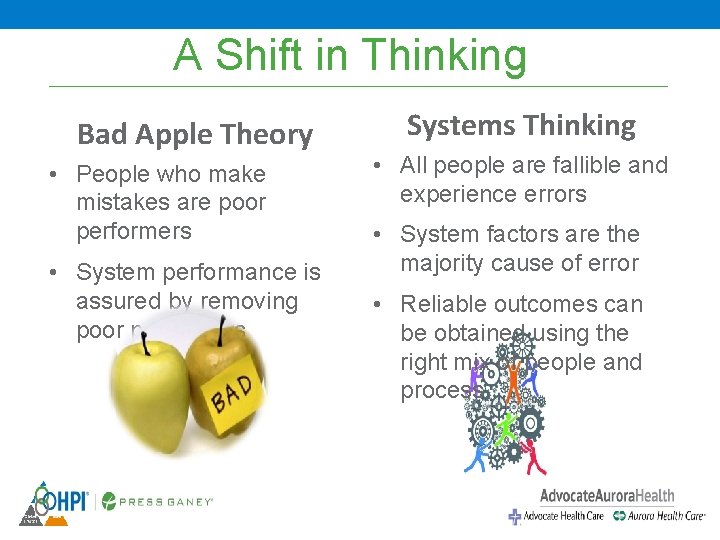
A Shift in Thinking Bad Apple Theory • People who make mistakes are poor performers • System performance is assured by removing poor performers Systems Thinking • All people are fallible and experience errors • System factors are the majority cause of error • Reliable outcomes can be obtained using the right mix of people and process.
NEW CLINICIAN LEADERSHIP PROGRAM High Reliability Organizations 2017 - 7: 54 to 11: 45
NEW CLINICIAN LEADERSHIP PROGRAM PRINCIPLES OF HIGH RELIABILITY
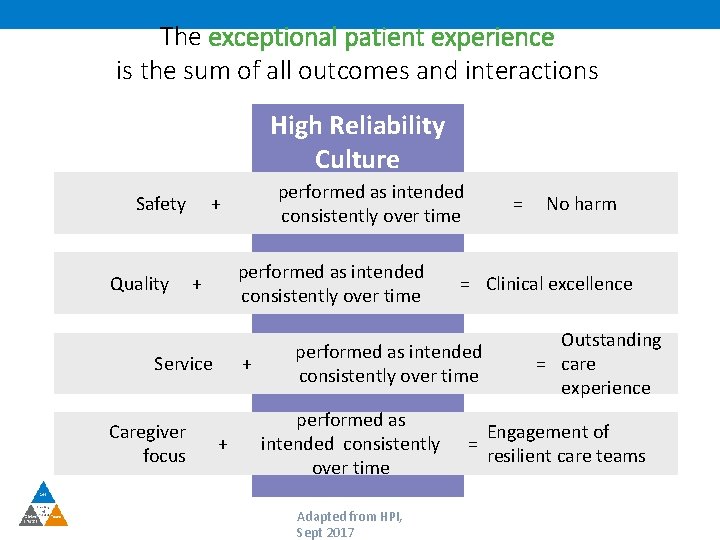
The exceptional patient experience is the sum of all outcomes and interactions High Reliability Culture Safety Quality performed as intended consistently over time + Service Caregiver focus performed as intended consistently over time + + + = = Clinical excellence performed as intended consistently over time Adapted from HPI, Sept 2017 No harm = Outstanding = care experience Engagement of resilient care teams
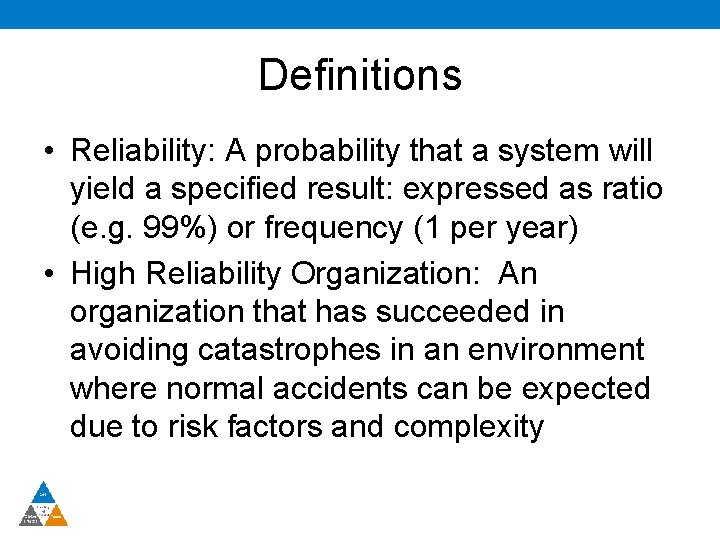
Definitions • Reliability: A probability that a system will yield a specified result: expressed as ratio (e. g. 99%) or frequency (1 per year) • High Reliability Organization: An organization that has succeeded in avoiding catastrophes in an environment where normal accidents can be expected due to risk factors and complexity
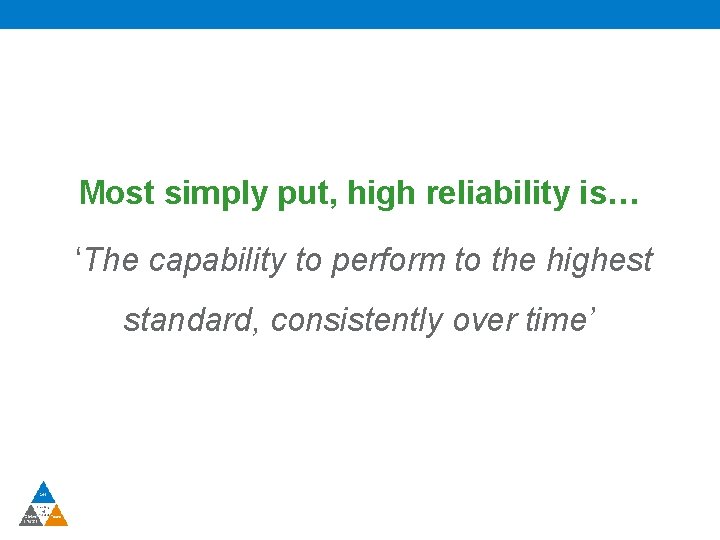
Most simply put, high reliability is… ‘The capability to perform to the highest standard, consistently over time’
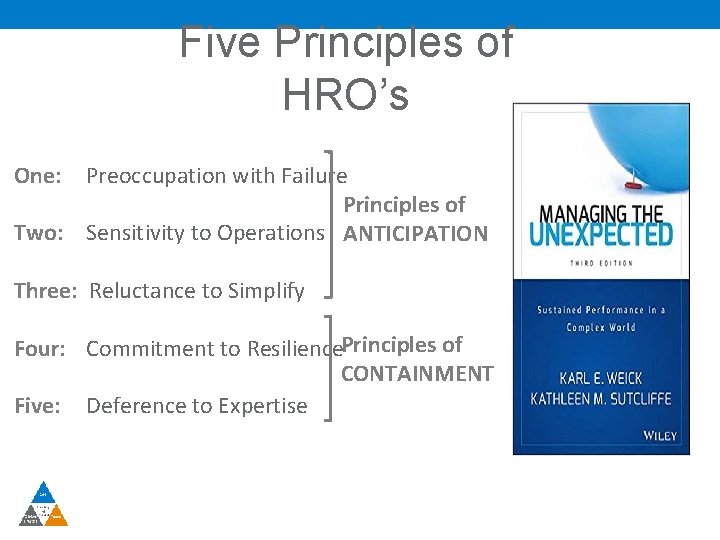
Five Principles of HRO’s One: Preoccupation with Failure Principles of Two: Sensitivity to Operations ANTICIPATION Three: Reluctance to Simplify Four: Commitment to Resilience. Principles of CONTAINMENT Five: Deference to Expertise
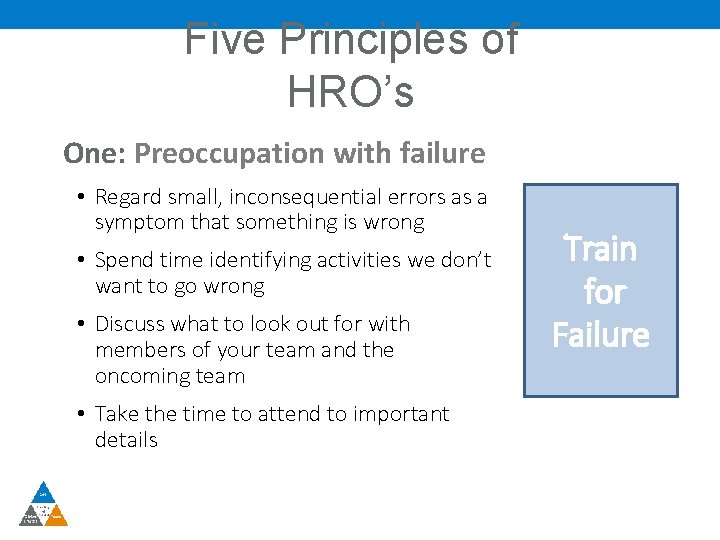
Five Principles of HRO’s One: Preoccupation with failure • Regard small, inconsequential Operating with a chronic errors as a symptom that something is wrong wariness of the possibility of • Spend time identifying activities we don’t unexpected events that may want to go wrong jeopardize safety, andforengaging • Discuss what to look out with members of your and the in proactive andteam preemptive oncoming team analysis and discussion. • Take the time to attend to important details Train for Failure
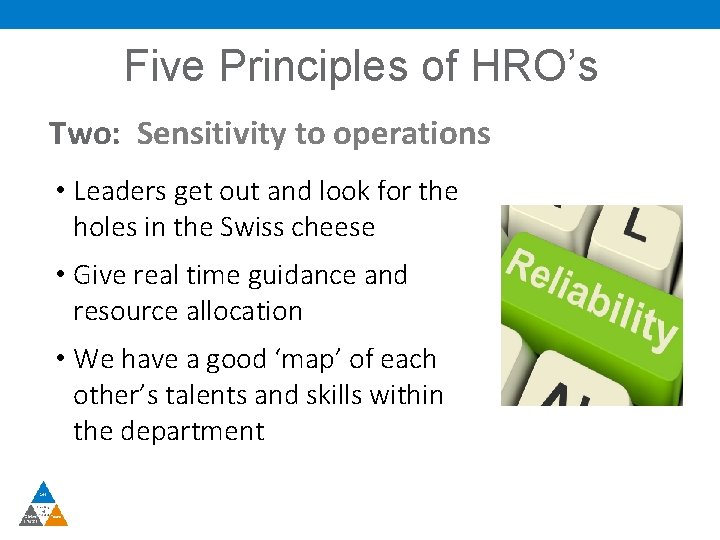
Five Principles of HRO’s Two: Sensitivity to operations Paying to what’s • Leadersattention get out and look for the happening the cheese frontline; holes in theon Swiss Ongoing interaction and • Give real time guidance and information sharing about the resource allocation human and organizational • We have a good ‘map’ of each factors that determine the safety talents skills within ofother’s a system as and a whole the department
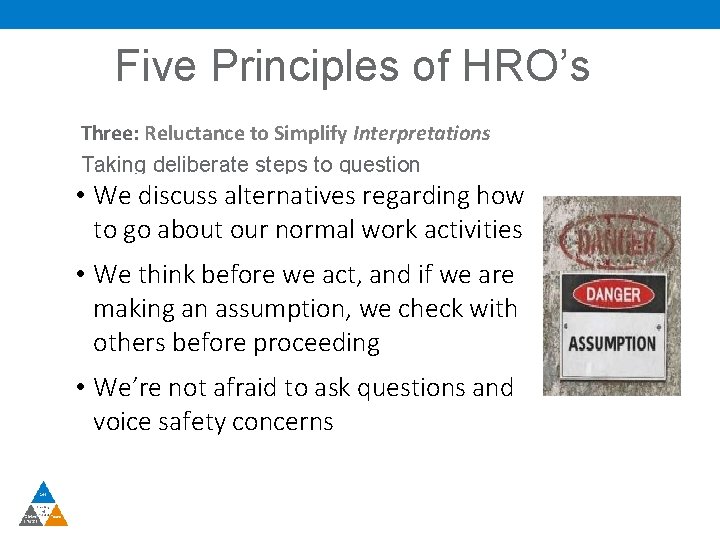
Five Principles of HRO’s Three: Reluctance to Simplify Interpretations Taking deliberate steps to question perceived wisdom to create • assumptions We discussand alternatives regarding how a more complete and nuanced picture of to go about our normal work activities ongoing operations. • We think before we act, and if we are making an assumption, we check with others before proceeding • We’re not afraid to ask questions and voice safety concerns
Five Principles of HRO’s Four: Commitment to Resilience • Because we are aware of what’s going on around us, we identify Developing capabilities to errors as they occur, and correct them before theyand get worse and detect, contain, bounce cause more harm back from errors that have • We talk about mistakes and ways to already occurred, before they learn from them worsen and cause • When errors happen, more we discuss how we could have prevented them serious harm.
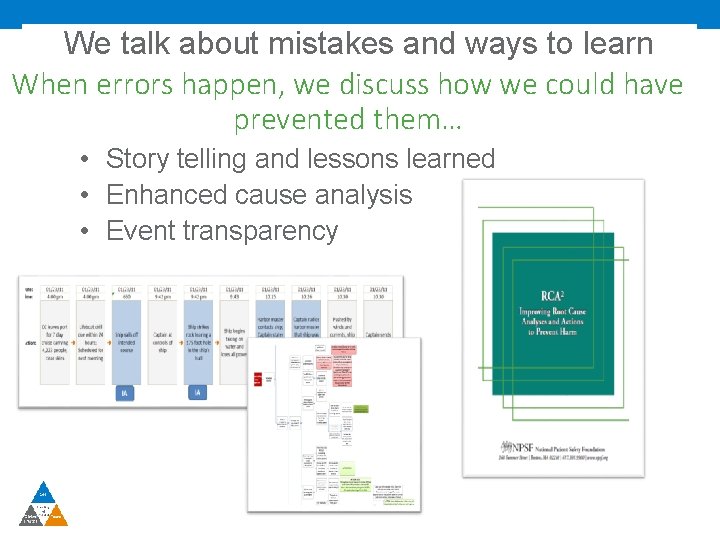
We talk about mistakes and ways to learn them…how we could have When errors happen, from we discuss prevented them… • Story telling and lessons learned • Enhanced cause analysis • Event transparency
Five Principles of HRO’s Five: Deference to expertise • We don’t share our During fasthesitate paced tooperations, expertise decision-making authority • We take advantage of the unique skills of our colleagues migrates to the person or • Whenwith a crisisthe occurs, weexpertise rapidly pool people most our collective expertise to resolve it with the problem at hand, • Rather than a team of experts, we are an expert of team regardless rank.

Huddle Video
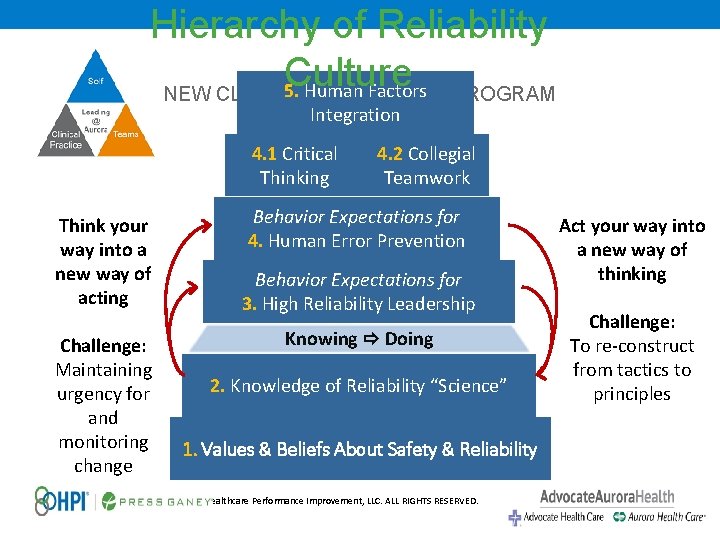
Hierarchy of Reliability Culture 5. Human Factors PROGRAM NEW CLINICIAN LEADERSHIP Integration 4. 1 Critical Thinking Think your way into a new way of acting Challenge: Maintaining urgency for and monitoring change 4. 2 Collegial Teamwork Behavior Expectations for 4. Human Error Prevention Behavior Expectations for 3. High Reliability Leadership Knowing Doing 2. Knowledge of Reliability “Science” 1. Values & Beliefs About Safety & Reliability © 2010 Healthcare Performance Improvement, LLC. ALL RIGHTS RESERVED. Act your way into a new way of thinking Challenge: To re-construct from tactics to principles
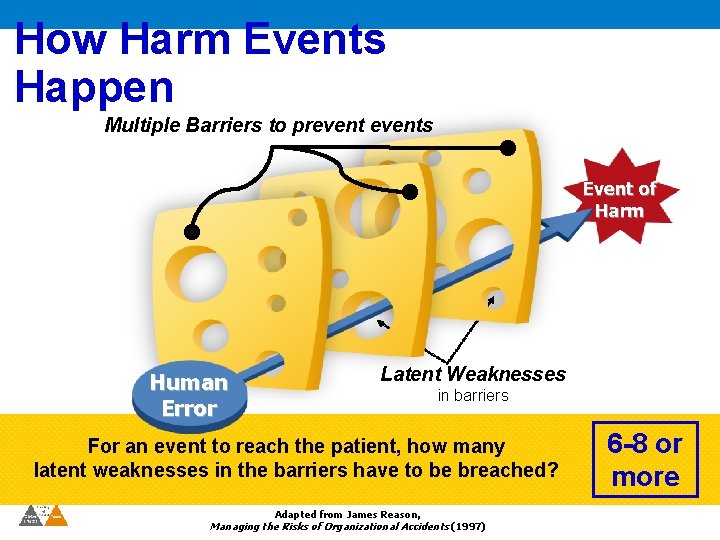
How Harm Events Happen Multiple Barriers to prevents Event of Harm Human Error Latent Weaknesses in barriers For an event to reach the patient, how many latent weaknesses in the barriers have to be breached? Adapted from James Reason, Managing the Risks of Organizational Accidents (1997) 6 -8 or more
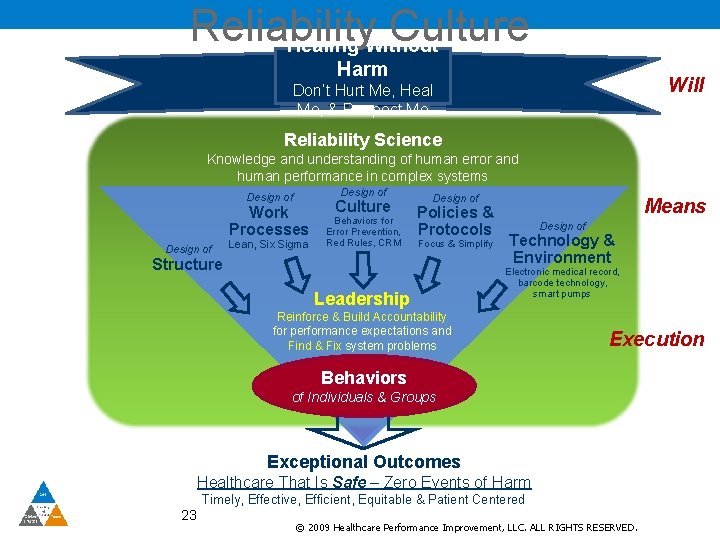
Reliability Culture Healing Without Harm Will Don’t Hurt Me, Heal Me, & Respect Me Reliability Science Knowledge and understanding of human error and human performance in complex systems Design of Work Processes Design of Lean, Six Sigma Culture Behaviors for Error Prevention, Red Rules, CRM Design of Policies & Protocols Focus & Simplify Structure Leadership Means Design of Technology & Environment Electronic medical record, barcode technology, smart pumps Reinforce & Build Accountability for performance expectations and Find & Fix system problems Execution Behaviors of Individuals & Groups Exceptional Outcomes Healthcare That Is Safe – Zero Events of Harm Timely, Effective, Efficient, Equitable & Patient Centered 23 © 2009 Healthcare Performance Improvement, LLC. ALL RIGHTS RESERVED.
NEW CLINICIAN LEADERSHIP PROGRAM Safety Behaviors Part 2 – Beginning to 7: 06 Part 3 - Beginning – 12: 40

https: //www. ispot. tv/ad/IZ 6 J/at-and-t-wireless-ok-tattooparlor
Leaders and Teams https: //www. youtube. com/watch? v=0 vvl 4 6 Pm. Cf. E
NEW CLINICIAN LEADERSHIP PROGRAM Video – Hierarchy 41: 40 – 43: 37 46: 40 – 50: 23
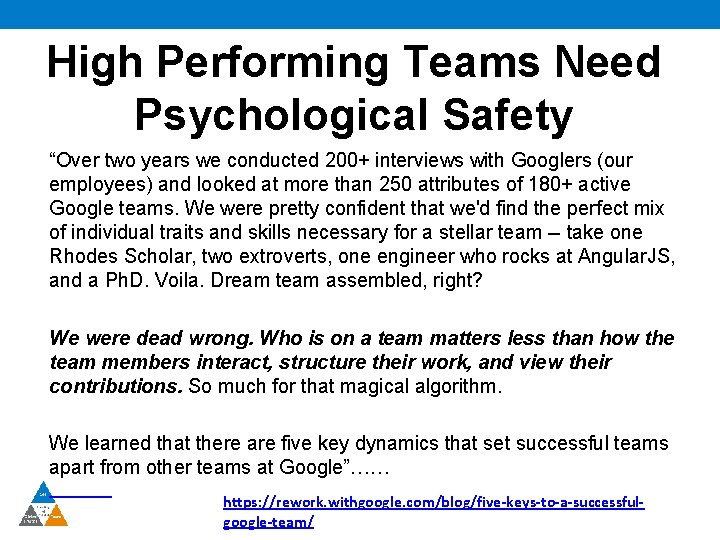
High Performing Teams Need Psychological Safety “Over two years we conducted 200+ interviews with Googlers (our employees) and looked at more than 250 attributes of 180+ active Google teams. We were pretty confident that we'd find the perfect mix of individual traits and skills necessary for a stellar team -- take one Rhodes Scholar, two extroverts, one engineer who rocks at Angular. JS, and a Ph. D. Voila. Dream team assembled, right? We were dead wrong. Who is on a team matters less than how the team members interact, structure their work, and view their contributions. So much for that magical algorithm. We learned that there are five key dynamics that set successful teams apart from other teams at Google”…… https: //rework. withgoogle. com/blog/five-keys-to-a-successfulgoogle-team/
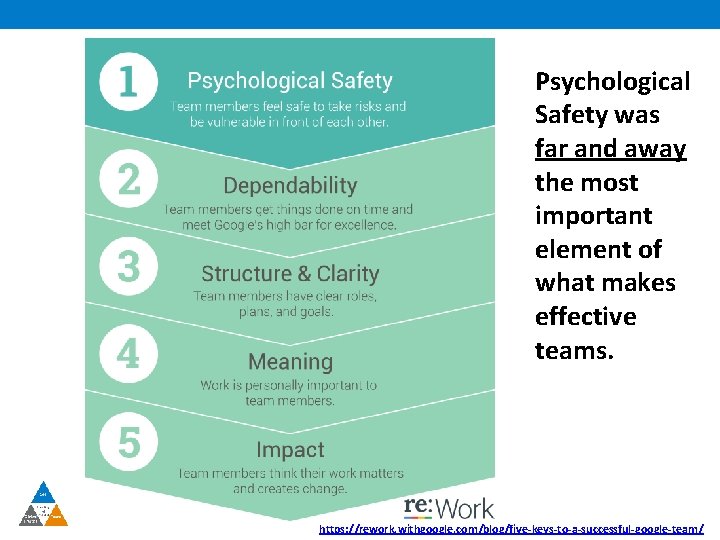
Psychological Safety was far and away the most important element of what makes effective teams. https: //rework. withgoogle. com/blog/five-keys-to-a-successful-google-team/
Role of Clinical Leaders • You as the physician or advanced practice clinician are viewed as the clinical leader of your team • You are critical in creating and sustaining an environment of psychological safety • Fostering psychological safety and high team performance is critical to create resilience in teams
Why is Psychological Safety Important in Healthcare? https: //m. youtube. com/watch? v=LF 1253 Yh. E c 8
Break for Discussion • With your neighbor(s) identify positive – and not so positive – examples of teams you have been on that had psychological safety
Why is Psychological Safety Important in Healthcare? • Learning • Risk Management • Innovation • Job Satisfaction/Meaning

What You Can Do https: //m. youtube. com/watch? v=jb. Ljd. Fqr. UN s
Break for Discussion • With your neighbor(s) identify two opportunities in your clinical work when you can use these skills • Describe why you think it will make a difference
Behaviors You Should Use and Model • Framing of the work – Describe the meaning of the work – Remind people of the nature of the work → highly complex, safety impact • Model fallibility and invite input – Ask for input by name to decrease barriers to providing feedback • Reward the messenger – Actively thank those for bringing key feedback and speaking up
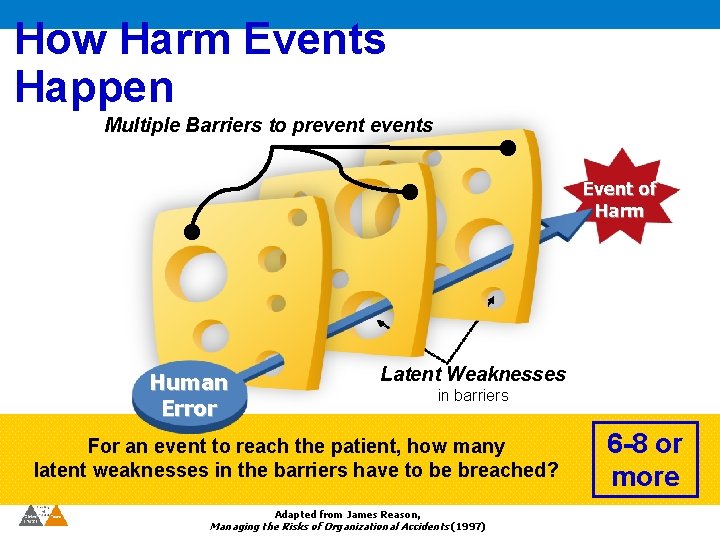
How Harm Events Happen Multiple Barriers to prevents Event of Harm Human Error Latent Weaknesses in barriers For an event to reach the patient, how many latent weaknesses in the barriers have to be breached? Adapted from James Reason, Managing the Risks of Organizational Accidents (1997) 6 -8 or more
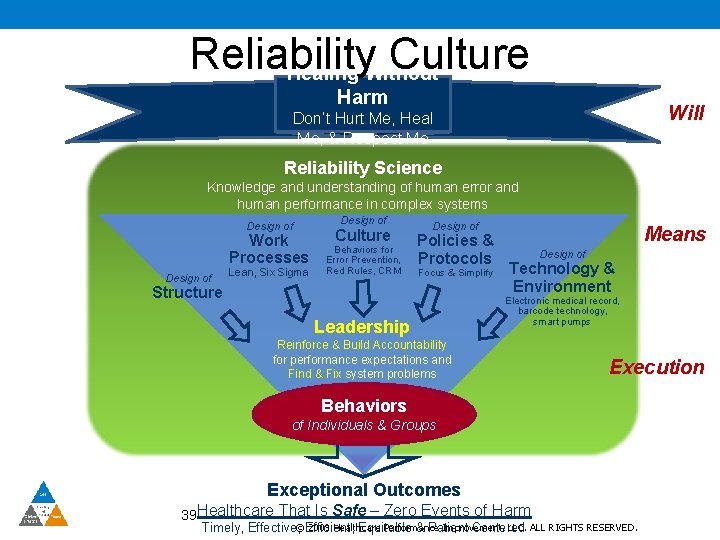
Reliability Culture Healing Without Harm Will Don’t Hurt Me, Heal Me, & Respect Me Reliability Science Knowledge and understanding of human error and human performance in complex systems Design of Work Processes Design of Lean, Six Sigma Design of Culture Behaviors for Error Prevention, Red Rules, CRM Design of Policies & Protocols Focus & Simplify Structure Leadership Means Design of Technology & Environment Electronic medical record, barcode technology, smart pumps Reinforce & Build Accountability for performance expectations and Find & Fix system problems Execution Behaviors of Individuals & Groups Exceptional Outcomes 39 Healthcare That Is Safe – Zero Events of Harm 2009 Healthcare Performance Improvement, LLC. ALL RIGHTS RESERVED. Timely, Effective, ©Efficient, Equitable & Patient Centered
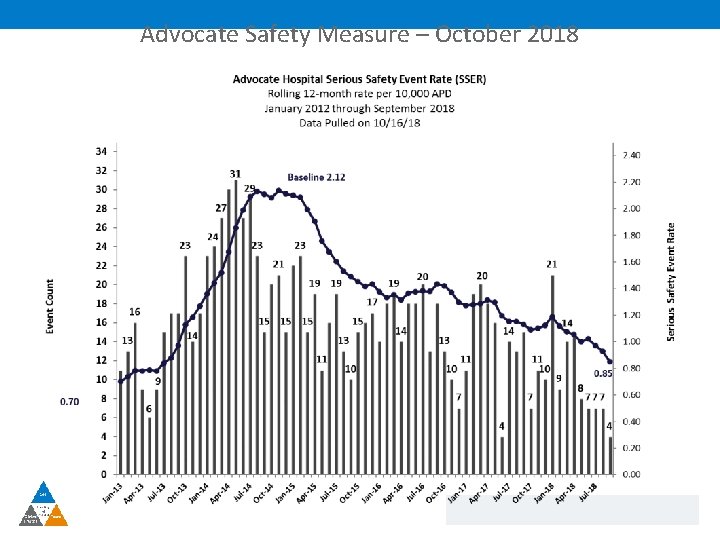
Advocate Safety Measure – October 2018
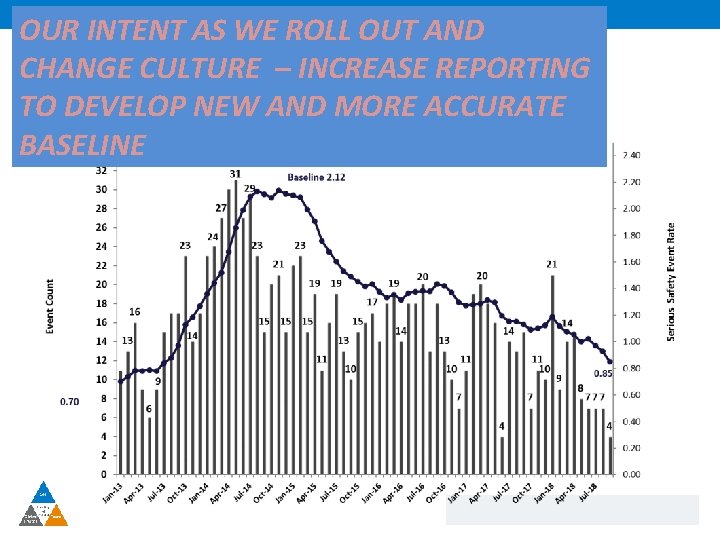
OUR INTENT AS WE ROLL OUT–AND Advocate Safety Measure October 2018 CHANGE CULTURE – INCREASE REPORTING TO DEVELOP NEW AND MORE ACCURATE BASELINE
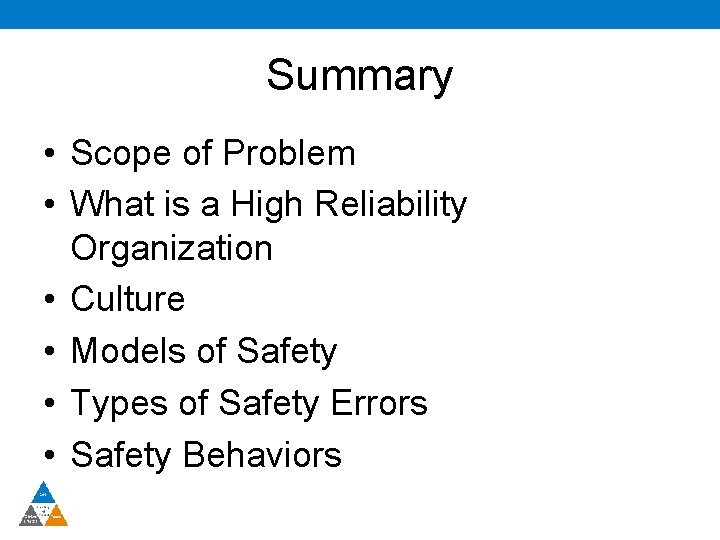
Summary • Scope of Problem • What is a High Reliability Organization • Culture • Models of Safety • Types of Safety Errors • Safety Behaviors
Q and A

Our Focus Remains the Same… Always https: //www. youtube. co m/watch? v=mk. N 7 g. Rorpk. I
NEW CLINICIAN LEADERSHIP PROGRAM Q&A Website: https: //urldefense. proofpoint. co m/v 2/url? u=https 3 A__advocateaurora. cnf. io&d=D w. MFAg&c=Fd. Th. Bv. JHx. SAZ 8 R 9 NIS_s. ODV 3 ezb 9 Po 6 yj. Z 5 Lt_Xt. N
- Slides: 45