
New Business Models in Agriculture Prof Alessio Cavicchi
New Business Models in Agriculture Prof. Alessio Cavicchi
Premise and background
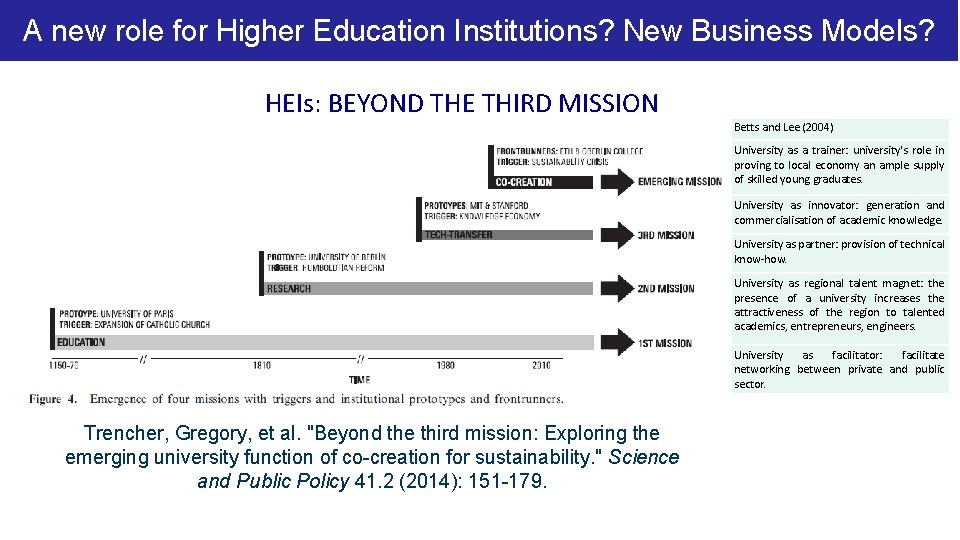
A new role for Higher Education Institutions? New Business Models? HEIs: BEYOND THE THIRD MISSION Betts and Lee (2004) University as a trainer: university's role in proving to local economy an ample supply of skilled young graduates. University as innovator: generation and commercialisation of academic knowledge. University as partner: provision of technical know-how. University as regional talent magnet: the presence of a university increases the attractiveness of the region to talented academics, entrepreneurs, engineers. University as facilitator: facilitate networking between private and public sector. Trencher, Gregory, et al. "Beyond the third mission: Exploring the emerging university function of co-creation for sustainability. " Science and Public Policy 41. 2 (2014): 151 -179.
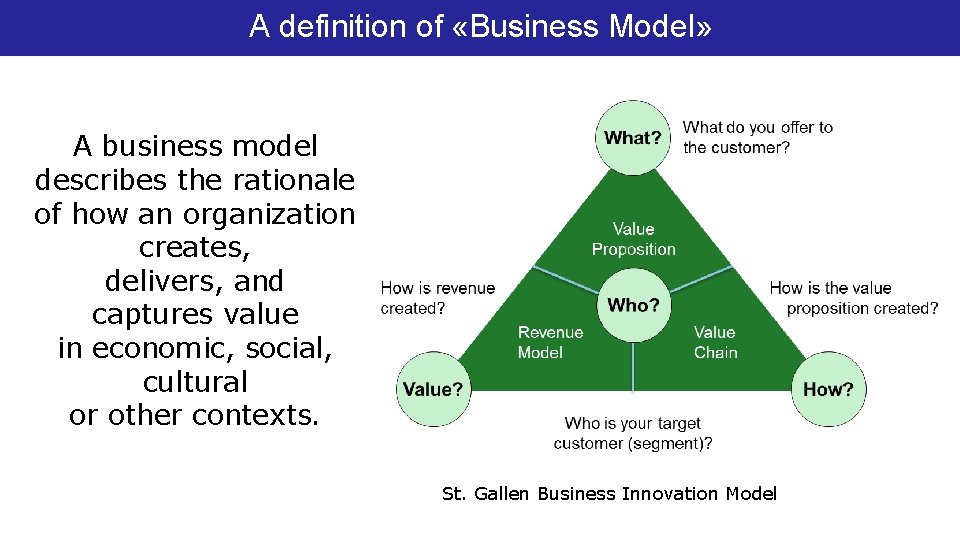
A definition of «Business Model» A business model describes the rationale of how an organization creates, delivers, and captures value in economic, social, cultural or other contexts. St. Gallen Business Innovation Model
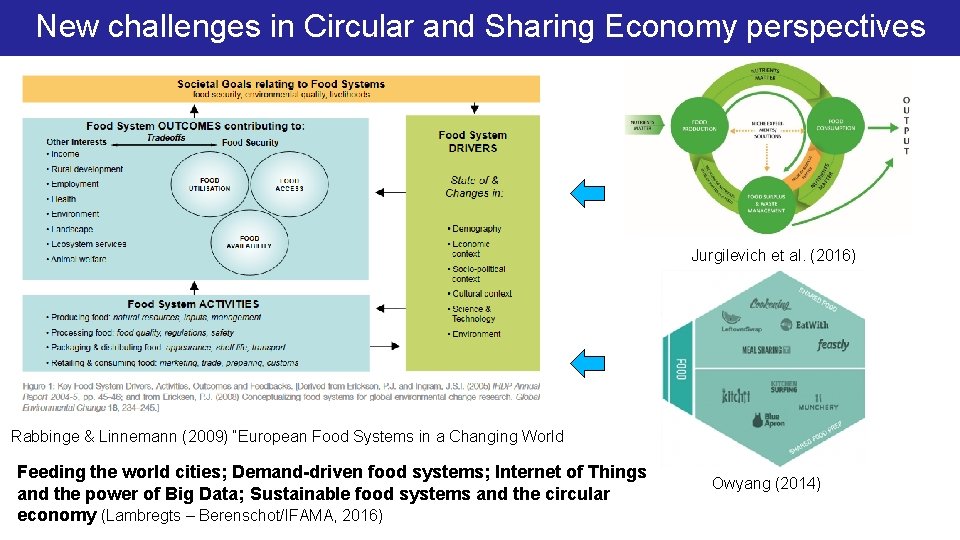
New challenges in Circular and Sharing Economy perspectives Jurgilevich et al. (2016) Rabbinge & Linnemann (2009) “European Food Systems in a Changing World Feeding the world cities; Demand-driven food systems; Internet of Things and the power of Big Data; Sustainable food systems and the circular economy (Lambregts – Berenschot/IFAMA, 2016) Owyang (2014)
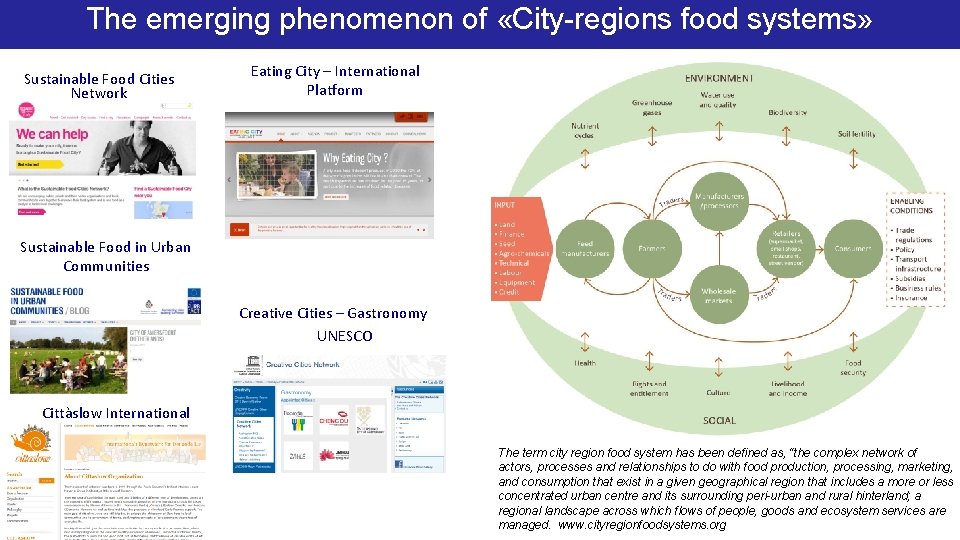
The emerging phenomenon of «City-regions food systems» Sustainable Food Cities Network Eating City – International Platform Sustainable Food in Urban Communities Creative Cities – Gastronomy UNESCO Cittàslow International The term city region food system has been defined as, “the complex network of actors, processes and relationships to do with food production, processing, marketing, and consumption that exist in a given geographical region that includes a more or less concentrated urban centre and its surrounding peri-urban and rural hinterland; a regional landscape across which flows of people, goods and ecosystem services are managed. www. cityregionfoodsystems. org
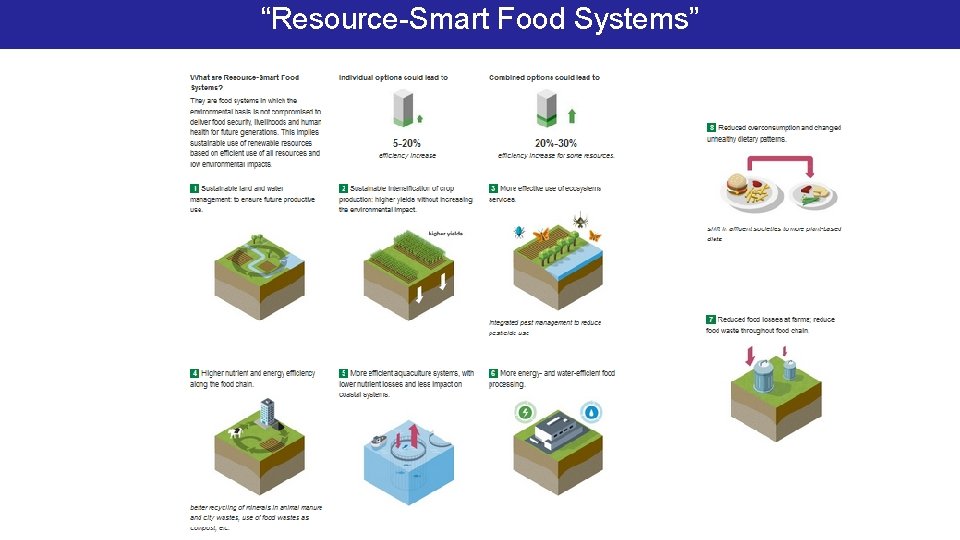
“Resource-Smart Food Systems”
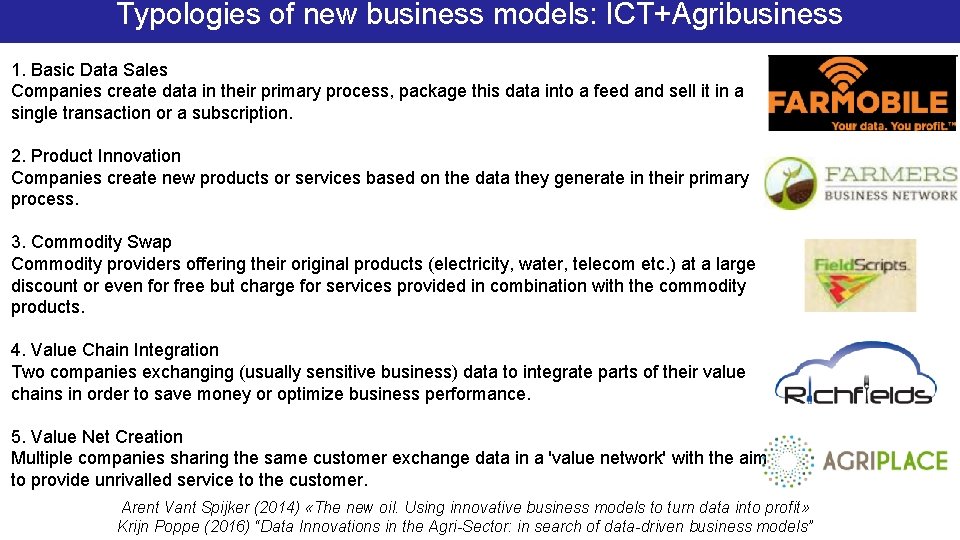
Typologies of new business models: ICT+Agribusiness 1. Basic Data Sales Companies create data in their primary process, package this data into a feed and sell it in a single transaction or a subscription. 2. Product Innovation Companies create new products or services based on the data they generate in their primary process. 3. Commodity Swap Commodity providers offering their original products (electricity, water, telecom etc. ) at a large discount or even for free but charge for services provided in combination with the commodity products. 4. Value Chain Integration Two companies exchanging (usually sensitive business) data to integrate parts of their value chains in order to save money or optimize business performance. 5. Value Net Creation Multiple companies sharing the same customer exchange data in a 'value network' with the aim to provide unrivalled service to the customer. Arent Vant Spijker (2014) «The new oil. Using innovative business models to turn data into profit» Krijn Poppe (2016) “Data Innovations in the Agri-Sector: in search of data-driven business models”
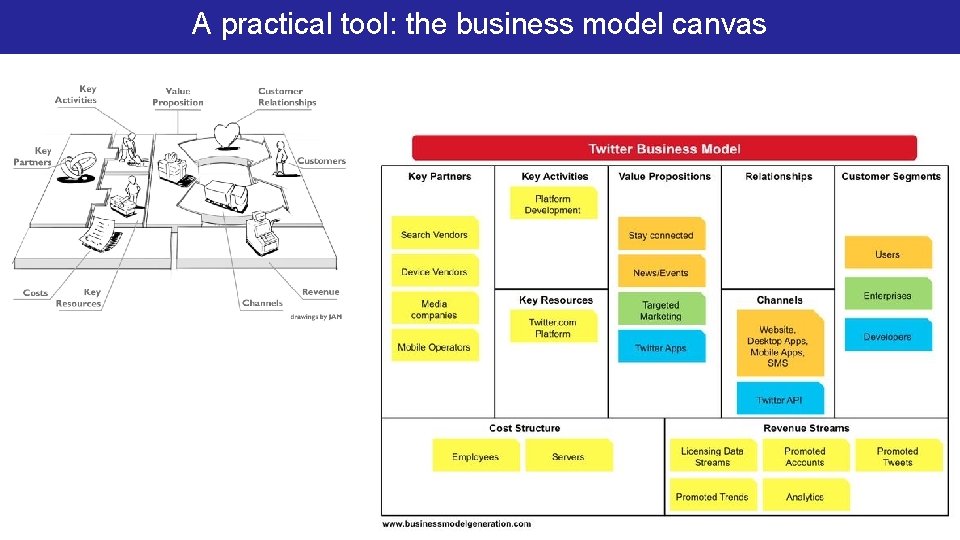
A practical tool: the business model canvas
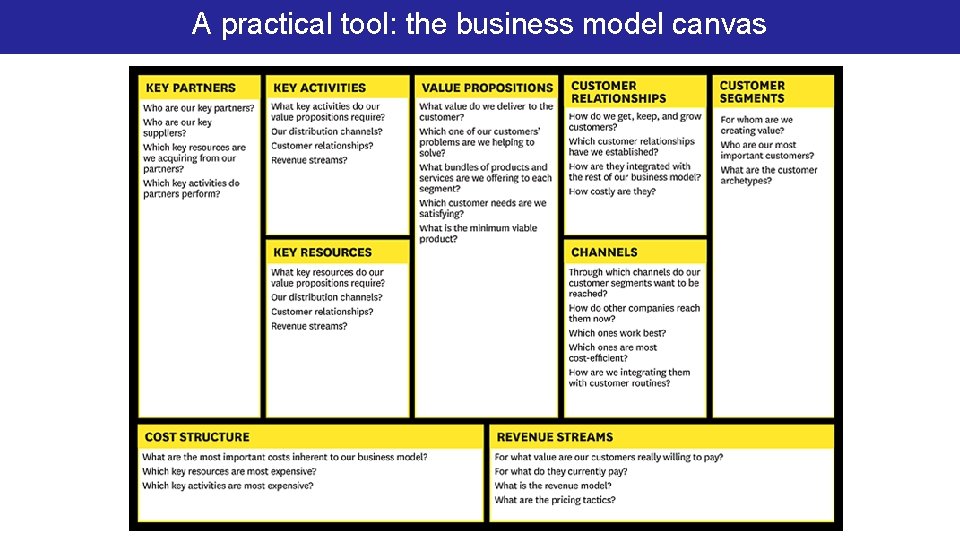
A practical tool: the business model canvas
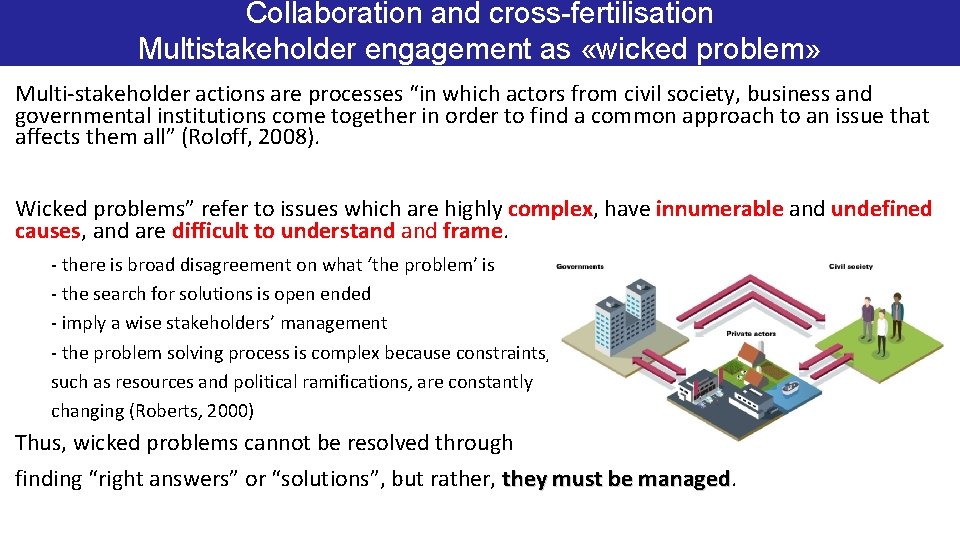
Collaboration and cross-fertilisation Multistakeholder engagement as «wicked problem» Multi-stakeholder actions are processes “in which actors from civil society, business and governmental institutions come together in order to find a common approach to an issue that affects them all” (Roloff, 2008). Wicked problems” refer to issues which are highly complex, have innumerable and undefined causes, and are difficult to understand frame. - there is broad disagreement on what ‘the problem’ is - the search for solutions is open ended - imply a wise stakeholders’ management - the problem solving process is complex because constraints, such as resources and political ramifications, are constantly changing (Roberts, 2000) Thus, wicked problems cannot be resolved through finding “right answers” or “solutions”, but rather, they must be managed
THANKS! For further info: E-mail: alessio. cavicchi@unimc. it Skype: alessio. cavicchi
- Slides: 12