
New approaches to capacity development for better data
New approaches to capacity development for better data: How to scale up innovation? PARIS-UNSD Conference| 13 -14 January 2020 OECD, Paris Session 1: Introducing new approaches to statistical capacity development Dr. Stephan Klingebiel UNDP Seoul Policy Centre References to a joint study with Niels Keijzer / DIE
Starting points • High potential benefits of data (revolution) (improved decision-making, etc. ). Ex. : Only eight of 54 African countries have official birth registries. • The benefits of the data revolution extend to different groups of people, social movements, institutions, businesses and countries. Many people and countries do not access these positive benefits. To a large extent benefits depend on levels of development and income. • The most important driving forces to shape the data revolution are domestic (legal) frameworks and public policies in all regions of the world. External support cannot compensate for absent domestic leadership and investment. • Especially in low income countries and lower-middle income countries and to some extent in upper-middle income countries we can observe two constraining factors in this regard: capacities and funding.
• Significant ODA (Official Development Assistance) funding gap for crucial SDG data: Initiatives like the new Data Financing Facility and “doubling financial support to statistics to 0. 7% of ODA per year” are crucial. • Need to relaunch and revitalize efforts to make development cooperation in support of data and statistics more effective. Road to Bern • Evaluations point to a need to widen the scope of interventions, but also point to opportunities for improving how they are designed, implemented and coordinated.
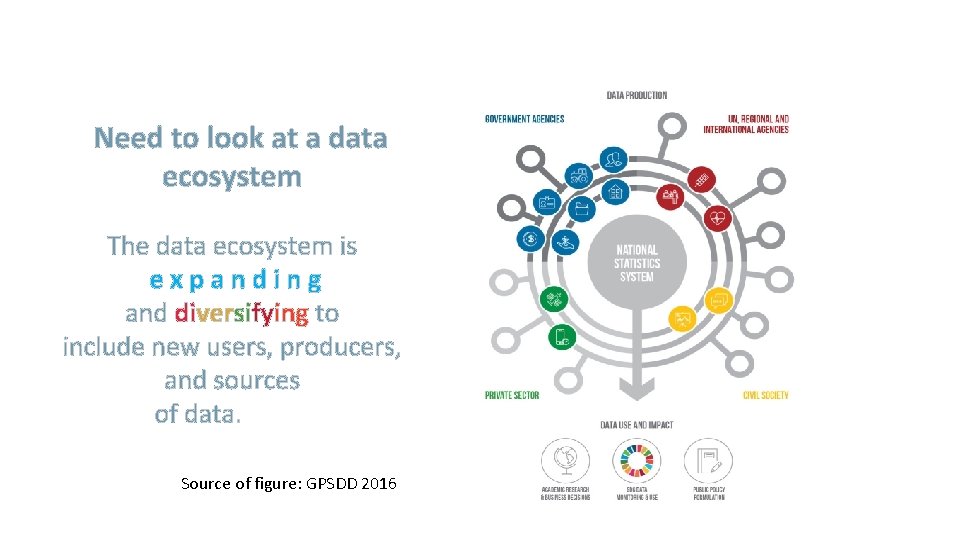
Twe he data ecosystem is n. Need to look at a data ecosystem The data ecosystem is expanding and diversifying to include new users, producers, and sources of data. Source of figure: GPSDD 2016
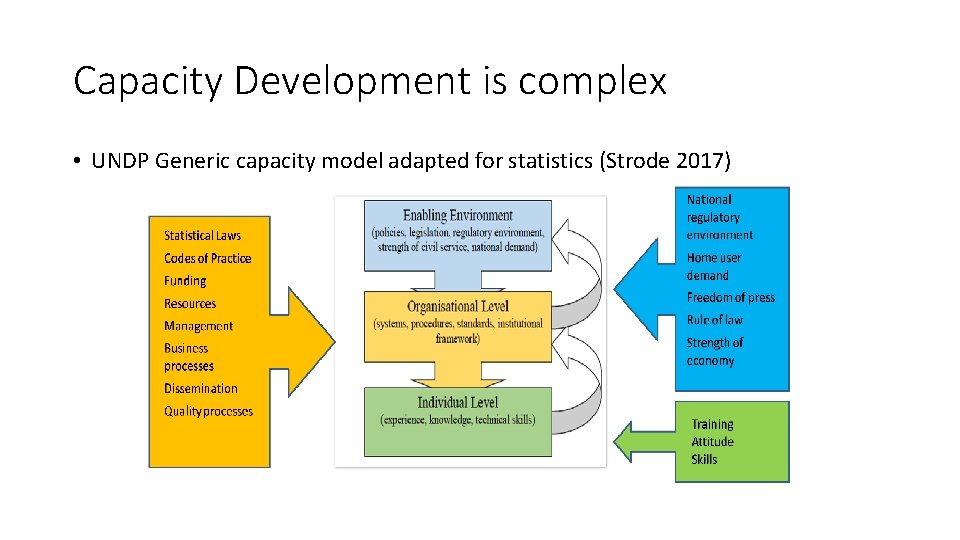
Capacity Development is complex • UNDP Generic capacity model adapted for statistics (Strode 2017)
Most important elements of a strategy • Justification and narrative • Political-economy perspective • Evidence-based and grounded in national development forums • Aid modalities

Justification and narrative A new strategy is providing a new justification for data and statistics from systemic perspectives – it is is about a fundamental shift in terms of a narrative. Traditional approaches New approach Technical focus on data & Topic not well linked to overall development strategy A functioning data ecosystem is crucial for sustainable development processes from an overall perspective
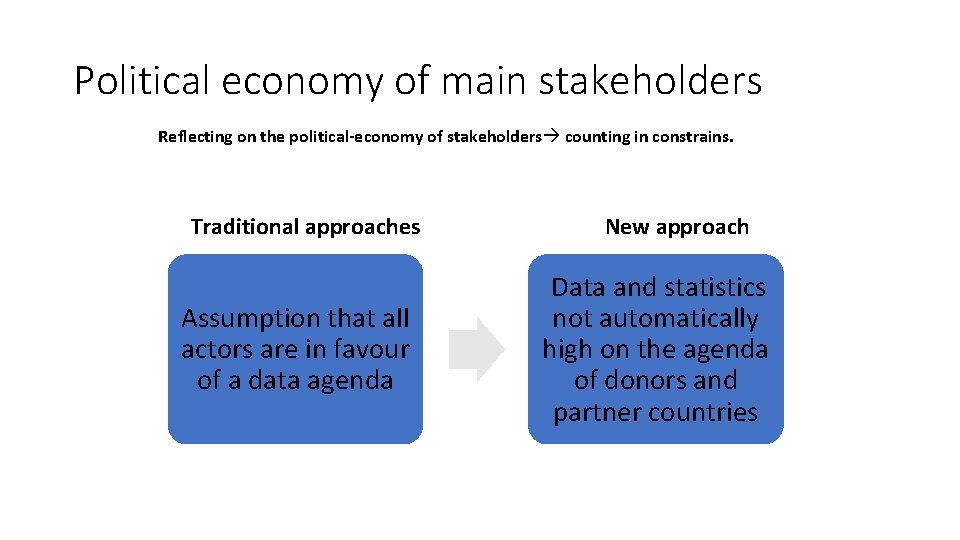
Political economy of main stakeholders Reflecting on the political-economy of stakeholders counting in constrains. Traditional approaches Assumption that all actors are in favour of a data agenda New approach Data and statistics not automatically high on the agenda of donors and partner countries
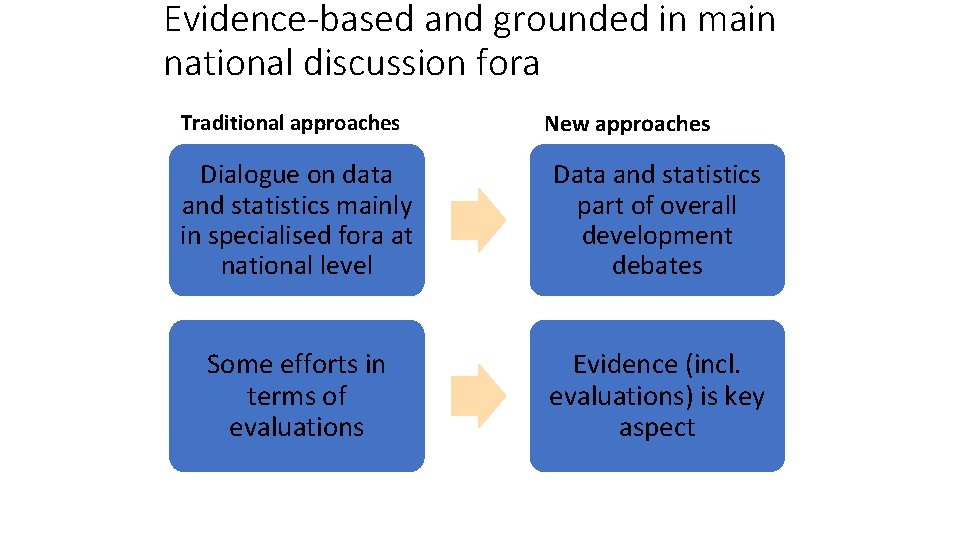
Evidence-based and grounded in main national discussion fora Traditional approaches New approaches Dialogue on data and statistics mainly in specialised fora at national level Data and statistics part of overall development debates Some efforts in terms of evaluations Evidence (incl. evaluations) is key aspect
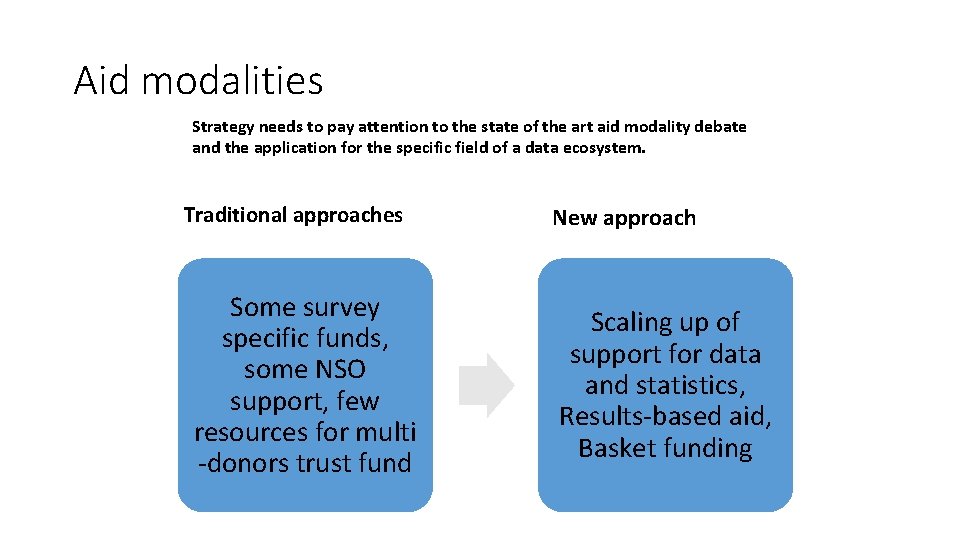
Aid modalities Strategy needs to pay attention to the state of the art aid modality debate and the application for the specific field of a data ecosystem. Traditional approaches Some survey specific funds, some NSO support, few resources for multi -donors trust fund New approach Scaling up of support for data and statistics, Results-based aid, Basket funding

Thank you!
- Slides: 11