
Neutron radiation hardness tests of silicon microstrip detectors

- Slides: 21
Neutron radiation hardness tests of silicon micro-strip detectors for CBM STS at KRI cyclotron V. Jakovlev, L. Lebedev and L. Solin V. G. Khlopin Radium Institute
Plan of the presentation n n n Be-target neutron irradiations Reasons of replacement Be(p, n) reaction with D(d, n) one D 2 -gas target D(d, n) neutron spectra calculations Effect of D 2 -gas density reduction Neutron hardness tests of SMSD
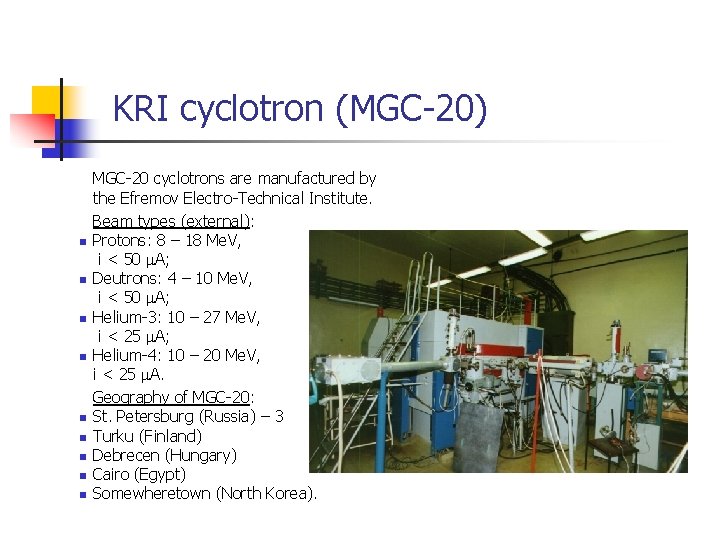
KRI cyclotron (MGC-20) n n n n n MGC-20 cyclotrons are manufactured by the Efremov Electro-Technical Institute. Beam types (external): Protons: 8 – 18 Me. V, i < 50 m. A; Deutrons: 4 – 10 Me. V, i < 50 m. A; Helium-3: 10 – 27 Me. V, i < 25 m. A; Helium-4: 10 – 20 Me. V, i < 25 m. A. Geography of MGC-20: St. Petersburg (Russia) – 3 Turku (Finland) Debrecen (Hungary) Cairo (Egypt) Somewheretown (North Korea).
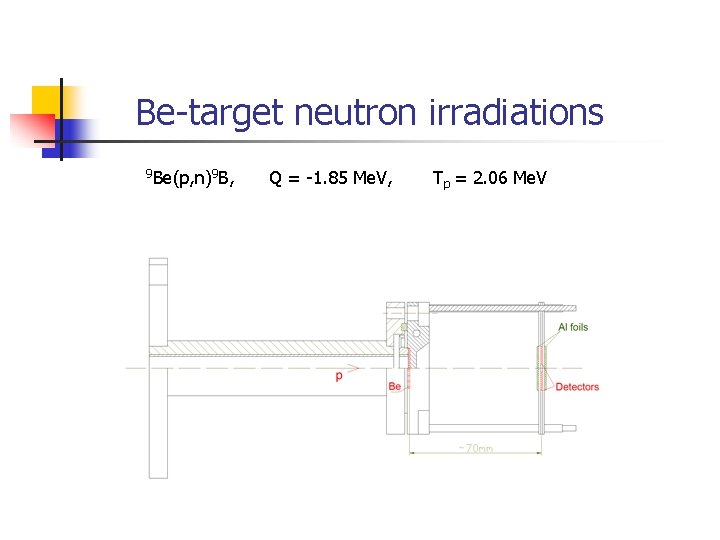
Be-target neutron irradiations 9 Be(p, n)9 B, Q = -1. 85 Me. V, Tp = 2. 06 Me. V
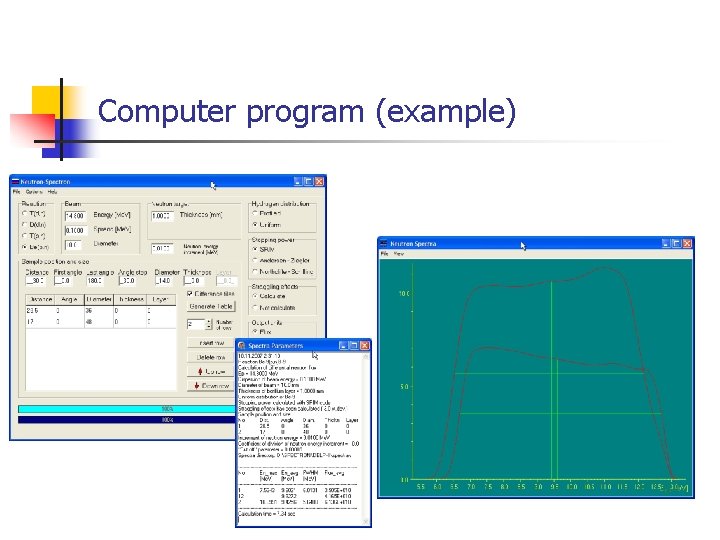
Computer program (example)
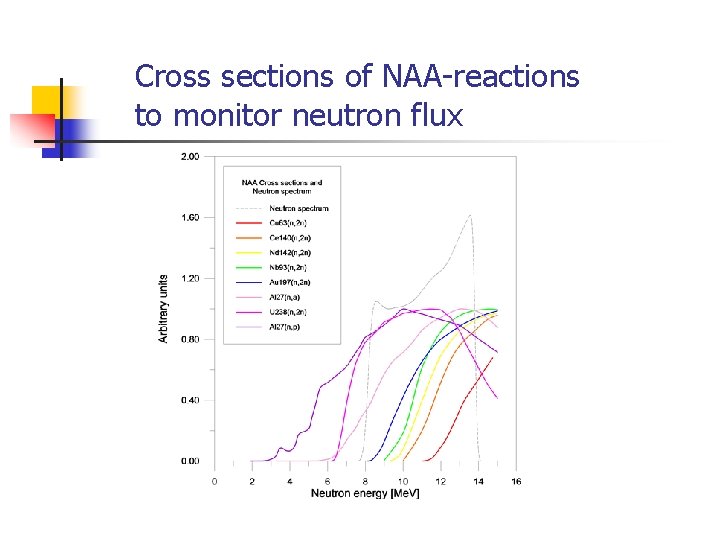
Cross sections of NAA-reactions to monitor neutron flux
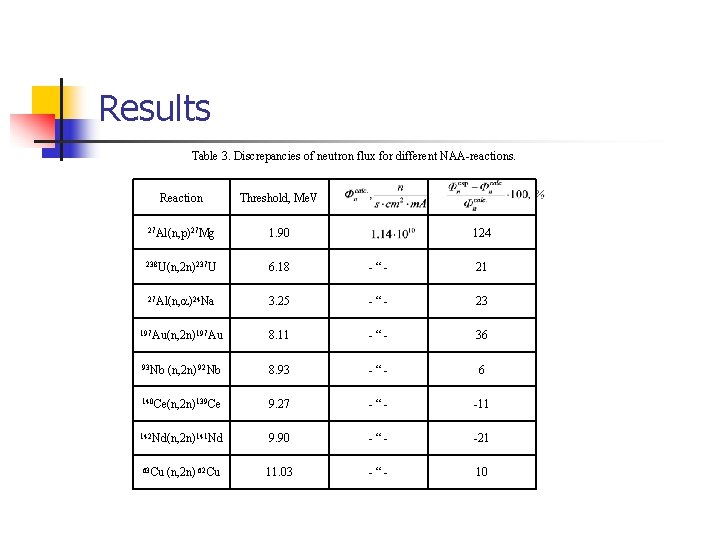
Results Table 3. Discrepancies of neutron flux for different NAA-reactions. Reaction Threshold, Me. V 27 Al(n, p)27 Mg 1. 90 238 U(n, 2 n)237 U 6. 18 -“- 21 27 Al(n, a)24 Na 3. 25 -“- 23 197 Au(n, 2 n)197 Au 8. 11 -“- 36 93 Nb (n, 2 n) 92 Nb 8. 93 -“- 6 140 Ce(n, 2 n)139 Ce 9. 27 -“- -11 142 Nd(n, 2 n)141 Nd 9. 90 -“- -21 11. 03 -“- 10 63 Cu (n, 2 n) 62 Cu 124
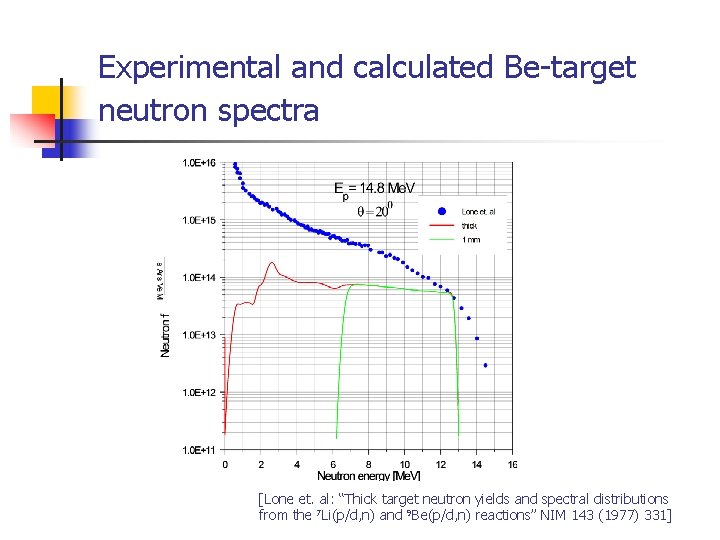
Experimental and calculated Be-target neutron spectra [Lone et. al: “Thick target neutron yields and spectral distributions from the 7 Li(p/d, n) and 9 Be(p/d, n) reactions” NIM 143 (1977) 331]
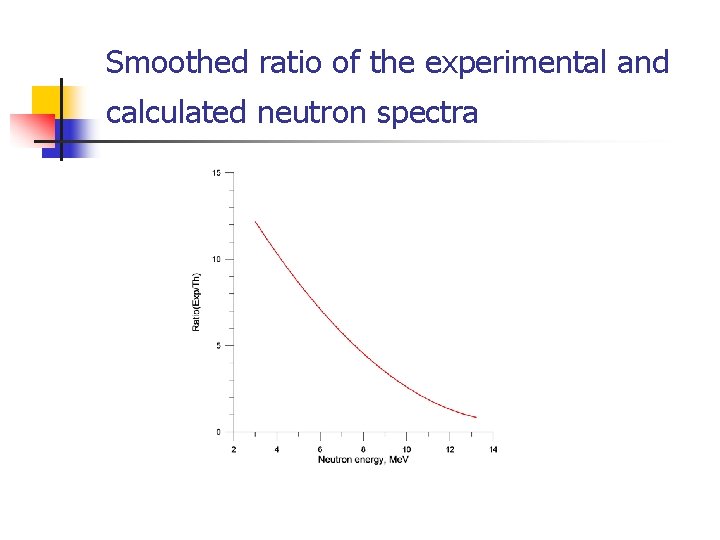
Smoothed ratio of the experimental and calculated neutron spectra
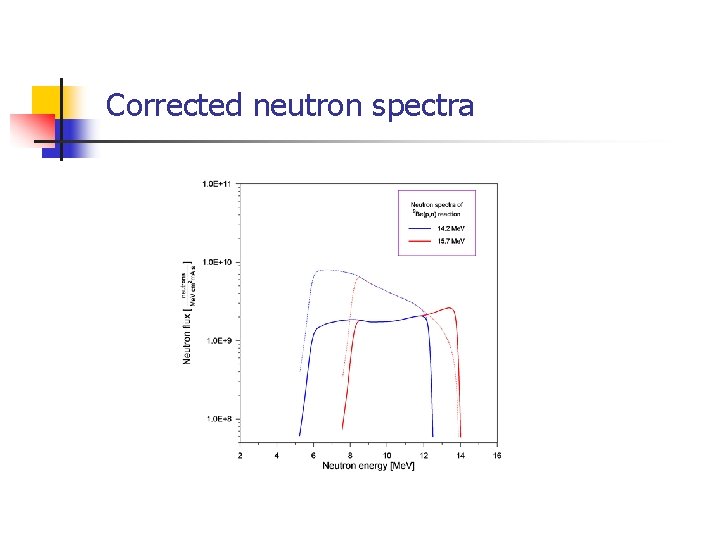
Corrected neutron spectra
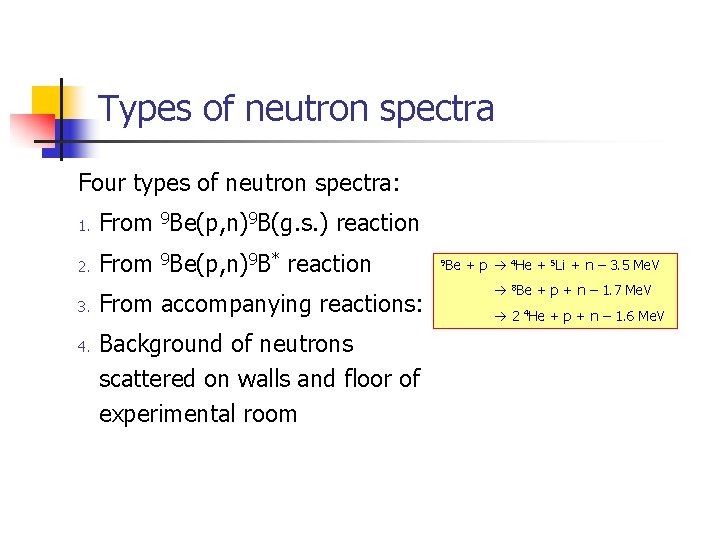
Types of neutron spectra Four types of neutron spectra: 1. From 9 Be(p, n)9 B(g. s. ) reaction 2. From 9 Be(p, n)9 B* reaction 3. 4. From accompanying reactions: Background of neutrons scattered on walls and floor of experimental room 9 Be + p 4 He + 5 Li + n – 3. 5 Me. V 8 Be + p + n – 1. 7 Me. V 2 4 He + p + n – 1. 6 Me. V
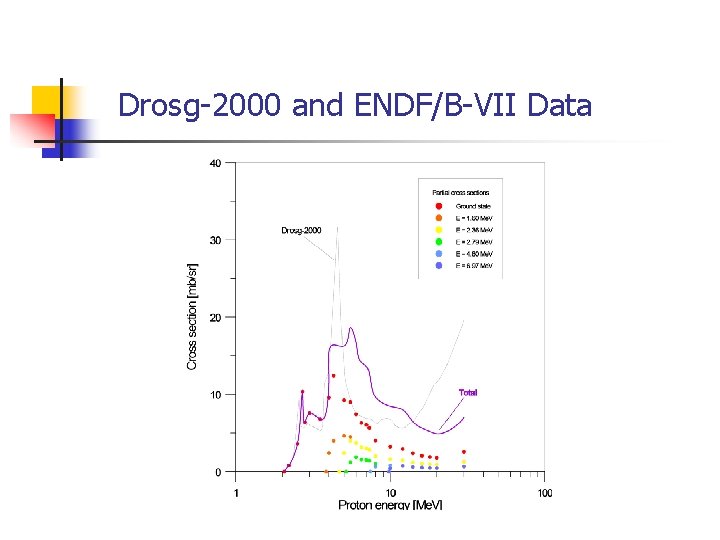
Drosg-2000 and ENDF/B-VII Data
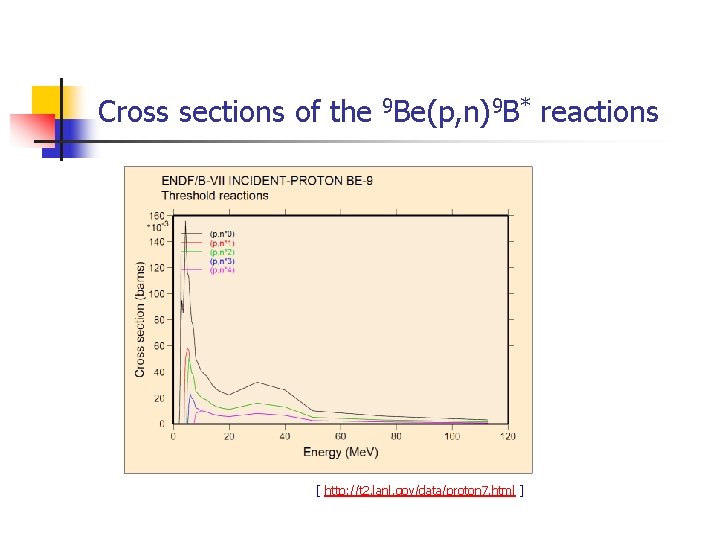
Cross sections of the 9 Be(p, n)9 B* reactions [ http: //t 2. lanl. gov/data/proton 7. html ]
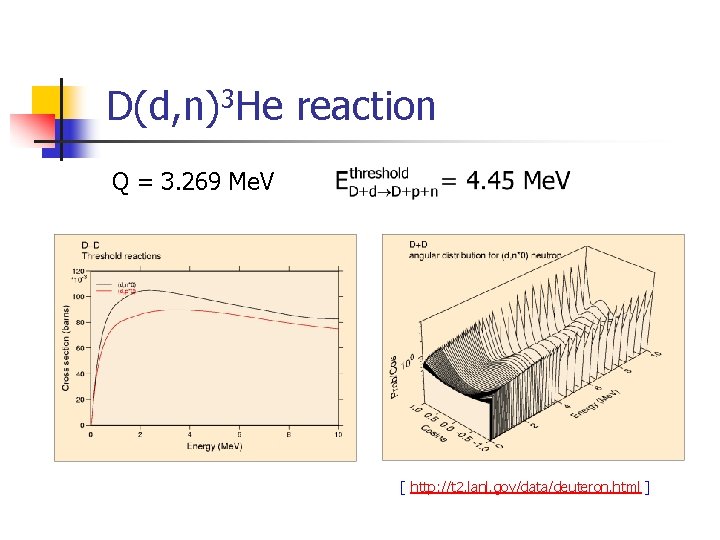
D(d, n)3 He reaction Q = 3. 269 Me. V [ http: //t 2. lanl. gov/data/deuteron. html ]
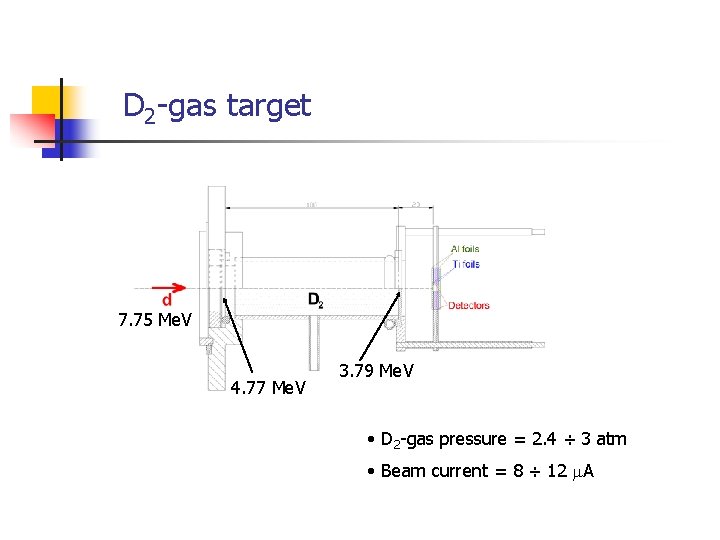
D 2 -gas target 7. 75 Me. V 4. 77 Me. V 3. 79 Me. V • D 2 -gas pressure = 2. 4 ÷ 3 atm • Beam current = 8 ÷ 12 m. A
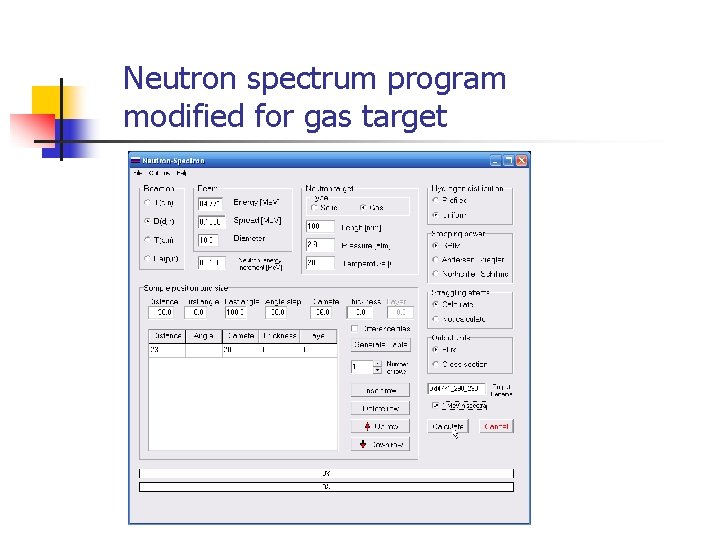
Neutron spectrum program modified for gas target
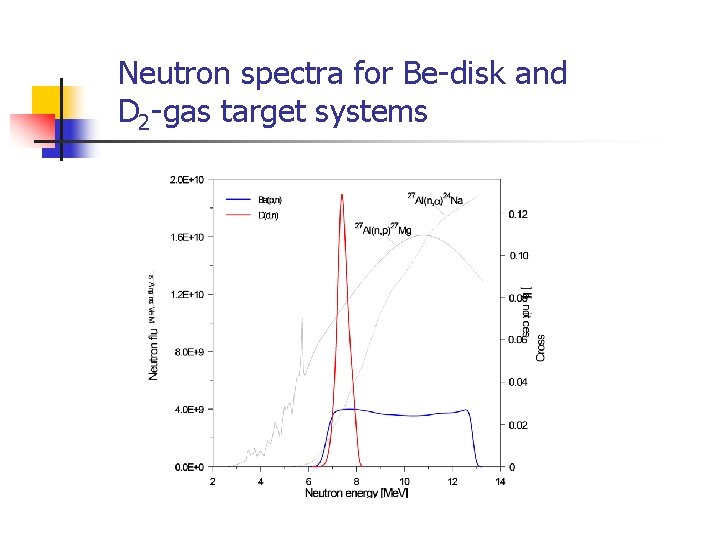
Neutron spectra for Be-disk and D 2 -gas target systems
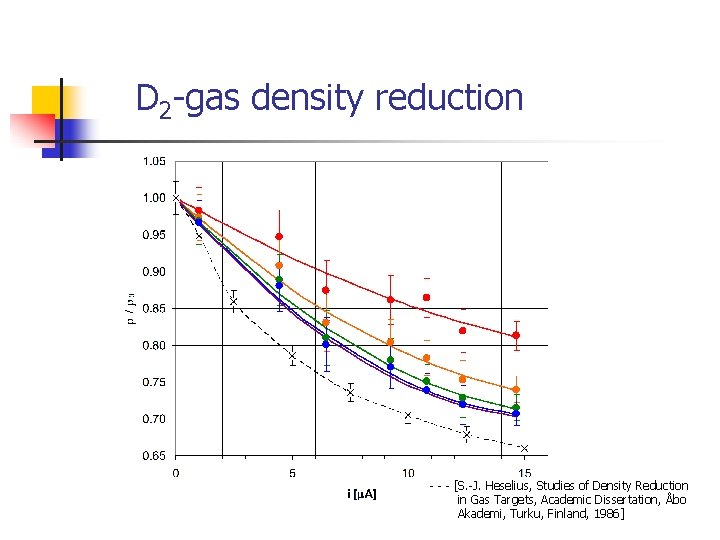
D 2 -gas density reduction - - - [S. -J. Heselius, Studies of Density Reduction in Gas Targets, Academic Dissertation, Åbo Akademi, Turku, Finland, 1986]
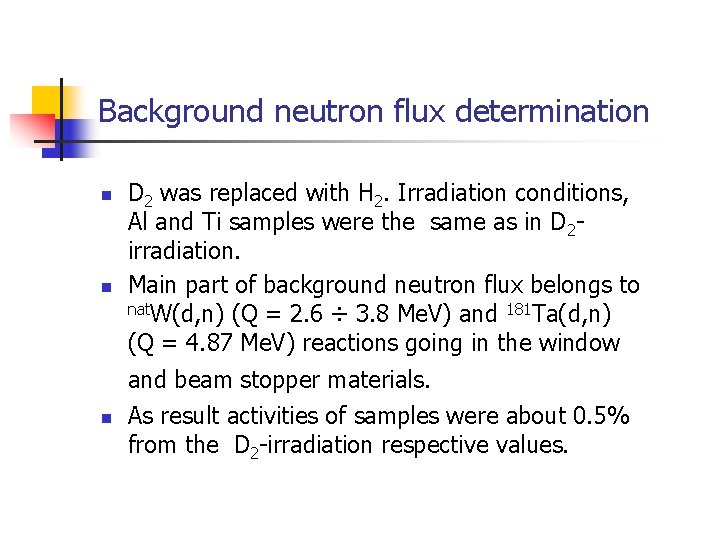
Background neutron flux determination n n D 2 was replaced with H 2. Irradiation conditions, Al and Ti samples were the same as in D 2 irradiation. Main part of background neutron flux belongs to nat. W(d, n) (Q = 2. 6 ÷ 3. 8 Me. V) and 181 Ta(d, n) (Q = 4. 87 Me. V) reactions going in the window and beam stopper materials. n As result activities of samples were about 0. 5% from the D 2 -irradiation respective values.
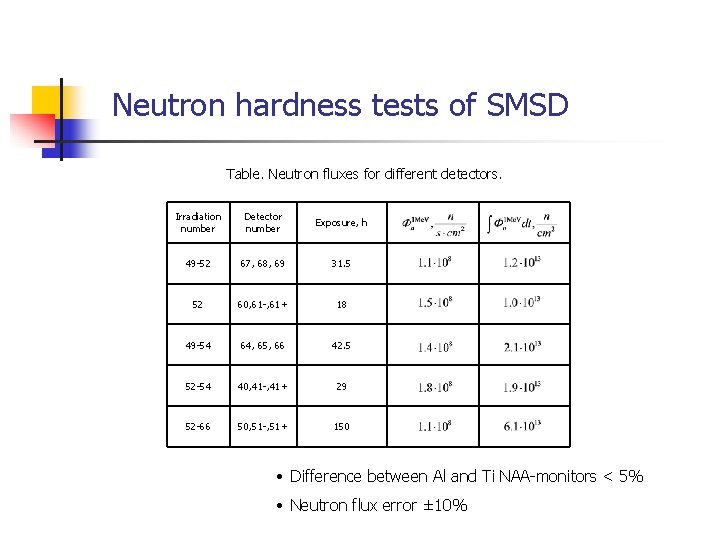
Neutron hardness tests of SMSD Table. Neutron fluxes for different detectors. Irradiation number Detector number Exposure, h 49 -52 67, 68, 69 31. 5 52 60, 61 -, 61+ 18 49 -54 64, 65, 66 42. 5 52 -54 40, 41 -, 41+ 29 52 -66 50, 51 -, 51+ 150 • Difference between Al and Ti NAA-monitors < 5% • Neutron flux error ± 10%