
Neutralizing Antibodies Derived from the B Cells of
“Neutralizing Antibodies Derived from the B Cells of 1918 Influenza Pandemic Survivors” (Yu et. al) Daniel Greenberg
The Influenza Virus • Negative sense single-strand segmented RNA virus • Human influenza A and B cause seasonal epidemics (influenza C causes minor respiratory epidemics) • Two main surface receptors: Hemagglutinin (HA) and neuraminidase http: //micro. magnet. fsu. edu/cells/viruses/images/influenzafigure 1. jpg
1918 Spanish Flu • Influenza A H 1 N 1 virus of avian origin • Most devastating epidemic in recorded world history • Killed 20 -40 million people • Average U. S. life span lowered by 10 years http: //www. whale. to/a/spanishflu. gif
1918 Spanish Flu (cont. ) • Genome recently sequenced (8 genes of interest) • Allows for molecular-level research (e. g. antibody-surface antigen interaction), not just serology http: //www. proteinsciences. com/Catalog/files/assets/basichtml/page 11. html
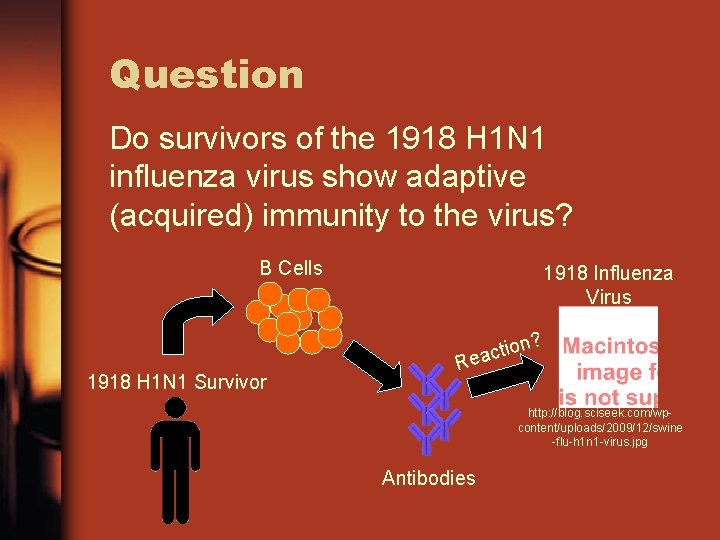
Question Do survivors of the 1918 H 1 N 1 influenza virus show adaptive (acquired) immunity to the virus? B Cells 1918 Influenza Virus ion t c a e 1918 H 1 N 1 Survivor ? R http: //blog. sciseek. com/wpcontent/uploads/2009/12/swine -flu-h 1 n 1 -virus. jpg Antibodies
Methods 1. Create monoclonal antibodies (m. Abs) 2. Genetically sequence antibodies of interest 3. ELISA test 4. Hemagglutination inhibition assay (HAI) 5. Virus neutralization assay 6. Classify escape mutants and determine the m. Abs to which they have resistance 7. Test for therapeutic efficacy using in vivo methods
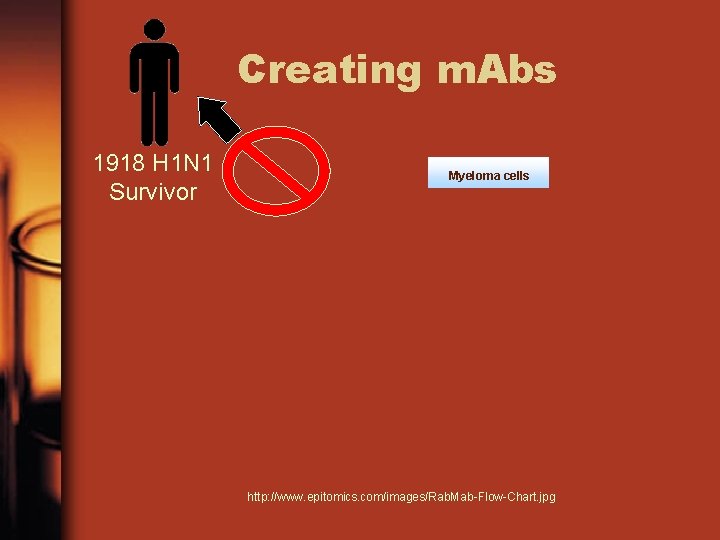
Creating m. Abs 1918 H 1 N 1 Survivor Myeloma cells http: //www. epitomics. com/images/Rab. Mab-Flow-Chart. jpg
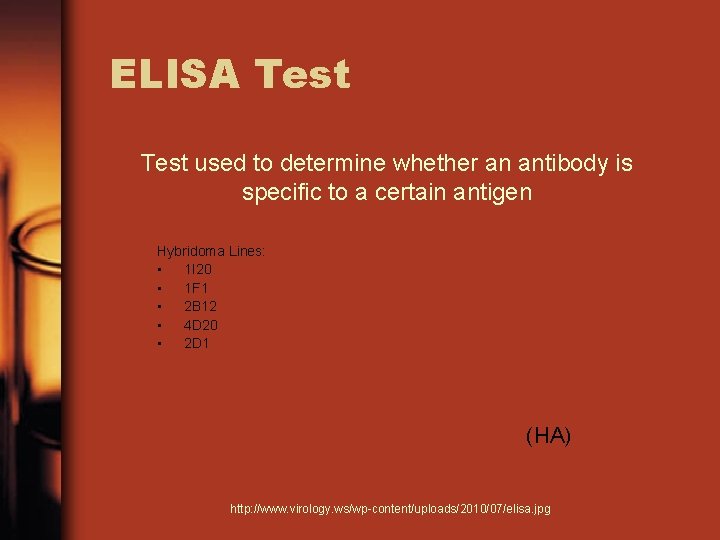
ELISA Test used to determine whether an antibody is specific to a certain antigen Hybridoma Lines: • 1 I 20 • 1 F 1 • 2 B 12 • 4 D 20 • 2 D 1 (HA) http: //www. virology. ws/wp-content/uploads/2010/07/elisa. jpg
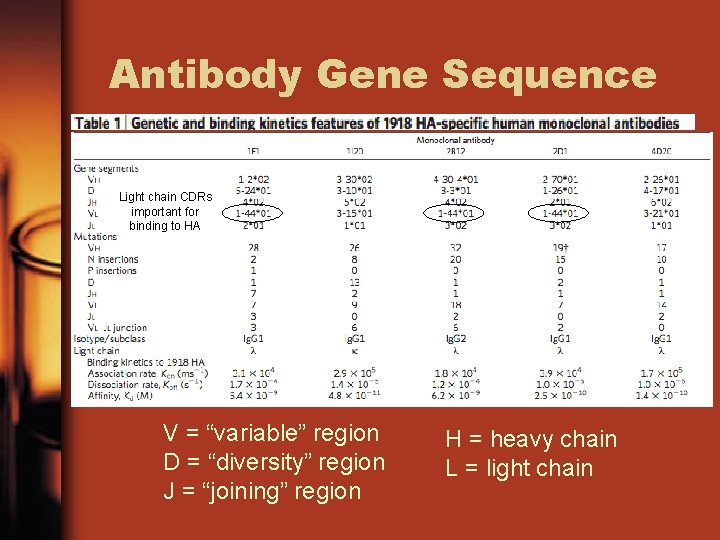
Antibody Gene Sequence Light chain CDRs important for binding to HA V = “variable” region D = “diversity” region J = “joining” region H = heavy chain L = light chain
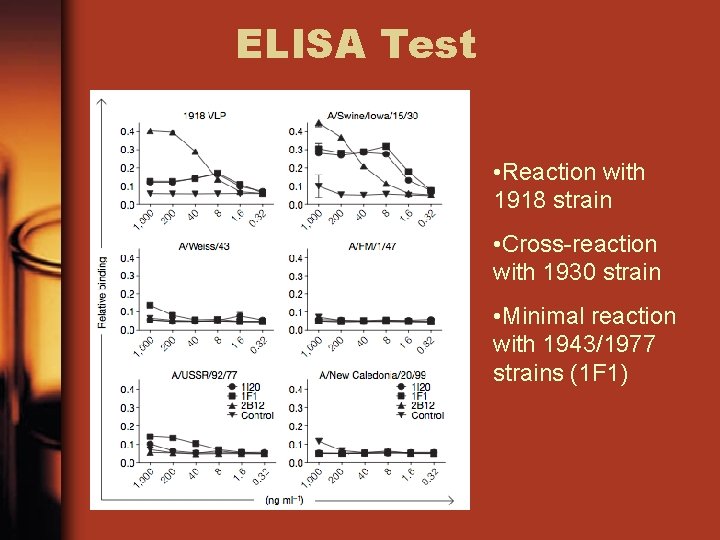
ELISA Test • Reaction with 1918 strain • Cross-reaction with 1930 strain • Minimal reaction with 1943/1977 strains (1 F 1)
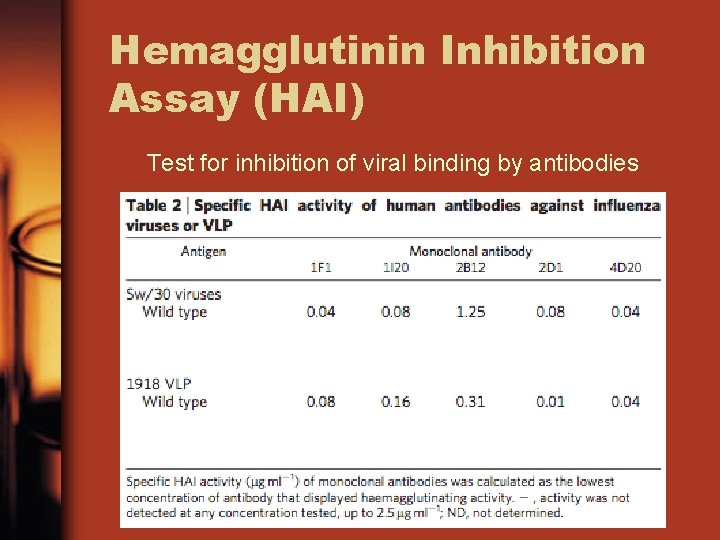
Hemagglutinin Inhibition Assay (HAI) Test for inhibition of viral binding by antibodies
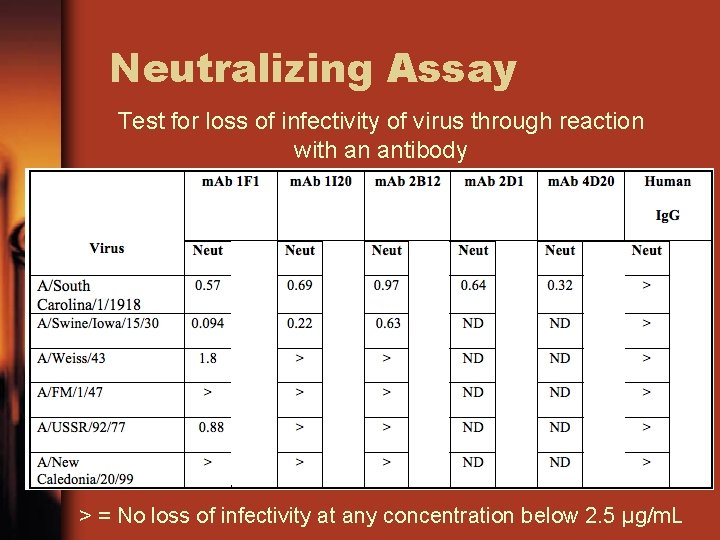
Neutralizing Assay Test for loss of infectivity of virus through reaction with an antibody > = No loss of infectivity at any concentration below 2. 5 µg/m. L
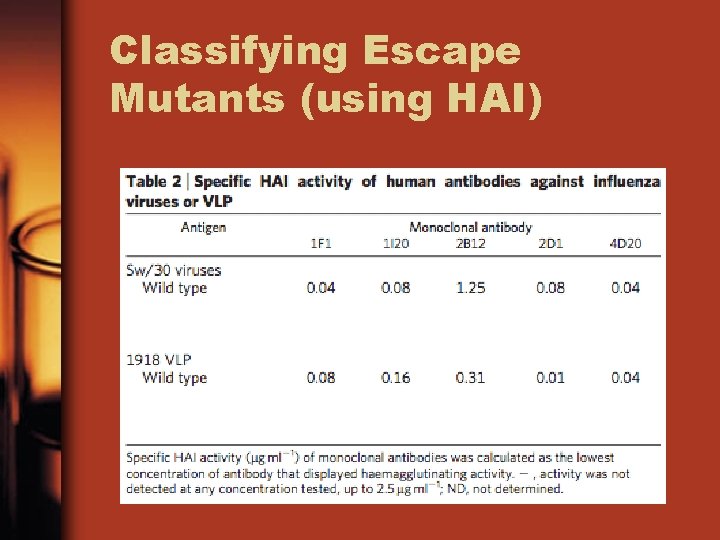
Classifying Escape Mutants (using HAI)
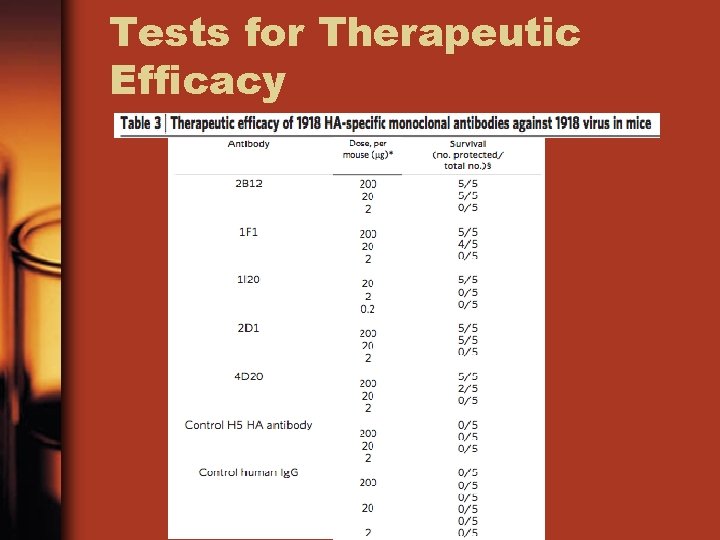
Tests for Therapeutic Efficacy
Implications • B cells survive for life of host • Memory B cells can also be longlived • Higher prevalence of viruses related to 1918 H 1 N 1 may have led to longterm immunity • High somatic mutation rate, as seen in m. Abs, is associated with strong binding constants and high potency
Limitations • Difficult to tell if isolated m. Abs were first stimulated by the 1918 virus • Limited sample size (only 32 subjects), so may not be representative of entire population http: //www. chromatographytoday. com/assets/file_store/pr _files/22000/images/thumbnails/360 w-new-antibody--canneutralise-influenza-viruses-in-a-unique-way_3194_801450250_0_0_14027843_300. jpg
Future Studies • How does the 1 F 1 m. Ab bind to the 1977 strain if that strain’s Sb antigenic site is so genetically different from that of the 1918 strain? • Further investigation into these m. Abs could lead to development of therapies for a 1918 -like virus • Antibodies isolated from a person may give insight into the diseases they have been exposed to in their lifetime

References http: //www. cdc. gov/flu/about/viruses/ty pes. htm http: //virus. stanford. edu/uda/ http: //www. sciencemag. org/content/31 0/5745/28. full http: //pathmicro. med. sc. edu/mayer/igg enetics 2000. htm
- Slides: 18