
NEUTRAL ATOM IMAGING OF THE TERRESTRIAL MAGNETOSPHERE Earl
- Slides: 51
NEUTRAL ATOM IMAGING OF THE TERRESTRIAL MAGNETOSPHERE Earl Scime (keep the Department of Physics West Virginia coaches, send. University back the University of Michigan October 2010 students)
ACKNOWLEDGEMENTS WVU team – Amy Keesee, Kate Tallaksen, Anna Zaniewski SWRI team – Dave Mc. Comas, Joerg-Micha Jahn, Jerry Goldstein, Phil Valek, Craig Pollock (now at NASA) LANL team – Michelle Thomsen, Herb Funsten, Ruth Skoug, Mike Henderson The Space Physics Community – for the animations and data highlighted throughout this talk.
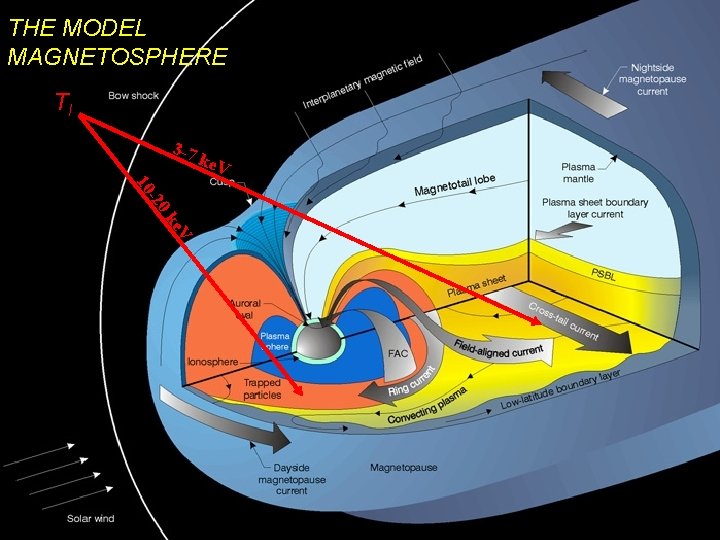
NEUTRAL ATOM IMAGING – THE PHYSICS OF WHERE, WHEN, AND HOW DO IONS GET HOT IN THE MAGNETOSPHERE? • The terrestrial magnetosphere • What can energetic neutral atoms tell us about a hot plasma? • The Medium Energy Neutral Atom imager (MENA) on the Imager for Magnetopause to Auroral Global Exploration (IMAGE), IBEX, and TWINS spacecraft • Comparison of remote and in-situ ion temperature measurements • Evolution of magnetospheric ion temperatures during a large geomagnetic storm • The “quiet” magnetosphere • Implications for magnetospheric physics
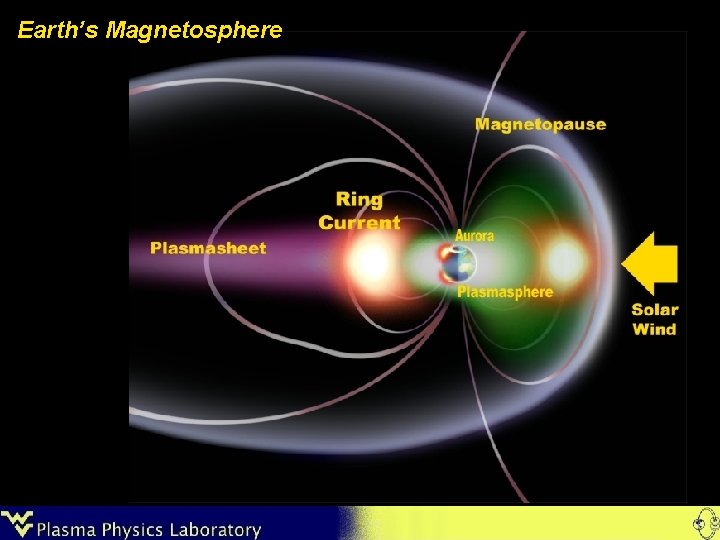
Earth’s Magnetosphere
THE MODEL MAGNETOSPHERE TI 3 -7 ke. V 0 k -2 10
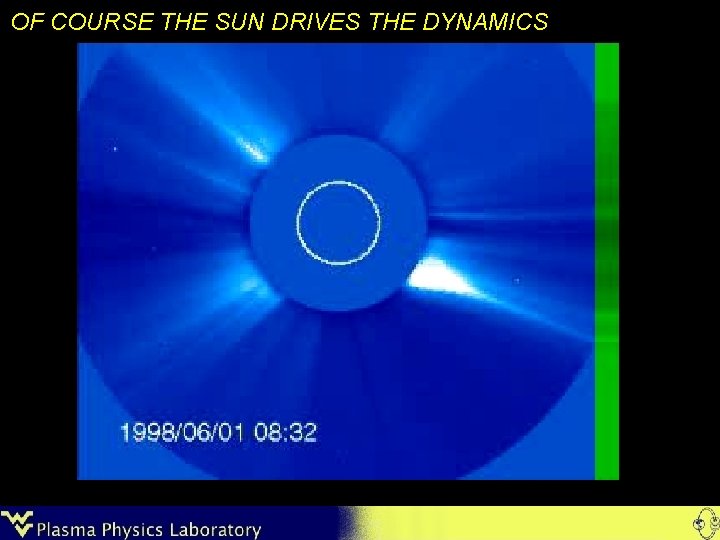
OF COURSE THE SUN DRIVES THE DYNAMICS
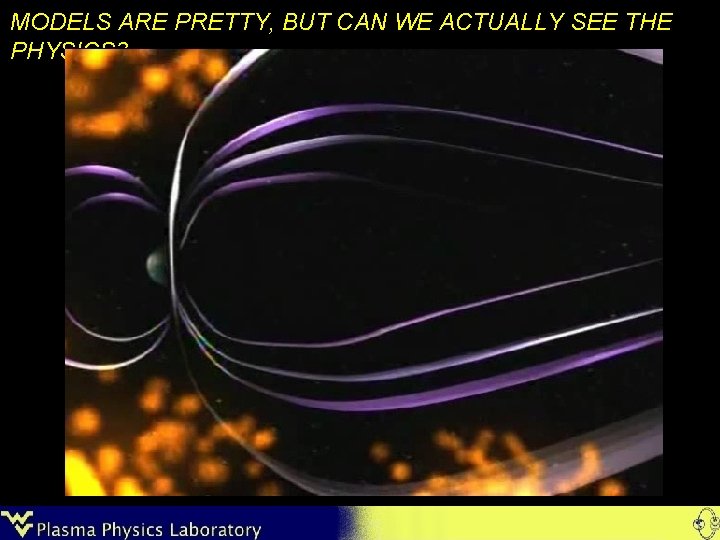
MODELS ARE PRETTY, BUT CAN WE ACTUALLY SEE THE PHYSICS?
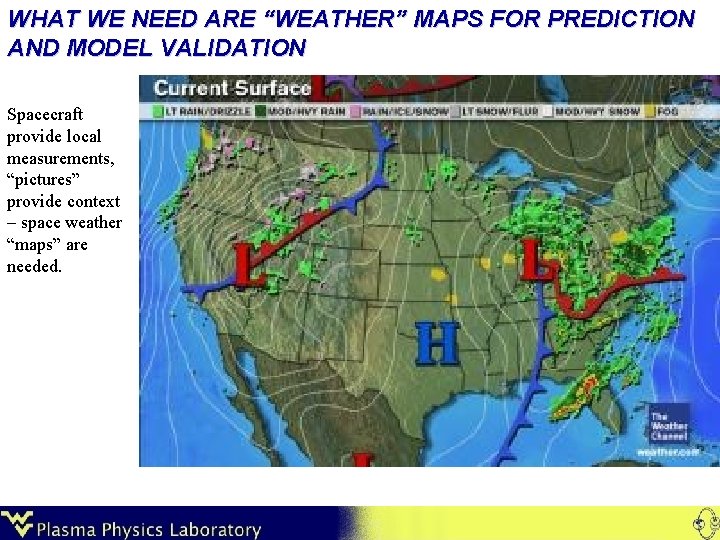
WHAT WE NEED ARE “WEATHER” MAPS FOR PREDICTION AND MODEL VALIDATION Spacecraft provide local measurements, “pictures” provide context – space weather “maps” are needed.
SOME THOUGHTS ON GEOMAGNETIC STORMS AND PREDICTIONS After examining the energy in a typical magnetic storm -" in this eight hours of not very severe magnetic storm as much work must have been done by the sun in sending magnetic waves out in all directions in space as he actually does in four months of his regular heat and light. This result, it seems to me, is absolutely conclusive against the supposition that terrestrial magnetic storms are due to magnetic action of the sun, or to any kind of action taking place within the sun, or in connection with hurricanes in his atmosphere, or anywhere near the sun outside. It seems as if we may also be forced to conclude that the supposed connection between magnetic storms and sunspots is unreal, and that the seeming agreement between the periods has been a mere coincidence. " Lord Kelvin in 1892 (Presidential Address to the Royal Society) Prediction is hard, especially about the future…. Yogi Berra
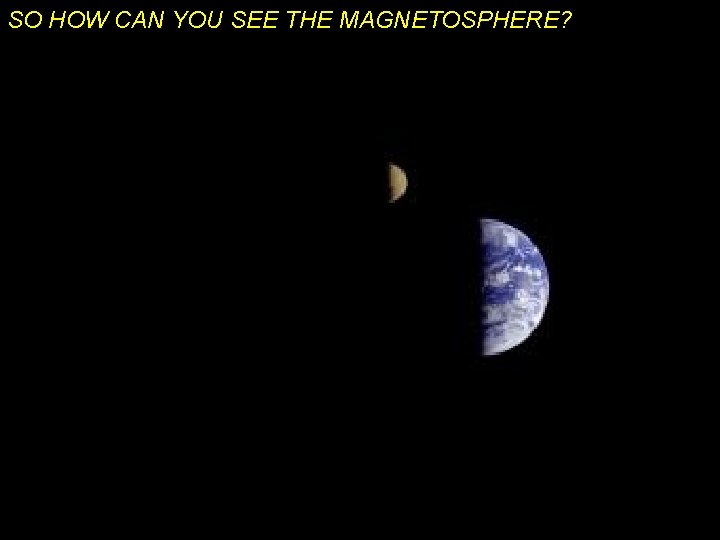
SO HOW CAN YOU SEE THE MAGNETOSPHERE?
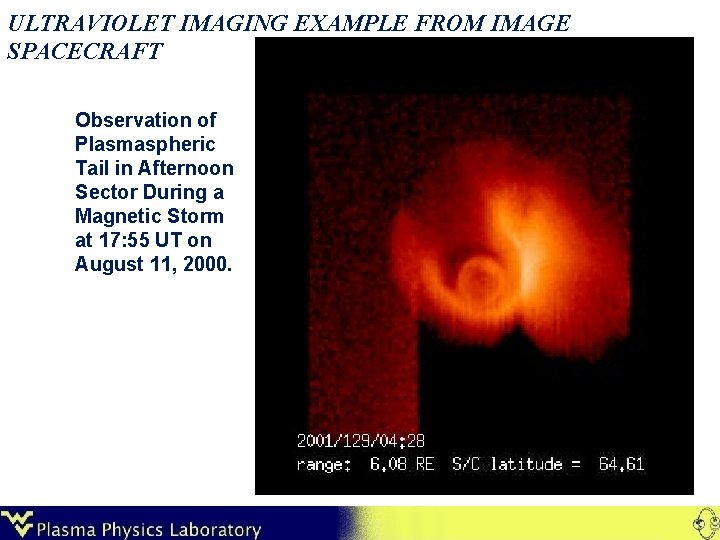
ULTRAVIOLET IMAGING EXAMPLE FROM IMAGE SPACECRAFT Observation of Plasmaspheric Tail in Afternoon Sector During a Magnetic Storm at 17: 55 UT on August 11, 2000.
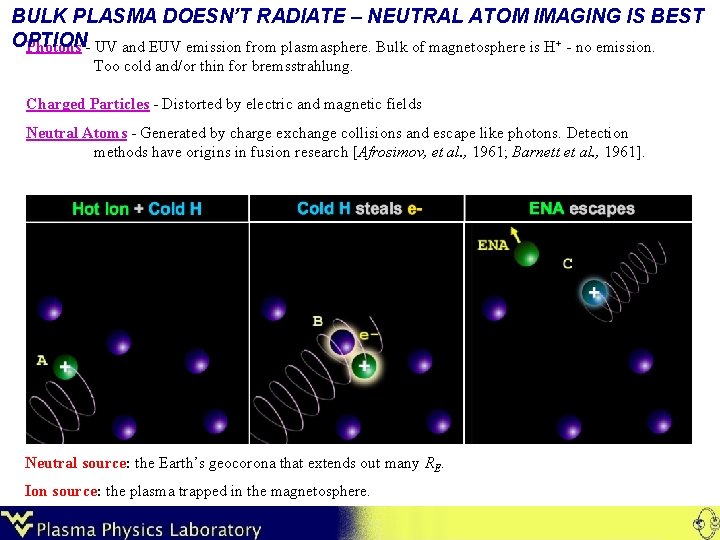
BULK PLASMA DOESN’T RADIATE – NEUTRAL ATOM IMAGING IS BEST OPTION Photons - UV and EUV emission from plasmasphere. Bulk of magnetosphere is H+ - no emission. Too cold and/or thin for bremsstrahlung. Charged Particles - Distorted by electric and magnetic fields Neutral Atoms - Generated by charge exchange collisions and escape like photons. Detection methods have origins in fusion research [Afrosimov, et al. , 1961; Barnett et al. , 1961]. Neutral source: the Earth’s geocorona that extends out many RE. Ion source: the plasma trapped in the magnetosphere.
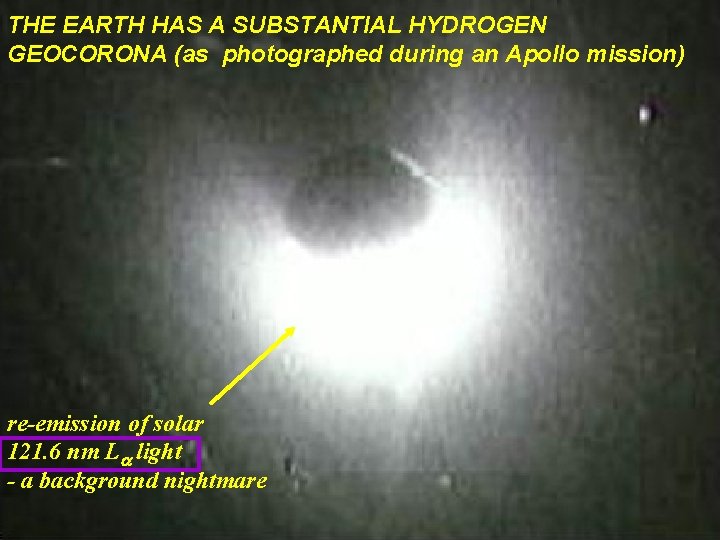
THE EARTH HAS A SUBSTANTIAL HYDROGEN GEOCORONA (as photographed during an Apollo mission) re-emission of solar 121. 6 nm La light - a background nightmare
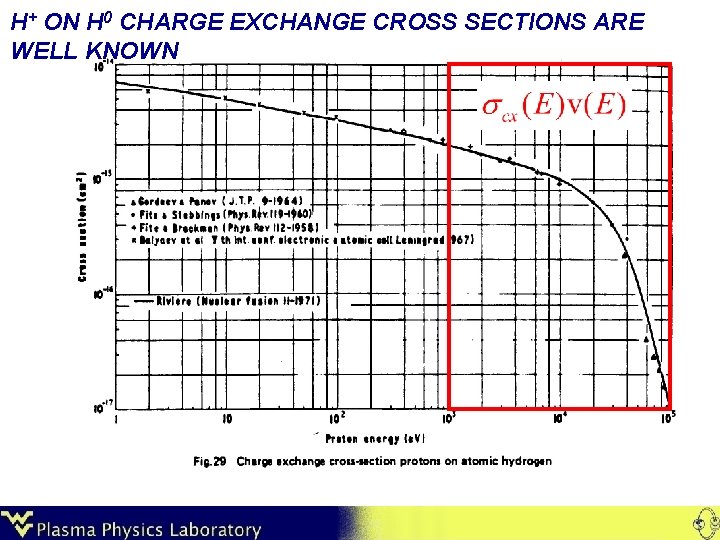
H+ ON H 0 CHARGE EXCHANGE CROSS SECTIONS ARE WELL KNOWN
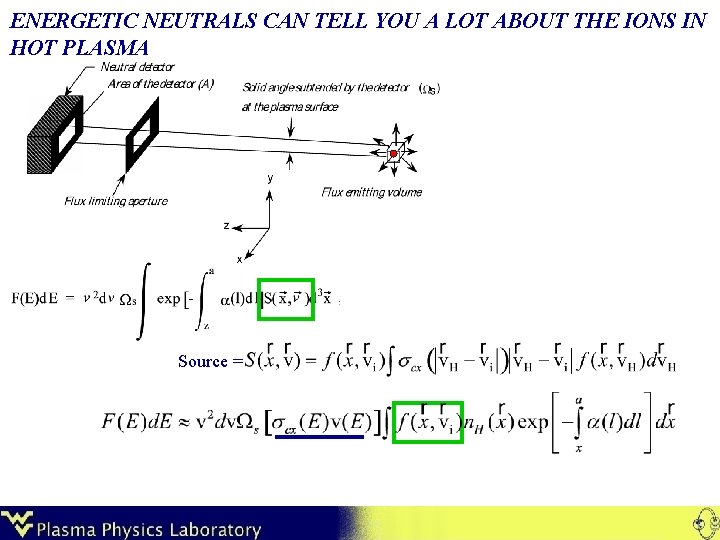
ENERGETIC NEUTRALS CAN TELL YOU A LOT ABOUT THE IONS IN HOT PLASMA Source =
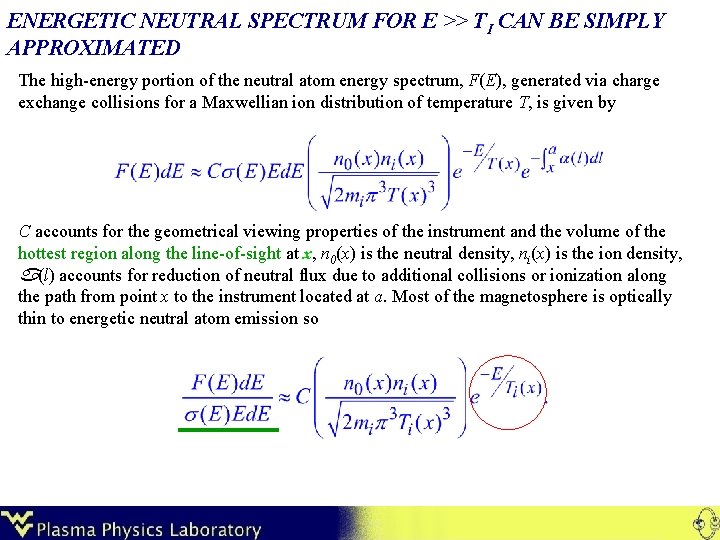
ENERGETIC NEUTRAL SPECTRUM FOR E >> TI CAN BE SIMPLY APPROXIMATED The high-energy portion of the neutral atom energy spectrum, F(E), generated via charge exchange collisions for a Maxwellian ion distribution of temperature T, is given by C accounts for the geometrical viewing properties of the instrument and the volume of the hottest region along the line-of-sight at x, n 0(x) is the neutral density, ni(x) is the ion density, (l) accounts for reduction of neutral flux due to additional collisions or ionization along the path from point x to the instrument located at a. Most of the magnetosphere is optically thin to energetic neutral atom emission so
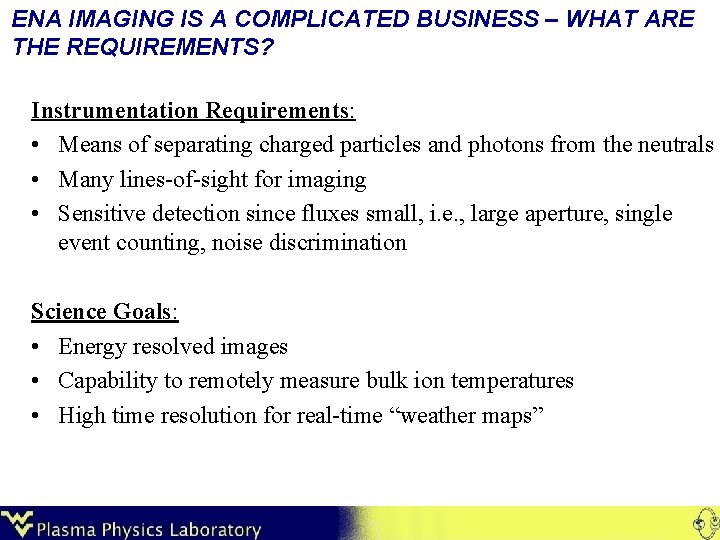
ENA IMAGING IS A COMPLICATED BUSINESS – WHAT ARE THE REQUIREMENTS? Instrumentation Requirements: • Means of separating charged particles and photons from the neutrals • Many lines-of-sight for imaging • Sensitive detection since fluxes small, i. e. , large aperture, single event counting, noise discrimination Science Goals: • Energy resolved images • Capability to remotely measure bulk ion temperatures • High time resolution for real-time “weather maps”
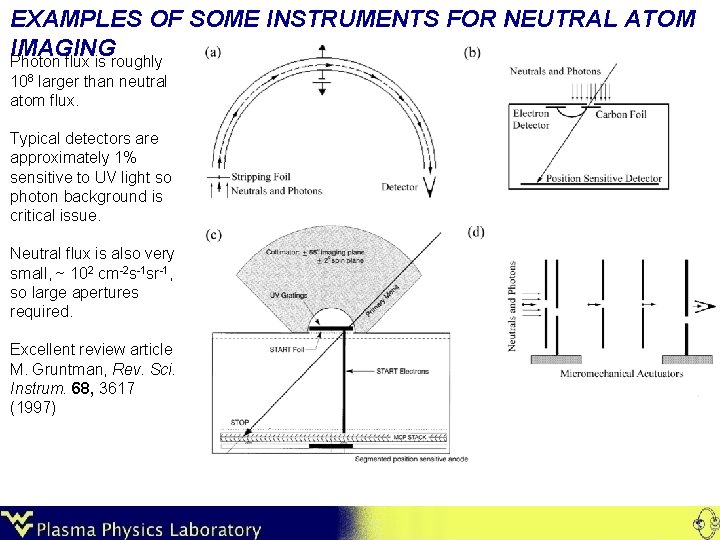
EXAMPLES OF SOME INSTRUMENTS FOR NEUTRAL ATOM IMAGING Photon flux is roughly 108 larger than neutral atom flux. Typical detectors are approximately 1% sensitive to UV light so photon background is critical issue. Neutral flux is also very small, ~ 102 cm-2 s-1 sr-1, so large apertures required. Excellent review article M. Gruntman, Rev. Sci. Instrum. 68, 3617 (1997)
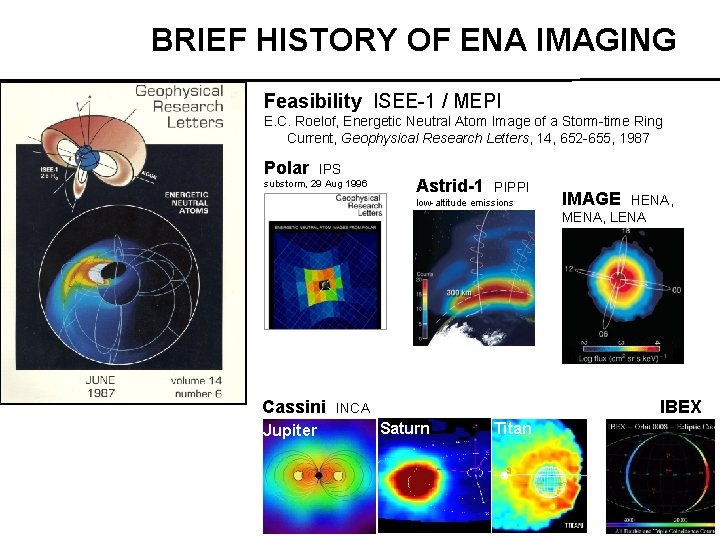
BRIEF HISTORY OF ENA IMAGING Feasibility ISEE-1 / MEPI E. C. Roelof, Energetic Neutral Atom Image of a Storm-time Ring Current, Geophysical Research Letters, 14, 652 -655, 1987 Polar IPS substorm, 29 Aug 1996 Astrid-1 PIPPI low-altitude emissions Cassini Jupiter IMAGE HENA, MENA, LENA IBEX INCA Saturn Titan 19
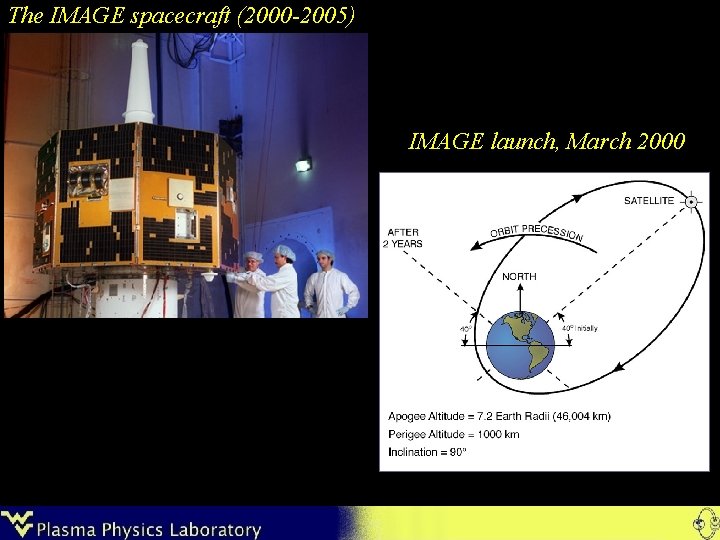
The IMAGE spacecraft (2000 -2005) IMAGE launch, March 2000
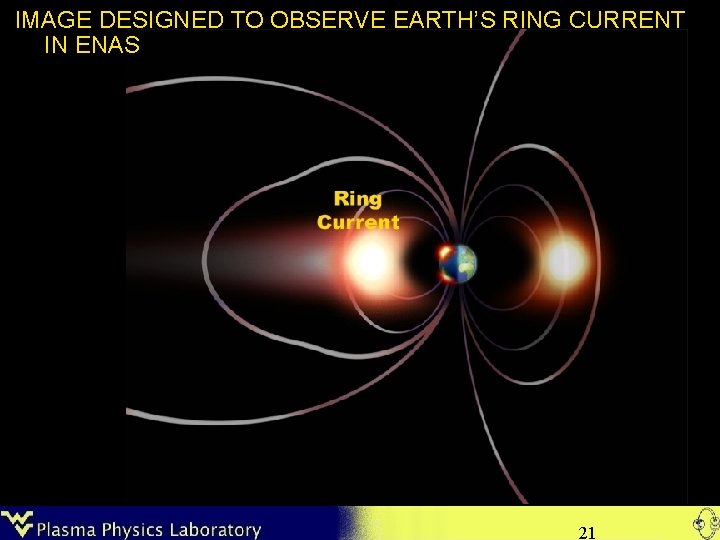
IMAGE DESIGNED TO OBSERVE EARTH’S RING CURRENT IN ENAS TWINS Mission 21
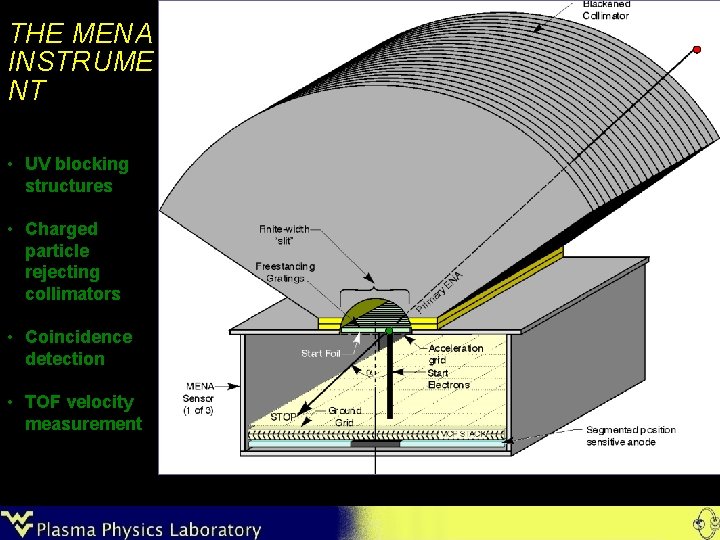
THE MENA INSTRUME NT • UV blocking structures • Charged particle rejecting collimators • Coincidence detection • TOF velocity measurement
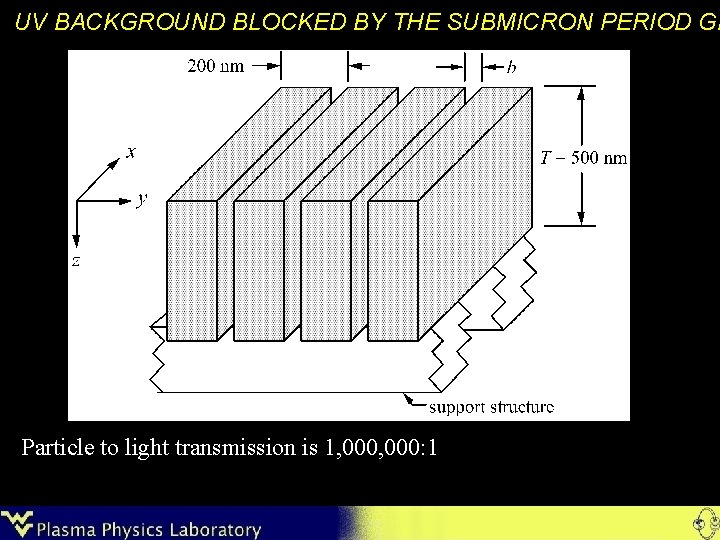
UV BACKGROUND BLOCKED BY THE SUBMICRON PERIOD GR Particle to light transmission is 1, 000: 1
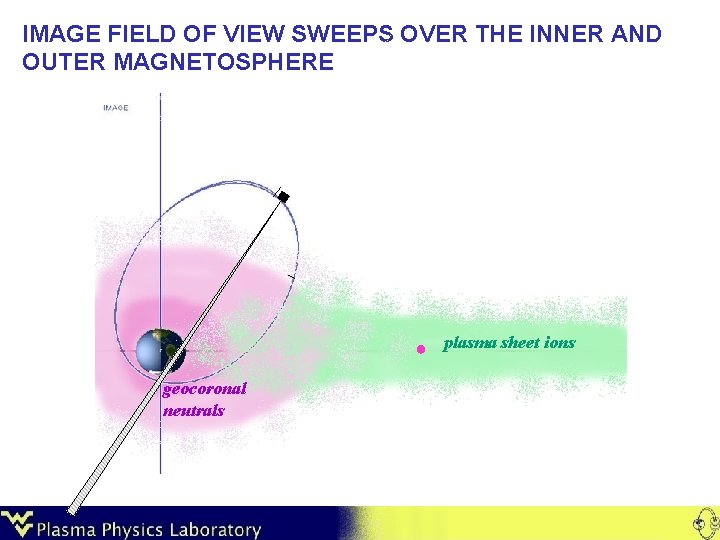
IMAGE FIELD OF VIEW SWEEPS OVER THE INNER AND OUTER MAGNETOSPHERE plasma sheet ions geocoronal neutrals
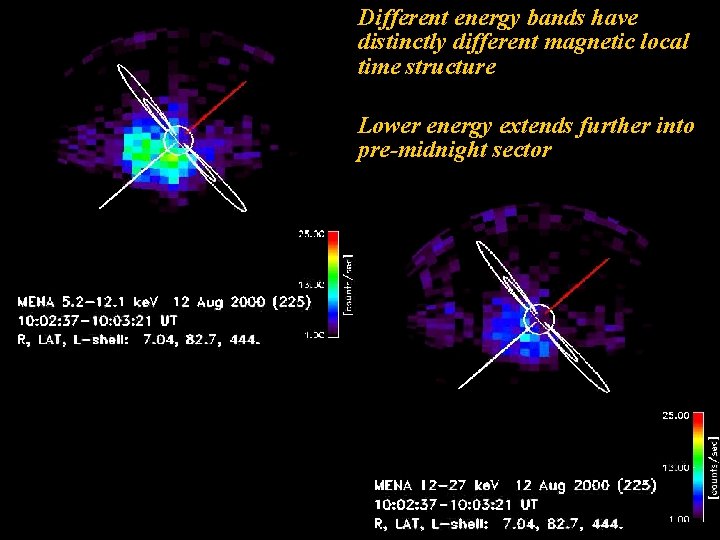
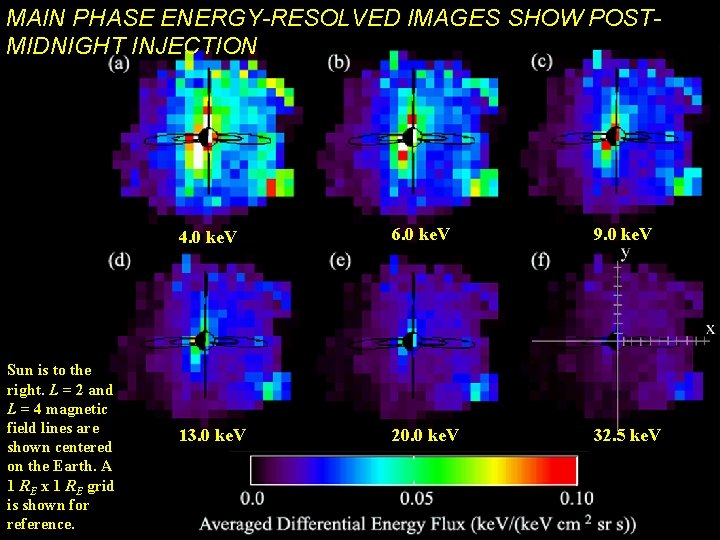
Different energy bands have distinctly different magnetic local time structure Lower energy extends further into pre-midnight sector
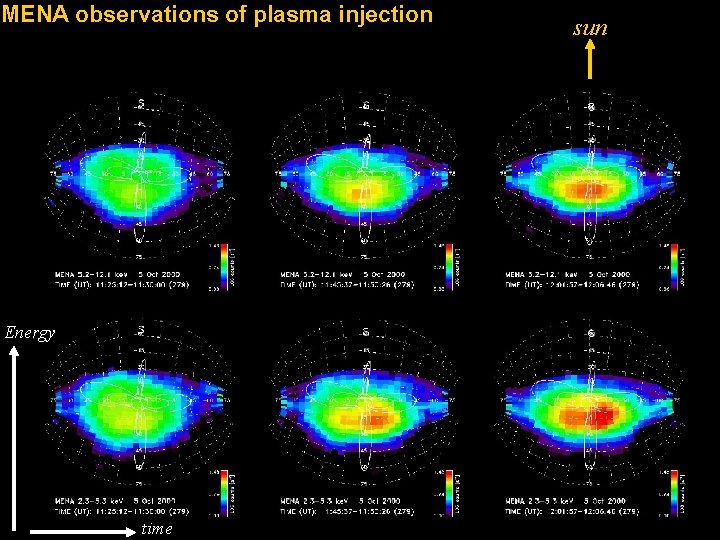
MENA observations of plasma injection Energy time sun
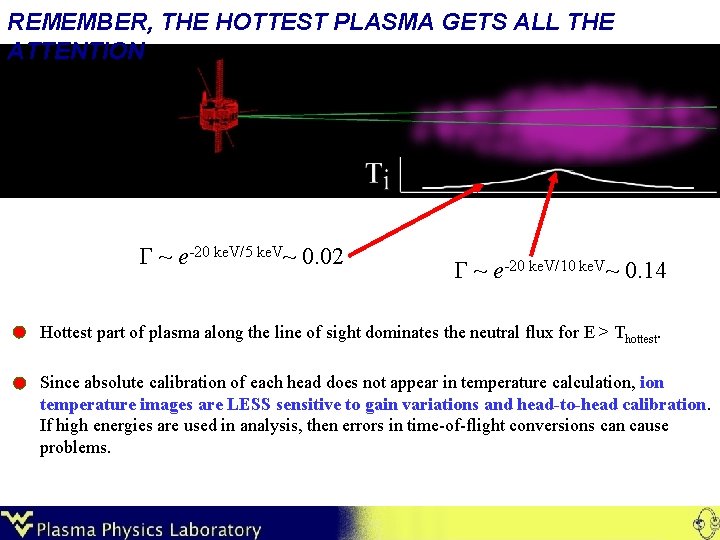
REMEMBER, THE HOTTEST PLASMA GETS ALL THE ATTENTION G ~ e-20 ke. V/5 ke. V~ 0. 02 G ~ e-20 ke. V/10 ke. V~ 0. 14 Hottest part of plasma along the line of sight dominates the neutral flux for E > Thottest. Since absolute calibration of each head does not appear in temperature calculation, ion temperature images are LESS sensitive to gain variations and head-to-head calibration. If high energies are used in analysis, then errors in time-of-flight conversions can cause problems.
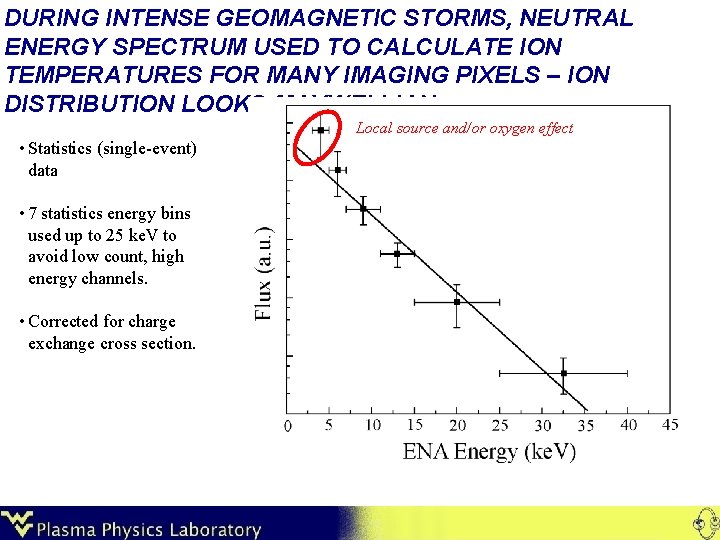
DURING INTENSE GEOMAGNETIC STORMS, NEUTRAL ENERGY SPECTRUM USED TO CALCULATE ION TEMPERATURES FOR MANY IMAGING PIXELS – ION DISTRIBUTION LOOKS MAXWELLIAN Local source and/or oxygen effect • Statistics (single-event) data • 7 statistics energy bins used up to 25 ke. V to avoid low count, high energy channels. • Corrected for charge exchange cross section.
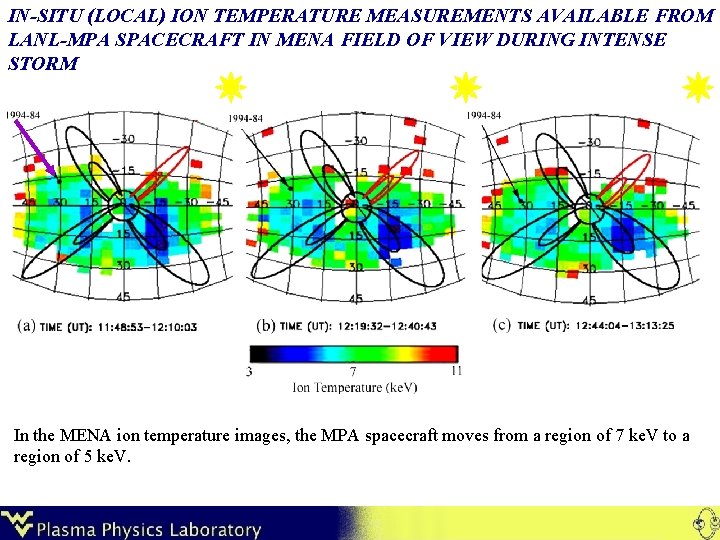
IN-SITU (LOCAL) ION TEMPERATURE MEASUREMENTS AVAILABLE FROM LANL-MPA SPACECRAFT IN MENA FIELD OF VIEW DURING INTENSE STORM In the MENA ion temperature images, the MPA spacecraft moves from a region of 7 ke. V to a region of 5 ke. V.
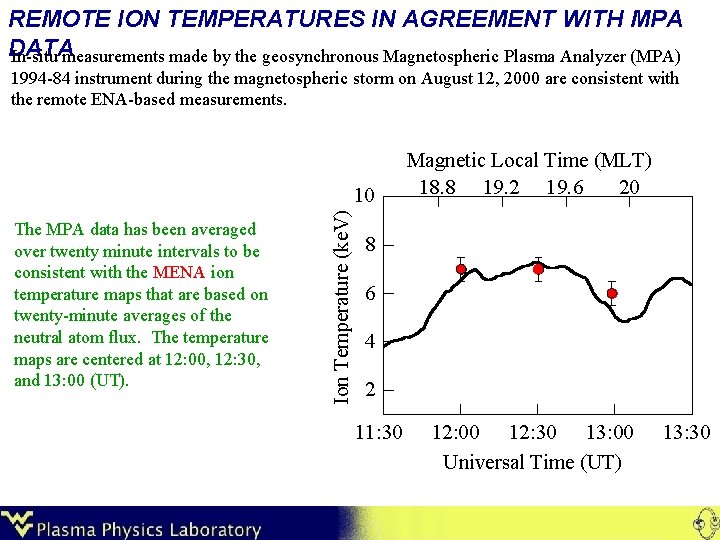
REMOTE ION TEMPERATURES IN AGREEMENT WITH MPA DATA In-situ measurements made by the geosynchronous Magnetospheric Plasma Analyzer (MPA) 1994 -84 instrument during the magnetospheric storm on August 12, 2000 are consistent with the remote ENA-based measurements. The MPA data has been averaged over twenty minute intervals to be consistent with the MENA ion temperature maps that are based on twenty-minute averages of the neutral atom flux. The temperature maps are centered at 12: 00, 12: 30, and 13: 00 (UT). Ion Temperature (ke. V) 10 Magnetic Local Time (MLT) 18. 8 19. 2 19. 6 20 8 6 4 2 11: 30 12: 00 12: 30 13: 00 Universal Time (UT) 13: 30
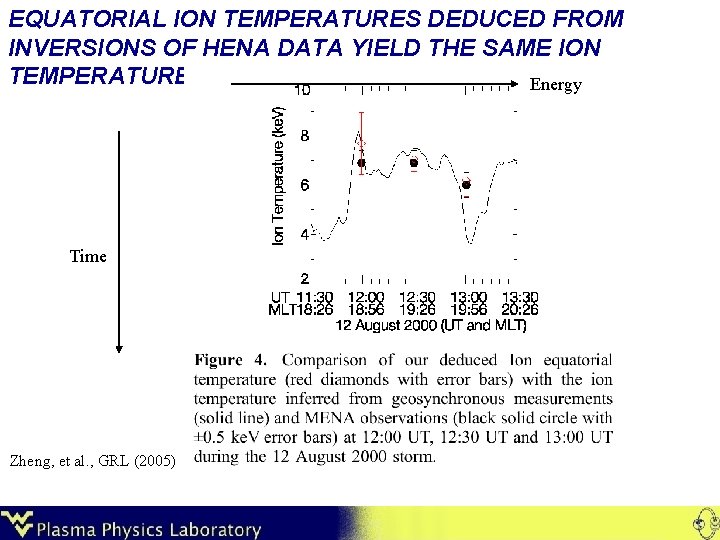
EQUATORIAL ION TEMPERATURES DEDUCED FROM INVERSIONS OF HENA DATA YIELD THE SAME ION TEMPERATURES Energy Time Zheng, et al. , GRL (2005)
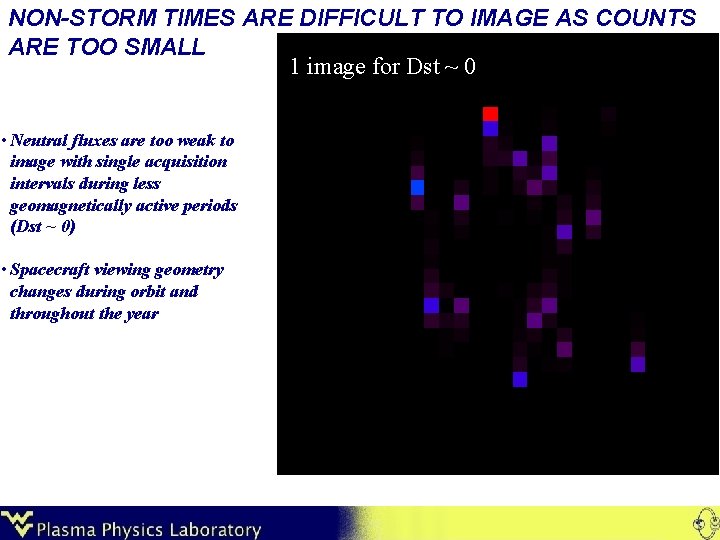
NON-STORM TIMES ARE DIFFICULT TO IMAGE AS COUNTS ARE TOO SMALL 1 image for Dst ~ 0 • Neutral fluxes are too weak to image with single acquisition intervals during less geomagnetically active periods (Dst ~ 0) • Spacecraft viewing geometry changes during orbit and throughout the year (c)
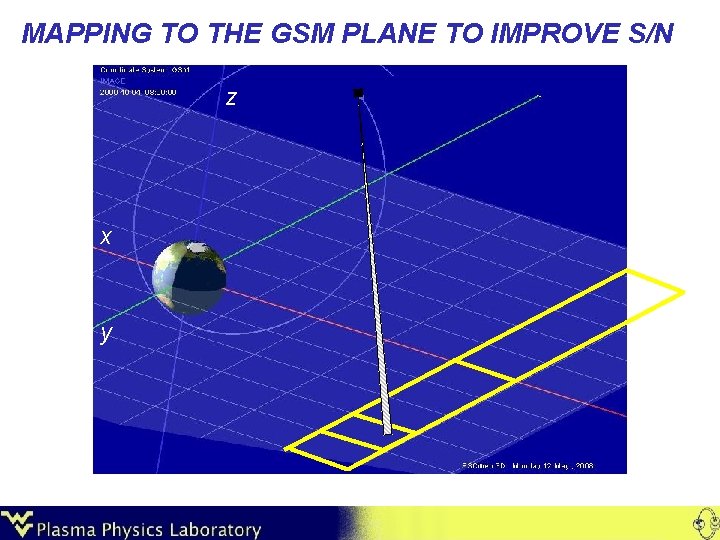
MAPPING TO THE GSM PLANE TO IMPROVE S/N z x y
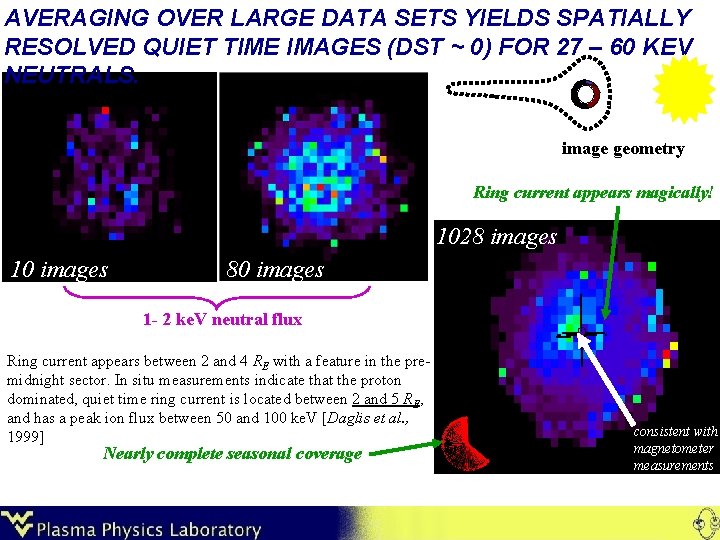
AVERAGING OVER LARGE DATA SETS YIELDS SPATIALLY RESOLVED QUIET TIME IMAGES (DST ~ 0) FOR 27 – 60 KEV NEUTRALS. image geometry Ring current appears magically! 1028 images 10 images 80 images 1 - 2 ke. V neutral flux Ring current appears between 2 and 4 RE with a feature in the premidnight sector. In situ measurements indicate that the proton dominated, quiet time ring current is located between 2 and 5 RE, and has a peak ion flux between 50 and 100 ke. V [Daglis et al. , 1999] Nearly complete seasonal coverage consistent with magnetometer measurements
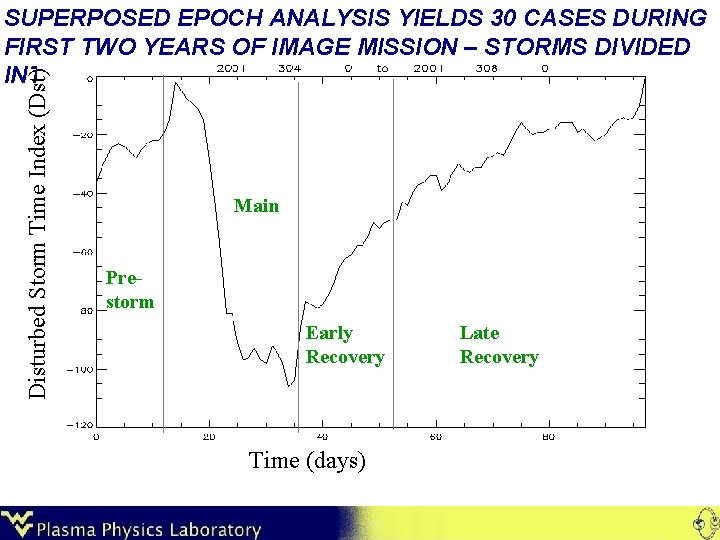
Disturbed Storm Time Index (Dst) SUPERPOSED EPOCH ANALYSIS YIELDS 30 CASES DURING FIRST TWO YEARS OF IMAGE MISSION – STORMS DIVIDED INTO PHASES Main Prestorm Early Recovery Time (days) Late Recovery
MAIN PHASE ENERGY-RESOLVED IMAGES SHOW POSTMIDNIGHT INJECTION Sun is to the right. L = 2 and L = 4 magnetic field lines are shown centered on the Earth. A 1 RE x 1 RE grid is shown for reference. 4. 0 ke. V 6. 0 ke. V 9. 0 ke. V 13. 0 ke. V 20. 0 ke. V 32. 5 ke. V
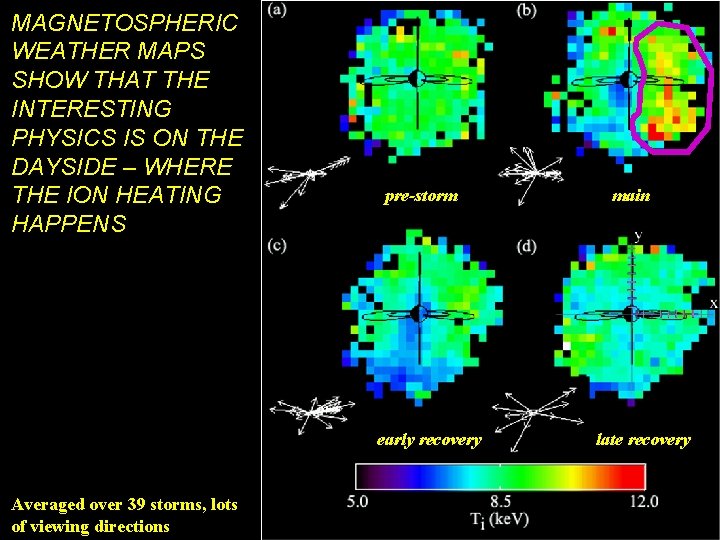
MAGNETOSPHERIC WEATHER MAPS SHOW THAT THE INTERESTING PHYSICS IS ON THE DAYSIDE – WHERE THE ION HEATING HAPPENS pre-storm early recovery Averaged over 39 storms, lots of viewing directions main late recovery
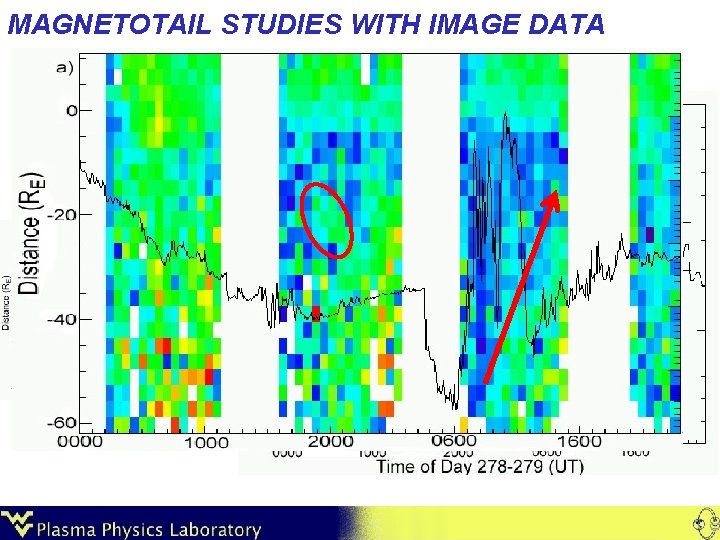
MAGNETOTAIL STUDIES WITH IMAGE DATA
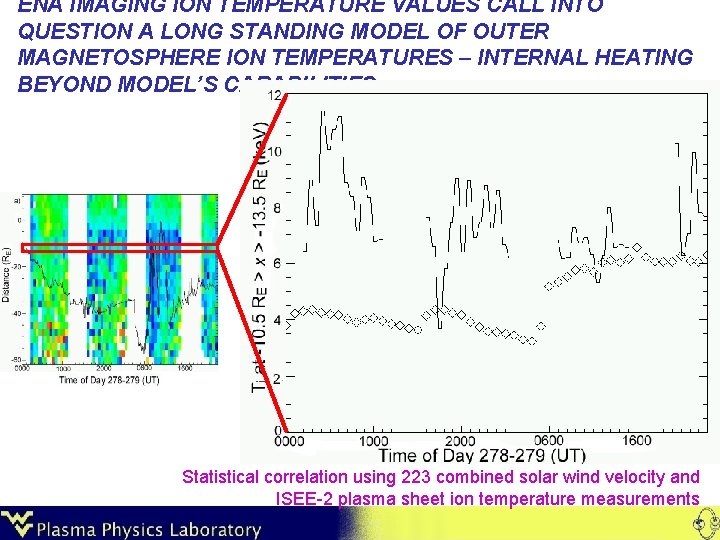
ENA IMAGING ION TEMPERATURE VALUES CALL INTO QUESTION A LONG STANDING MODEL OF OUTER MAGNETOSPHERE ION TEMPERATURES – INTERNAL HEATING BEYOND MODEL’S CAPABILITIES Statistical correlation using 223 combined solar wind velocity and ISEE-2 plasma sheet ion temperature measurements
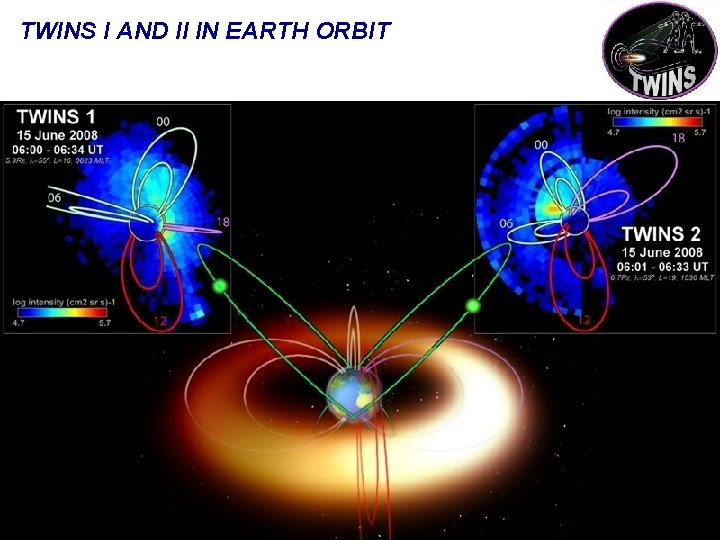
TWINS I AND II IN EARTH ORBIT
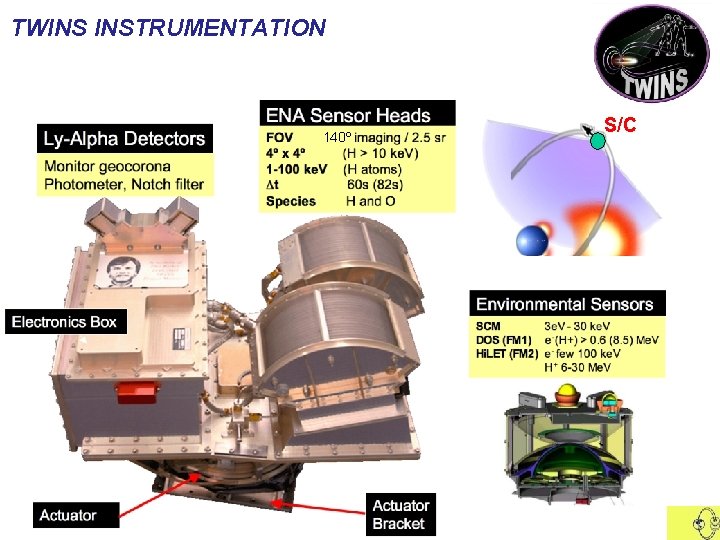
TWINS INSTRUMENTATION S/C 140º Ancillary / Onboard 42
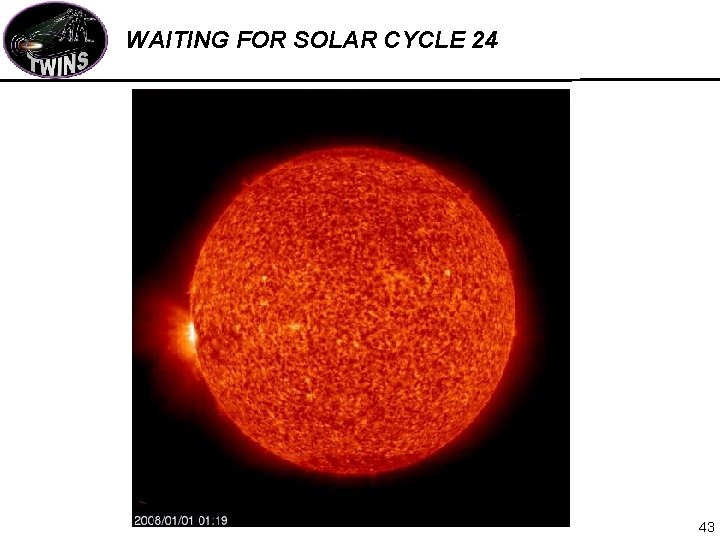
WAITING FOR SOLAR CYCLE 24 43
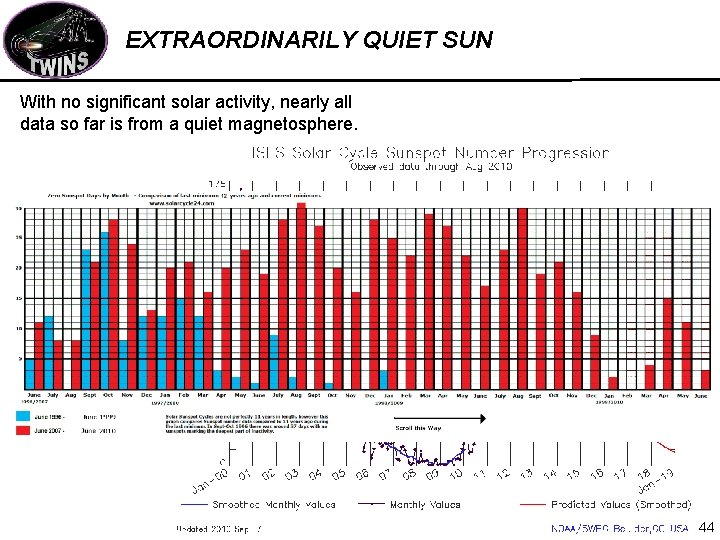
EXTRAORDINARILY QUIET SUN With no significant solar activity, nearly all data so far is from a quiet magnetosphere. 44
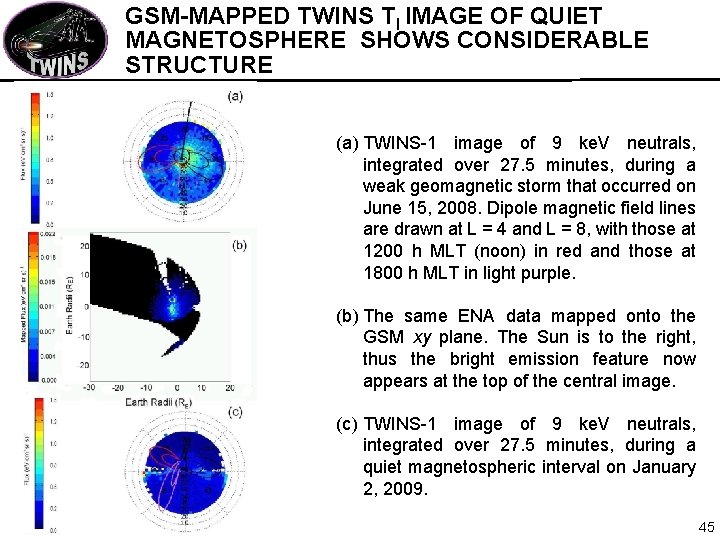
GSM-MAPPED TWINS TI IMAGE OF QUIET MAGNETOSPHERE SHOWS CONSIDERABLE STRUCTURE (a) TWINS-1 image of 9 ke. V neutrals, integrated over 27. 5 minutes, during a weak geomagnetic storm that occurred on June 15, 2008. Dipole magnetic field lines are drawn at L = 4 and L = 8, with those at 1200 h MLT (noon) in red and those at 1800 h MLT in light purple. (b) The same ENA data mapped onto the GSM xy plane. The Sun is to the right, thus the bright emission feature now appears at the top of the central image. (c) TWINS-1 image of 9 ke. V neutrals, integrated over 27. 5 minutes, during a quiet magnetospheric interval on January 2, 2009. 45
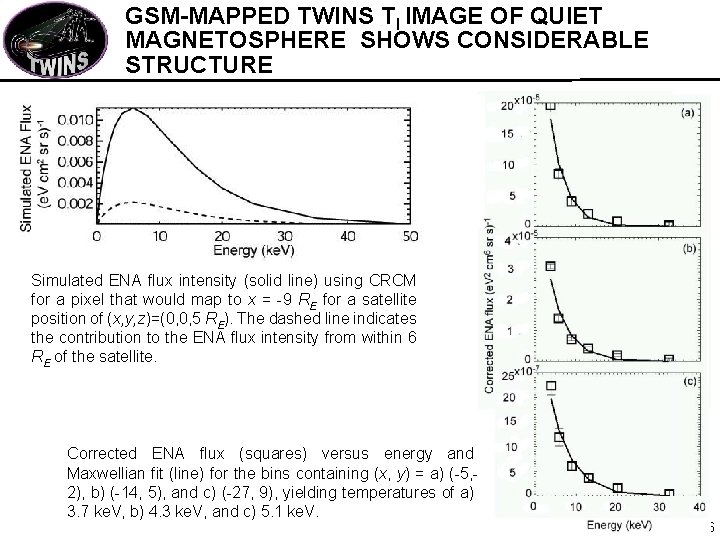
GSM-MAPPED TWINS TI IMAGE OF QUIET MAGNETOSPHERE SHOWS CONSIDERABLE STRUCTURE Simulated ENA flux intensity (solid line) using CRCM for a pixel that would map to x = -9 RE for a satellite position of (x, y, z)=(0, 0, 5 RE). The dashed line indicates the contribution to the ENA flux intensity from within 6 RE of the satellite. Corrected ENA flux (squares) versus energy and Maxwellian fit (line) for the bins containing (x, y) = a) (-5, 2), b) (-14, 5), and c) (-27, 9), yielding temperatures of a) 3. 7 ke. V, b) 4. 3 ke. V, and c) 5. 1 ke. V. 46
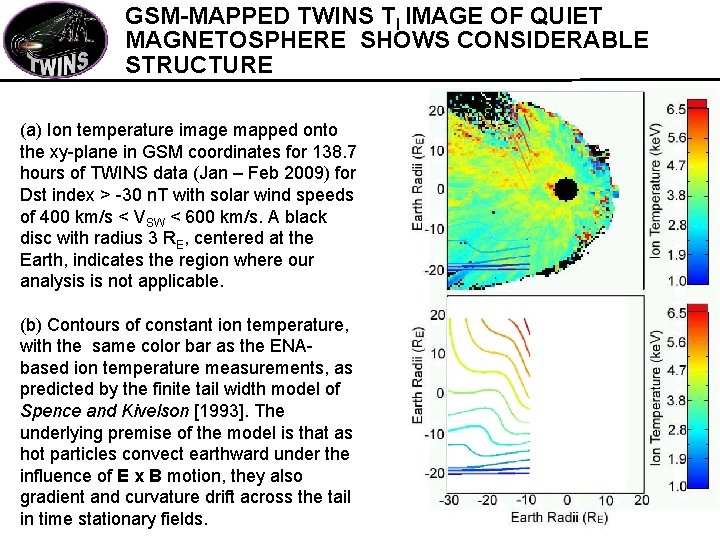
GSM-MAPPED TWINS TI IMAGE OF QUIET MAGNETOSPHERE SHOWS CONSIDERABLE STRUCTURE (a) Ion temperature image mapped onto the xy-plane in GSM coordinates for 138. 7 hours of TWINS data (Jan – Feb 2009) for Dst index > -30 n. T with solar wind speeds of 400 km/s < VSW < 600 km/s. A black disc with radius 3 RE, centered at the Earth, indicates the region where our analysis is not applicable. (b) Contours of constant ion temperature, with the same color bar as the ENAbased ion temperature measurements, as predicted by the finite tail width model of Spence and Kivelson [1993]. The underlying premise of the model is that as hot particles convect earthward under the influence of E x B motion, they also gradient and curvature drift across the tail in time stationary fields. 47
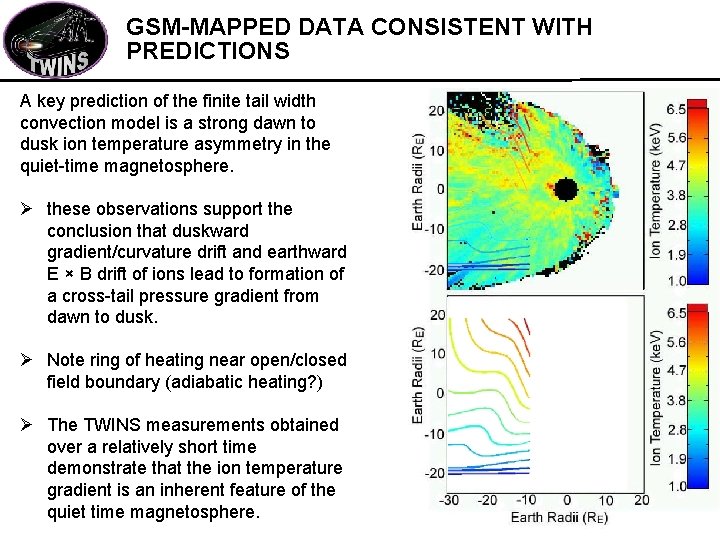
GSM-MAPPED DATA CONSISTENT WITH PREDICTIONS A key prediction of the finite tail width convection model is a strong dawn to dusk ion temperature asymmetry in the quiet-time magnetosphere. Ø these observations support the conclusion that duskward gradient/curvature drift and earthward E × B drift of ions lead to formation of a cross-tail pressure gradient from dawn to dusk. Ø Note ring of heating near open/closed field boundary (adiabatic heating? ) Ø The TWINS measurements obtained over a relatively short time demonstrate that the ion temperature gradient is an inherent feature of the quiet time magnetosphere. 48
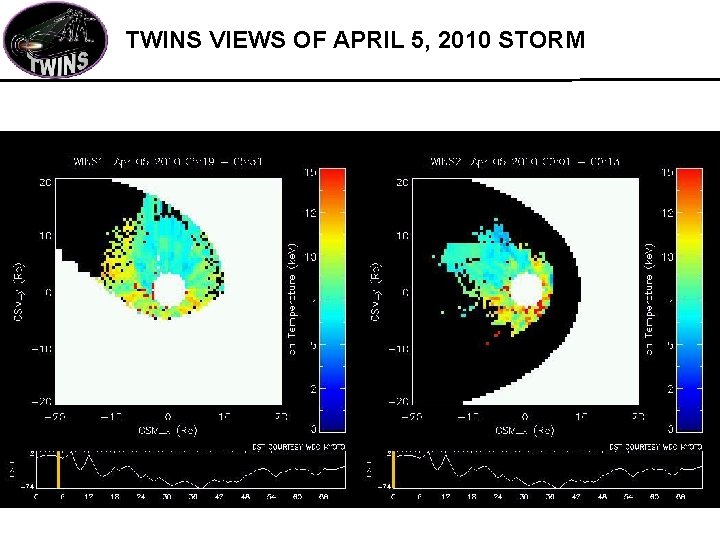
TWINS VIEWS OF APRIL 5, 2010 STORM
RECAP • Neutral atom imaging successful at Earth, Saturn, and the termination shock • Remotely measured MENA ion temperatures are consistent with in-situ measurements during large geomagnetic storms. Quiet time magnetosphere imaged with three different spacecraft – ring current is detectable and pre-midnight feature consistent with electrical current measurements. Evolution of ion heating during a storm remotely observed ! Post midnight injection is energy dependent and cold. Ion heating occurs in dayside magnetopause. Magnetotail “weather mapping” possible out to 60 Earth radii for single storm. Temperatures consistent with local measurements, flows of heat and localized heating events seen in temperature maps. Measurements contradict empirical model during intervals of heavy substorm activity. Quiet time imaging of magnetotail yield absolute temperatures and thermal asymmetries consistent with finite width magnetotail model predictions. • •
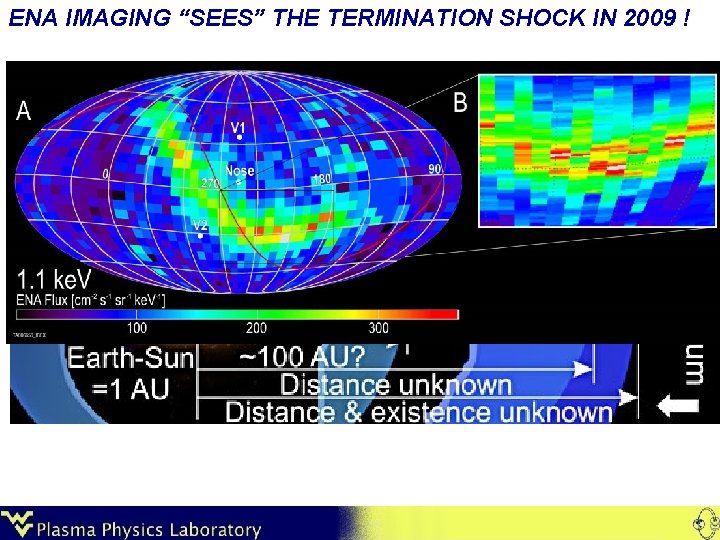
ENA IMAGING “SEES” THE TERMINATION SHOCK IN 2009 ! 1 image for Dst ~ 0 Structure aligns with direction of local interstellar magnetic field – completely unexpected [Mc. Comas et al. , 2009].