
NEUROTRANSMISSION Psych 11 Kabotoff What are neurotransmitters chemicals
NEUROTRANSMISSION Psych 11 Kabotoff
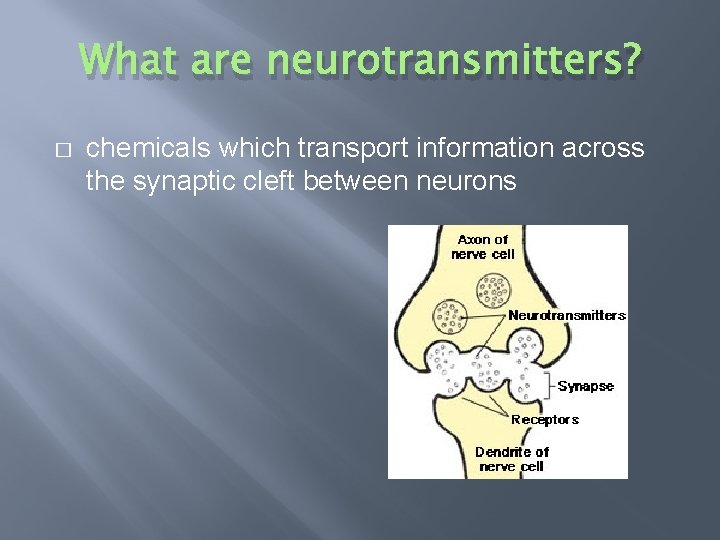
What are neurotransmitters? � chemicals which transport information across the synaptic cleft between neurons
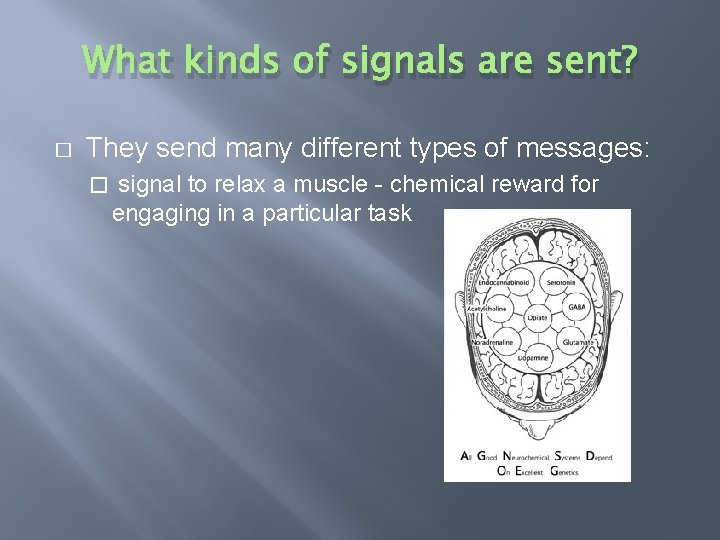
What kinds of signals are sent? � They send many different types of messages: � signal to relax a muscle - chemical reward for engaging in a particular task
Eight key NT systems � � Serotonin Dopamine GABA Glutamate � � Opiate Noradrenaline Endocannabinoid Acetylcholine
Serotonin � Sleep, arousal levels, emotion � Higher levels of serotonin activate hypothalamus and frontal cortex � 1999 Buddhist monks dep f n w, cold temp, 48 hrs=hallucinations � � Too low=sleep or eating disorders, depression Too high =OCD
Acetylcholine � � � Linked to creating memory (stim hippocampus) and muscle contraction Affected in Alzheimer’s patients Too low = paralysis
Dopamine � � Voluntary movement, learning, feelings of pleasure Tied to depression and vital to chemical dependency treatment � Black out or binge drinkers seek the feeling of numbness when they use alcohol in excess � Too much=psychotic, hallucinations � Too little=clinically depressed
GABA � � Calms things down, too low=seizures Counteracts glutamate and other stimulant neurotransmitters Genetic predisposition – people who talk fast, worry, get fired up etc have a LOT of this. . Huntington’s disease decreases this, causes tremors, personality changes
Norepinephrine � � � Mood, alertness, quick response (sex, eating, thirst) Too high=high blood pressure, nervous, anxiety Too low=lethargy, lack of motivation, depression
Opiate system � � Creates euphoric feeling i. e. endorphins Is addictive Prescription: Morphine, Vicodin, Oxy. Contin, Dilaudid, Demerol, Codeine But can also cause pain if taken over a long period of time
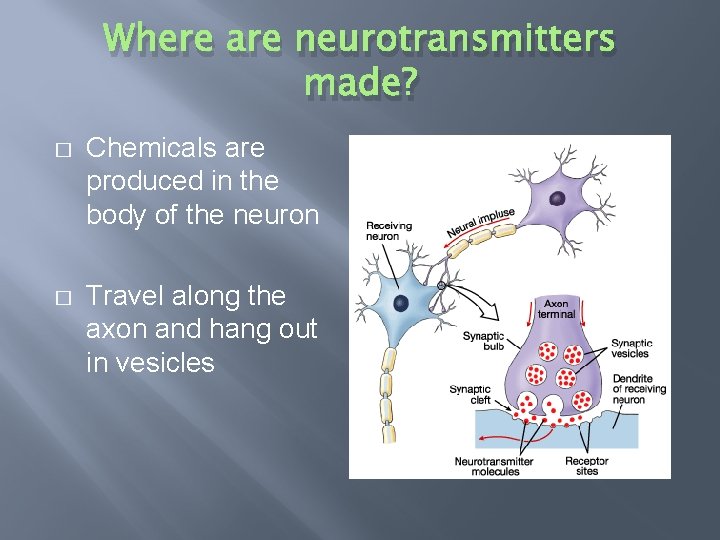
Where are neurotransmitters made? � Chemicals are produced in the body of the neuron � Travel along the axon and hang out in vesicles
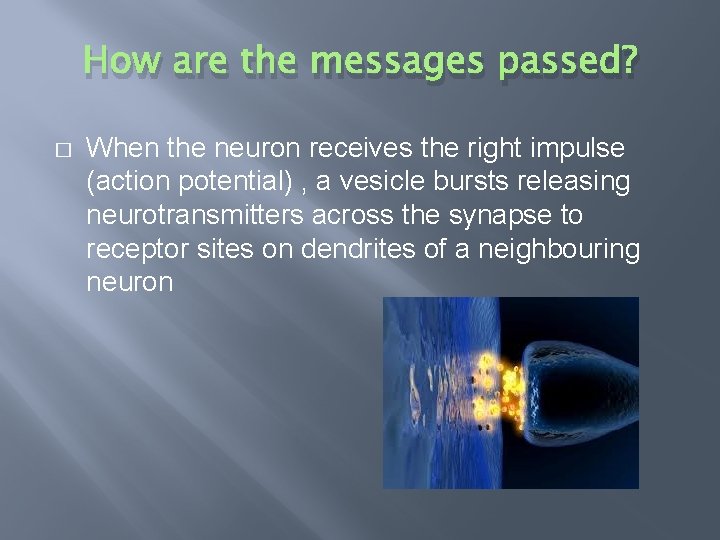
How are the messages passed? � When the neuron receives the right impulse (action potential) , a vesicle bursts releasing neurotransmitters across the synapse to receptor sites on dendrites of a neighbouring neuron
Other fun facts � � � Neurotransmitters are the most important molecule in nearly every living thing Can be excitatory or inhibitors Some Factors affecting the release of neurotransmitters: genetics � eating habits � exposure to chemical substances � stress �
What genetics? � Research one of the following neurological disorders-conditions for: symptoms, how they affect or are affected by the process of neurotransmission, genetics: � ADHD-ADD � Epilepsy � Parkinson’s Disease � Huntington’s Disease � Alzheimer’s � OCD � ALS � Migraines � Autism Spectrum Disorder � Asperger’s Syndrome � Schizophrenia
Criteria for your Mind Map- Poster: � Must clearly present: � Name, brain scan images � Symptoms � Impact on CNS-PNS. . � Genetic Indicators � Must Identify Sources (3+) /2 /4 /4 /3 /2
Dietary Considerations � � � Lack of protein in the diet, results in an absence in the amino acids needed to produce neurotransmitters for later release diets low in omega-3 and other fatty acids Synthetic chemicals also affect the release of neurotransmitters, either intentionally or unintentionally (drugs vs chem weapons)
- Slides: 16