
NEUROSCIENCE HOW IT IMPACTS THE WAY YOU TEACH
- Slides: 48
NEUROSCIENCE: HOW IT IMPACTS THE WAY YOU TEACH & HOW STUDENTS LEARN June 2016
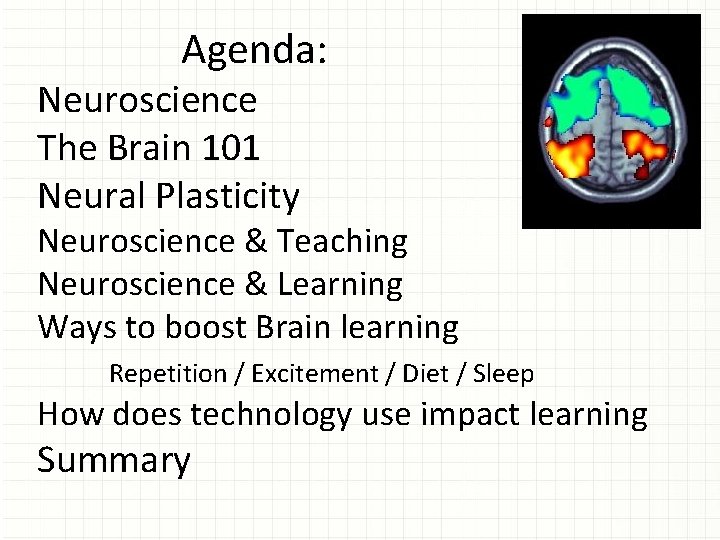
Agenda: Neuroscience The Brain 101 Neural Plasticity Neuroscience & Teaching Neuroscience & Learning Ways to boost Brain learning Repetition / Excitement / Diet / Sleep How does technology use impact learning Summary
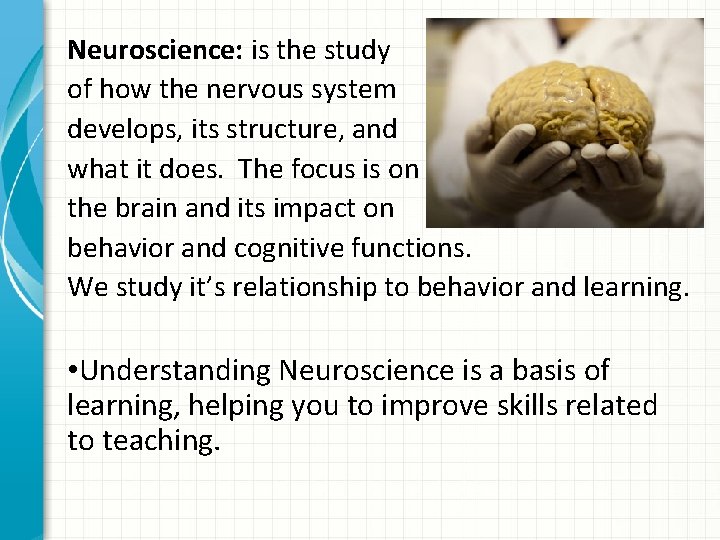
Neuroscience: is the study of how the nervous system develops, its structure, and what it does. The focus is on the brain and its impact on behavior and cognitive functions. We study it’s relationship to behavior and learning. • Understanding Neuroscience is a basis of learning, helping you to improve skills related to teaching.
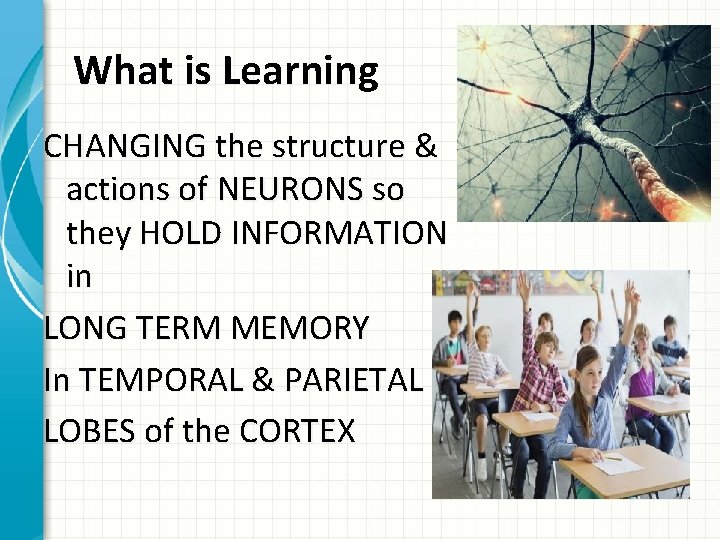
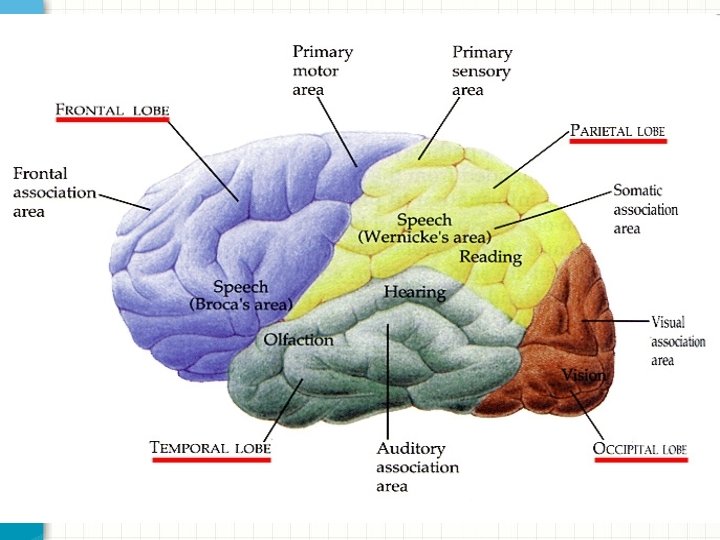
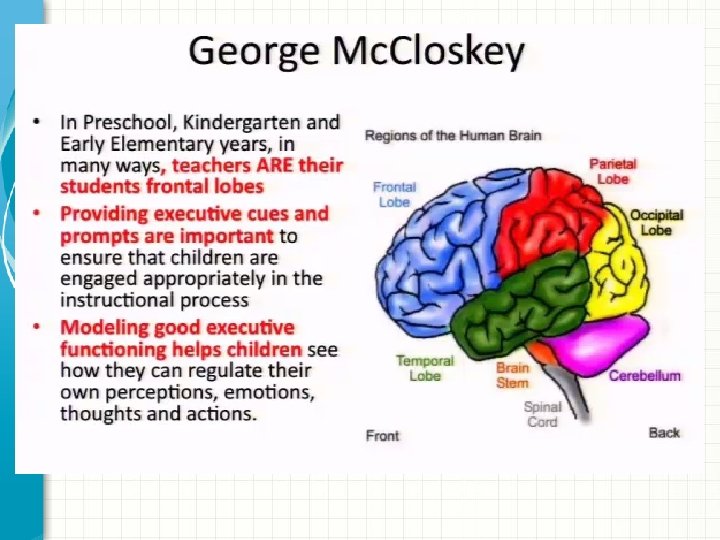
What is Learning CHANGING the structure & actions of NEURONS so they HOLD INFORMATION in LONG TERM MEMORY In TEMPORAL & PARIETAL LOBES of the CORTEX
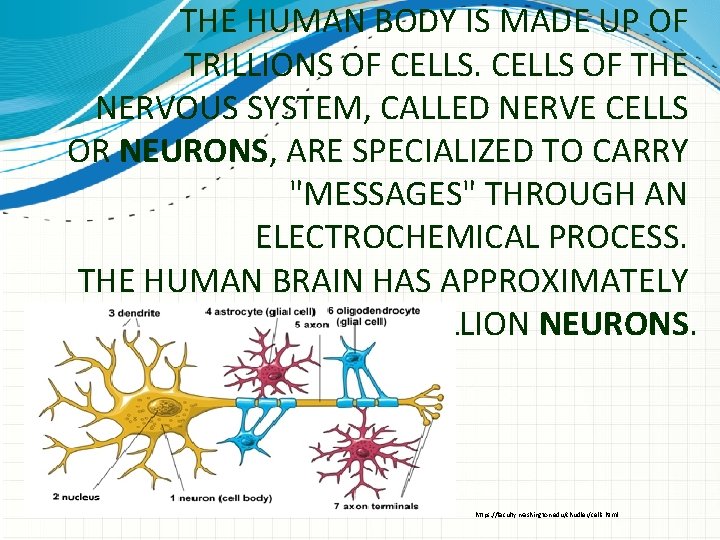
THE HUMAN BODY IS MADE UP OF TRILLIONS OF CELLS OF THE NERVOUS SYSTEM, CALLED NERVE CELLS OR NEURONS, ARE SPECIALIZED TO CARRY "MESSAGES" THROUGH AN ELECTROCHEMICAL PROCESS. THE HUMAN BRAIN HAS APPROXIMATELY 100 BILLION NEURONS. https: //faculty. washington. edu/chudler/cells. html
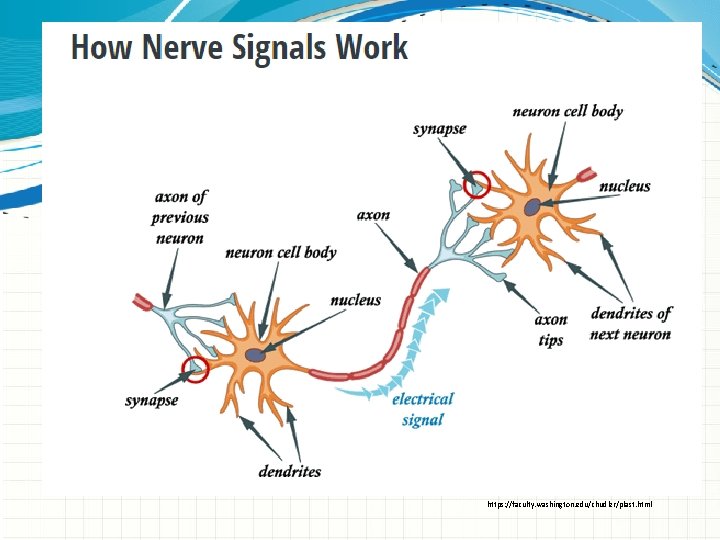
https: //faculty. washington. edu/chudler/plast. html
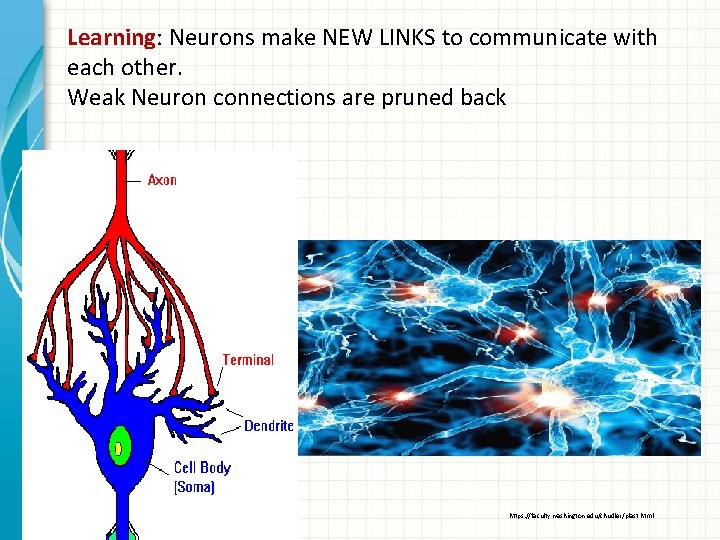
Learning: Neurons make NEW LINKS to communicate with each other. Weak Neuron connections are pruned back https: //faculty. washington. edu/chudler/plast. html
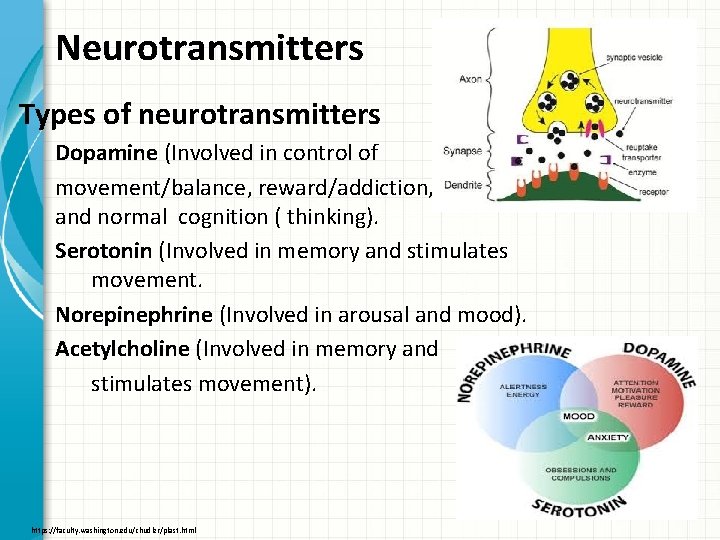
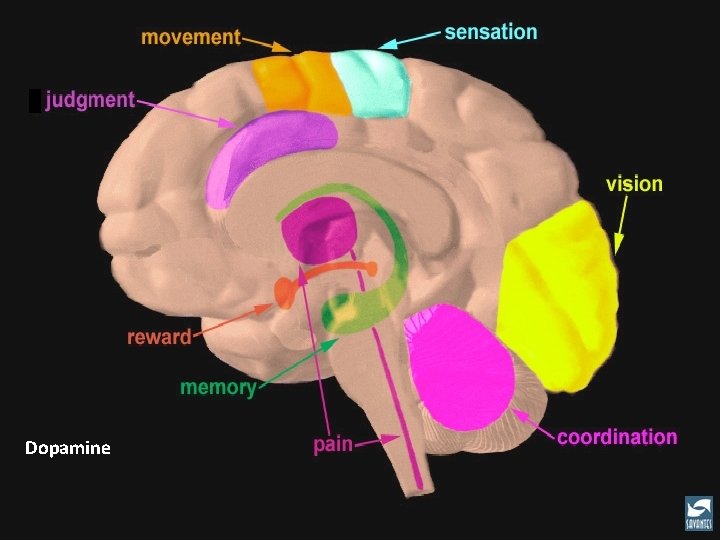
Neurotransmitters Types of neurotransmitters Dopamine (Involved in control of movement/balance, reward/addiction, pleasure, emotion and normal cognition ( thinking). Serotonin (Involved in memory and stimulates movement. Norepinephrine (Involved in arousal and mood). Acetylcholine (Involved in memory and stimulates movement). https: //faculty. washington. edu/chudler/plast. html
Dopamine
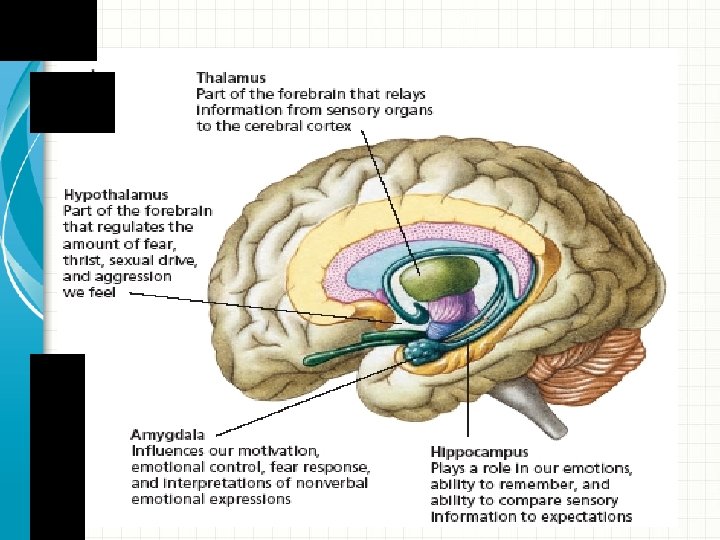
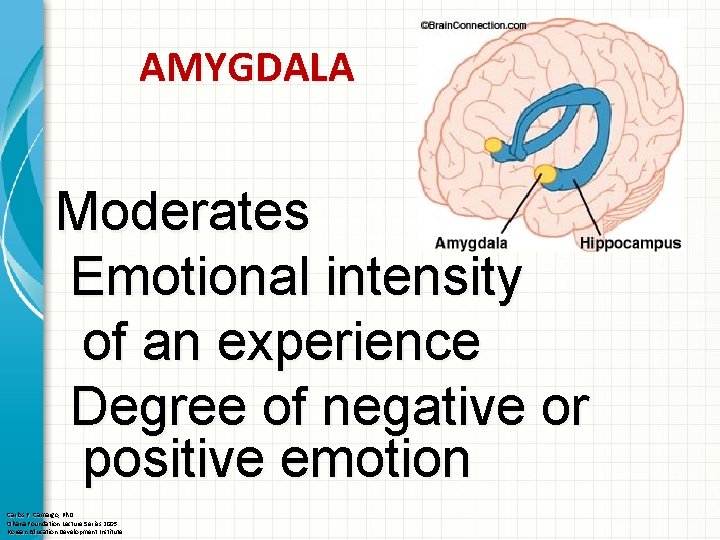
AMYGDALA Moderates Emotional intensity of an experience Degree of negative or positive emotion Carlos F. Camargo, Ph. D Ohana Foundation Lecture Series 2005 Korean Education Development Institute
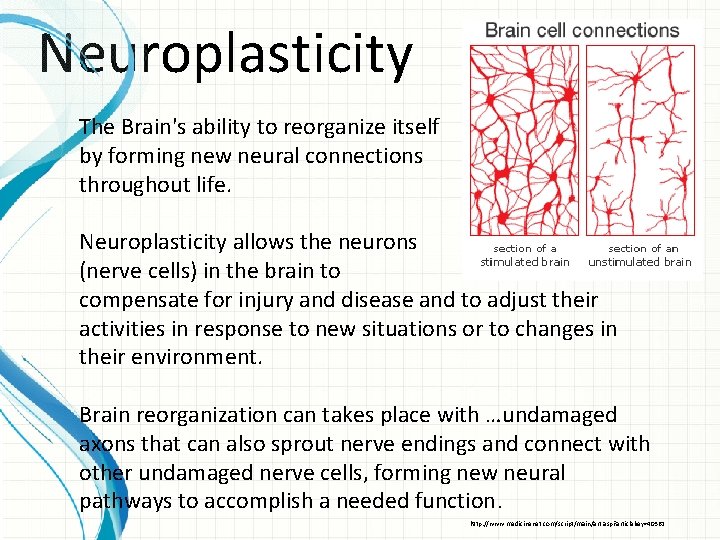
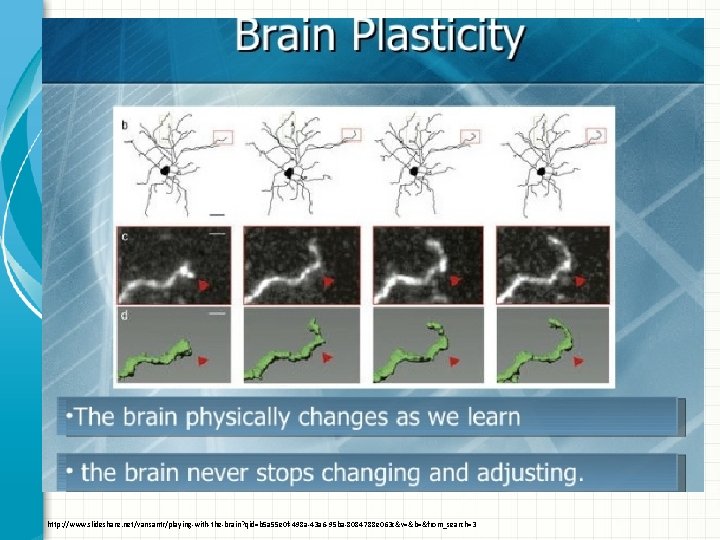
Neuroplasticity The Brain's ability to reorganize itself by forming new neural connections throughout life. Neuroplasticity allows the neurons (nerve cells) in the brain to compensate for injury and disease and to adjust their activities in response to new situations or to changes in their environment. Brain reorganization can takes place with …undamaged axons that can also sprout nerve endings and connect with other undamaged nerve cells, forming new neural pathways to accomplish a needed function. http: //www. medicinenet. com/script/main/art. asp? articlekey=40362
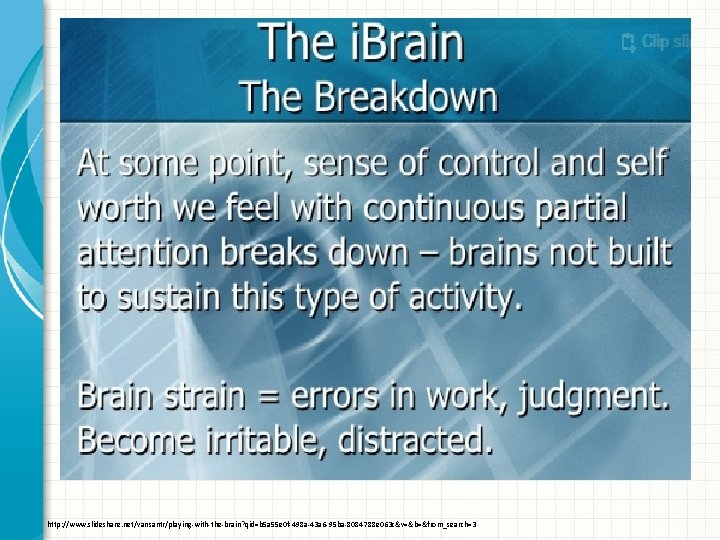
http: //www. slideshare. net/vansantr/playing-with-the-brain? qid=b 5 a 55 e 0 f-498 a-43 a 6 -95 ba-8084788 e 063 c&v=&b=&from_search=3
http: //www. slideshare. net/vansantr/playing-with-the-brain? qid=b 5 a 55 e 0 f-498 a-43 a 6 -95 ba-8084788 e 063 c&v=&b=&from_search=3
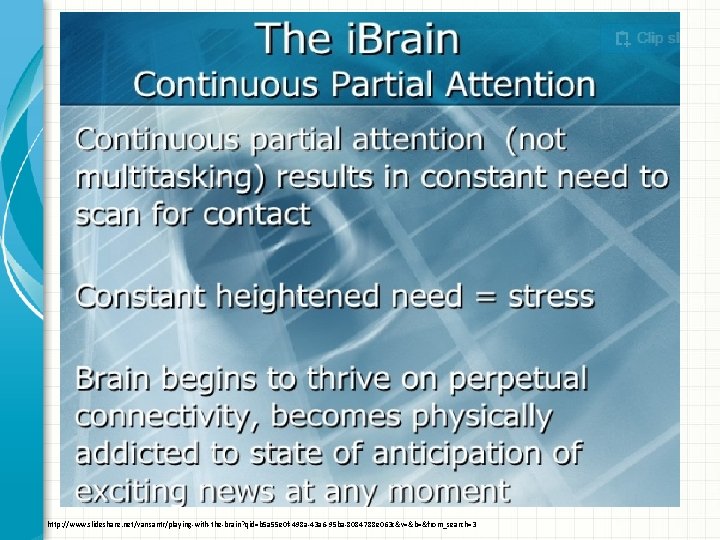
http: //www. slideshare. net/vansantr/playing-with-the-brain? qid=b 5 a 55 e 0 f-498 a-43 a 6 -95 ba-8084788 e 063 c&v=&b=&from_search=3
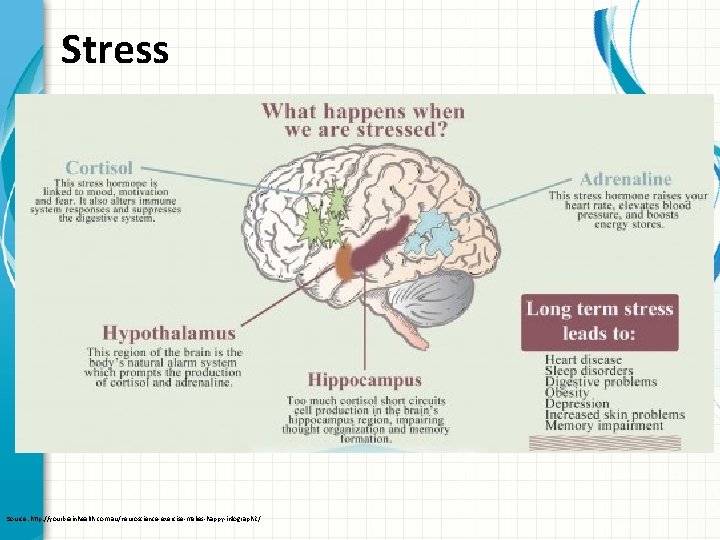
Stress Source: http: //yourbrainhealth. com. au/neuroscience-exercise-makes-happy-infographic/
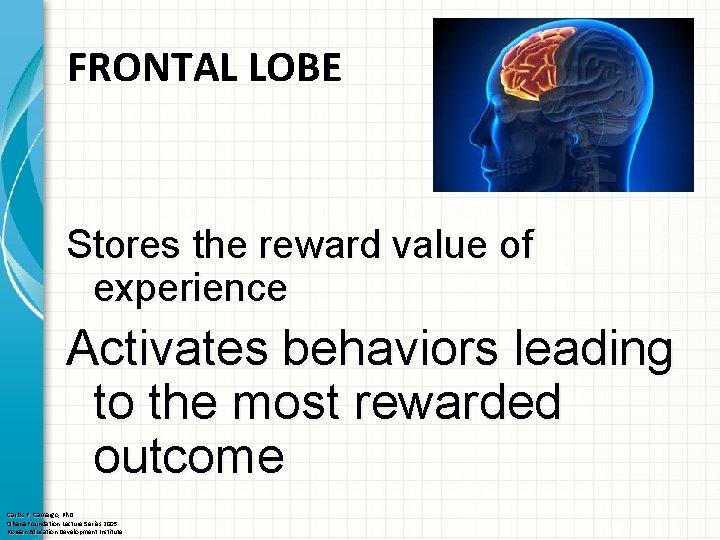
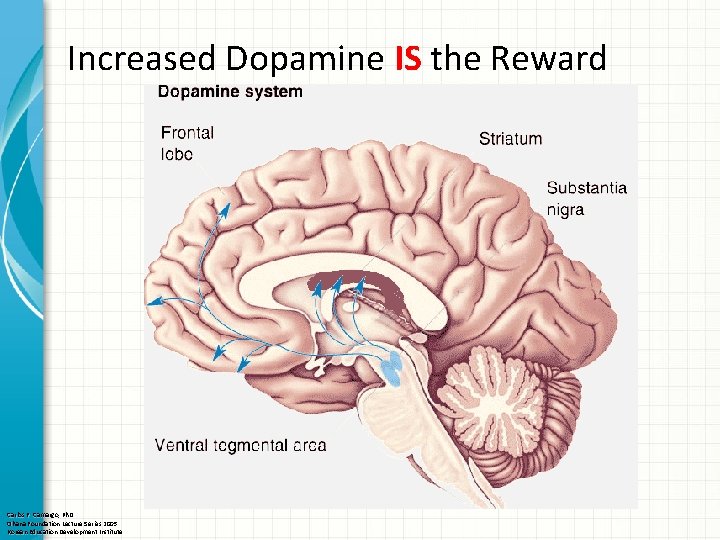
FRONTAL LOBE Stores the reward value of experience Activates behaviors leading to the most rewarded outcome Carlos F. Camargo, Ph. D Ohana Foundation Lecture Series 2005 Korean Education Development Institute
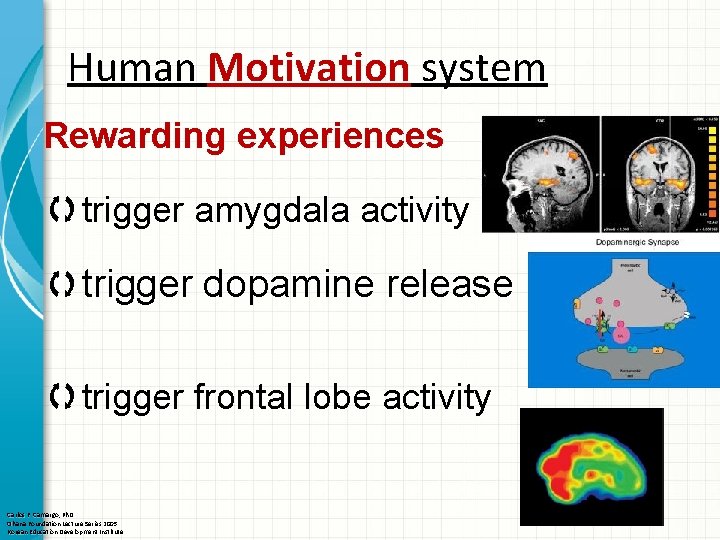
Human Motivation system Rewarding experiences trigger amygdala activity trigger dopamine release trigger frontal lobe activity Carlos F. Camargo, Ph. D Ohana Foundation Lecture Series 2005 Korean Education Development Institute
Increased Dopamine IS the Reward Carlos F. Camargo, Ph. D Ohana Foundation Lecture Series 2005 Korean Education Development Institute
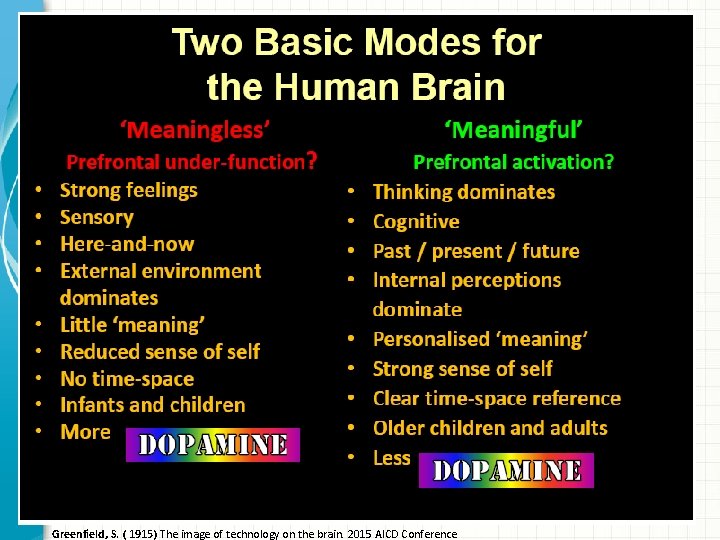
Greenfield, S. ( 1915) The image of technology on the brain. 2015 AICD Conference
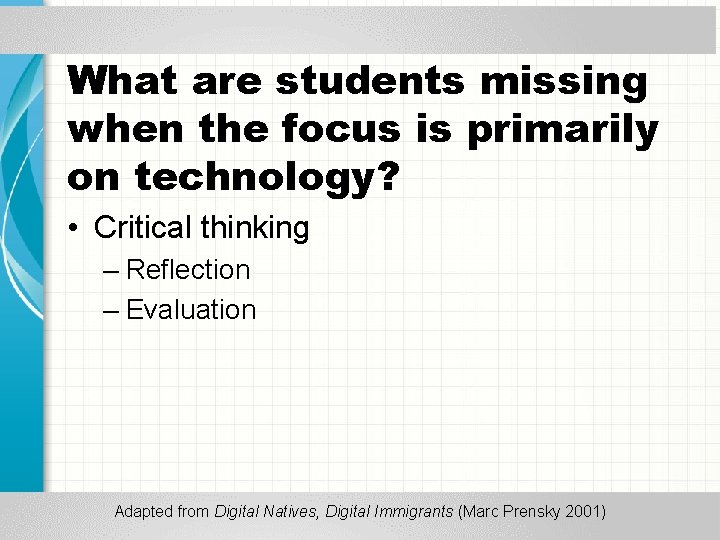
What are students missing when the focus is primarily on technology? • Critical thinking – Reflection – Evaluation Adapted from Digital Natives, Digital Immigrants (Marc Prensky 2001)
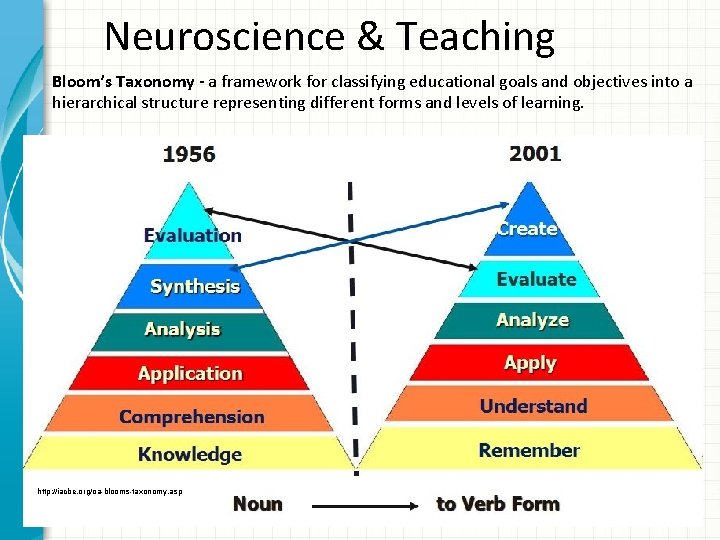
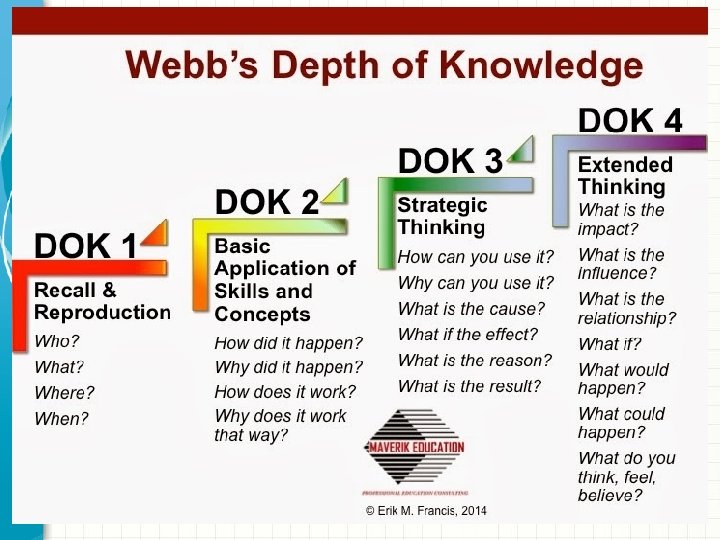
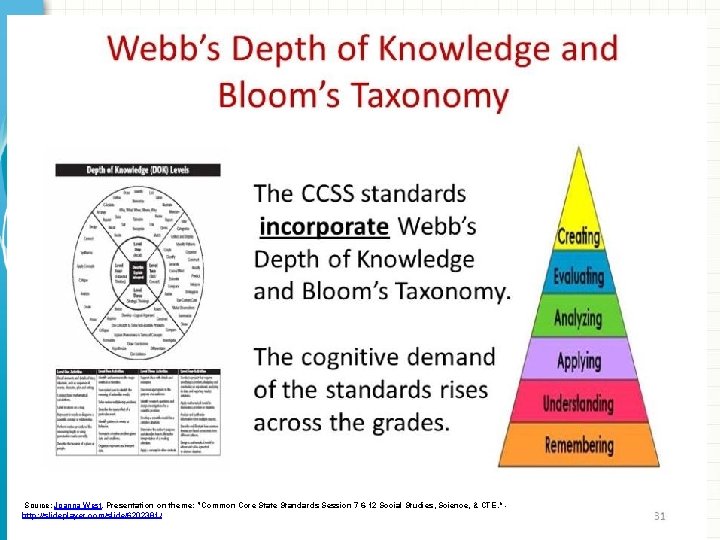
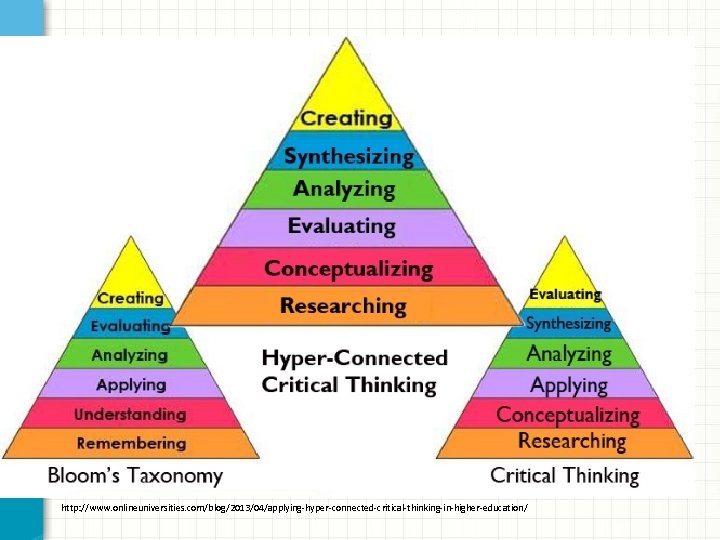
Neuroscience & Teaching Bloom’s Taxonomy - a framework for classifying educational goals and objectives into a hierarchical structure representing different forms and levels of learning. http: //iacbe. org/oa-blooms-taxonomy. asp
So what ?
Source: Joanna West, Presentation on theme: "Common Core State Standards Session 7 6 -12 Social Studies, Science, & CTE. “ http: //slideplayer. com/slide/6202381 /
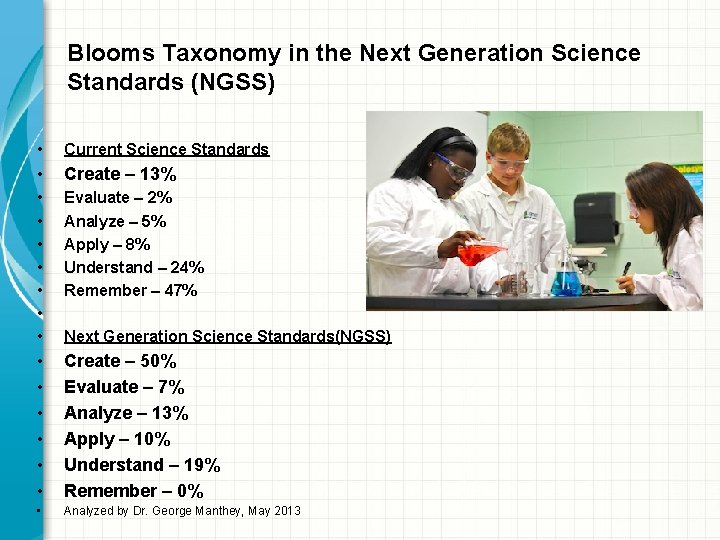
Blooms Taxonomy in the Next Generation Science Standards (NGSS) • Current Science Standards • Create – 13% • • Evaluate – 2% Analyze – 5% Apply – 8% Understand – 24% Remember – 47% • • • Create – 50% Evaluate – 7% Analyze – 13% Apply – 10% Understand – 19% Remember – 0% • Analyzed by Dr. George Manthey, May 2013 Next Generation Science Standards(NGSS)
http: //www. onlineuniversities. com/blog/2013/04/applying-hyper-connected-critical-thinking-in-higher-education/
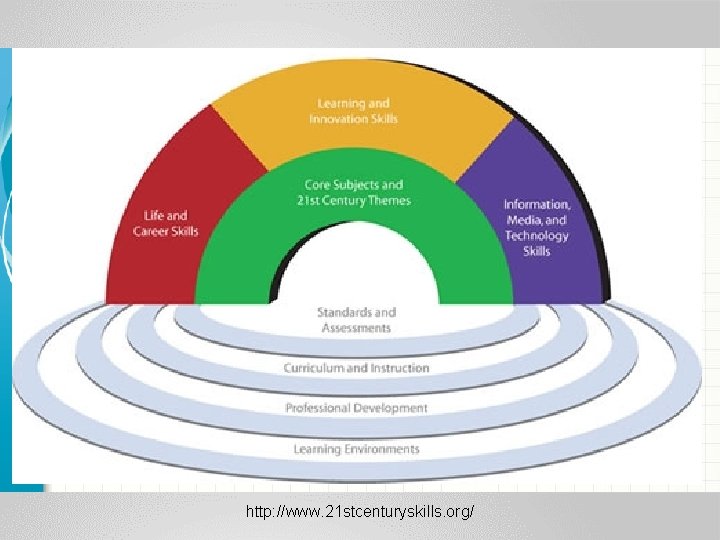
http: //www. 21 stcenturyskills. org/
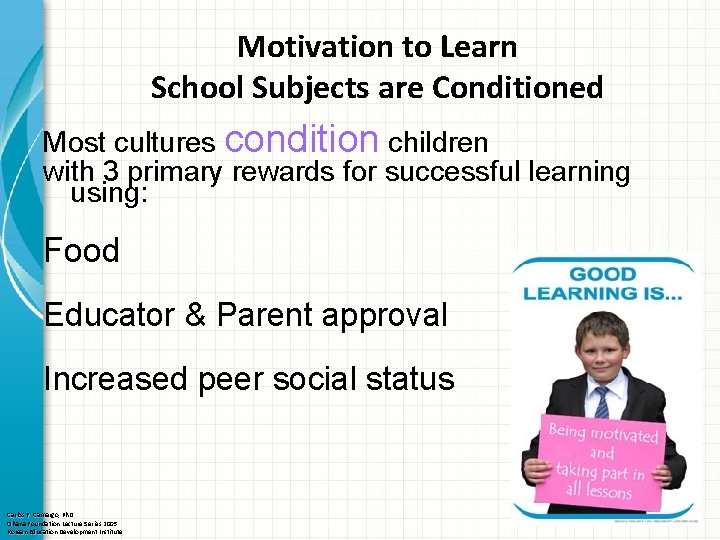
Motivation to Learn School Subjects are Conditioned Most cultures condition children with 3 primary rewards for successful learning using: Food Educator & Parent approval Increased peer social status Carlos F. Camargo, Ph. D Ohana Foundation Lecture Series 2005 Korean Education Development Institute
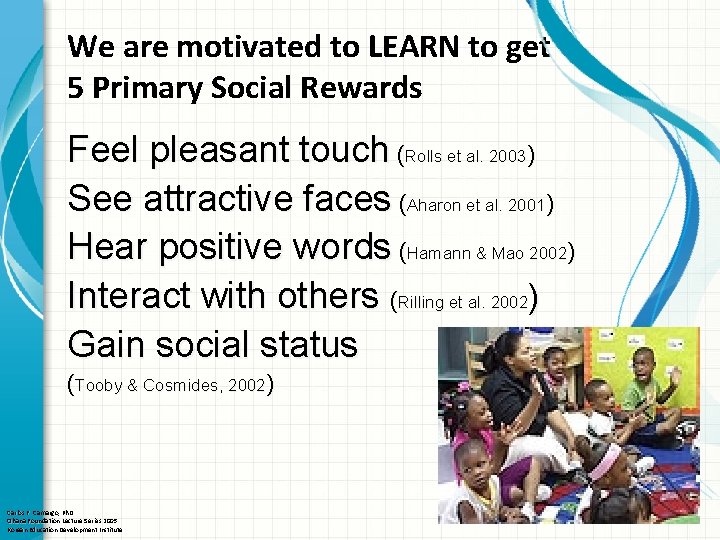
We are motivated to LEARN to get 5 Primary Social Rewards Feel pleasant touch (Rolls et al. 2003) See attractive faces (Aharon et al. 2001) Hear positive words (Hamann & Mao 2002) Interact with others (Rilling et al. 2002) Gain social status (Tooby & Cosmides, 2002) Carlos F. Camargo, Ph. D Ohana Foundation Lecture Series 2005 Korean Education Development Institute
Major promoters of learning = – REPETITION of INFORMATION (Squire and Kandel, 2000) – EXCITEMENT at the time of learning (Cahill & Gorski, 2003; Le. Doux, 2002) – EATING CARBOHYDRATES at time of learning (Korol, 2002) – 8 -9 HOURS OF SLEEP after learning (Kuriyama, Stickgold, & Walker, 2004) Carlos F. Camargo, Ph. D Ohana Foundation Lecture Series 2005 Korean Education Development Institute
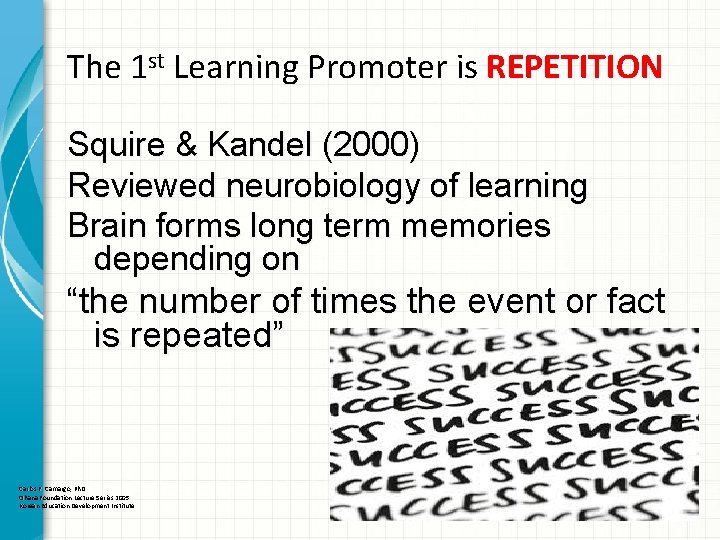
The 1 st Learning Promoter is REPETITION Squire & Kandel (2000) Reviewed neurobiology of learning Brain forms long term memories depending on “the number of times the event or fact is repeated” Carlos F. Camargo, Ph. D Ohana Foundation Lecture Series 2005 Korean Education Development Institute
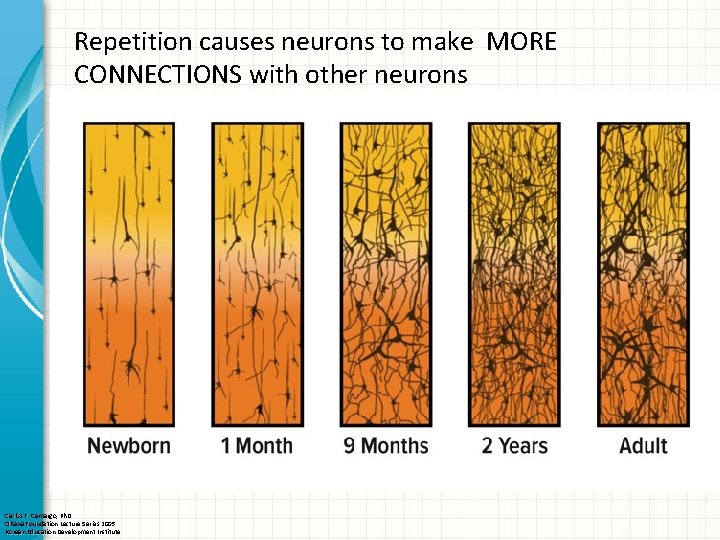
Repetition causes neurons to make MORE CONNECTIONS with other neurons Carlos F. Camargo, Ph. D Ohana Foundation Lecture Series 2005 Korean Education Development Institute
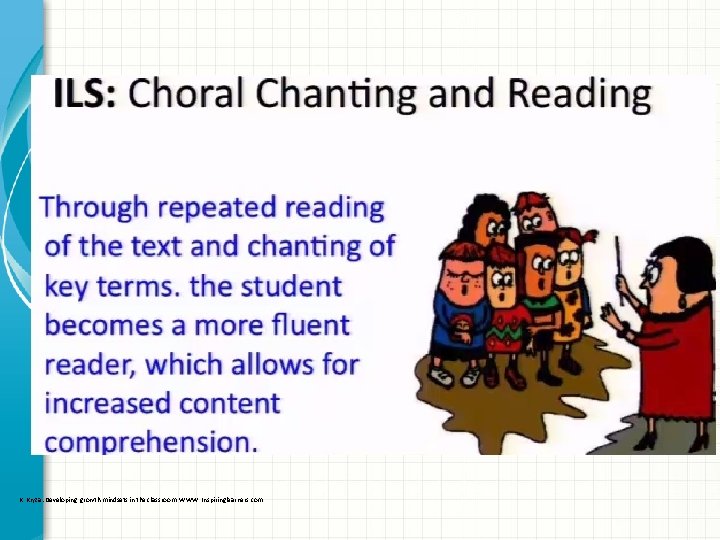
K. Kryza: Developing growth mindsets in the classroom. WWW. Inspiringlearners. com
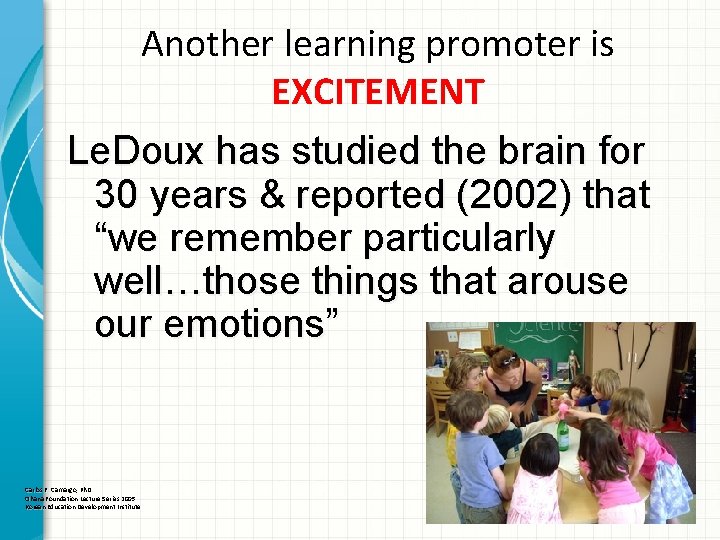
Another learning promoter is EXCITEMENT Le. Doux has studied the brain for 30 years & reported (2002) that “we remember particularly well…those things that arouse our emotions” Carlos F. Camargo, Ph. D Ohana Foundation Lecture Series 2005 Korean Education Development Institute
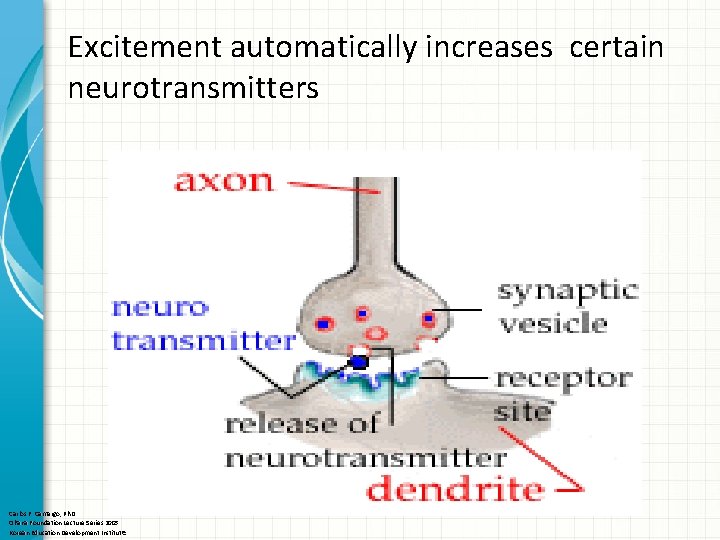
Excitement automatically increases certain neurotransmitters Carlos F. Camargo, Ph. D Ohana Foundation Lecture Series 2005 Korean Education Development Institut e
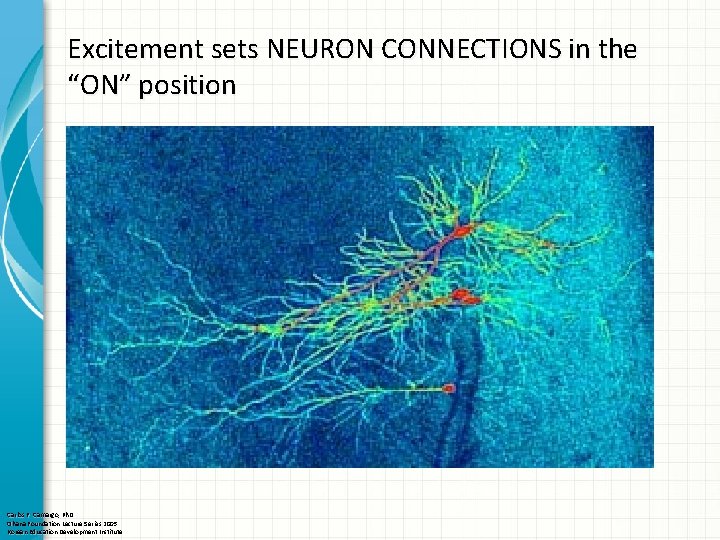
Excitement sets NEURON CONNECTIONS in the “ON” position Carlos F. Camargo, Ph. D Ohana Foundation Lecture Series 2005 Korean Education Development Institute
Another learning promoter is EATING CARBOHYDRATES (Complex-Whole grains, non processed foods, etc) • Greenwood and Winocur (2001) research: high-fat diet impairs brain glucose metabolism needed to form long term memory • Korol (2002) research: eating carbohydrates enhanced memory • (Smith, 2003) research: lack of breakfast impairs learning Carlos F. Camargo, Ph. D Ohana Foundation Lecture Series 2005 Korean Education Development Institute
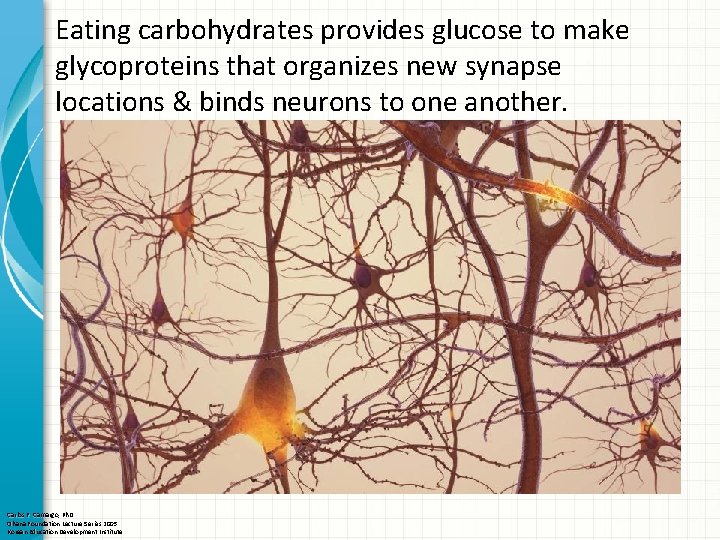
Eating carbohydrates provides glucose to make glycoproteins that organizes new synapse locations & binds neurons to one another. Carlos F. Camargo, Ph. D Ohana Foundation Lecture Series 2005 Korean Education Development Institute
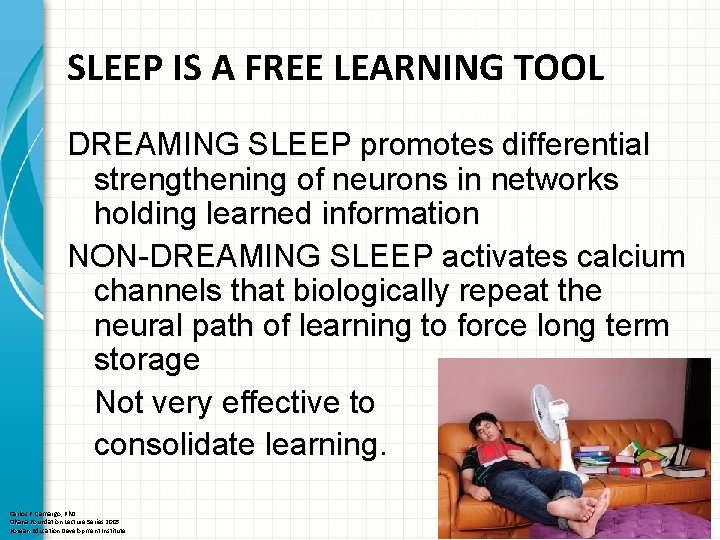
SLEEP IS A FREE LEARNING TOOL DREAMING SLEEP promotes differential strengthening of neurons in networks holding learned information NON-DREAMING SLEEP activates calcium channels that biologically repeat the neural path of learning to force long term storage Not very effective to consolidate learning. Carlos F. Camargo, Ph. D Ohana Foundation Lecture Series 2005 Korean Education Development Institute
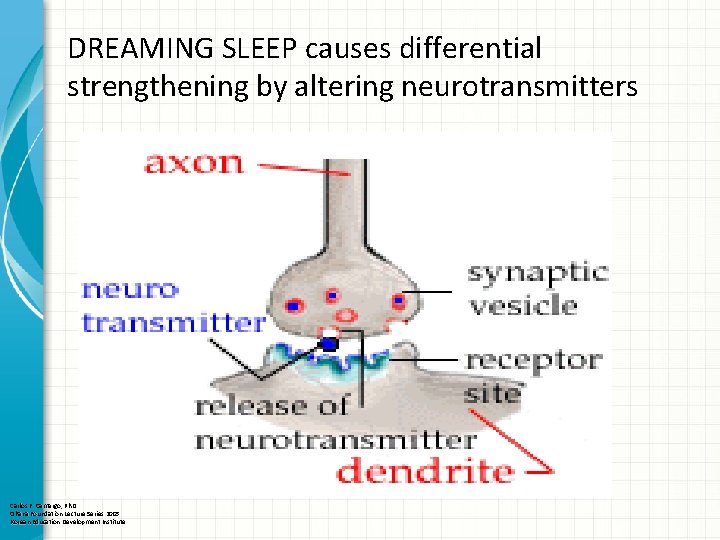
DREAMING SLEEP causes differential strengthening by altering neurotransmitters Carlos F. Camargo, Ph. D Ohana Foundation Lecture Series 2005 Korean Education Development Institute
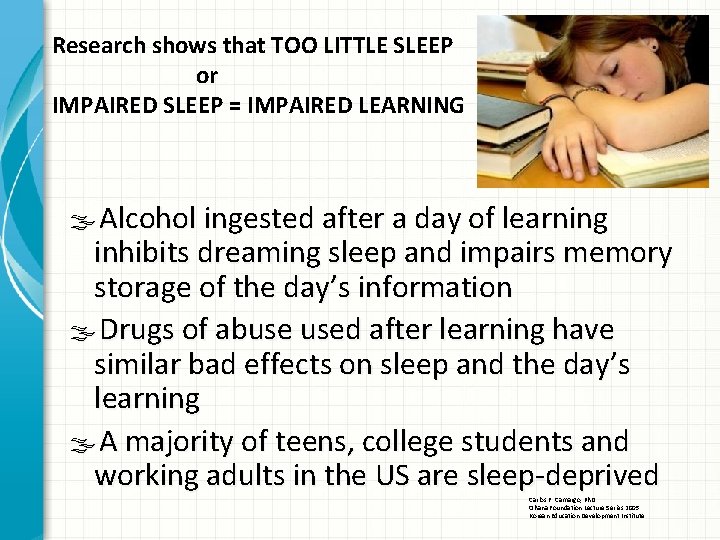
Research shows that TOO LITTLE SLEEP or IMPAIRED SLEEP = IMPAIRED LEARNING Alcohol ingested after a day of learning inhibits dreaming sleep and impairs memory storage of the day’s information Drugs of abuse used after learning have similar bad effects on sleep and the day’s learning A majority of teens, college students and working adults in the US are sleep-deprived Carlos F. Camargo, Ph. D Ohana Foundation Lecture Series 2005 Korean Education Development Institute
Of the major learning promoters – REPETITION of INFORMATION (Squire and Kandel, 2000) – EXCITEMENT at the time of learning (Cahill & Gorski, 2003; Le. Doux, 2002) – EATING CARBOHYDRATES at time of learning (Korol, 2002) – 8 -9 HOURS OF SLEEP after learning (Kuriyama, Stickgold, & Walker, 2004) Carlos F. Camargo, Ph. D Ohana Foundation Lecture Series 2005 Korean Education Development Institute
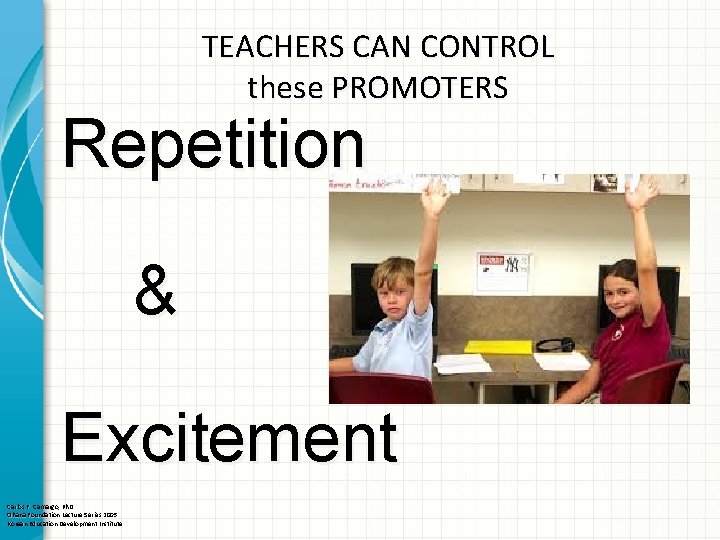
TEACHERS CAN CONTROL these PROMOTERS Repetition & Excitement Carlos F. Camargo, Ph. D Ohana Foundation Lecture Series 2005 Korean Education Development Institute
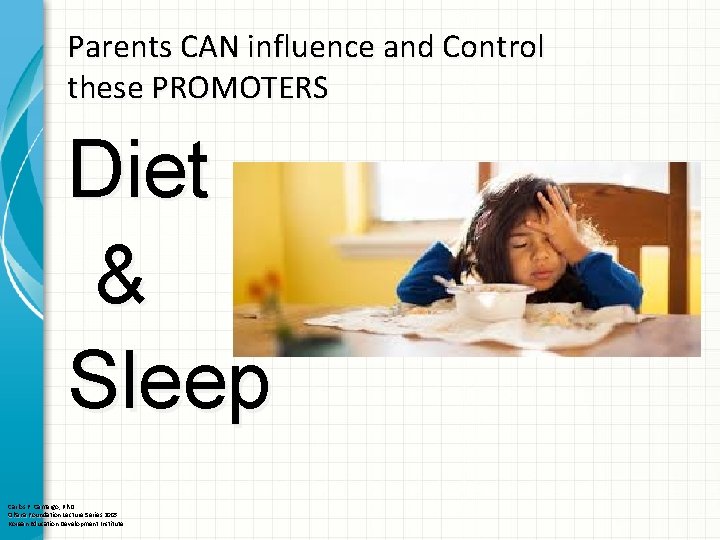
Parents CAN influence and Control these PROMOTERS Diet & Sleep Carlos F. Camargo, Ph. D Ohana Foundation Lecture Series 2005 Korean Education Development Institute
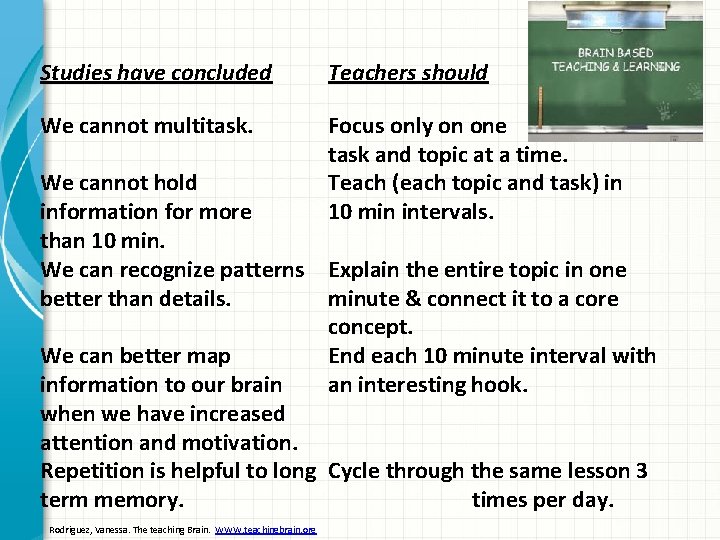
Studies have concluded Teachers should We cannot multitask. Focus only on one task and topic at a time. Teach (each topic and task) in 10 min intervals. We cannot hold information for more than 10 min. We can recognize patterns Explain the entire topic in one better than details. minute & connect it to a core concept. We can better map End each 10 minute interval with information to our brain an interesting hook. when we have increased attention and motivation. Repetition is helpful to long Cycle through the same lesson 3 term memory. times per day. Rodriguez, Vanessa. The teaching Brain. WWW. teachingbrain. org
Resources - Sources Amen Clinics Atlas: http: //amenclinics. com/bp/atlas/ Great website sponsored by Amen Clinics Inc. , A Medical Corporation. Autonomic Nervous System: http: //faculty. washington. edu/chudler/auto. html Summary of information about the structure and function of the autonomic nervous system. Basic Neural Processes Tutorials: http: //psych. hanover. edu/Krantz/neurotut. html Learn about basic brain functioning. Brain and Behavior : http: //serendip. brynmawr. edu/bb/ Large site - contains lots of links to information about the brain & behavior. Students can complete several interactive exercises to learn more about brain functions. Brain & Mind – Electronic Magazine on Neuroscience http: //www. epub. org. br/cm/ Includes a wealth of short articles devoted to the brain. Brain Model Tutorial: http: //pegasus. cc. ucf. edu/~Brainmd 1/brain. html This site teaches students about the various parts of the human brain and allows them to test their knowledge of brain structures. Carlos F. Camargo, Ph. D The Neuroscience of Learning. Ohana Foundation Lecture Series 2005 Korean Education Development Institute The Human Brain: A Learning Tool: http: //uta. maymt. edu/~psychol/brain. html Close-up pictures of the brain’s lobes. Neuroscience for Kids: http: //faculty. washington. edu/chudler/neurok. html Shen, Jason. Why practice actually makes perfect: How to rewire your brain for better performance. https: //blog. bufferapp. com/why-practice-actually-makes-perfect-how-to-rewire-your-brain-forbetter-performance Van Sant, Rick. "Implications of Brain Research on Game and Simulation Design. " Implications of Brain Research on Game and Simulation Design. N. p. , n. d. Web. 09 May 2016. <http: //www. slideshare. net/vansantr/playing-with-the-brain? qid=b 5 a 55 e 0 f-498 a-43 a 6 -95 ba 8084788 e 063 c&v=&b=&from_search=3>. Whole Brain Atlas: http: //www. med. harvard. edu: 80/AANLIB/home. html