
Neuroscience and Behavior Neurons are similar to other
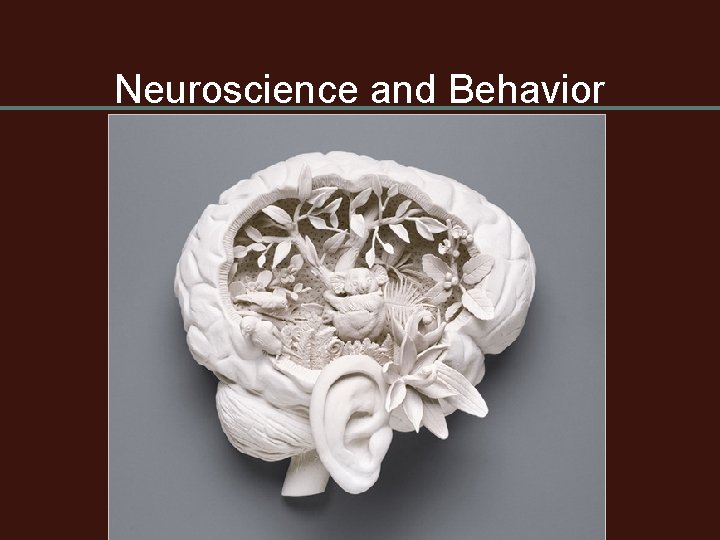
Neuroscience and Behavior
Neurons are similar to other cells in the body because: Neurons are surrounded by a cell membrane. Neurons have a nucleus that contains genes. Neurons contain cytoplasm, mitochondria and other organelles. Neurons carry out basic cellular processes such as protein synthesis and energy production. However, neurons differ from other cells in the body because: Neurons have specialized extensions called dendrites and axons. Dendrites bring information to the cell body and axons take information away from the cell body. Neurons communicate with each other through an electrochemical process. Neurons contain some specialized structures (for example, synapses) and chemicals (for example, neurotransmitters). 2
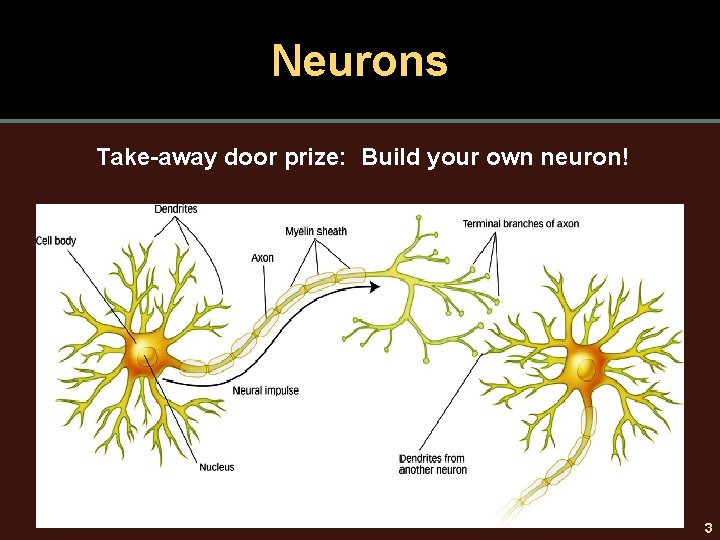
Neurons Take-away door prize: Build your own neuron! 3
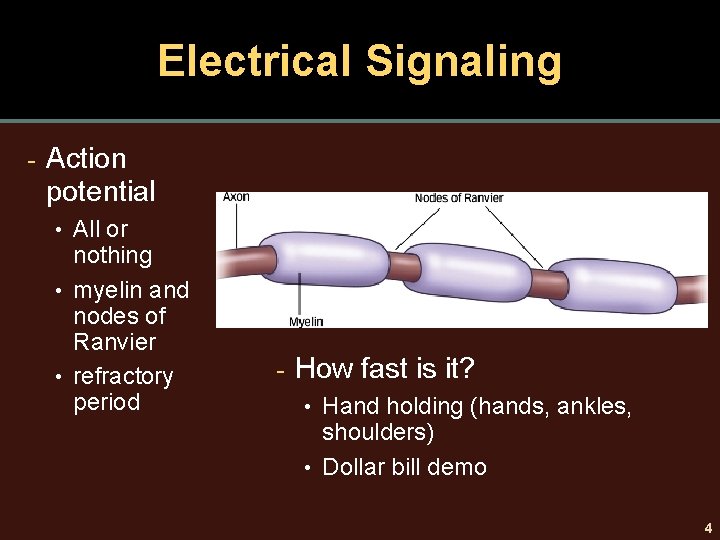
Electrical Signaling - Action potential • All or nothing • myelin and nodes of Ranvier • refractory period - How fast is it? • Hand holding (hands, ankles, shoulders) • Dollar bill demo 4
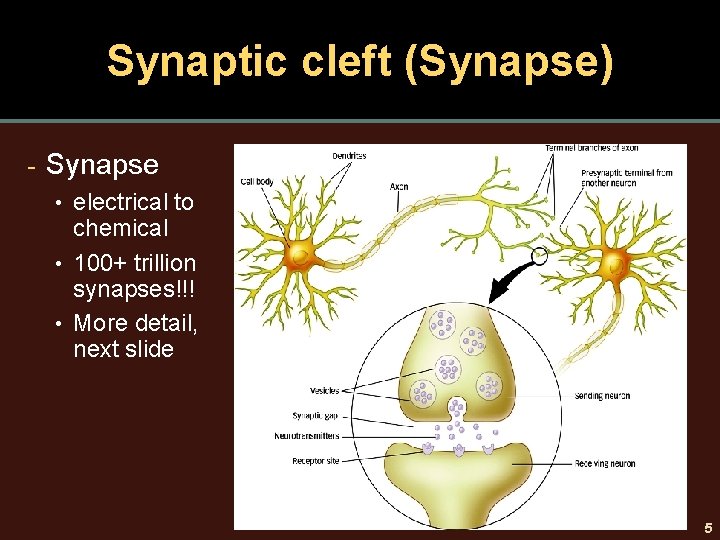
Synaptic cleft (Synapse) - Synapse • electrical to chemical • 100+ trillion synapses!!! • More detail, next slide 5
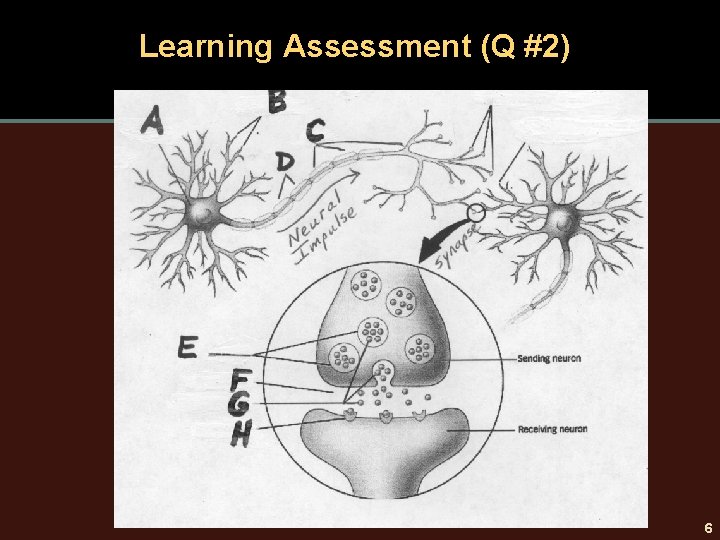
Learning Assessment (Q #2) 6
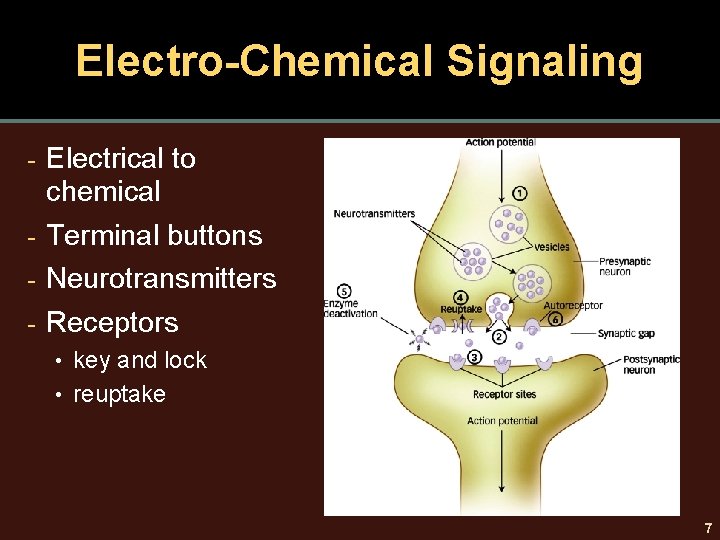
Electro-Chemical Signaling Electrical to chemical - Terminal buttons - Neurotransmitters - Receptors - • key and lock • reuptake 7
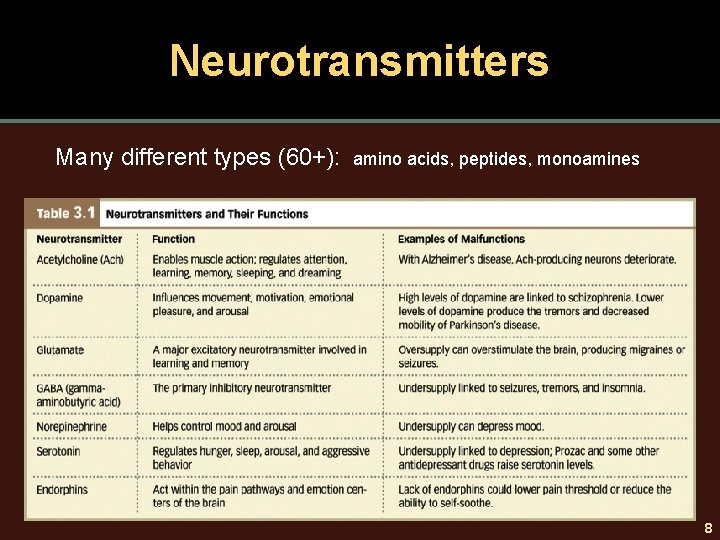
Neurotransmitters Many different types (60+): amino acids, peptides, monoamines 8
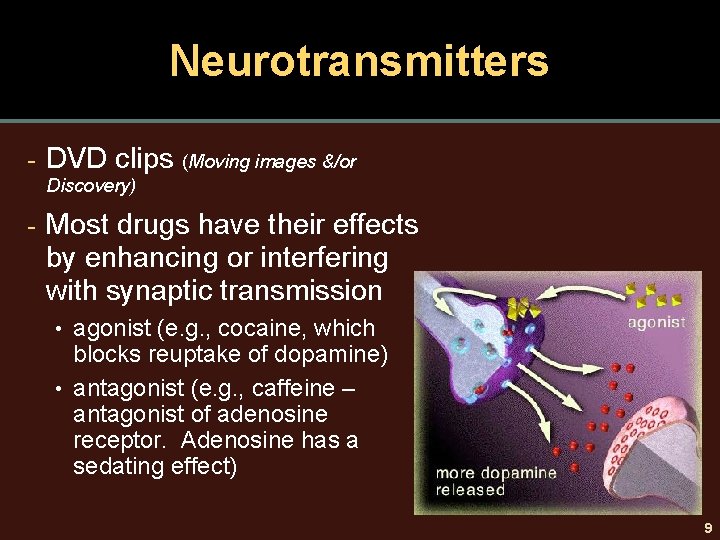
Neurotransmitters - DVD clips (Moving images &/or Discovery) - Most drugs have their effects by enhancing or interfering with synaptic transmission • agonist (e. g. , cocaine, which blocks reuptake of dopamine) • antagonist (e. g. , caffeine – antagonist of adenosine receptor. Adenosine has a sedating effect) 9
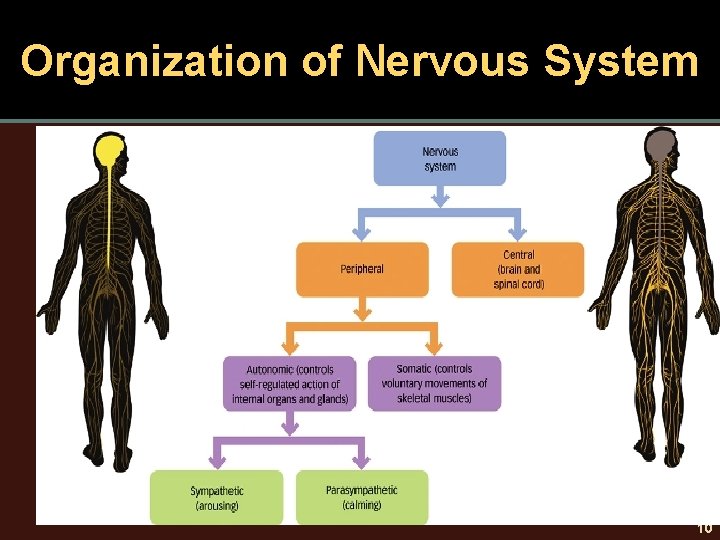
Organization of Nervous System 10
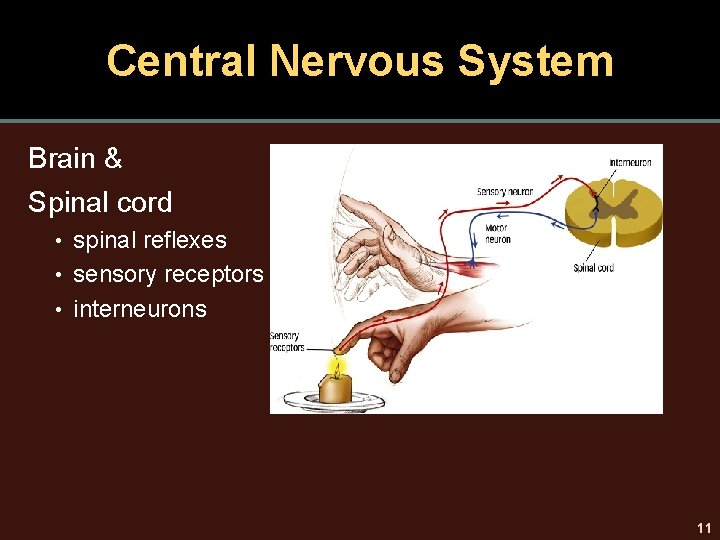
Central Nervous System Brain & Spinal cord • spinal reflexes • sensory receptors • interneurons 11
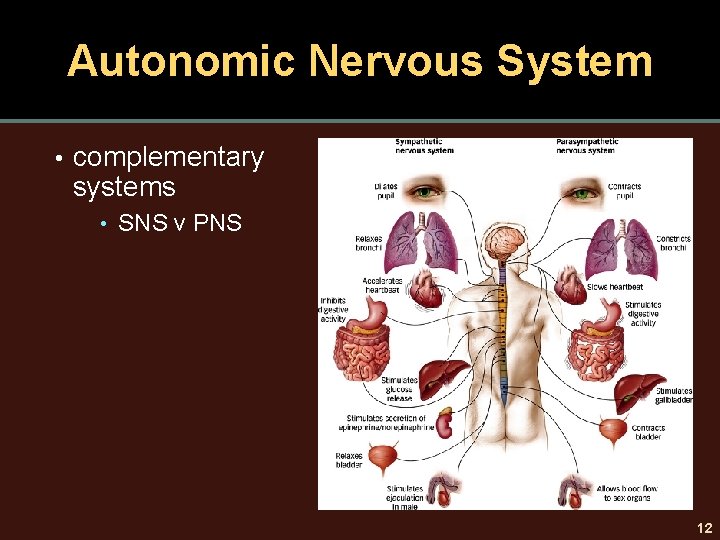
Autonomic Nervous System • complementary systems • SNS v PNS 12
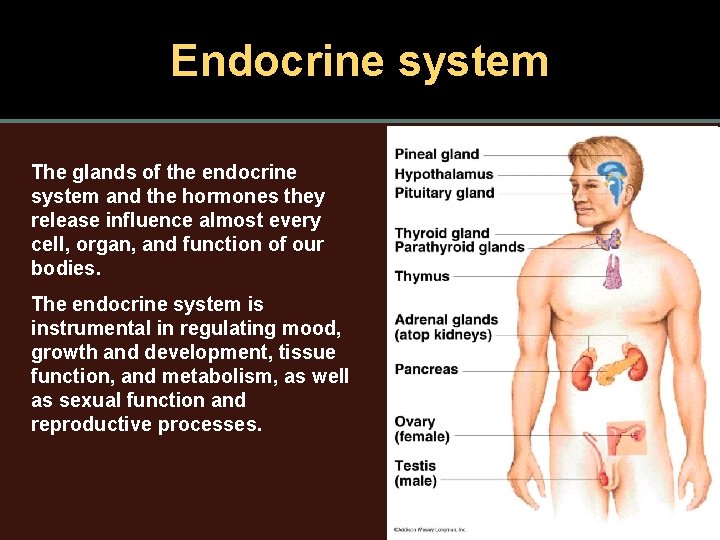
Endocrine system The glands of the endocrine system and the hormones they release influence almost every cell, organ, and function of our bodies. The endocrine system is instrumental in regulating mood, growth and development, tissue function, and metabolism, as well as sexual function and reproductive processes.
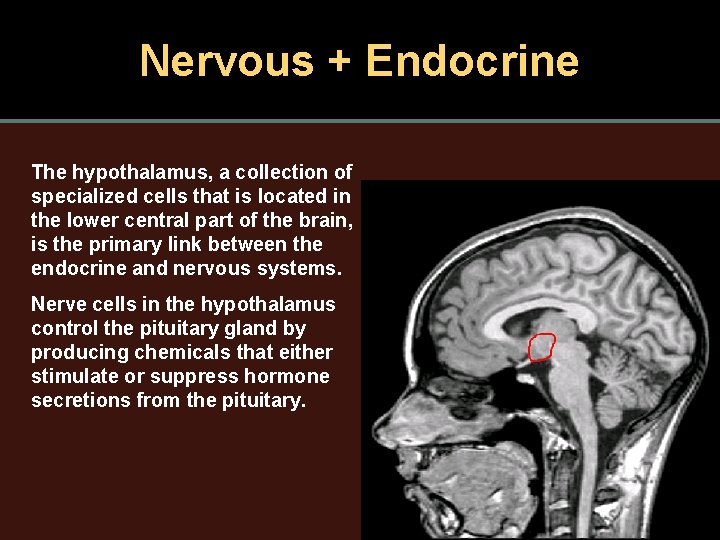
Nervous + Endocrine The hypothalamus, a collection of specialized cells that is located in the lower central part of the brain, is the primary link between the endocrine and nervous systems. Nerve cells in the hypothalamus control the pituitary gland by producing chemicals that either stimulate or suppress hormone secretions from the pituitary.
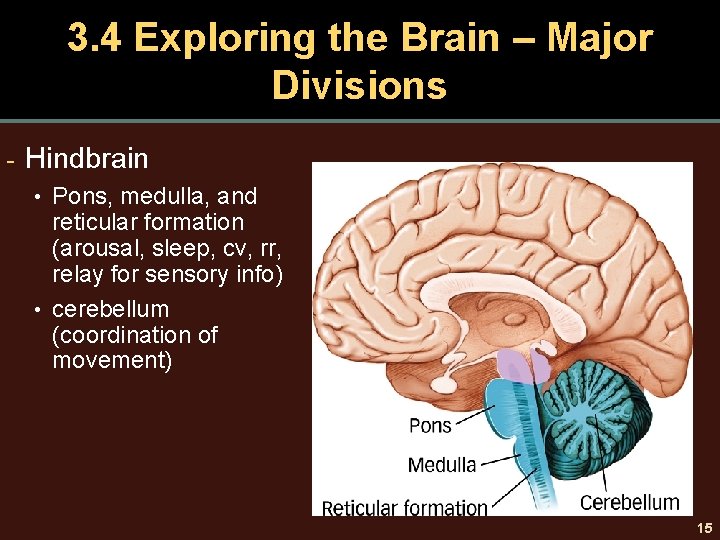
3. 4 Exploring the Brain – Major Divisions - Hindbrain • Pons, medulla, and reticular formation (arousal, sleep, cv, rr, relay for sensory info) • cerebellum (coordination of movement) 15
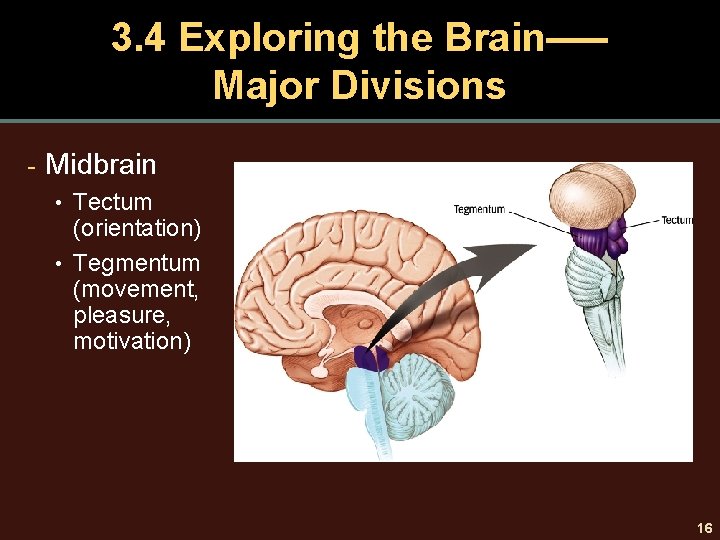
3. 4 Exploring the Brain–— Major Divisions - Midbrain • Tectum (orientation) • Tegmentum (movement, pleasure, motivation) 16
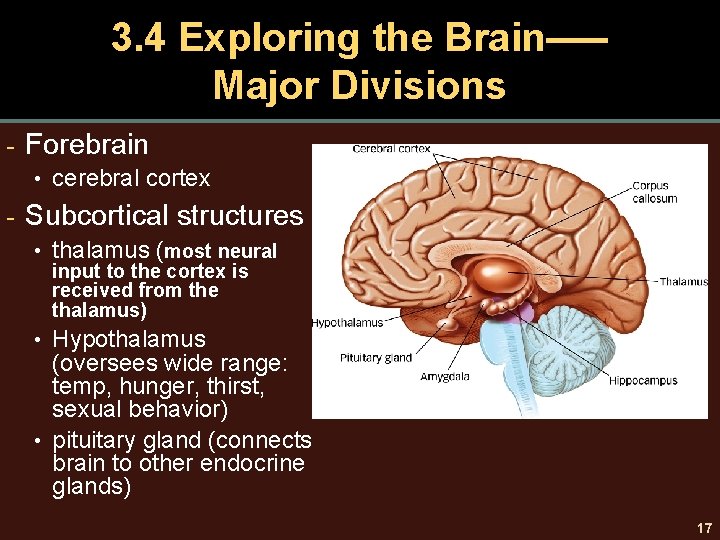
3. 4 Exploring the Brain–— Major Divisions - Forebrain • cerebral cortex - Subcortical structures • thalamus (most neural input to the cortex is received from the thalamus) • Hypothalamus (oversees wide range: temp, hunger, thirst, sexual behavior) • pituitary gland (connects brain to other endocrine glands) 17
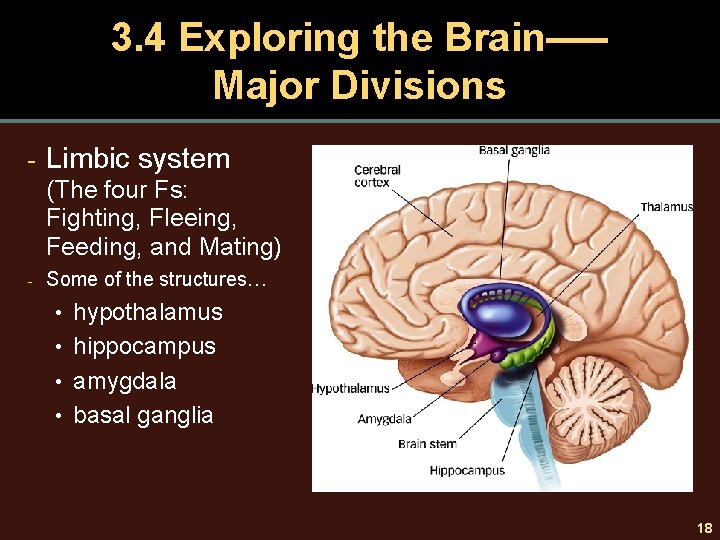
3. 4 Exploring the Brain–— Major Divisions - Limbic system (The four Fs: Fighting, Fleeing, Feeding, and Mating) - Some of the structures… • hypothalamus • hippocampus • amygdala • basal ganglia 18
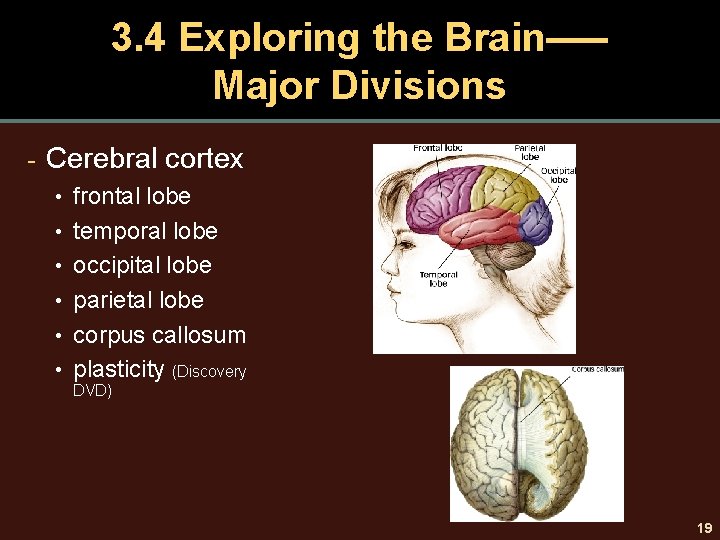
3. 4 Exploring the Brain–— Major Divisions - Cerebral cortex • frontal lobe • temporal lobe • occipital lobe • parietal lobe • corpus callosum • plasticity (Discovery DVD) 19
PSYCHOLOGY Brain http: //www. pbs. org/wnet/brain/3 d/ index. html
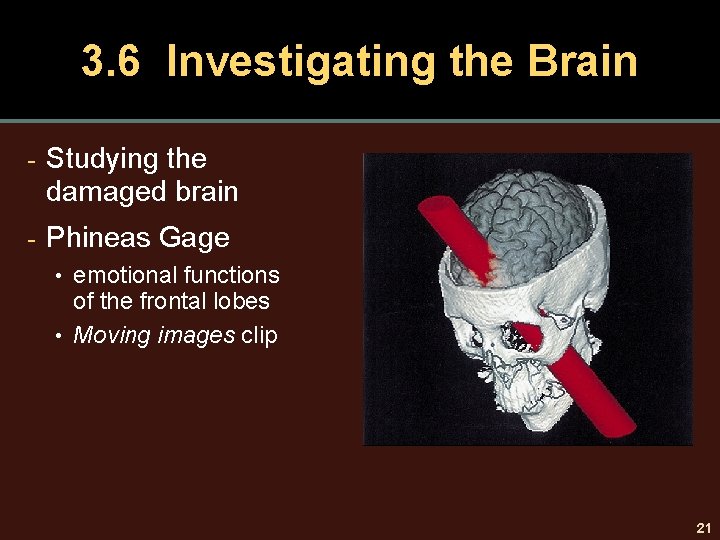
3. 6 Investigating the Brain - Studying the damaged brain - Phineas Gage • emotional functions of the frontal lobes • Moving images clip 21
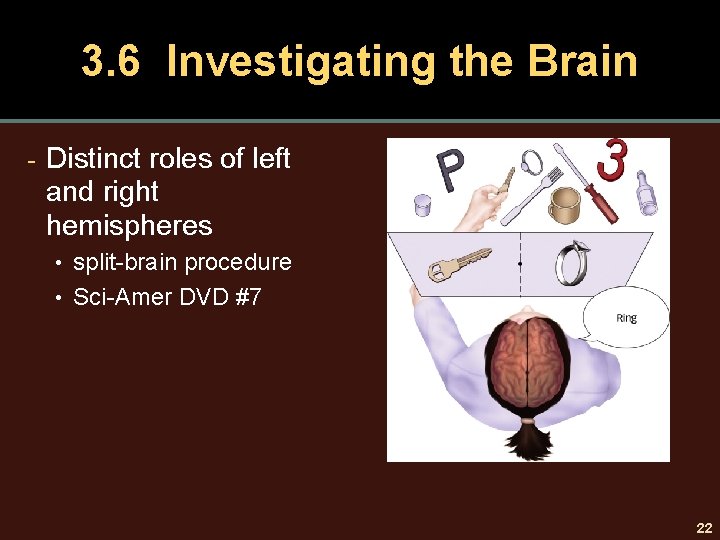
3. 6 Investigating the Brain - Distinct roles of left and right hemispheres • split-brain procedure • Sci-Amer DVD #7 22
3. 6 Listening to the Brain - Electroencephalogram (EEG) - Brain patterns while sleeping and awake 23
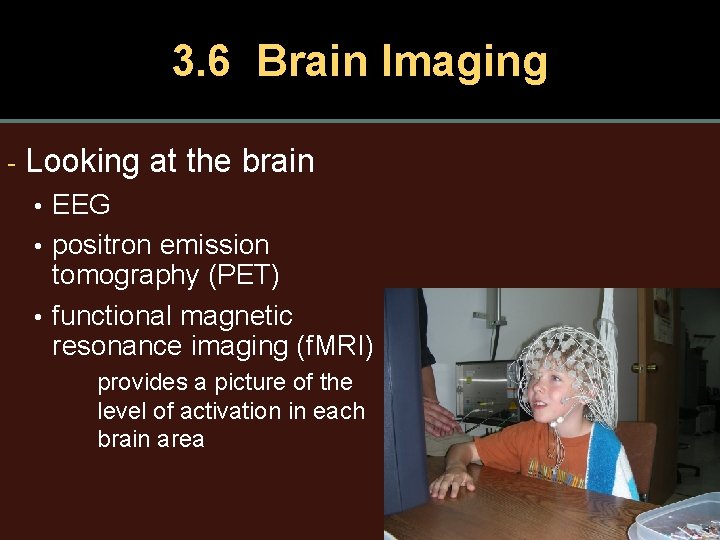
3. 6 Brain Imaging - Looking at the brain • EEG • positron emission tomography (PET) • functional magnetic resonance imaging (f. MRI) provides a picture of the level of activation in each brain area 24
- Slides: 24