
NEUROPLASTICITY AND PEDIATRIC BRAIN INJURY A REASON FOR
NEUROPLASTICITY: AND PEDIATRIC BRAIN INJURY: A REASON FOR HOPE Richard O. Temple, Ph. D. Licensed Clinical Psychologist Clinical Neuropsychology Email: info@richtemplephd. com Web: www. richtemplephd. com
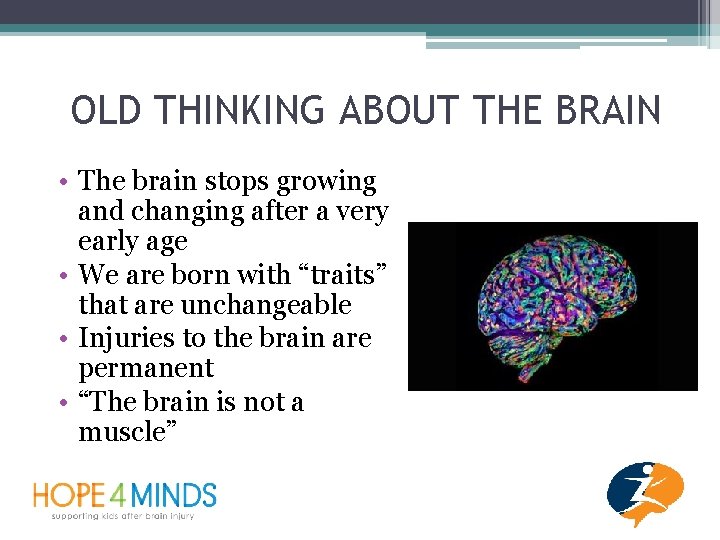
OLD THINKING ABOUT THE BRAIN • The brain stops growing and changing after a very early age • We are born with “traits” that are unchangeable • Injuries to the brain are permanent • “The brain is not a muscle”

A Reason for Hope
NEUROPLASTICITY • The inherent ability of the brain to change in response to experiences • “One of the most extraordinary discoveries of the twentieth century” ▫ Norman Doidge, Canadian Psychiatrist, author of “The Brain That Changes Itself” and “The Brain’s Way of Healing”
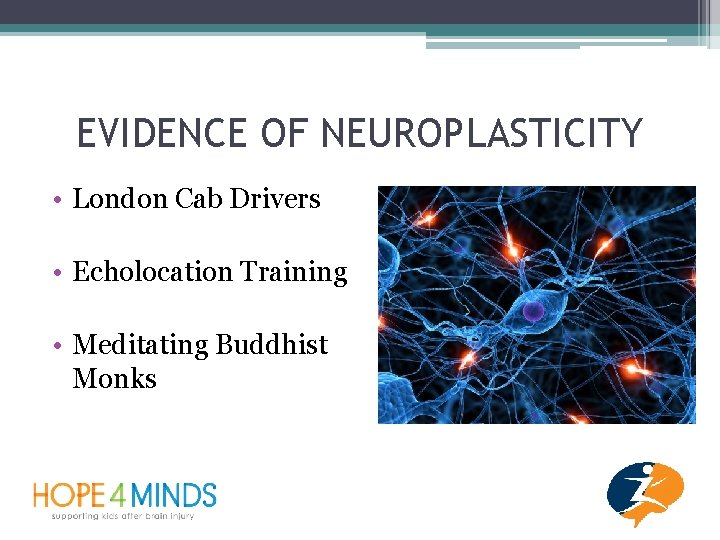
EVIDENCE OF NEUROPLASTICITY • London Cab Drivers • Echolocation Training • Meditating Buddhist Monks
NEUROPLASTICITY • A naturally occurring process • “Our brain is always changing” ▫ Positive neuroplasticity �Learning a new skill �Imagination �New experiences �Intensity and repetition �Meditation and trait changes
NEUROPLASTICITY ▫ Negative neuroplasticity �Not practicing a skill �Constraining thoughts or experiences ▫ Examples of negative neuroplasticity �Learned disuse �Pain
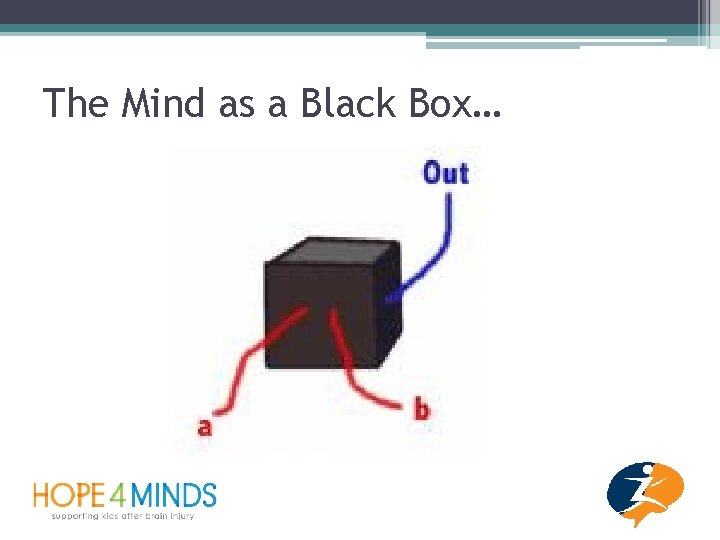
The Mind as a Black Box…
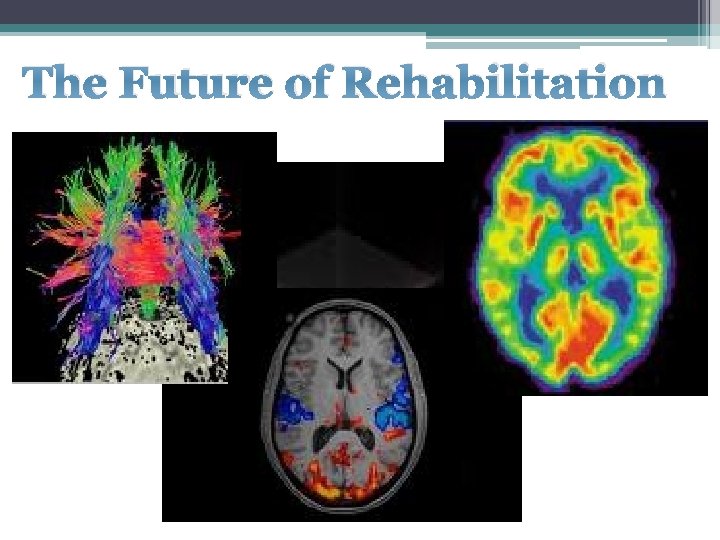
The Future of Rehabilitation
Inside The Black Box • Over 100 BILLION brain cells involved in information processing • 30, 000 -60, 000 brain cells in a piece of brain the size of a grain of salt • Each brain cell can have upwards of 20, 000 connections with other brain cells • Ample raw material for neuroplasticity!
NEUROPLASTICITY • What we are trying to achieve: ▫ New brain areas responding to activity ▫ Improved connections between brain areas (white matter integrity) ▫ A more efficient brain that interconnects and transmits messages more efficiently
NEUROPLASTICITY IN THE PEDIATRIC BRAIN • Pediatric brain is thought to be more plastic ▫ Still developing • Challenge of latent abilities ▫ Deficits emerging later in life • Younger children may not be able to understand some information as well as adults • Motivation
NEUROPLASTICITY: Active Ingredients • Intensity and repetition ▫ ▫ ▫ “building bridges” Get comfortable with small, consistent changes Making it automatic and efficient Errorless learning Understand that neural changes precede behavioral changes
NEUROPLASTICITY: Active Ingredients • Variety and Novelty ▫ Make yourself uncomfortable! ▫ New thinking and experiences create new connections ▫ Increased intensity creates new connections, or strengthens existing connections
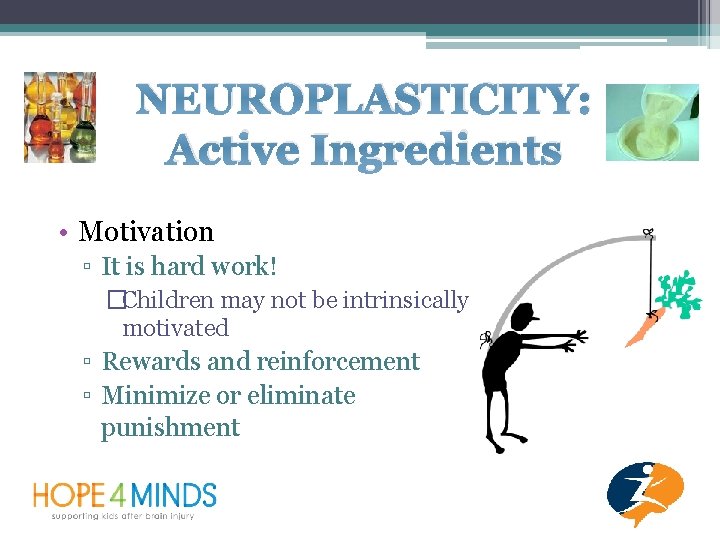
NEUROPLASTICITY: Active Ingredients • Motivation ▫ It is hard work! �Children may not be intrinsically motivated ▫ Rewards and reinforcement ▫ Minimize or eliminate punishment
NEUROPLASTIC ENVIRONMENT • Behavioral Change ▫ Creating a routine conducive to neuroplasticity �Schedule �Meaningful Activity �Perils of the “resting state” �Create an environment conducive to repetition, challenge, and new learning
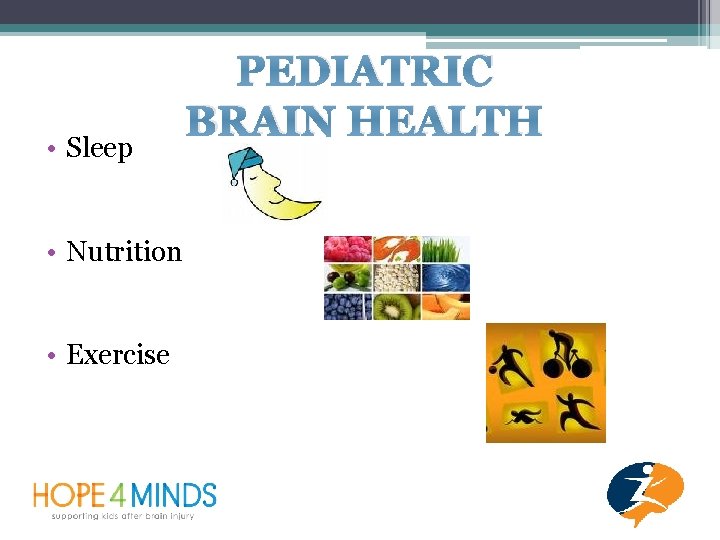
• Sleep • Nutrition • Exercise PEDIATRIC BRAIN HEALTH
INNOVATIVE THERAPIES • Software Programs • Biofeedback • Neurofeedback ▫ Trans-cranial magnetic stimulation (TMS) • Stem Cell Therapy • Meditation / Mindfulness
The Internet • Can be used for good or evil ▫ Mind-numbing passive viewing like TV ▫ Accumulation of knowledge and idea generator
NEUROPLASTICITY GAME PLAN • Fight negative neuroplasticity • Develop a positive neuroplastic routine ▫ Intensity ▫ Novelty ▫ Good sleep, nutrition, and exercise • Provide motivation and hope • Stay current with the latest developments
Thank You
- Slides: 21