
Neuroplasticity A Kent Van Cleave Jr Ph D

- Slides: 15
Neuroplasticity A. Kent Van Cleave, Jr. , Ph. D.
Neuroplasticity refers to structural changes that happen in the brain due to learning, experience, maturation, and a variety of other sources. Fuchs & Flugge (2014, p. 1) offer a taxonomy of morphological changes that can occur: “morphological alterations in brain areas, changes in neuron morphology, network alterations including changes in neuronal connectivity, the generation of new neurons (neurogenesis), and neurobiochemical changes. ”
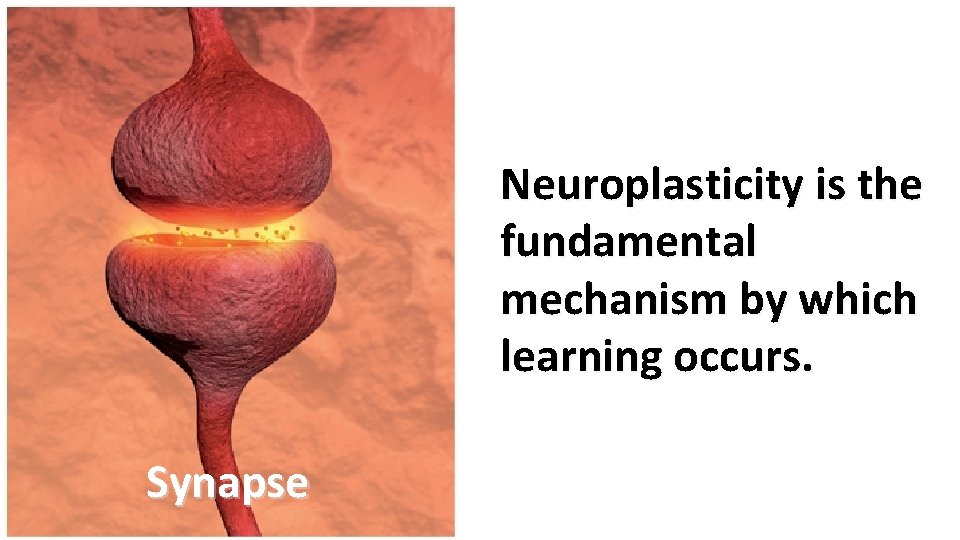
Neuroplasticity is the fundamental mechanism by which learning occurs. Synapse
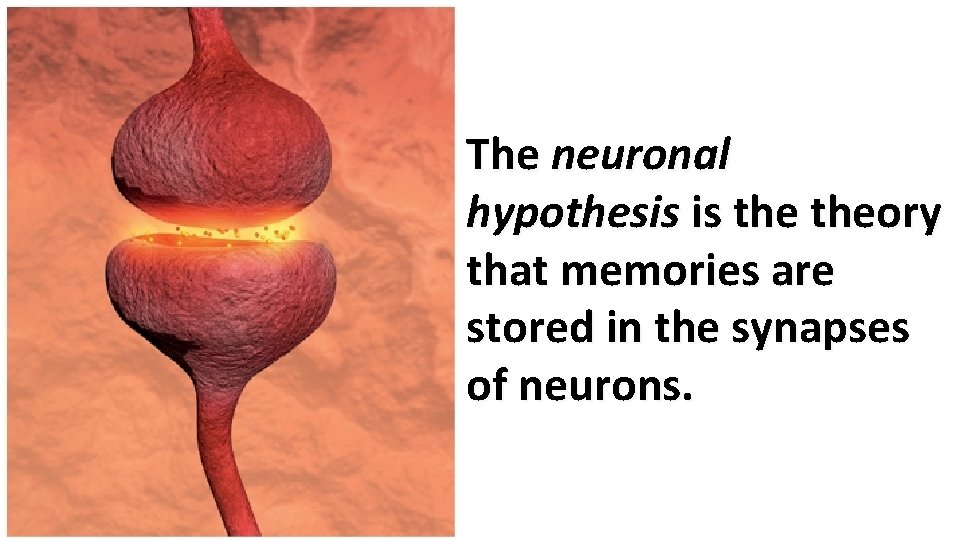
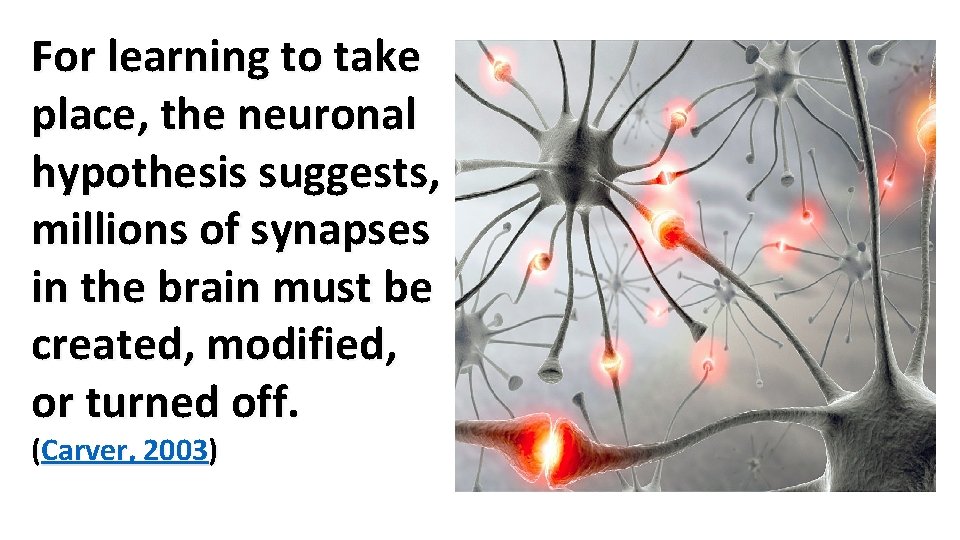
The neuronal hypothesis is theory that memories are stored in the synapses of neurons.
For learning to take place, the neuronal hypothesis suggests, millions of synapses in the brain must be created, modified, or turned off. (Carver, 2003)
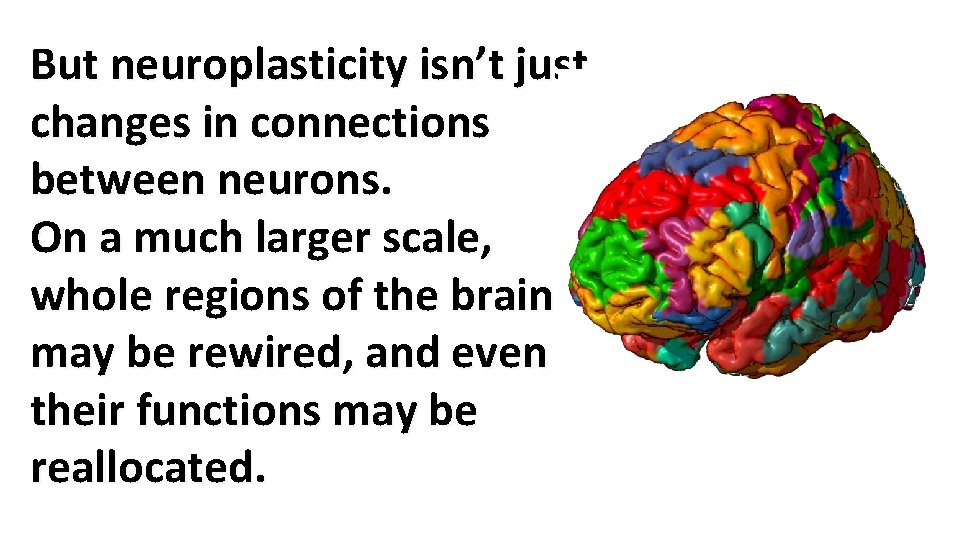
But neuroplasticity isn’t just changes in connections between neurons. On a much larger scale, whole regions of the brain may be rewired, and even their functions may be reallocated.
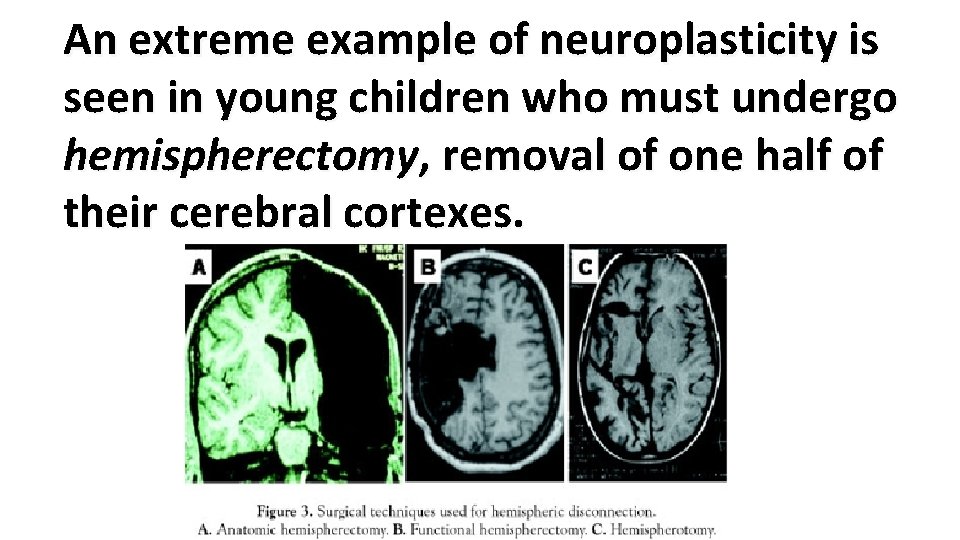
An extreme example of neuroplasticity is seen in young children who must undergo hemispherectomy, removal of one half of their cerebral cortexes.
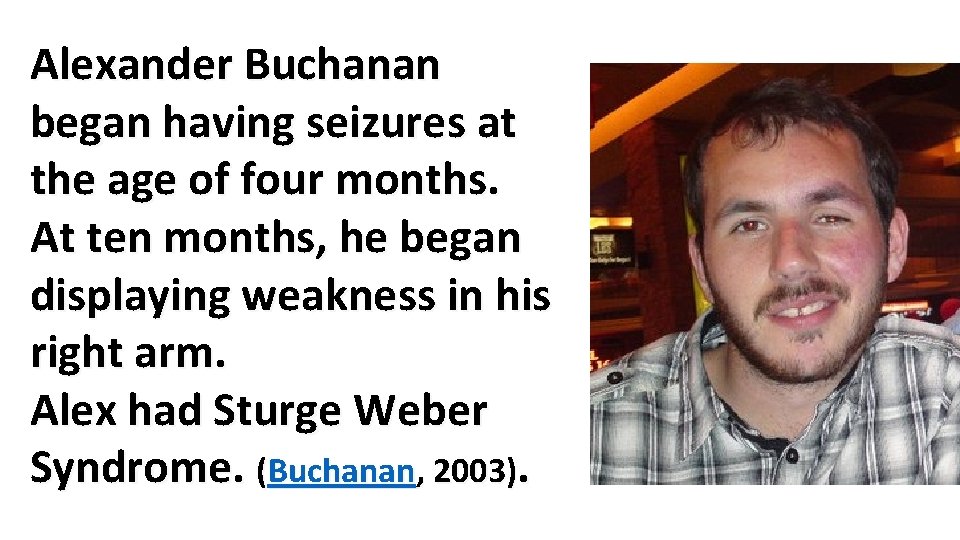
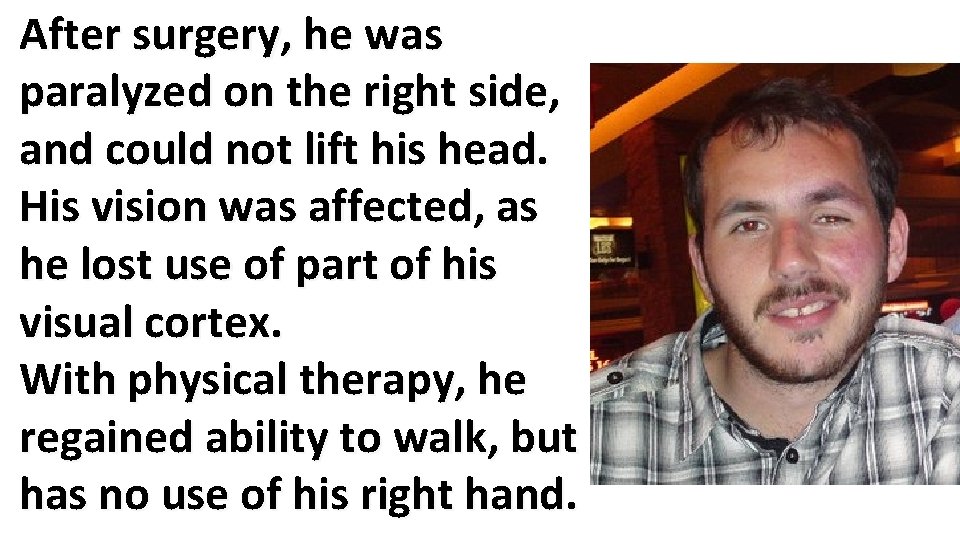
Alexander Buchanan began having seizures at the age of four months. At ten months, he began displaying weakness in his right arm. Alex had Sturge Weber Syndrome. (Buchanan, 2003).
By four years old, Alex’s quality of life began to be affected, and his right side progressively weakened. Alex underwent a hemispherectomy.
After surgery, he was paralyzed on the right side, and could not lift his head. His vision was affected, as he lost use of part of his visual cortex. With physical therapy, he regained ability to walk, but has no use of his right hand.
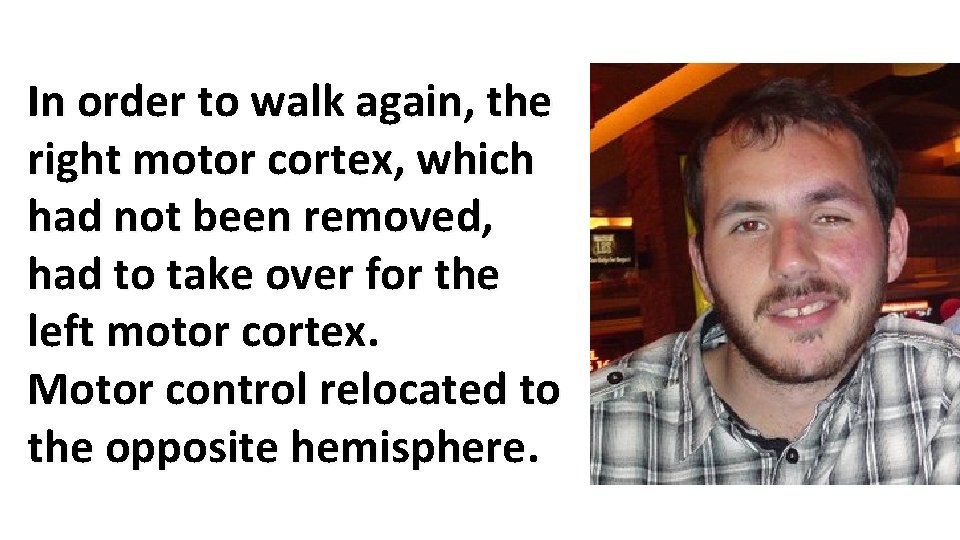
In order to walk again, the right motor cortex, which had not been removed, had to take over for the left motor cortex. Motor control relocated to the opposite hemisphere.
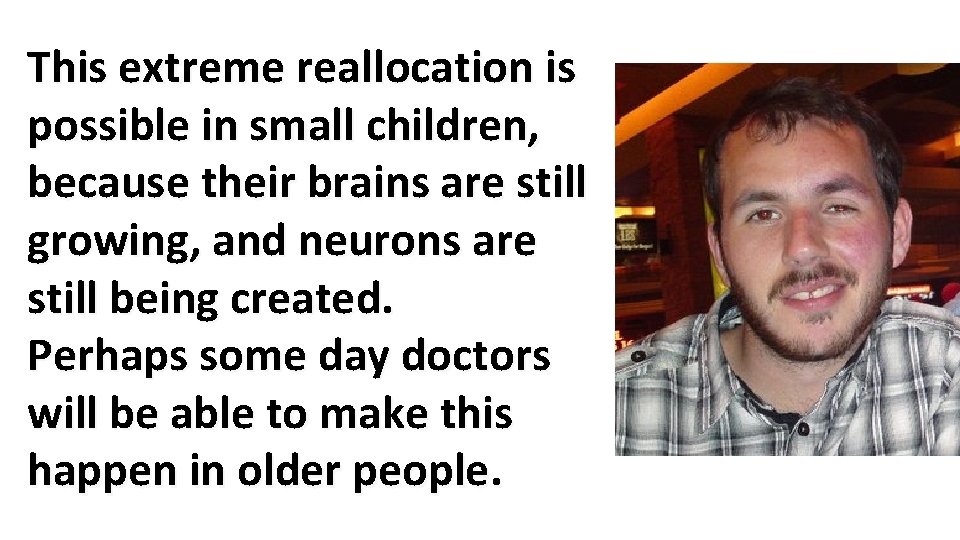
This extreme reallocation is possible in small children, because their brains are still growing, and neurons are still being created. Perhaps some day doctors will be able to make this happen in older people.
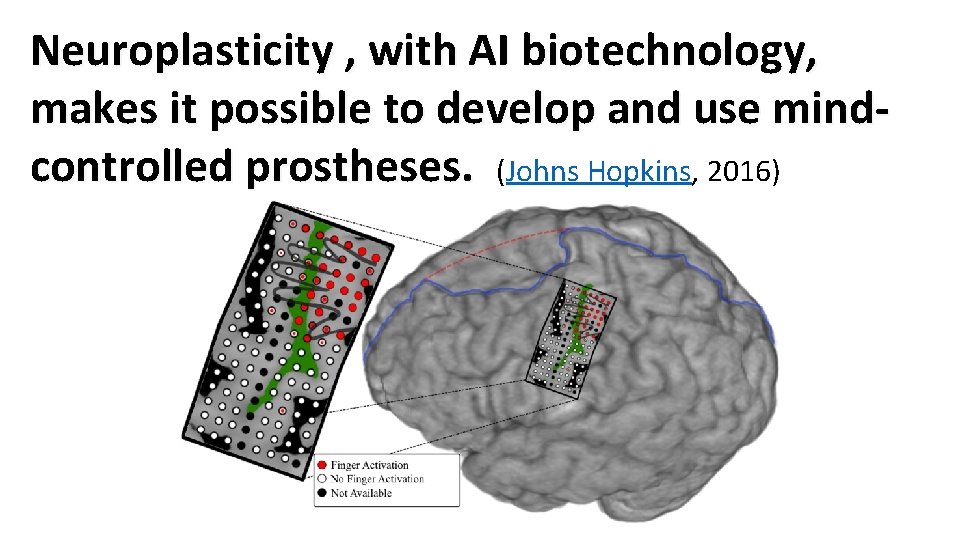
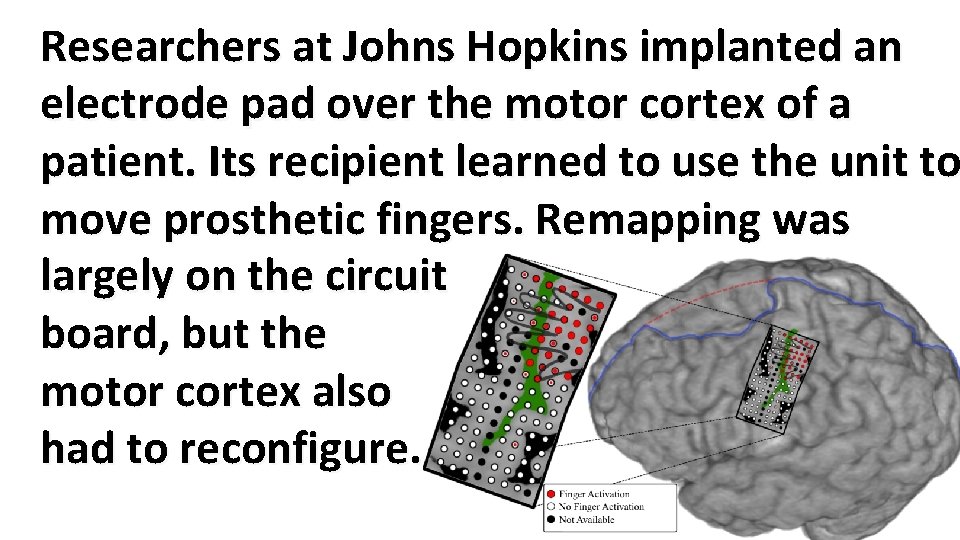
Neuroplasticity , with AI biotechnology, makes it possible to develop and use mindcontrolled prostheses. (Johns Hopkins, 2016)
Researchers at Johns Hopkins implanted an electrode pad over the motor cortex of a patient. Its recipient learned to use the unit to move prosthetic fingers. Remapping was largely on the circuit board, but the motor cortex also had to reconfigure.
References Buchanan, L. (2011). Alexander’s story – who underwent hemispherectomy. Sturge Weber UK. Retrieved from http: //www. sturgeweber. org. uk/2011/07/alexander. html Carver, C. F. (2003). The making of a memory mechanism. Journal of the History of Biology, 36, 153 -195. Retrieved from https: //pnp. artsci. wustl. edu/files/philosophy/imce/making_memory_ mechanism_0. pdf Fuchs, E. , & Flugge, G. (2014). Adult neuroplasticity: More than 40 years of research. Neural Plasticity, 1– 10. doi: 10. 1155/2014/541870. Accessed from https: //www. ncbi. nlm. nih. gov/pmc/articles/PMC 4026979/ Johns Hopkins Medicine (2016). Mind controlled prosthetic arm moves individual ‘fingers’. Retrieved from https: //www. hopkinsmedicine. org/news/media/releases/mind_contro lled_prosthetic_arm_moves_individual_fingers_