
Neurophysiology The electrical and chemical processes within neurons
- Slides: 22
Neurophysiology • The electrical and chemical processes within neurons – An action potential is a rapid electrical signal that travels along the axon of a neuron. – A neurotransmitter is a chemical messenger between neurons. – Electrical and chemical processes work together • Chemistry produces the electrical activity • Electrical activity modulates the chemistry – Not responsible for Nernst equation on page 65.
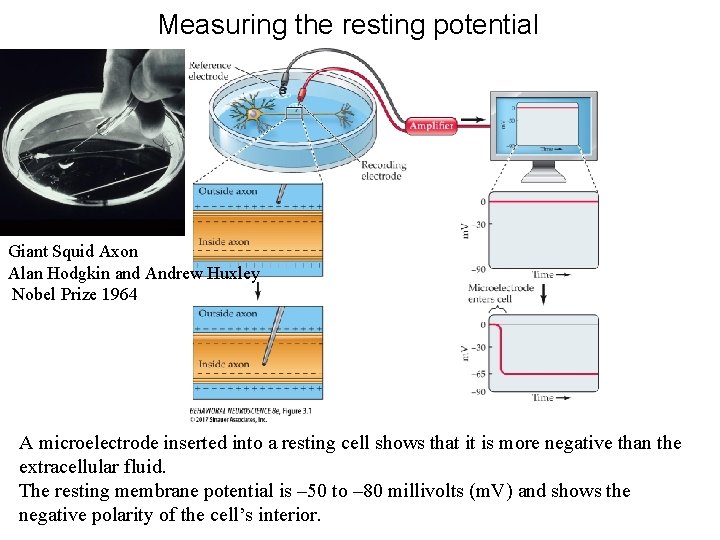
Measuring the resting potential Giant Squid Axon Alan Hodgkin and Andrew Huxley Nobel Prize 1964 A microelectrode inserted into a resting cell shows that it is more negative than the extracellular fluid. The resting membrane potential is – 50 to – 80 millivolts (m. V) and shows the negative polarity of the cell’s interior.
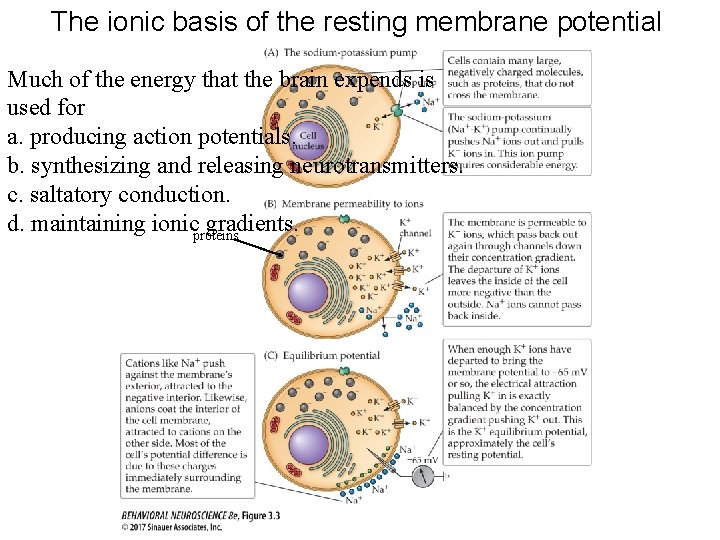
The ionic basis of the resting membrane potential Much of the energy that the brain expends is used for a. producing action potentials. b. synthesizing and releasing neurotransmitters. c. saltatory conduction. d. maintaining ionicproteins gradients.
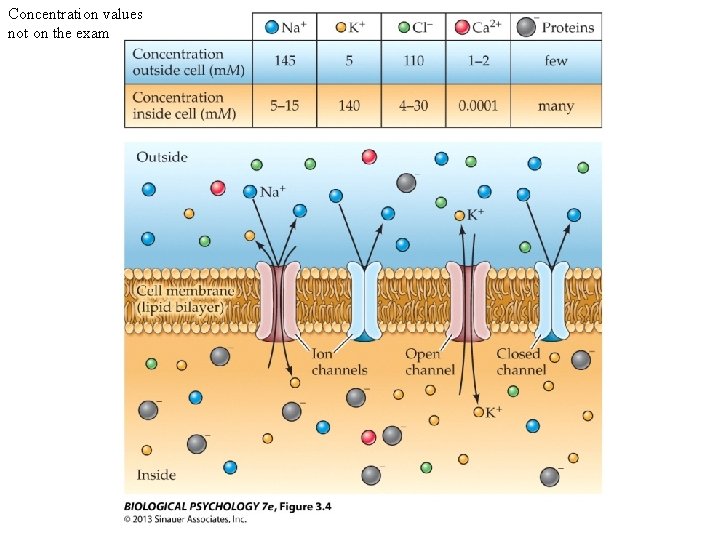
Ion Channels Regulate Membrane Potential • Ion channels are proteins that span the cell membrane and allow ions to pass. – The cell membrane is a lipid bilayer, with two layers of lipid molecules. • Ion channels open and close in response to: – voltage changes – Chemicals “ligands” such as neurotransmitters – mechanical action • The membrane shows selective permeability— – K+ can enter or leave with little restriction – other ions such as Na+ , Ca++, Cl- are tightly restricted • There are many different types of ion channels
Concentration values not on the exam Fig 3. 4 Distribution of Ions Fig 3. 4
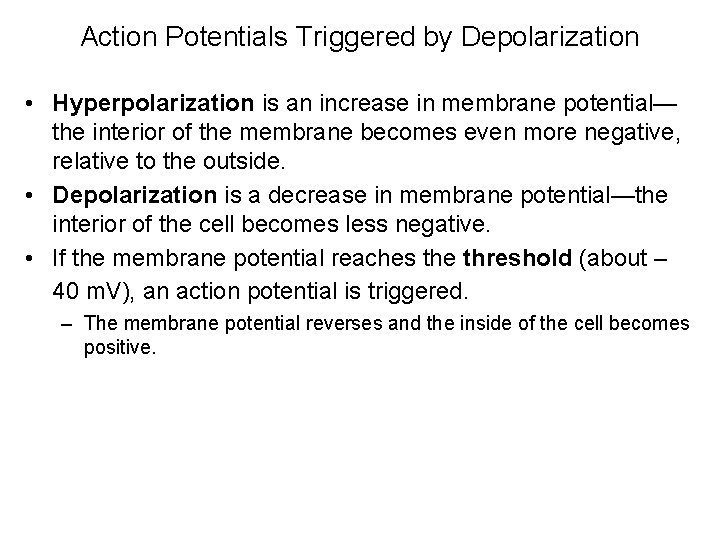
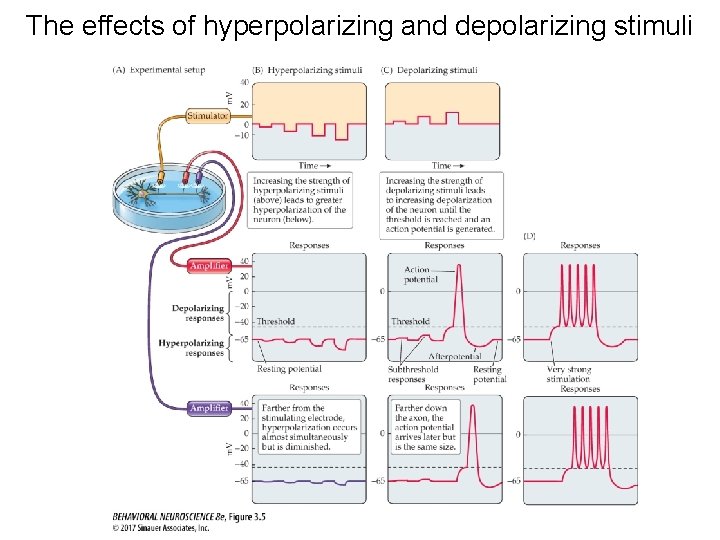
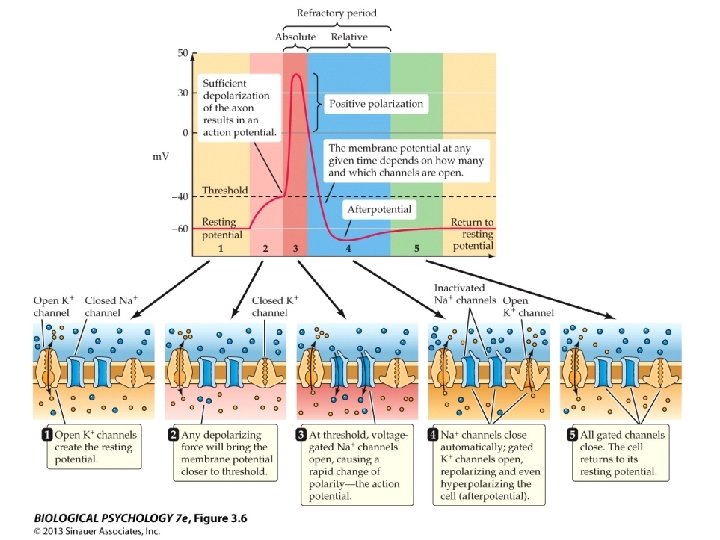
Action Potentials Triggered by Depolarization • Hyperpolarization is an increase in membrane potential— the interior of the membrane becomes even more negative, relative to the outside. • Depolarization is a decrease in membrane potential—the interior of the cell becomes less negative. • If the membrane potential reaches the threshold (about – 40 m. V), an action potential is triggered. – The membrane potential reverses and the inside of the cell becomes positive.
The effects of hyperpolarizing and depolarizing stimuli
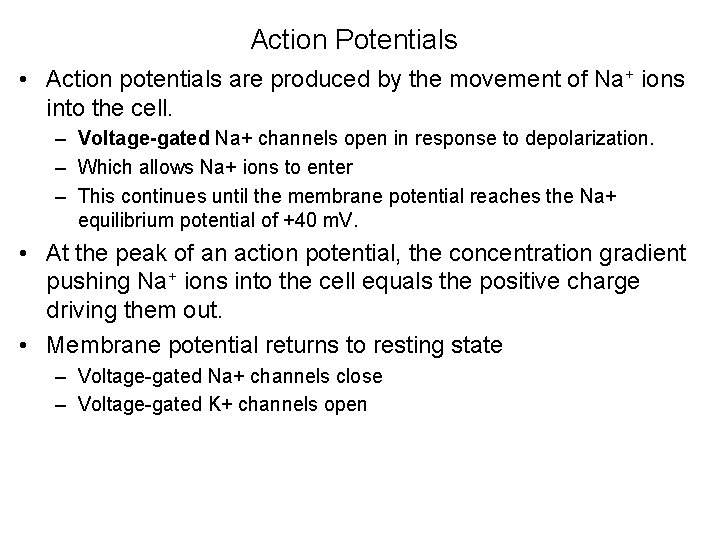
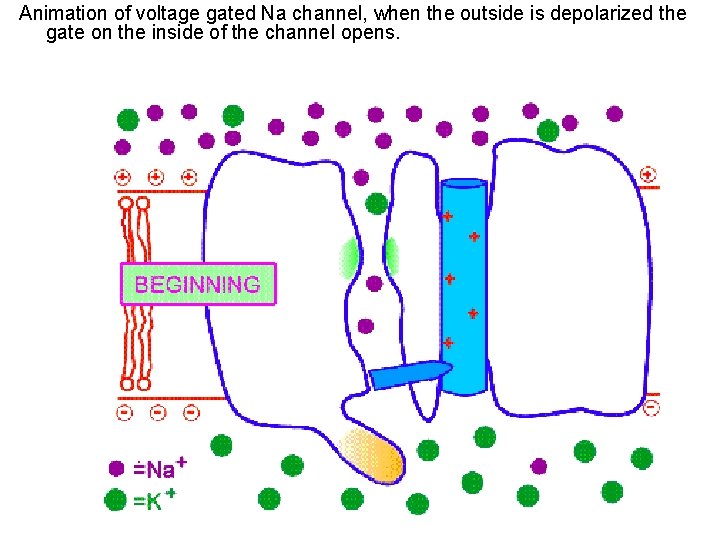
Action Potentials • Action potentials are produced by the movement of Na+ ions into the cell. – Voltage-gated Na+ channels open in response to depolarization. – Which allows Na+ ions to enter – This continues until the membrane potential reaches the Na+ equilibrium potential of +40 m. V. • At the peak of an action potential, the concentration gradient pushing Na+ ions into the cell equals the positive charge driving them out. • Membrane potential returns to resting state – Voltage-gated Na+ channels close – Voltage-gated K+ channels open
Fig 3. 6 Action Potential Mediated by Voltage-Gated Na Channels
Animation of voltage gated Na channel, when the outside is depolarized the gate on the inside of the channel opens.
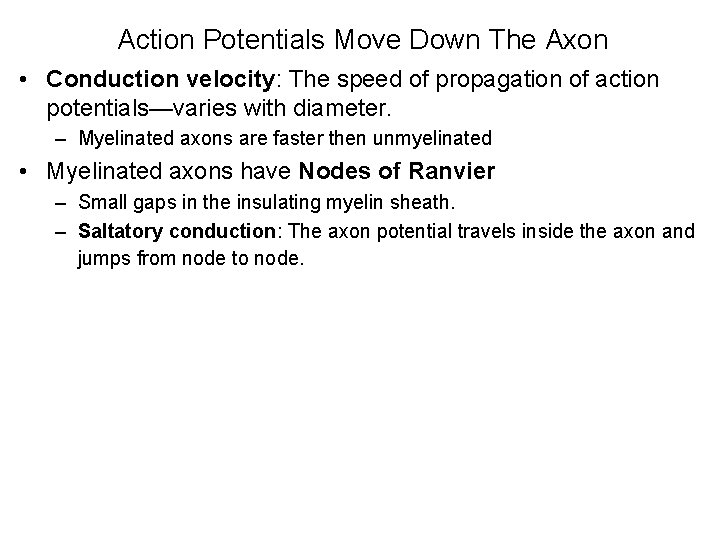
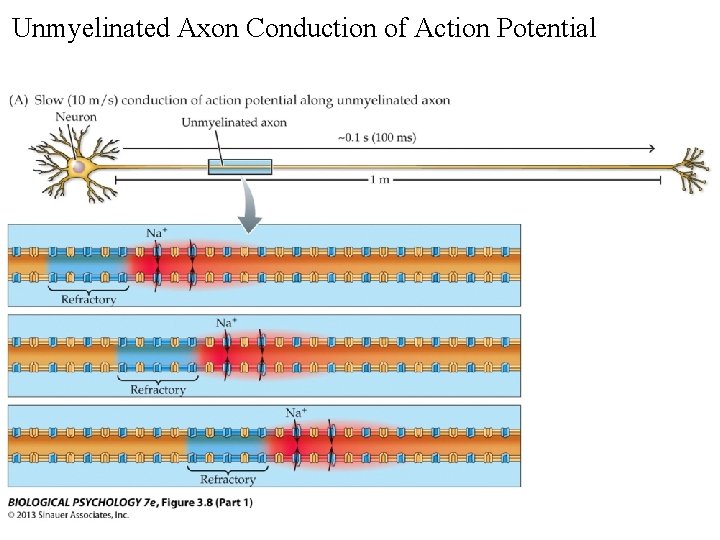
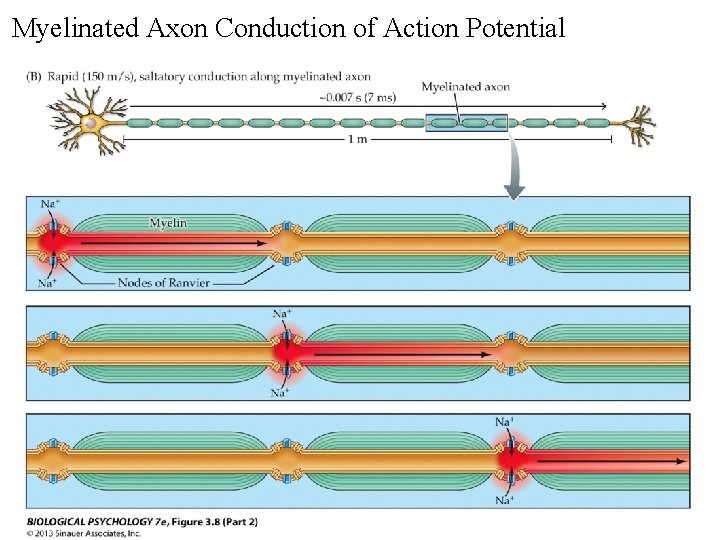
Action Potentials Move Down The Axon • Conduction velocity: The speed of propagation of action potentials—varies with diameter. – Myelinated axons are faster then unmyelinated • Myelinated axons have Nodes of Ranvier – Small gaps in the insulating myelin sheath. – Saltatory conduction: The axon potential travels inside the axon and jumps from node to node.
Unmyelinated Axon Conduction of Action Potential Fig 3. 8 a Conduction along Axons
Myelinated Axon Conduction of Action Potential Fig 3. 8 b Conduction along Axons
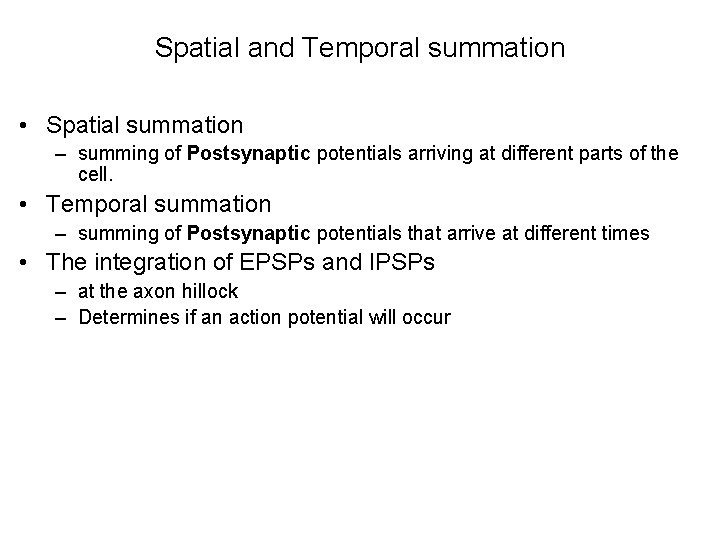
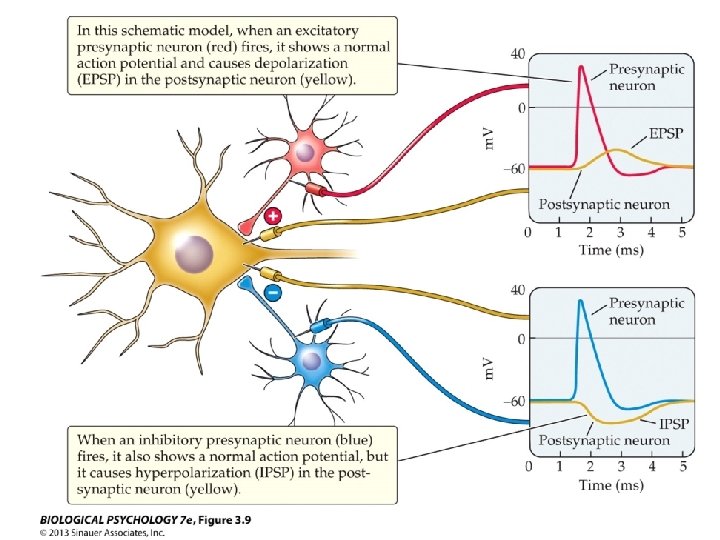
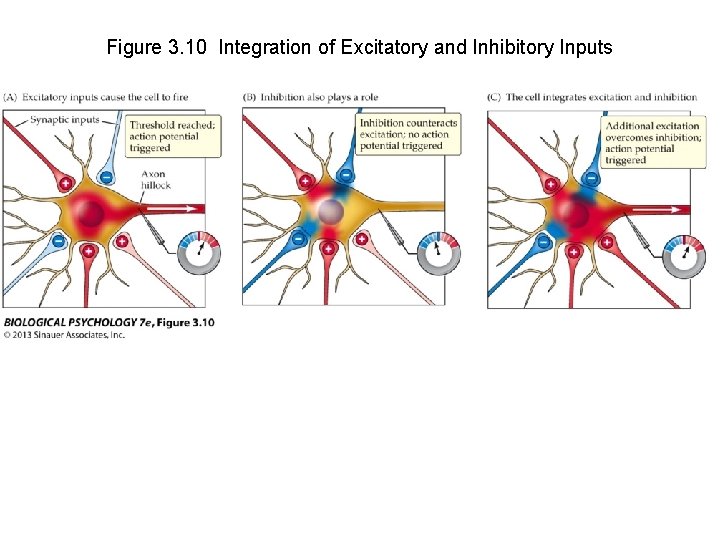
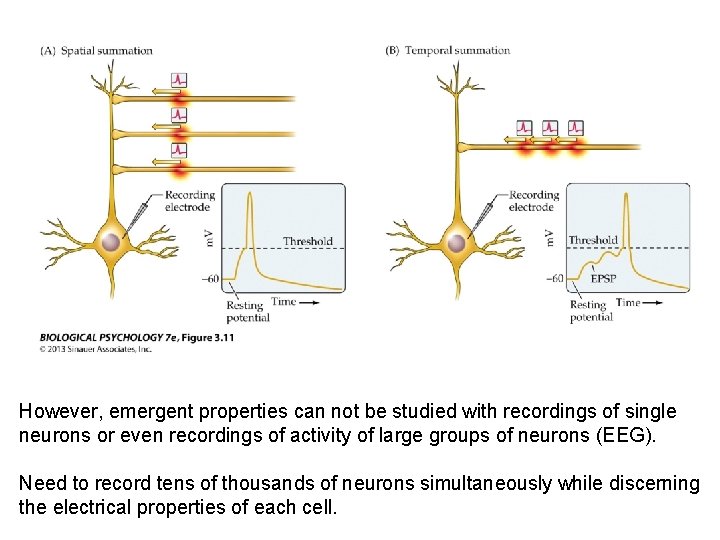
Spatial and Temporal summation • Spatial summation – summing of Postsynaptic potentials arriving at different parts of the cell. • Temporal summation – summing of Postsynaptic potentials that arrive at different times • The integration of EPSPs and IPSPs – at the axon hillock – Determines if an action potential will occur
Fig 3. 9 Recording Postsynaptic Potentials
Figure 3. 10 Integration of Excitatory and Inhibitory Inputs
However, emergent properties can not be studied with recordings of single neurons or even recordings of activity of large groups of neurons (EEG). Need to record tens of thousands of neurons simultaneously while discerning the electrical properties of each cell.
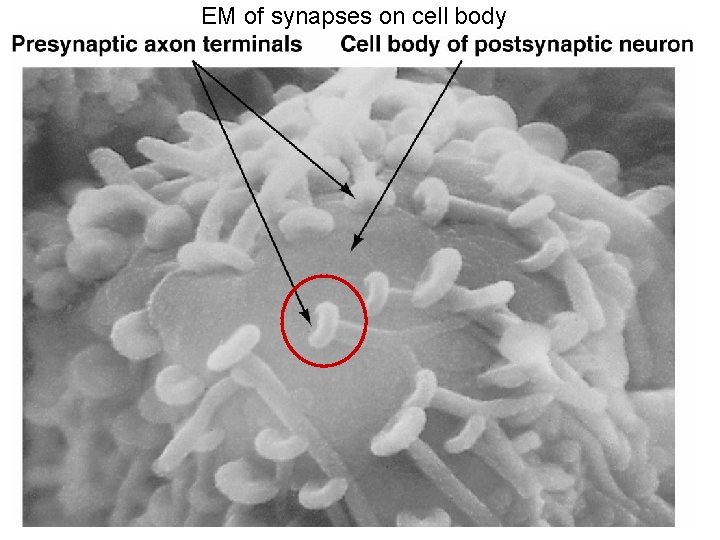
EM of synapses on cell body
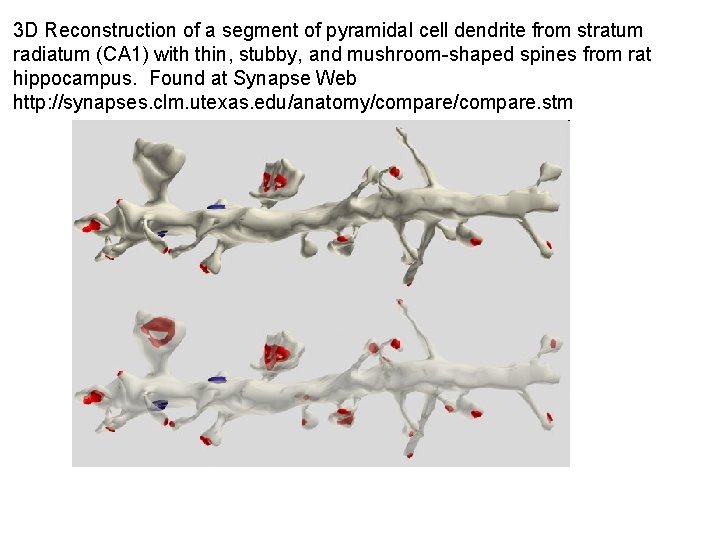
3 D Reconstruction of a segment of pyramidal cell dendrite from stratum radiatum (CA 1) with thin, stubby, and mushroom-shaped spines from rat hippocampus. Found at Synapse Web http: //synapses. clm. utexas. edu/anatomy/compare. stm
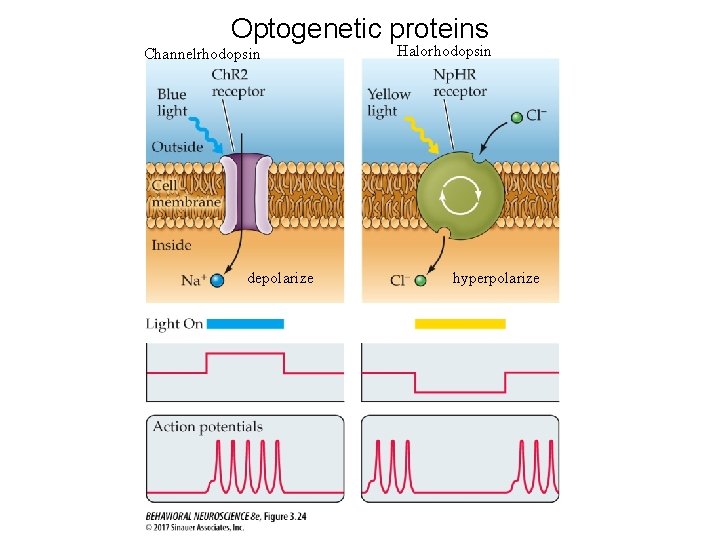
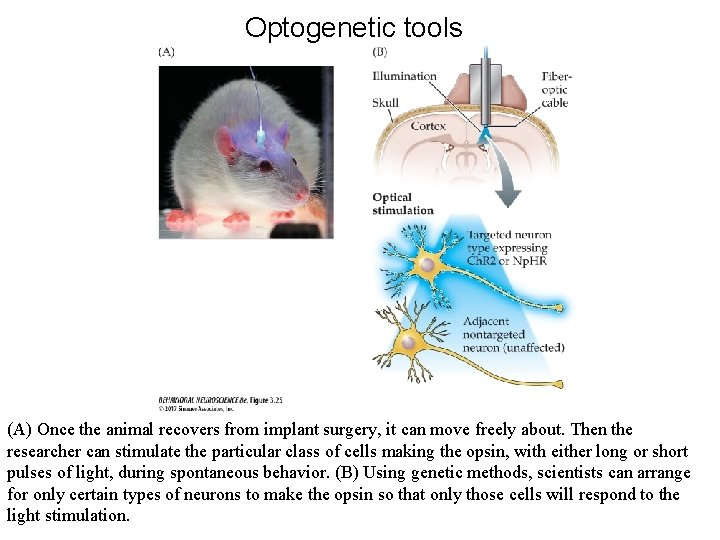
The Cutting Edge: Optogenetics • Optogenetics uses genetic tools to insert light-sensitive ion channels into neurons. • Stimulating the brain with light, delivered by fiber-optic cables, can excite or inhibit those targeted neurons. • Some algae and bacteria produce light-sensitive proteins called opsins, which resemble the mammalian opsins found in light-receptor cells in our eye. • Channelrhodopsin responds to blue light by allowing Na+ ions to enter the cell, depolarizing it. • Halorhodopsin responds to yellow light by allowing Cl– ions into the cell, hyperpolarizing it.
Optogenetic proteins Channelrhodopsin depolarize Halorhodopsin hyperpolarize
Optogenetic tools (A) Once the animal recovers from implant surgery, it can move freely about. Then the researcher can stimulate the particular class of cells making the opsin, with either long or short pulses of light, during spontaneous behavior. (B) Using genetic methods, scientists can arrange for only certain types of neurons to make the opsin so that only those cells will respond to the light stimulation.