
Neuropathology Review Questions 113012 Match the tumor with
- Slides: 14
Neuropathology Review Questions 11/30/12
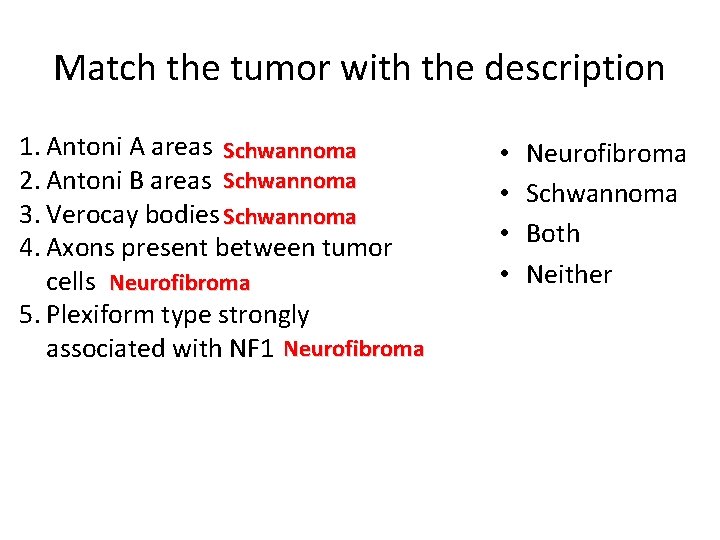
Match the tumor with the description 1. Antoni A areas Schwannoma 2. Antoni B areas Schwannoma 3. Verocay bodies Schwannoma 4. Axons present between tumor cells Neurofibroma 5. Plexiform type strongly associated with NF 1 Neurofibroma • • Neurofibroma Schwannoma Both Neither
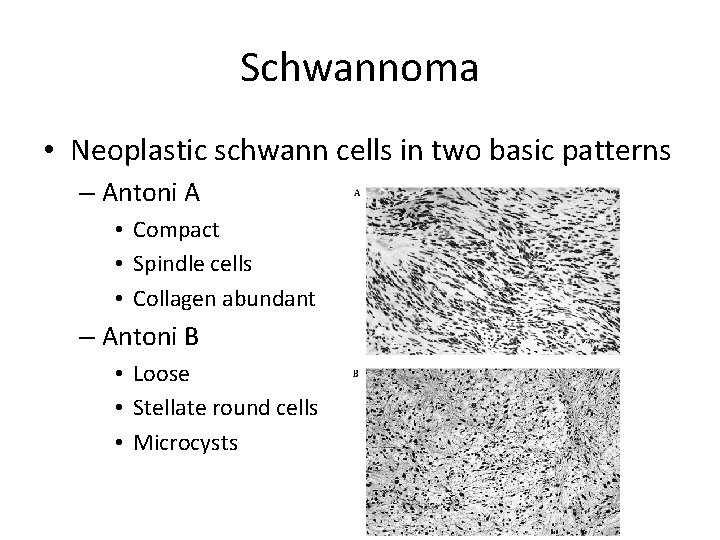
Schwannoma • Neoplastic schwann cells in two basic patterns – Antoni A • Compact • Spindle cells • Collagen abundant – Antoni B • Loose • Stellate round cells • Microcysts
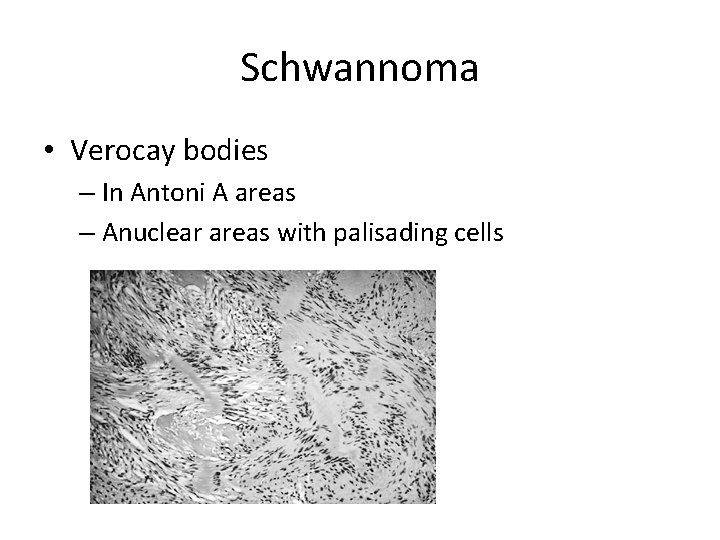
Schwannoma • Verocay bodies – In Antoni A areas – Anuclear areas with palisading cells
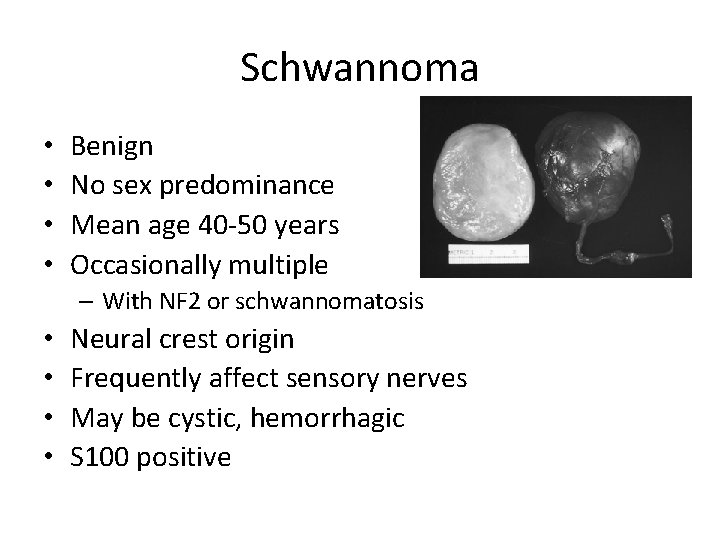
Schwannoma • • Benign No sex predominance Mean age 40 -50 years Occasionally multiple – With NF 2 or schwannomatosis • • Neural crest origin Frequently affect sensory nerves May be cystic, hemorrhagic S 100 positive
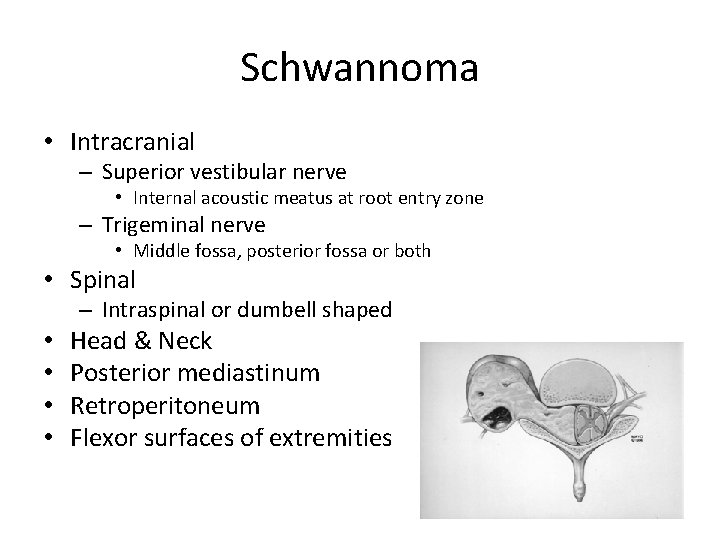
Schwannoma • Intracranial – Superior vestibular nerve • Internal acoustic meatus at root entry zone – Trigeminal nerve • Middle fossa, posterior fossa or both • Spinal – Intraspinal or dumbell shaped • • Head & Neck Posterior mediastinum Retroperitoneum Flexor surfaces of extremities
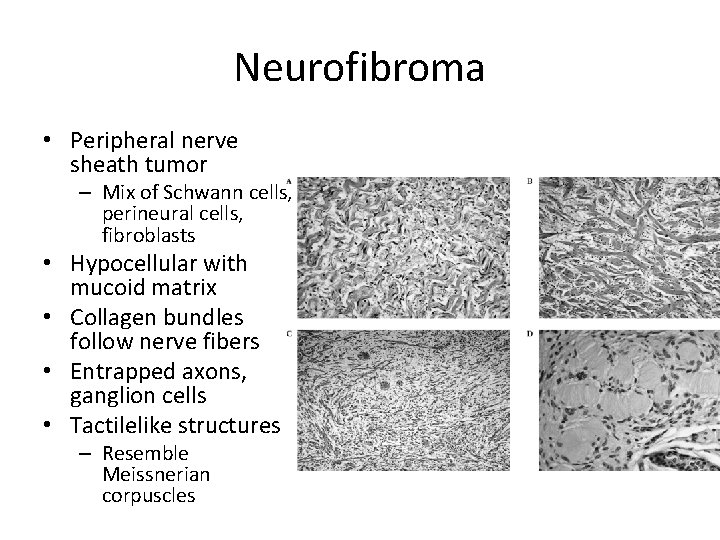
Neurofibroma • Peripheral nerve sheath tumor – Mix of Schwann cells, perineural cells, fibroblasts • Hypocellular with mucoid matrix • Collagen bundles follow nerve fibers • Entrapped axons, ganglion cells • Tactilelike structures – Resemble Meissnerian corpuscles
Neurofibroma • • Any age No sex predominance Not intracranial Solitary cutaneous nodules – From small terminal nerves • Potential for malignant transformation
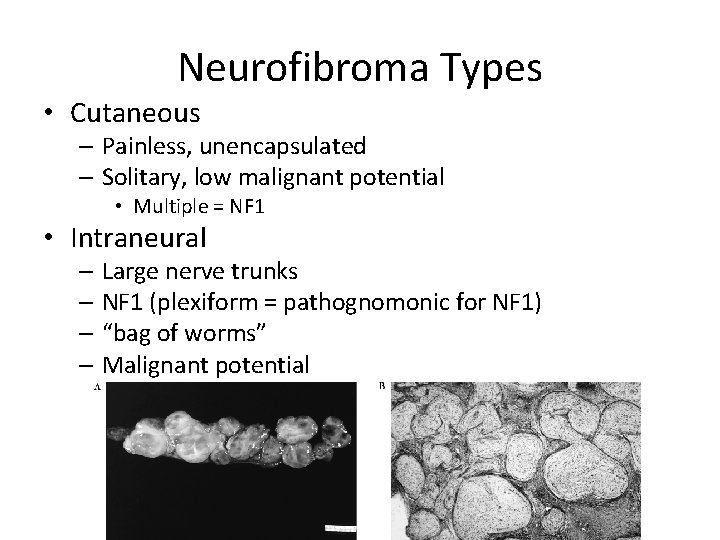
Neurofibroma Types • Cutaneous – Painless, unencapsulated – Solitary, low malignant potential • Multiple = NF 1 • Intraneural – Large nerve trunks – NF 1 (plexiform = pathognomonic for NF 1) – “bag of worms” – Malignant potential
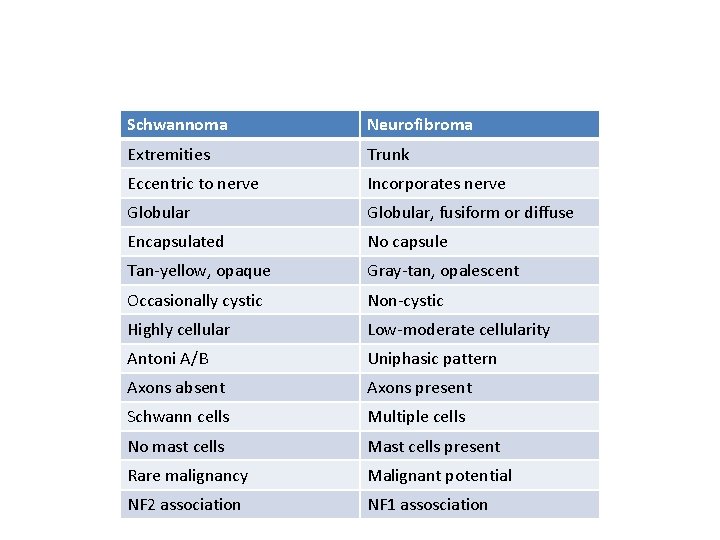
Schwannoma Neurofibroma Extremities Trunk Eccentric to nerve Incorporates nerve Globular, fusiform or diffuse Encapsulated No capsule Tan-yellow, opaque Gray-tan, opalescent Occasionally cystic Non-cystic Highly cellular Low-moderate cellularity Antoni A/B Uniphasic pattern Axons absent Axons present Schwann cells Multiple cells No mast cells Mast cells present Rare malignancy Malignant potential NF 2 association NF 1 assosciation
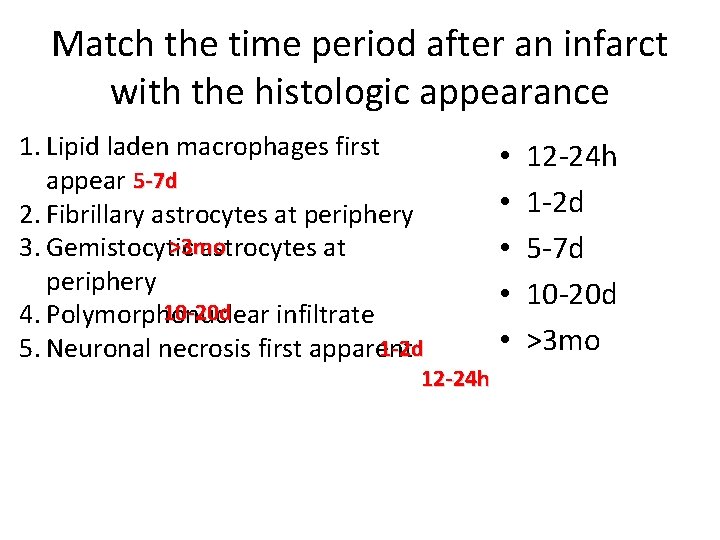
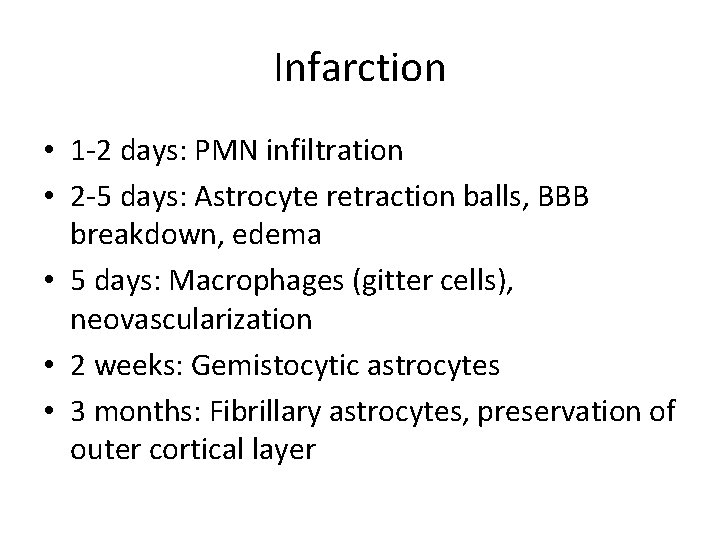
Match the time period after an infarct with the histologic appearance 1. Lipid laden macrophages first appear 5 -7 d 2. Fibrillary astrocytes at periphery >3 mo 3. Gemistocytic astrocytes at periphery 10 -20 d 4. Polymorphonuclear infiltrate 1 -2 d 5. Neuronal necrosis first apparent 12 -24 h • • • 12 -24 h 1 -2 d 5 -7 d 10 -20 d >3 mo
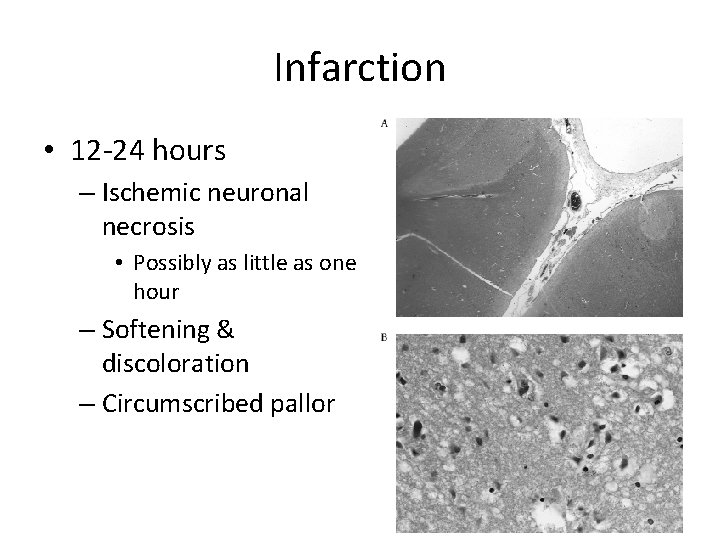
Infarction • 12 -24 hours – Ischemic neuronal necrosis • Possibly as little as one hour – Softening & discoloration – Circumscribed pallor
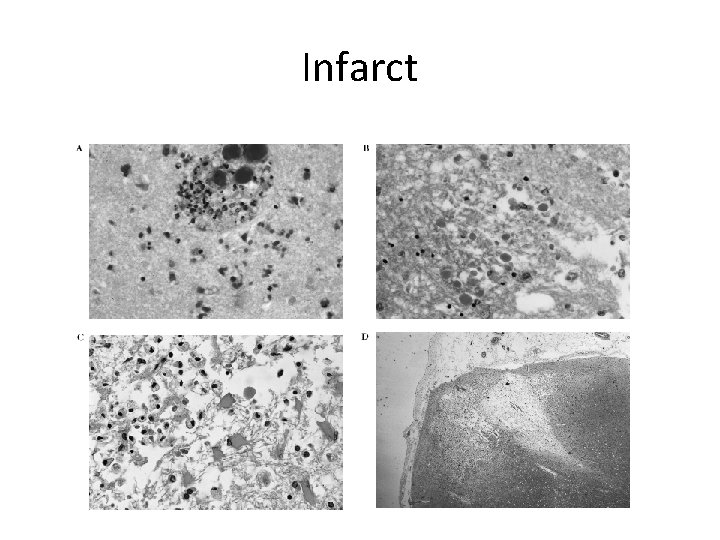
Infarction • 1 -2 days: PMN infiltration • 2 -5 days: Astrocyte retraction balls, BBB breakdown, edema • 5 days: Macrophages (gitter cells), neovascularization • 2 weeks: Gemistocytic astrocytes • 3 months: Fibrillary astrocytes, preservation of outer cortical layer
Infarct