
NEUROPATHIC PAIN MEDICATION UPDATE 2015 AProfessor Arun Aggarwal







- Slides: 49
NEUROPATHIC PAIN MEDICATION UPDATE: 2015 A/Professor Arun Aggarwal Royal Prince Alfred Hospital Pain Management Centre SYDNEY AUSTRALIA International Conference on Pain Medicine 2015 – Chicago
DISCLOSURE S Professor Aggarwal is on medical advisory boards, received sponsorship or honoraria from the following companies: Bio. CSL Hospira i. Nova Mundipharma Pfizer UCB
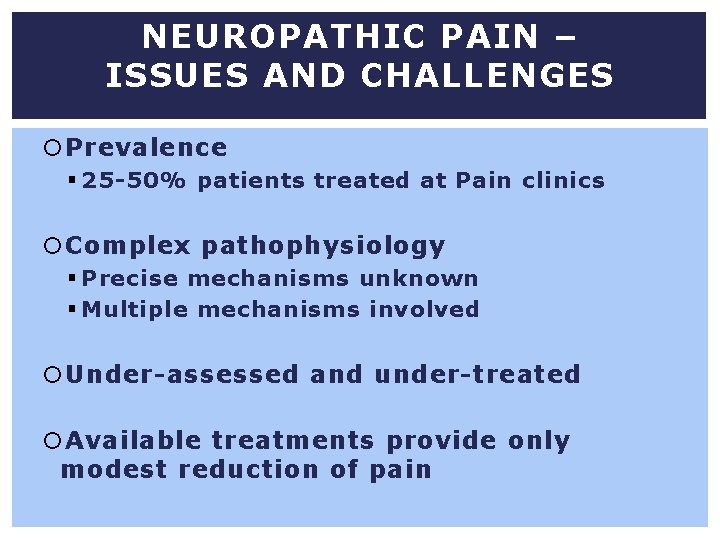
NEUROPATHIC PAIN – ISSUES AND CHALLENGES Prevalence § 25 -50% patients treated at Pain clinics Complex pathophysiology § Precise mechanisms unknown § Multiple mechanisms involved Under-assessed and under-treated Available treatments provide only modest reduction of pain
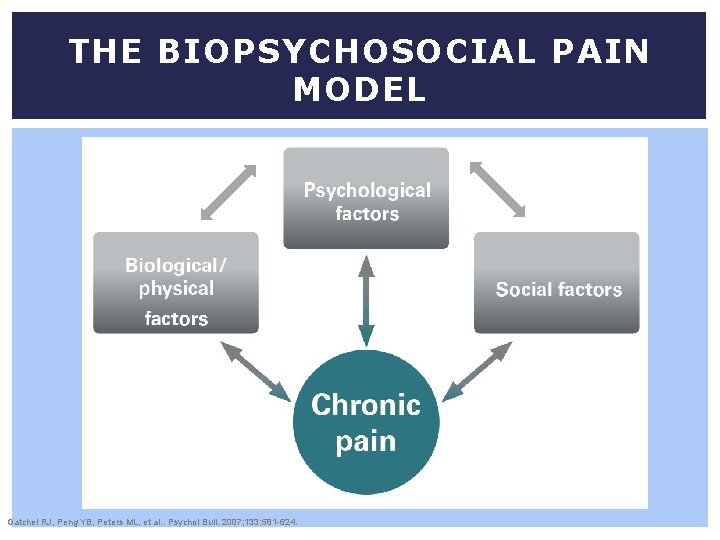
THE BIOPSYCHOSOCIAL PAIN MODEL Gatchel RJ, Peng YB, Peters ML, et al. . Psychol Bull. 2007; 133: 581 -624.
THE MULTIMODAL APPROACH TO PAIN MANAGEMENT Pharmacological Patient treatment Education e. g. NSAIDs, opioids, e. g. knowledge about pain, realistic goals Psychological Therapies e. g. counselling, treatment of depression adjuvants Physical Therapies e. g. physiotherapy , exercises/stre tches, TENS Interventional Therapy e. g. procedures, surgery 1. Pergolizzi J. Curr Med Res Opin 2013; 29(9): 1127 -1135.
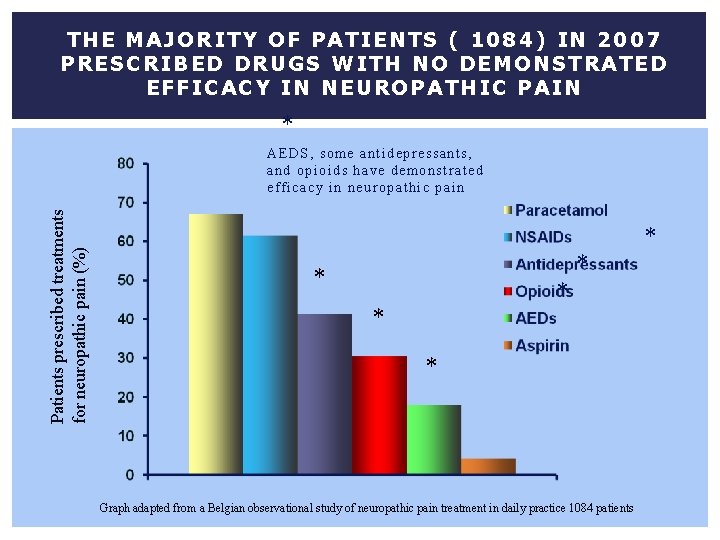
THE MA JOR ITY OF PATIENTS ( 1084) IN 2007 PRESCR IB ED DR UGS WITH NO DEMONSTRATED E FFIC AC Y I N NEUROPATHIC PAIN * Patients prescribed treatments for neuropathic pain (%) AEDS, some antidepressants, and opioids have demonstrated efficacy in neuropathic pain * * * Graph adapted from a Belgian observational study of neuropathic pain treatment in daily practice 1084 patients *
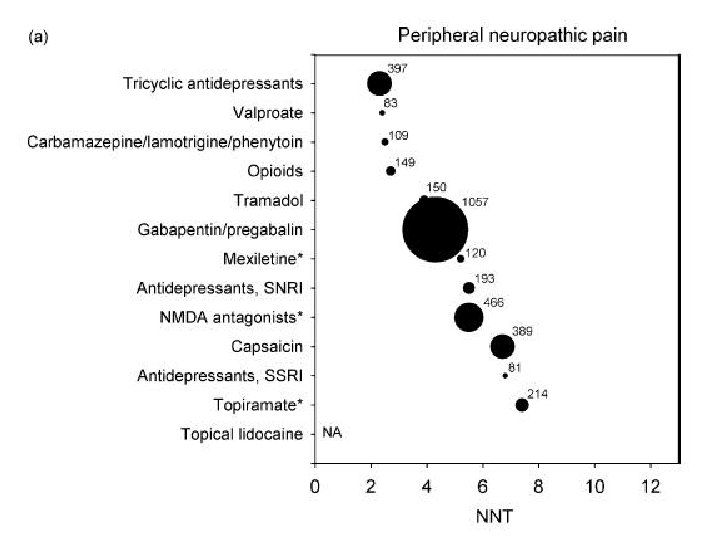
PHARMACOTHERAPY Generally involves use of anti-convulsants and / or anti-depressant medication Even with the current generation of drugs, effective analgesia is achieved in <50% of cases Despite advances in research and clinical trials, NNT for most drugs is between 3 -5
NNT’S FOR DIABETIC PERIPHERAL NEUROPATHY Carbamazepine Amitriptyline 2. 3 (CI 1. 6 - 3. 8) 2. 4 (CI 2. 4 – 4. 0) Dextromethophan 2. 5 Gabapentin 3. 8 Tramadol 3. 9 Lamotrigine 4. 0 (CI 1. 6 - 5. 4) (CI 3. 5 - 5. 7) Pregabalin Topiramate (CI 3. 9 – 6. 6) (CI 4. 3 – 28. 5) 4. 2 7. 4 (CI 2. 7 - 6. 3) (CI 2. 1 - 4. 2)
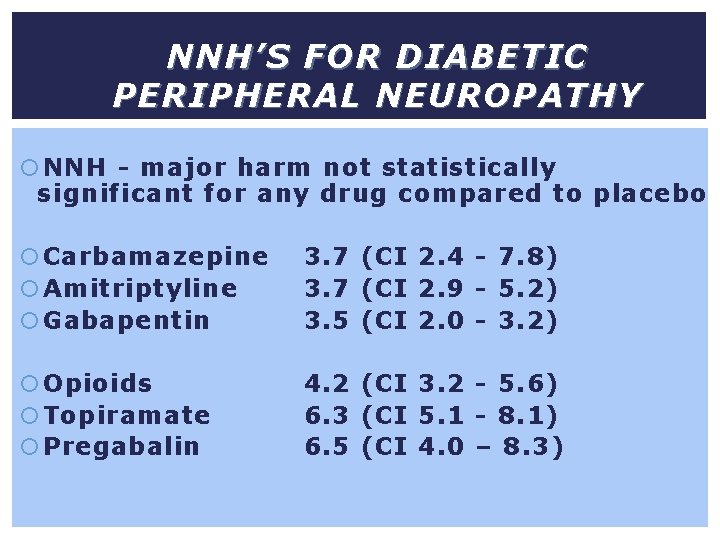
NNH’S FOR DIABETIC PERIPHERAL NEUROPATHY NNH - major harm not statistically significant for any drug compared to placebo Carbamazepine Amitriptyline Gabapentin 3. 7 (CI 2. 4 - 7. 8) 3. 7 (CI 2. 9 - 5. 2) 3. 5 (CI 2. 0 - 3. 2) Opioids Topiramate Pregabalin 4. 2 (CI 3. 2 - 5. 6) 6. 3 (CI 5. 1 - 8. 1) 6. 5 (CI 4. 0 – 8. 3)
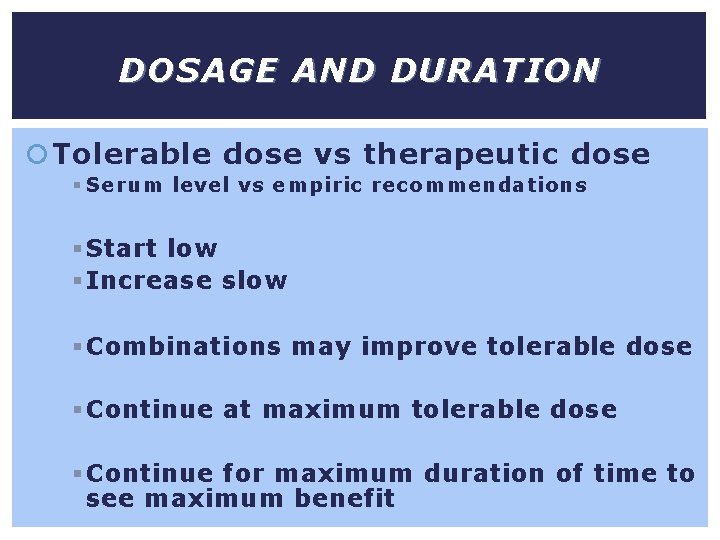
DOSAGE AND DURATION Tolerable dose vs therapeutic dose § Serum level vs empiric recommendations § Start low § Increase slow § Combinations may improve tolerable dose § Continue at maximum tolerable dose § Continue for maximum duration of time to see maximum benefit
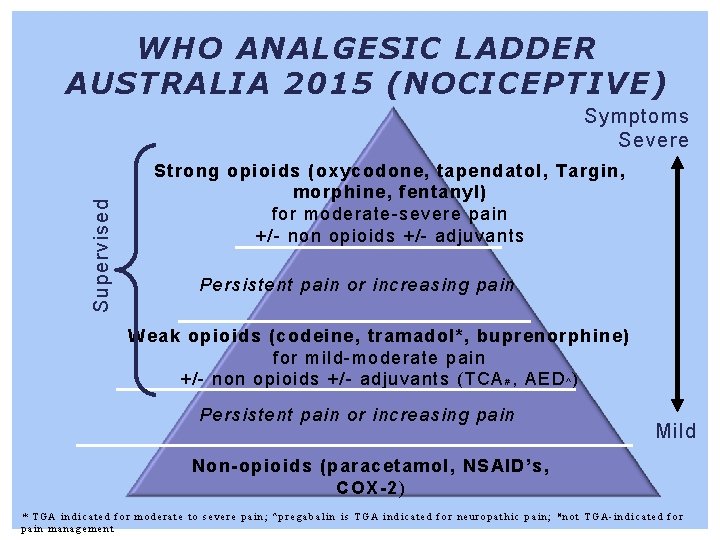
WHO ANALGESIC LADDER AUSTRALIA 2015 (NOCICEPTIVE) Supervised Symptoms Severe Strong opioids (oxycodone, tapendatol, Targin, morphine, fentanyl) for moderate-severe pain +/- non opioids +/- adjuvants Persistent pain or increasing pain Weak opioids (codeine, tramadol*, buprenorphine) for mild-moderate pain +/- non opioids +/- adjuvants (TCA # , AED ^ ) Persistent pain or increasing pain Mild Non-opioids (paracetamol, NSAID’s, COX-2) * TGA indicated for moderate to severe pain; ^pregabalin is TGA indicated for neuropathic pain; pain management #not TGA-indicated for
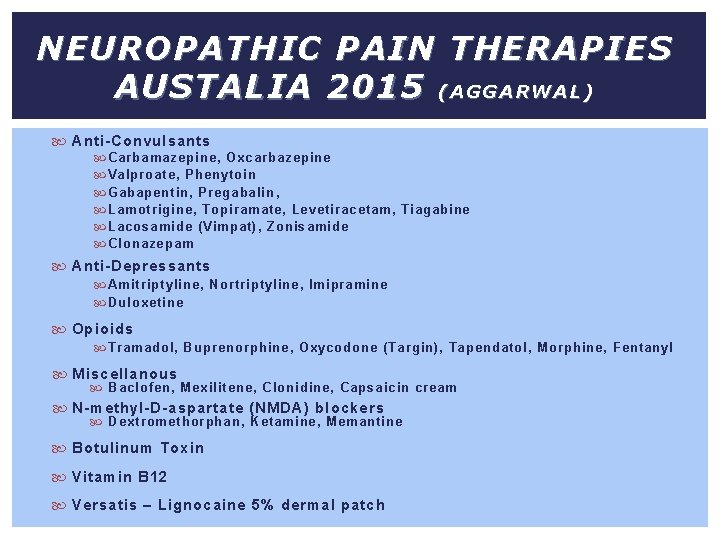
NEUROPATHIC PAIN THERAPIES AUSTALIA 2015 ( A G G A R W A L ) Anti-Convulsants Carbamazepine, Oxcarbazepine Valproate, Phenytoin Gabapentin, Pregabalin , Lamotrigine, Topiramate, Levetiracetam, Tiagabine Lacosamide (Vimpat), Zonisamide Clonazepam Anti-Depressants Amitriptyline, Nortriptyline, Imipramine Duloxetine Opioids Tramadol, Buprenorphine, Oxycodone (Targin), Tapendatol, Morphine, Fentanyl Miscellanous Baclofen, Mexilitene, Clonidine, Capsaicin cream N-methyl-D-aspartate (NMDA) blockers Dextromethorphan, Ketamine, Memantine Botulinum Toxin Vitamin B 12 Versatis – Lignocaine 5% dermal patch
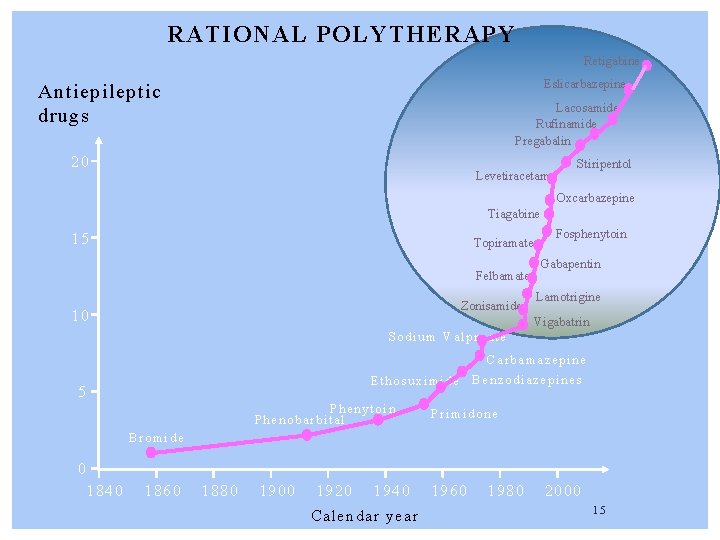
RATIONAL POLYTHERAPY Retigabine Eslicarbazepine Antiepileptic drugs Lacosamide Rufinamide Pregabalin 20 Levetiracetam Stiripentol Oxcarbazepine Tiagabine 15 Topiramate Felbamate Zonisamide 10 Fosphenytoin Gabapentin Lamotrigine Vigabatrin Sodium Valproate Carbamazepine Ethosuximide Benzodiazepines 5 Phenytoin Phenobarbital Primidone Bromide 0 1840 1860 1880 1900 1920 1940 Calendar year 1960 1980 2000 15
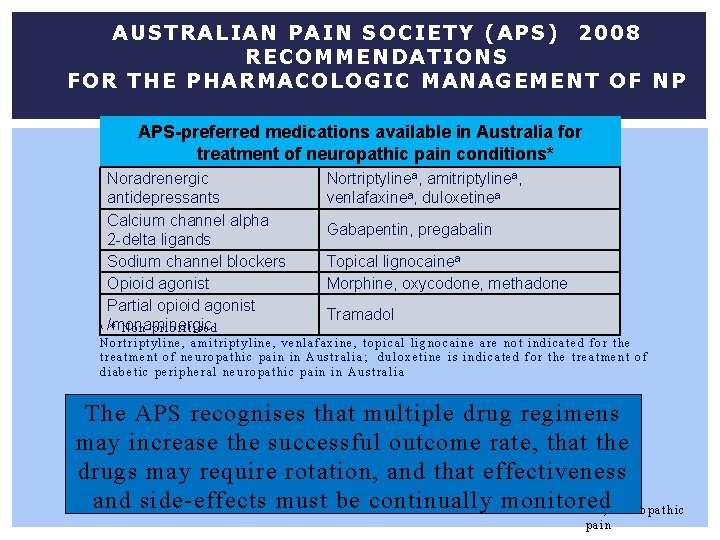
AUSTRALIAN PAIN SOCIETY (APS) 2008 RECOMMENDATIONS FOR THE PHARMA COLOGIC MANAGE MEN T OF N P APS-preferred medications available in Australia for treatment of neuropathic pain conditions* Noradrenergic antidepressants Calcium channel alpha 2 -delta ligands Sodium channel blockers Opioid agonist Partial opioid agonist a /monaminergic * Non-prioritised Nortriptylinea, amitriptylinea, venlafaxinea, duloxetinea Gabapentin, pregabalin Topical lignocainea Morphine, oxycodone, methadone Tramadol Nortriptyline, amitriptyline, venlafaxine, topical lignocaine are not indicated for the treatment of neuropathic pain in Australia; duloxetine is indicated for the treatment of diabetic peripheral neuropathic pain in Australia The APS recognises that multiple drug regimens may increase the successful outcome rate, that the drugs may require rotation, and that effectiveness and side-effects must be continually monitored NP, neuropathic pain
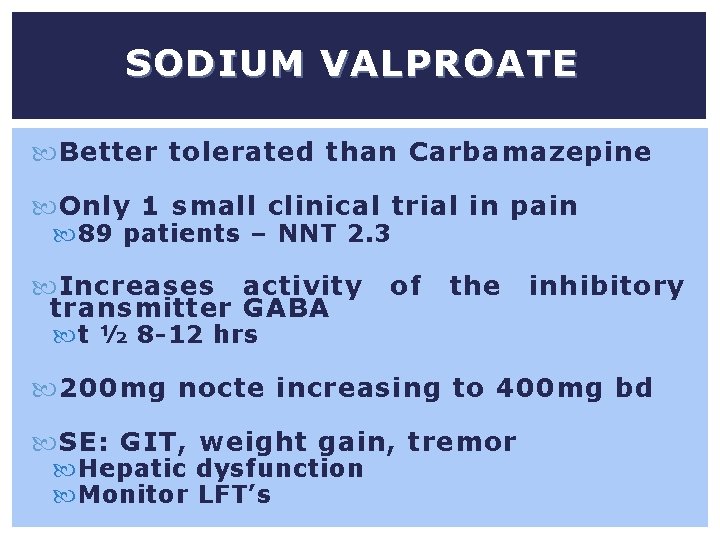
SODIUM VALPROATE Better tolerated than Carbamazepine Only 1 small clinical trial in pain 89 patients – NNT 2. 3 Increases activity of the inhibitory transmitter GABA t ½ 8 -12 hrs 200 mg nocte increasing to 400 mg bd SE: GIT, weight gain, tremor Hepatic dysfunction Monitor LFT’s
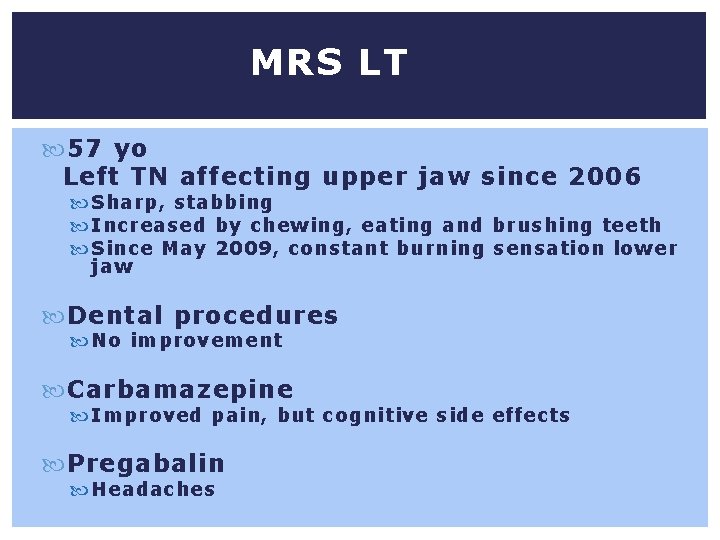
MRS LT 57 yo Left TN affecting upper jaw since 2006 Sharp, stabbing Increased by chewing, eating and brushing teeth Since May 2009, constant burning sensation lower jaw Dental procedures No improvement Carbamazepine Improved pain, but cognitive side effects Pregabalin Headaches
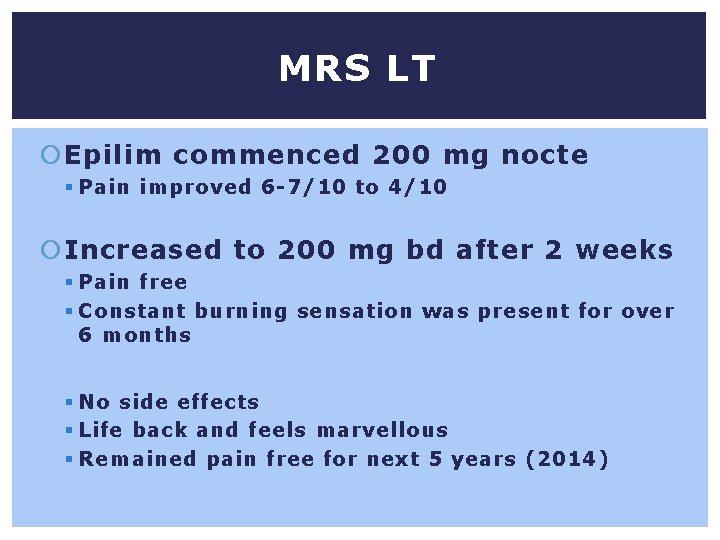
MRS LT Epilim commenced 200 mg nocte § Pain improved 6 -7/10 to 4/10 Increased to 200 mg bd after 2 weeks § Pain free § Constant burning sensation was present for over 6 months § No side effects § Life back and feels marvellous § Remained pain free for next 5 years (2014)
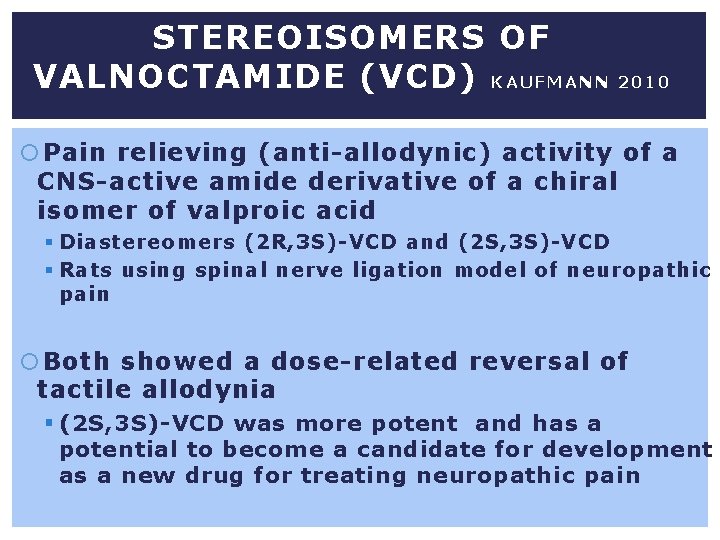
STEREOISOMERS OF VALNOCTAMIDE (VCD) K A U F M A N N 2 0 1 0 Pain relieving (anti-allodynic) activity of a CNS-active amide derivative of a chiral isomer of valproic acid § Diastereomers (2 R, 3 S)-VCD and (2 S, 3 S)-VCD § Rats using spinal nerve ligation model of neuropathic pain Both showed a dose-related reversal of tactile allodynia § (2 S, 3 S)-VCD was more potent and has a potential to become a candidate for development as a new drug for treating neuropathic pain
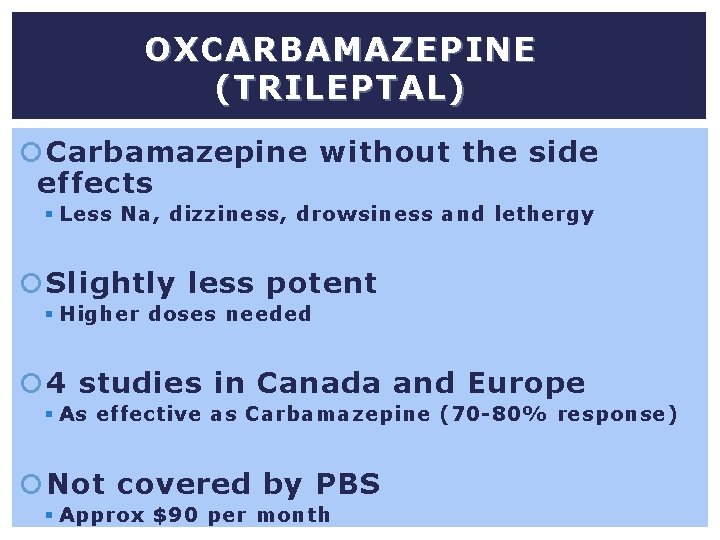
OXCARBAMAZEPINE ( TRILEPTAL) Carbamazepine without the side effects § Less Na, dizziness, drowsiness and lethergy Slightly less potent § Higher doses needed 4 studies in Canada and Europe § As effective as Carbamazepine (70 -80% response) Not covered by PBS § Approx $90 per month
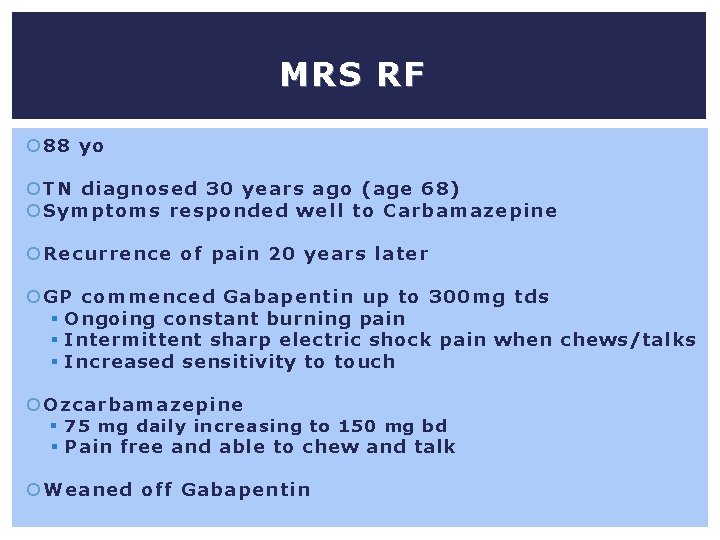
MRS RF 88 yo TN diagnosed 30 years ago (age 68) Symptoms responded well to Carbamazepine Recurrence of pain 20 years later GP commenced Gabapentin up to 300 mg tds § Ongoing constant burning pain § Intermittent sharp electric shock pain when chews/talks § Increased sensitivity to touch Ozcarbamazepine § 75 mg daily increasing to 150 mg bd § Pain free and able to chew and talk Weaned off Gabapentin
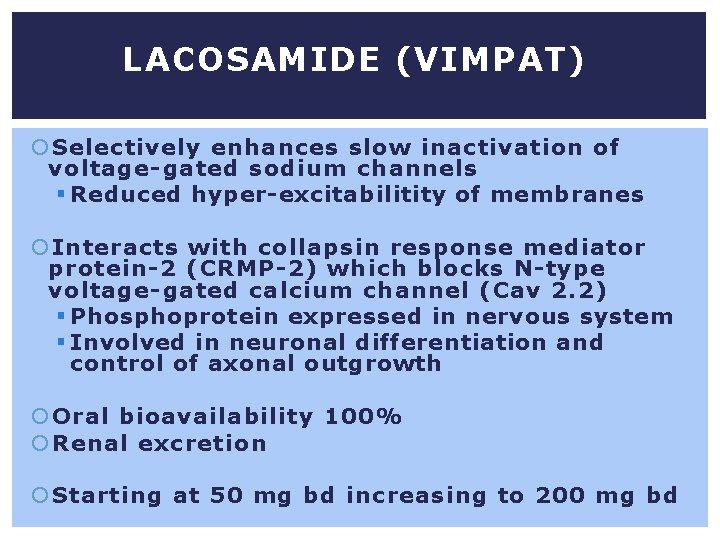
LACOSAMIDE (VIMPAT) Selectively enhances slow inactivation of voltage-gated sodium channels § Reduced hyper-excitabilitity of membranes Interacts with collapsin response mediator protein-2 (CRMP-2) which blocks N-type voltage-gated calcium channel (Cav 2. 2) § Phosphoprotein expressed in nervous system § Involved in neuronal differentiation and control of axonal outgrowth Oral bioavailability 100% Renal excretion Starting at 50 mg bd increasing to 200 mg bd
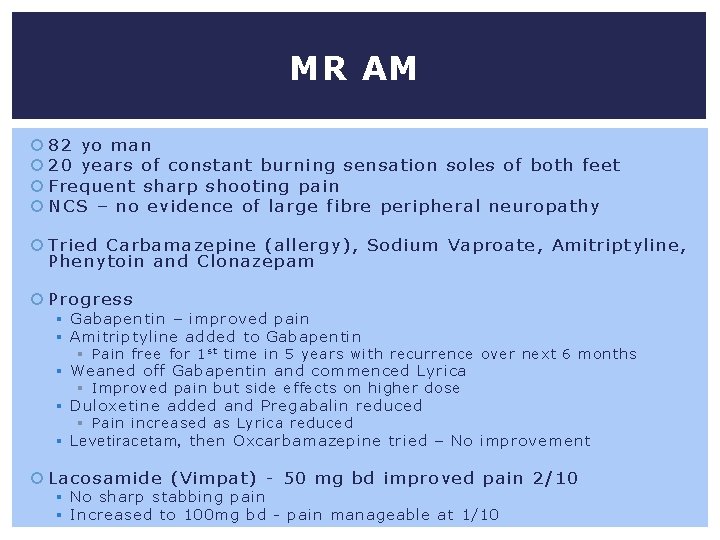
MR AM 82 yo man 20 years of constant burning sensation soles of both feet Frequent sharp shooting pain NCS – no evidence of large fibre peripheral neuropathy Tried Carbamazepine (allergy), Sodium Vaproate, Amitriptyline, Phenytoin and Clonazepam Progress § Gabapentin – improved pain § Amitriptyline added to Gabapentin § Pain free for 1 s t time in 5 years with recurrence over next 6 months § Weaned off Gabapentin and commenced Lyrica § Improved pain but side effects on higher dose § Duloxetine added and Pregabalin reduced § Pain increased as Lyrica reduced § Levetiracetam, then Oxcarbamazepine tried – No improvement Lacosamide (Vimpat) - 50 mg bd improved pain 2/10 § No sharp stabbing pain § Increased to 100 mg bd - pain manageable at 1/10
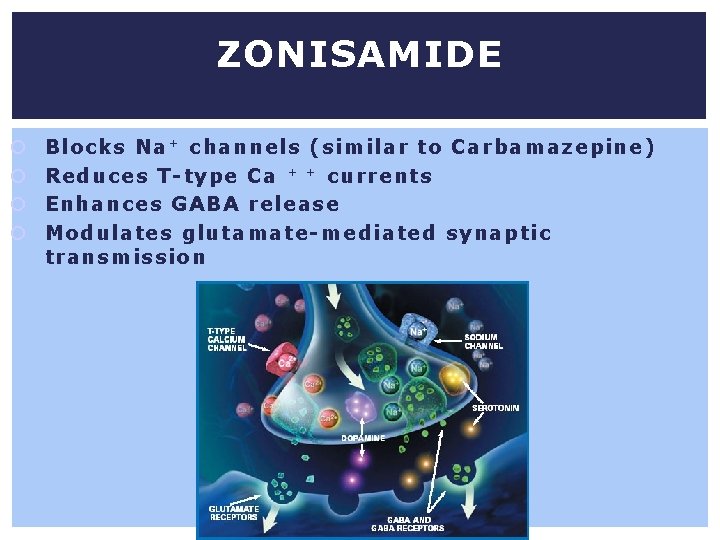
ZONISAMIDE Blocks Na + channels (similar to Carbamazepine) Reduces T-type Ca + + currents Enhances GABA release Modulates glutamate-mediated synaptic transmission
TAPENTADOL (PALEXIA ® ) SR : MECHANISM OF ACTION † (COMPLEMENTARY AND INTERACT SYNERGISTICALLY) †Animal data do not necessarily predict human clinical effect *mu-opioid receptor agonists also activate the inhibitory descending pain pathway at a supraspinal level, however their efficacy in chronic neuropathic pain may be limited and require higher doses than for nociceptive pain 4 -6 Refs: 1. Pergolizzi et al. Pain Prac 2011; 12(4): 290– 306. 2. Argoff C. Curr Med Res Opin 2011; 27(10): 2019– 31. 3. Kress HG. Eur J Pain 2010; 14(8): 781– 3. 4. e. TG complete [Internet]. Melbourne: Therapeutic Guidelines Limited; Mar 2013 Accessed: 5 May 2014. 5. Ballantyne JC & Shin NS et al. Clin J Pain 2008; 24(6): 469– 78. 6. Mc. Nicol ED et al. Cochrane Database Syst Rev 2013; (Issue 8). 7. Schroder W. Et al. Eur. J. Pain 2010; 14: 814 -821
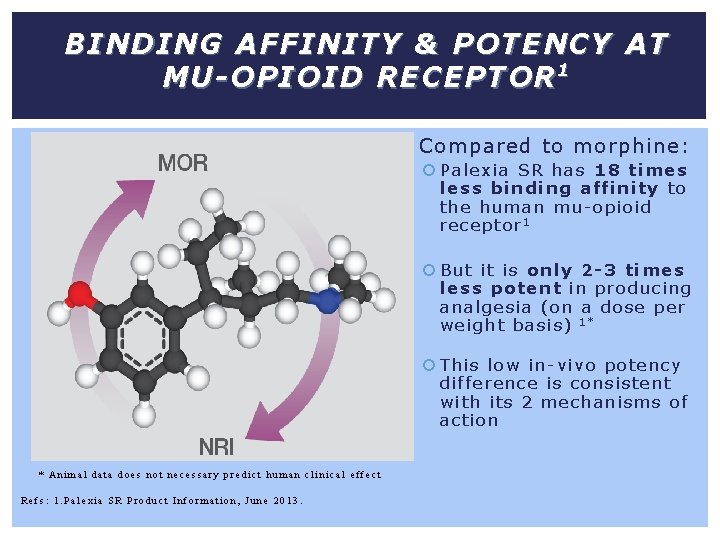
BINDING AFFINITY & POTENCY AT MU-OPIOID RECEPTOR 1 Compared to morphine: Palexia SR has 18 times less binding affinity to the human mu-opioid receptor 1 But it is only 2 -3 times less potent in producing analgesia (on a dose per weight basis) 1 * This low in-vivo potency difference is consistent with its 2 mechanisms of action * Animal data does not necessary predict human clinical effect Refs: 1. Palexia SR Product Information, June 2013.
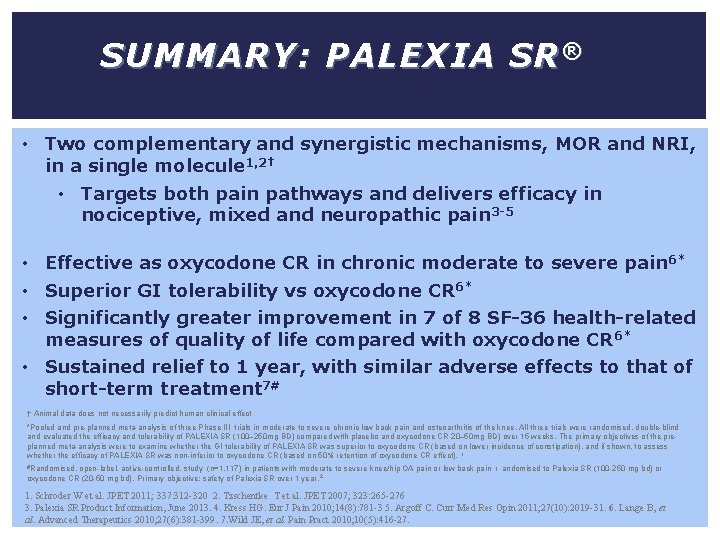
SUMMARY: PALEXIA SR ® • Two complementary and synergistic mechanisms, MOR and NRI, in a single molecule 1, 2† • Targets both pain pathways and delivers efficacy in nociceptive, mixed and neuropathic pain 3 -5 • Effective as oxycodone CR in chronic moderate to severe pain 6* • Superior GI tolerability vs oxycodone CR 6* • Significantly greater improvement in 7 of 8 SF-36 health-related measures of quality of life compared with oxycodone CR 6* • Sustained relief to 1 year, with similar adverse effects to that of short-term treatment 7# † Animal data does not necessarily predict human clinical effect *Pooled and pre-planned meta-analysis of three Phase III trials in moderate to severe chronic low back pain and osteoarthritis of the knee. All three trials were randomised, double-blind and evaluated the efficacy and tolerability of PALEXIA SR (100– 250 mg BD) compared with placebo and oxycodone CR 20– 50 mg BD) over 15 weeks. The primary objectives of the preplanned meta-analysis were to examine whether the GI tolerability of PALEXIA SR was superior to oxycodone CR (based on lower incidence of constipation), and if shown, to assess whether the efficacy of PALEXIA SR was non-inferior to oxycodone CR (based on 50% retention of oxycodone CR effect). 1 #Randomised, open-label, active-controlled, study (n=1, 117) in patients with moderate to severe knee/hip OA pain or low back pain r andomised to Palexia SR (100 -250 mg bd) or oxycodone CR (20 -50 mg bd). Primary objective: safety of Palexia SR over 1 year. 2 1. Schroder W et al. JPET 2011; 337: 312 -320 2. Tzschentke T et al. JPET 2007; 323: 265 -276 3. Palexia SR Product Information, June 2013. 4. Kress HG. Eur J Pain 2010; 14(8): 781 -3 5. Argoff C. Curr Med Res Opin 2011; 27(10): 2019 -31. 6. Lange B, et al. Advanced Therapeutics 2010; 27(6): 381 -399. 7. Wild JE, et al. Pain Pract 2010; 10(5): 416 -27.
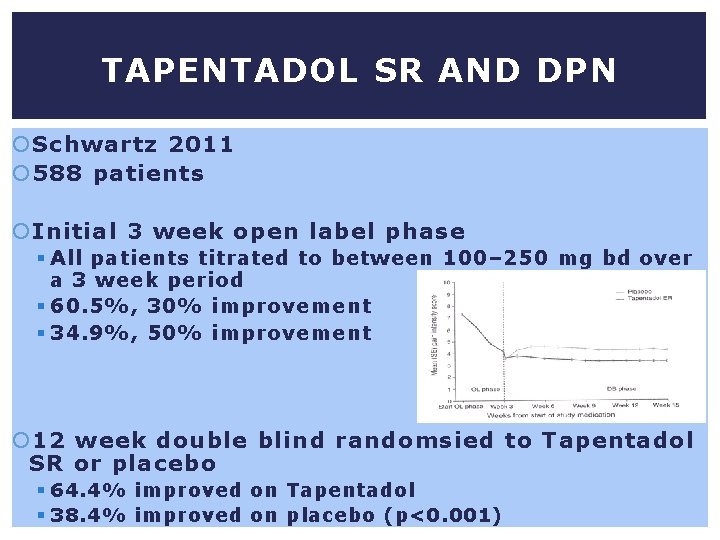
TAPENTADOL SR AND DPN Schwartz 2011 588 patients Initial 3 week open label phase § All patients titrated to between 100– 250 mg bd over a 3 week period § 60. 5%, 30% improvement § 34. 9%, 50% improvement 12 week double blind randomsied to Tapentadol SR or placebo § 64. 4% improved on Tapentadol § 38. 4% improved on placebo (p<0. 001)
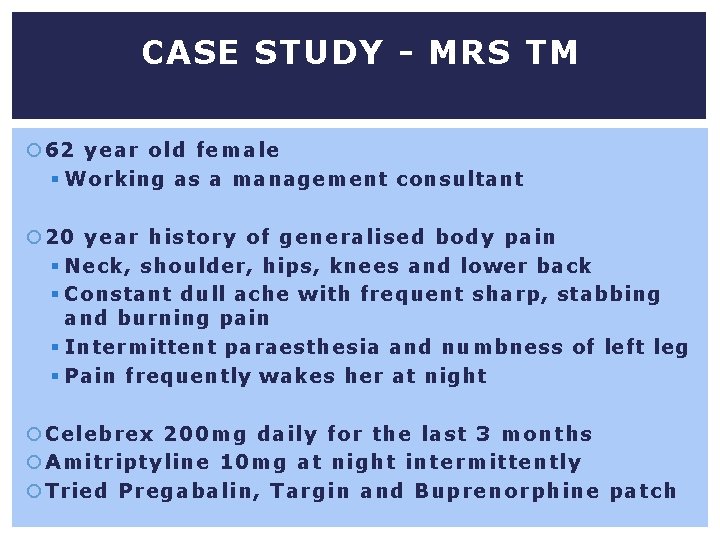
CASE STUDY - MRS TM 62 year old female § Working as a management consultant 20 year history of generalised body pain § Neck, shoulder, hips, knees and lower back § Constant dull ache with frequent sharp, stabbing and burning pain § Intermittent paraesthesia and numbness of left leg § Pain frequently wakes her at night Celebrex 200 mg daily for the last 3 months Amitriptyline 10 mg at night intermittently Tried Pregabalin, Targin and Buprenorphine patch
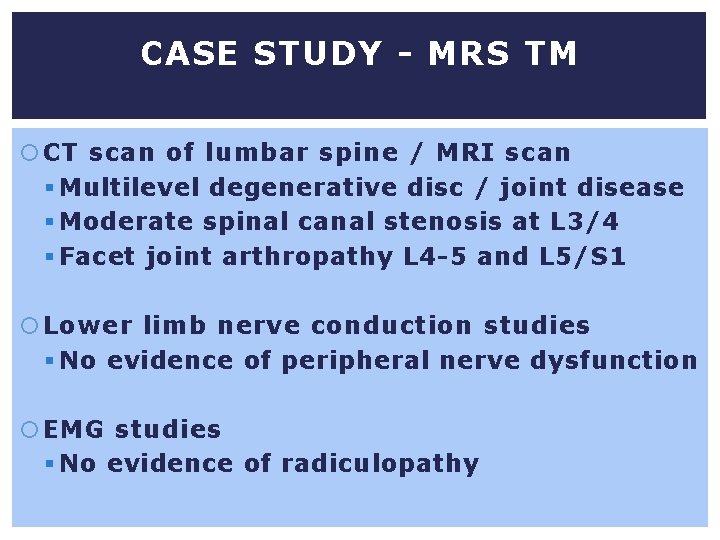
CASE STUDY - MRS TM CT scan of lumbar spine / MRI scan § Multilevel degenerative disc / joint disease § Moderate spinal canal stenosis at L 3/4 § Facet joint arthropathy L 4 -5 and L 5/S 1 Lower limb nerve conduction studies § No evidence of peripheral nerve dysfunction EMG studies § No evidence of radiculopathy
CASE STUDY - MRS TM Treatment • Celebrex 200 mg mane and Amitriptyline 10 mg nocte continued • Commenced on Tapentadol SR 50 mg twice per day • Increased to 100 mg twice a day in 2 weeks time • Home range of motion exercise program Review 6 weeks • Complete resolution of pain (20 year history) • Constant pain resolved • Sharp, stabbing and burning pain resolved • Paraesthesia of left leg resolved • Sleeping well – stopped Amitriptyline and Celebrex Increased Function • Vacuuming whole house without break, • Preparing food without difficulty, • Mopping floors and • Going up a 12 foot ladder to clean gutters
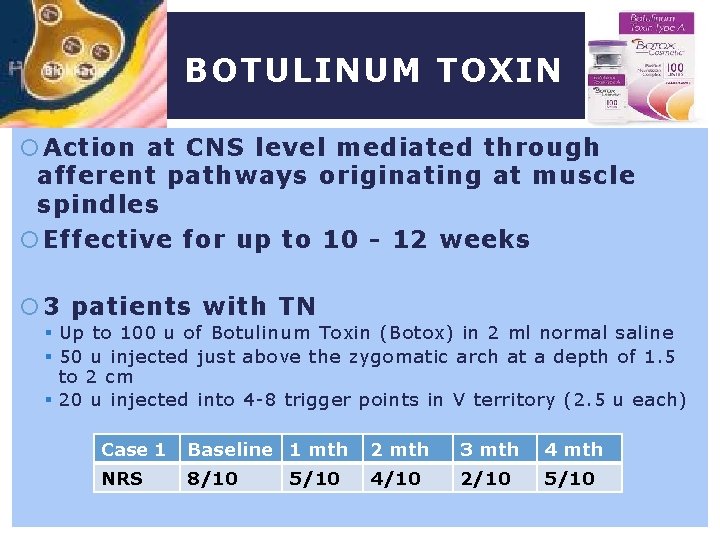
BOTULINUM TOXIN Action at CNS level mediated through afferent pathways originating at muscle spindles Effective for up to 10 - 12 weeks 3 patients with TN § Up to 100 u of Botulinum Toxin (Botox) in 2 ml normal saline § 50 u injected just above the zygomatic arch at a depth of 1. 5 to 2 cm § 20 u injected into 4 -8 trigger points in V territory (2. 5 u each) Case 1 Baseline 1 mth 2 mth 3 mth 4 mth NRS 8/10 4/10 2/10 5/10
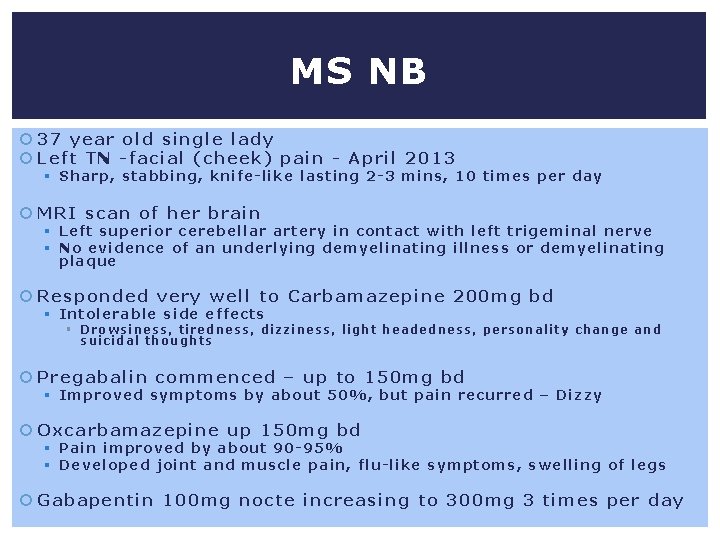
MS NB 37 year old single lady Left TN -facial (cheek) pain - April 2013 § Sharp, stabbing, knife-like lasting 2 -3 mins, 10 times per day MRI scan of her brain § Left superior cerebellar artery in contact with left trigeminal nerve § No evidence of an underlying demyelinating illness or demyelinating plaque Responded very well to Carbamazepine 200 mg bd § Intolerable side effects § Drowsiness, tiredness, dizziness, light headedness, personality change and suicidal thoughts Pregabalin commenced – up to 150 mg bd § Improved symptoms by about 50%, but pain recurred – Dizzy Oxcarbamazepine up 150 mg bd § Pain improved by about 90 -95% § Developed joint and muscle pain, flu-like symptoms, swelling of legs Gabapentin 100 mg nocte increasing to 300 mg 3 times per day
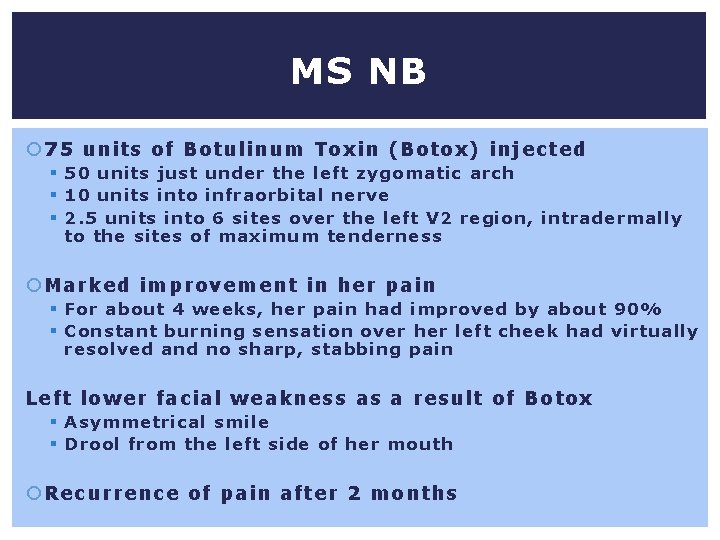
MS NB 75 units of Botulinum Toxin (Botox) injected § 50 units just under the left zygomatic arch § 10 units into infraorbital nerve § 2. 5 units into 6 sites over the left V 2 region, intradermally to the sites of maximum tenderness Marked improvement in her pain § For about 4 weeks, her pain had improved by about 90% § Constant burning sensation over her left cheek had virtually resolved and no sharp, stabbing pain Left lower facial weakness as a result of Botox § Asymmetrical smile § Drool from the left side of her mouth Recurrence of pain after 2 months
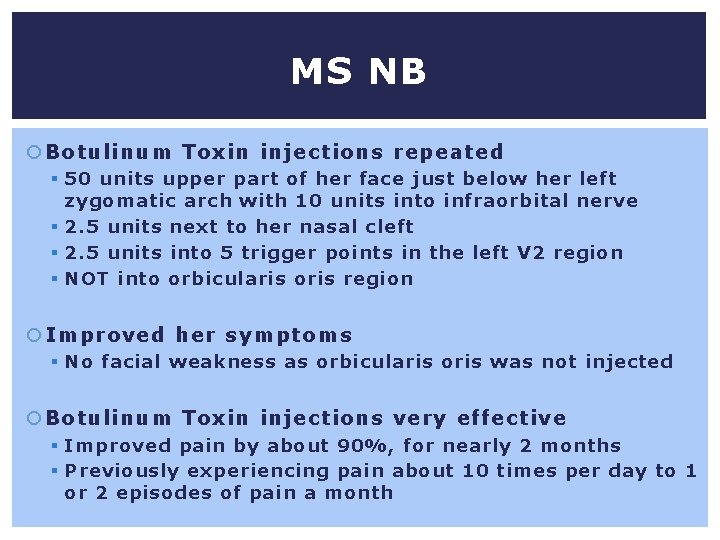
MS NB Botulinum Toxin injections repeated § 50 units upper part of her face just below her left zygomatic arch with 10 units into infraorbital nerve § 2. 5 units next to her nasal cleft § 2. 5 units into 5 trigger points in the left V 2 region § NOT into orbicularis oris region Improved her symptoms § No facial weakness as orbicularis oris was not injected Botulinum Toxin injections very effective § Improved pain by about 90%, for nearly 2 months § Previously experiencing pain about 10 times per day to 1 or 2 episodes of pain a month
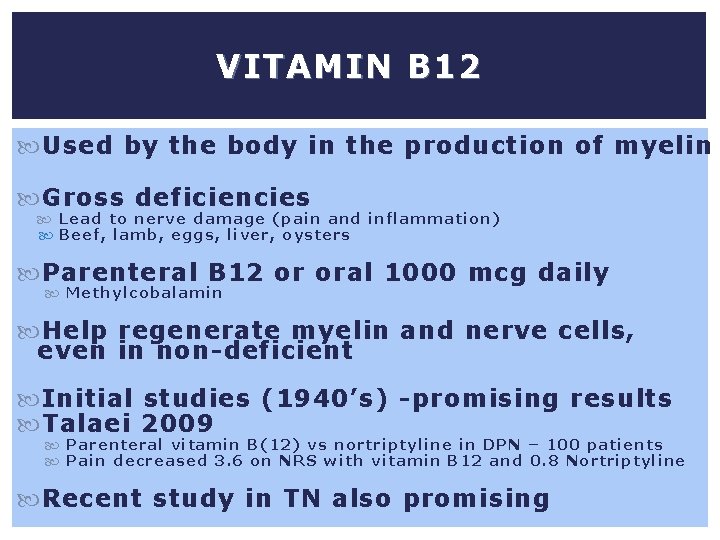
VITAMIN B 12 Used by the body in the production of myelin Gross deficiencies Lead to nerve damage (pain and inflammation) Beef, lamb, eggs, liver, oysters Parenteral B 12 or oral 1000 mcg daily Methylcobalamin Help regenerate myelin and nerve cells, even in non-deficient Initial studies (1940’s) -promising results Talaei 2009 Parenteral vitamin B(12) vs nortriptyline in DPN – 100 patients Pain decreased 3. 6 on NRS with vitamin B 12 and 0. 8 Nortriptyline Recent study in TN also promising
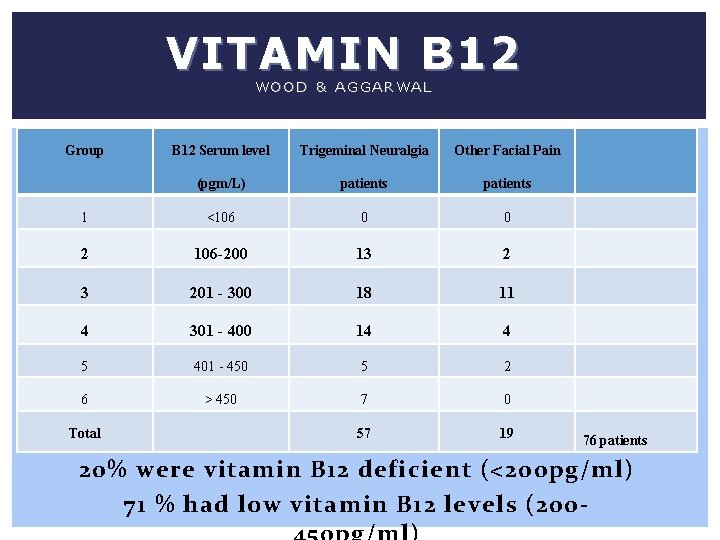
VITAMIN B 12 WOOD & AGGARWAL Group B 12 Serum level Trigeminal Neuralgia Other Facial Pain (pgm/L) patients 1 <106 0 0 2 106 -200 13 2 3 201 - 300 18 11 4 301 - 400 14 4 5 401 - 450 5 2 6 > 450 7 0 57 19 Total 76 patients 20% were vitamin B 12 deficient (<200 pg/ml) 71 % had low vitamin B 12 levels (200 -
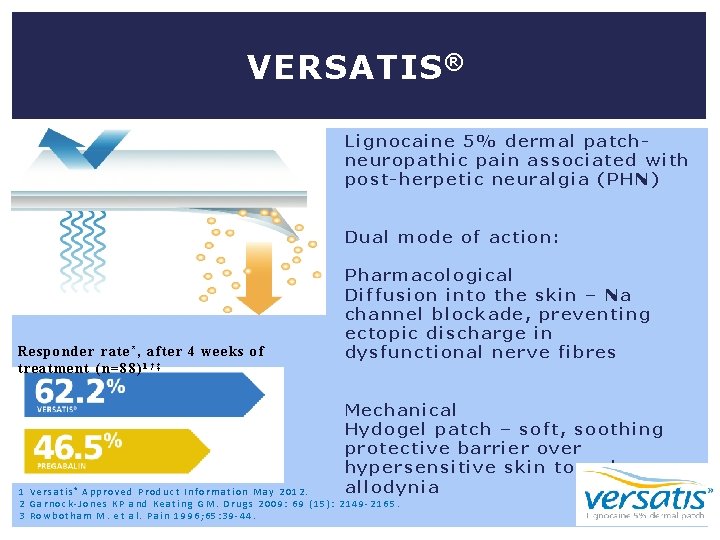
VERSATIS ® Lignocaine 5% dermal patch- neuropathic pain associated with post-herpetic neuralgia (PHN) Dual mode of action: Responder rate*, after 4 weeks of treatment (n=88)1†‡ Pharmacological Diffusion into the skin – Na channel blockade, preventing ectopic discharge in dysfunctional nerve fibres Mechanical Hydogel patch – soft, soothing protective barrier over hypersensitive skin to reduce allodynia 1 Versatis® Approved Product Information May 2012. 2 Garnock-Jones KP and Keating GM. Drugs 2009: 69 (15): 2149 -2165. 3 Rowbotham M. et al. Pain 1996; 65: 39 -44.
WIND - UP Prolonged response to a noxious stimulus § Dramatic increase in duration and magnitude of cell responses, but input into the spinal cord remains the same Activation of: § Neurotransmitters (glutamate, substance P, NO) § Receptors ( NMDA) § Inflammation and chemicals (neurotropin) § Genes (Cfos)
KETAMINE Ketamine § Non-competitive NMDA antagonist § Use limited by due side effects (hallucinations) § Lack of oral preparation (only IV, SC and spinal). Oral NMDA receptor antagonists § Dextromethorpan, Amantadine and Memantine § Dose required for Dextromethorphan § As a cough suppressant 40 -80 mg § Pain 400 mg / day § Dextromethorphan NNT for DPN 2. 5 (CI 1. 6 - 5. 4) § Dextromethorphan NNH 8. 8 (CI 5. 6 – 21. 1)
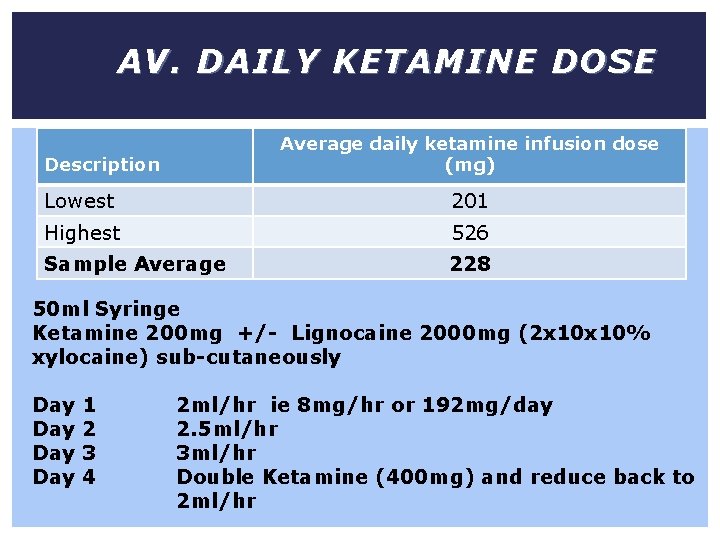
AV. DAILY KETAMINE DOSE Description Average daily ketamine infusion dose (mg) Lowest 201 Highest 526 Sample Average 228 50 ml Syringe Ketamine 200 mg +/- Lignocaine 2000 mg (2 x 10% xylocaine) sub-cutaneously Day 1 2 ml/hr ie 8 mg/hr or 192 mg/day Day 2 2. 5 ml/hr Day 3 3 ml/hr Day 4 Double Ketamine (400 mg) and reduce back to 2 ml/hr
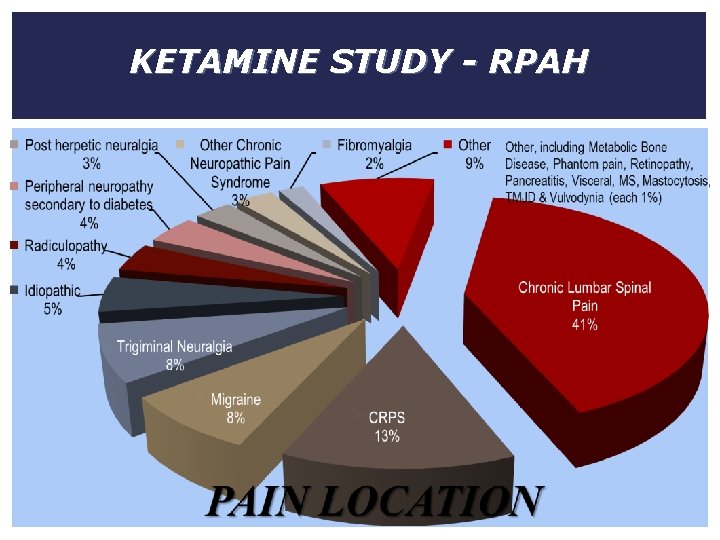
KETAMINE STUDY - RPAH
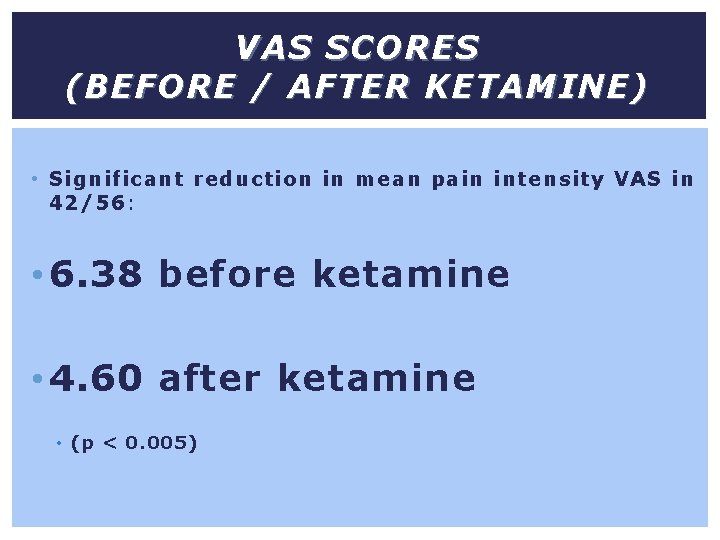
VAS SCORES (BEFORE / AFTER KETAMINE) • Significant reduction in mean pain intensity VAS in 42/56: • 6. 38 before ketamine • 4. 60 after ketamine • (p < 0. 005)
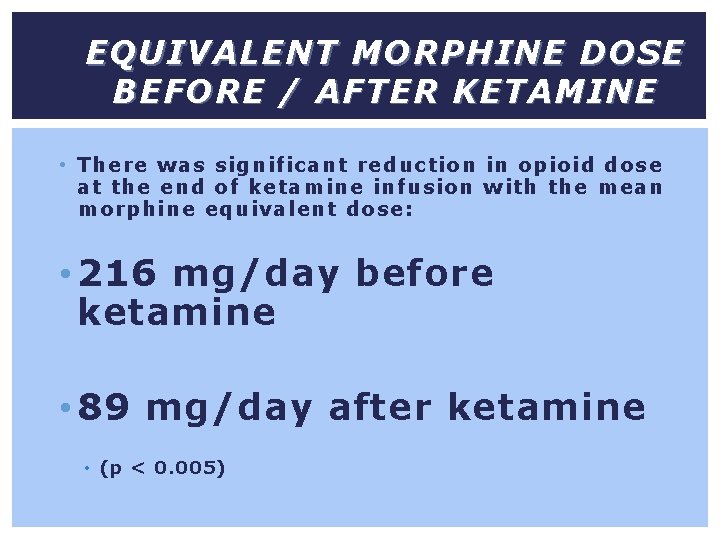
EQUIVALENT MORPHINE DOSE BEFORE / AFTER KETAMINE • There was significant reduction in opioid dose at the end of ketamine infusion with the mean morphine equivalent dose: • 216 mg/day before ketamine • 89 mg/day after ketamine • (p < 0. 005)
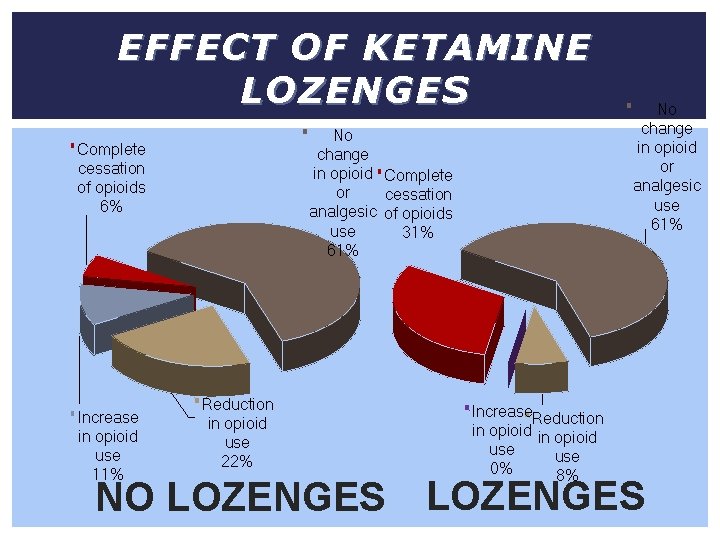
EFFECT OF KETAMINE LOZENGES No change in opioid Complete or cessation analgesic of opioids use 31% 61% Complete cessation of opioids 6% Increase in opioid use 11% Reduction in opioid use 22% Increase. Reduction in opioid use 0% 8% No change in opioid or analgesic use 61% NO LOZENGES
NEUROPATHIC PAIN – CONCLUSION Prevalence § 25 -50% patients treated at Pain clinics Complex pathophysiology § Precise mechanisms unknown § Multiple mechanisms involved Under-assessed and under-treated Available treatments provide only modest reduction of pain
CUSTOMISING TREATMENT The search for pain management