
Neurons How the brain communicates Neurons billions used
Neurons: How the brain communicates § Neurons – billions used to convey info. Throughout the body § Dendrites – take in neurochemical info § Axon – sends messages to next neuron – Sends message faster if mylenated § Damage can occur from injury or disease – Most common for young adults?
Brain injuries § 1) Trauma (stable or recovery course) – Damage at point of trauma, opposite side, and sides due to axonal shearing) § 2) Disease (progressive course) – Location may be localized, and localization defines different diseases and pathologies § Brain damage can be predicted by 1) duration of unconsciousness, and/or 2) duration of amnesia, and/or 3) location and extent of damage
Communication § Neuronal impulse (electrical within & chemical between neurons) § Neurochemicals are also referred to as neurotransmitters – e. g. , acetylcholine assists in motor functions, serotonin assists with mood and sleep, dopamine plays role in movement, emotional control, alertness, etc.
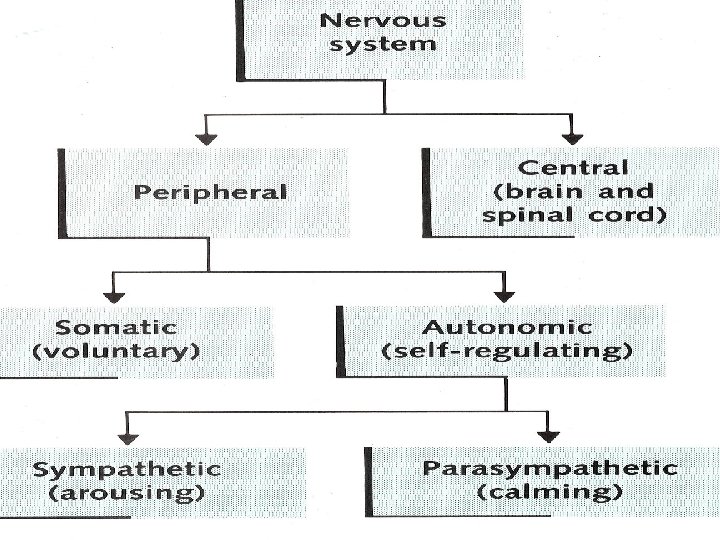
Divisions of the nervous system § The nervous system monitors/controls almost every organ system through a series of positive and negative feedback loops. § CNS - brain & spinal cord. § Peripheral NS (PNS) connects the CNS to other parts of the body, and is composed of nerves (bundles of sensory and motor neurons). – Voluntary muscles and sensory info and involuntary muscles -autonomic nervous system § Sympathetic (expends energy) and parasympathetic (conserves energy)
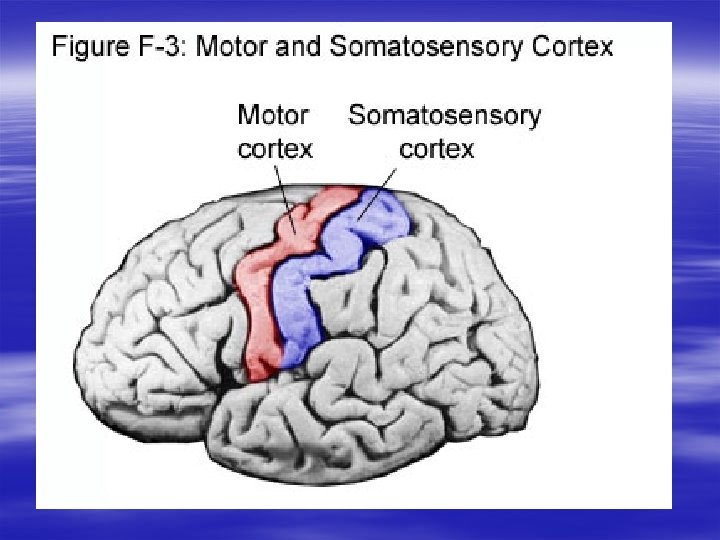
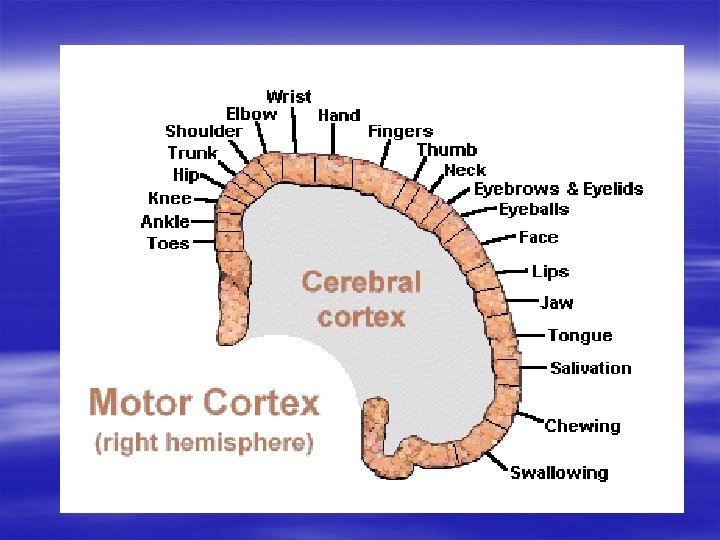
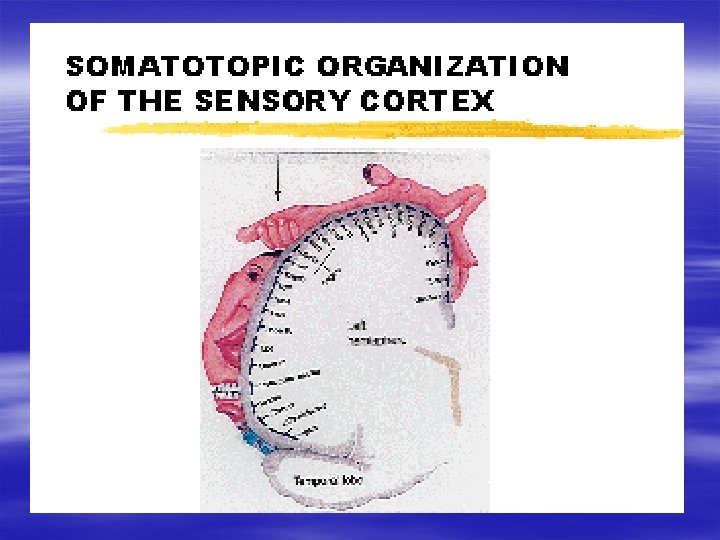
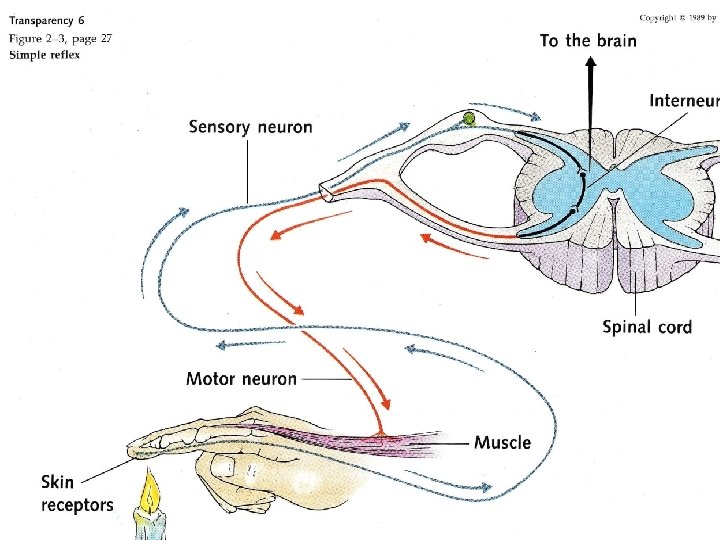
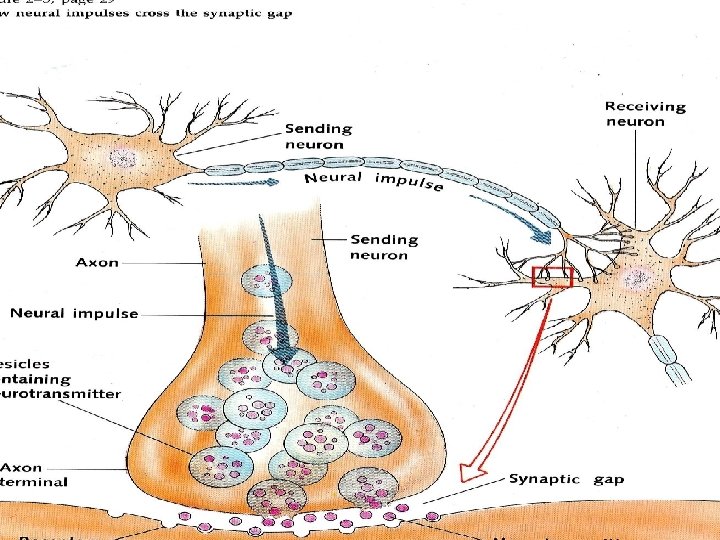
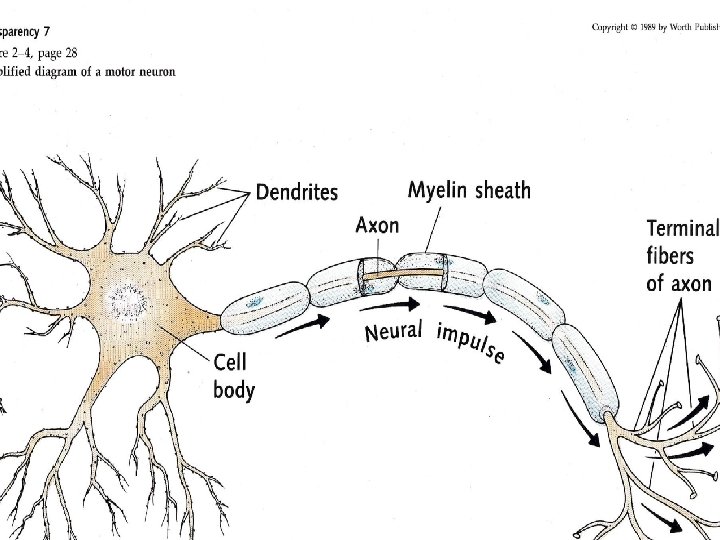
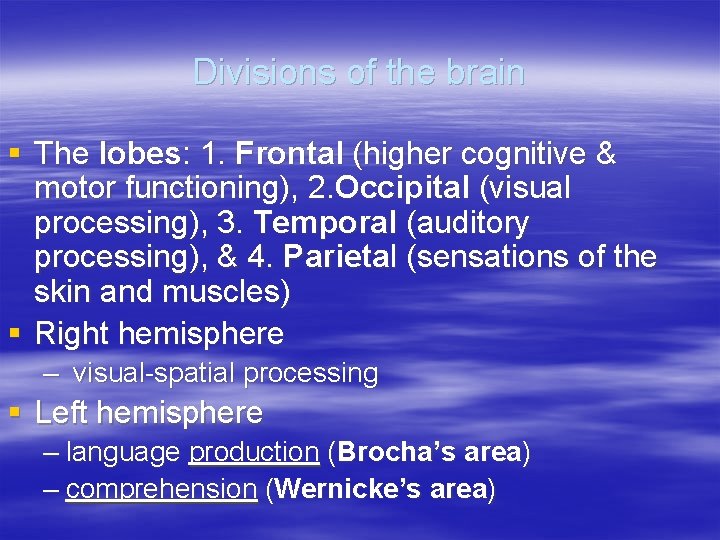
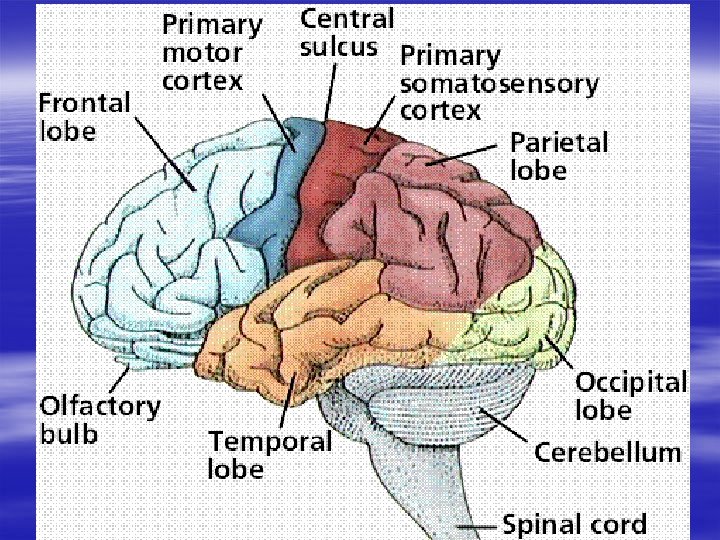
Divisions of the brain § The lobes: 1. Frontal (higher cognitive & motor functioning), 2. Occipital (visual processing), 3. Temporal (auditory processing), & 4. Parietal (sensations of the skin and muscles) § Right hemisphere – visual-spatial processing § Left hemisphere – language production (Brocha’s area) – comprehension (Wernicke’s area)
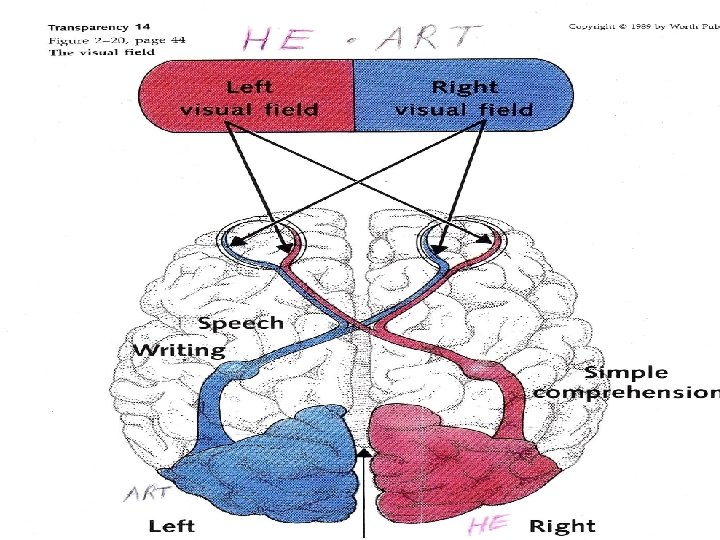
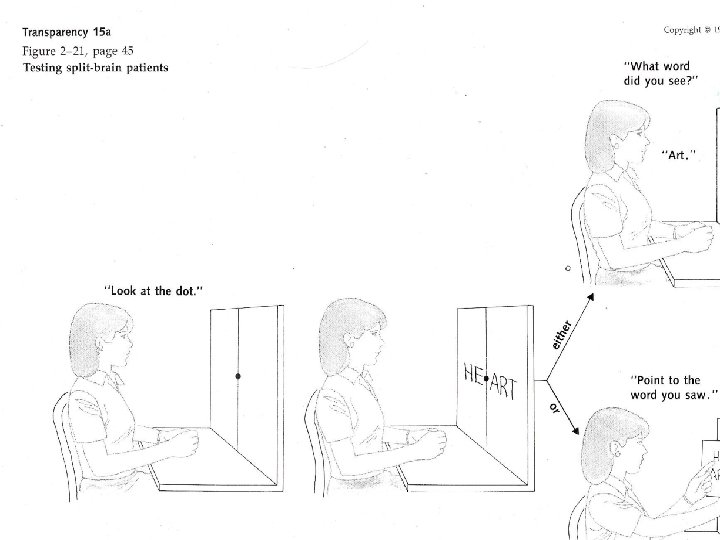
How the brain works § Corpus callosum – connects the two hemispheres of the brain and allows them to communicate – Severed (surgically) in some patients with severe forms of epilepsy to prevent grand mal seizures from spreading to both hemispheres § Roger Sperry’s work on split brain patients – Each hemisphere has unique functions and can be autonomous – Hemispheric isolation creates potential for errors § Migration of functioning – transfer of functioning that can occur when part of the brain is damaged (more likely if patient is young)
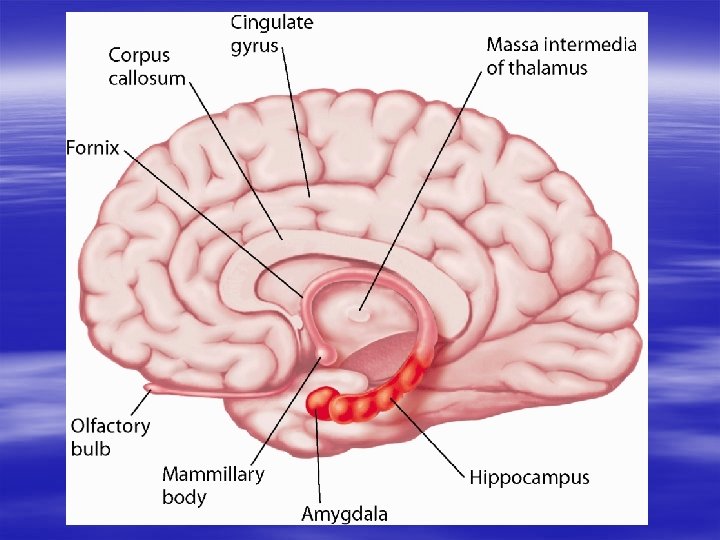
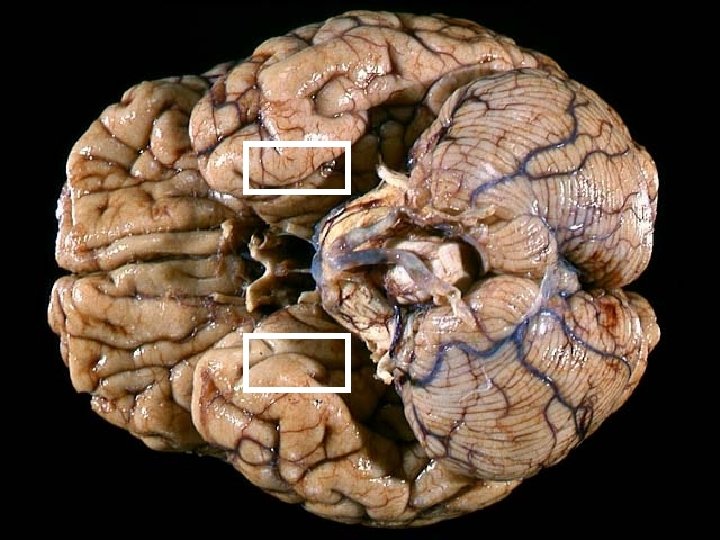
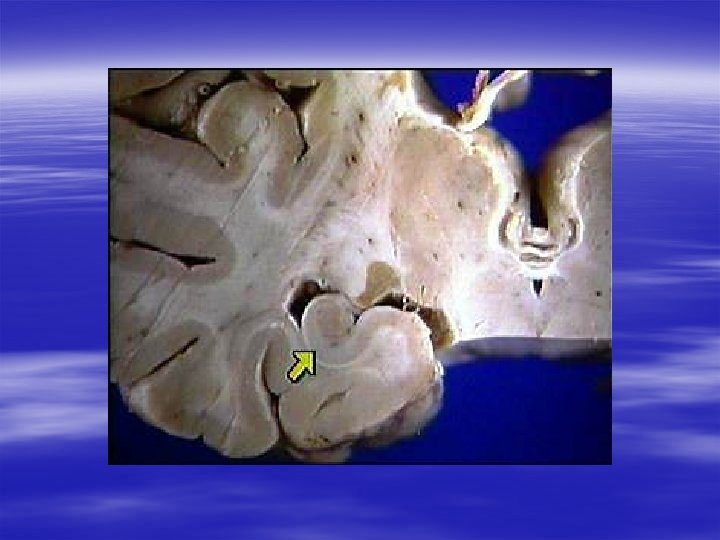
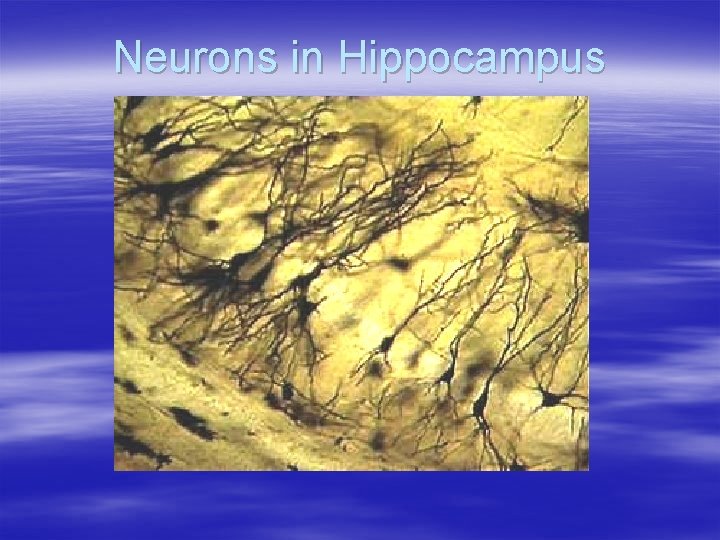
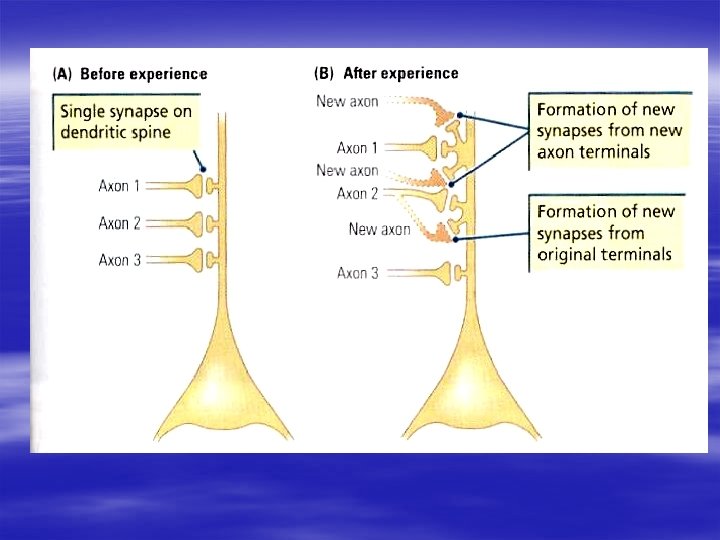
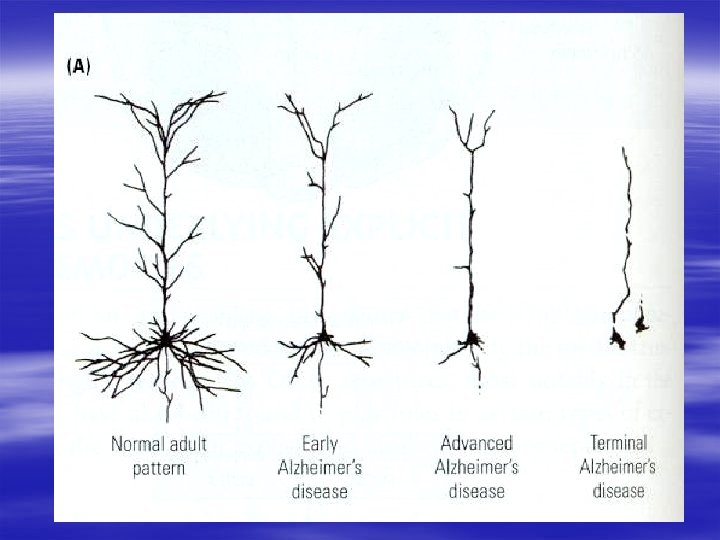
Neurons in Hippocampus
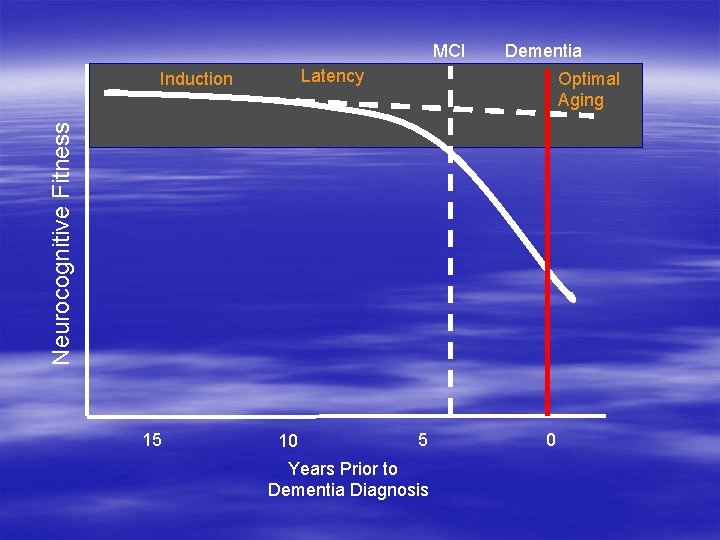
MCI Dementia Latency Optimal Aging Neurocognitive Fitness Induction 15 10 5 Years Prior to Dementia Diagnosis 0
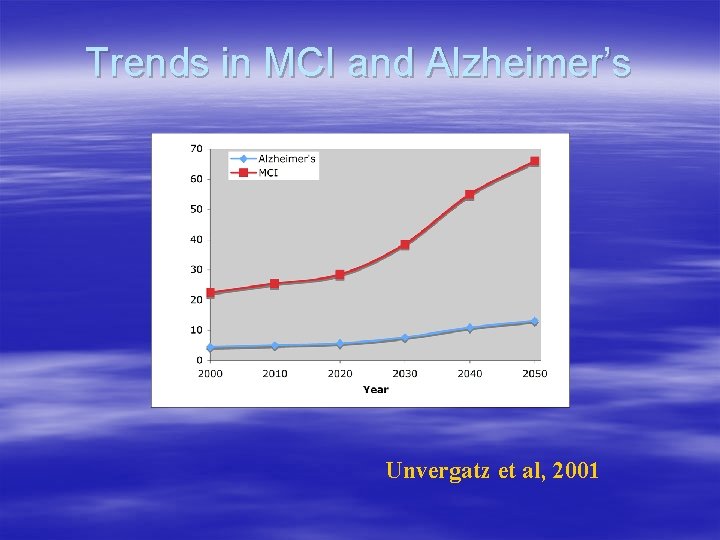
Trends in MCI and Alzheimer’s Unvergatz et al, 2001
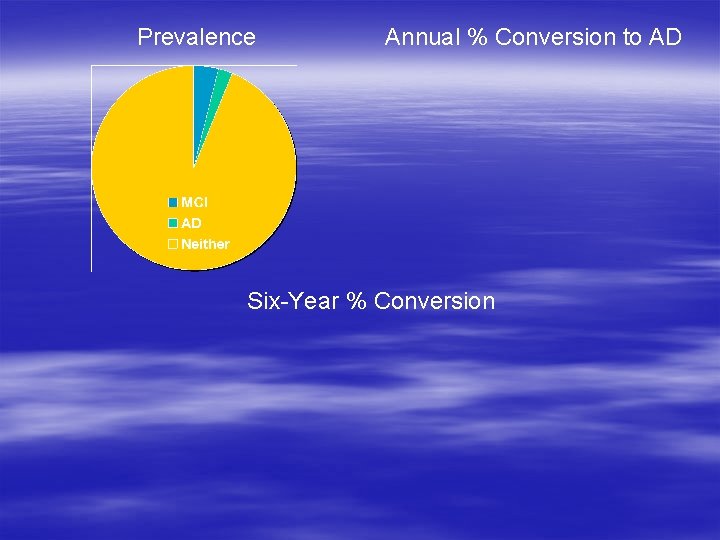
Prevalence Annual % Conversion to AD Six-Year % Conversion
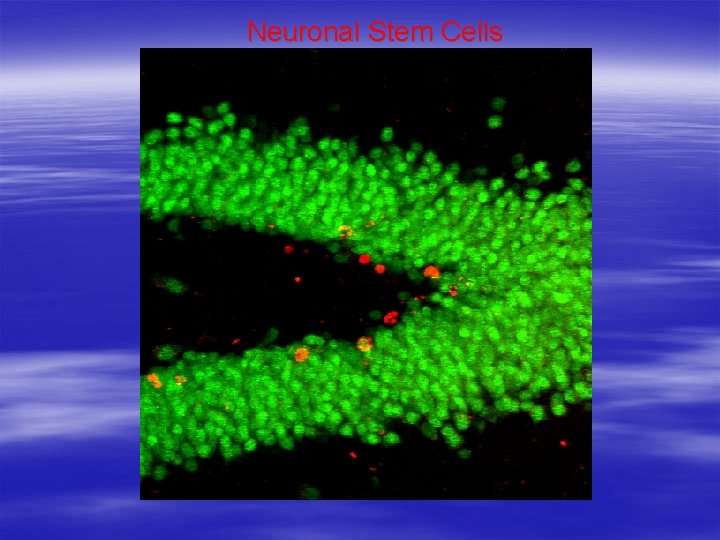
Neuronal Stem Cells
Conditioning in everyday life § Cancer patients receiving trials of chemotherapy show a weakening of their immune system when exposed to the hospital room where they received chemotherapy – Can we condition increases in immune system? § Placebo effects with drugs – If a pill has worked for you before a similar pill (even an inert substance) can not only cure a headache, but actually result in neurochemical changes in your body § Behavioral change: A Clockwork orange, reconditioning prisoners, buzzer pants, etc. § Salivating to the golden arches, etc.
Conditioning dogs and rats § Watson & Raynor (1920) trained a young infant (Little Albert) so that he would e afraid of a rat. § Before conditioning – Present white rat – no fear (neutral stimulus) – Loud noise – fear (unconditioned response) § Conditioning – Pair the white rat (neutral stimulus) with the loud noise (unconditioned stimulus) § After conditioning – White rat = fear (conditioned response) – The white rat is now a conditioned stimulus
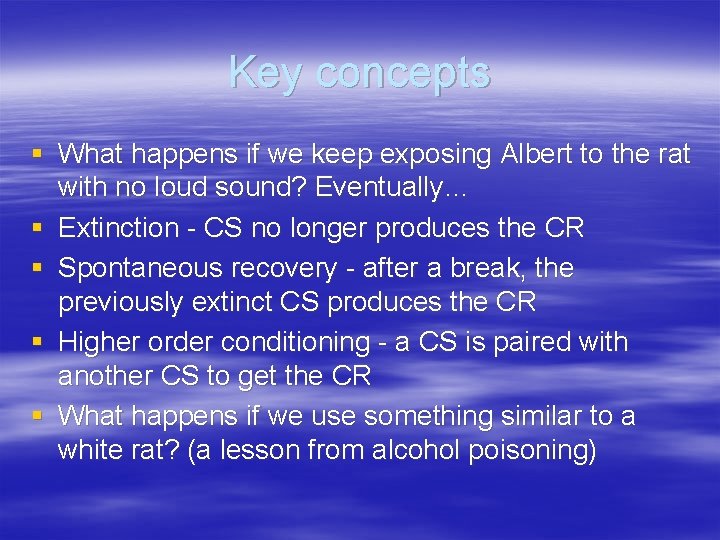
Key concepts § What happens if we keep exposing Albert to the rat with no loud sound? Eventually… § Extinction - CS no longer produces the CR § Spontaneous recovery - after a break, the previously extinct CS produces the CR § Higher order conditioning - a CS is paired with another CS to get the CR § What happens if we use something similar to a white rat? (a lesson from alcohol poisoning)
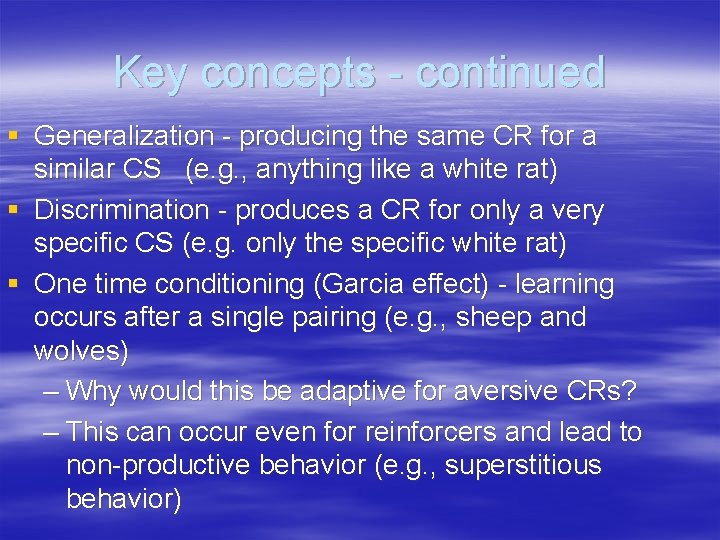
Key concepts - continued § Generalization - producing the same CR for a similar CS (e. g. , anything like a white rat) § Discrimination - produces a CR for only a very specific CS (e. g. only the specific white rat) § One time conditioning (Garcia effect) - learning occurs after a single pairing (e. g. , sheep and wolves) – Why would this be adaptive for aversive CRs? – This can occur even for reinforcers and lead to non-productive behavior (e. g. , superstitious behavior)
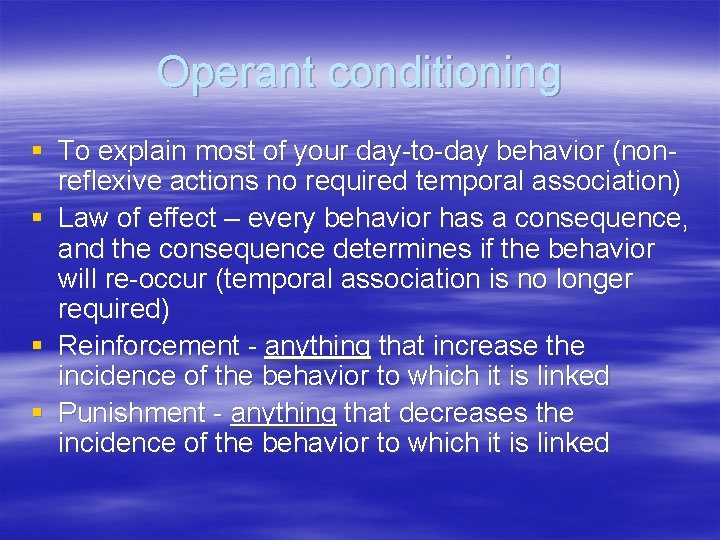
Operant conditioning § To explain most of your day-to-day behavior (nonreflexive actions no required temporal association) § Law of effect – every behavior has a consequence, and the consequence determines if the behavior will re-occur (temporal association is no longer required) § Reinforcement - anything that increase the incidence of the behavior to which it is linked § Punishment - anything that decreases the incidence of the behavior to which it is linked
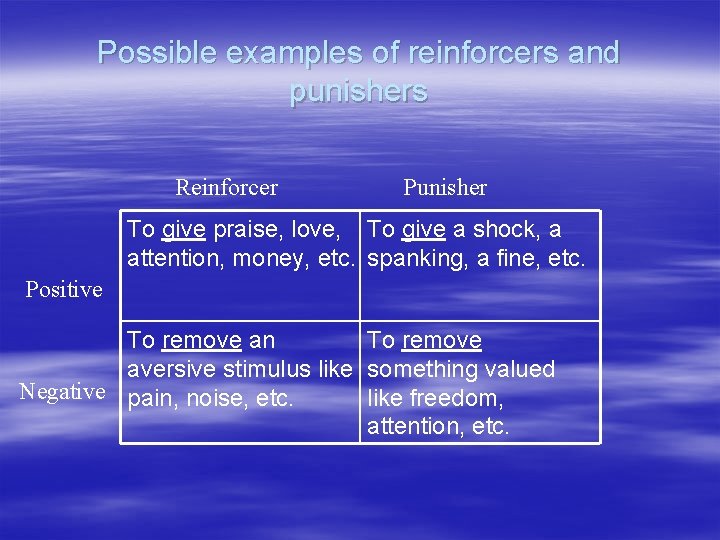
Possible examples of reinforcers and punishers Reinforcer Punisher To give praise, love, To give a shock, a attention, money, etc. spanking, a fine, etc. Positive To remove an To remove aversive stimulus like something valued Negative pain, noise, etc. like freedom, attention, etc.
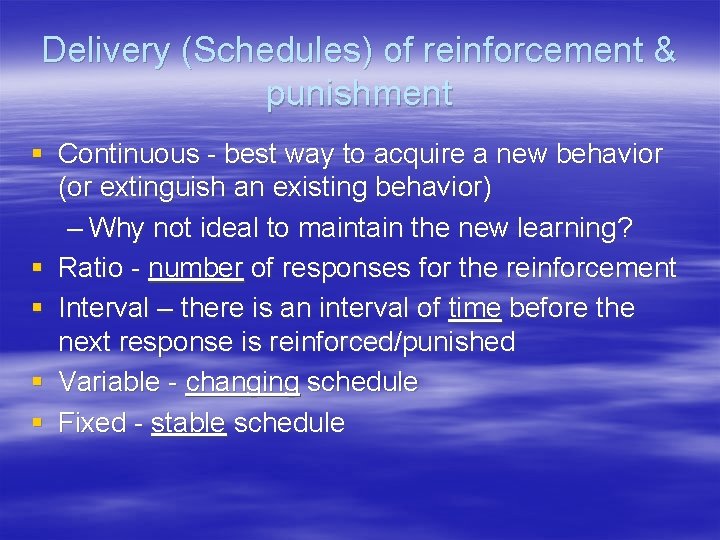
Delivery (Schedules) of reinforcement & punishment § Continuous - best way to acquire a new behavior (or extinguish an existing behavior) – Why not ideal to maintain the new learning? § Ratio - number of responses for the reinforcement § Interval – there is an interval of time before the next response is reinforced/punished § Variable - changing schedule § Fixed - stable schedule
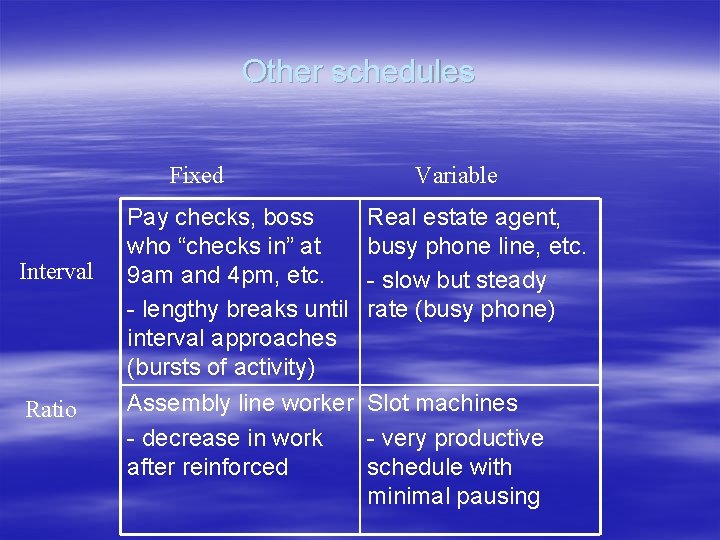
Other schedules Fixed Interval Ratio Pay checks, boss who “checks in” at 9 am and 4 pm, etc. - lengthy breaks until interval approaches (bursts of activity) Variable Real estate agent, busy phone line, etc. - slow but steady rate (busy phone) Assembly line worker Slot machines - decrease in work - very productive after reinforced schedule with minimal pausing
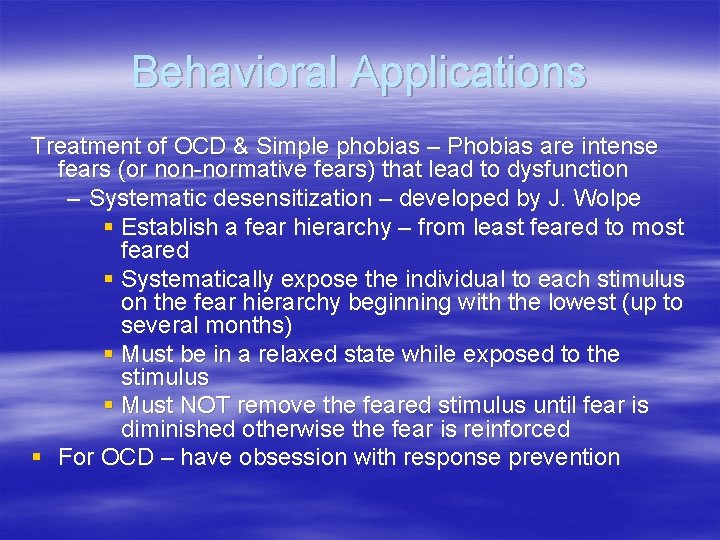
Behavioral Applications Treatment of OCD & Simple phobias – Phobias are intense fears (or non-normative fears) that lead to dysfunction – Systematic desensitization – developed by J. Wolpe § Establish a fear hierarchy – from least feared to most feared § Systematically expose the individual to each stimulus on the fear hierarchy beginning with the lowest (up to several months) § Must be in a relaxed state while exposed to the stimulus § Must NOT remove the feared stimulus until fear is diminished otherwise the fear is reinforced § For OCD – have obsession with response prevention
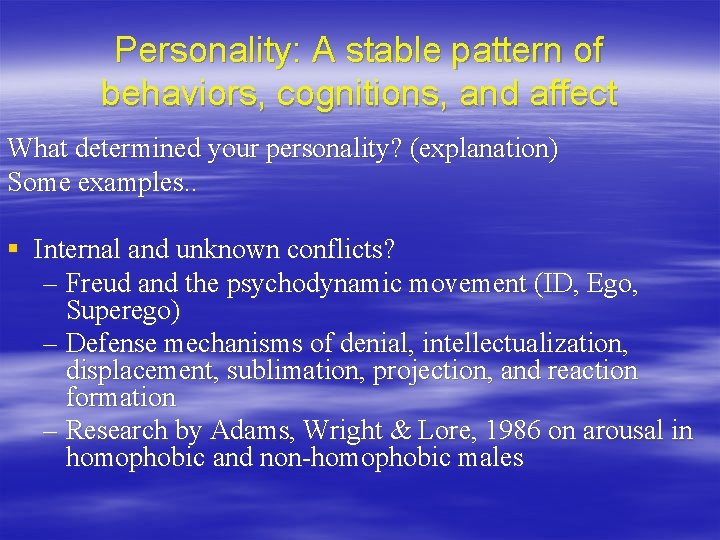
Personality: A stable pattern of behaviors, cognitions, and affect What determined your personality? (explanation) Some examples. . § Internal and unknown conflicts? – Freud and the psychodynamic movement (ID, Ego, Superego) – Defense mechanisms of denial, intellectualization, displacement, sublimation, projection, and reaction formation – Research by Adams, Wright & Lore, 1986 on arousal in homophobic and non-homophobic males
Personality Theory and Research § Biological processes – Eysenck’s research on arousal in the Ascending Reticular Activating System (ARAS) – Extraverts show less responsiveness to stimulation – Introverts show heightened response to stimulation – Implications for socialization frequency and interpersonal distance Measuring personality (description) - Early examples were decidedly non-scientific
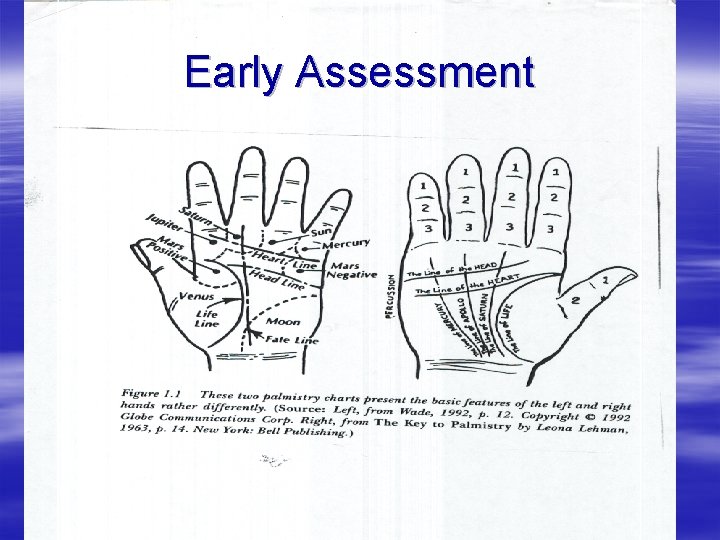
Early Assessment
Roots of Assessment Early attempts. . § Palm reading § Astrology - stars as gods vs. planets All of these (non-standardized, unreliable and non-validated) techniques rely on… Barnum effect - broad and slightly positive statements; – Stock statements - true in all circumstances – Fishing statements – general statements that can be interpreted in many ways (e. g. , “you’ve experienced a loss”) – Research (Glick, 1985) suggests that people are more likely to believe Barnum-type false feedback vs. real personality assessments.
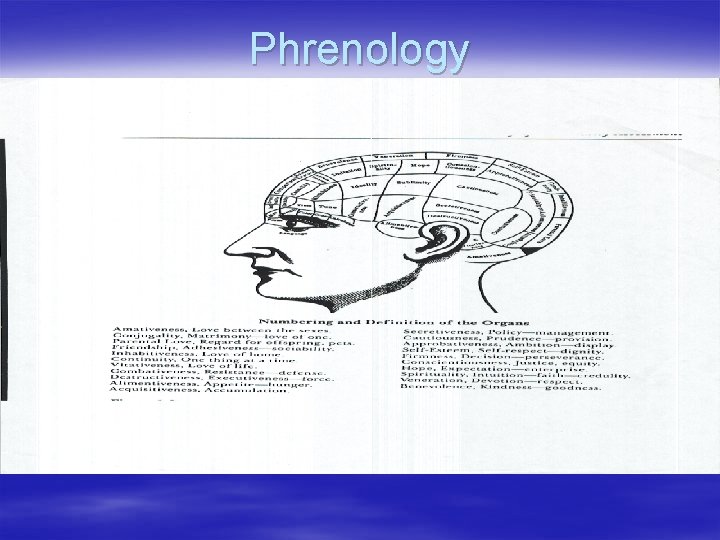
Phrenology
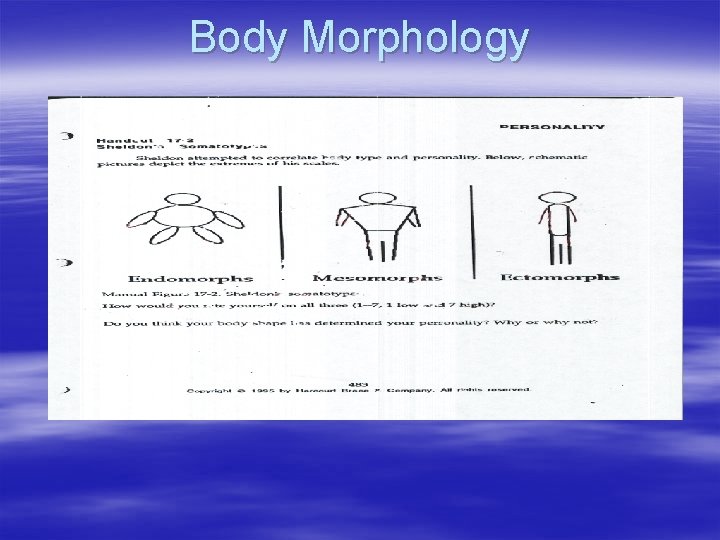
Body Morphology
Morphological assessments: From the head to the body § Phrenology (Gall, early 1800 s) – skull shape = personality § Sheldon’s body types (1950) – Based on photographs of all incoming freshmen at Ivy league schools in the 1930 s – Endomorph – jolly/happy, lazy – Mesomorph – dominant, athletic – Ectomorph – smart, shy § Body type and criminality (Lombroso)
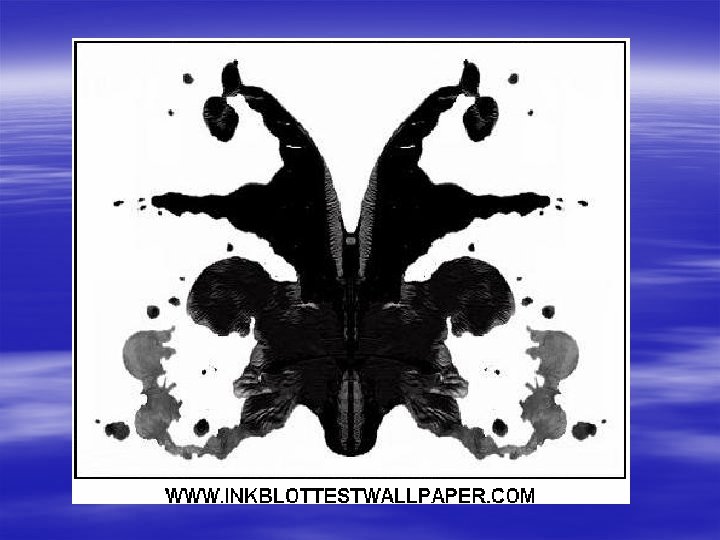
Current Assessment Clinical settings: § Psychodynamic methods: word association, TAT, Rorschach (2 nd most common test), etc. § MMPI - developed in 1940 using an empirical approach, revised in 1989 (MMPI-2) and has 567 T/F items – Most widely used inventory in clinical settings – items generally lack face validity (not obvious) – 3 validity scales (lying, defensiveness, infrequency) – Assesses m/f, Si, Hs, Pa, etc. (psychopathology= personality)
Assessment - continued Non-clinical settings § NEO-PI – developed for use in the non-clinical population – Neuroticism, Extraversion, Openness to new experience, Agreeableness, & Conscientiousness – Neuroticism is associated with psychological problems (depression, anxiety), but also success in school and work. – Internal control beliefs result in better adaptation and health (studies in old age home; Rodin, 1977)
Intelligence - what is it? § Cognitive abilities such as memory, vocabulary, reasoning, general knowledge, speed of responding, etc. § Wechsler Adult Intelligence Scale (WAIS-III) – Verbal and Performance IQ – Mean IQ = 100, SD = 15 – Like all IQ measures, it is considered to be culturally biased (no such thing as a culture free test)
Alternatives to traditional intelligence § Gould: Intelligence does not = IQ; does not reflect innate skills, nor is intelligence unchangeable (video) § Broader definitions of intelligence: Gardner’s multiple intelligences (abilities in music, art, language, social skills, coordination, etc. ) § Creativity - a way to assess alternative forms of intelligence (flexibility in how one thinks about a problem- allows for novel responses and divergent thinking –the consequences test)
Stunted intellectual development Associated with several developmental disorders including § Autism: extremely low IQ, minimal verbalizations, isolative, repetitious (rocking) and sometimes self-damaging (head banging) behavior § Autism spectrum disorders: 6 in 1, 000 and these include Rett syndrome (small heads, hands, feet, repetitive movements, cog delay), Asperger’s (high functioning AD? ), etc. § More common in males (4: 1), but females are more severe cases Savant syndrome § Very rare (only 1% of all autistic individuals: approx. 1 in a million) § An extraordinary ability (either in absolute or relative to daily functioning), severe cognitive deficits, over attention Stimulus over-selectivity – over attention to only one aspect of a stimulus (can explain both autism and savant syndrome)
Biases and heuristics in judgment § General rules we apply in reasoning to be efficient (can result in erroneous conclusions when improperly applied) § % violent crimes? = 10 -11% – The availability heuristic
Biases - cont § The representative heuristic (ignores base rates) – Over 1 million truck drivers vs. 1 chair – 10% are quiet, 1% like cognac, classical music (1%) = 10 § What is your chance of getting skin cancer in the next two years? What is the chance of someone of the same age/gender as you getting skin cancer in the next 2 years? – Overconfidence bias
Biases and heuristics in judgment – cont. § What are the next three numbers (2, 4, 6, _, _, _)? – Confirmation bias § The odds of winning at black jack are 50%. Assuming you have just lost 10 hands in a row, what are your odds of winning the next one? – Gambler’s fallacy (luck will change) – in reality, these are random and unrelated events. Luck doesn’t change. § All-star team vs. a regular team, who should win? – Fallacy of composition (the whole is = sum of its parts) § Buying beef with 25% fat or 75% fat free? – Error from framing effects – context provides information that results in different conclusions
- Slides: 51