
Neuron Physiology Animal Cell Chromatin Axonal Membrane of
Neuron Physiology
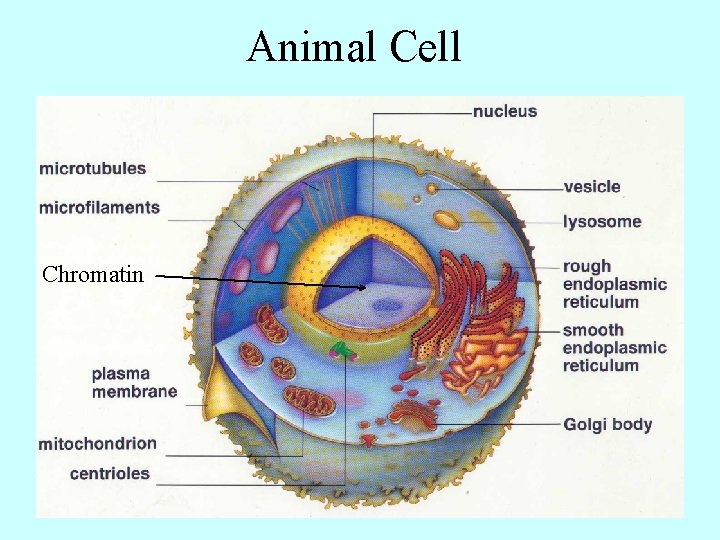
Animal Cell Chromatin
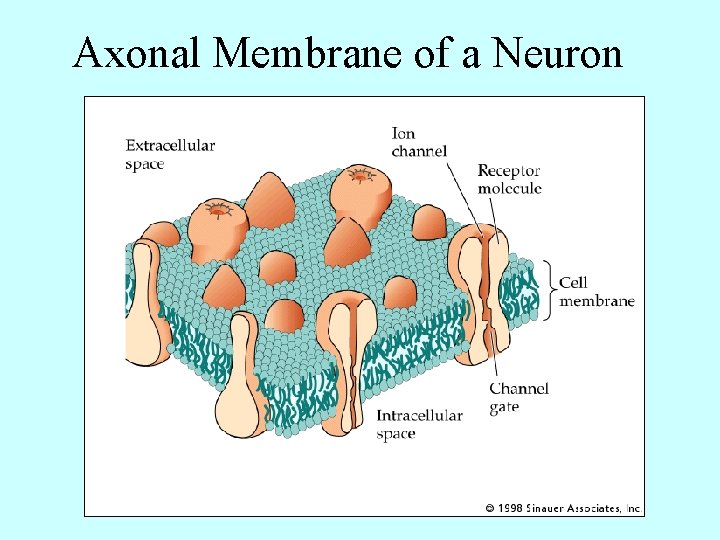
Axonal Membrane of a Neuron
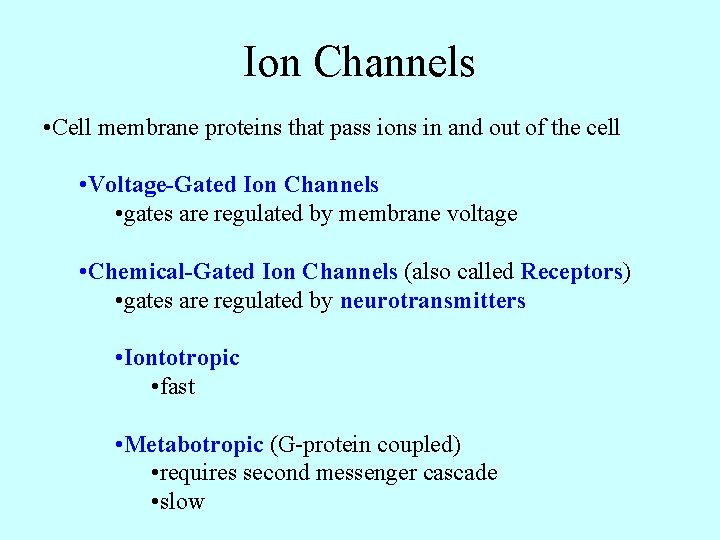
Ion Channels • Cell membrane proteins that pass ions in and out of the cell • Voltage-Gated Ion Channels • gates are regulated by membrane voltage • Chemical-Gated Ion Channels (also called Receptors) • gates are regulated by neurotransmitters • Iontotropic • fast • Metabotropic (G-protein coupled) • requires second messenger cascade • slow
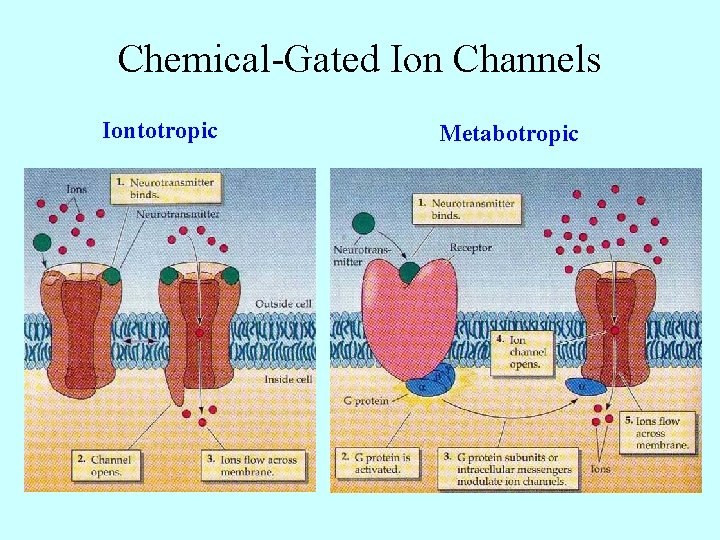
Chemical-Gated Ion Channels Iontotropic Metabotropic
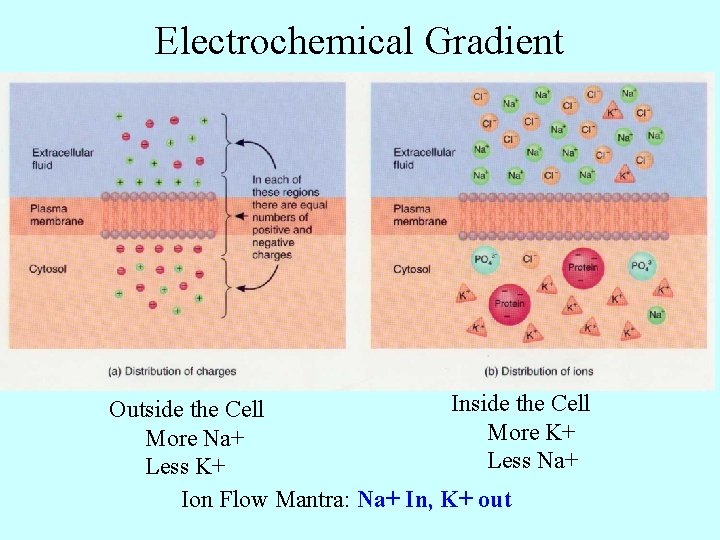
Electrochemical Gradient Inside the Cell Outside the Cell More K+ More Na+ Less K+ Ion Flow Mantra: Na+ In, K+ out
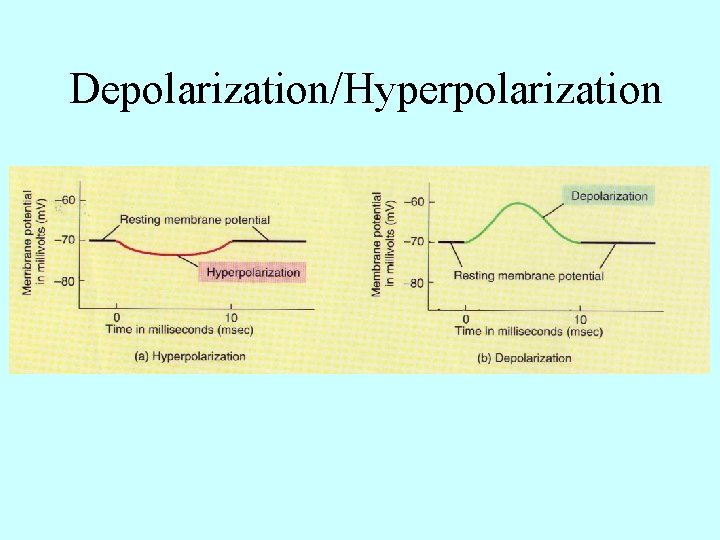
Depolarization/Hyperpolarization
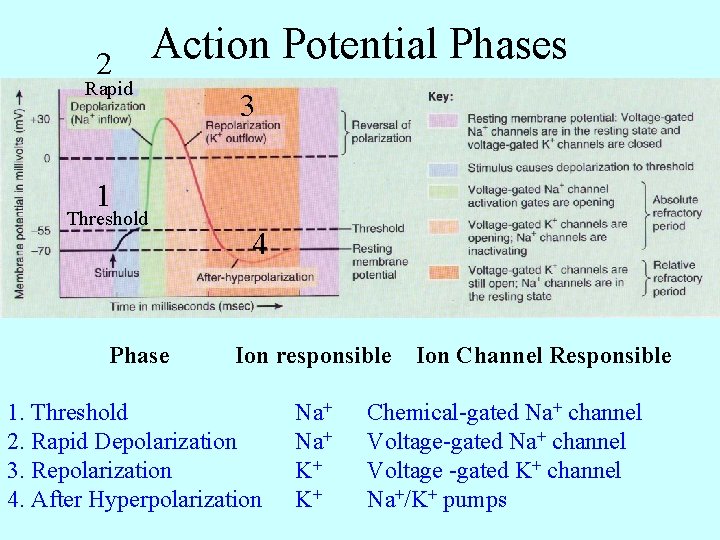
2 Action Potential Phases Rapid 3 1 Threshold Phase 4 Ion responsible 1. Threshold 2. Rapid Depolarization 3. Repolarization 4. After Hyperpolarization Na+ K+ K+ Ion Channel Responsible Chemical-gated Na+ channel Voltage -gated K+ channel Na+/K+ pumps
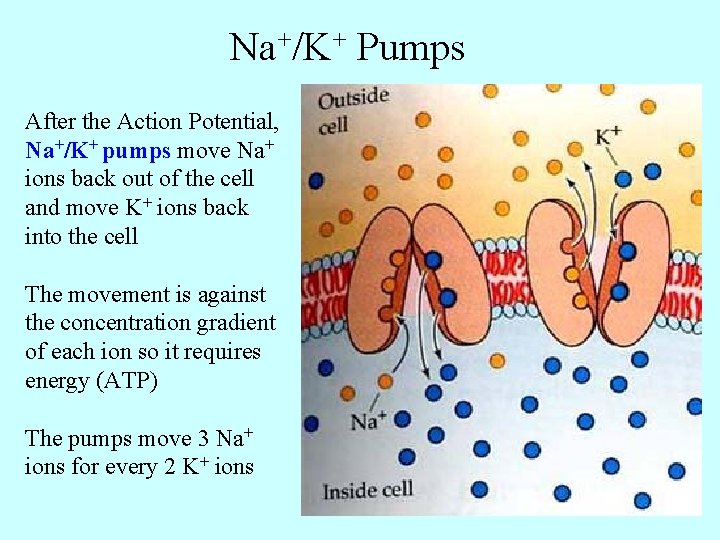
Na+/K+ Pumps After the Action Potential, Na+/K+ pumps move Na+ ions back out of the cell and move K+ ions back into the cell The movement is against the concentration gradient of each ion so it requires energy (ATP) The pumps move 3 Na+ ions for every 2 K+ ions
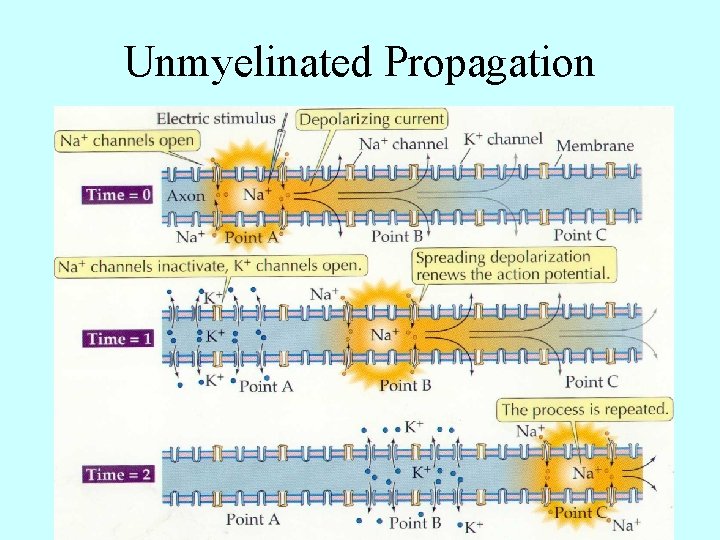
Unmyelinated Propagation
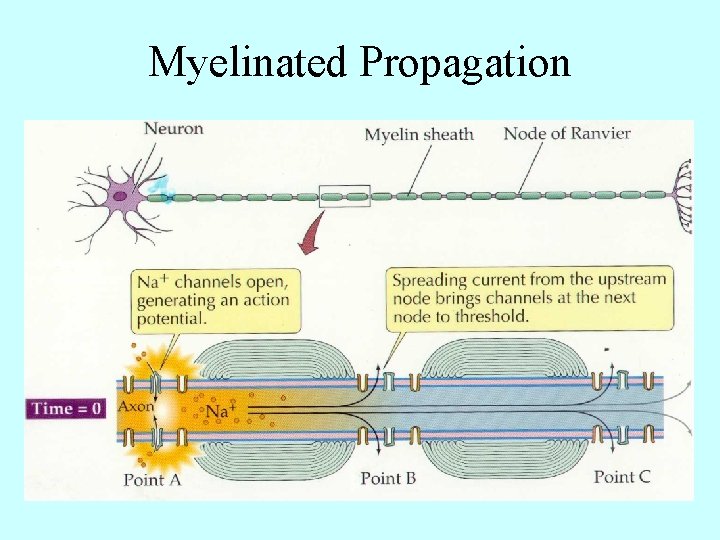
Myelinated Propagation
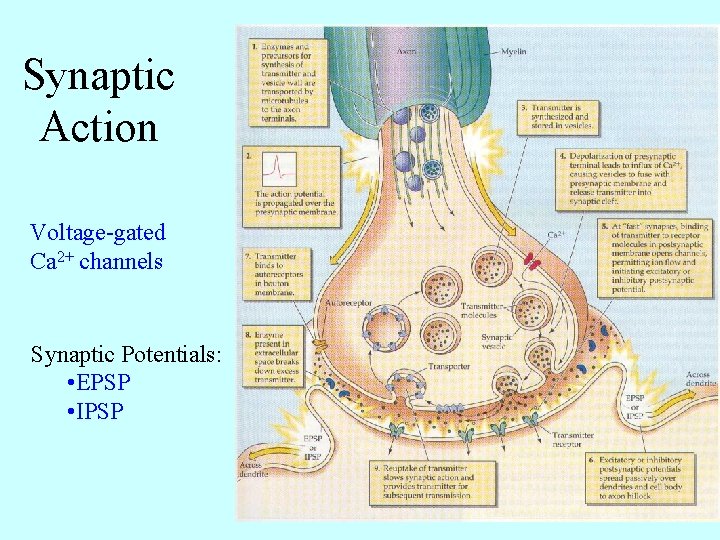
Synaptic Action Voltage-gated Ca 2+ channels Synaptic Potentials: • EPSP • IPSP
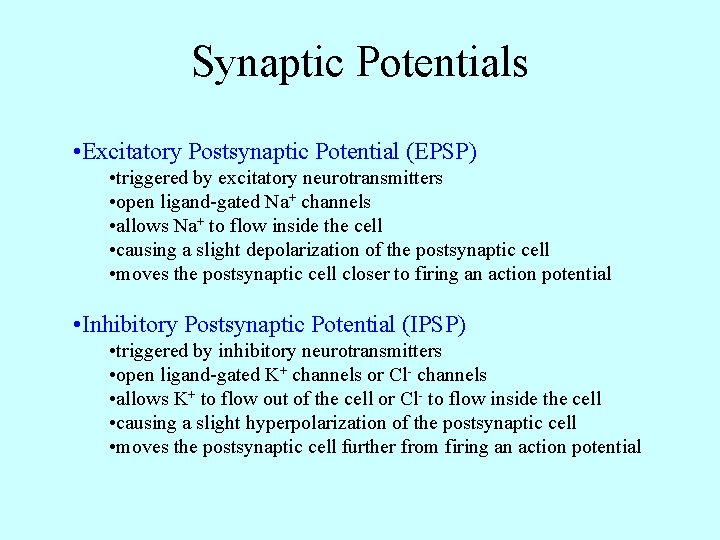
Synaptic Potentials • Excitatory Postsynaptic Potential (EPSP) • triggered by excitatory neurotransmitters • open ligand-gated Na+ channels • allows Na+ to flow inside the cell • causing a slight depolarization of the postsynaptic cell • moves the postsynaptic cell closer to firing an action potential • Inhibitory Postsynaptic Potential (IPSP) • triggered by inhibitory neurotransmitters • open ligand-gated K+ channels or Cl- channels • allows K+ to flow out of the cell or Cl- to flow inside the cell • causing a slight hyperpolarization of the postsynaptic cell • moves the postsynaptic cell further from firing an action potential
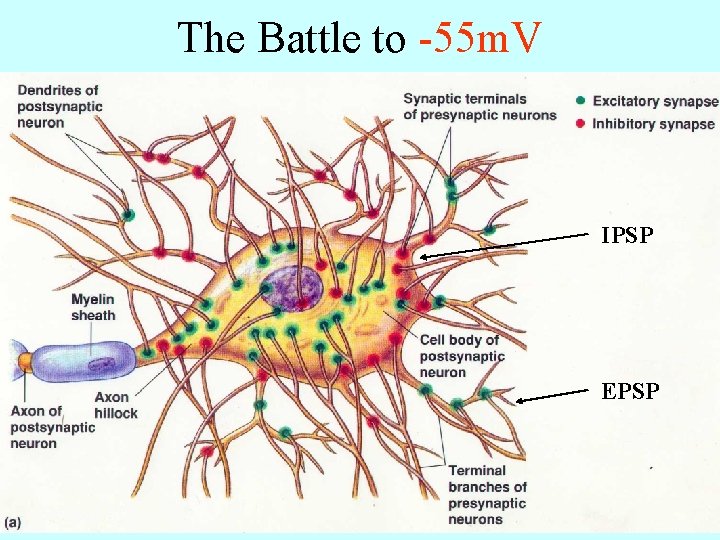
The Battle to -55 m. V IPSP EPSP
- Slides: 14