
Neuromuscular Junction and Muscular Contraction Lecture 6 Image
- Slides: 14
Neuromuscular Junction and Muscular Contraction Lecture 6 Image used with consent from Mc. Ardle, et al. , (2009)
Aims By the end of the session you will be able to: • Understand how a neural impulse reaches the neural muscular junction. • Describe the Neuromuscular Junction (NMJ). • Understand the structure of a neurone • Understand the what effects the speed of conduction
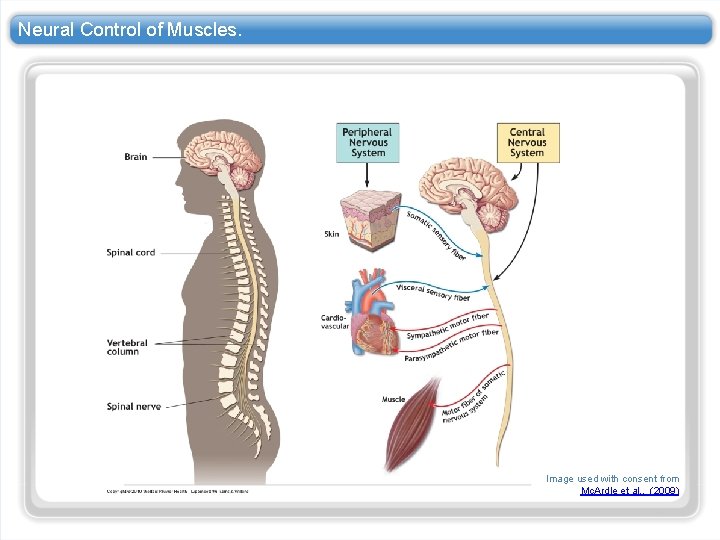
Neural Control of Muscles. Image used with consent from Mc. Ardle et al. , (2009)
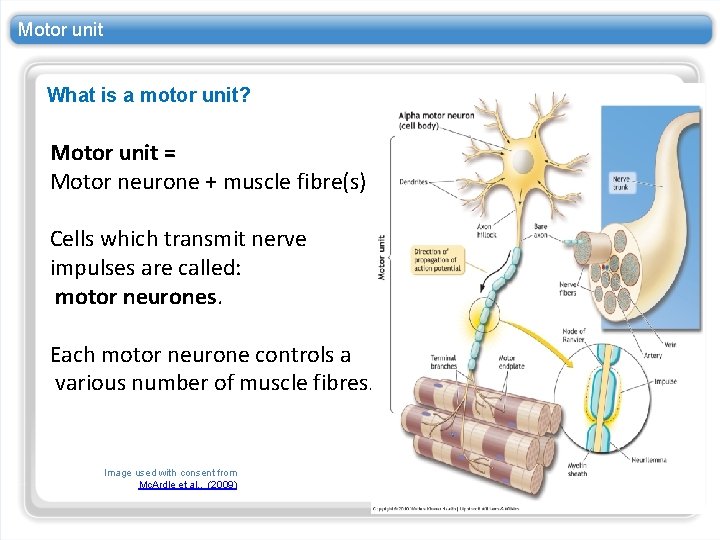
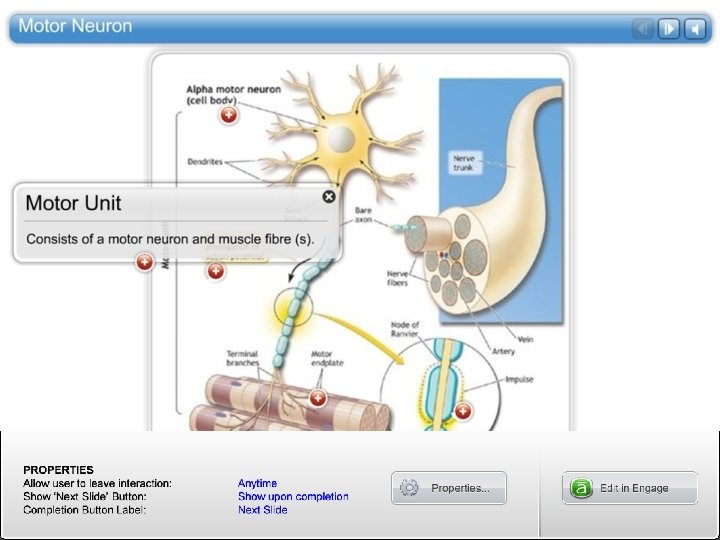
Motor unit What is a motor unit? Motor unit = Motor neurone + muscle fibre(s) Cells which transmit nerve impulses are called: motor neurones. Each motor neurone controls a various number of muscle fibres. to the execution of physical movements and responses, e. g. performing a tennis serve Image used with consent from Mc. Ardle et al. , (2009)
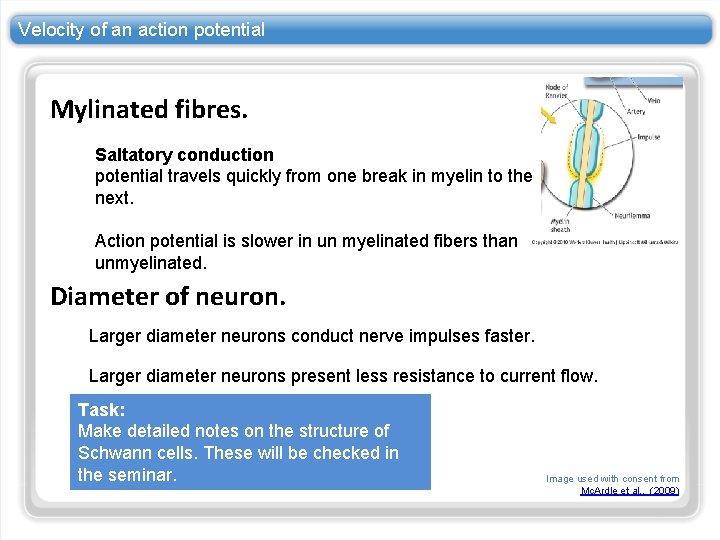
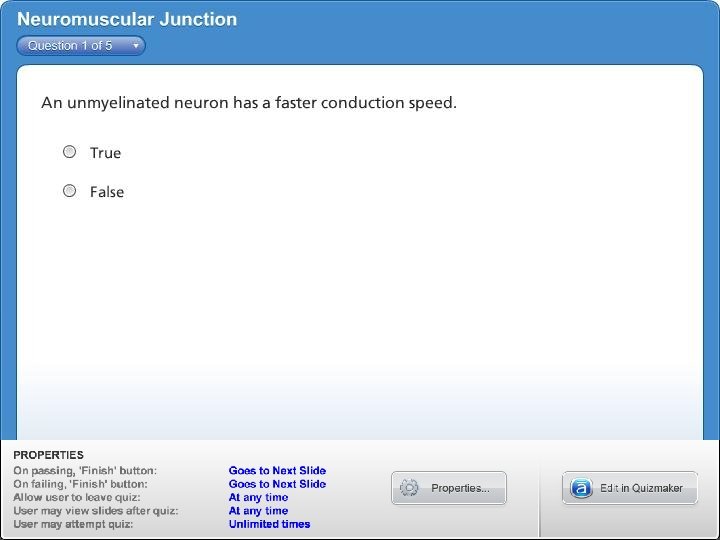
Velocity of an action potential Mylinated fibres. Saltatory conduction potential travels quickly from one break in myelin to the next. Action potential is slower in un myelinated fibers than unmyelinated. Diameter of neuron. Larger diameter neurons conduct nerve impulses faster. Larger diameter neurons present less resistance to current flow. Task: Make detailed notes on the structure of Schwann cells. These will be checked in the seminar. Image used with consent from Mc. Ardle et al. , (2009)
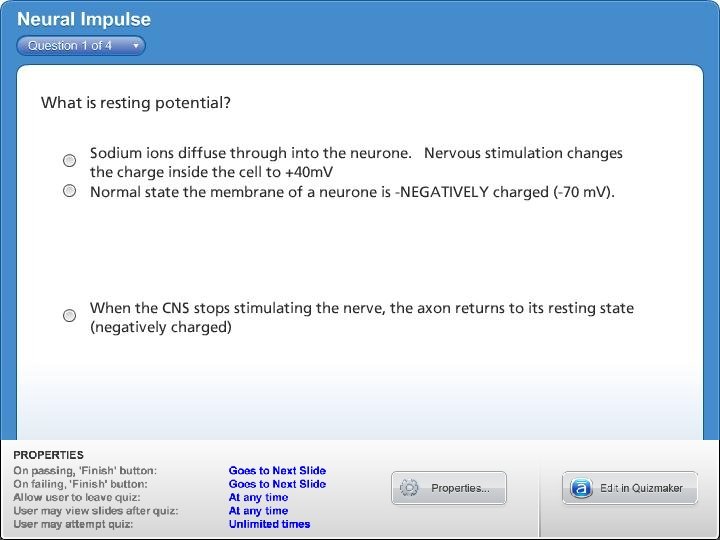
The movement of a neural impulse. Based around the movement of ions; potassium (K+), sodium (Na+). Resting potential - In its normal state the membrane of a neurone is – NEGATIVELY charged (-70 m. V). Action potential - Sodium ions diffuse through into the neurone. - Nervous stimulation changes the charge inside the cell to +40 m. V Repolarisation - When the CNS stops stimulating the nerve, the axon returns to its resting state (negatively charged)
Action Potential clip
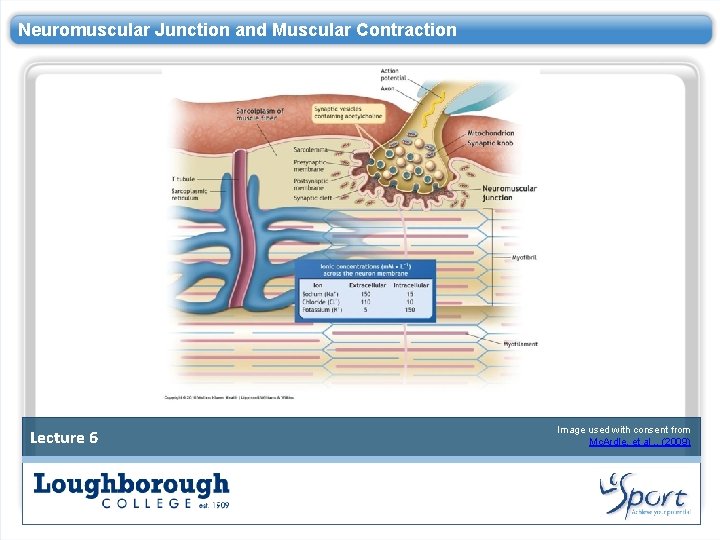
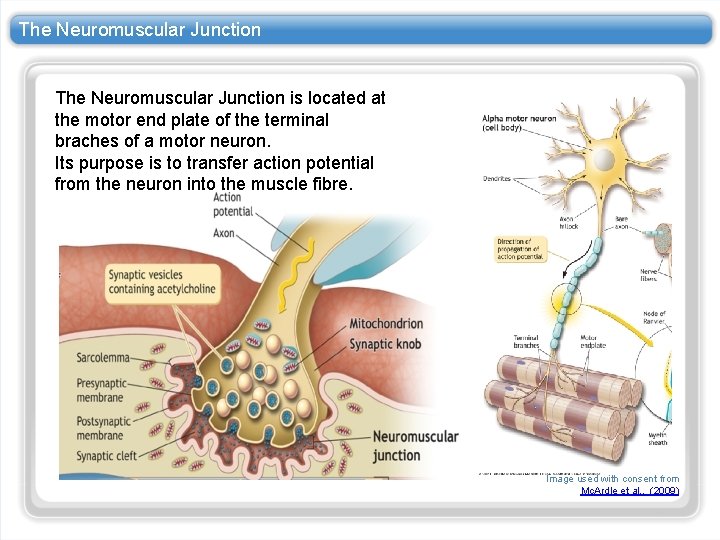
The Neuromuscular Junction is located at the motor end plate of the terminal braches of a motor neuron. Its purpose is to transfer action potential from the neuron into the muscle fibre. Image used with consent from Mc. Ardle et al. , (2009)
The Neuromuscular Junction transmission The Process:
Summary • A muscle will only contract if excited • A muscle will only contact if there has been an action potential generated and transported to the muscle fibres. • The Neuromuscular Junction is a chemical synapse.
References Mc. Ardle, W. Katch, F. Katch, V. (2011). Exercise Physiology: Nutrition, Energy, and Human Performance. Lippincott Williams and Wilkins, (7). Totora, G. J. and Derrickson, B. H. (2009). Principles of Anatomy and Physiology. Wiley and Sons, Inc, (12).