
NEUROMUSCULAR DISORDERS What is a neuromuscular disorder A

- Slides: 39
NEUROMUSCULAR DISORDERS
� What is a neuromuscular disorder? A condition affecting one or more of the following: -Muscles -Nerves -Neuromuscular junction; the area where muscle and nerve make connection -Motor or sensory cell-body
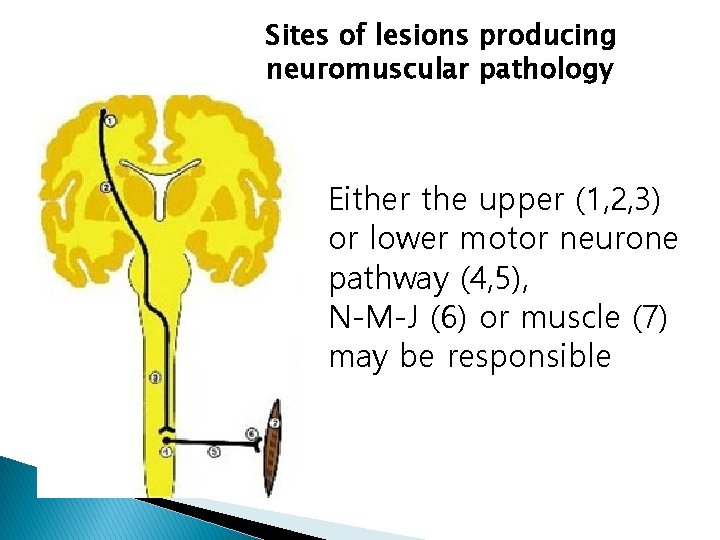
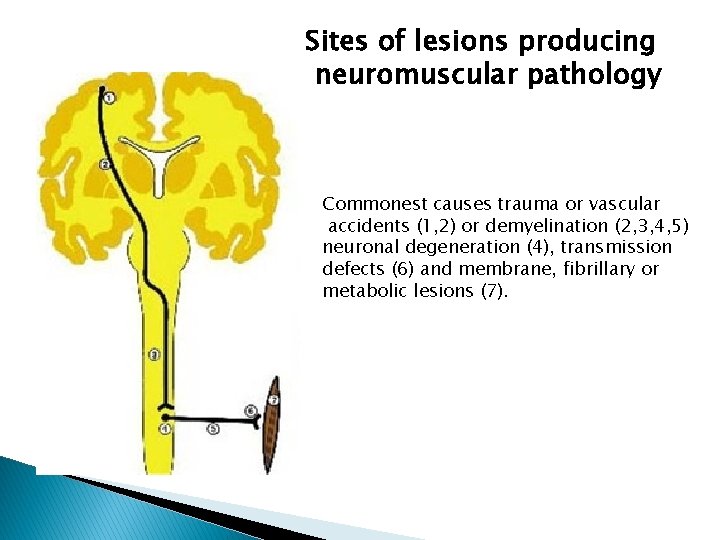
Sites of lesions producing neuromuscular pathology Either the upper (1, 2, 3) or lower motor neurone pathway (4, 5), N-M-J (6) or muscle (7) may be responsible
Sites of lesions producing neuromuscular pathology Commonest causes trauma or vascular accidents (1, 2) or demyelination (2, 3, 4, 5) neuronal degeneration (4), transmission defects (6) and membrane, fibrillary or metabolic lesions (7).
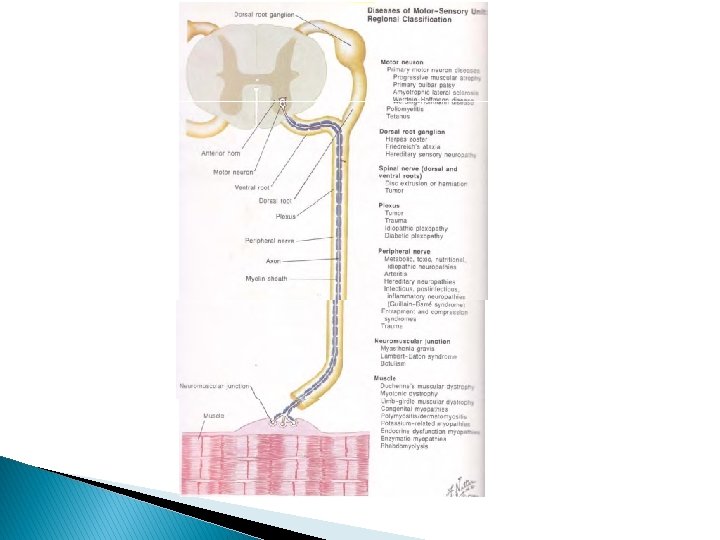
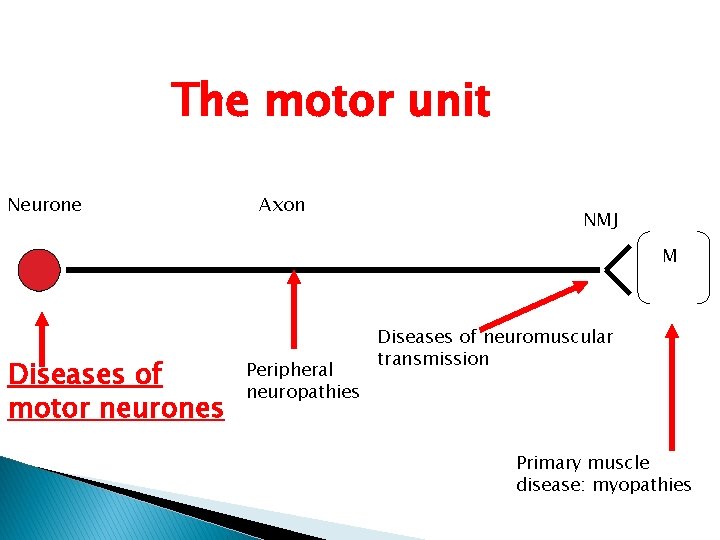
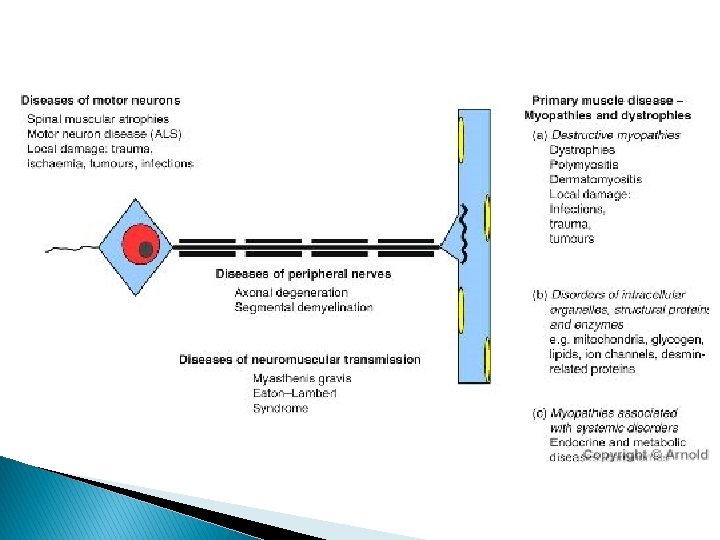
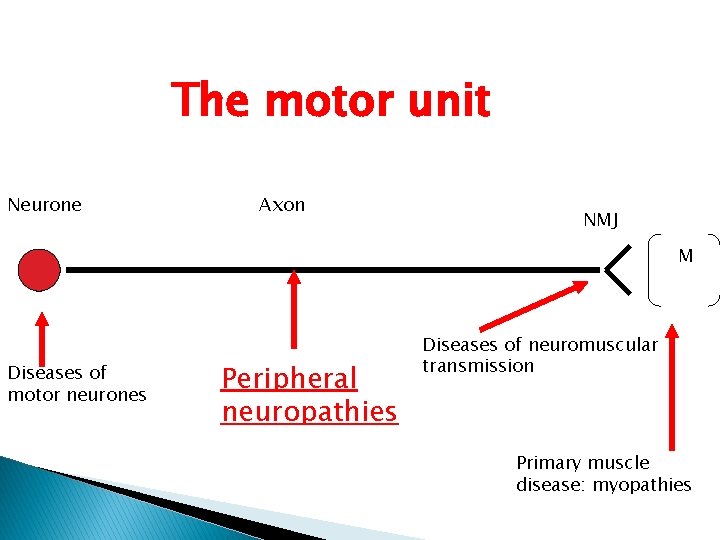
The motor unit Neurone Axon NMJ M Diseases of motor neurones Peripheral neuropathies Diseases of neuromuscular transmission Primary muscle disease: myopathies
MOTOR NEURON DISEASE
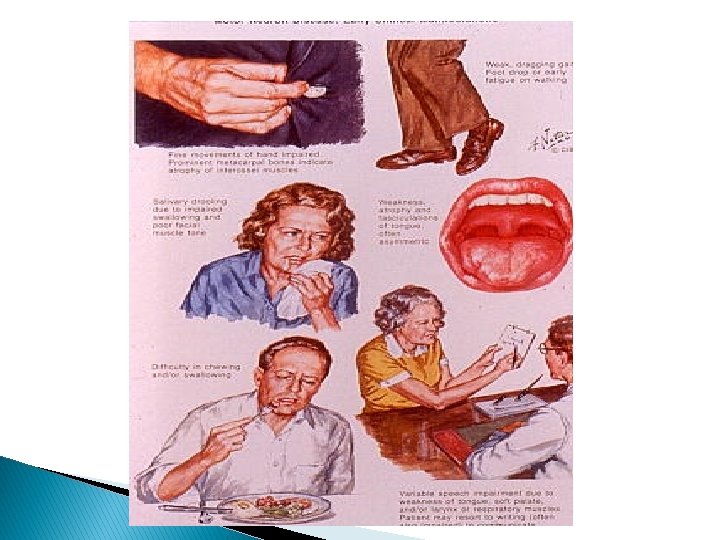
Amyotropic Lateral Sclerosis ~ generalised wasting & fasiculation ~ Bulbar muscle involvement common ~ Associated upper motor neurone symptoms and signs ~ No sensory symptoms ~ Steadily progressive and fatal
Clinical presentation • Selective loss of LMN from pons, medulla and spinal cord, together with loss of UMN from the brain • Clinical picture varies depending on whether : a) upper or lower motor neurones are predominantly involved b) Which muscles are most affected c) The rate of cell loss
Aetiology of ALS ~ cause unknown ~ 5 -10% AD and in familial cases usually starts 10 years earlier than sporadic cases ~ Mutations in the Cu/Zn superoxide dismutase gene on Ch 21 q accounts for 25% of all familial cases ~ Mutations of the neurofilament heavy ~ Tunisian ALS uncommon AR disease linked to 2 q 33 -q 35
The motor unit Neurone Axon NMJ M Diseases of motor neurones Peripheral neuropathies Diseases of neuromuscular transmission Primary muscle disease: myopathies
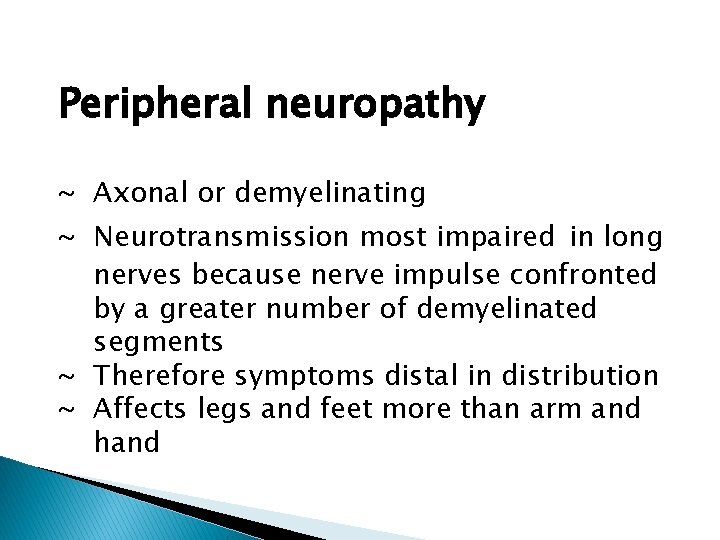
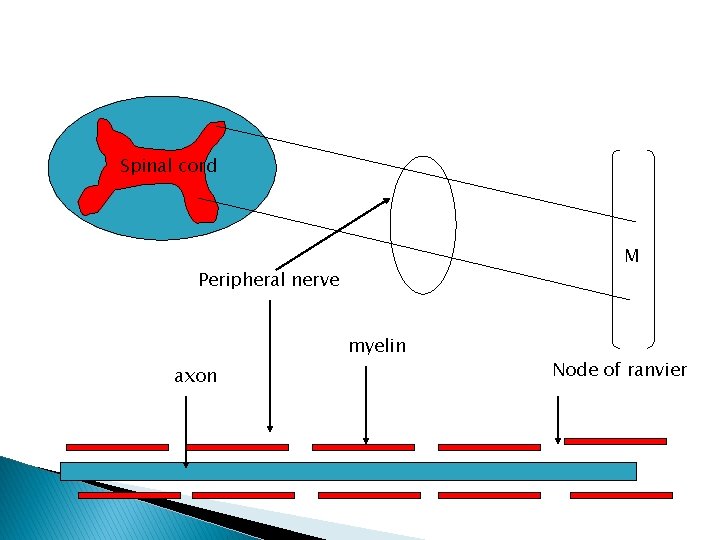
Peripheral neuropathy ~ Axonal or demyelinating ~ Neurotransmission most impaired in long nerves because nerve impulse confronted by a greater number of demyelinated segments ~ Therefore symptoms distal in distribution ~ Affects legs and feet more than arm and hand
Spinal cord M Peripheral nerve myelin axon Node of ranvier
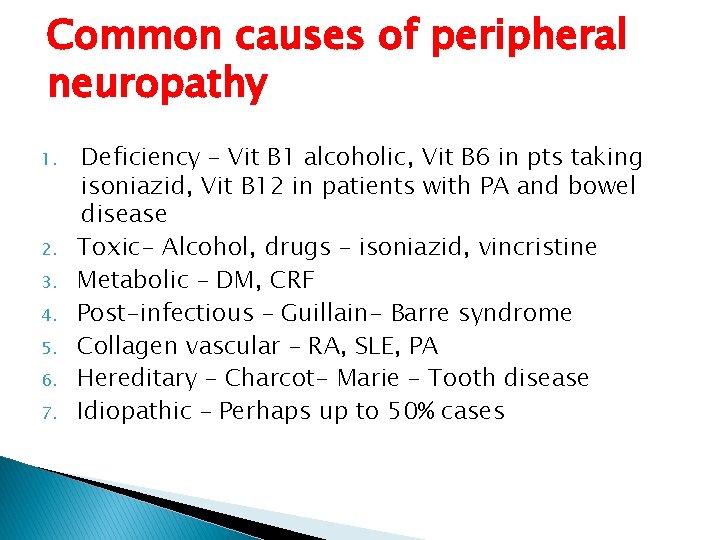
Common causes of peripheral neuropathy 1. 2. 3. 4. 5. 6. 7. Deficiency – Vit B 1 alcoholic, Vit B 6 in pts taking isoniazid, Vit B 12 in patients with PA and bowel disease Toxic- Alcohol, drugs – isoniazid, vincristine Metabolic – DM, CRF Post-infectious – Guillain- Barre syndrome Collagen vascular – RA, SLE, PA Hereditary – Charcot- Marie – Tooth disease Idiopathic – Perhaps up to 50% cases
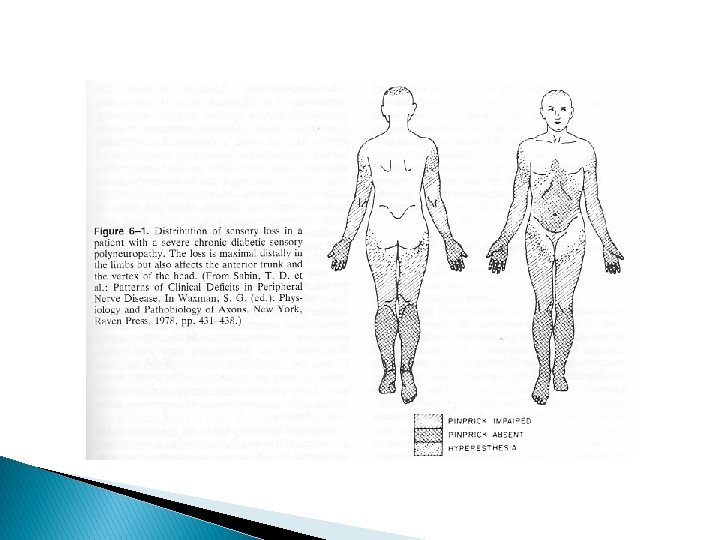
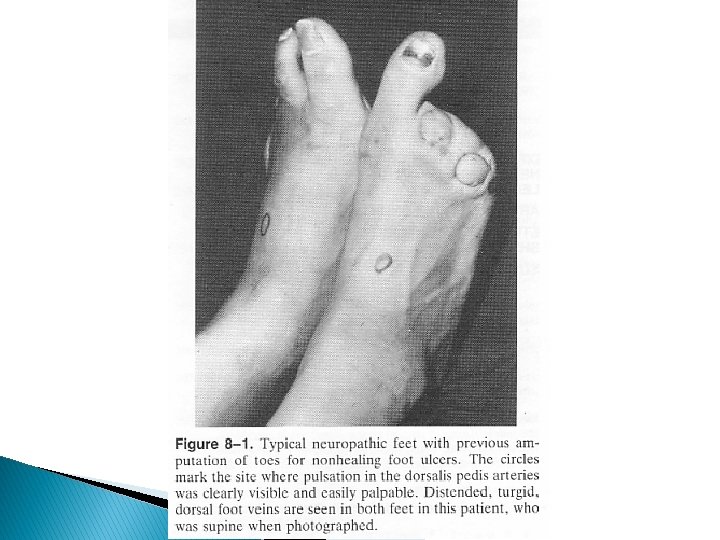
DIABETIC POLYNEUROPATHY
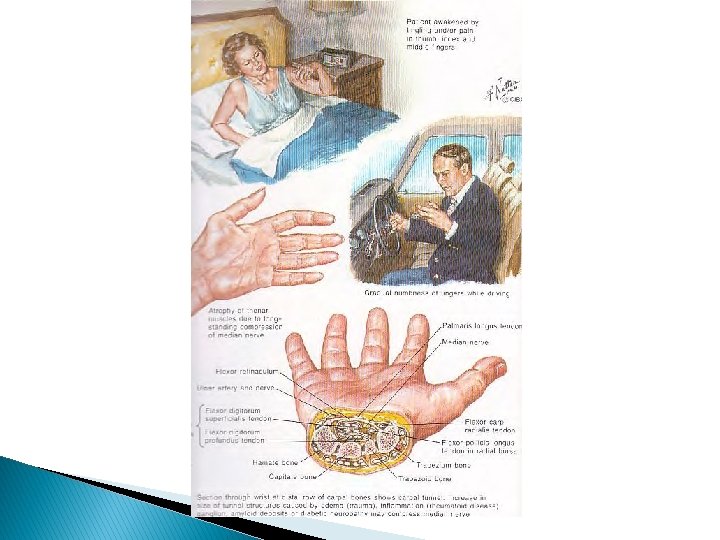
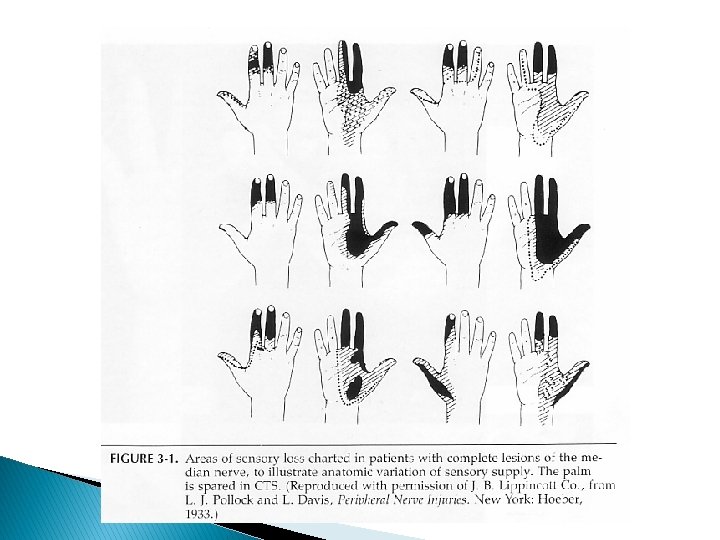
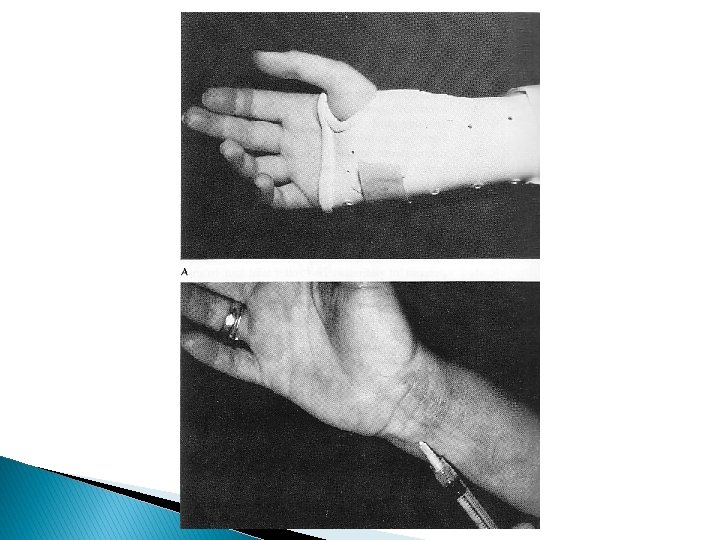
CARPAL TUNNEL SYNDROME
GUILLAIN BARRE SYNDROME
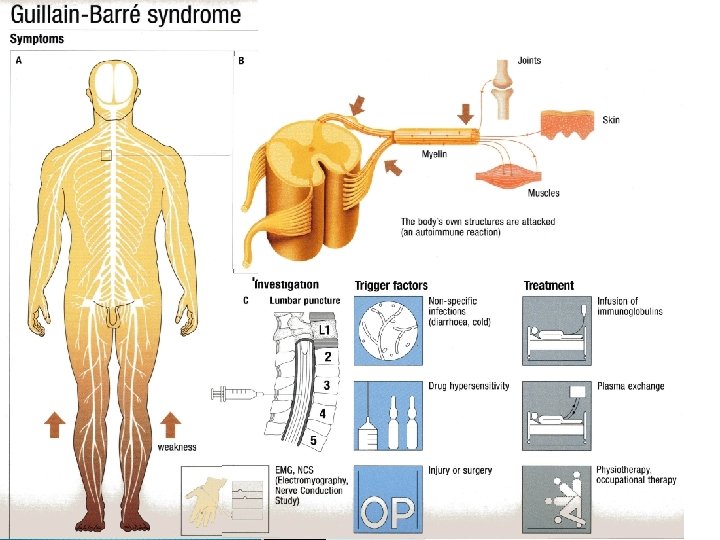
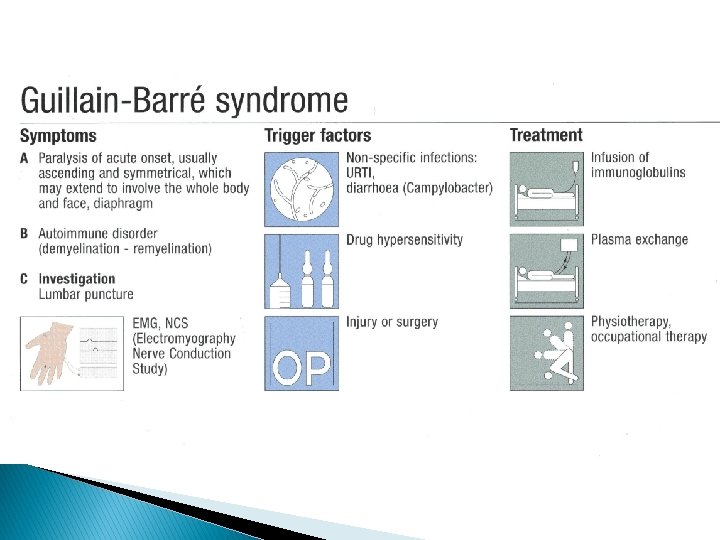
Guillain-Barre syndrome ~ Rapid evolution over several days ~ Life threatening weakness ~ Affects nerve roots as well as peripheral nerves ~ Occurs within 2 weeks of an infection usually campylobacter, cytomegalo, EBV ~ Auto-immune response ~ Weakness and sensory symptoms which worsen daily for 1 -2 weeks ~ Demyelinating polyneuropathy and polyradiculopathy
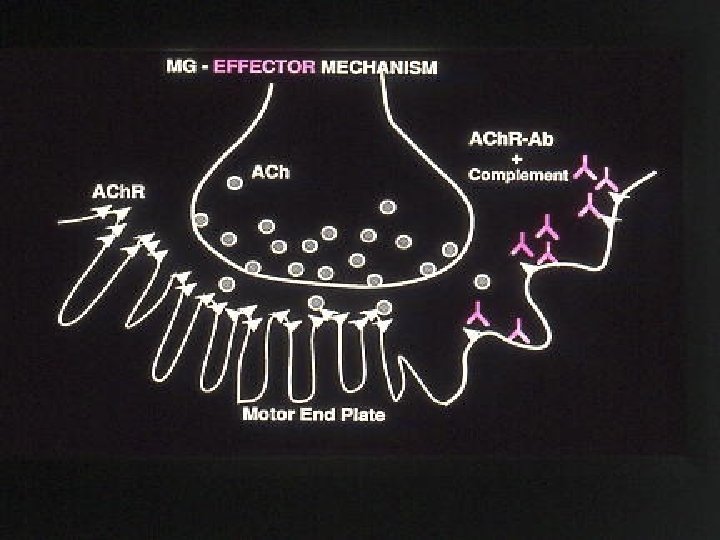
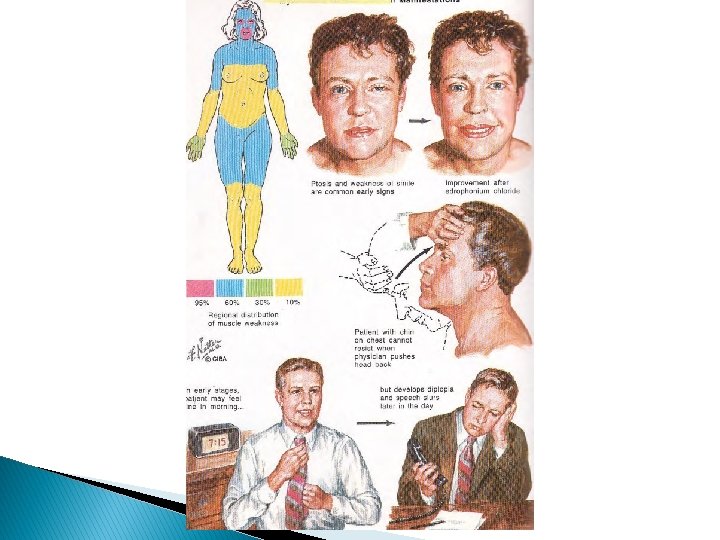
Myasthenia Gravis
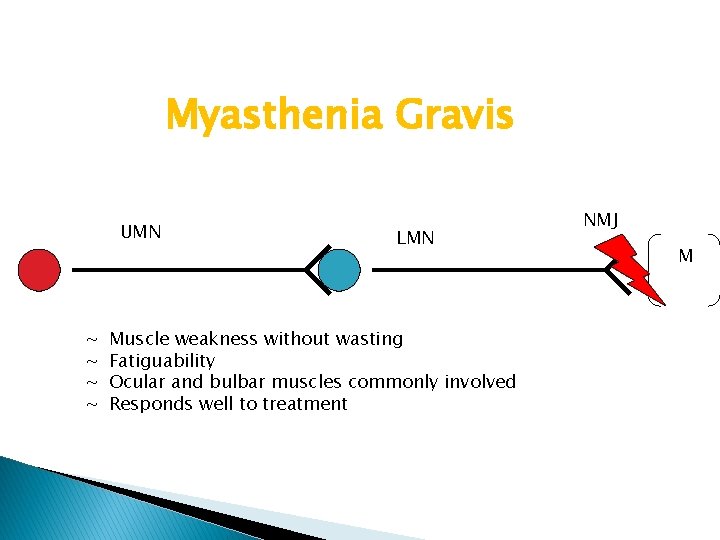
Myasthenia Gravis UMN ~ ~ LMN Muscle weakness without wasting Fatiguability Ocular and bulbar muscles commonly involved Responds well to treatment NMJ M
MUSCLE DISEASE
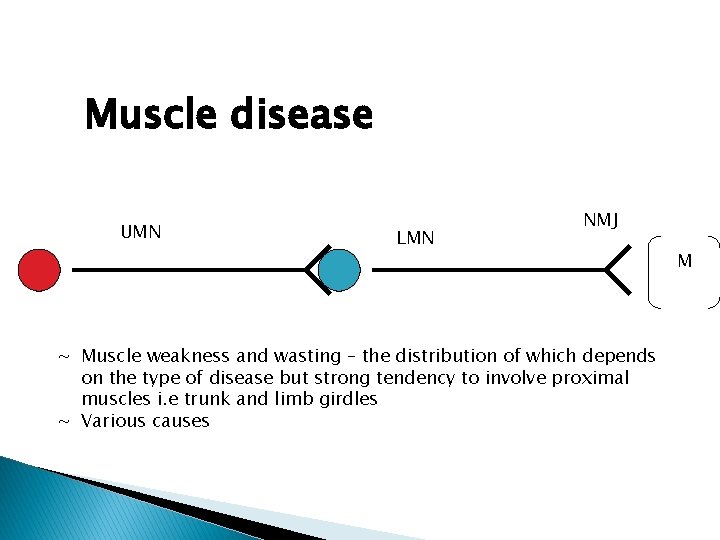
Muscle disease UMN LMN NMJ ~ Muscle weakness and wasting – the distribution of which depends on the type of disease but strong tendency to involve proximal muscles i. e trunk and limb girdles ~ Various causes M
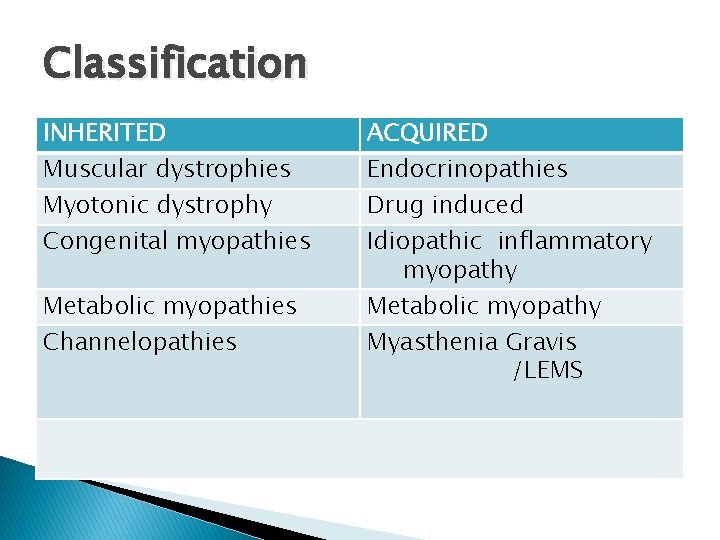
Classification INHERITED Muscular dystrophies Myotonic dystrophy Congenital myopathies Metabolic myopathies Channelopathies ACQUIRED Endocrinopathies Drug induced Idiopathic inflammatory myopathy Metabolic myopathy Myasthenia Gravis /LEMS
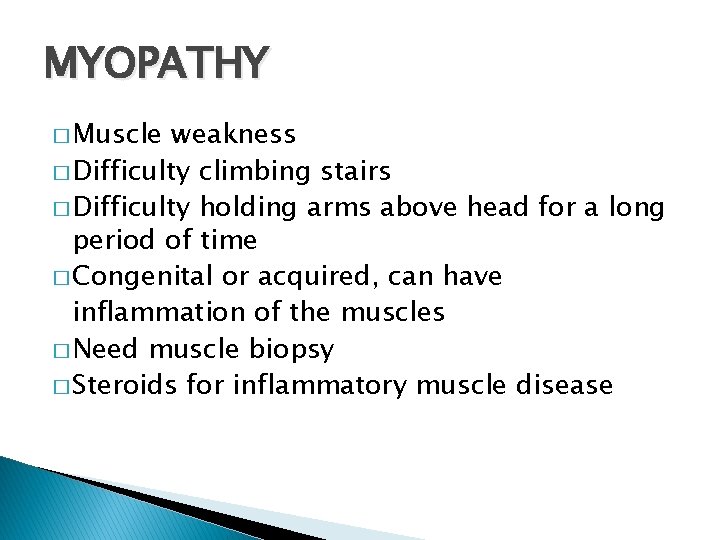
MYOPATHY � Muscle weakness � Difficulty climbing stairs � Difficulty holding arms above head for a long period of time � Congenital or acquired, can have inflammation of the muscles � Need muscle biopsy � Steroids for inflammatory muscle disease
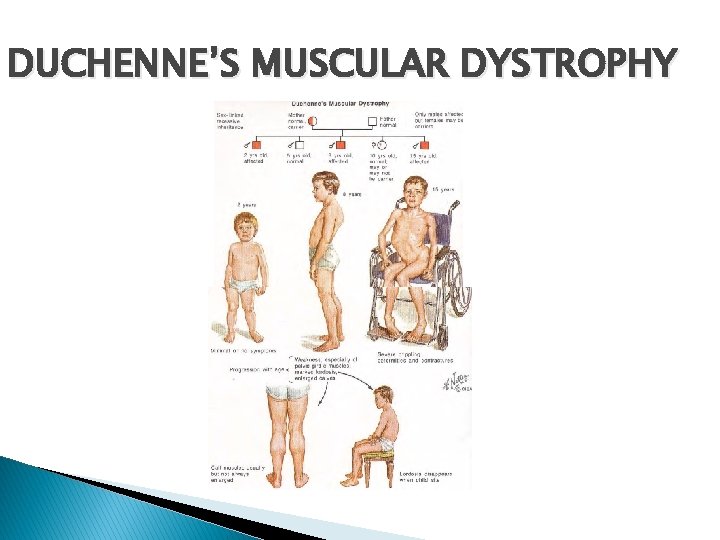
DUCHENNE’S MUSCULAR DYSTROPHY
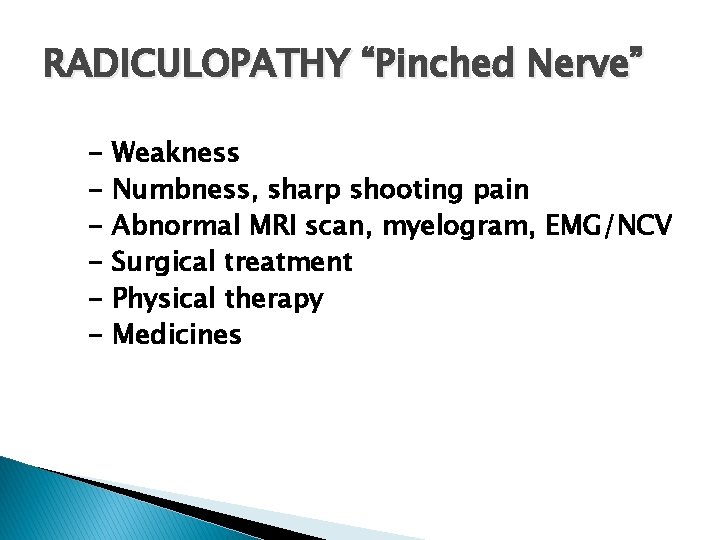
RADICULOPATHY “Pinched Nerve” - Weakness Numbness, sharp shooting pain Abnormal MRI scan, myelogram, EMG/NCV Surgical treatment Physical therapy Medicines
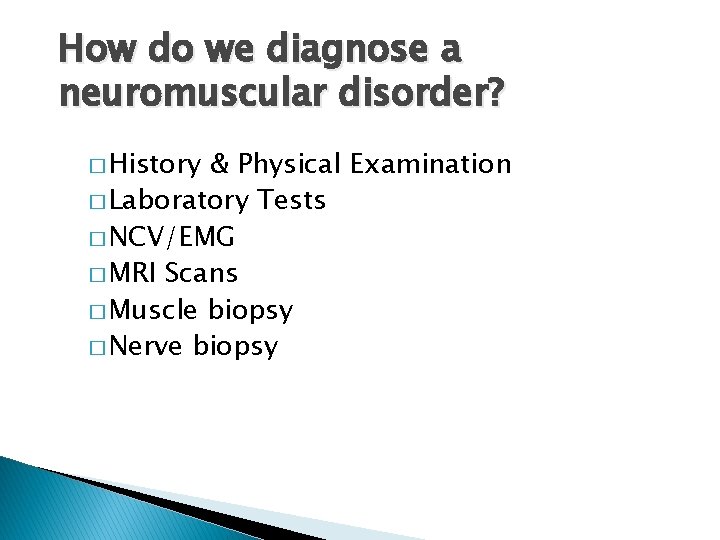
How do we diagnose a neuromuscular disorder? � History & Physical Examination � Laboratory Tests � NCV/EMG � MRI Scans � Muscle biopsy � Nerve biopsy
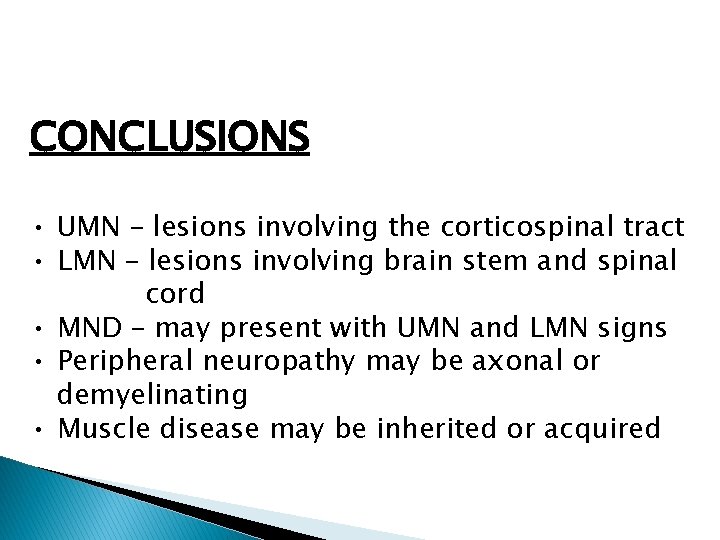
CONCLUSIONS • UMN – lesions involving the corticospinal tract • LMN – lesions involving brain stem and spinal cord • MND – may present with UMN and LMN signs • Peripheral neuropathy may be axonal or demyelinating • Muscle disease may be inherited or acquired