
Neuromorphic Processing The potential to make smart technologies
- Slides: 9
Neuromorphic Processing The potential to make smart technologies actually smart
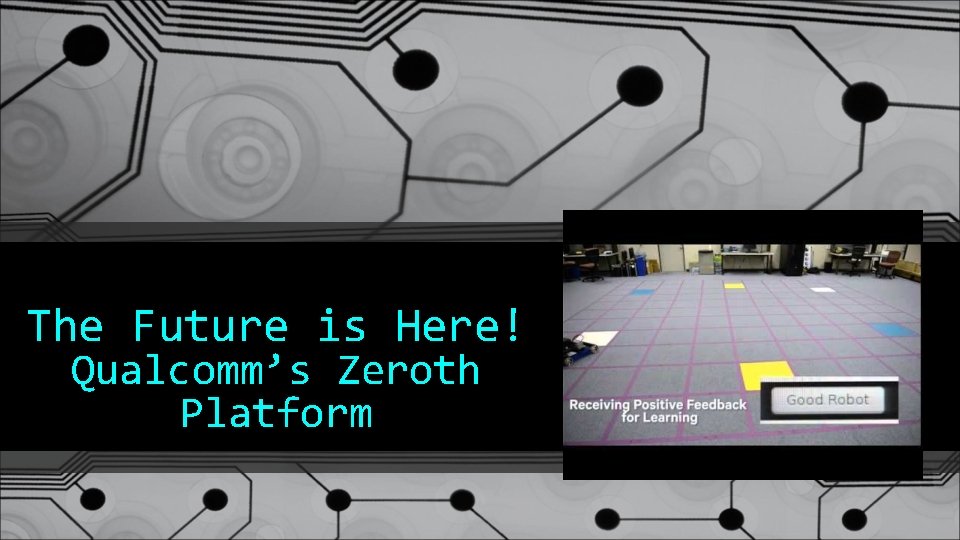
The Future is Here! Qualcomm’s Zeroth Platform
Why cognitive computing? Human brains are highly effective at certain tasks -Visual recognition -Categorizing and learning These tasks have proven difficult for traditional computers -Google finds a cat on the internet But what is it? Brain-inspired computational software architecture 3
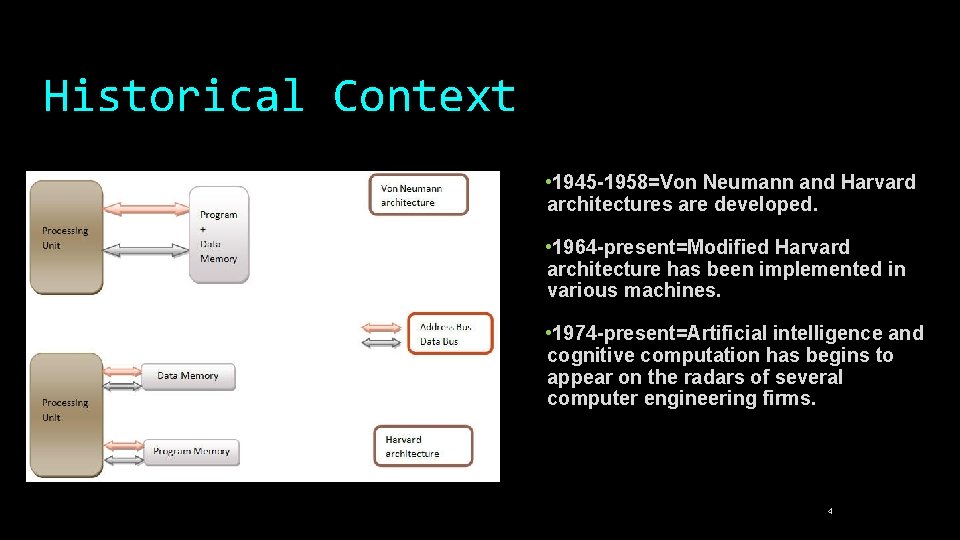
Historical Context • 1945 -1958=Von Neumann and Harvard architectures are developed. • 1964 -present=Modified Harvard architecture has been implemented in various machines. • 1974 -present=Artificial intelligence and cognitive computation has begins to appear on the radars of several computer engineering firms. 4
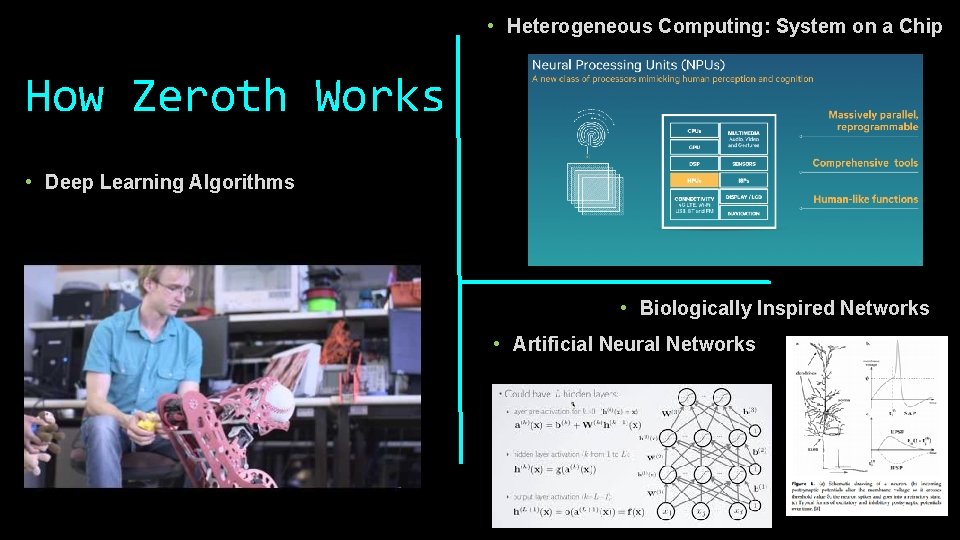
• Heterogeneous Computing: System on a Chip How Zeroth Works • Deep Learning Algorithms • Biologically Inspired Networks • Artificial Neural Networks 5
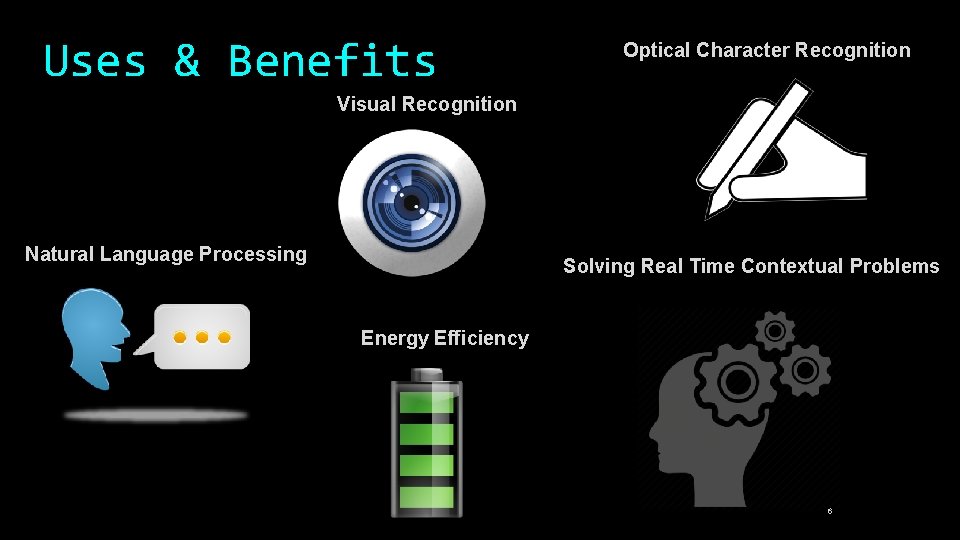
Uses & Benefits Optical Character Recognition Visual Recognition Natural Language Processing Solving Real Time Contextual Problems Energy Efficiency 6
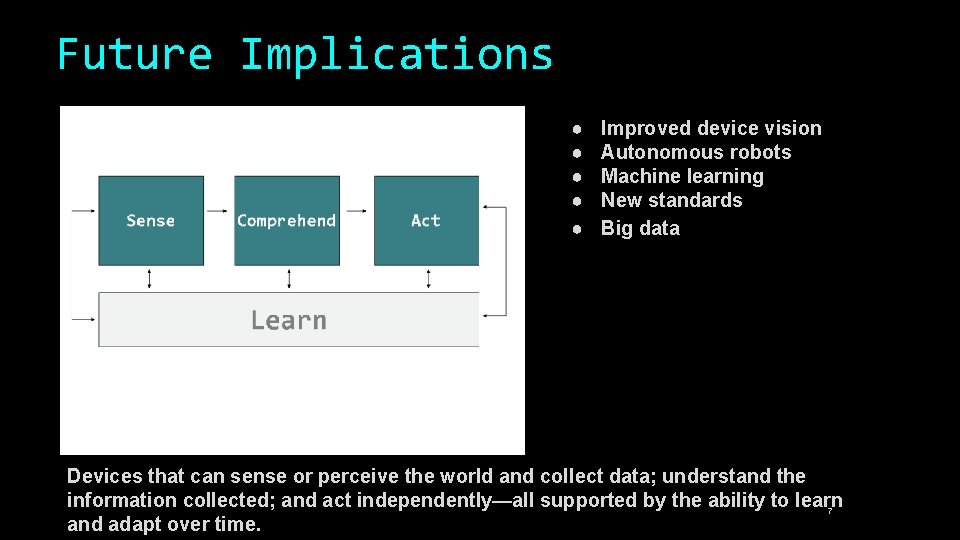
Future Implications ● ● ● Improved device vision Autonomous robots Machine learning New standards Big data Devices that can sense or perceive the world and collect data; understand the information collected; and act independently—all supported by the ability to learn and adapt over time. 7
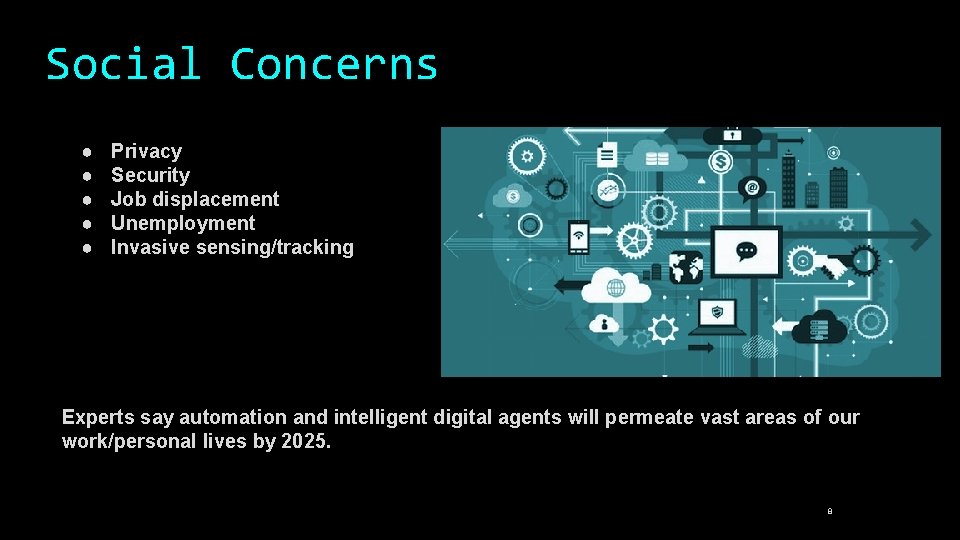
Social Concerns ● ● ● Privacy Security Job displacement Unemployment Invasive sensing/tracking Experts say automation and intelligent digital agents will permeate vast areas of our work/personal lives by 2025. 8
@CCT 506 Neurochip neurochip. wordpress. com Susan Noh | Isaac Riddle | Yingxue Guo | Shaqueta Pierre