
Neuromodulation what the future brings Alon Y Mogilner
Neuromodulation – what the future brings… Alon Y. Mogilner, MD, Ph. D Associate Professor of Neurosurgery Director, Center for Neuromodulation NYU Langone Medical Center

Disclosures • Medtronic neurological: – Consultant, fellowship/grant support • St. Jude Medical: – Grant support, consultant • Boston Scientific – Grant Support

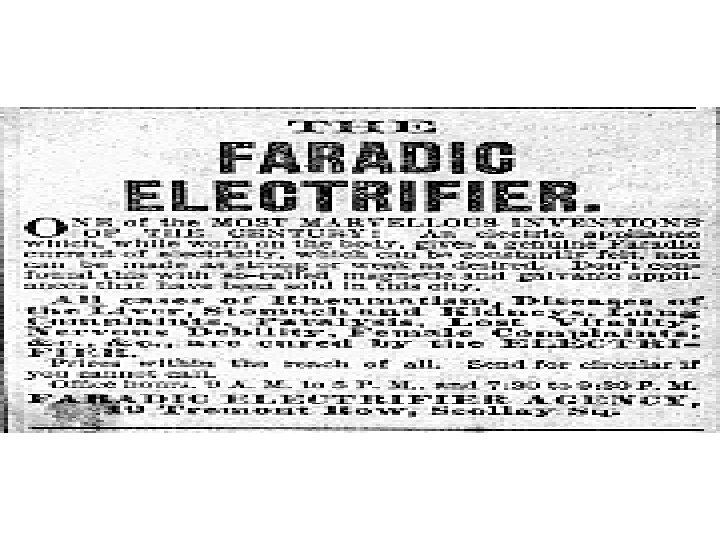
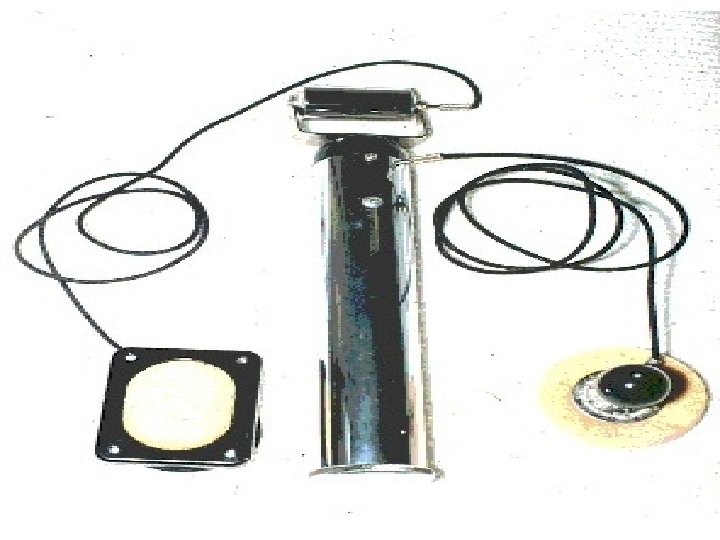
Neuromodulation – the past…
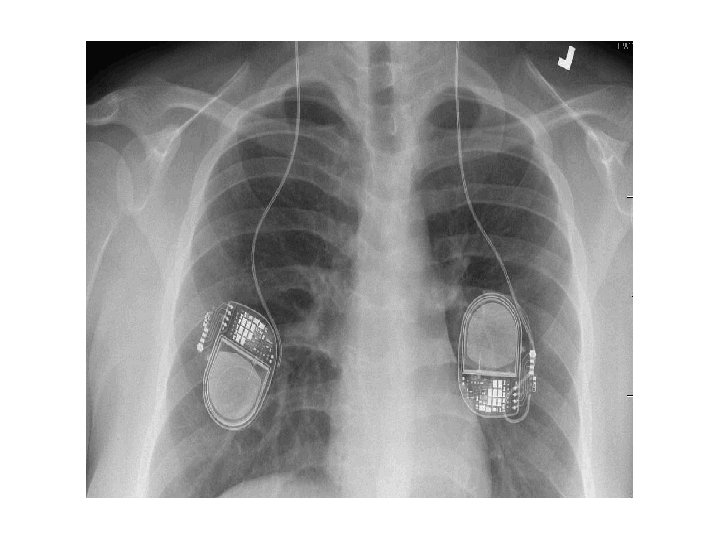
Neuromodulation: Emerging Indications • DBS: Currently FDA-approved for: – Movement Disorders (PD, ET, Dystonia) – Psychiatric Conditions (OCD) • In clinical trials for: – Treatment-refractory depression – Chronic pain • Other conditions: – – Tourette’s syndrome Brain injury states Obesity Cognitive/Memory Enhancement
Psychiatric Indications • OCD: • Approved under an FDA HDE (humanitarian device exemption) • Few cases reported in the literature • Target: anterior limb of the internal capsule (ALIC)
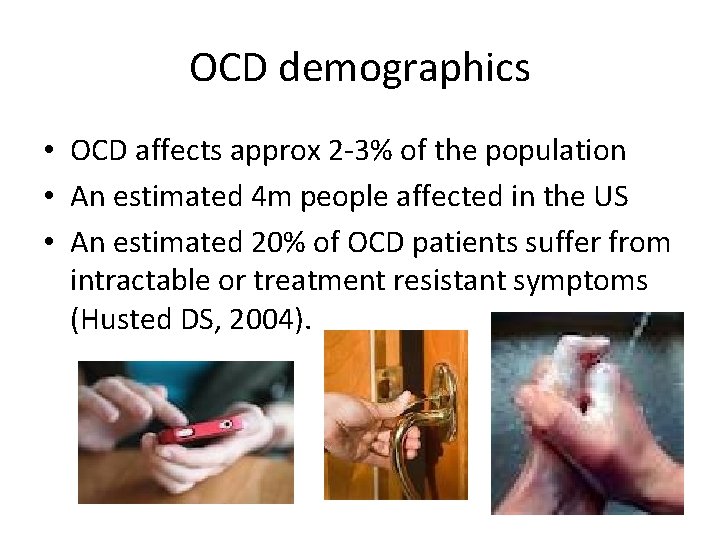
OCD demographics • OCD affects approx 2 -3% of the population • An estimated 4 m people affected in the US • An estimated 20% of OCD patients suffer from intractable or treatment resistant symptoms (Husted DS, 2004).
OCD Pathophysiology • The “ventral cognitive” component of the cortico -striato-thalamo-cortical (CSTC) circuit appears central to the pathophysiology of OCD • This circuit projects from the anterior and lateral orbitofrontal cortex (OFC) through the putamen and regulates context-related operations and response inhibition (Dougherty DD, 2010)
OCD Pathophysiology, cont’d • The cortico-thalamic pathway (C-T), which is excitatory, lies within this circuit and runs from OFC to the thalamus to ALIC. • It is balanced by an inhibitory pathway that runs from the OFC through the ventral striatum to the thalamus (C-S-T) • OCD symptoms are believed to arise when the CST pathway does not appropriately inhibit the CT pathway (e. g. , decreased CST or increased CT activity). (Shah DB, 2008)
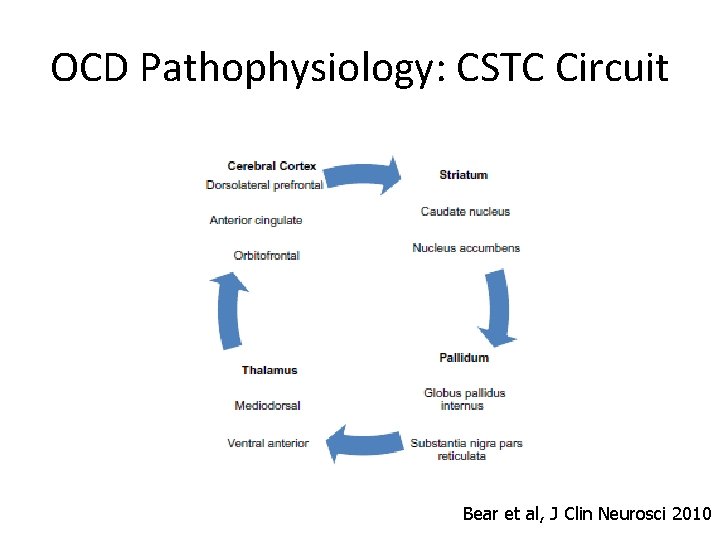
OCD Pathophysiology: CSTC Circuit Bear et al, J Clin Neurosci 2010
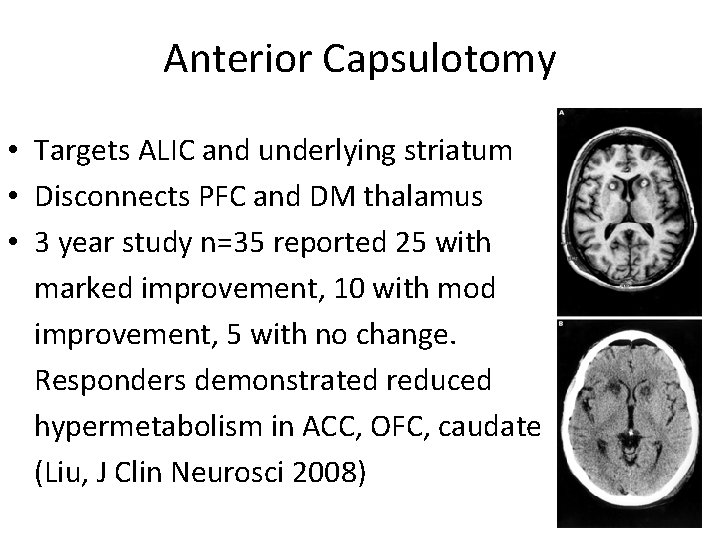
Anterior Capsulotomy • Targets ALIC and underlying striatum • Disconnects PFC and DM thalamus • 3 year study n=35 reported 25 with marked improvement, 10 with mod improvement, 5 with no change. Responders demonstrated reduced hypermetabolism in ACC, OFC, caudate (Liu, J Clin Neurosci 2008)
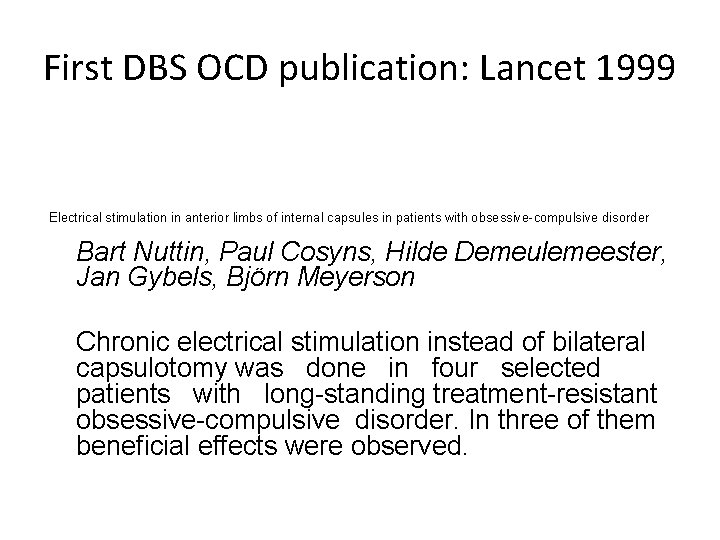
First DBS OCD publication: Lancet 1999 Electrical stimulation in anterior limbs of internal capsules in patients with obsessive-compulsive disorder Bart Nuttin, Paul Cosyns, Hilde Demeulemeester, Jan Gybels, Björn Meyerson Chronic electrical stimulation instead of bilateral capsulotomy was done in four selected patients with long-standing treatment-resistant obsessive-compulsive disorder. In three of them beneficial effects were observed.
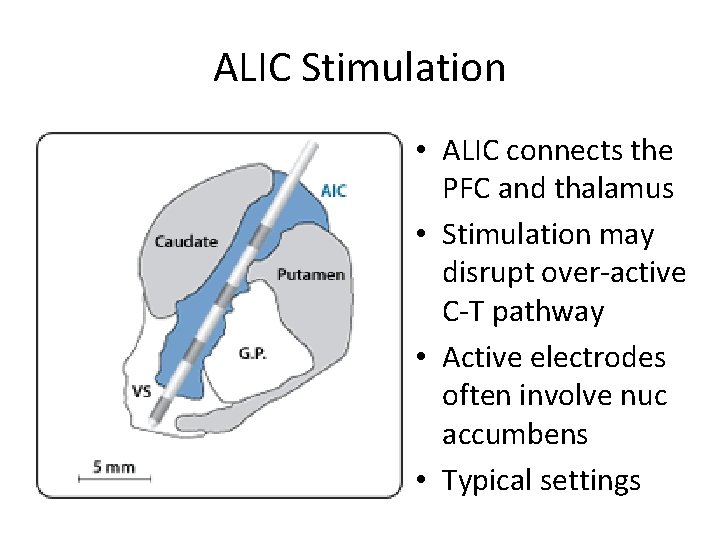
ALIC Stimulation • ALIC connects the PFC and thalamus • Stimulation may disrupt over-active C-T pathway • Active electrodes often involve nuc accumbens • Typical settings

DBS lead location: ALIC
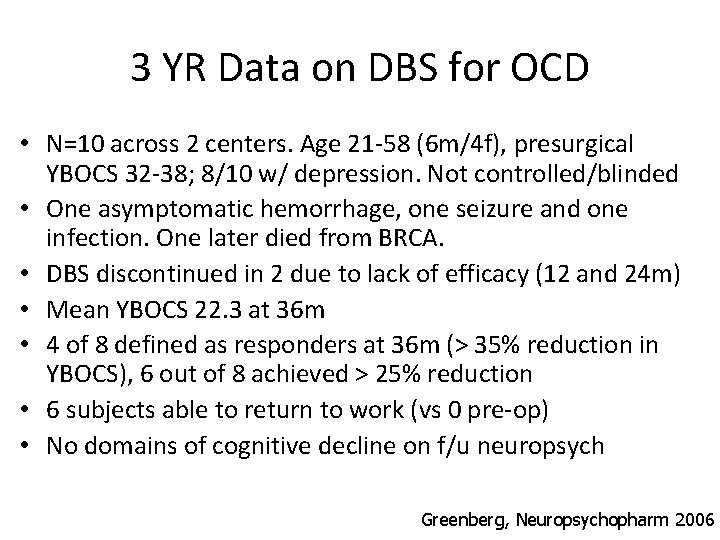
3 YR Data on DBS for OCD • N=10 across 2 centers. Age 21 -58 (6 m/4 f), presurgical YBOCS 32 -38; 8/10 w/ depression. Not controlled/blinded • One asymptomatic hemorrhage, one seizure and one infection. One later died from BRCA. • DBS discontinued in 2 due to lack of efficacy (12 and 24 m) • Mean YBOCS 22. 3 at 36 m • 4 of 8 defined as responders at 36 m (> 35% reduction in YBOCS), 6 out of 8 achieved > 25% reduction • 6 subjects able to return to work (vs 0 pre-op) • No domains of cognitive decline on f/u neuropsych Greenberg, Neuropsychopharm 2006
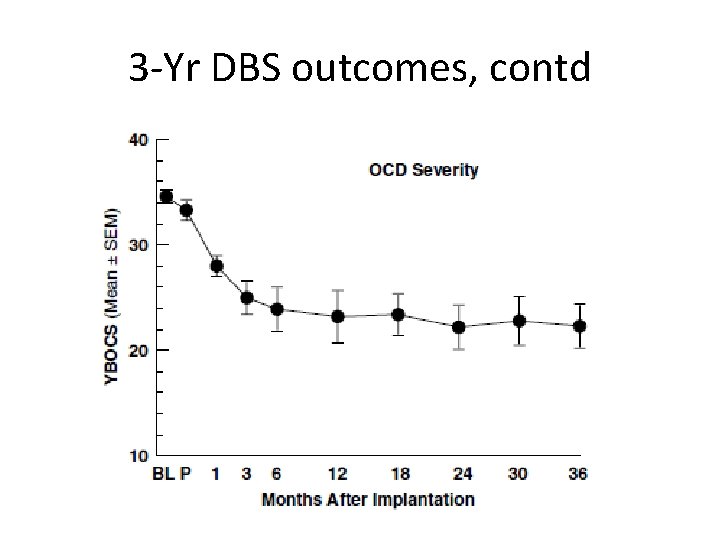
3 -Yr DBS outcomes, contd
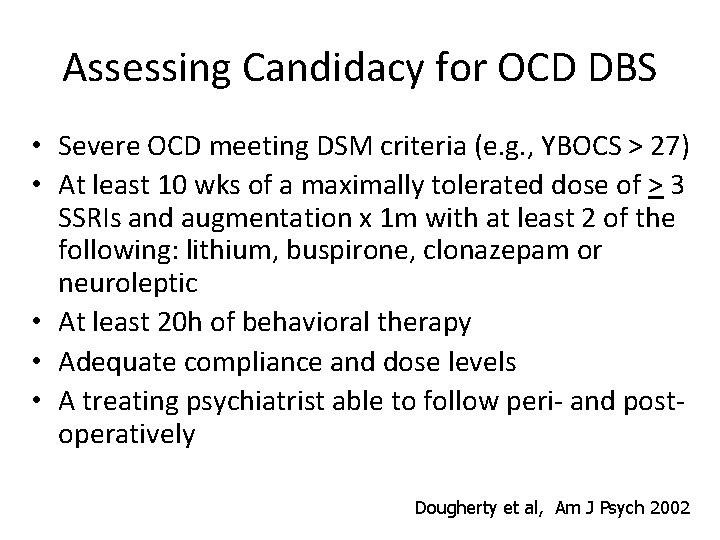
Assessing Candidacy for OCD DBS • Severe OCD meeting DSM criteria (e. g. , YBOCS > 27) • At least 10 wks of a maximally tolerated dose of > 3 SSRIs and augmentation x 1 m with at least 2 of the following: lithium, buspirone, clonazepam or neuroleptic • At least 20 h of behavioral therapy • Adequate compliance and dose levels • A treating psychiatrist able to follow peri- and postoperatively Dougherty et al, Am J Psych 2002

Obsessive picking post-DBS
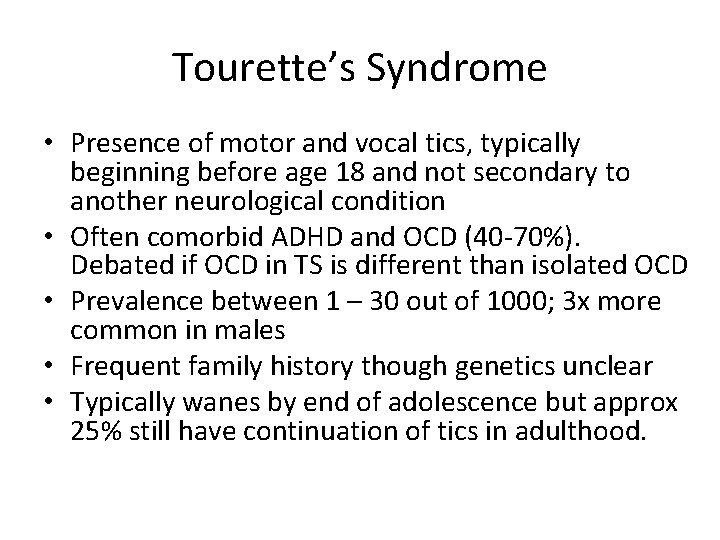
Tourette’s Syndrome • Presence of motor and vocal tics, typically beginning before age 18 and not secondary to another neurological condition • Often comorbid ADHD and OCD (40 -70%). Debated if OCD in TS is different than isolated OCD • Prevalence between 1 – 30 out of 1000; 3 x more common in males • Frequent family history though genetics unclear • Typically wanes by end of adolescence but approx 25% still have continuation of tics in adulthood.
Tourette’s Syndrome • Presence of motor and vocal tics, typically beginning before age 18 and not secondary to another neurological condition • Often comorbid ADHD and OCD (40 -70%). Debated if OCD in TS is different than isolated OCD • Prevalence between 1 – 30 out of 1000; 3 x more common in males • Frequent family history though genetics unclear • Typically wanes by end of adolescence but approx 25% still have continuation of tics in adulthood.
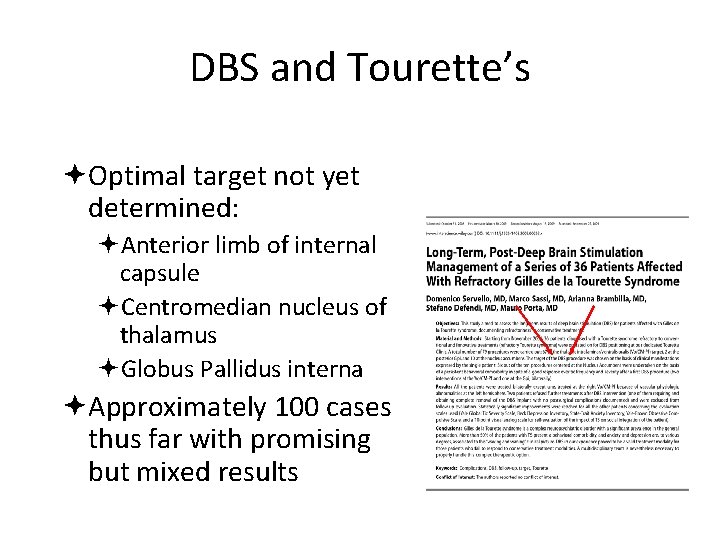
DBS and Tourette’s Optimal target not yet determined: Anterior limb of internal capsule Centromedian nucleus of thalamus Globus Pallidus interna Approximately 100 cases thus far with promising but mixed results
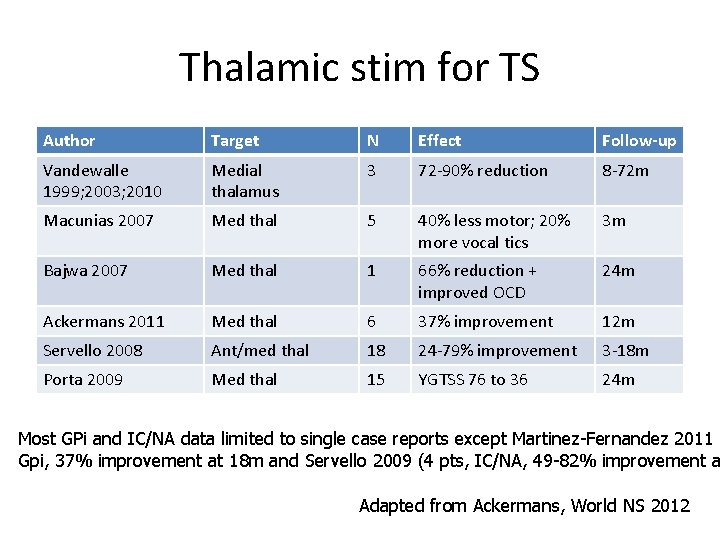
Thalamic stim for TS Author Target N Effect Follow-up Vandewalle 1999; 2003; 2010 Medial thalamus 3 72 -90% reduction 8 -72 m Macunias 2007 Med thal 5 40% less motor; 20% more vocal tics 3 m Bajwa 2007 Med thal 1 66% reduction + improved OCD 24 m Ackermans 2011 Med thal 6 37% improvement 12 m Servello 2008 Ant/med thal 18 24 -79% improvement 3 -18 m Porta 2009 Med thal 15 YGTSS 76 to 36 24 m Most GPi and IC/NA data limited to single case reports except Martinez-Fernandez 2011 ( Gpi, 37% improvement at 18 m and Servello 2009 (4 pts, IC/NA, 49 -82% improvement a Adapted from Ackermans, World NS 2012
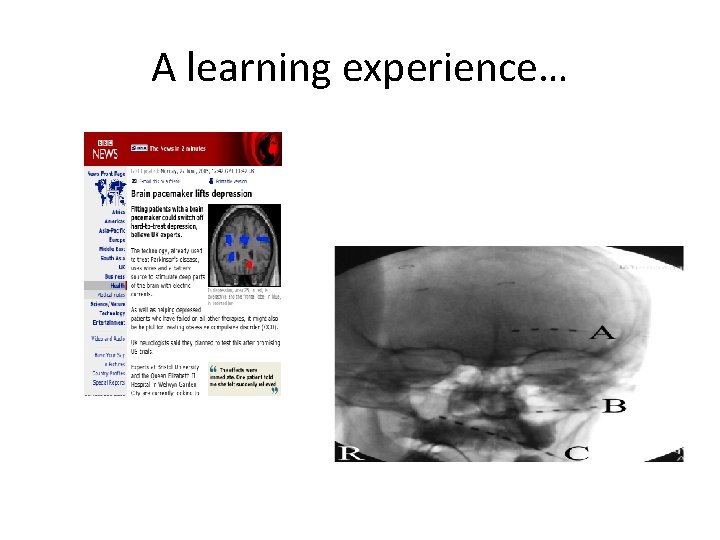
A learning experience…
DBS for Depression: Clinical Trials • Brodmann’s area 24/25 – BROADEN study (St. Jude Medical) – 18 sites – Approximately 200 patients – Randomized, double blinded trial • VC/VS - RECLAIM study (Medtronic) – Randomized, double-blinded trial
Other indications • Cognitive/Memory Enhancement: – Forniceal/hypothalamic stimulation • Brain Injury States: – Medial thalamic stimulation
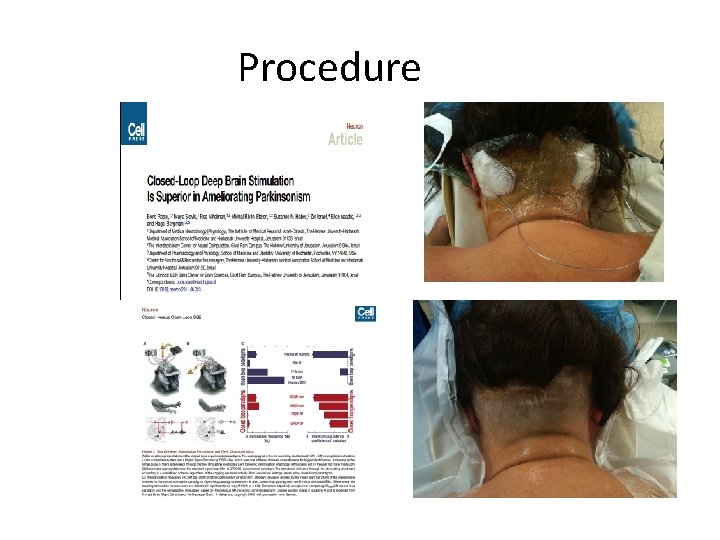
Peripheral Stimulation for headache and craniofacial pain • Goadsby (1997): Stimulation of greater occipital nerve (GON) in cats resulted in increased metabolic activity of the trigeminal nucleus caudalis and cervical dorsal horn 3 • Weiner (1999): Peripheral neurostimulation for occipital neuralgia 4 • Goadsby (2004): ONS for migraine headache 5 3. Goadsby PJ, Knight YE, Hoskin KL. Stimulation of the greater occipital nerve increases metabolic activity in the trigeminal nucleus caudalis and cervical dorsal horn of the cat. Pain 1997; 73(1): 23 -8. 4. Weiner RL, Reed KL. Peripheral neurostimulation for control of intractable occipital neuralgia. Neuromodulation 1999; 2(3): 217 -21. 5. Matharu MS, Bartsch T, Ward N, Frackowiak RSJ, Weiner RL, Goadsby PJ. Central neuromodulation in chronic migraine patients with suboccipital stimulators: A PET study. Brain 2004; 127: 220 -30.
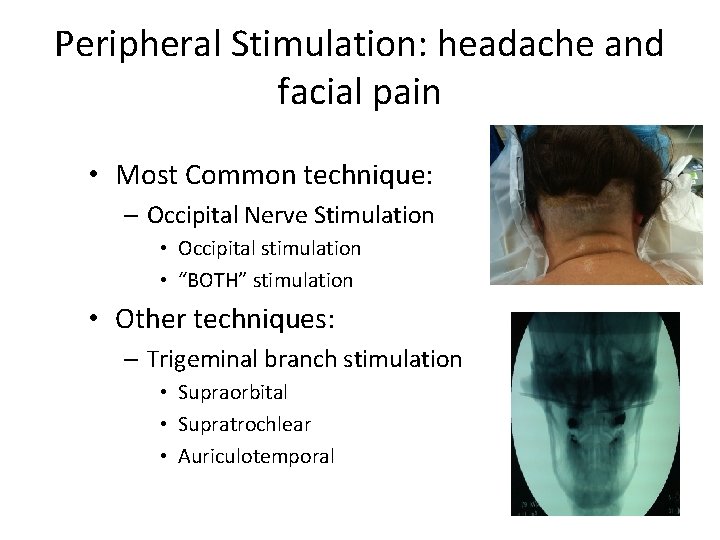
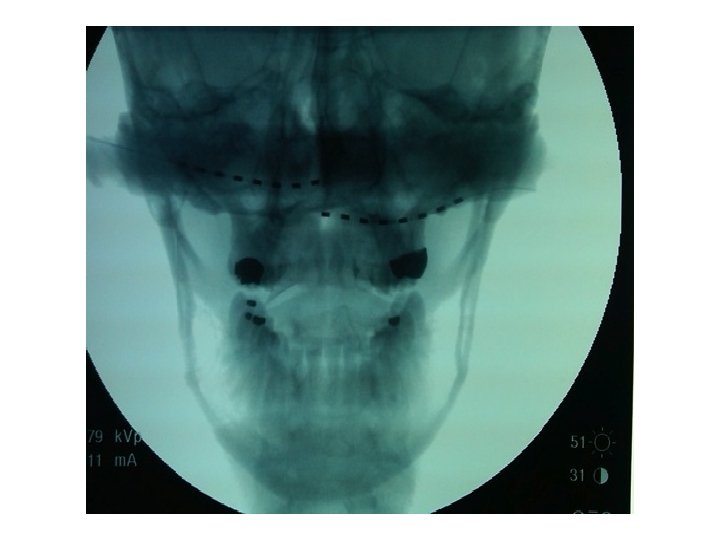
Peripheral Stimulation: headache and facial pain • Most Common technique: – Occipital Nerve Stimulation • Occipital stimulation • “BOTH” stimulation • Other techniques: – Trigeminal branch stimulation • Supraorbital • Supratrochlear • Auriculotemporal
Procedure
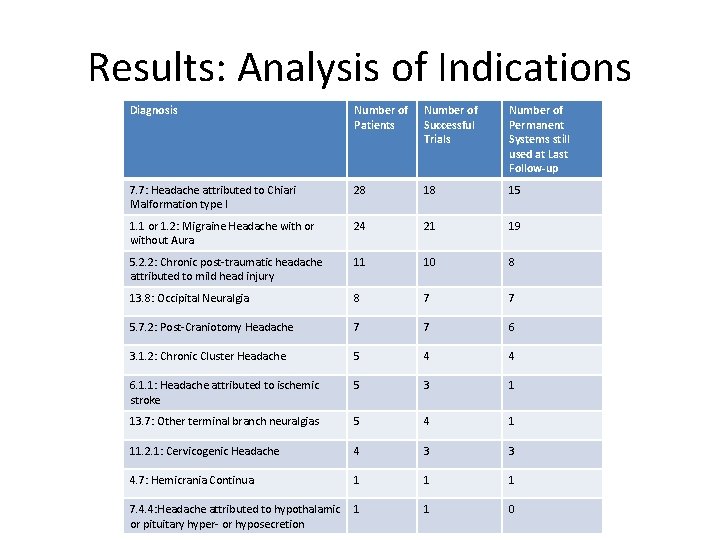
Results: Analysis of Indications Diagnosis Number of Patients Number of Successful Trials Number of Permanent Systems still used at Last Follow-up 7. 7: Headache attributed to Chiari Malformation type I 28 18 15 1. 1 or 1. 2: Migraine Headache with or without Aura 24 21 19 5. 2. 2: Chronic post-traumatic headache attributed to mild head injury 11 10 8 13. 8: Occipital Neuralgia 8 7 7 5. 7. 2: Post-Craniotomy Headache 7 7 6 3. 1. 2: Chronic Cluster Headache 5 4 4 6. 1. 1: Headache attributed to ischemic stroke 5 3 1 13. 7: Other terminal branch neuralgias 5 4 1 11. 2. 1: Cervicogenic Headache 4 3 3 4. 7: Hemicrania Continua 1 1 1 7. 4. 4: Headache attributed to hypothalamic or pituitary hyper- or hyposecretion 1 1 0
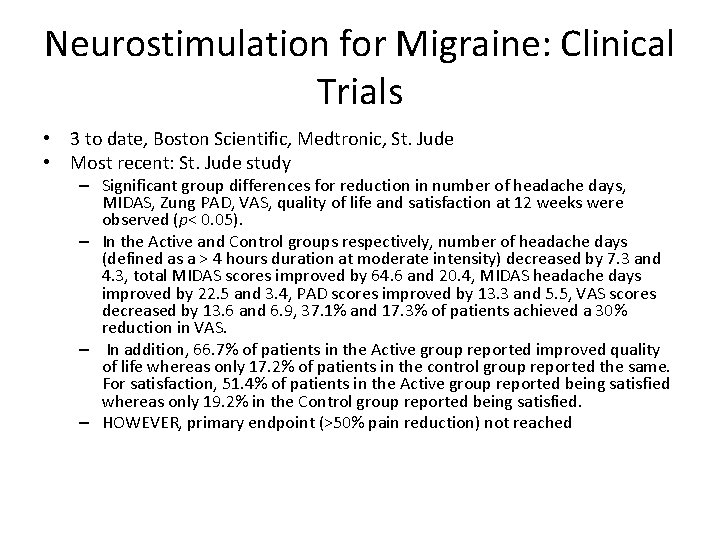
Neurostimulation for Migraine: Clinical Trials • 3 to date, Boston Scientific, Medtronic, St. Jude • Most recent: St. Jude study – Significant group differences for reduction in number of headache days, MIDAS, Zung PAD, VAS, quality of life and satisfaction at 12 weeks were observed (p< 0. 05). – In the Active and Control groups respectively, number of headache days (defined as a > 4 hours duration at moderate intensity) decreased by 7. 3 and 4. 3, total MIDAS scores improved by 64. 6 and 20. 4, MIDAS headache days improved by 22. 5 and 3. 4, PAD scores improved by 13. 3 and 5. 5, VAS scores decreased by 13. 6 and 6. 9, 37. 1% and 17. 3% of patients achieved a 30% reduction in VAS. – In addition, 66. 7% of patients in the Active group reported improved quality of life whereas only 17. 2% of patients in the control group reported the same. For satisfaction, 51. 4% of patients in the Active group reported being satisfied whereas only 19. 2% in the Control group reported being satisfied. – HOWEVER, primary endpoint (>50% pain reduction) not reached
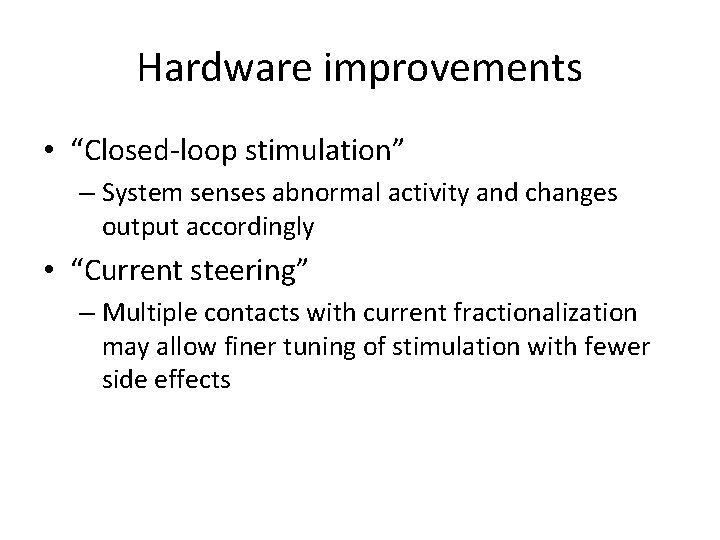
Hardware improvements • “Closed-loop stimulation” – System senses abnormal activity and changes output accordingly • “Current steering” – Multiple contacts with current fractionalization may allow finer tuning of stimulation with fewer side effects
The future? “The future ain’t what it used be…
Summary • We are entering a “brave new world” of neuromodulation • Future advances will entail: – Better understanding of pathophysiology – Improvements in technology – Clear evidence-based medicine documenting clinical benefit…
Thank you Email: alon. mogilner@nyumc. org michael. pourfar@nyumc. org
- Slides: 37