
Neurological Disorders Lesson 3 2 How do our

- Slides: 22
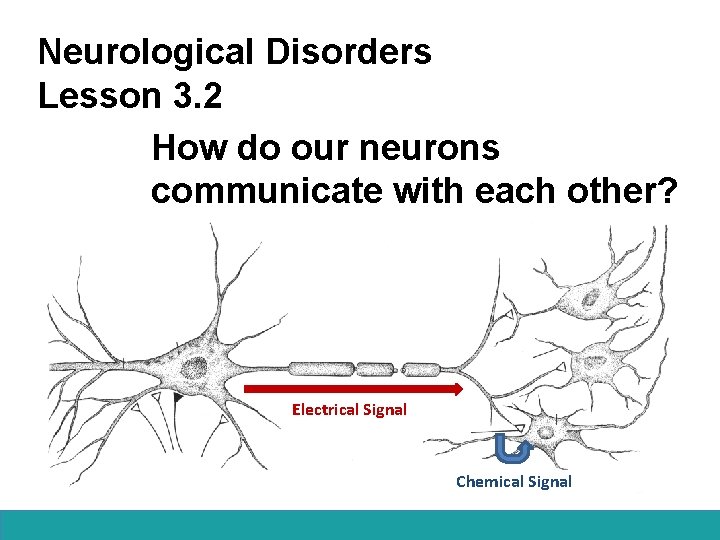
Neurological Disorders Lesson 3. 2 How do our neurons communicate with each other? Electrical Signal Chemical Signal
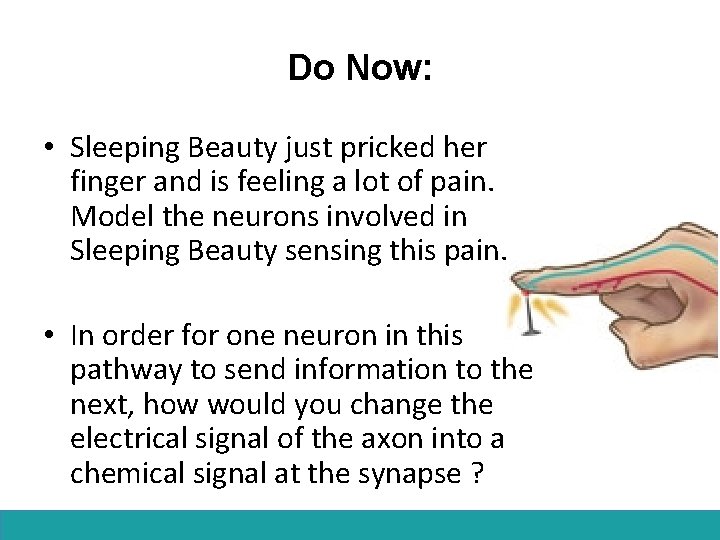
Do Now: • Sleeping Beauty just pricked her finger and is feeling a lot of pain. Model the neurons involved in Sleeping Beauty sensing this pain. • In order for one neuron in this pathway to send information to the next, how would you change the electrical signal of the axon into a chemical signal at the synapse ?
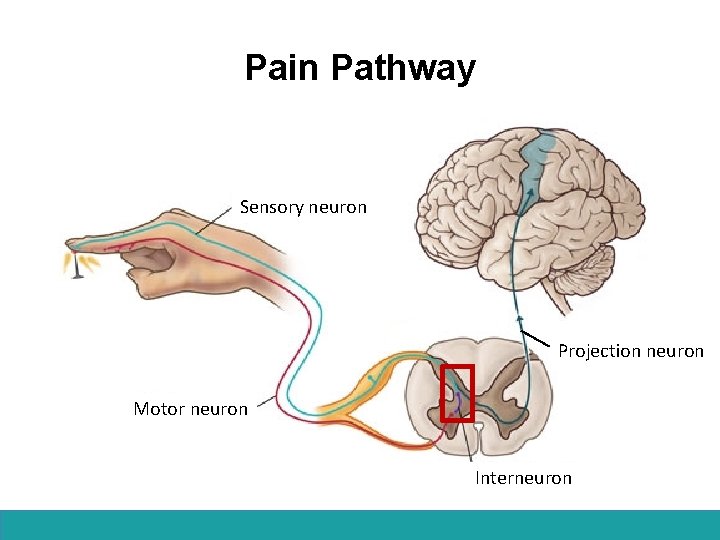
Pain Pathway Sensory neuron Projection neuron Motor neuron Interneuron
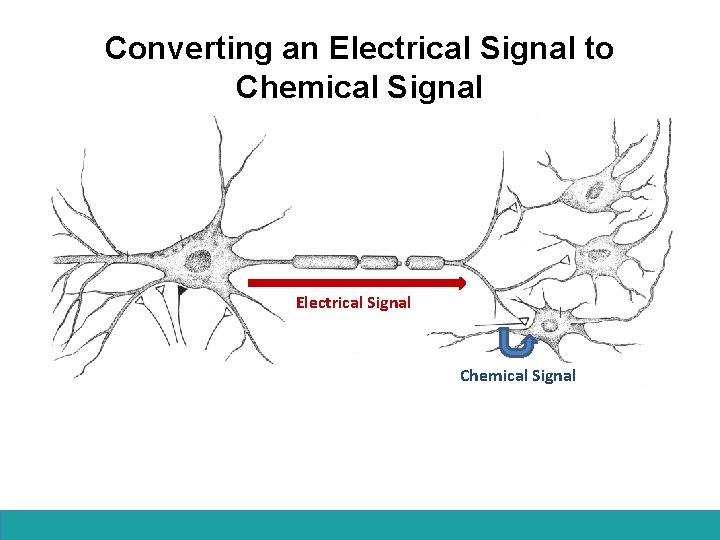
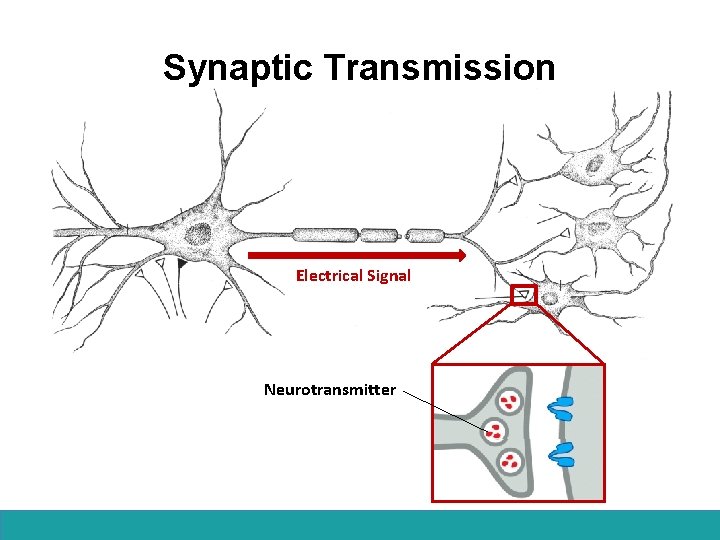
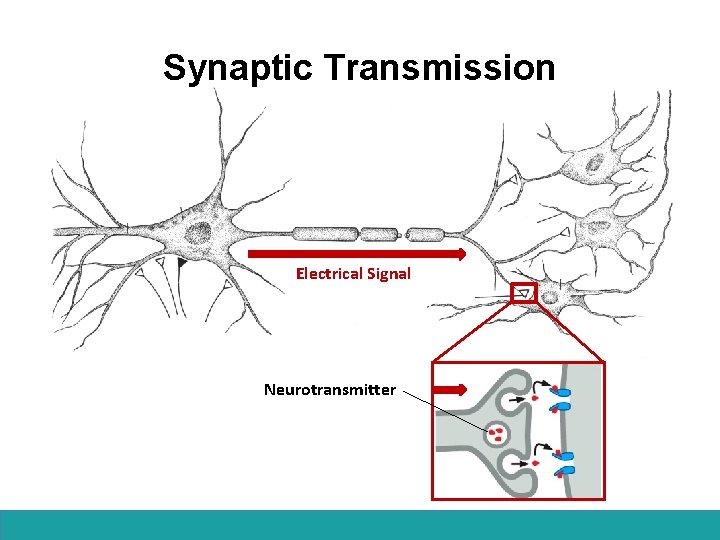
Converting an Electrical Signal to Chemical Signal Electrical Signal Chemical Signal
Synaptic Transmission Electrical Signal Neurotransmitter
Synaptic Transmission Electrical Signal Neurotransmitter
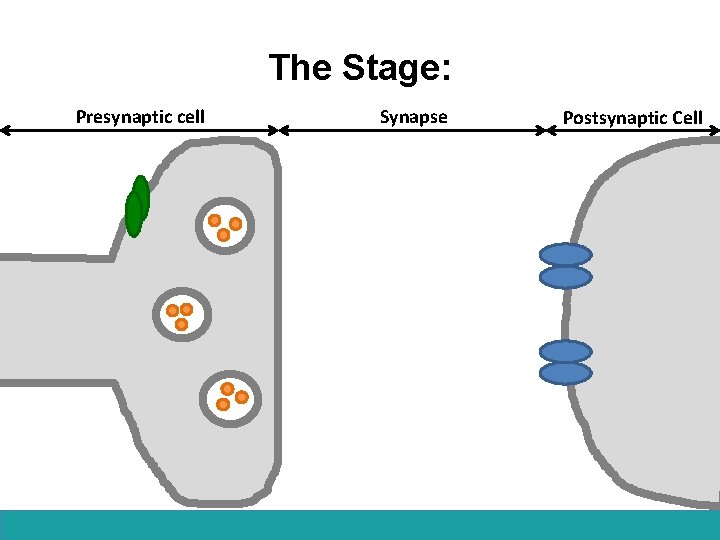
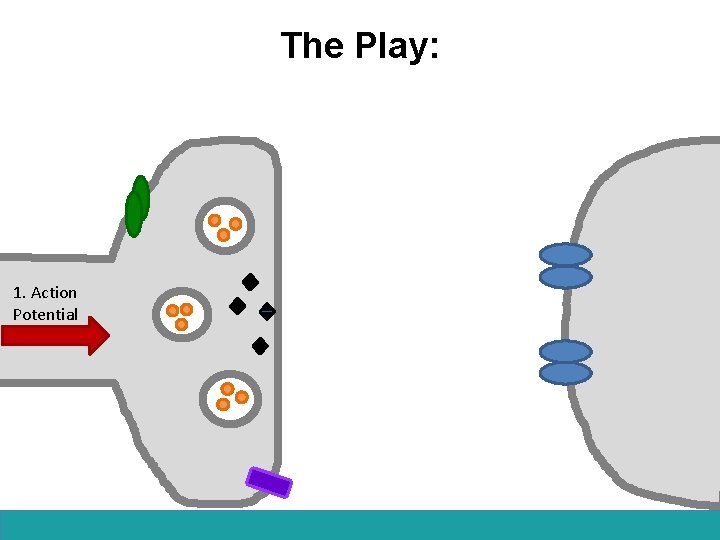
The Stage: Presynaptic cell Synapse Postsynaptic Cell
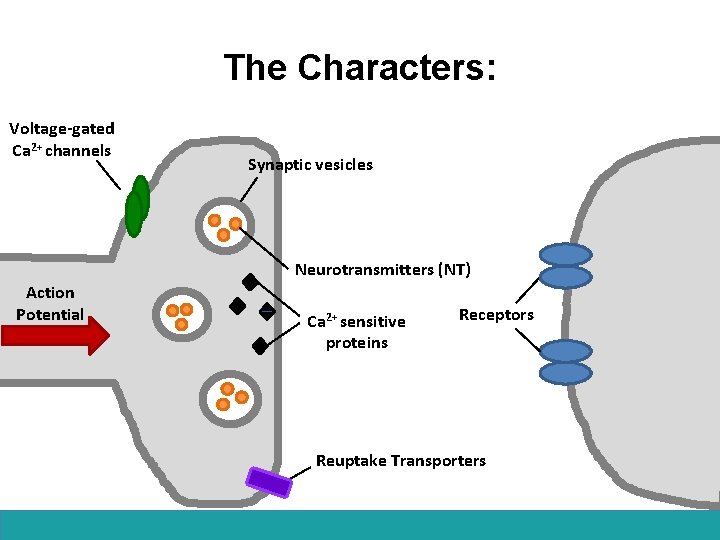
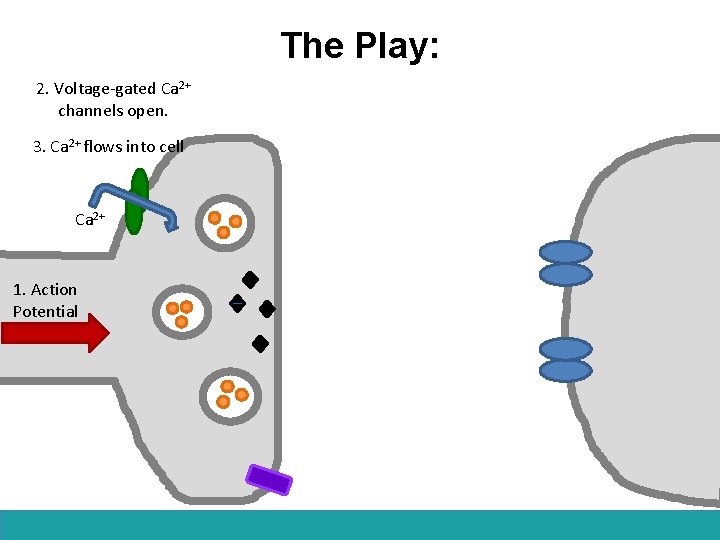
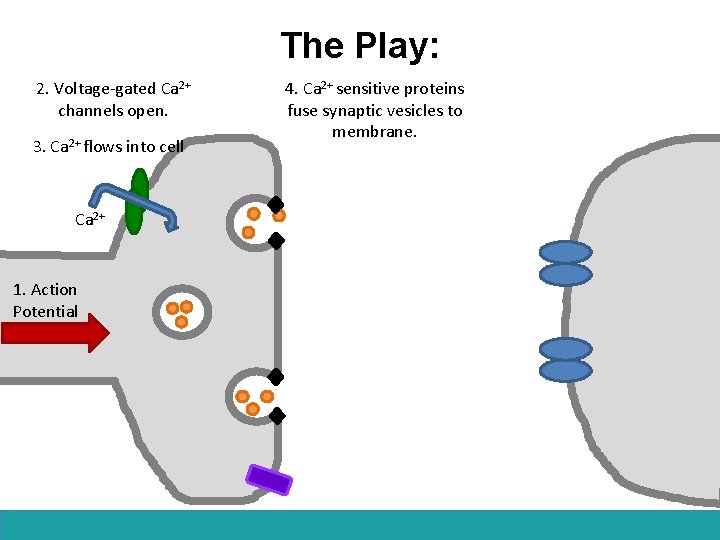
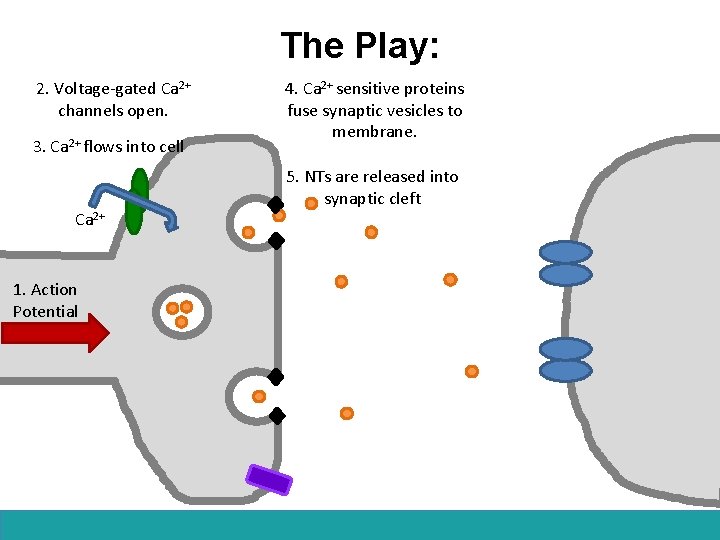
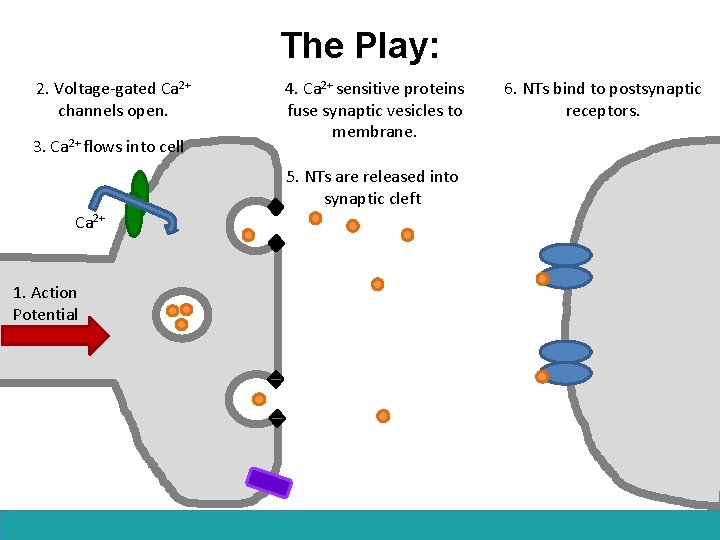
The Characters: Voltage-gated Ca 2+ channels Synaptic vesicles Neurotransmitters (NT) Action Potential Ca 2+ sensitive proteins Receptors Reuptake Transporters
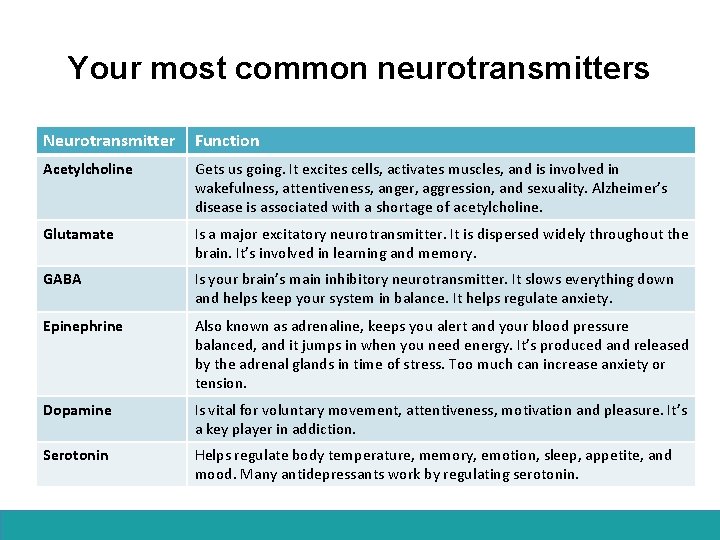
Your most common neurotransmitters Neurotransmitter Function Acetylcholine Gets us going. It excites cells, activates muscles, and is involved in wakefulness, attentiveness, anger, aggression, and sexuality. Alzheimer’s disease is associated with a shortage of acetylcholine. Glutamate Is a major excitatory neurotransmitter. It is dispersed widely throughout the brain. It’s involved in learning and memory. GABA Is your brain’s main inhibitory neurotransmitter. It slows everything down and helps keep your system in balance. It helps regulate anxiety. Epinephrine Also known as adrenaline, keeps you alert and your blood pressure balanced, and it jumps in when you need energy. It’s produced and released by the adrenal glands in time of stress. Too much can increase anxiety or tension. Dopamine Is vital for voluntary movement, attentiveness, motivation and pleasure. It’s a key player in addiction. Serotonin Helps regulate body temperature, memory, emotion, sleep, appetite, and mood. Many antidepressants work by regulating serotonin.
How do the characters work together to complete synaptic transmission? Card Sort Activity
The Play: 1. Action Potential
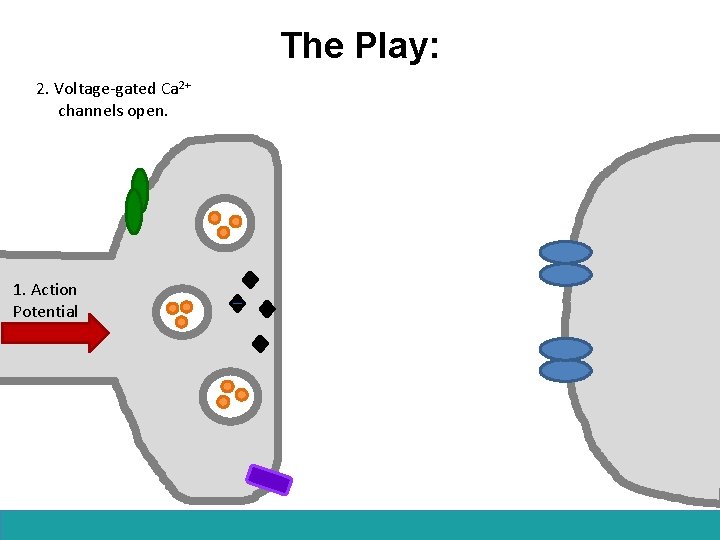
The Play: 2. Voltage-gated Ca 2+ channels open. 1. Action Potential
The Play: 2. Voltage-gated Ca 2+ channels open. 3. Ca 2+ flows into cell Ca 2+ 1. Action Potential
The Play: 2. Voltage-gated Ca 2+ channels open. 3. Ca 2+ flows into cell Ca 2+ 1. Action Potential 4. Ca 2+ sensitive proteins fuse synaptic vesicles to membrane.
The Play: 2. Voltage-gated Ca 2+ channels open. 3. Ca 2+ flows into cell Ca 2+ 1. Action Potential 4. Ca 2+ sensitive proteins fuse synaptic vesicles to membrane. 5. NTs are released into synaptic cleft
The Play: 2. Voltage-gated Ca 2+ channels open. 3. Ca 2+ flows into cell 4. Ca 2+ sensitive proteins fuse synaptic vesicles to membrane. 5. NTs are released into synaptic cleft Ca 2+ 1. Action Potential 6. NTs bind to postsynaptic receptors.
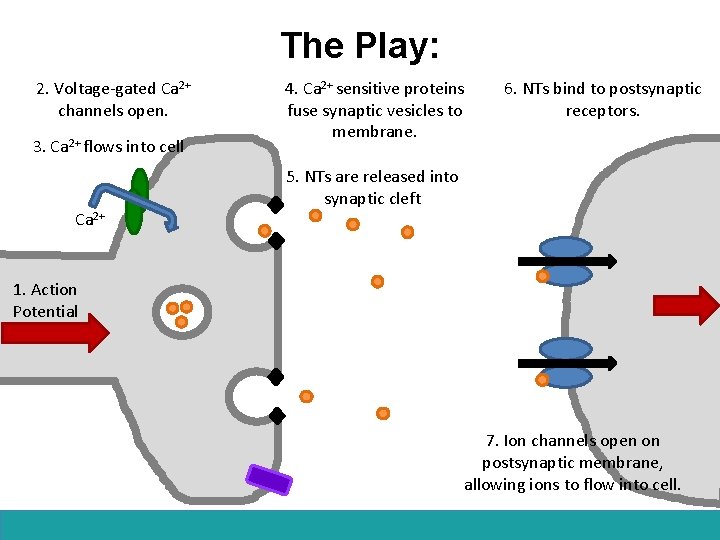
The Play: 2. Voltage-gated Ca 2+ channels open. 3. Ca 2+ flows into cell Ca 2+ 4. Ca 2+ sensitive proteins fuse synaptic vesicles to membrane. 6. NTs bind to postsynaptic receptors. 5. NTs are released into synaptic cleft 1. Action Potential 7. Ion channels open on postsynaptic membrane, allowing ions to flow into cell.
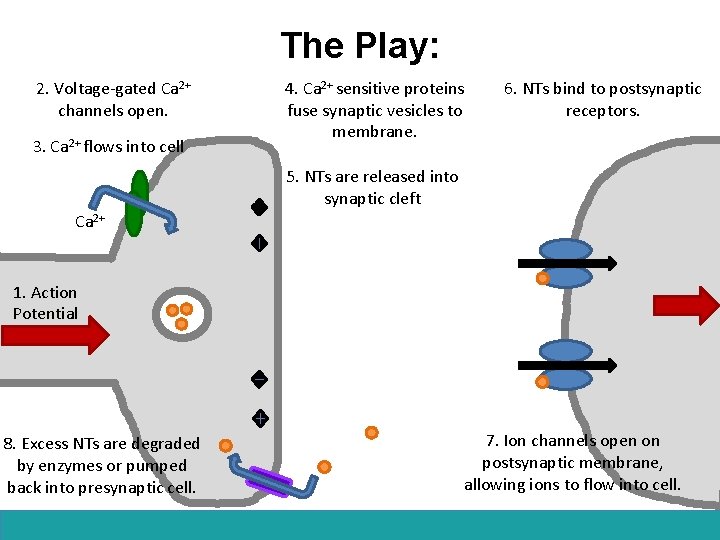
The Play: 2. Voltage-gated Ca 2+ channels open. 3. Ca 2+ flows into cell 4. Ca 2+ sensitive proteins fuse synaptic vesicles to membrane. 6. NTs bind to postsynaptic receptors. 5. NTs are released into synaptic cleft Ca 2+ 1. Action Potential 8. Excess NTs are degraded by enzymes or pumped back into presynaptic cell. 7. Ion channels open on postsynaptic membrane, allowing ions to flow into cell.
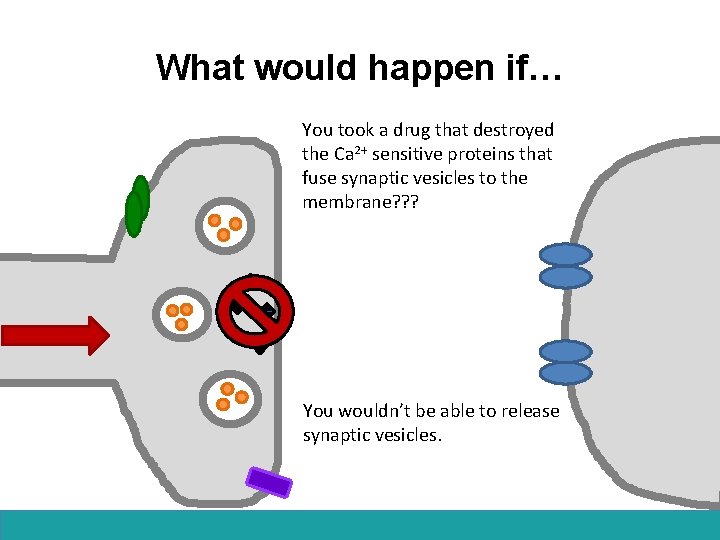
What would happen if… You took a drug that destroyed the Ca 2+ sensitive proteins that fuse synaptic vesicles to the membrane? ? ? You wouldn’t be able to release synaptic vesicles.
That’s How Botox Works! Before After Botox destroys the proteins that fuse synaptic vesicles with the membrane. By stopping vesicle release, Botox prevents muscle contraction which prevents wrinkles!
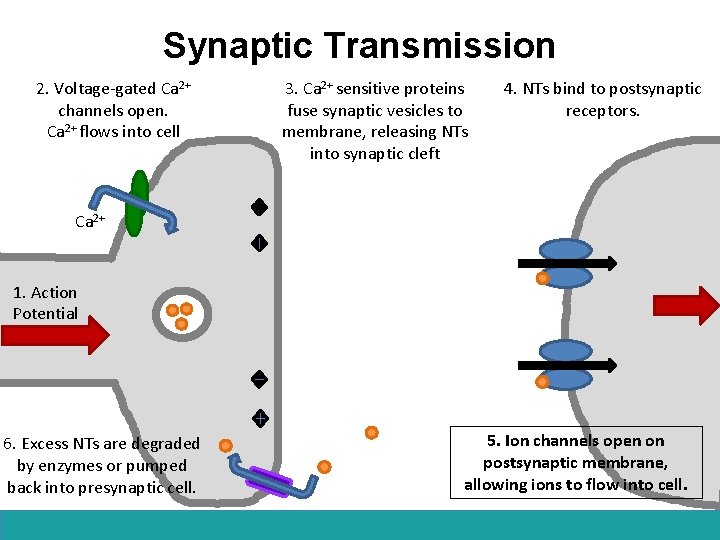
Synaptic Transmission 2. Voltage-gated Ca 2+ channels open. Ca 2+ flows into cell 3. Ca 2+ sensitive proteins fuse synaptic vesicles to membrane, releasing NTs into synaptic cleft 4. NTs bind to postsynaptic receptors. Ca 2+ 1. Action Potential 6. Excess NTs are degraded by enzymes or pumped back into presynaptic cell. 5. Ion channels open on postsynaptic membrane, allowing ions to flow into cell.
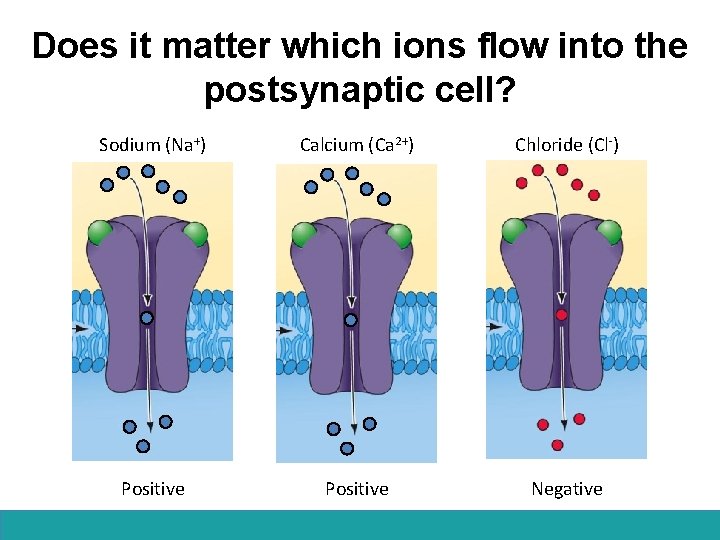
Does it matter which ions flow into the postsynaptic cell? Sodium (Na+) Calcium (Ca 2+) Chloride (Cl-) Positive Negative