
Neurological Diseases PNS Nervous System CNS Brain spinal
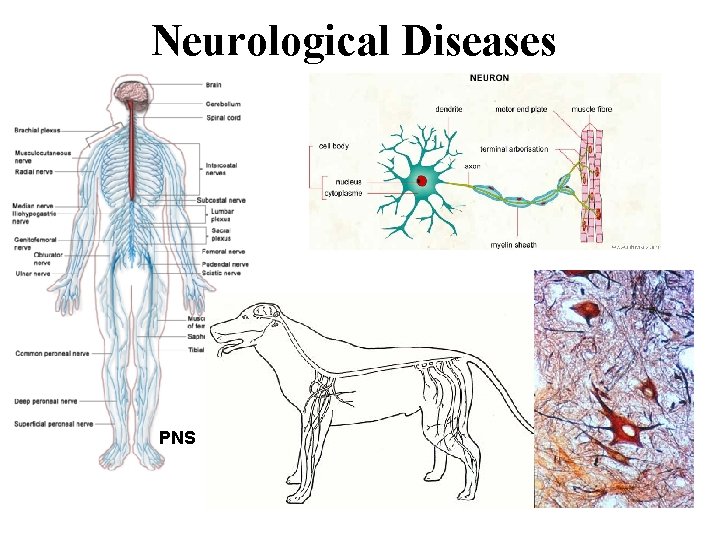
Neurological Diseases PNS
Nervous System • CNS – Brain, spinal cord • PNS (Links CNS to body) – Cranial nerves (from brain) – Peripheral nerves (from spinal cord) • Autonomic nervous system smooth muscle and cardiac muscle : (PNS and SNS) • Somatic (voluntary) system – skeletal m.
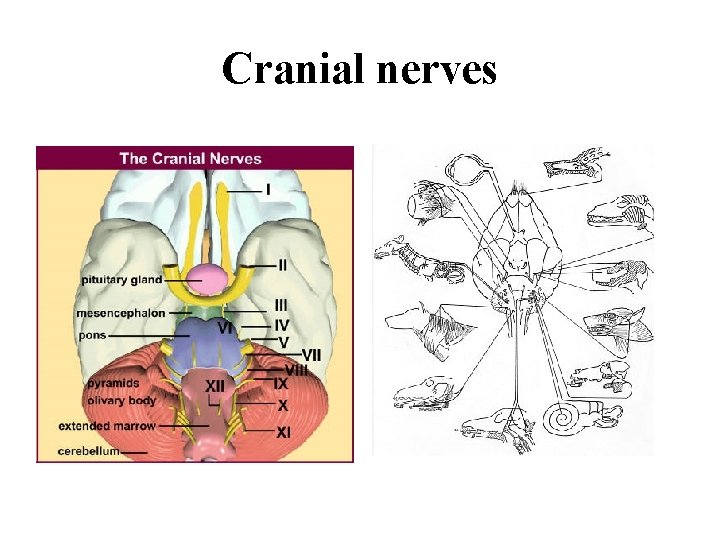
Cranial nerves
Mnemonics • “Oh, Oh, To Touch And Feel Various Girl's Very Angelic Hands” • Olfactory, Optic, Oculomotor, Troclear, Trigeminal, Abducens, Facial, Vestibulocochlear, Glossopharyngeal, Vagus, Accessory, Hypoglossal • “Some Say Marry Money, But My Brother Says Big Business Makes Money”
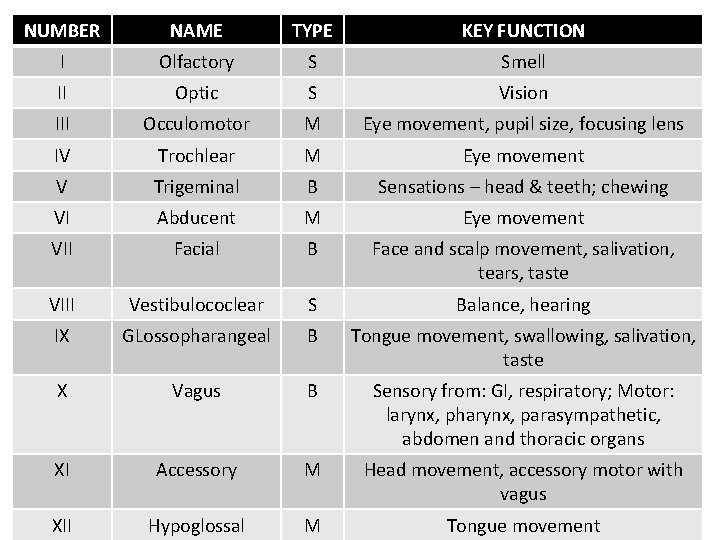
NUMBER NAME TYPE KEY FUNCTION I Olfactory S Smell II Optic S Vision III Occulomotor M Eye movement, pupil size, focusing lens IV Trochlear M Eye movement V Trigeminal B Sensations – head & teeth; chewing VI Abducent M Eye movement VII Facial B Face and scalp movement, salivation, tears, taste VIII Vestibulococlear S Balance, hearing IX GLossopharangeal B Tongue movement, swallowing, salivation, taste X Vagus B Sensory from: GI, respiratory; Motor: larynx, pharynx, parasympathetic, abdomen and thoracic organs XI Accessory M Head movement, accessory motor with vagus XII Hypoglossal M Tongue movement
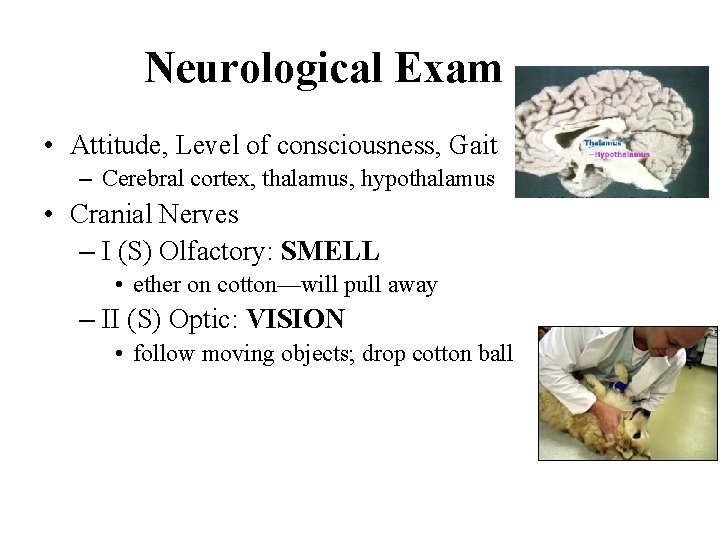
Neurological Exam • Attitude, Level of consciousness, Gait – Cerebral cortex, thalamus, hypothalamus • Cranial Nerves – I (S) Olfactory: SMELL • ether on cotton—will pull away – II (S) Optic: VISION • follow moving objects; drop cotton ball
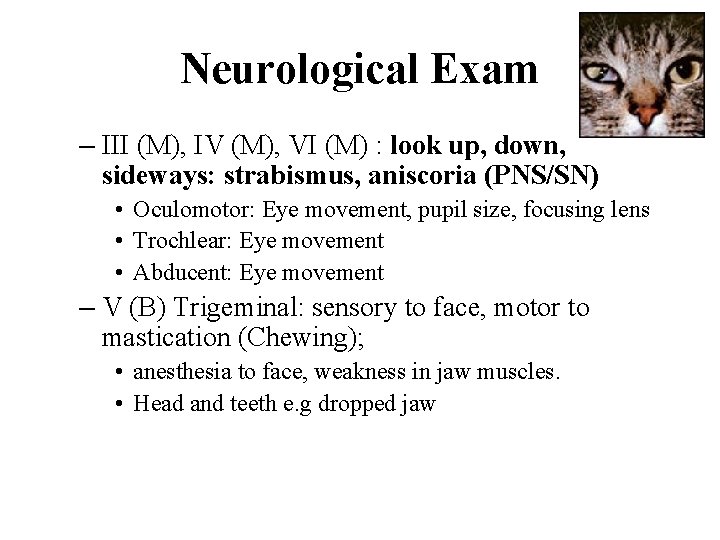
Neurological Exam – III (M), IV (M), VI (M) : look up, down, sideways: strabismus, aniscoria (PNS/SN) • Oculomotor: Eye movement, pupil size, focusing lens • Trochlear: Eye movement • Abducent: Eye movement – V (B) Trigeminal: sensory to face, motor to mastication (Chewing); • anesthesia to face, weakness in jaw muscles. • Head and teeth e. g dropped jaw

Neurologic Exam – VII (M) Facial: Face/Scalp, salivation, tears, taste • unilateral droop; drool; no menace • Paralysis: eyelid, lip, ear – VIII (S) Vestibulocochlear: • balance (nystagmus, head tilt, circling); deafness
Neurologic Exam – IX (B), XI (M): swallowing (9 and 10); muscle atrophy • Glossopharyngeal: tongue movement, swallowing, salivation, taste, dysphagia • Vagus: Sensory: GI/resp; Motor: larynx, pharynx, parasympathetic, abdomen and thoracic organs. Dysphagia. Megaesophagus. • Accessory: head movement, accessory motor with vagus. Laryngeal paralysis. – XII (M) Hypoglossal • loss of tongue movement; unilateral atrophy
Female Brain
Male Brain
LOCATION
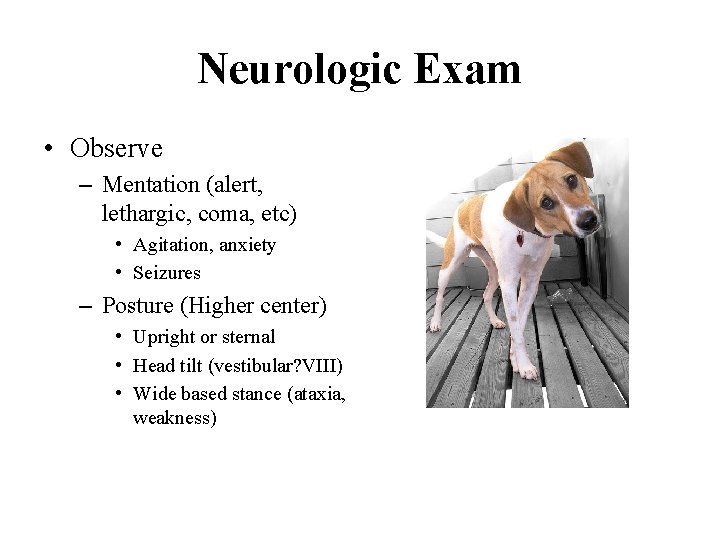
Neurologic Exam • Observe – Mentation (alert, lethargic, coma, etc) • Agitation, anxiety • Seizures – Posture (Higher center) • Upright or sternal • Head tilt (vestibular? VIII) • Wide based stance (ataxia, weakness)
Neuro Exam • Gait – Walking and running on flat, nonslippery surface • Walk slowly back and forth with turns and circles – Proprioceptive deficits – knuckling? (spinal cord defect) – Paresis (Deficient)/paralysis (No) – cerebral cortex, brainstem, spinal cord or peripheral spinal nerves or muscles – Circling/pacing – • Tight circling with head tilt – vestibular (VIII) • With dementia – ipsilateral cerebral cortex
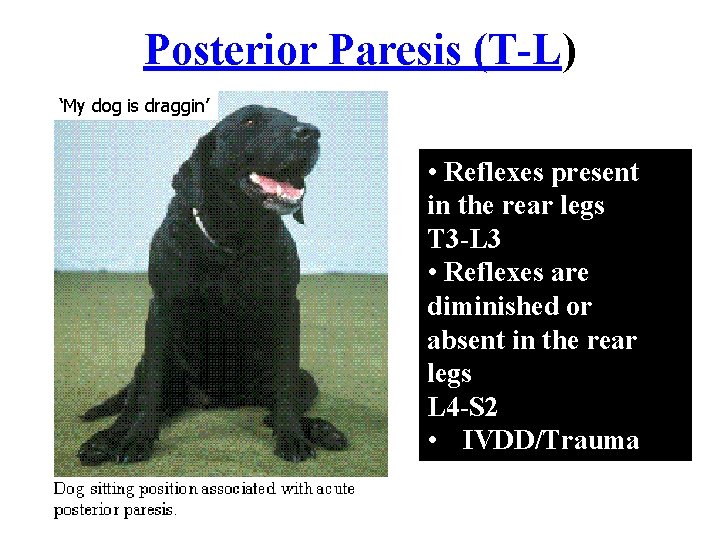
Posterior Paresis (T-L) ‘My dog is draggin’ • Reflexes present in the rear legs T 3 -L 3 • Reflexes are diminished or absent in the rear legs L 4 -S 2 • IVDD/Trauma
Neuro Exam – Ataxia/incoordination – cerebellum (coordinates motor activity), vestibular system, or spinal cord – Dysmetria - cerebellar • Hypermetria – too long movements • Hypometria – movements too short
Neuro Exam • Postural reactions – – Knuckling Hopping Wheelbarrowing Hemiwalking • Muscle Tone – Atrophy – occurs slowly from disuse • Rapidly from nerve damage – LMN – decreased – UMN – extensor muscle tone increased – Test by flexing/extending joints
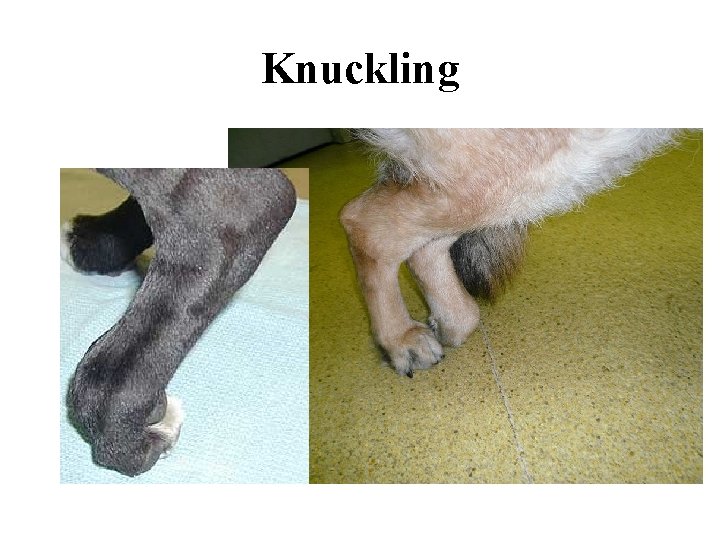
Knuckling
Neuro exam – Spinal Reflexes • • Thoracic limb withdrawal – pinch toe Patellar – strike patellar ligament – extension of stifle Pelvic limb withdrawal – pinch toe Sciatic – Strike between greater trochanter and ischium – flexion of stifle and hock • Cranial tibial – strike cranial tibial m just below proximal end of tibia – flex hock • Perineal – pinch perineum/anus – anal sphincter contraction, tuck tail • Panniculus – stimulate skin over dorsum just lateral to vertebral column – twitch of cutaneous trunci m.
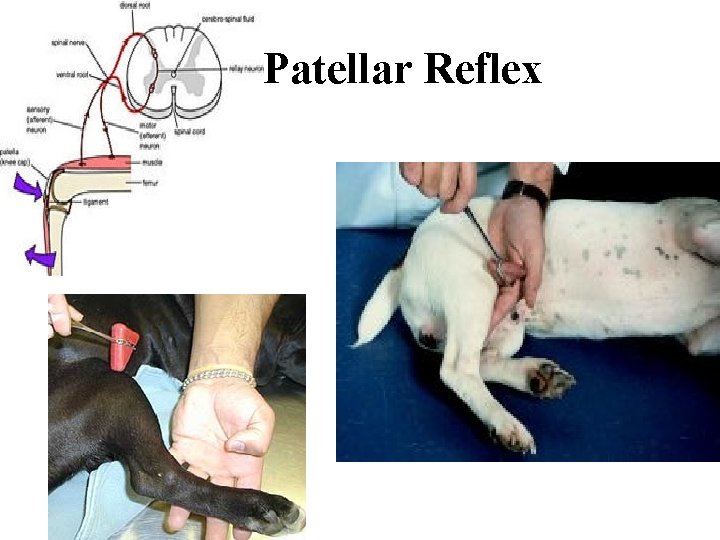
Patellar Reflex
Reflex examination • http: //www. youtube. com/watch? v=NFq. FABs. I a 7 Q&feature=related

Pelvic Limb Withdrawal – Or Not
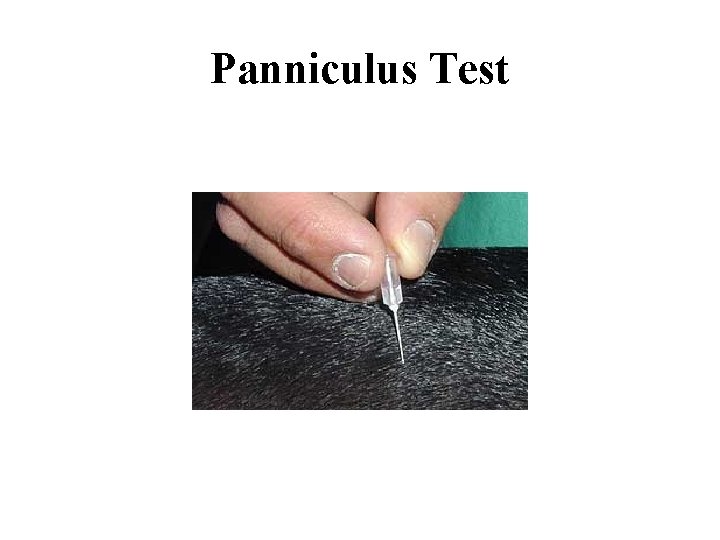
Panniculus Test

Palpebral reflex • http: //video. google. com/videosearch? q=neurol ogical+exam+in+dogs&hl=en&emb=0&aq=f#
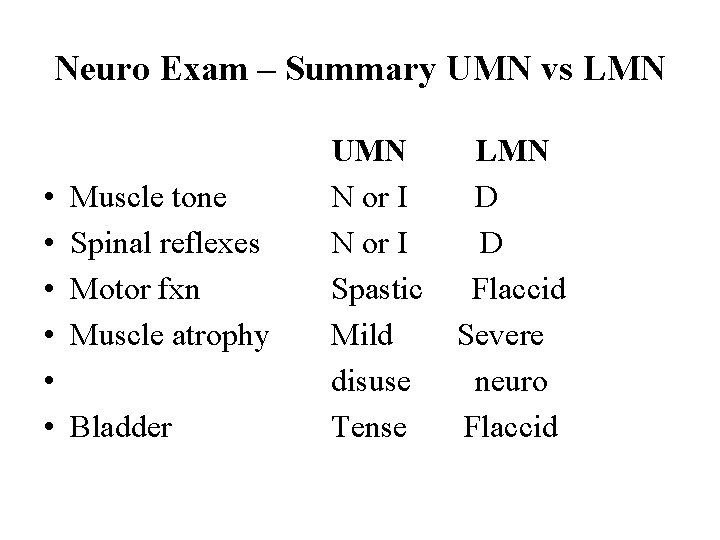
Neuro Exam – Summary UMN vs LMN • • • Muscle tone Spinal reflexes Motor fxn Muscle atrophy Bladder UMN N or I Spastic Mild disuse Tense LMN D D Flaccid Severe neuro Flaccid
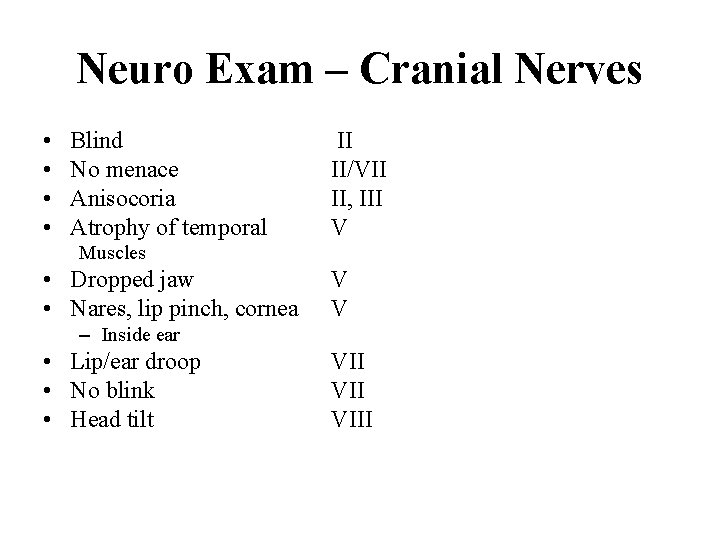
Neuro Exam – Cranial Nerves • • Blind No menace Anisocoria Atrophy of temporal II II/VII II, III V Muscles • Dropped jaw • Nares, lip pinch, cornea V V – Inside ear • Lip/ear droop • No blink • Head tilt VII VIII
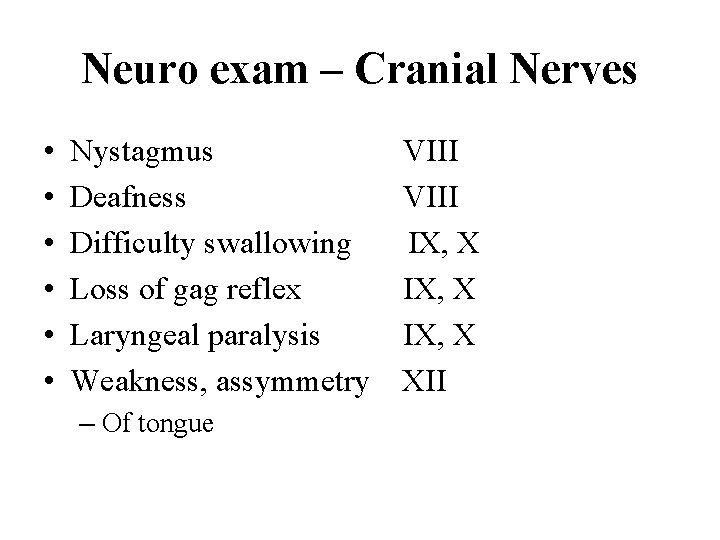
Neuro exam – Cranial Nerves • • • Nystagmus Deafness Difficulty swallowing Loss of gag reflex Laryngeal paralysis Weakness, assymmetry – Of tongue VIII IX, X XII
Cranial nerve • http: //www. youtube. com/watch? v=S 8 f 9 GPW 9 IE&feature=related
The Nervous System And its associated diseases
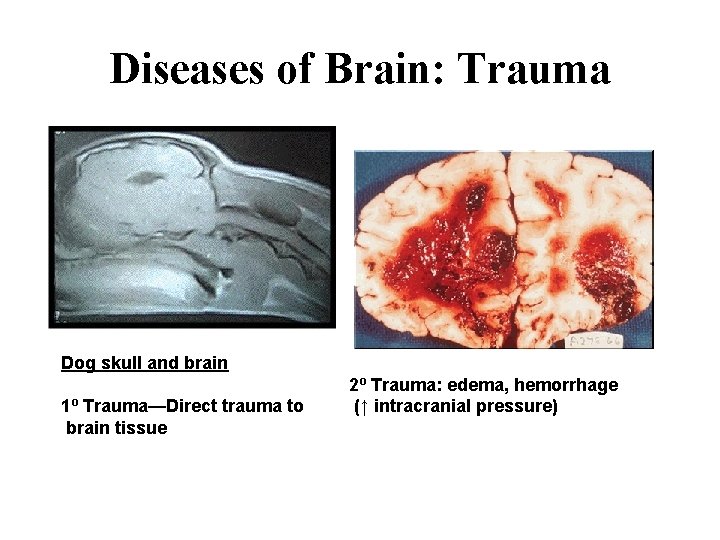
Diseases of Brain: Trauma Dog skull and brain 1º Trauma—Direct trauma to brain tissue 2º Trauma: edema, hemorrhage (↑ intracranial pressure)
Brain Trauma • Signs: – Seizures – Blood in eyes, ears, nose, oral cavity – Loss of consciousness or decrease in response to external stimuli – Shock, coma, altered respiratory patterns • Dx – Hx of trauma (HBC, falling) – Chem. panel to rule out other metabolic diseases
Brain Trauma • Treatment—aimed at reducing 2° effects (edema) – Osmotic agents: Mannitol (20 -50%) IV slow bolus – Diuretics: Furosemide IV q 4 h – Anti-seizure Rx if needed: Diazepam, Phenobarbital • Client info – Some brain injury is irreversible – Dog in coma >48 h usually does not survive – Worsening neuro signs → bad prognosis
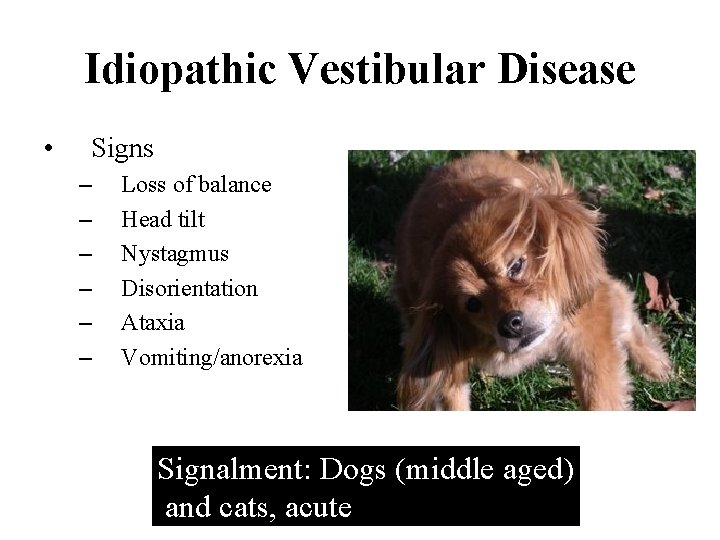
Idiopathic Vestibular Disease • Signs – – – Loss of balance Head tilt Nystagmus Disorientation Ataxia Vomiting/anorexia Signalment: Dogs (middle aged) and cats, acute
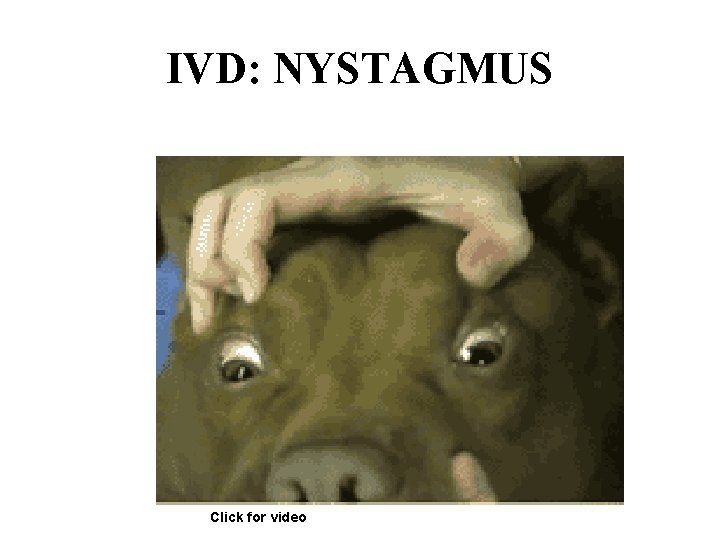
IVD: NYSTAGMUS Click for video
Idiopathic Vestibular disease http: //www. youtube. com/watch? v=Zcc. Ud. SH 91 zc&feature=Play. List& p=E 1 3 C 661759 E 7 C&playnext_from=PL&playnext=3&index=30 http: //www. youtube. com/watch? v=Y 25 T 7 d. Z 77 T 4&feature=related http: //www. youtube. com/watch? v=Hjw. GY 2 v. Jk 0 E&feature=related
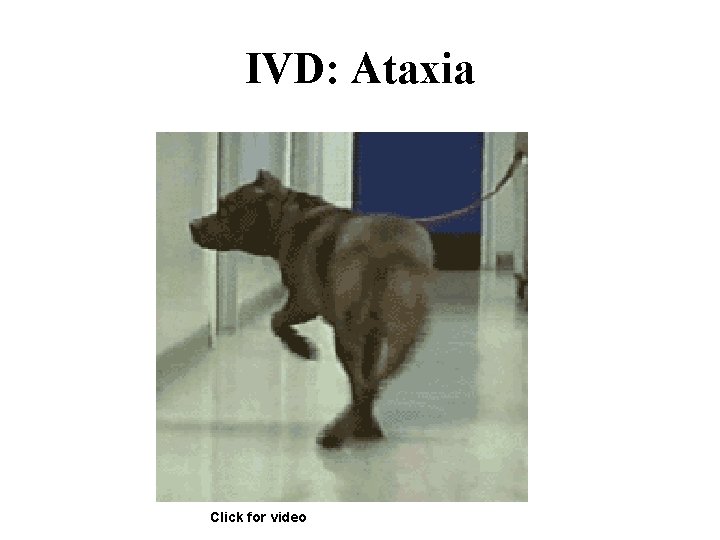
IVD: Ataxia Click for video
Idiopathic Vestibular Disease • Dx – – – • Clinical signs Blood work to r/o other diseases of nervous system Ear exam to r/o inner ear infection Rx – – Treatment is not recommended; does not alter course of disease (antibiotics, steroids often given to cover possible causes not found by PE and lab work) Clinical signs resolve in 3 -6 wks
PEOPLE “The man who smiles in the face of trouble… Has found someone to blame it on. ”
References • Alleice Summers, Common Diseases of Companion Animals • http: //neuro. vetmed. ufl. edu/neuro/courses/vem 5171/Neuropharmacology. pdf
- Slides: 39