
Neurogenic bladder By Cindy Mendez ETIOLOGY Loss of
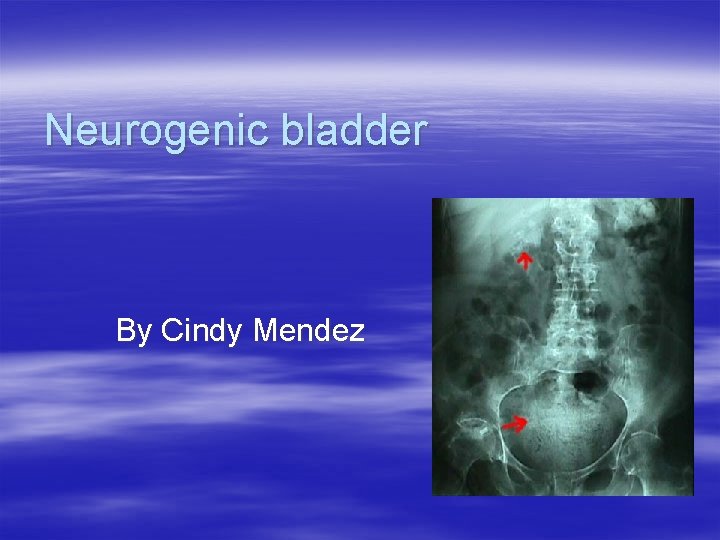
Neurogenic bladder By Cindy Mendez
ETIOLOGY § Loss of voluntary voiding control – Manifested by retention or incontinence § Caused by a lesion to the nervous system – Congenital, – Traumatic, – disease § Interrupting the conduction

ETIOLOGY § Two types of neurogenic bladder – spastic § Caused by a lesion above, at the voiding reflex. § resulting in loss of sensation to void and loss of motor control – Bladder may also atrophies, decreasing bladder capacity

ETIOLOGY – Flaccid § Lesion on the lower motor neuron § Bladder Continues to fill and extend § Pooling of urine and incomplete emptying – Causing urine stasis, and possible infection

Clinical manifestations § Infection – From urinary stasis – And catherization § Retention – May lead to back up of urine § Distention – Of any of the structures in the urinary track causing discomfort
Assessment § Diaphoresis, flushing and nausea prior to reflex incontinenc. § Infrequent voiding § Urinary incontinence § Assess for: – congenital abnormalities – neurological disease – Or spinal cord injury

Diagnostics § To asses the type and extent of damage to the bladder and any other urinary system structures – BUN – Creatinine levels – And radiograph studies to check for structural changes that have occurred
Medical management § Parasympathomimetic ( urecholine) – Increase bladder contractility § Catherization – To relieve distention § Sacral modulation and stimulation – To reduce urinary urge incontinence § The Interstim device – To reduce overactive bladder or stimulate an under-active bladder
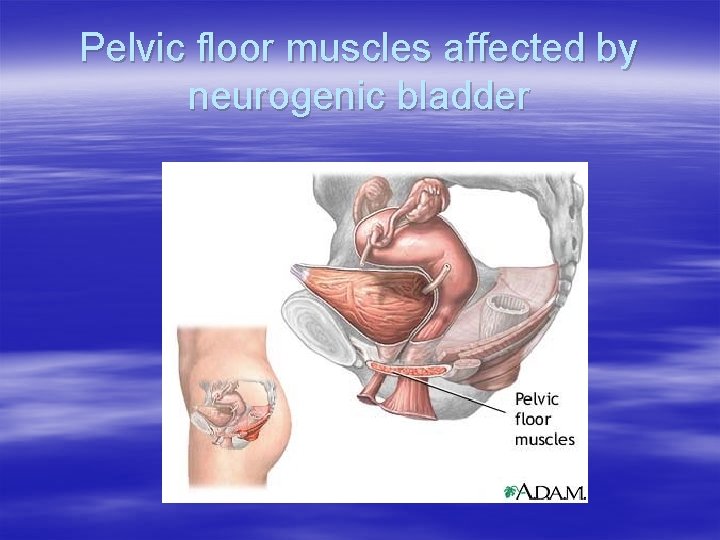
Pelvic floor muscles affected by neurogenic bladder

Nursing interventions patient teaching § Establish urinary elimination § Bladder training ( with or with out self stimulation) every 2 hrs § Having patient recognize signs of distention § Supportive sensitive environment to have patient discuss feelings and self image adaptation
- Slides: 10