
Neurochemistry October 25 2013 Chapter 12 472 473
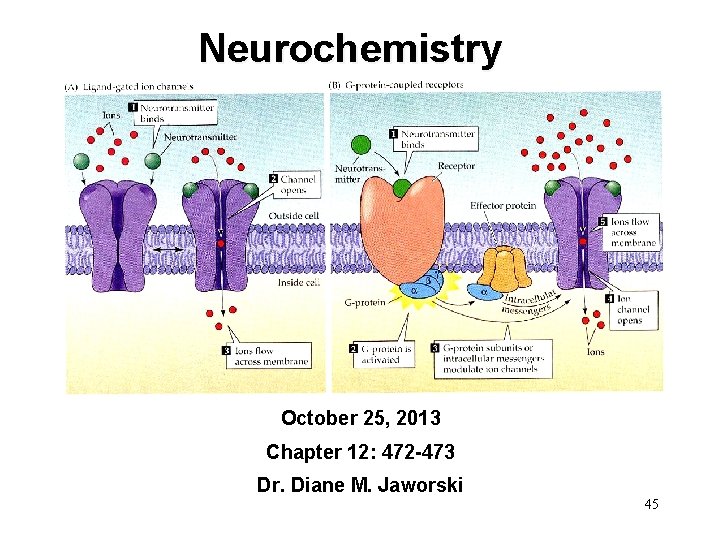
Neurochemistry October 25, 2013 Chapter 12: 472 -473 Dr. Diane M. Jaworski 45
• How do neurotransmitters work? • What are the major neurotransmitters? • What is the function of the neurotransmitters? • What diseases are associated with the neurotransmitters? 46

How do neurotransmitters work? Life Cycle of a Neurotransmitter • Synthesized in the neuron - peptides made in cell body - others assembled in button • Stored in vesicles • Released by calciummediated exocytosis • Activation of receptor on postsynaptic cell by sodium ion • Removal from synaptic cleft, taken up by: glial cell, pre-synaptic neuron, or degraded in synaptic cleft 47 © Squire et al. , Fundamental Neuroscience, 2 nd ed. 2003
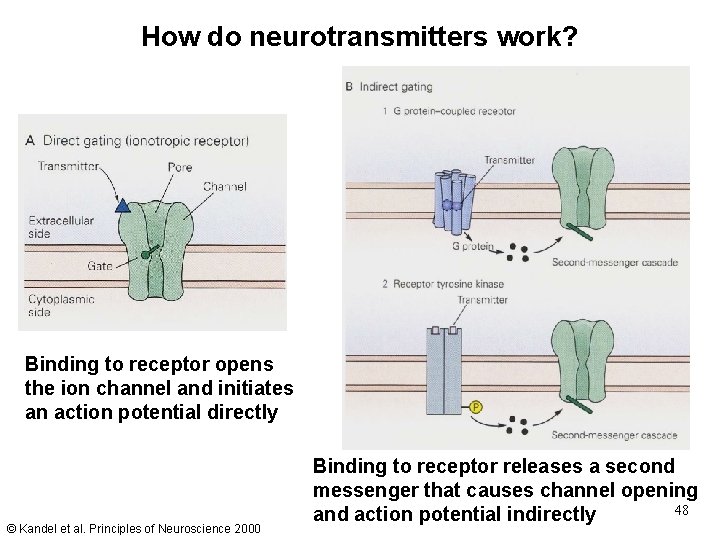
How do neurotransmitters work? Binding to receptor opens the ion channel and initiates an action potential directly © Kandel et al. Principles of Neuroscience 2000 Binding to receptor releases a second messenger that causes channel opening 48 and action potential indirectly

What are the major neurotransmitters in the CNS? 3. Small Molecule Neurotransmitter Acetylcholine 1. Neuropeptides Substance P Opioid peptide Excitatory amino acids - Glutamate - Aspartate Inhibitory amino acis - GABA - Glycine 2. Gaseous Neurotransmitter Nitric Oxide Catecholamines - Dopamine - Norepinephrine (noradrenaline) - Epinephrine (adrenaline) Serotonin 49
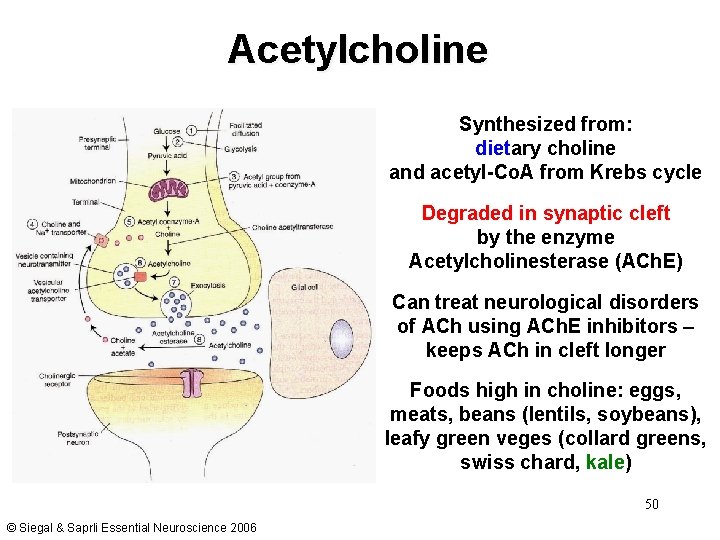
Acetylcholine Synthesized from: dietary choline and acetyl-Co. A from Krebs cycle Degraded in synaptic cleft by the enzyme Acetylcholinesterase (ACh. E) Can treat neurological disorders of ACh using ACh. E inhibitors – keeps ACh in cleft longer Foods high in choline: eggs, meats, beans (lentils, soybeans), leafy green veges (collard greens, swiss chard, kale) 50 © Siegal & Saprli Essential Neuroscience 2006
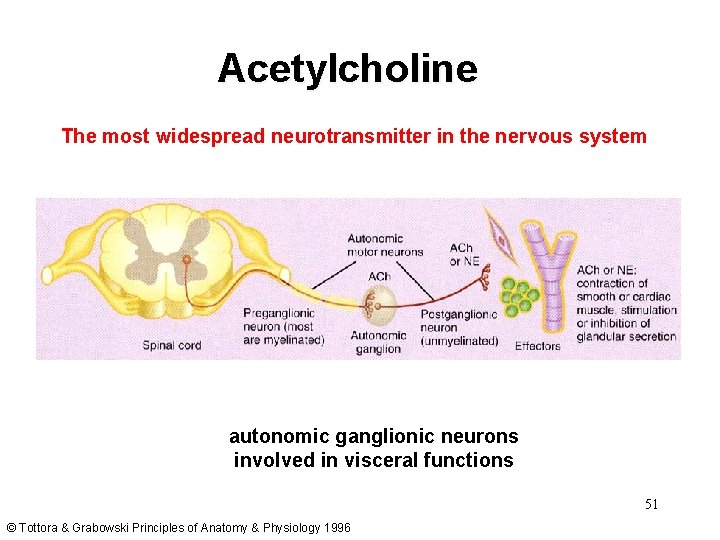
Acetylcholine The most widespread neurotransmitter in the nervous system autonomic ganglionic neurons involved in visceral functions 51 © Tottora & Grabowski Principles of Anatomy & Physiology 1996

Acetylcholine - motor neurons of spinal cord to innervate muscle of body - motor neurons of cranial nerves to innervate muscles of head/neck What happens if ACh release decreases or receptors are blocked? 52 © Tottora & Grabowski Principles of Anatomy & Physiology 1996
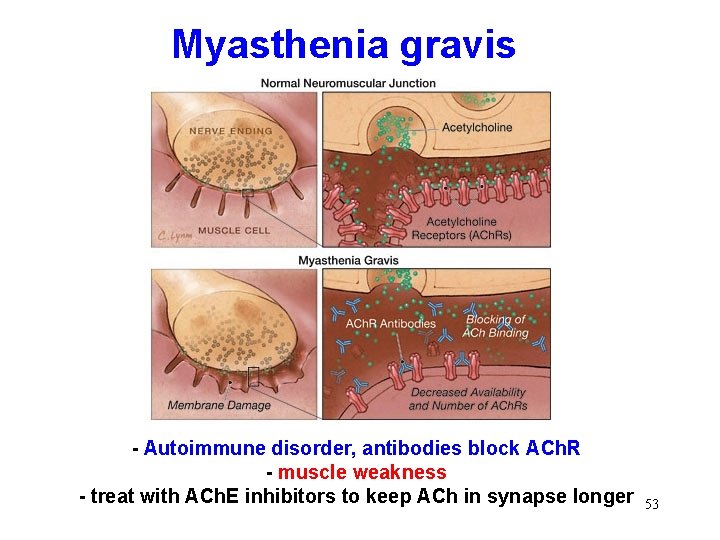
Myasthenia gravis - Autoimmune disorder, antibodies block ACh. R - muscle weakness - treat with ACh. E inhibitors to keep ACh in synapse longer 53
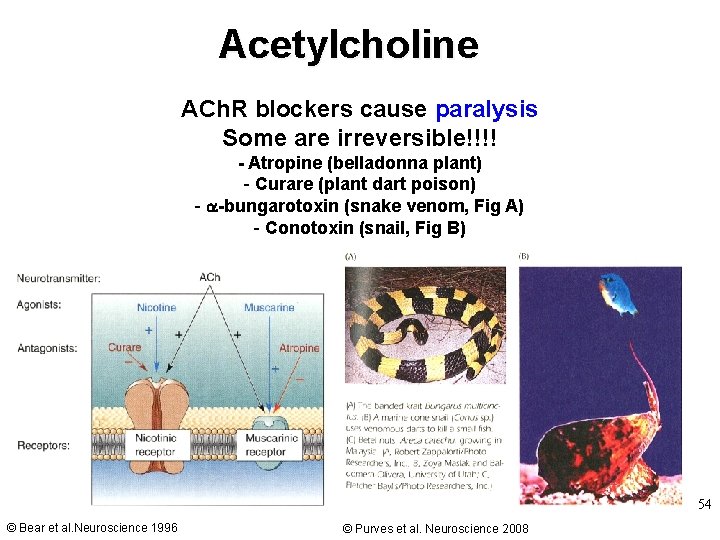
Acetylcholine ACh. R blockers cause paralysis Some are irreversible!!!! - Atropine (belladonna plant) - Curare (plant dart poison) - a-bungarotoxin (snake venom, Fig A) - Conotoxin (snail, Fig B) 54 © Bear et al. Neuroscience 1996 © Purves et al. Neuroscience 2008

Acetylcholine Neurons die in Alzheimer’s disease -many CNS synapses -involved in regulating alertness/attention, sleep, learning/memory 55 © Nestler et al. Molecular Neuropharmacology, 2001
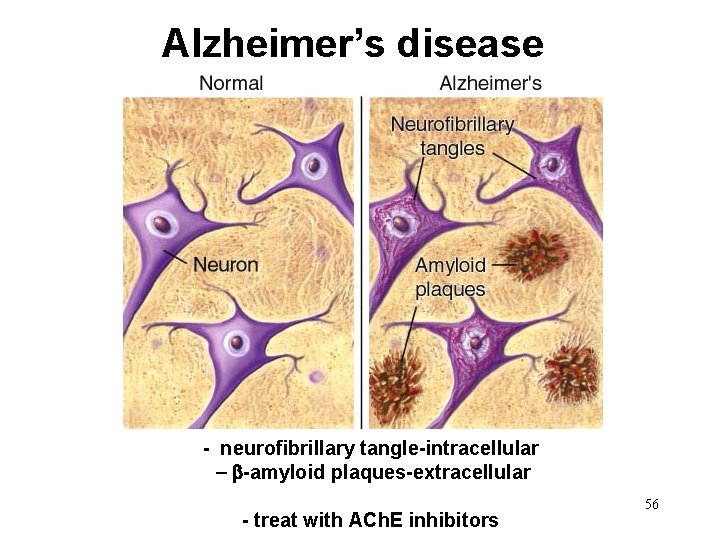
Alzheimer’s disease - neurofibrillary tangle-intracellular - b-amyloid plaques-extracellular - treat with ACh. E inhibitors 56
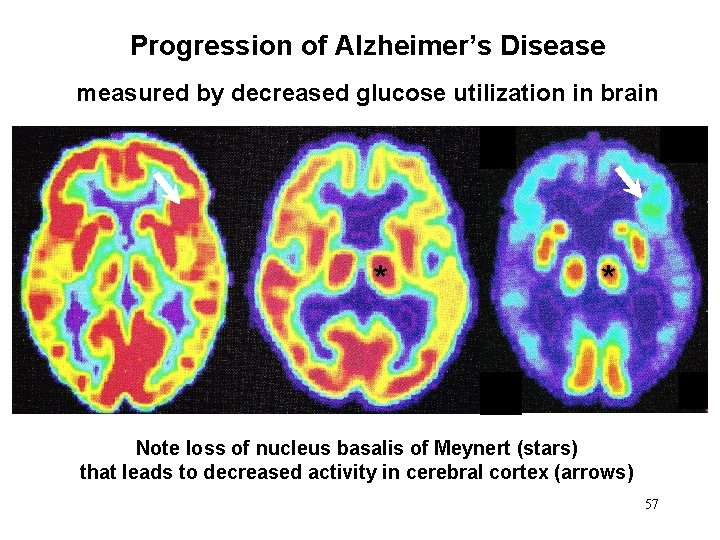
Progression of Alzheimer’s Disease measured by decreased glucose utilization in brain * * Note loss of nucleus basalis of Meynert (stars) that leads to decreased activity in cerebral cortex (arrows) 57
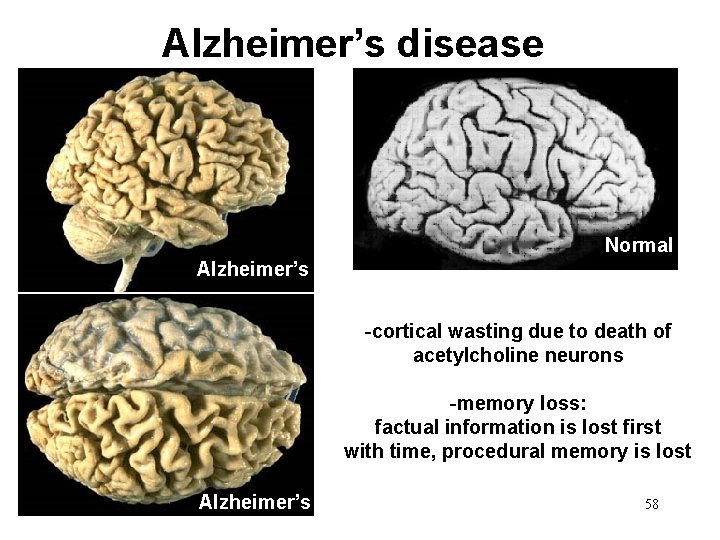
Alzheimer’s disease Normal Alzheimer’s -cortical wasting due to death of acetylcholine neurons -memory loss: factual information is lost first with time, procedural memory is lost Alzheimer’s 58

Tower of Hanoi See how you do: http: //www. mazeworks. com/hanoi/index. htm 59
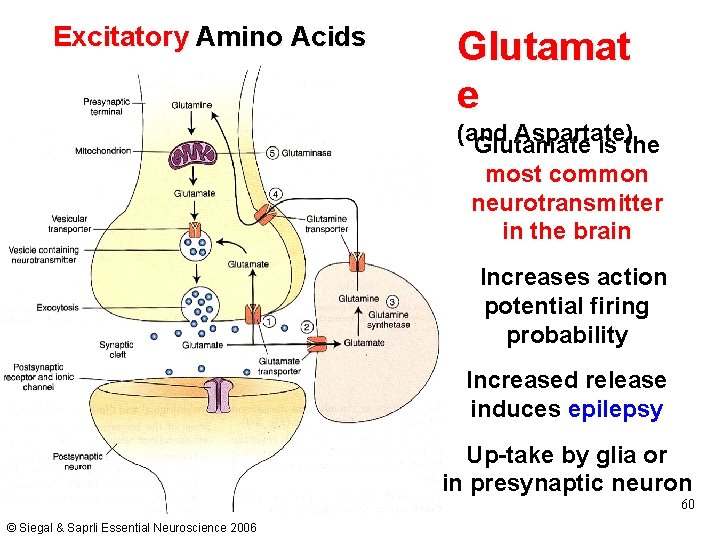
Excitatory Amino Acids Glutamat e (and Aspartate) Glutamate is the most common neurotransmitter in the brain Increases action potential firing probability Increased release induces epilepsy Up-take by glia or in presynaptic neuron 60 © Siegal & Saprli Essential Neuroscience 2006
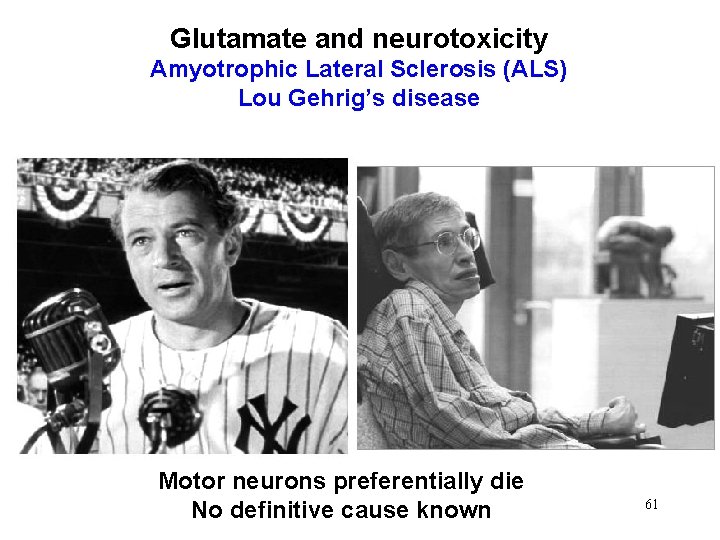
Glutamate and neurotoxicity Amyotrophic Lateral Sclerosis (ALS) Lou Gehrig’s disease Motor neurons preferentially die No definitive cause known 61
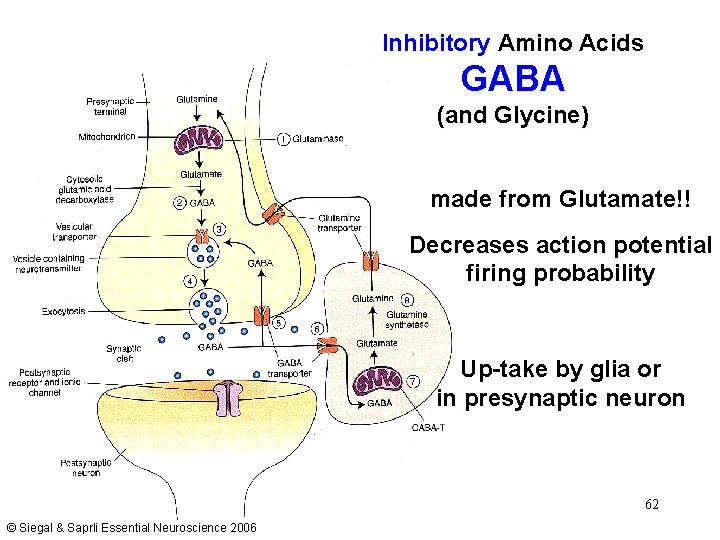
Inhibitory Amino Acids GABA (and Glycine) made from Glutamate!! Decreases action potential firing probability Up-take by glia or in presynaptic neuron 62 © Siegal & Saprli Essential Neuroscience 2006
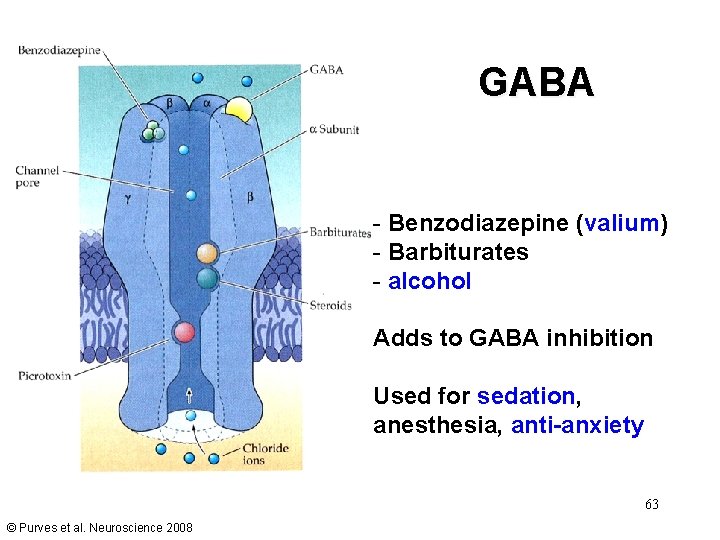
GABA - Benzodiazepine (valium) - Barbiturates - alcohol Adds to GABA inhibition Used for sedation, anesthesia, anti-anxiety 63 © Purves et al. Neuroscience 2008
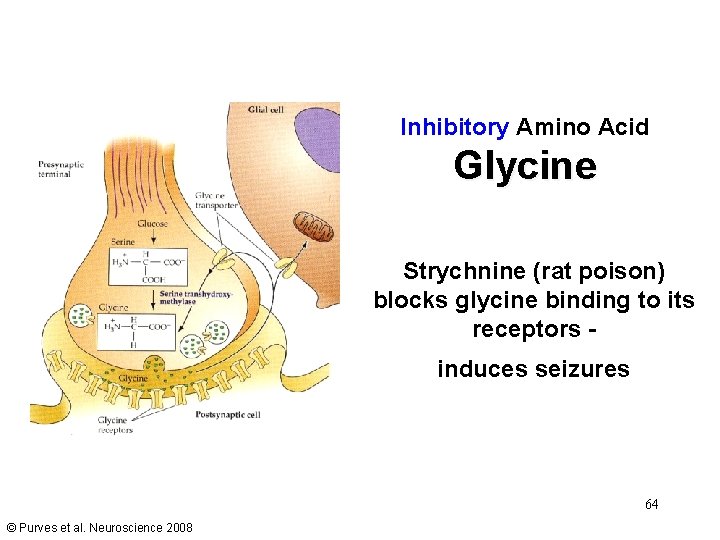
Inhibitory Amino Acid Glycine Strychnine (rat poison) blocks glycine binding to its receptors induces seizures 64 © Purves et al. Neuroscience 2008
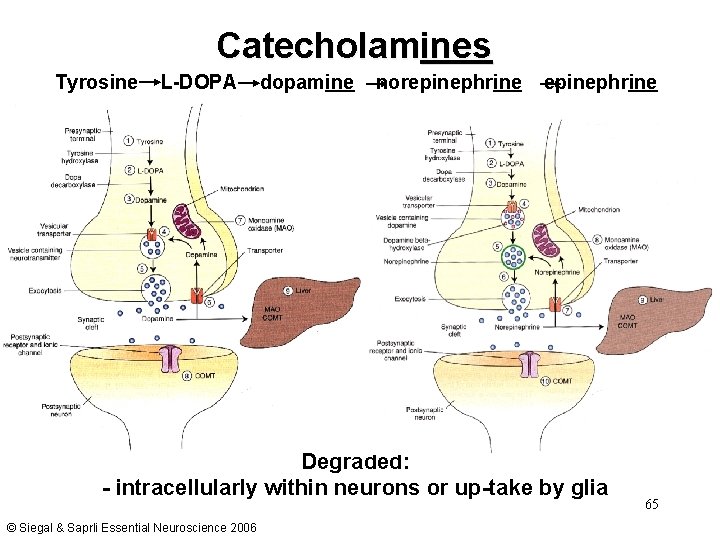
Catecholamines Tyrosine L-DOPA dopamine norepinephrine Degraded: - intracellularly within neurons or up-take by glia © Siegal & Saprli Essential Neuroscience 2006 65
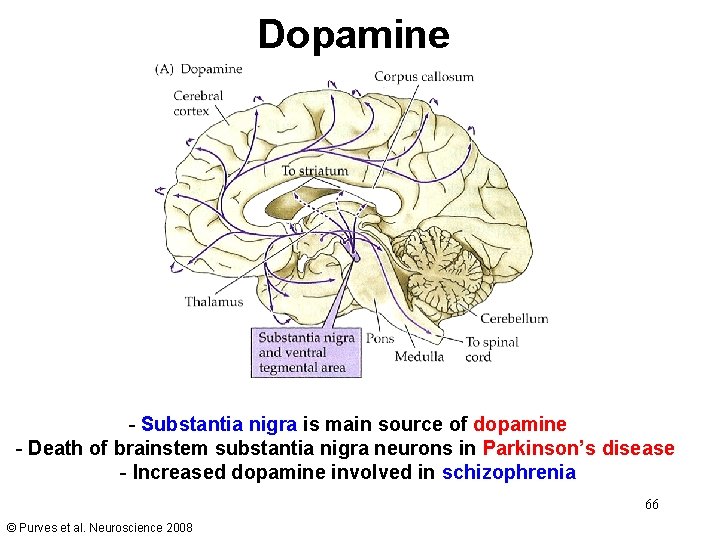
Dopamine - Substantia nigra is main source of dopamine - Death of brainstem substantia nigra neurons in Parkinson’s disease - Increased dopamine involved in schizophrenia 66 © Purves et al. Neuroscience 2008
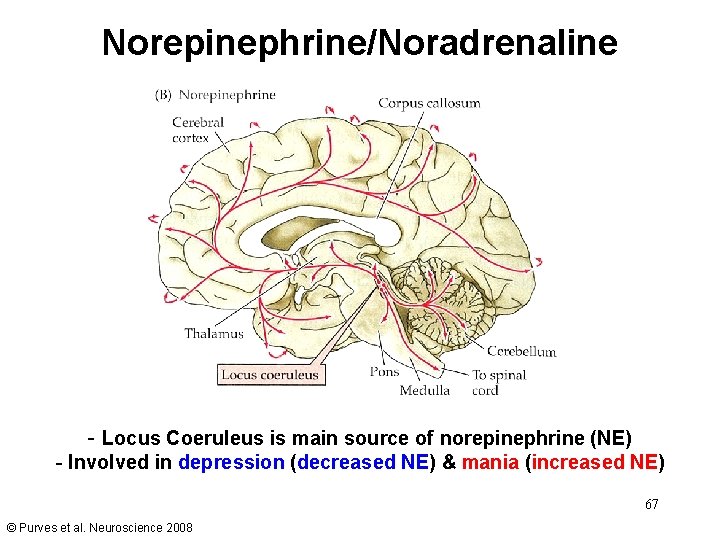
Norepinephrine/Noradrenaline - Locus Coeruleus is main source of norepinephrine (NE) - Involved in depression (decreased NE) & mania (increased NE) 67 © Purves et al. Neuroscience 2008
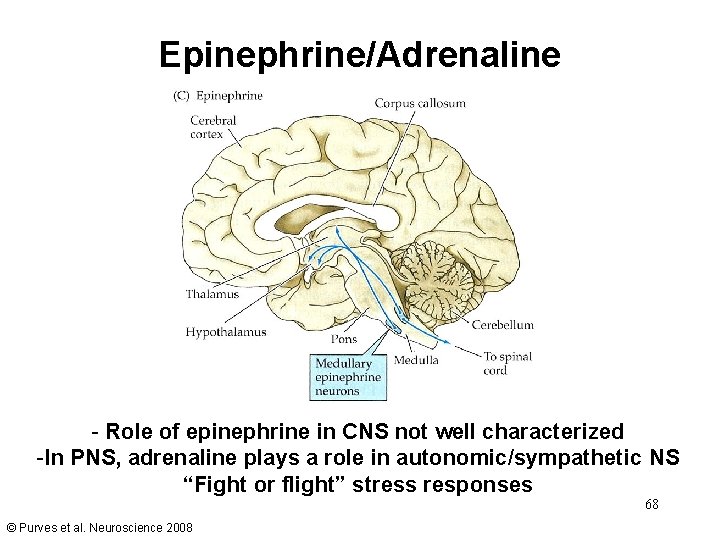
Epinephrine/Adrenaline - Role of epinephrine in CNS not well characterized -In PNS, adrenaline plays a role in autonomic/sympathetic NS “Fight or flight” stress responses 68 © Purves et al. Neuroscience 2008
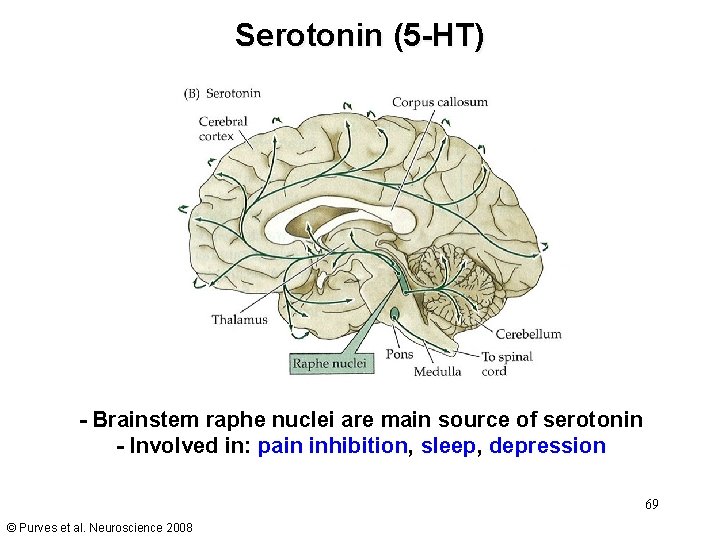
Serotonin (5 -HT) - Brainstem raphe nuclei are main source of serotonin - Involved in: pain inhibition, sleep, depression 69 © Purves et al. Neuroscience 2008
Symptoms of Major Depression Patients must show one of the following: - Depressed mood most of the day - Diminished interest or pleasure in activities most of the day Other Symptoms: - Large increase or decrease in appetite - Insomnia or excessive sleeping - Restlessness or slowness of movement - Fatigue or loss of energy - Indecisiveness or diminished ability to think or concentrate - Feelings of worthlessness or excessive guilt - Recurrent thoughts of death or of suicide 70
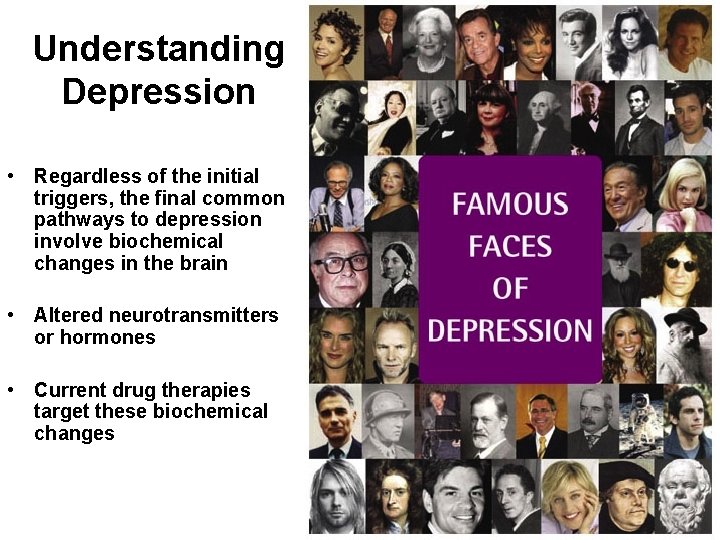
Understanding Depression • Regardless of the initial triggers, the final common pathways to depression involve biochemical changes in the brain • Altered neurotransmitters or hormones • Current drug therapies target these biochemical changes 71
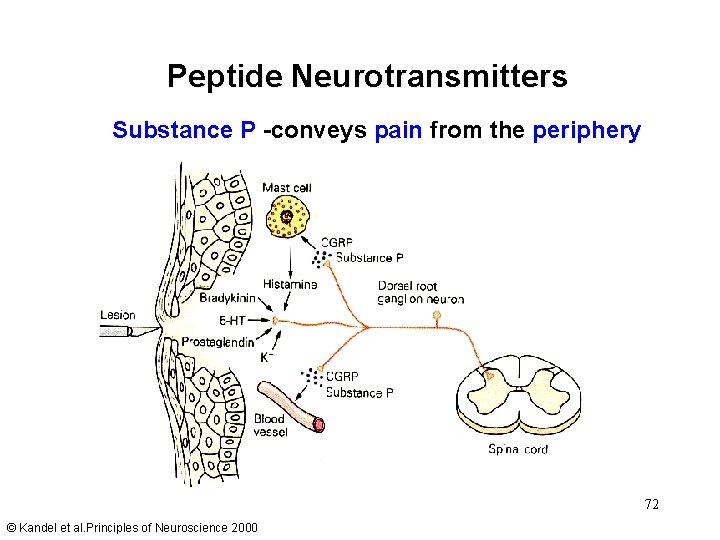
Peptide Neurotransmitters Substance P -conveys pain from the periphery 72 © Kandel et al. Principles of Neuroscience 2000
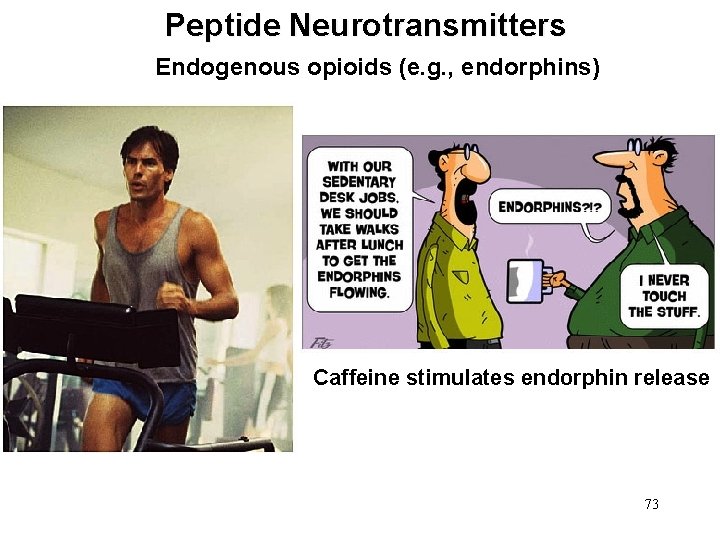
Peptide Neurotransmitters Endogenous opioids (e. g. , endorphins) Caffeine stimulates endorphin release 73
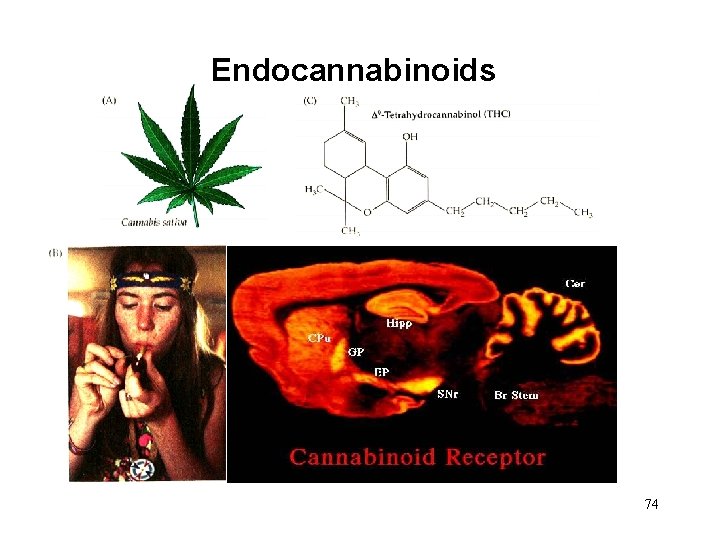
Endocannabinoids 74
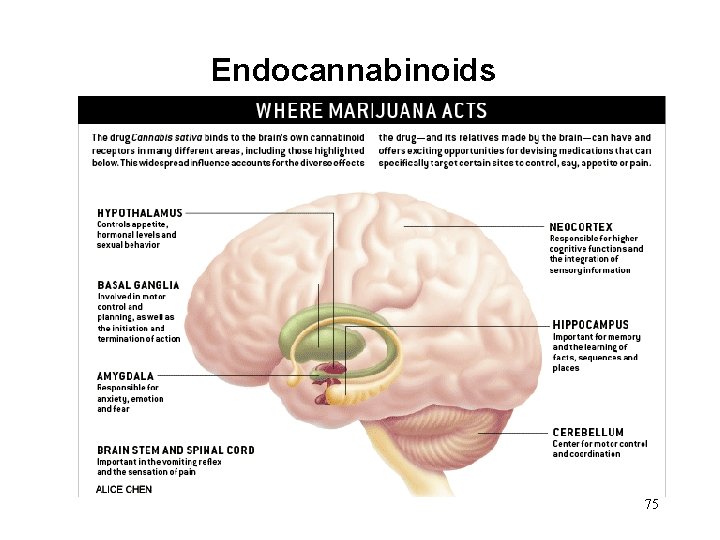
Endocannabinoids 75
http: //learn. genetics. utah. edu/content/addiction/drugs/mouse. html 76
- Slides: 32