
Neurobiology Syllabus 1 A brief history of neuroscience
Neurobiology Syllabus: 1. A brief history of neuroscience. 2. Brain cells – neurons and glia. 3. Membrane equilibrium, Nernst potential. 4. Action potential, Hodgkin and Huxley model. 5. Electrical and chemical synapses. 6. Cable theory. 7. Integration in dendrites. 8. The taste system, the olfactory system, the somatic senses, muscle sense and kinesthesia, the sense of balance, hearing, vision. 9. Motor activity. Reflexes. Locomotion. Central pattern generators. 10. Specific transmitter systems. 11. Emotion. 12. Learning and memory
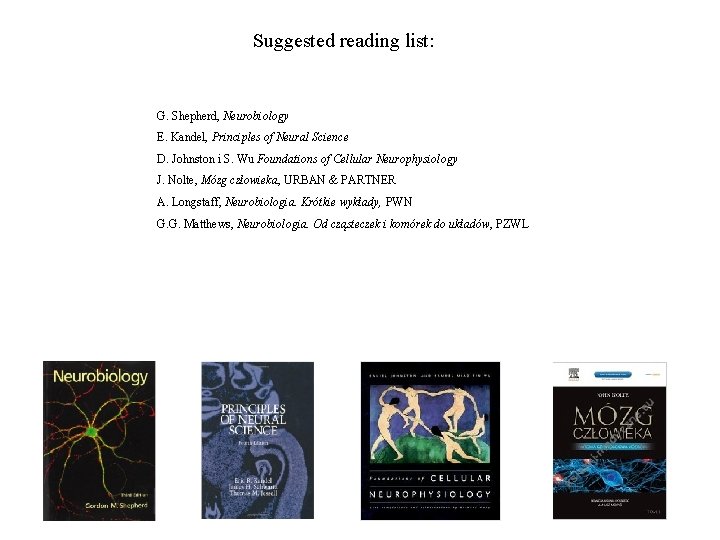
Suggested reading list: G. Shepherd, Neurobiology E. Kandel, Principles of Neural Science D. Johnston i S. Wu Foundations of Cellular Neurophysiology J. Nolte, Mózg człowieka, URBAN & PARTNER A. Longstaff, Neurobiologia. Krótkie wykłady, PWN G. G. Matthews, Neurobiologia. Od cząsteczek i komórek do układów, PZWL

Edwin Smith Surgical Papyrus – 1700 BC (‘yś) - brain
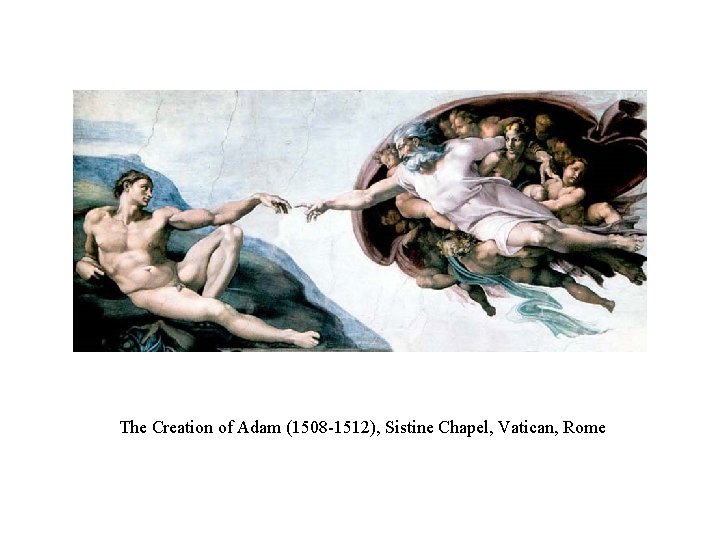
The Creation of Adam (1508 -1512), Sistine Chapel, Vatican, Rome
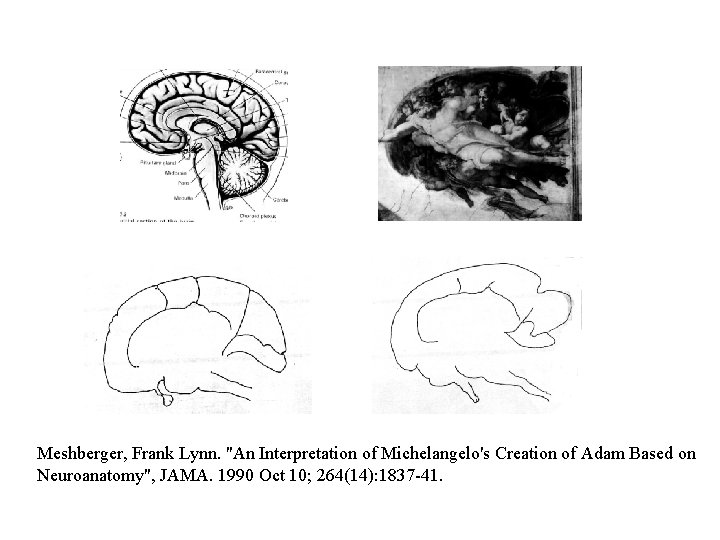
Meshberger, Frank Lynn. "An Interpretation of Michelangelo's Creation of Adam Based on Neuroanatomy", JAMA. 1990 Oct 10; 264(14): 1837 -41.
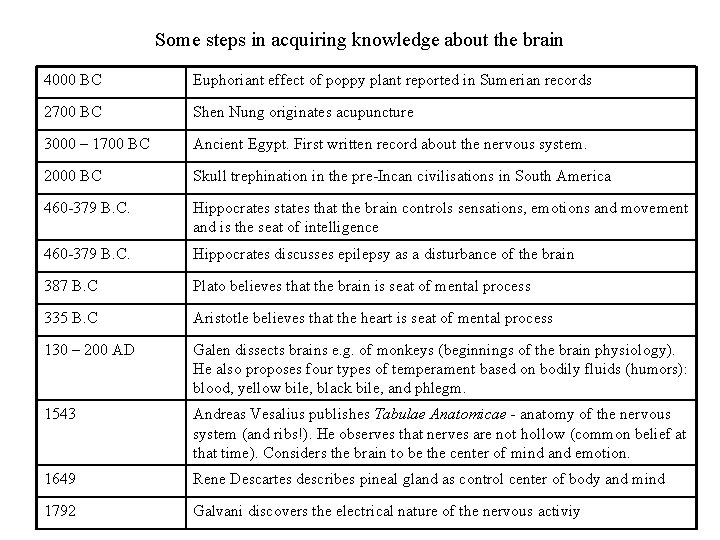
Some steps in acquiring knowledge about the brain 4000 BC Euphoriant effect of poppy plant reported in Sumerian records 2700 BC Shen Nung originates acupuncture 3000 – 1700 BC Ancient Egypt. First written record about the nervous system. 2000 BC Skull trephination in the pre-Incan civilisations in South America 460 -379 B. C. Hippocrates states that the brain controls sensations, emotions and movement and is the seat of intelligence 460 -379 B. C. Hippocrates discusses epilepsy as a disturbance of the brain 387 B. C Plato believes that the brain is seat of mental process 335 B. C Aristotle believes that the heart is seat of mental process 130 – 200 AD Galen dissects brains e. g. of monkeys (beginnings of the brain physiology). He also proposes four types of temperament based on bodily fluids (humors): blood, yellow bile, black bile, and phlegm. 1543 Andreas Vesalius publishes Tabulae Anatomicae - anatomy of the nervous system (and ribs!). He observes that nerves are not hollow (common belief at that time). Considers the brain to be the center of mind and emotion. 1649 Rene Descartes describes pineal gland as control center of body and mind 1792 Galvani discovers the electrical nature of the nervous activiy
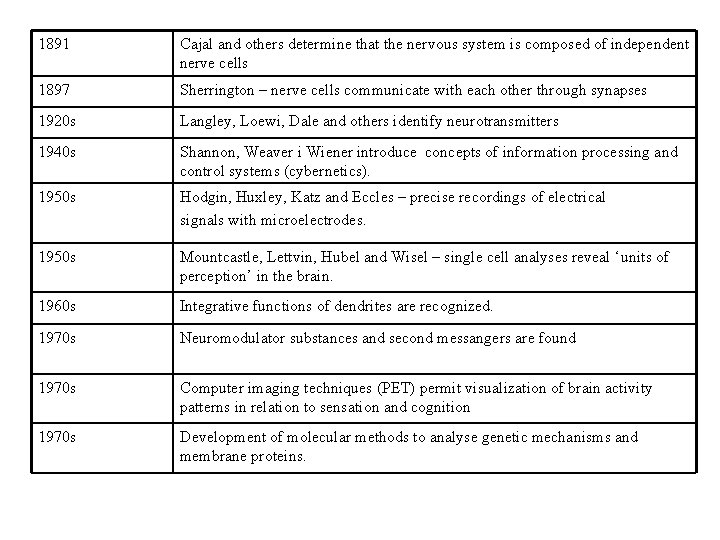
1891 Cajal and others determine that the nervous system is composed of independent nerve cells 1897 Sherrington – nerve cells communicate with each other through synapses 1920 s Langley, Loewi, Dale and others identify neurotransmitters 1940 s Shannon, Weaver i Wiener introduce concepts of information processing and control systems (cybernetics). 1950 s Hodgin, Huxley, Katz and Eccles – precise recordings of electrical signals with microelectrodes. 1950 s Mountcastle, Lettvin, Hubel and Wisel – single cell analyses reveal ‘units of perception’ in the brain. 1960 s Integrative functions of dendrites are recognized. 1970 s Neuromodulator substances and second messangers are found 1970 s Computer imaging techniques (PET) permit visualization of brain activity patterns in relation to sensation and cognition 1970 s Development of molecular methods to analyse genetic mechanisms and membrane proteins.
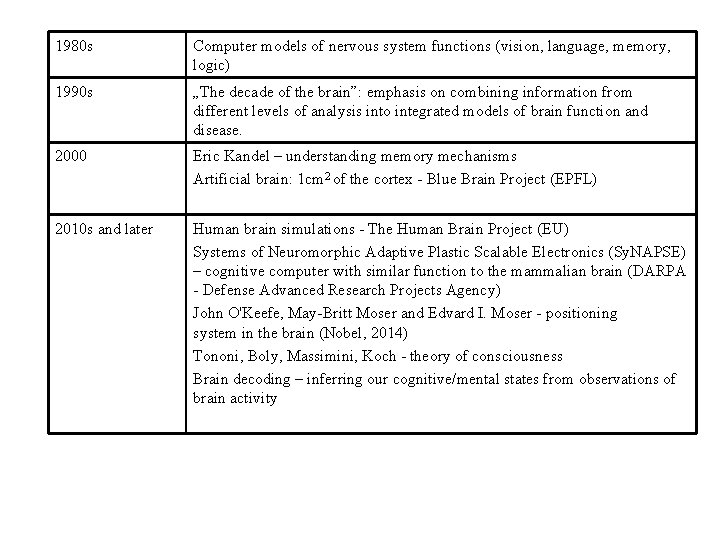
1980 s Computer models of nervous system functions (vision, language, memory, logic) 1990 s „The decade of the brain”: emphasis on combining information from different levels of analysis into integrated models of brain function and disease. 2000 Eric Kandel – understanding memory mechanisms Artificial brain: 1 cm 2 of the cortex - Blue Brain Project (EPFL) 2010 s and later Human brain simulations - The Human Brain Project (EU) Systems of Neuromorphic Adaptive Plastic Scalable Electronics (Sy. NAPSE) – cognitive computer with similar function to the mammalian brain (DARPA - Defense Advanced Research Projects Agency) John O'Keefe, May-Britt Moser and Edvard I. Moser - positioning system in the brain (Nobel, 2014) Tononi, Boly, Massimini, Koch - theory of consciousness Brain decoding – inferring our cognitive/mental states from observations of brain activity
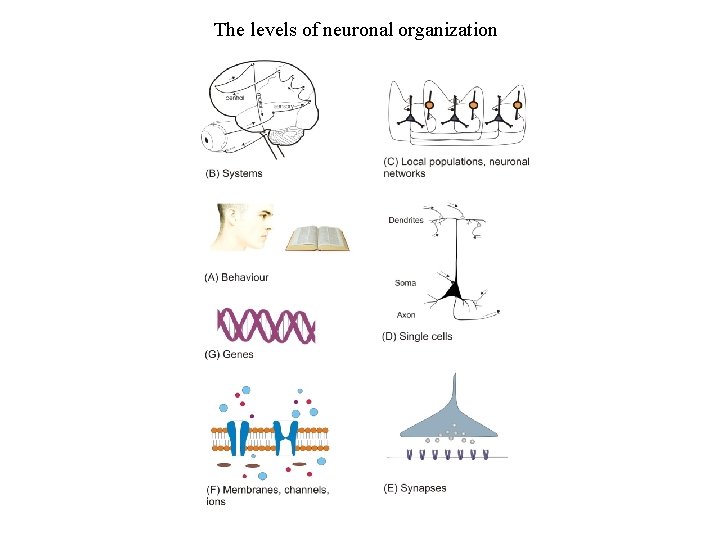
The levels of neuronal organization
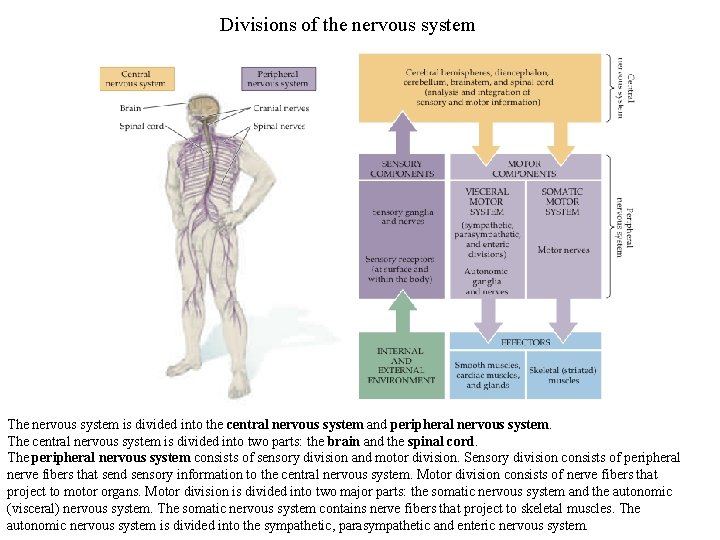
Divisions of the nervous system The nervous system is divided into the central nervous system and peripheral nervous system. The central nervous system is divided into two parts: the brain and the spinal cord. The peripheral nervous system consists of sensory division and motor division. Sensory division consists of peripheral nerve fibers that send sensory information to the central nervous system. Motor division consists of nerve fibers that project to motor organs. Motor division is divided into two major parts: the somatic nervous system and the autonomic (visceral) nervous system. The somatic nervous system contains nerve fibers that project to skeletal muscles. The autonomic nervous system is divided into the sympathetic, parasympathetic and enteric nervous system.
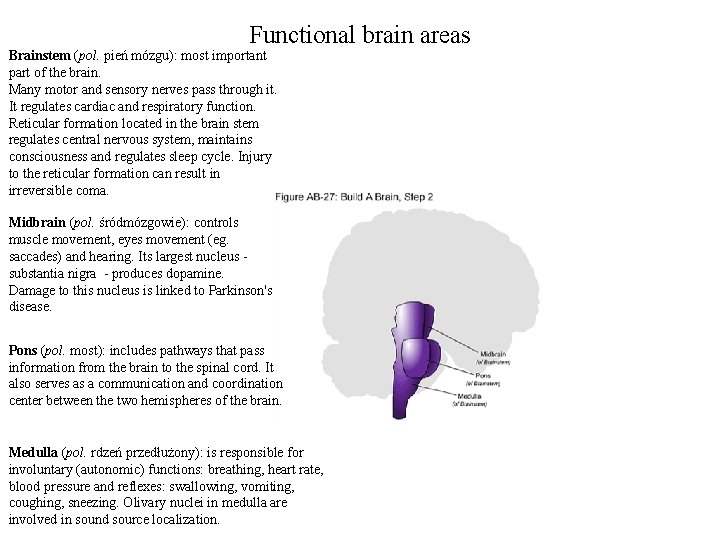
Functional brain areas Brainstem (pol. pień mózgu): most important part of the brain. Many motor and sensory nerves pass through it. It regulates cardiac and respiratory function. Reticular formation located in the brain stem regulates central nervous system, maintains consciousness and regulates sleep cycle. Injury to the reticular formation can result in irreversible coma. Midbrain (pol. śródmózgowie): controls muscle movement, eyes movement (eg. saccades) and hearing. Its largest nucleus - substantia nigra - produces dopamine. Damage to this nucleus is linked to Parkinson's disease. Pons (pol. most): includes pathways that pass information from the brain to the spinal cord. It also serves as a communication and coordination center between the two hemispheres of the brain. Medulla (pol. rdzeń przedłużony): is responsible for involuntary (autonomic) functions: breathing, heart rate, blood pressure and reflexes: swallowing, vomiting, coughing, sneezing. Olivary nuclei in medulla are involved in sound source localization.
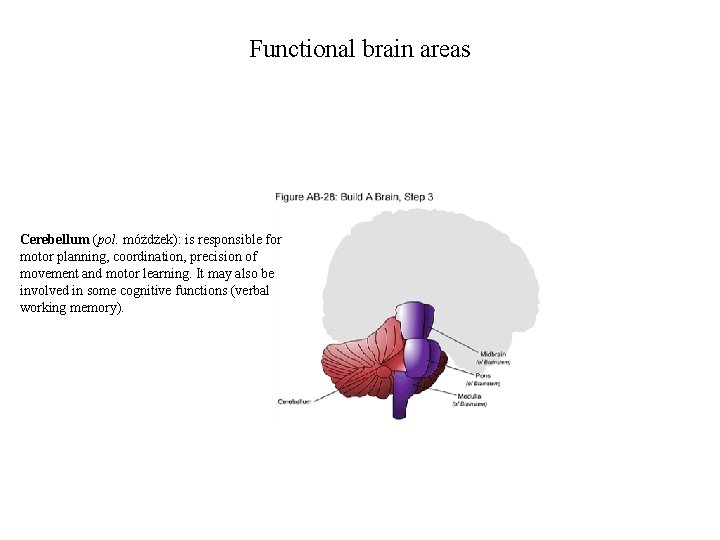
Functional brain areas Cerebellum (pol. móżdżek): is responsible for motor planning, coordination, precision of movement and motor learning. It may also be involved in some cognitive functions (verbal working memory).
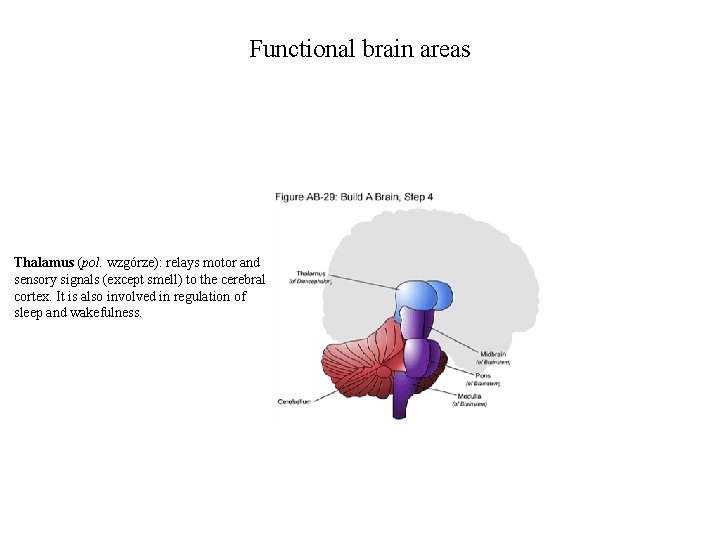
Functional brain areas Thalamus (pol. wzgórze): relays motor and sensory signals (except smell) to the cerebral cortex. It is also involved in regulation of sleep and wakefulness.
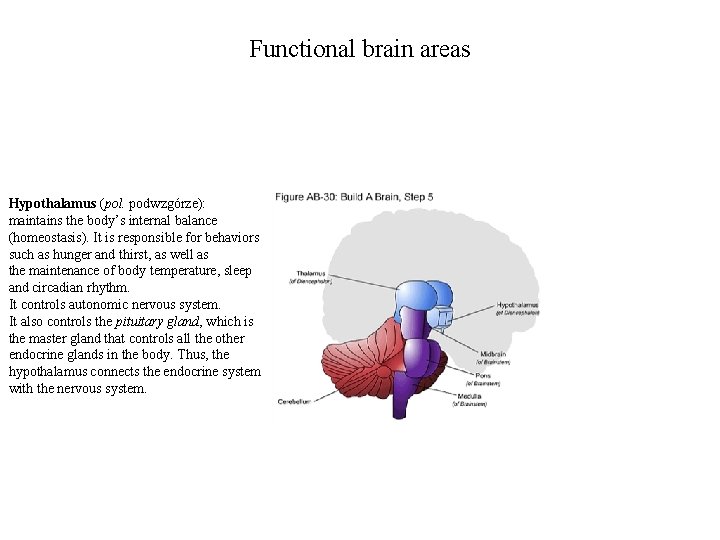
Functional brain areas Hypothalamus (pol. podwzgórze): maintains the body’s internal balance (homeostasis). It is responsible for behaviors such as hunger and thirst, as well as the maintenance of body temperature, sleep and circadian rhythm. It controls autonomic nervous system. It also controls the pituitary gland, which is the master gland that controls all the other endocrine glands in the body. Thus, the hypothalamus connects the endocrine system with the nervous system.
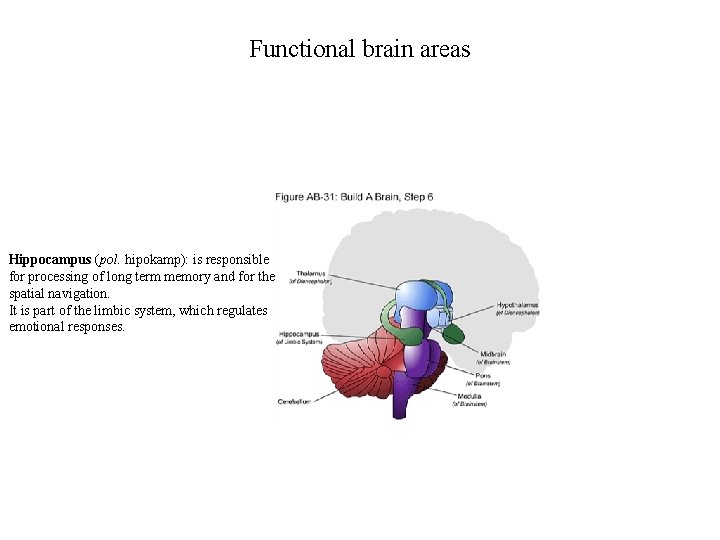
Functional brain areas Hippocampus (pol. hipokamp): is responsible for processing of long term memory and for the spatial navigation. It is part of the limbic system, which regulates emotional responses.
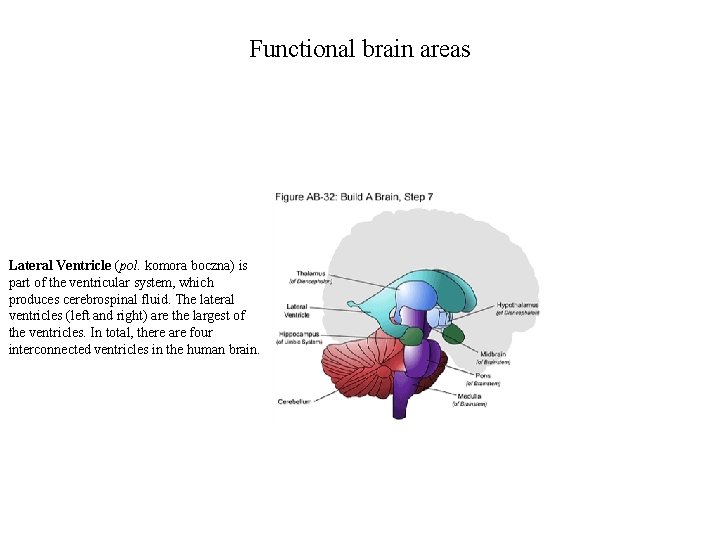
Functional brain areas Lateral Ventricle (pol. komora boczna) is part of the ventricular system, which produces cerebrospinal fluid. The lateral ventricles (left and right) are the largest of the ventricles. In total, there are four interconnected ventricles in the human brain.
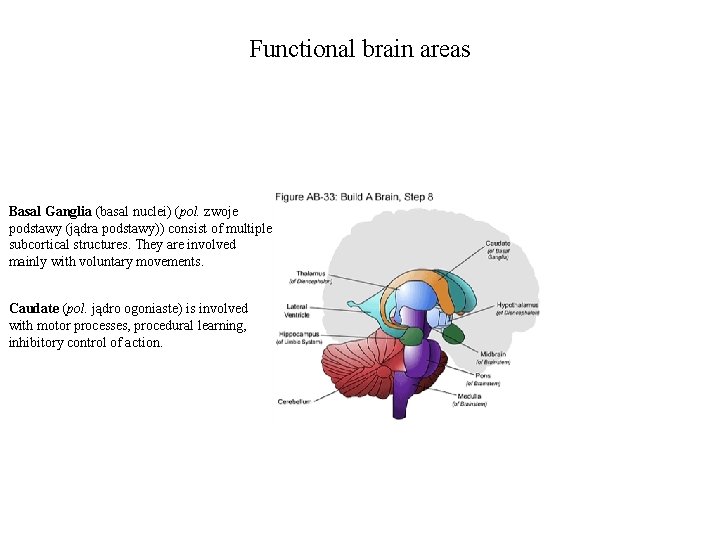
Functional brain areas Basal Ganglia (basal nuclei) (pol. zwoje podstawy (jądra podstawy)) consist of multiple subcortical structures. They are involved mainly with voluntary movements. Caudate (pol. jądro ogoniaste) is involved with motor processes, procedural learning, inhibitory control of action.
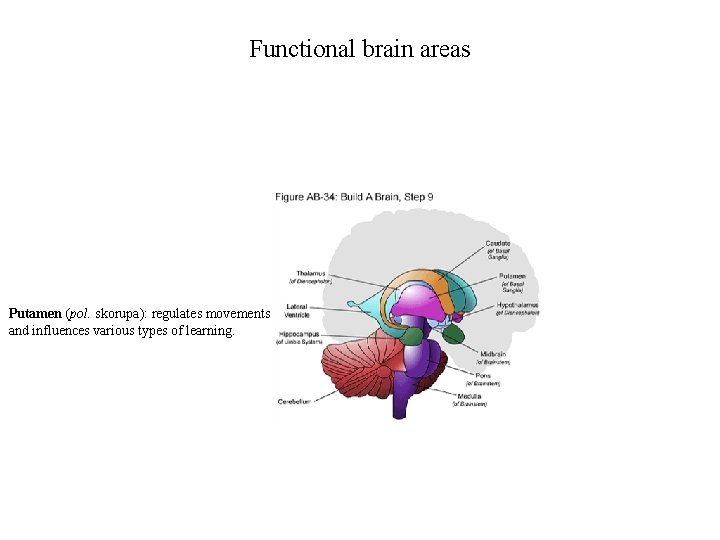
Functional brain areas Putamen (pol. skorupa): regulates movements and influences various types of learning.
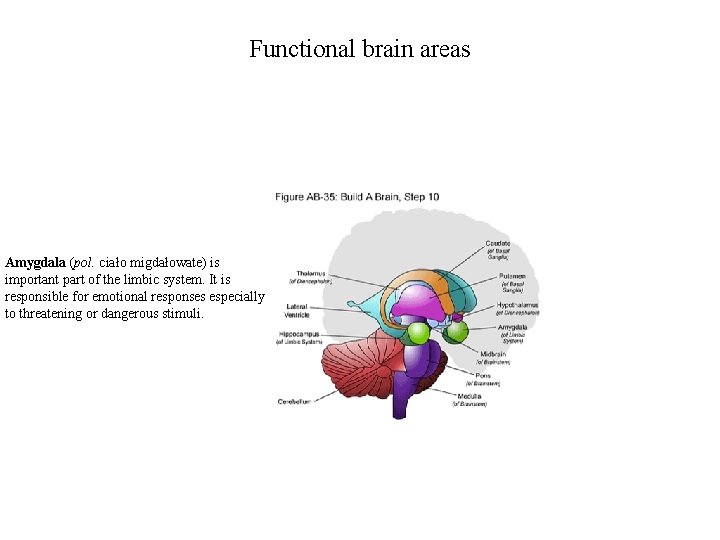
Functional brain areas Amygdala (pol. ciało migdałowate) is important part of the limbic system. It is responsible for emotional responses especially to threatening or dangerous stimuli.
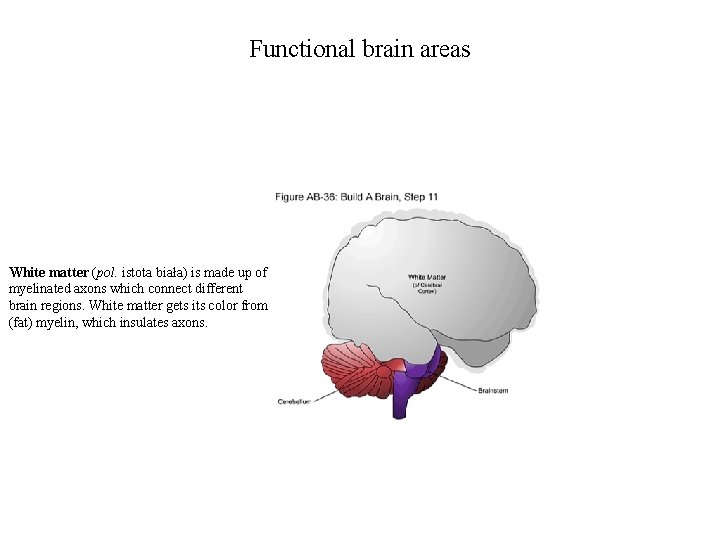
Functional brain areas White matter (pol. istota biała) is made up of myelinated axons which connect different brain regions. White matter gets its color from (fat) myelin, which insulates axons.
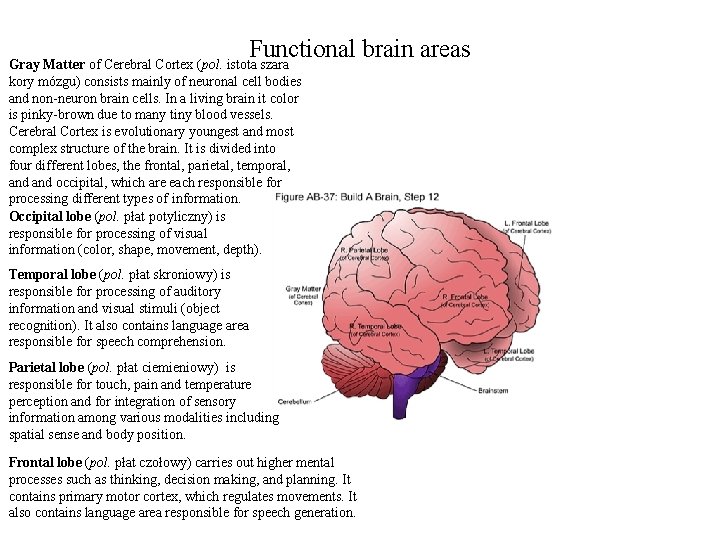
Functional brain areas Gray Matter of Cerebral Cortex (pol. istota szara kory mózgu) consists mainly of neuronal cell bodies and non-neuron brain cells. In a living brain it color is pinky-brown due to many tiny blood vessels. Cerebral Cortex is evolutionary youngest and most complex structure of the brain. It is divided into four different lobes, the frontal, parietal, temporal, and occipital, which are each responsible for processing different types of information. Occipital lobe (pol. płat potyliczny) is responsible for processing of visual information (color, shape, movement, depth). Temporal lobe (pol. płat skroniowy) is responsible for processing of auditory information and visual stimuli (object recognition). It also contains language area responsible for speech comprehension. Parietal lobe (pol. płat ciemieniowy) is responsible for touch, pain and temperature perception and for integration of sensory information among various modalities including spatial sense and body position. Frontal lobe (pol. płat czołowy) carries out higher mental processes such as thinking, decision making, and planning. It contains primary motor cortex, which regulates movements. It also contains language area responsible for speech generation.
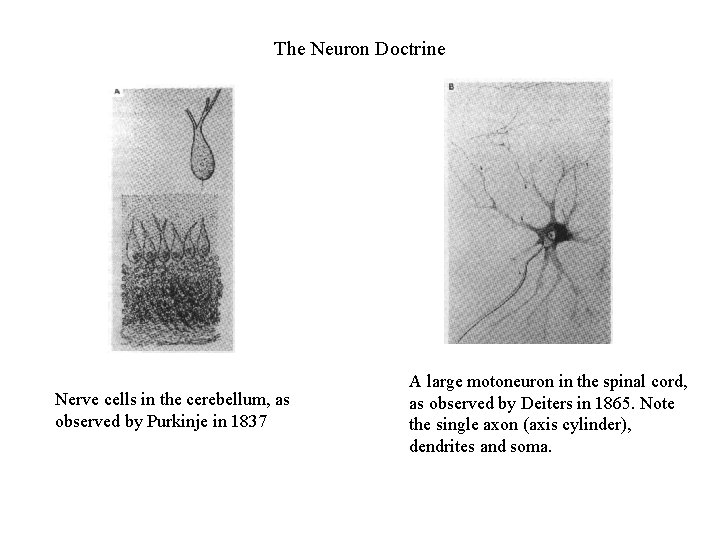
The Neuron Doctrine Nerve cells in the cerebellum, as observed by Purkinje in 1837 A large motoneuron in the spinal cord, as observed by Deiters in 1865. Note the single axon (axis cylinder), dendrites and soma.
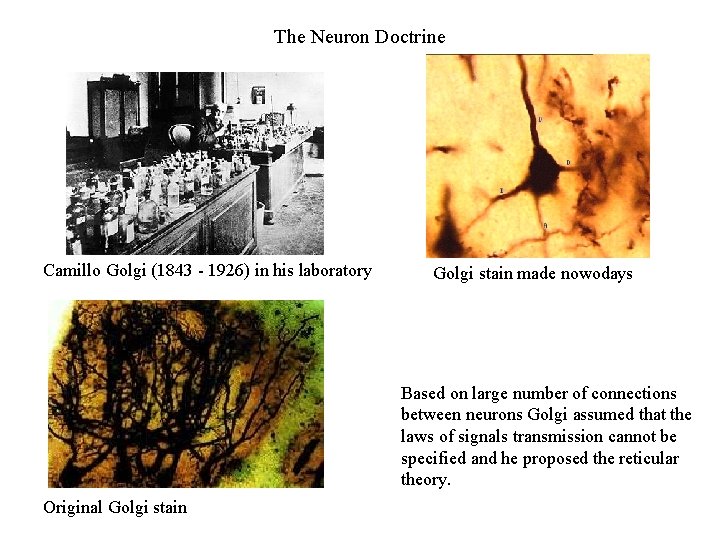
The Neuron Doctrine Camillo Golgi (1843 - 1926) in his laboratory Golgi stain made nowodays Based on large number of connections between neurons Golgi assumed that the laws of signals transmission cannot be specified and he proposed the reticular theory. Original Golgi stain
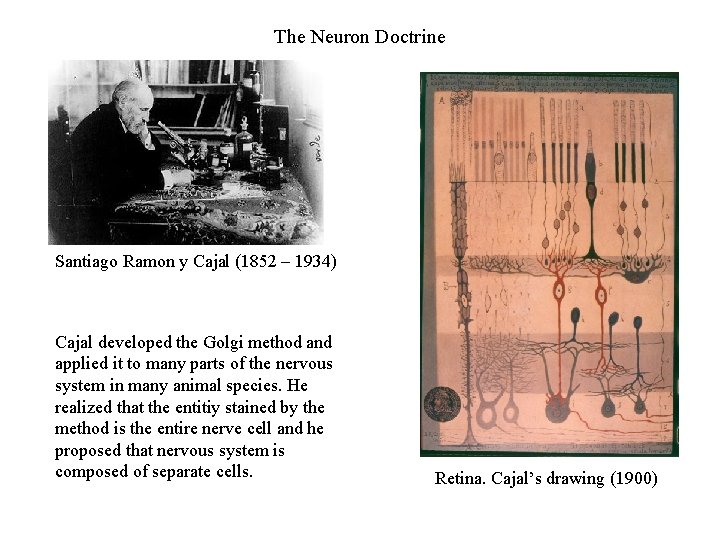
The Neuron Doctrine Santiago Ramon y Cajal (1852 – 1934) Cajal developed the Golgi method and applied it to many parts of the nervous system in many animal species. He realized that the entitiy stained by the method is the entire nerve cell and he proposed that nervous system is composed of separate cells. Retina. Cajal’s drawing (1900)
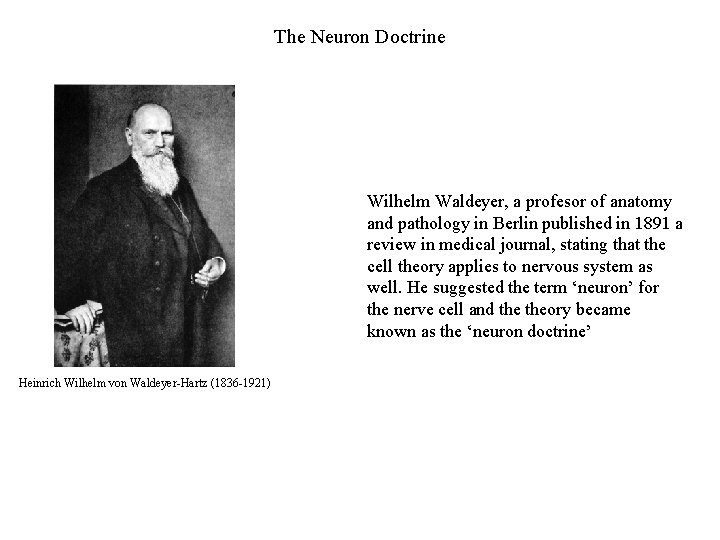
The Neuron Doctrine Wilhelm Waldeyer, a profesor of anatomy and pathology in Berlin published in 1891 a review in medical journal, stating that the cell theory applies to nervous system as well. He suggested the term ‘neuron’ for the nerve cell and theory became known as the ‘neuron doctrine’ Heinrich Wilhelm von Waldeyer-Hartz (1836 -1921)
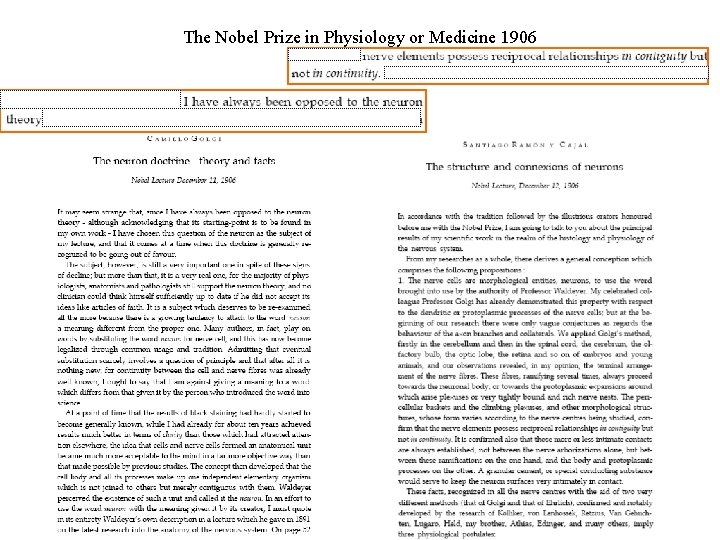
The Nobel Prize in Physiology or Medicine 1906
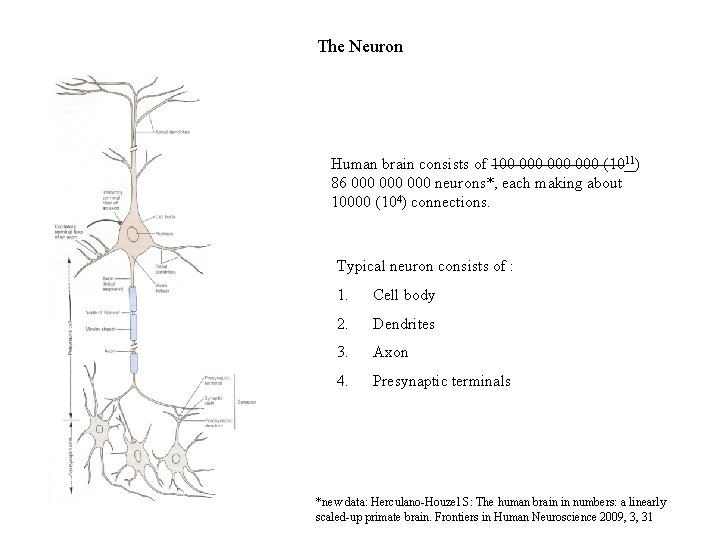
The Neuron Human brain consists of 100 000 000 (1011) 86 000 000 neurons*, each making about 10000 (104) connections. Typical neuron consists of : 1. Cell body 2. Dendrites 3. Axon 4. Presynaptic terminals *new data: Herculano-Houzel S: The human brain in numbers: a linearly scaled-up primate brain. Frontiers in Human Neuroscience 2009, 3, 31
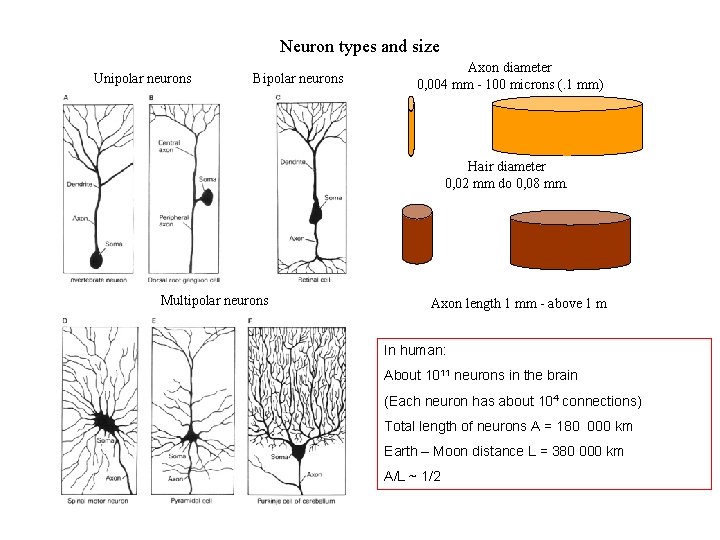
Neuron types and size Unipolar neurons Bipolar neurons Axon diameter 0, 004 mm - 100 microns (. 1 mm) Hair diameter 0, 02 mm do 0, 08 mm. Multipolar neurons Axon length 1 mm - above 1 m In human: About 1011 neurons in the brain (Each neuron has about 104 connections) Total length of neurons A = 180 000 km Earth – Moon distance L = 380 000 km A/L ~ 1/2
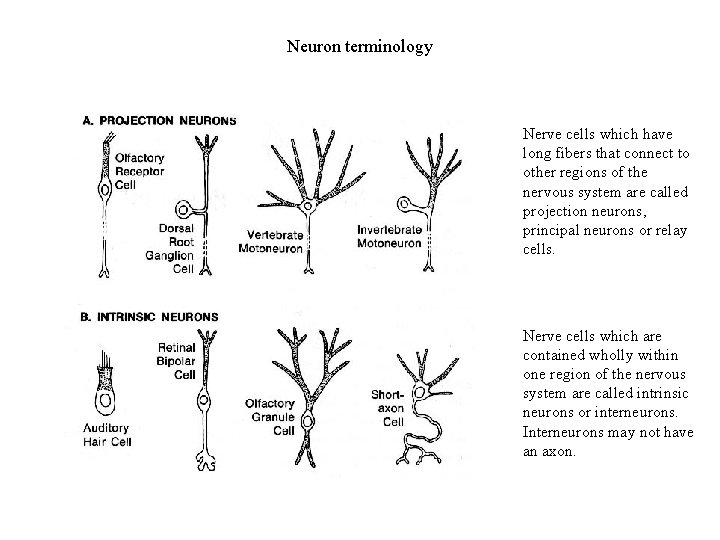
Neuron terminology Nerve cells which have long fibers that connect to other regions of the nervous system are called projection neurons, principal neurons or relay cells. Nerve cells which are contained wholly within one region of the nervous system are called intrinsic neurons or interneurons. Interneurons may not have an axon.
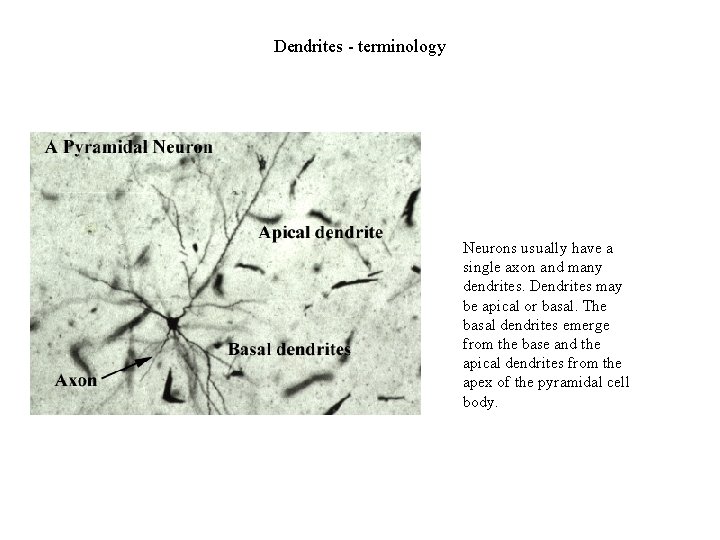
Dendrites - terminology Neurons usually have a single axon and many dendrites. Dendrites may be apical or basal. The basal dendrites emerge from the base and the apical dendrites from the apex of the pyramidal cell body.
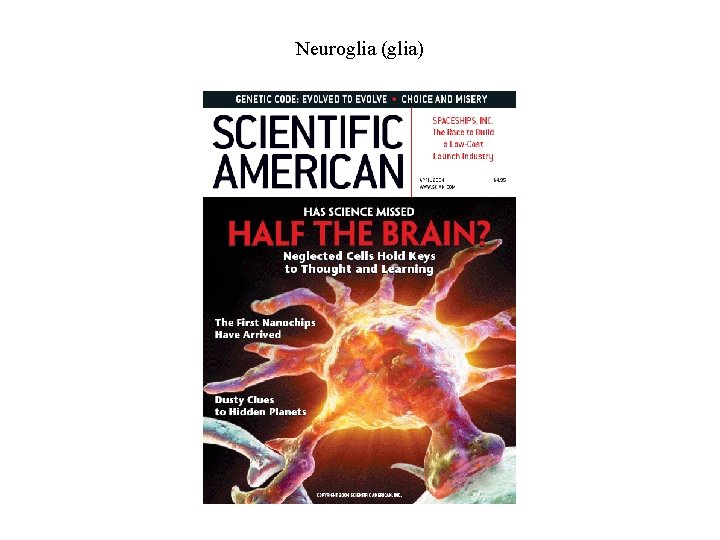
Neuroglia (glia)
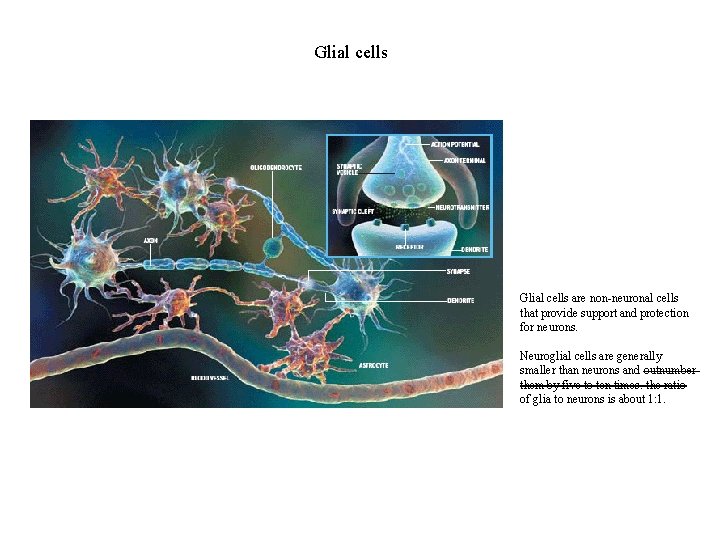
Glial cells are non-neuronal cells that provide support and protection for neurons. Neuroglial cells are generally smaller than neurons and outnumber them by five to ten times. the ratio of glia to neurons is about 1: 1.
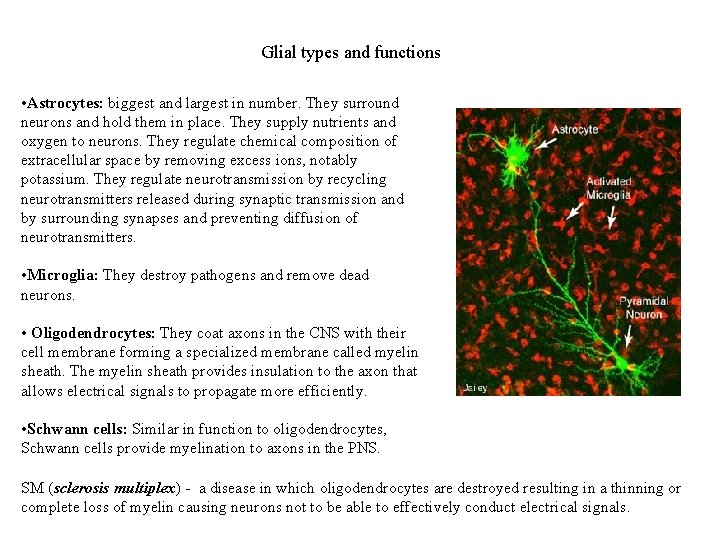
Glial types and functions • Astrocytes: biggest and largest in number. They surround neurons and hold them in place. They supply nutrients and oxygen to neurons. They regulate chemical composition of extracellular space by removing excess ions, notably potassium. They regulate neurotransmission by recycling neurotransmitters released during synaptic transmission and by surrounding synapses and preventing diffusion of neurotransmitters. • Microglia: They destroy pathogens and remove dead neurons. • Oligodendrocytes: They coat axons in the CNS with their cell membrane forming a specialized membrane called myelin sheath. The myelin sheath provides insulation to the axon that allows electrical signals to propagate more efficiently. • Schwann cells: Similar in function to oligodendrocytes, Schwann cells provide myelination to axons in the PNS. SM (sclerosis multiplex) - a disease in which oligodendrocytes are destroyed resulting in a thinning or complete loss of myelin causing neurons not to be able to effectively conduct electrical signals.
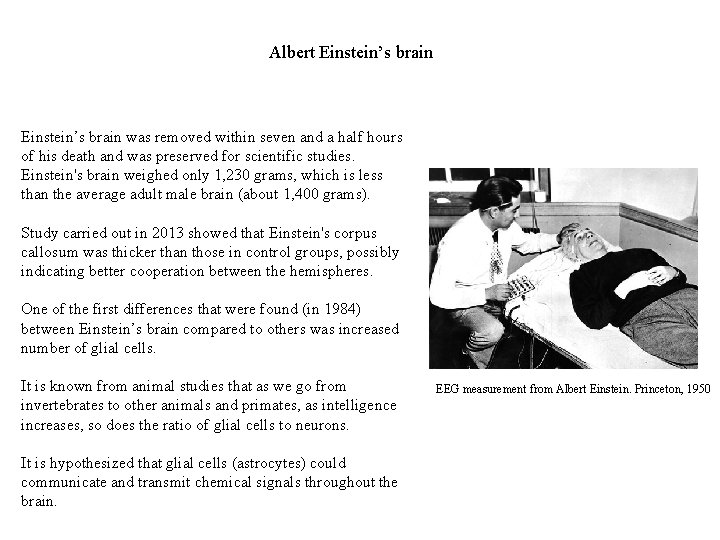
Albert Einstein’s brain was removed within seven and a half hours of his death and was preserved for scientific studies. Einstein's brain weighed only 1, 230 grams, which is less than the average adult male brain (about 1, 400 grams). Study carried out in 2013 showed that Einstein's corpus callosum was thicker than those in control groups, possibly indicating better cooperation between the hemispheres. One of the first differences that were found (in 1984) between Einstein’s brain compared to others was increased number of glial cells. It is known from animal studies that as we go from invertebrates to other animals and primates, as intelligence increases, so does the ratio of glial cells to neurons. It is hypothesized that glial cells (astrocytes) could communicate and transmit chemical signals throughout the brain. EEG measurement from Albert Einstein. Princeton, 1950
- Slides: 34