
Neurobiology of Social Behavior Animal Social Behaviors Agonistic
Neurobiology of Social Behavior
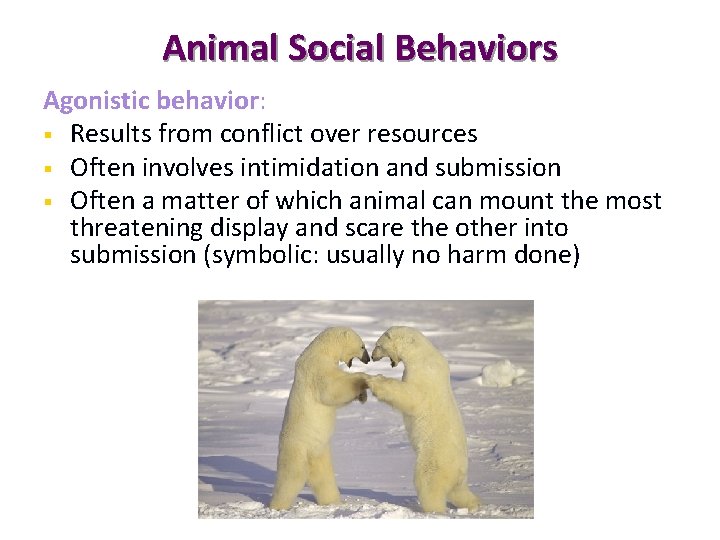
Animal Social Behaviors Agonistic behavior: § Results from conflict over resources § Often involves intimidation and submission § Often a matter of which animal can mount the most threatening display and scare the other into submission (symbolic: usually no harm done)
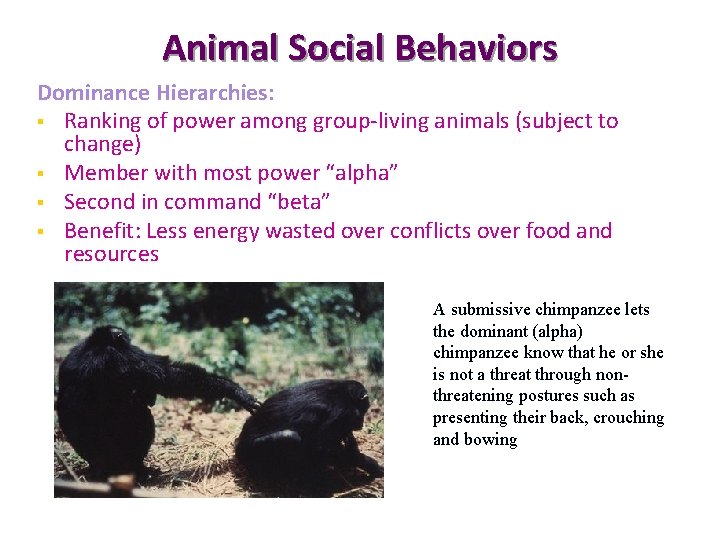
Animal Social Behaviors Dominance Hierarchies: § Ranking of power among group-living animals (subject to change) § Member with most power “alpha” § Second in command “beta” § Benefit: Less energy wasted over conflicts over food and resources A submissive chimpanzee lets the dominant (alpha) chimpanzee know that he or she is not a threat through nonthreatening postures such as presenting their back, crouching and bowing
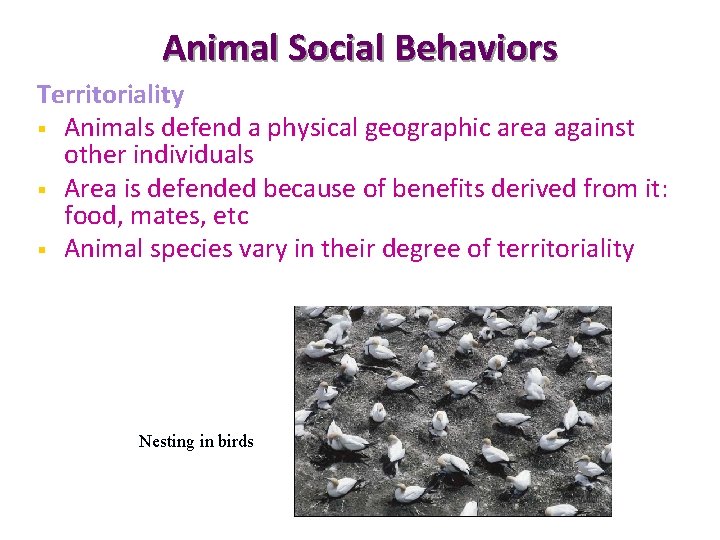
Animal Social Behaviors Territoriality § Animals defend a physical geographic area against other individuals § Area is defended because of benefits derived from it: food, mates, etc § Animal species vary in their degree of territoriality Nesting in birds
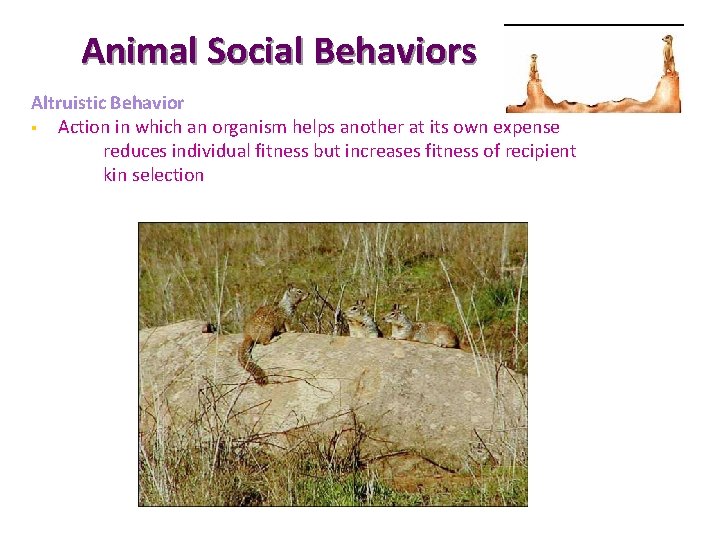
Animal Social Behaviors Altruistic Behavior § Action in which an organism helps another at its own expense reduces individual fitness but increases fitness of recipient kin selection
Animal Communication Animals communicate in many ways…communication need not always be vocal Ø Chemical communication Ø Visual communication Ø Auditory communication Ø Tactile communication n
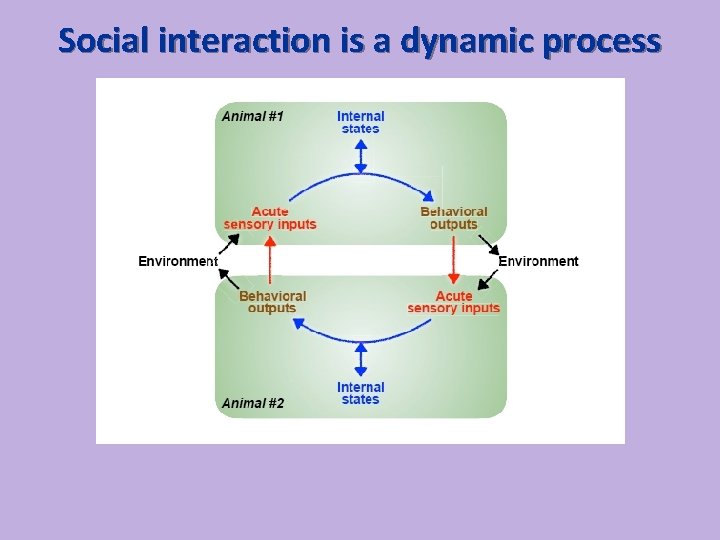
Social interaction is a dynamic process
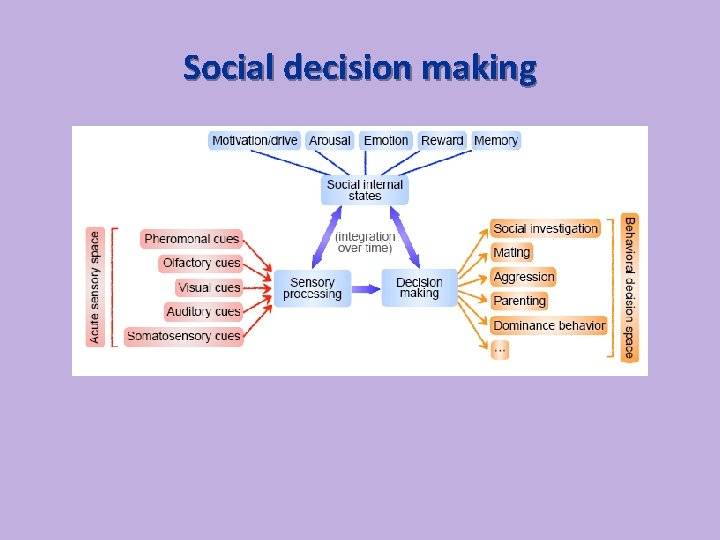
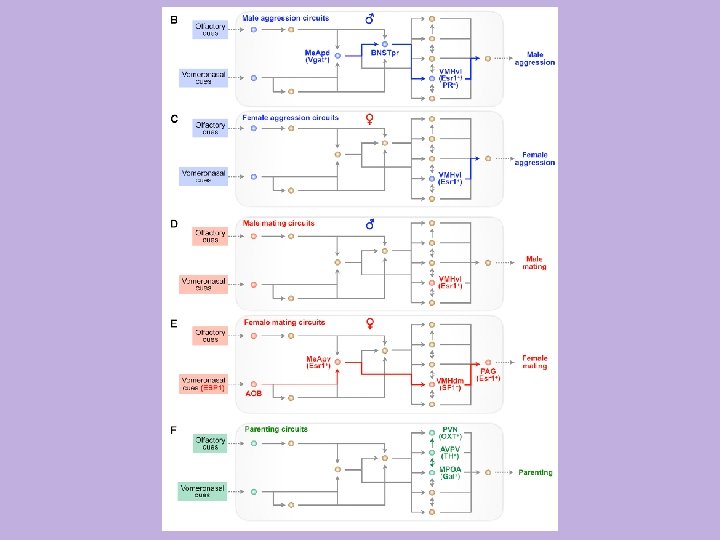
Social decision making
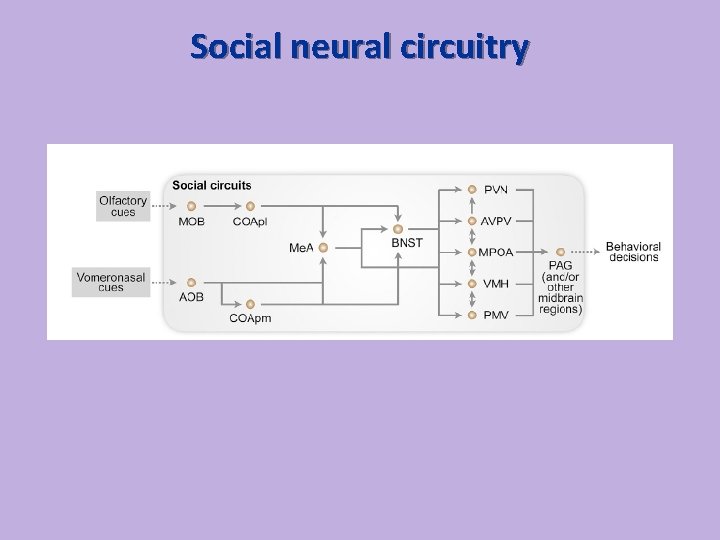
Social neural circuitry
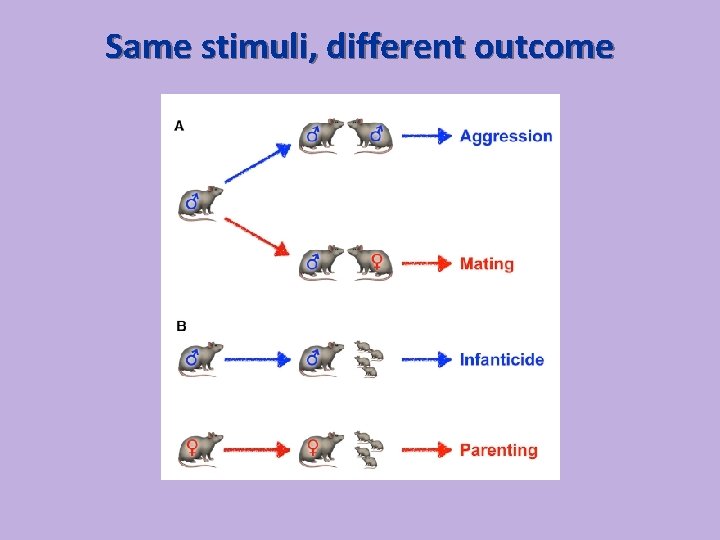
Same stimuli, different outcome
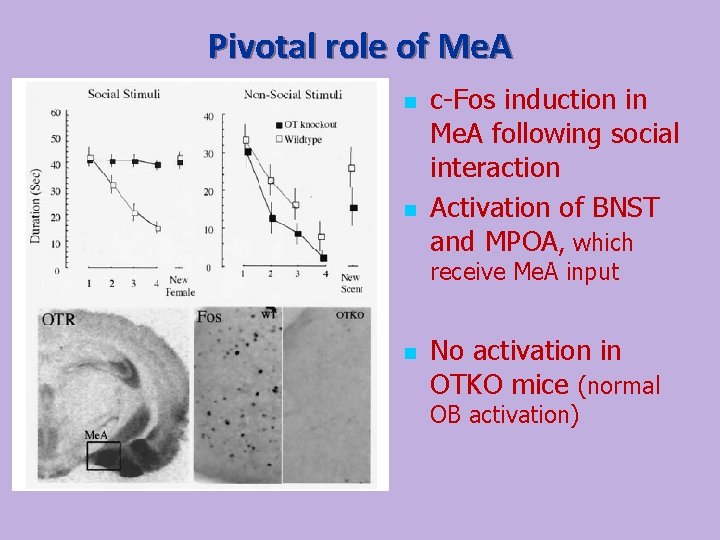
Pivotal role of Me. A n n c-Fos induction in Me. A following social interaction Activation of BNST and MPOA, which receive Me. A input n No activation in OTKO mice (normal OB activation)
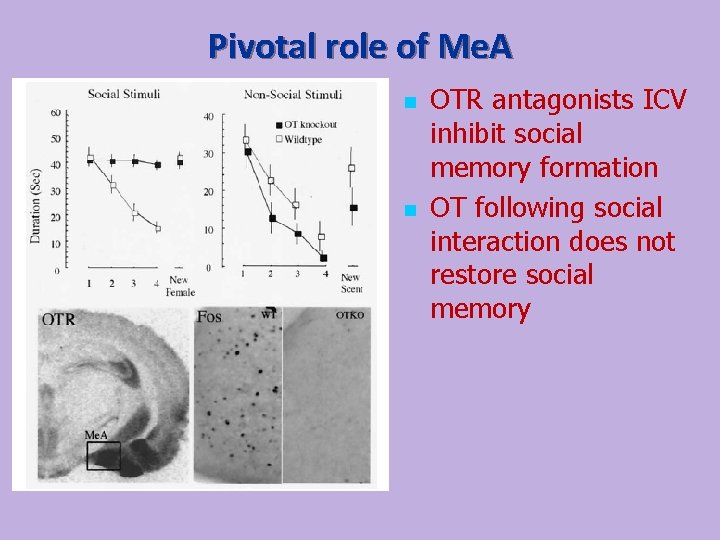
Pivotal role of Me. A n n OTR antagonists ICV inhibit social memory formation OT following social interaction does not restore social memory
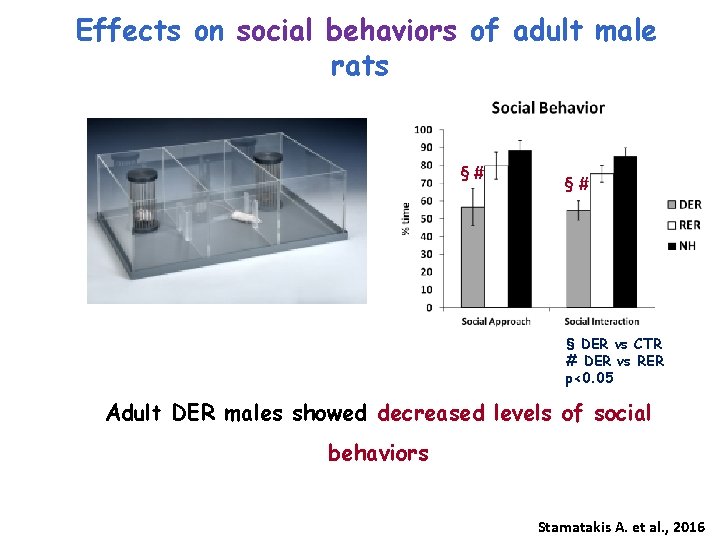
Effects on social behaviors of adult male rats §# §# § DER vs CTR # DER vs RER p<0. 05 Adult DER males showed decreased levels of social behaviors Stamatakis A. et al. , 2016
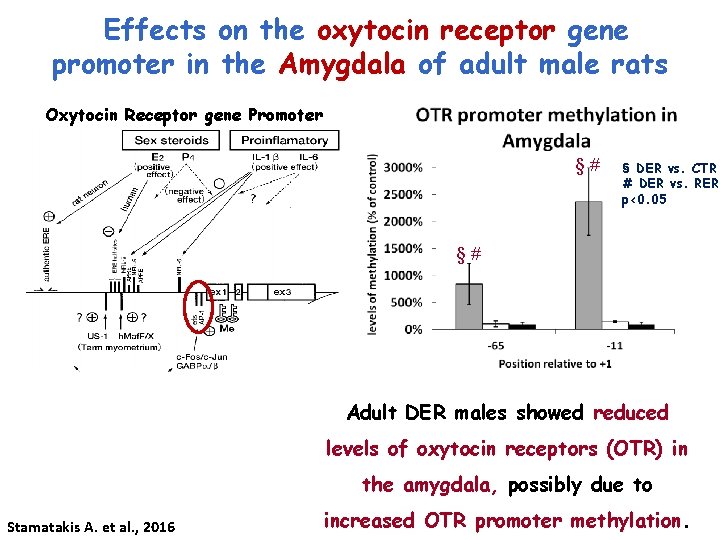
Effects on the oxytocin receptor gene promoter in the Amygdala of adult male rats Oxytocin Receptor gene Promoter §# § DER vs. CTR # DER vs. RER p<0. 05 §# Adult DER males showed reduced levels of oxytocin receptors (OTR) in the amygdala, possibly due to Stamatakis A. et al. , 2016 increased OTR promoter methylation.

The Neurobiology of Aggression and Violence
Aggression n Reactive: n Non- premeditated attach to an object/person considered as source of threat or frustration n Instrumental: n Premeditated , with a specific purpose (involves executive functions)
n Aggression: The intend to cause harm n Dominance: Control of available resources (food, space, reproduction…) n Aggression is used to achieve dominance n Violence: The action causing harm
Two Types of Violence 1. Affective, impulsive, 2. Predatory, purposeless premeditated, instrumental n Typical of acquired sociopathy n Typical of antisocial personality disorder n Orbitofrontal pathology on n Associated with both structural imaging orbitofrontal and (Brower and Price, J Neurol amygdala dysfunction Neurosurg Psychiatry 2001; 71: 720 -726) (Glenn and Raine, Psychiatric Clin N Am 2008: 31: 463 -475)
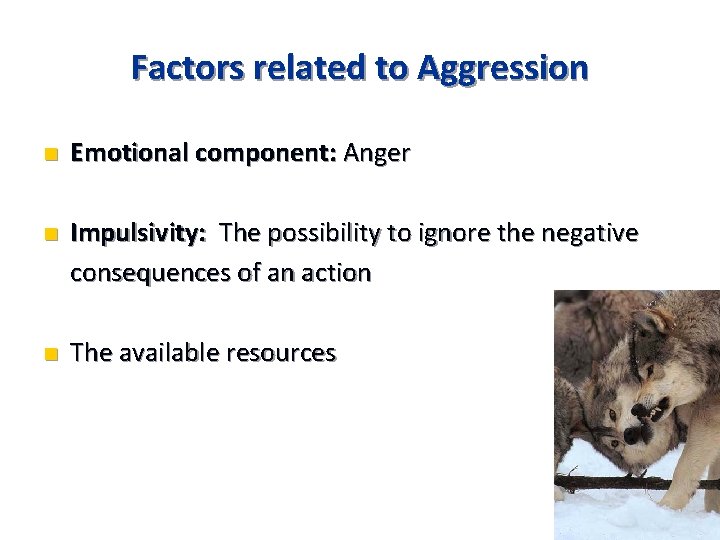
Factors related to Aggression n Emotional component: Anger n Impulsivity: The possibility to ignore the negative consequences of an action n The available resources
Aggression and sex steroids n In most mammals there is a sex difference in aggression and violent behaviour n In some species, there is seasonal variation: Higher aggressiveness when T is higher n In rats, castration reduces aggressiveness, which is restored by exogenous T
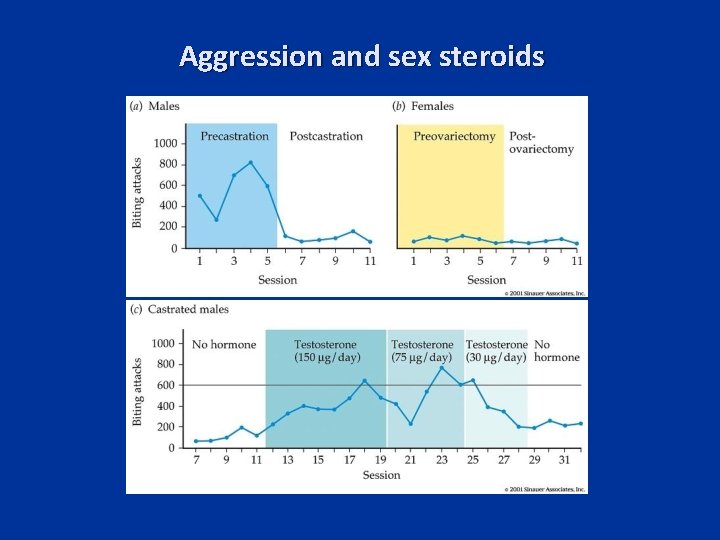
Aggression and sex steroids
Aggression androgens n n The simple hypothesis: T causes aggression, thus males are more aggressive Alternative hypotheses: n n n T is related to specific types of aggression Threshold beyond which T is related to aggression T is related to dominance and not to aggression T has minimal influence on aggression, which is modified by experience T is related to aggression while Serotonin with impulsivity
T interacts with serotonin influencing types of aggression n In primates, CSF Τ levels are correlated with aggression within a social group (especially alphamales) but not with impulsivity Low levels of 5 -HT metabolites are linked with impulsivity and inability to control aggressiveness In primates, impulsive aggression is correlated with a concomitant high T and low 5 -HIAA
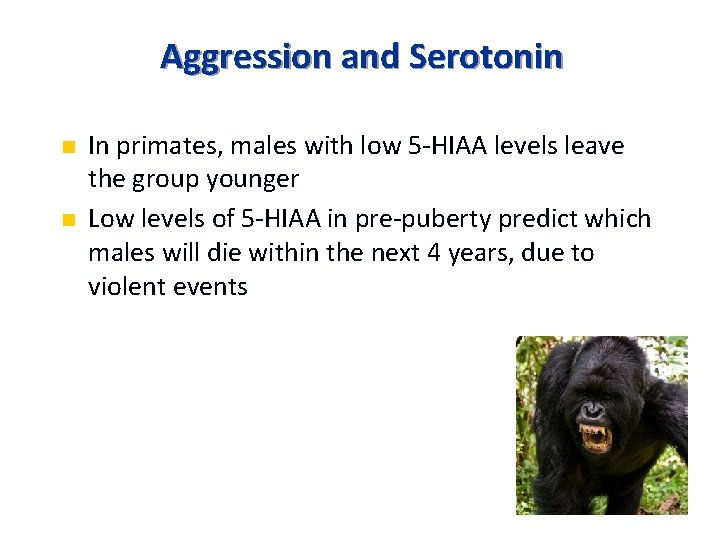
Aggression and Serotonin n n In primates, males with low 5 -HIAA levels leave the group younger Low levels of 5 -HIAA in pre-puberty predict which males will die within the next 4 years, due to violent events
Aggression and Serotonin n Serotonin levels are negatively correlated with aggression n Lesion of 5 -HT axons in the PFC, enhances aggression n Levels of 5 -HIAA are lower in aggressive males (risk taking behaviors) n Very low levels of CSF 5 -HIAA in those with a record of violent and impulsive aggression n SSRIs reduce aggressiveness
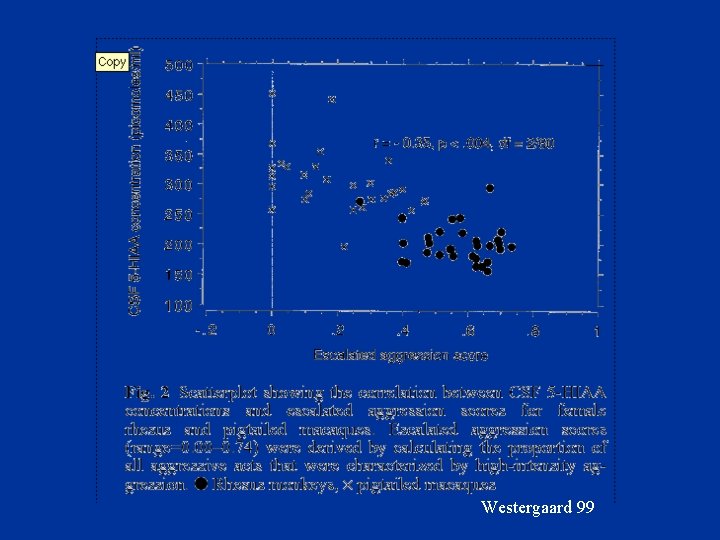
Westergaard 99
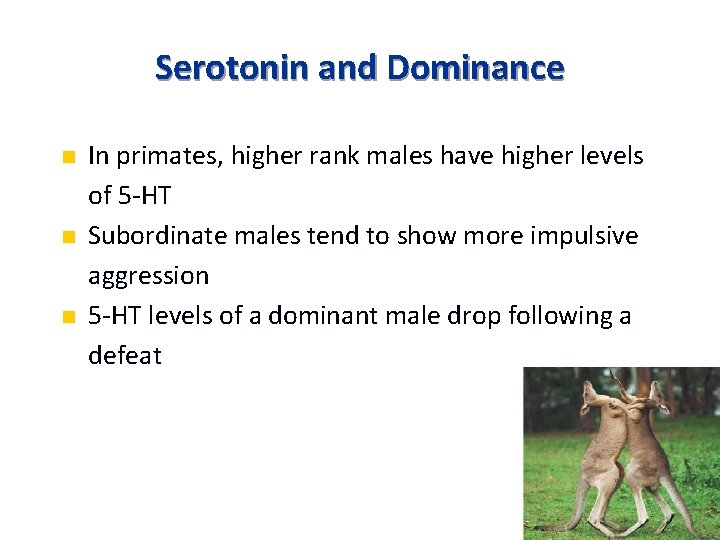
Serotonin and Dominance n n n In primates, higher rank males have higher levels of 5 -HT Subordinate males tend to show more impulsive aggression 5 -HT levels of a dominant male drop following a defeat
Serotonin and Dominance n n n 5 -HT levels of a candidate alpha male are in the average range, until he becomes alpha. 5 -HT levels increase possibly due to social stimuli e. g. females’ interest Pharmacological manipulation of 5 -HT levels influence dominance In the absence of an alpha male, higher 5 -HT levels promote “social ascent”
Brain areas controlling aggression
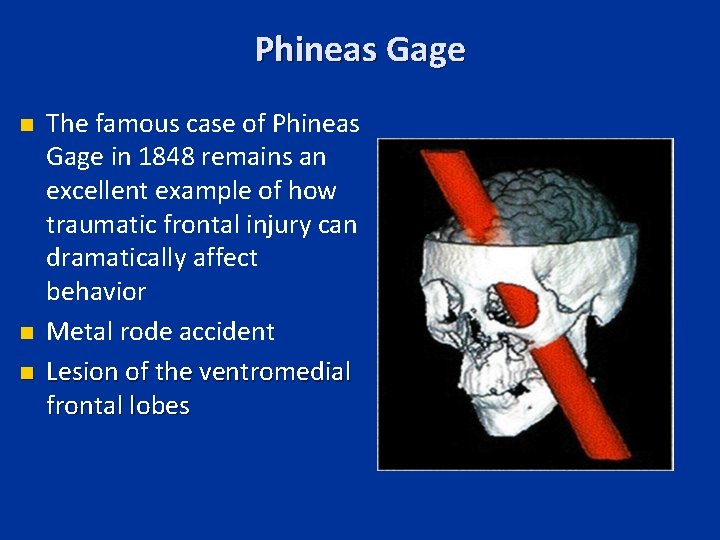
Phineas Gage n n n The famous case of Phineas Gage in 1848 remains an excellent example of how traumatic frontal injury can dramatically affect behavior Metal rode accident Lesion of the ventromedial frontal lobes
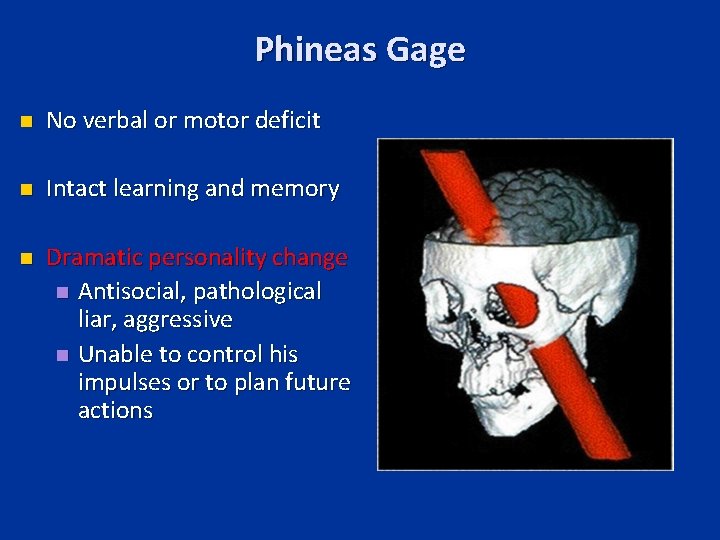
Phineas Gage n No verbal or motor deficit n Intact learning and memory n Dramatic personality change n Antisocial, pathological liar, aggressive n Unable to control his impulses or to plan future actions
More Recent Investigation n The Vietnam Head Injury Study demonstrated that veterans with penetrating wounds of the ventromedial frontal lobes had a higher frequency of aggressive and violent behavior than control subjects, or veterans with lesions elsewhere in the brain Grafman et al. Neurology 1996; 46; 1231 -1238
Neuroanatomy of Aggression and Violence n n n The frontal lobes, particularly the orbitofrontal cortices, are prominent because of their critical role in social cognition and impulse control Limbic structures, particularly the amygdala, are implicated because of their mediation of basic emotion and drive-related behavior Structural and functional neuroimaging studies steadily add new data to establish these affiliations with more certainty
The Frontal Lobes in Violence and Criminality n n n Focal frontal lesions aggressive dys-control Orbitofrontal lesions are most implicated, and impulsive violence is more likely than predatory Reduced density of neurons (reduced N-acetylaspartate in proton magnetic resonance spectroscopy) (Chritchley, et. al. 2000) n Frontal lobe lesions do not predict violent crime, but may increase the risk of violence by 10% over the base rate for a given population J Neurol Neurosurg Psychiatry 2001; 71: 720 -726
The Limbic System n n Electric stimulation or tumor in the amygdala increase all types of aggression In rats, septal lesions increase foraging aggression but not social aggression Violence occurs when temporolimbic “bottom-up” drives – prominently involving the amygdala – cannot be inhibited by “top-down” prefrontal structures such as the orbitofrontal and anterior cingulate cortices Violence occurs when frontal inhibition cannot control limbic impulses; anger provocation and substance abuse are often involved Am J Psychiatry 2008; 165: 429 -440
Serotonin and the Orbitofrontal Cortex n n n Serotonergic neurons project to the orbitofrontal cortex, and patients with impulsive aggression show decreased orbitofrontal metabolism on PET in response to serotonergic stimulation Increased orbitofrontal metabolism on PET and clinical improvement after 12 weeks of fluoxetine in impulsive aggression patients (Psychopharmacology 2004; 176: 451 -458) Serotonin may facilitate prefrontal limbic inhibition
Dopamine and Impulse Control Disorder (ICD) n n Pathological gambling can follow dopamine agonist treatment of Parkinson’s Disease (PD) – pramipexole first reported (Driver-Dunckley et al. Neurology 2003; 61: 422 -423); L-dopa can also produce ICD Aggression and hypersexuality may occur in ICD PD patients are typically cautious, avoid risk, and seek less reward, consistent with loss of dopamine in the ventral tegmental area and decreased innervation of the nucleus accumbens (Stamey and Jankovic, Neurologist 2008; 14: 89 -99) Dopamine may contribute to aggressive behavior
A Tentative Model of the Neurobiology of Violence n n n The frontal lobes, most notably orbitofrontal cortices, can fail to exert control over limbic structures, and violence may result Limbic structures, most notably the amygdala, can be excessively activated under certain circumstances to produce violence Serotonin may inhibit and dopamine may enhance violent behavior

- Slides: 41