
Neurobiology of Emotion Advances and Consequences advances redefining

Neurobiology of Emotion: Advances and Consequences
advances redefining the concept of emotion 1. amplifying the description of emotion phenotypes; 2. specifying the physiology of the emotion-feeling cycles.
WHAT IS AN EMOTION?
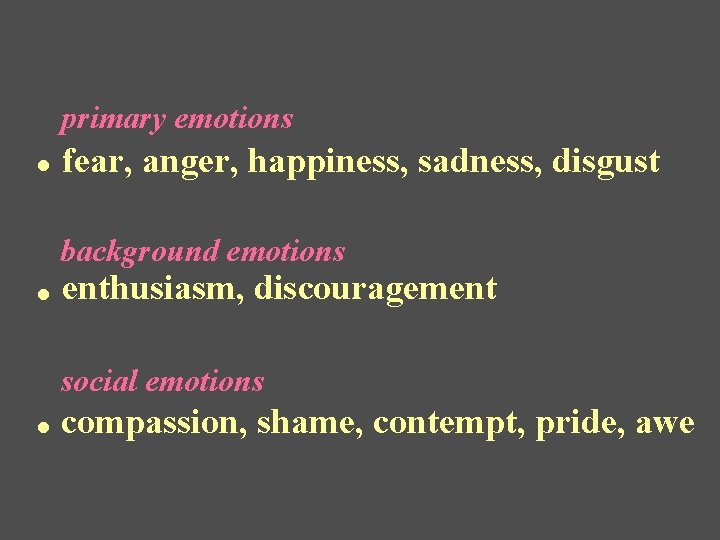
primary emotions . fear, anger, happiness, sadness, disgust background emotions . enthusiasm, discouragement social emotions . compassion, shame, contempt, pride, awe
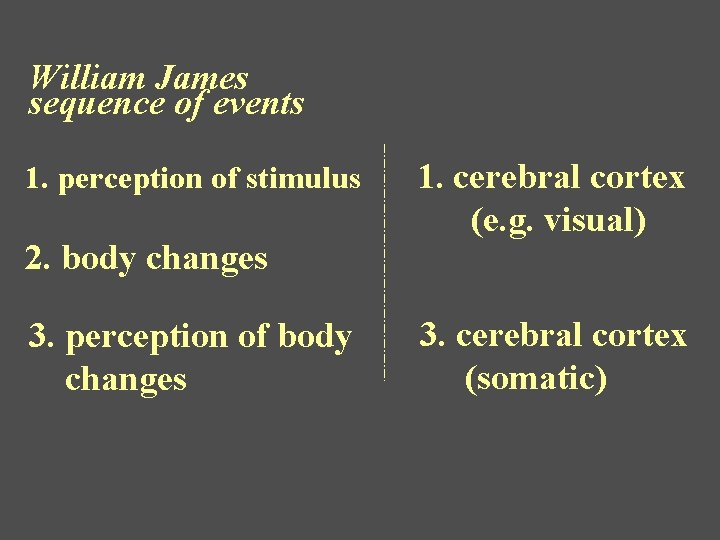
“ Our natural way of thinking about these emotions is that the mental perception of some fact excites the mental affection called the emotion, and that this latter state of mind gives rise to the bodily expression. My thesis on the contrary is that the bodily changes follow directly the PERCEPTION of the exciting fact and that our feeling of the same changes as they occur IS the emotion. ” James, W. Mind, 9, 188 -205, 1884
James 1. inverted the traditional sequence of events in 2. the emotion process; 2. interposed the body between the causative stimulus and the experience of emotion; 3. left out stimulus appraisal and confined the cognitive aspect of emotion to perception (of the stimulus and of body activity); 4. conflated emotion and feeling.
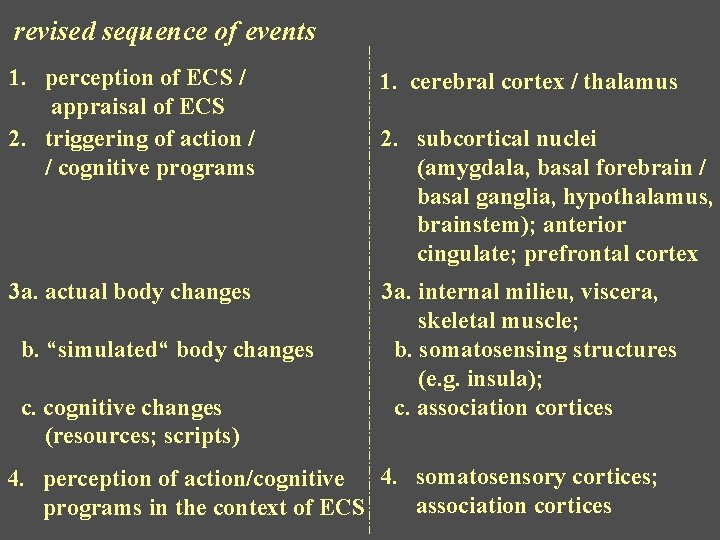
1. human emotions are largely unlearned programs of automatic actions and cognitive strategies aimed at the management of life
2. the program is triggered as a package by emotionally-competent stimuli (objects or situations, actual or in mind) acting on brain devices shaped by evolution; some ECSs are evolutionary, some are individually learned.
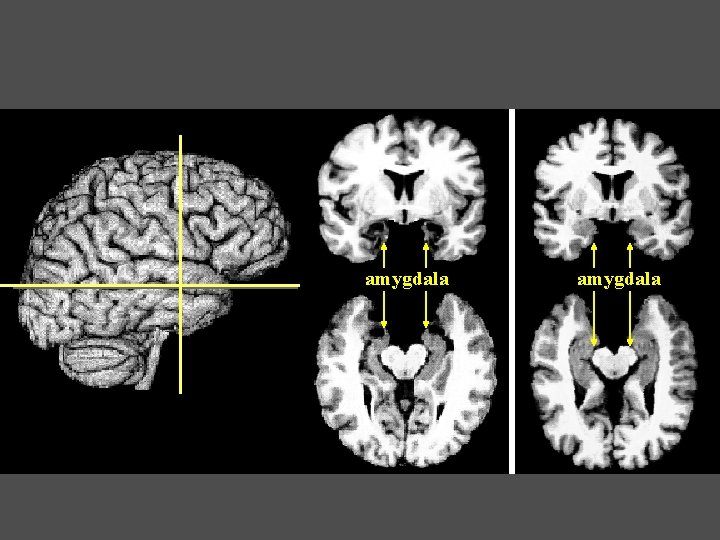
amygdala
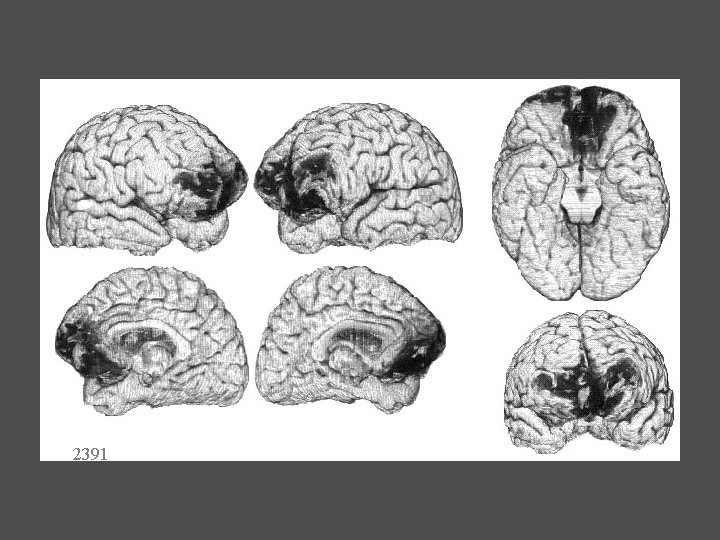
2391
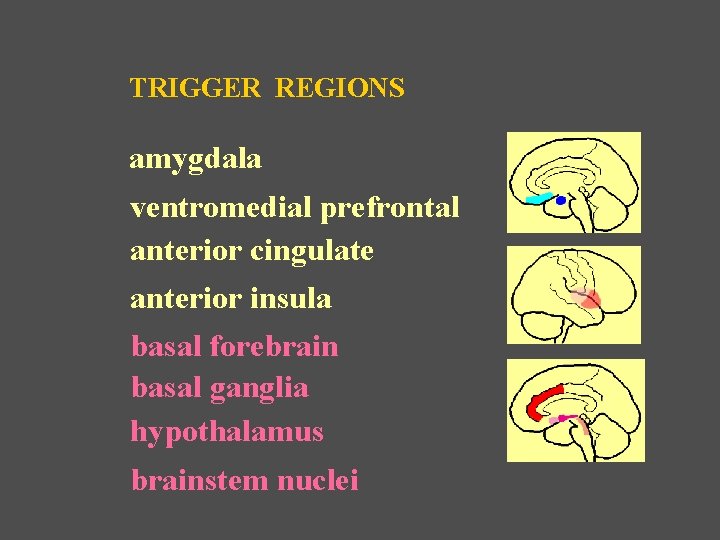
TRIGGER REGIONS amygdala ventromedial prefrontal anterior cingulate anterior insula basal forebrain basal ganglia hypothalamus brainstem nuclei
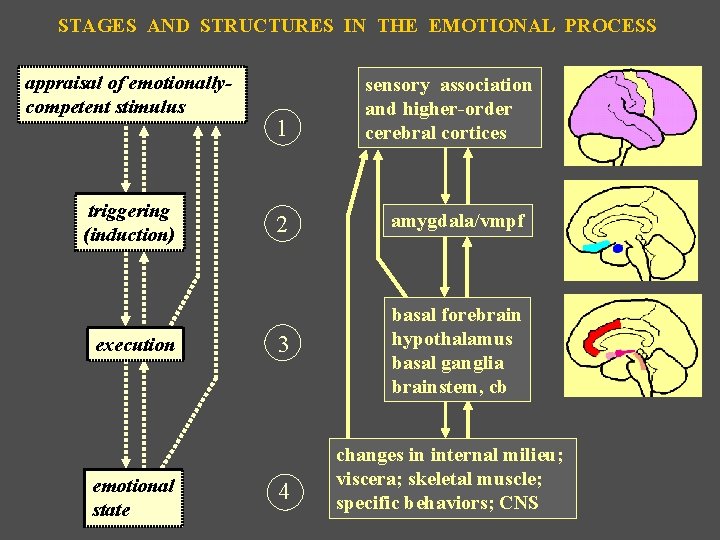
STAGES AND STRUCTURES IN THE EMOTIONAL PROCESS appraisal of emotionallycompetent stimulus triggering (induction) execution emotional state 1 sensory association and higher-order cerebral cortices 2 amygdala/vmpf 3 basal forebrain hypothalamus basal ganglia brainstem, cb 4 changes in internal milieu; viscera; skeletal muscle; specific behaviors; CNS
1. 3. the execution of emotions is 2. carried out in the body-proper (changes in the state of internal milieu, viscera, skeletal muscle; and in the CNS
4. the changes in the CNS involve systems which control cognitive resources e. g. attention, working memory, learning; and promote special cognitive strategies and the recall of certain memories (scripts)
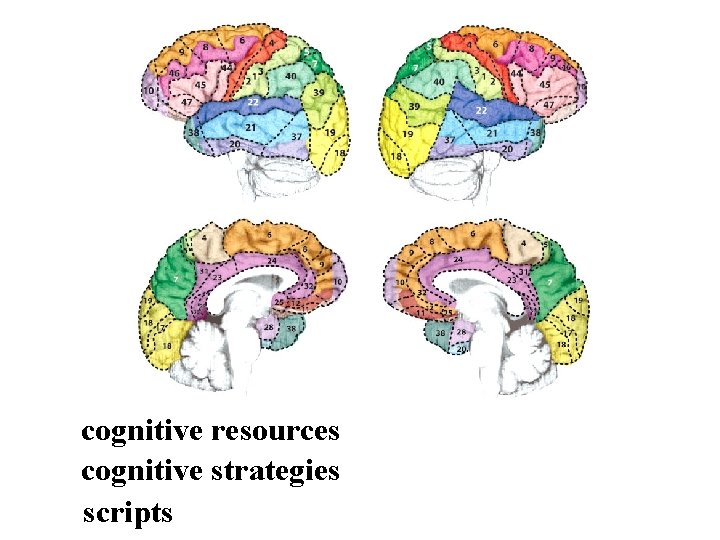
cognitive resources cognitive strategies scripts
5. • emotional programs are built from simpler programs (drives and motivations) • reward and punishment processes are integral components of all these programs and include scaling of internal needs and prediction devices • emotions and their components execute homeostatic goals of varied specificity
WHAT ARE FEELINGS OF EMOTION?
![feelings are composite perceptions of [1] a particular state of the body, actual or](http://slidetodoc.com/presentation_image_h2/a71542a0b1da993d35769268605e3140/image-19.jpg "feelings are composite perceptions of [1] a particular state of the body, actual or")
feelings are composite perceptions of [1] a particular state of the body, actual or simulated; [2] a state of altered cognitive resources; [3] the deployment of certain scripts. the perceptions are temporally connected to the causative object (intentionality)
HOW DO WE FEEL AN EMOTION?
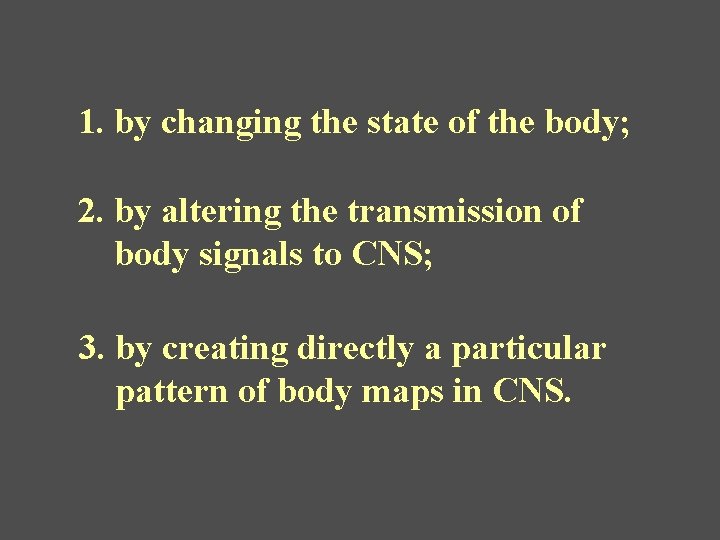
1. by changing the state of the body; 2. by altering the transmission of body signals to CNS; 3. by creating directly a particular pattern of body maps in CNS.
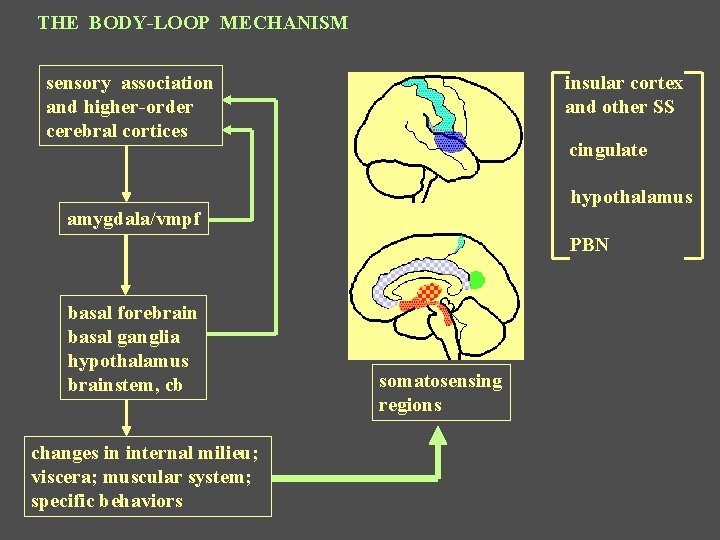
THE BODY-LOOP MECHANISM sensory association and higher-order cerebral cortices insular cortex and other SS cingulate hypothalamus amygdala/vmpf PBN basal forebrain basal ganglia hypothalamus brainstem, cb changes in internal milieu; viscera; muscular system; specific behaviors somatosensing regions
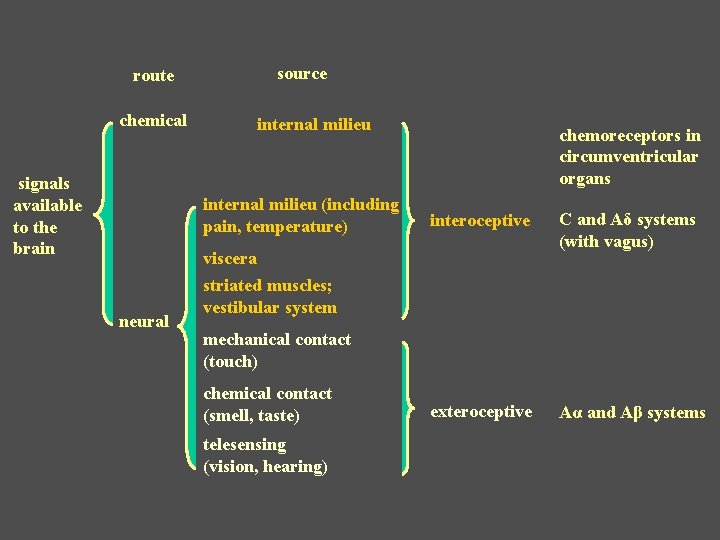
source route chemical signals available to the brain internal milieu (including pain, temperature) chemoreceptors in circumventricular organs interoceptive C and Aδ systems (with vagus) exteroceptive Aα and Aβ systems viscera neural striated muscles; vestibular system mechanical contact (touch) chemical contact (smell, taste) telesensing (vision, hearing)
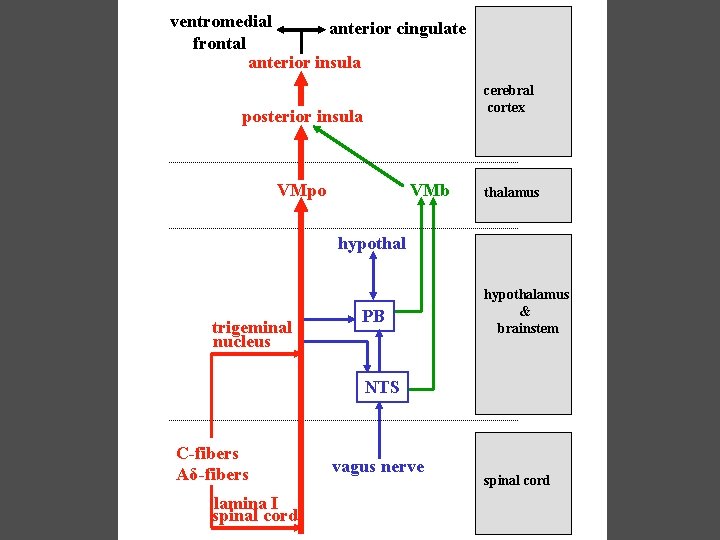
ventromedial anterior cingulate frontal anterior insula cerebral cortex posterior insula VMpo VMb thalamus hypothal trigeminal nucleus PB hypothalamus & brainstem NTS C-fibers Aδ-fibers lamina I spinal cord vagus nerve spinal cord
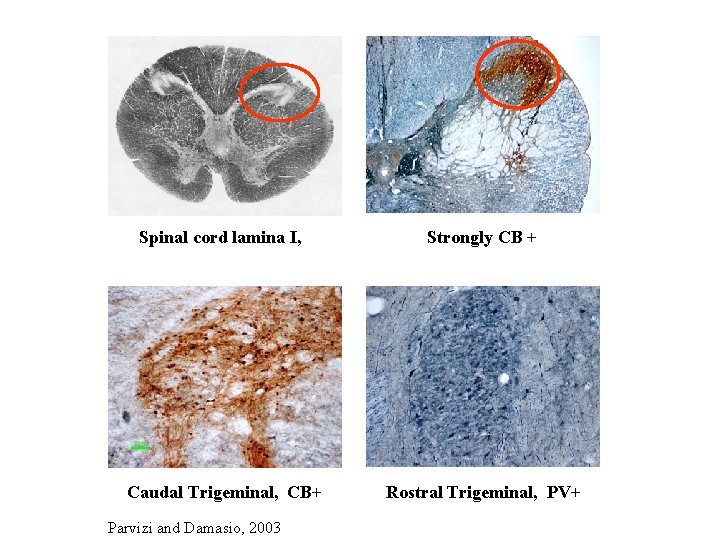
Spinal cord lamina I, Strongly CB + Caudal Trigeminal, CB+ Rostral Trigeminal, PV+ Parvizi and Damasio, 2003
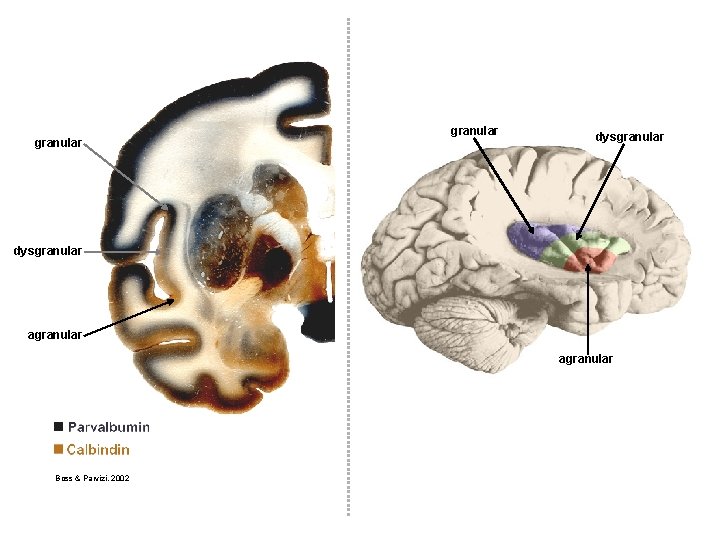
granular dysgranular agranular Boss & Parvizi, 2002
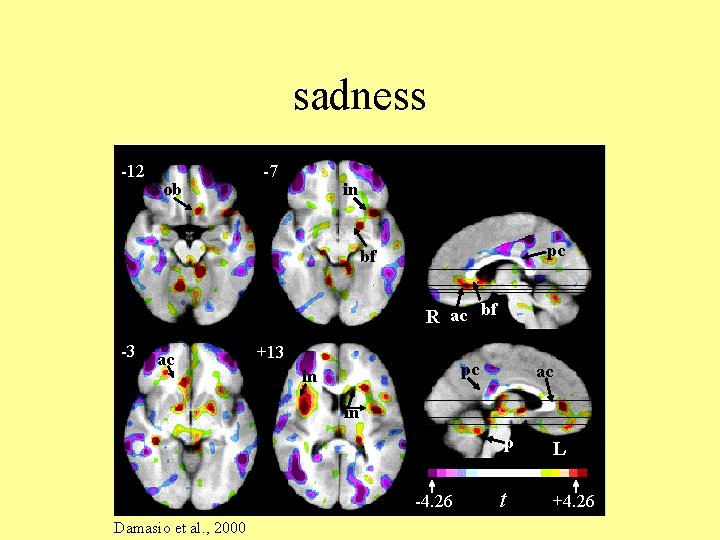
sadness -12 ob -7 in pc bf R ac bf -3 ac +13 pc in ac in -4. 26 Damasio et al. , 2000 p L t +4. 26
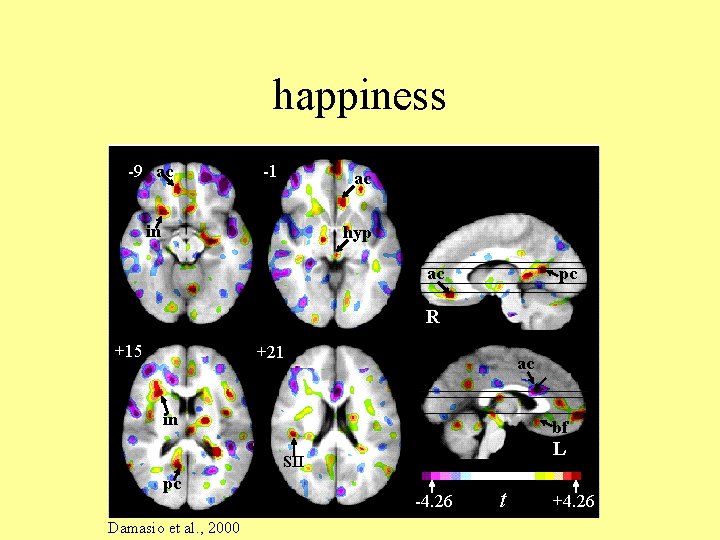
happiness -9 ac -1 ac in hyp ac pc R +15 +21 ac in bf L SII pc Damasio et al. , 2000 -4. 26 t +4. 26
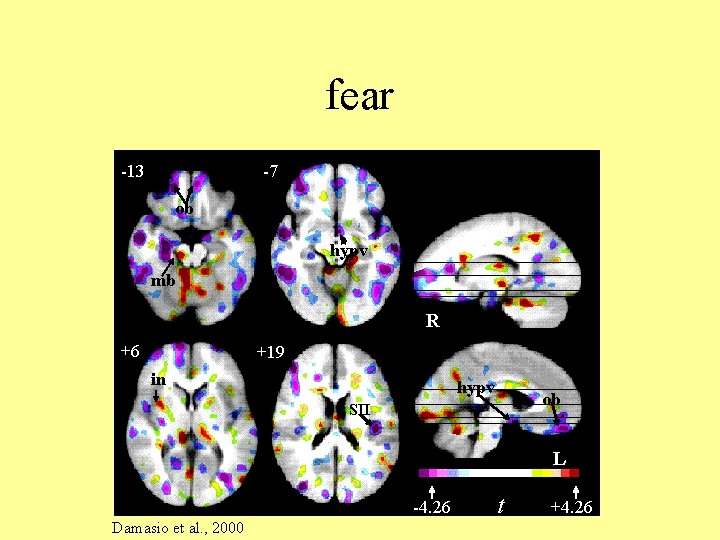
fear -13 -7 ob hypv mb R +6 +19 in hypv ob SII L -4. 26 Damasio et al. , 2000 t +4. 26
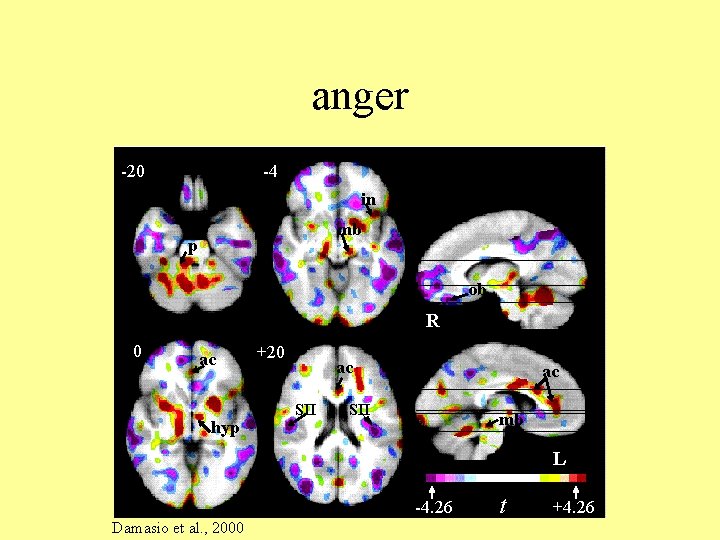
anger -20 -4 in mb p ob R 0 ac hyp +20 ac SII mb L -4. 26 Damasio et al. , 2000 t +4. 26
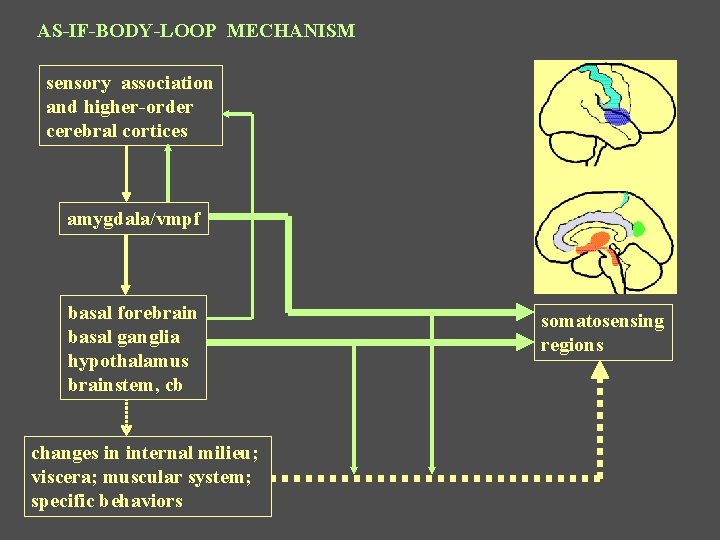
AS-IF-BODY-LOOP MECHANISM sensory association and higher-order cerebral cortices amygdala/vmpf basal forebrain basal ganglia hypothalamus brainstem, cb changes in internal milieu; viscera; muscular system; specific behaviors somatosensing regions
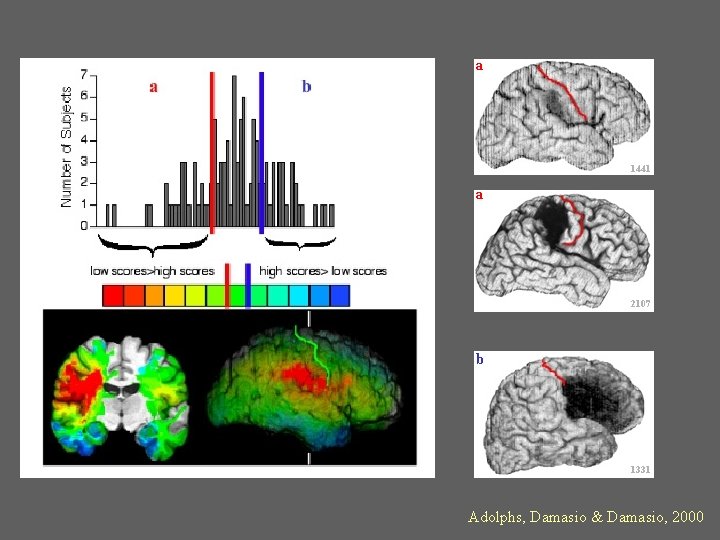
a 1441 a 2107 b 1331 Adolphs, Damasio & Damasio, 2000
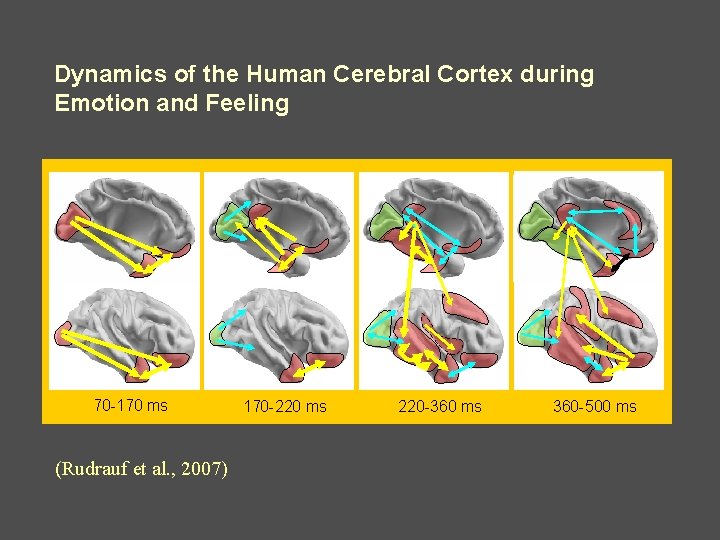
Dynamics of the Human Cerebral Cortex during Emotion and Feeling 70 -170 ms (Rudrauf et al. , 2007) 170 -220 ms 220 -360 ms 360 -500 ms
William James sequence of events 1. perception of stimulus 2. body changes 3. perception of body changes 1. cerebral cortex (e. g. visual) 3. cerebral cortex (somatic)
revised sequence of events 1. perception of ECS / appraisal of ECS 2. triggering of action / / cognitive programs 1. cerebral cortex / thalamus 3 a. actual body changes 3 a. internal milieu, viscera, skeletal muscle; b. somatosensing structures (e. g. insula); c. association cortices b. “simulated“ body changes c. cognitive changes (resources; scripts) 2. subcortical nuclei (amygdala, basal forebrain / basal ganglia, hypothalamus, brainstem); anterior cingulate; prefrontal cortex 4. perception of action/cognitive 4. somatosensory cortices; association cortices programs in the context of ECS
consequences 1. the role of emotion in social cognition (including ethics and economics) 2. the role of emotion in biological evolution and the emergence of consciousness
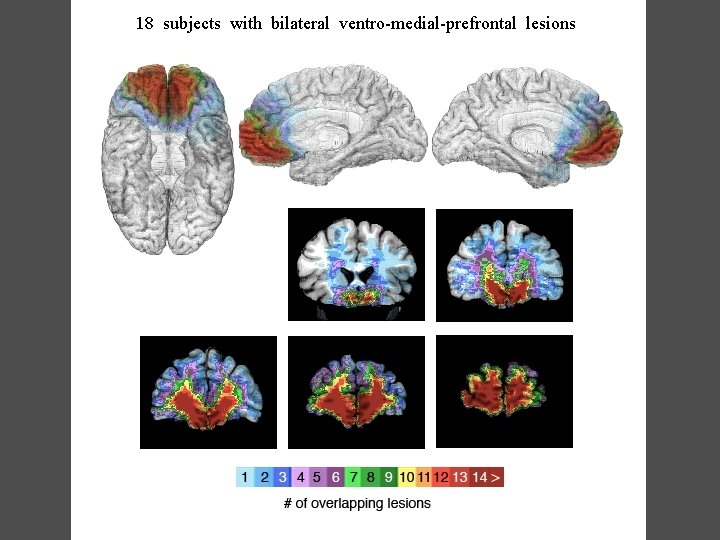
18 subjects with bilateral ventro-medial-prefrontal lesions
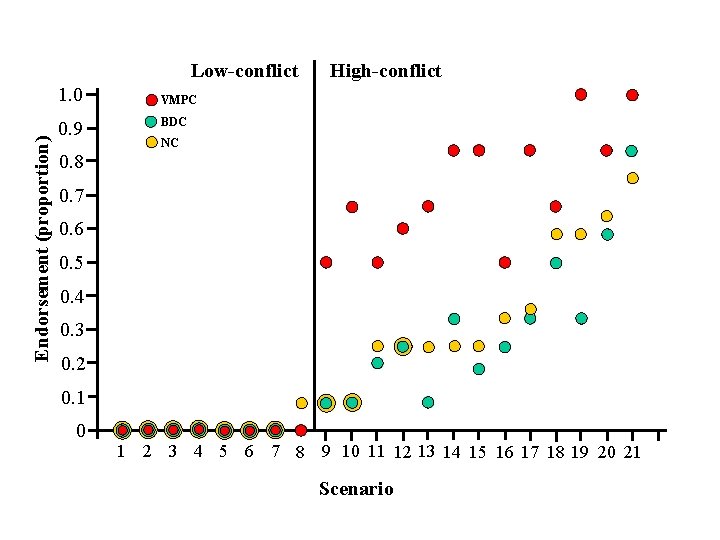
Low-conflict Endorsement (proportion) 1. 0 0. 9 0. 8 High-conflict VMPC BDC NC 0. 7 0. 6 0. 5 0. 4 0. 3 0. 2 0. 1 0 1 2 3 4 5 6 7 8 9 10 11 12 13 14 15 16 17 18 19 20 21 Scenario
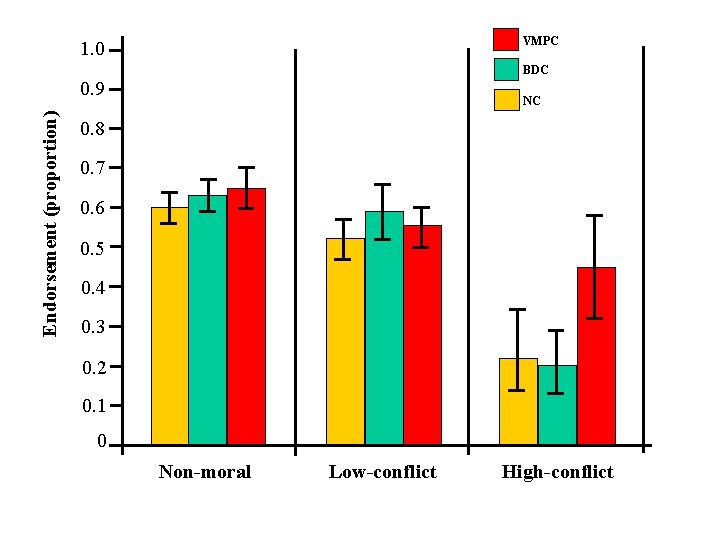
VMPC 1. 0 BDC Endorsement (proportion) 0. 9 NC 0. 8 0. 7 0. 6 0. 5 0. 4 0. 3 0. 2 0. 1 0 Non-moral Low-conflict High-conflict
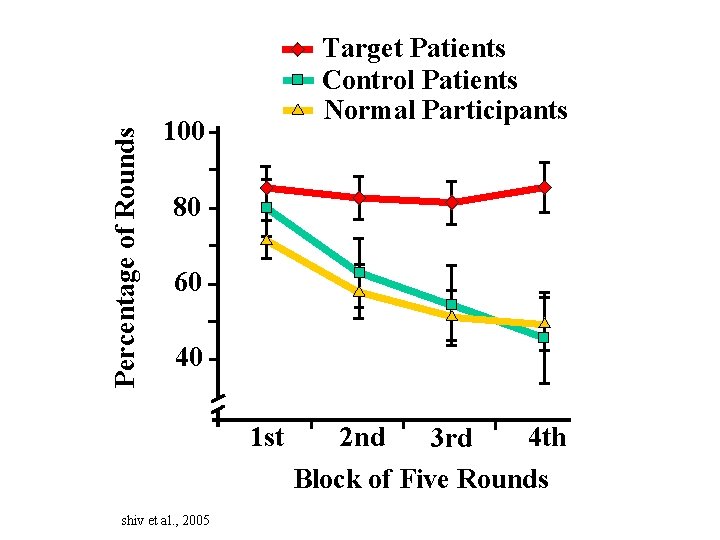
Percentage of Rounds Target Patients Control Patients Normal Participants 100 80 60 40 1 st shiv et al. , 2005 4 th 2 nd 3 rd Block of Five Rounds

- Slides: 42