
Neuro Therm Workshop Supracscapular Nerve Block for Shoulder
Neuro. Therm Workshop Supracscapular Nerve Block for Shoulder Pain
Agenda Suprascapular RF Indications: Chronic shoulder pain Current Treatment: Meds, procedures, Surgery, PT Anatomy Procedure Reimbursement
Treatment Options Medications NSAIDs Topicals Tramadol PT/OT, TENS Injections SAB GH joint RF vs p. RF Arthroscopy, joint replacement
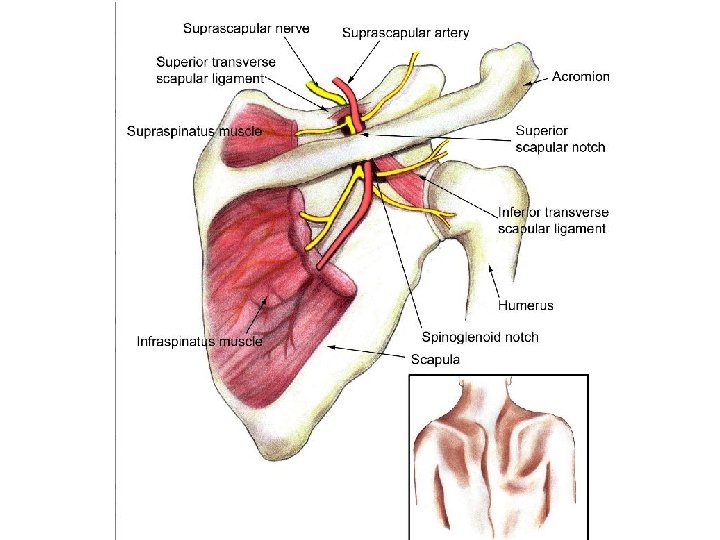
Anatomy • C 5 and C 6 roots off of upper trunk of brachial plexus • Passes under transverse scapular ligament • Sits in bottom of scapular notch • Innervates 70% of shoulder girdle • Innervates supraspinatus and infraspinatus muscles
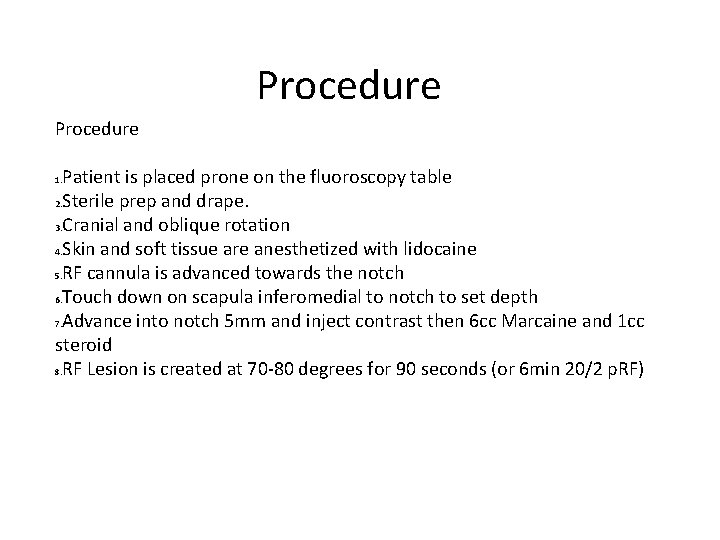
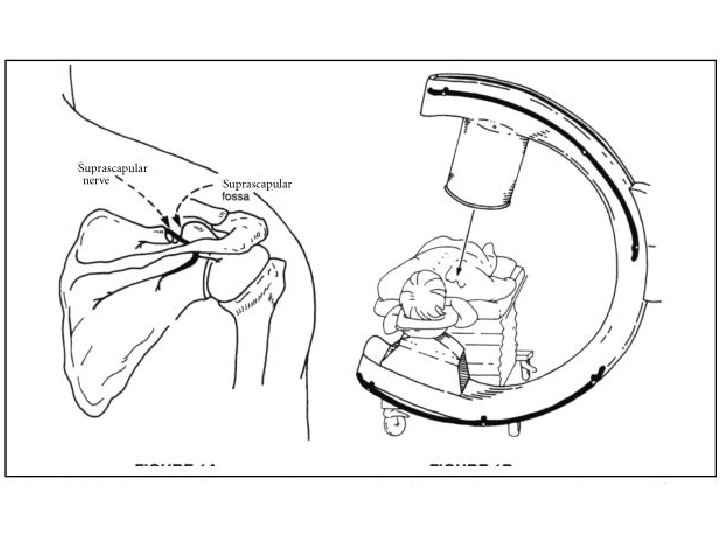
Procedure Patient is placed prone on the fluoroscopy table 2. Sterile prep and drape. 3. Cranial and oblique rotation 4. Skin and soft tissue are anesthetized with lidocaine 5. RF cannula is advanced towards the notch 6. Touch down on scapula inferomedial to notch to set depth 7. Advance into notch 5 mm and inject contrast then 6 cc Marcaine and 1 cc steroid 8. RF Lesion is created at 70 -80 degrees for 90 seconds (or 6 min 20/2 p. RF) 1.

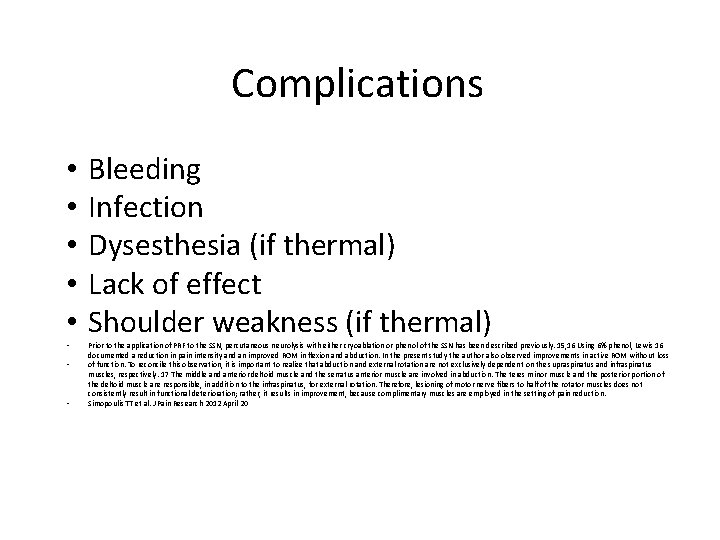
Complications • • Bleeding Infection Dysesthesia (if thermal) Lack of effect Shoulder weakness (if thermal) Prior to the application of PRF to the SSN, percutaneous neurolysis with either cryoablation or phenol of the SSN has been described previously. 15, 16 Using 6% phenol, Lewis 16 documented a reduction in pain intensity and an improved ROM in flexion and abduction. In the present study the author also observed improvements in active ROM without loss of function. To reconcile this observation, it is important to realize that abduction and external rotation are not exclusively dependent on the supraspinatus and infraspinatus muscles, respectively. 17 The middle and anterior deltoid muscle and the serratus anterior muscle are involved in abduction. The teres minor muscle and the posterior portion of the deltoid muscle are responsible, in addition to the infraspinatus, for external rotation. Therefore, lesioning of motor nerve fibers to half of the rotator muscles does not consistently result in functional deterioration; rather, it results in improvement, because complimentary muscles are employed in the setting of pain reduction. Simopoulis TT et al. J Pain Research 2012 April 20
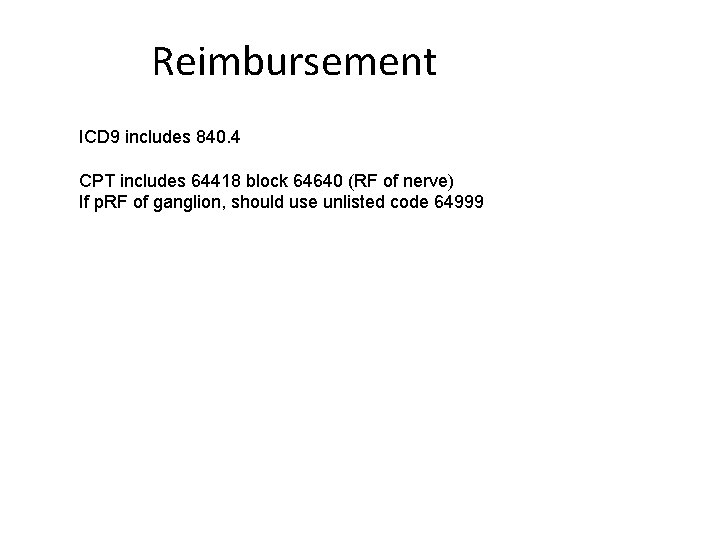
Reimbursement ICD 9 includes 840. 4 CPT includes 64418 block 64640 (RF of nerve) If p. RF of ganglion, should use unlisted code 64999

Questions?
- Slides: 11