
Neural Networks The Backpropagation Algorithm Annette Lopez Davila
Neural Networks: The Backpropagation Algorithm Annette Lopez Davila
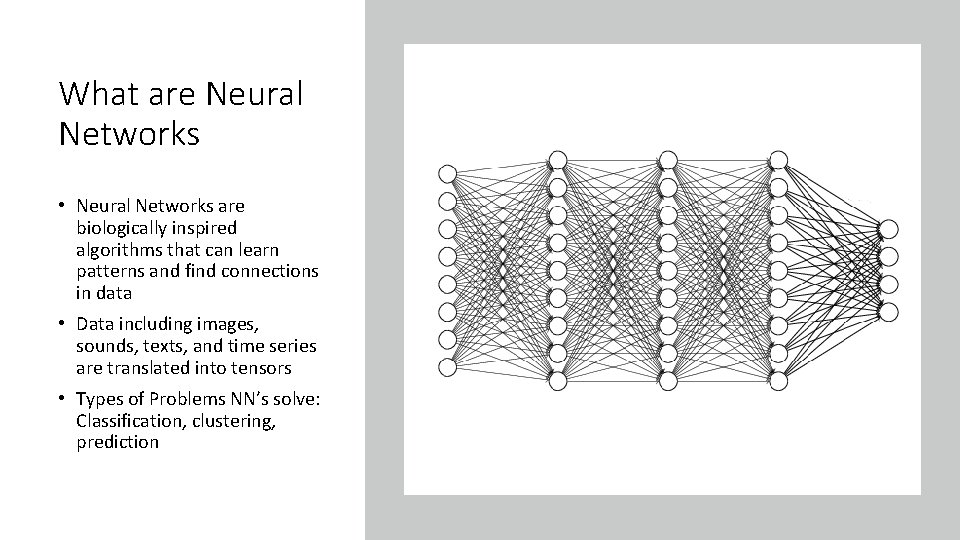
What are Neural Networks • Neural Networks are biologically inspired algorithms that can learn patterns and find connections in data • Data including images, sounds, texts, and time series are translated into tensors • Types of Problems NN’s solve: Classification, clustering, prediction
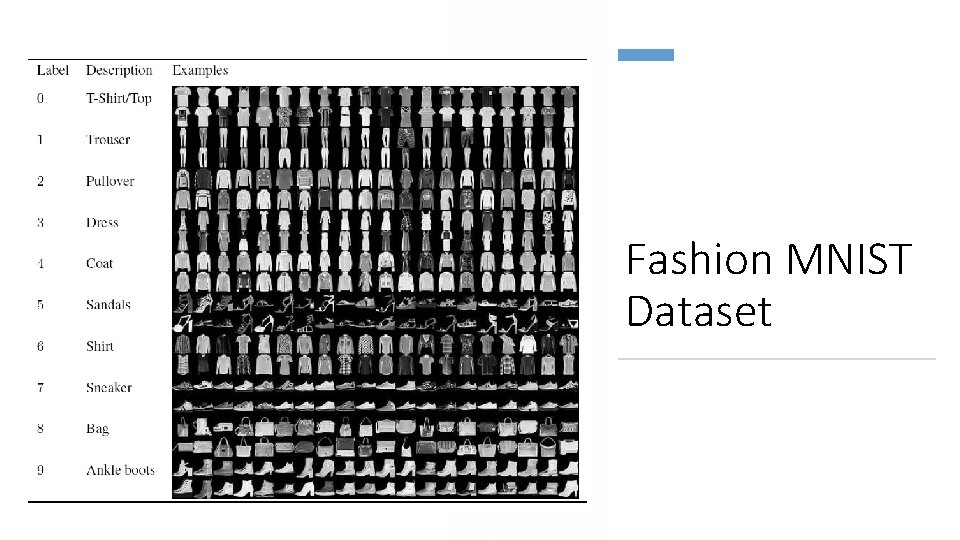
Fashion MNIST Dataset
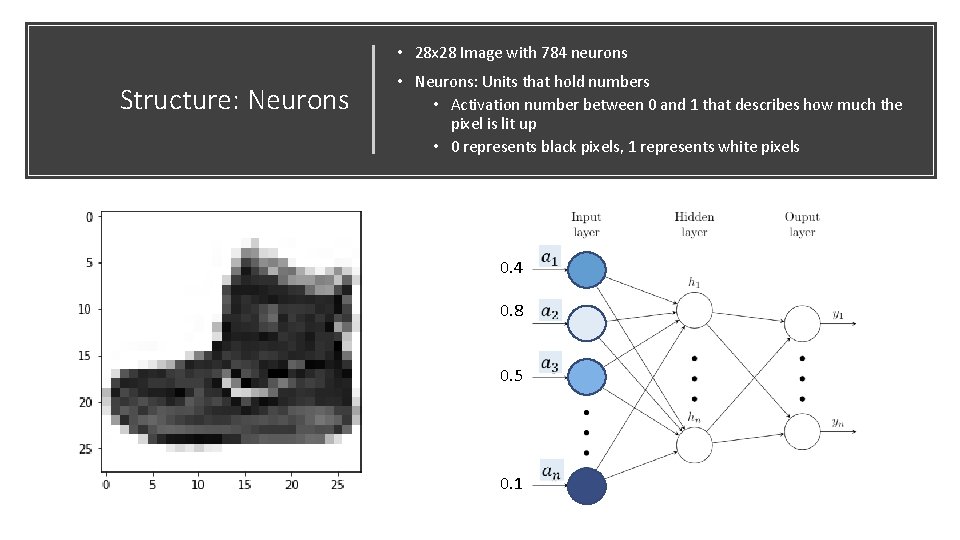
• 28 x 28 Image with 784 neurons Structure: Neurons • Neurons: Units that hold numbers • Activation number between 0 and 1 that describes how much the pixel is lit up • 0 represents black pixels, 1 represents white pixels 0. 4 0. 8 0. 5 0. 1
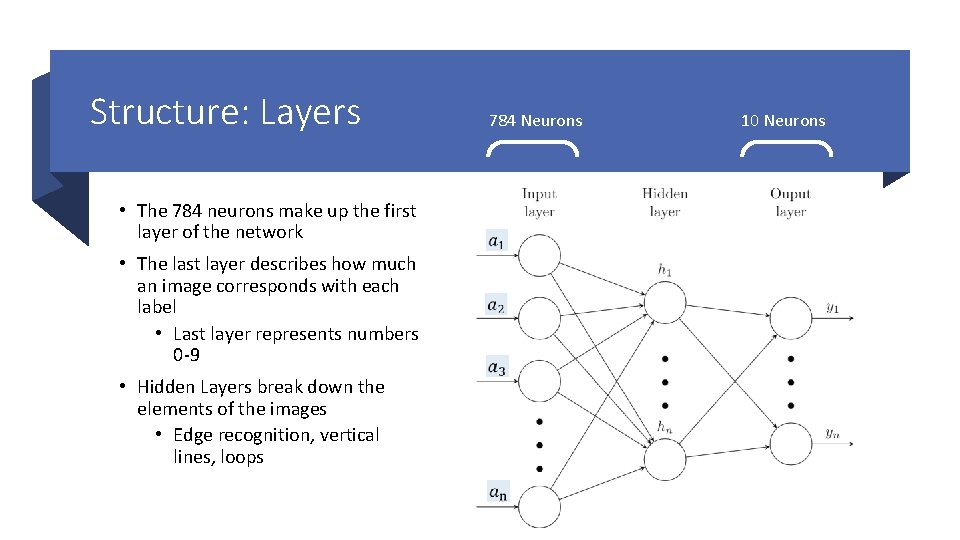
Structure: Layers • The 784 neurons make up the first layer of the network • The last layer describes how much an image corresponds with each label • Last layer represents numbers 0 -9 • Hidden Layers break down the elements of the images • Edge recognition, vertical lines, loops 784 Neurons 10 Neurons
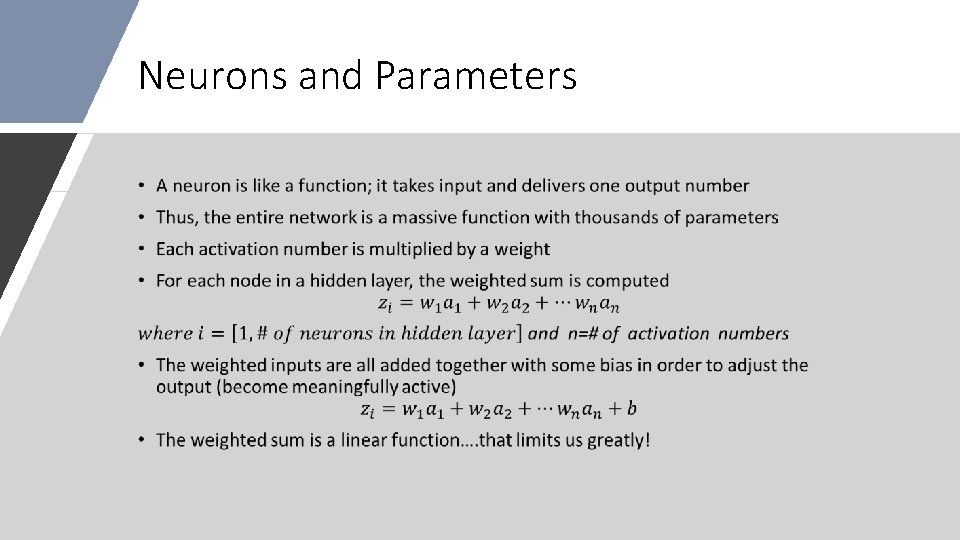
Neurons and Parameters •
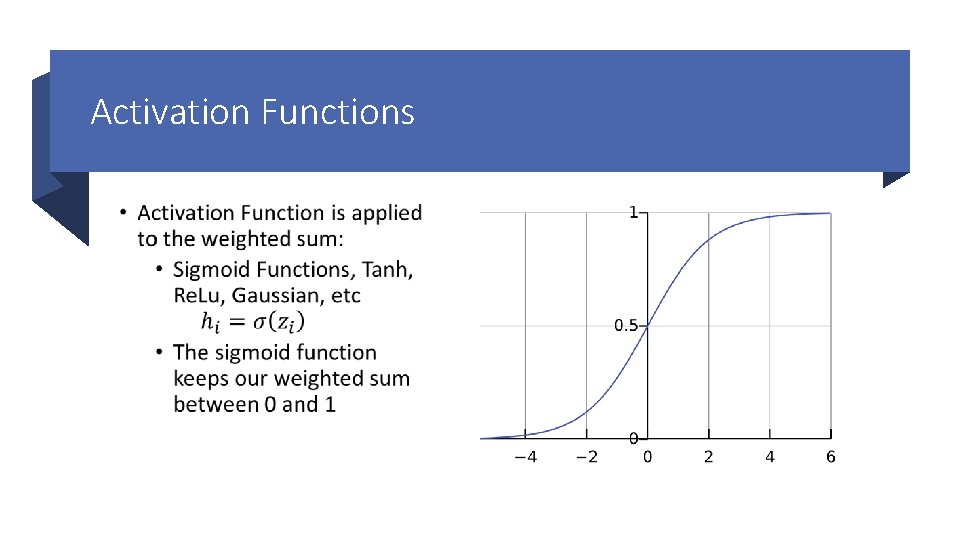
Activation Functions •
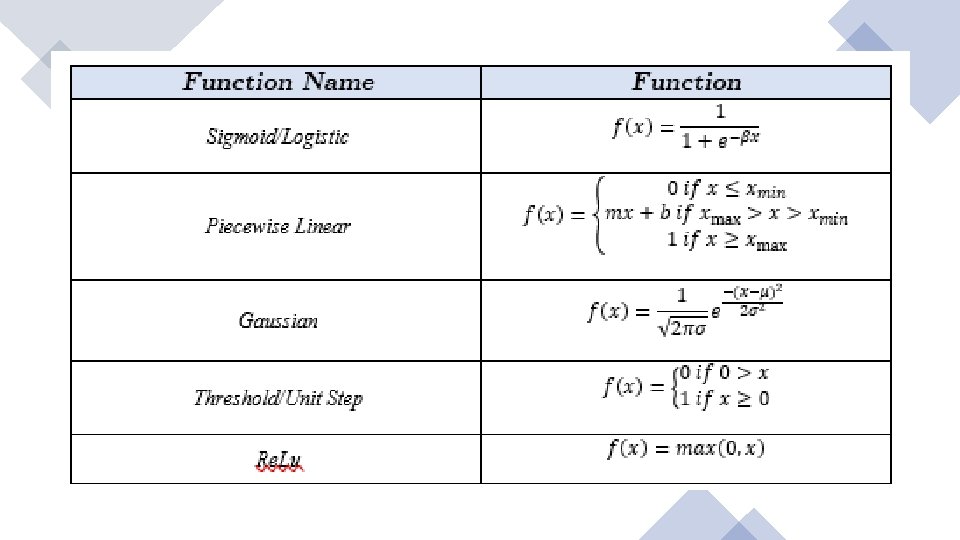

a
A neural network is a connection of many of these mini functions Some combinations of weights and biases will give us more accurate answers than others Machine Learning We could find all the correct weights and biases by hand by using a lot of calculus Machine Learning: finding the optimal weights and biases with a computer
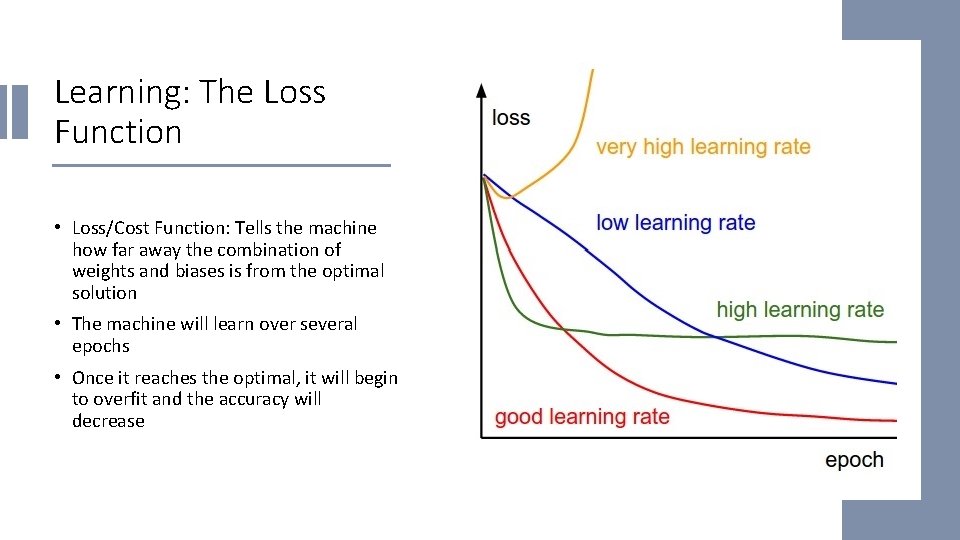
Learning: The Loss Function • Loss/Cost Function: Tells the machine how far away the combination of weights and biases is from the optimal solution • The machine will learn over several epochs • Once it reaches the optimal, it will begin to overfit and the accuracy will decrease
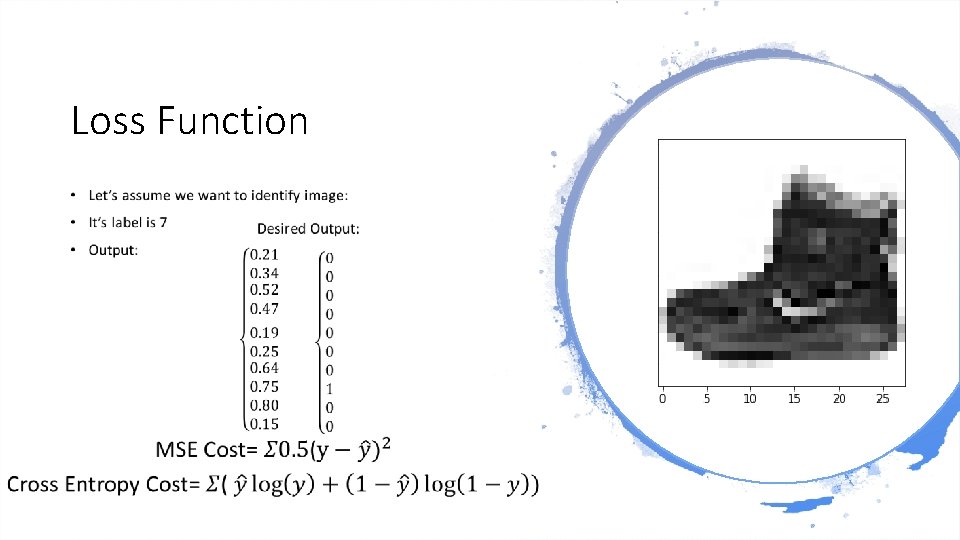
Loss Function •
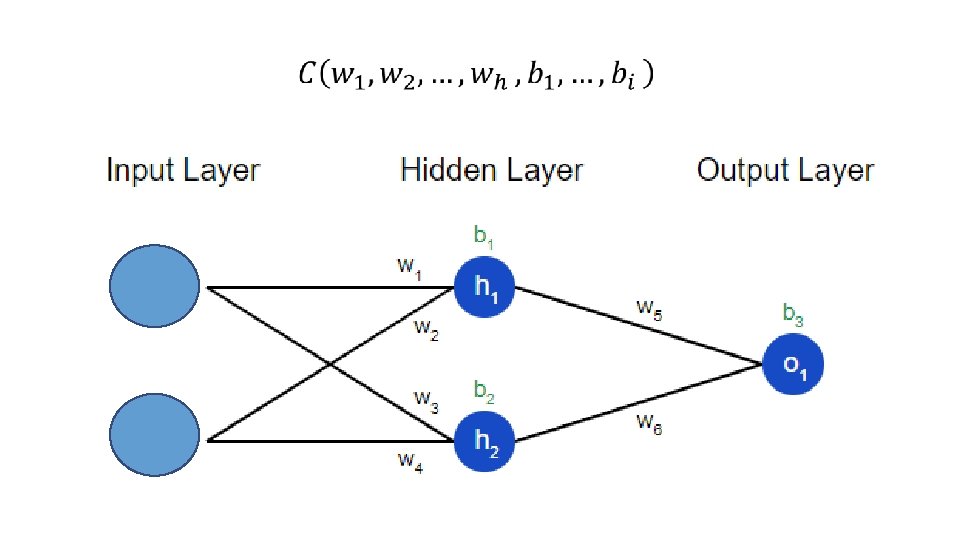
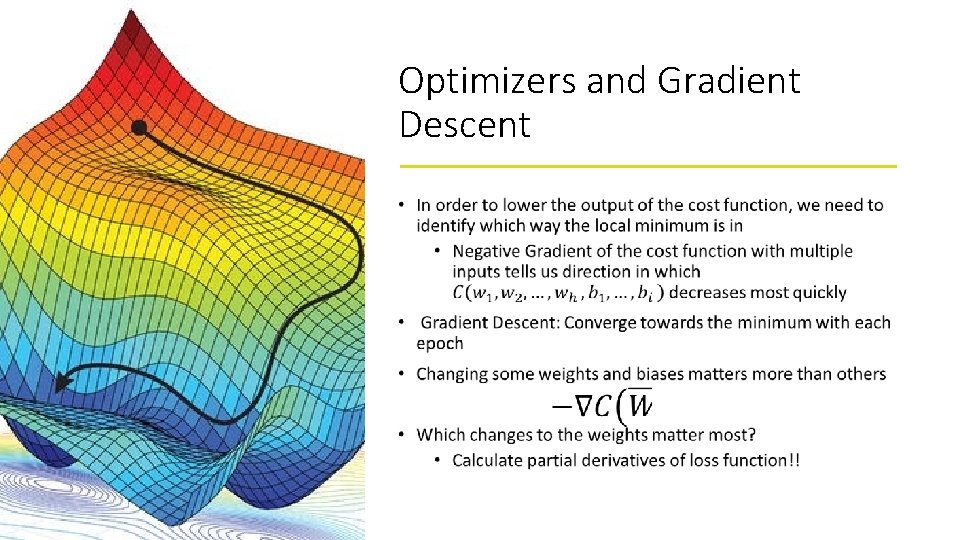
Optimizers and Gradient Descent •
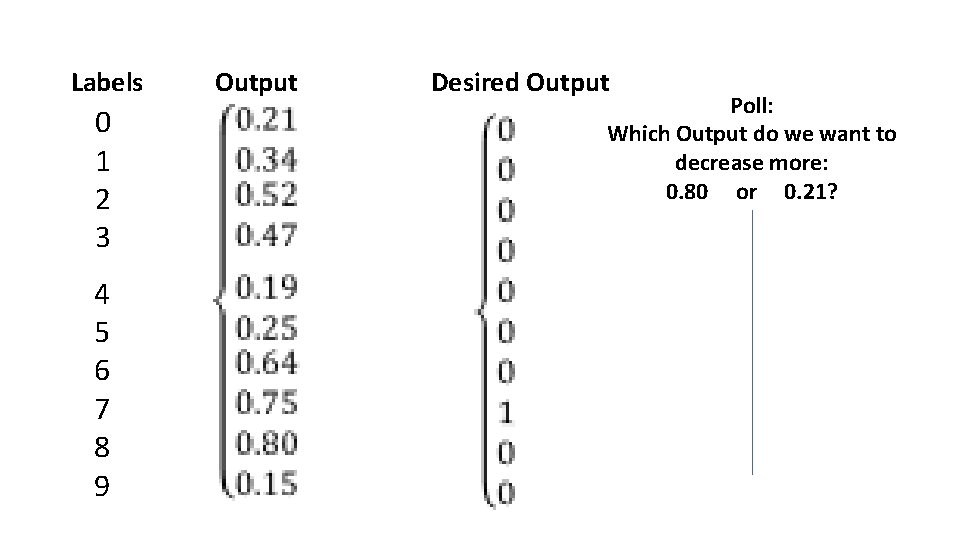
Labels 0 1 2 3 4 5 6 7 8 9 Output Desired Output Poll: Which Output do we want to decrease more: 0. 80 or 0. 21?
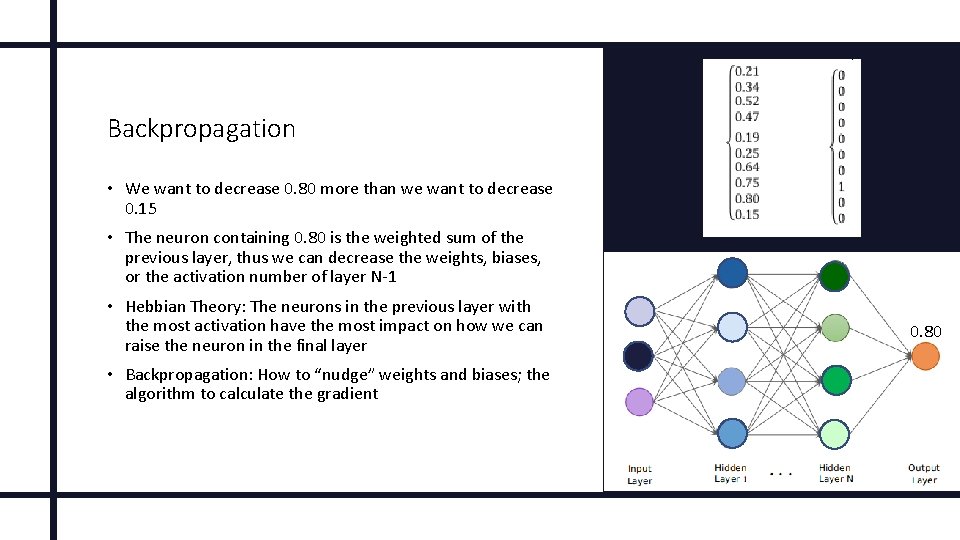
Backpropagation • We want to decrease 0. 80 more than we want to decrease 0. 15 • The neuron containing 0. 80 is the weighted sum of the previous layer, thus we can decrease the weights, biases, or the activation number of layer N-1 • Hebbian Theory: The neurons in the previous layer with the most activation have the most impact on how we can raise the neuron in the final layer • Backpropagation: How to “nudge” weights and biases; the algorithm to calculate the gradient 0. 80
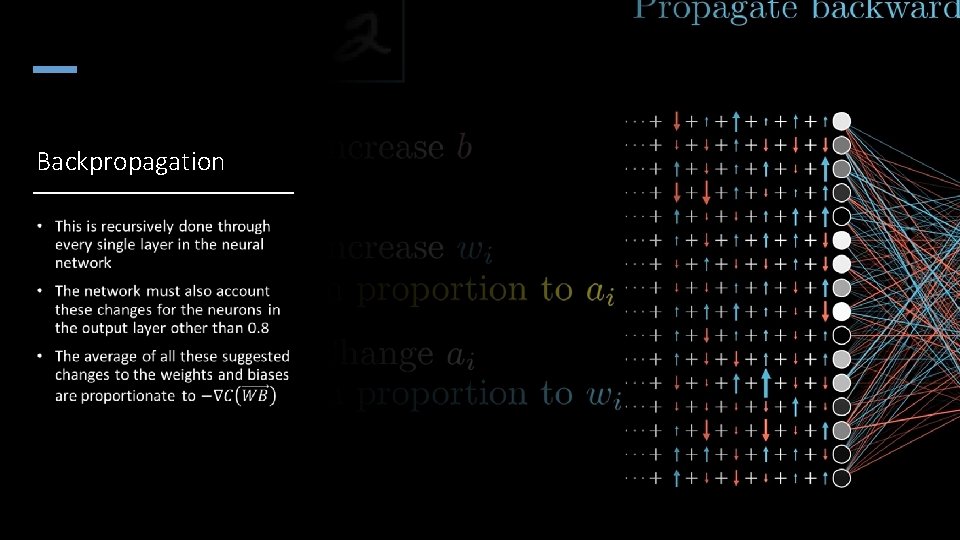
Backpropagation •

The Calculus Behind Backprop
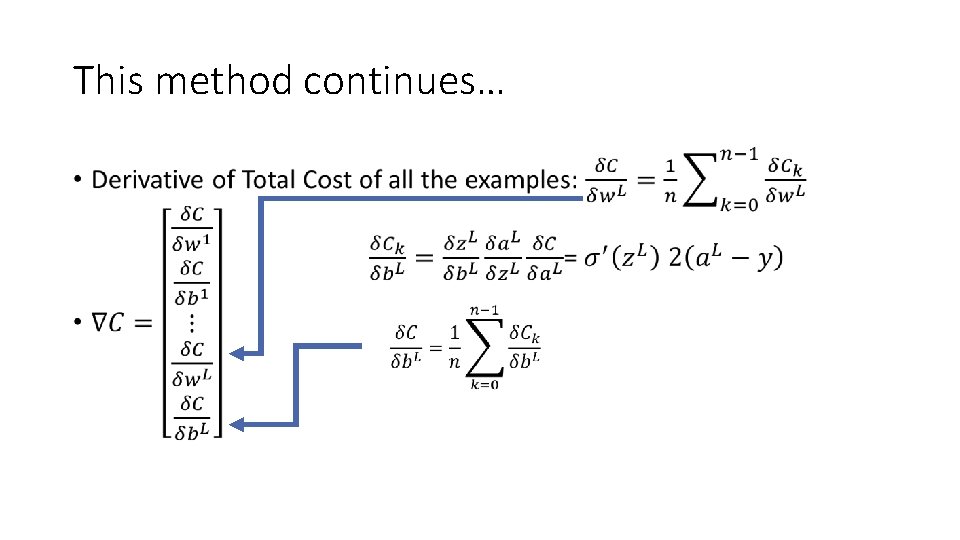
This method continues… •
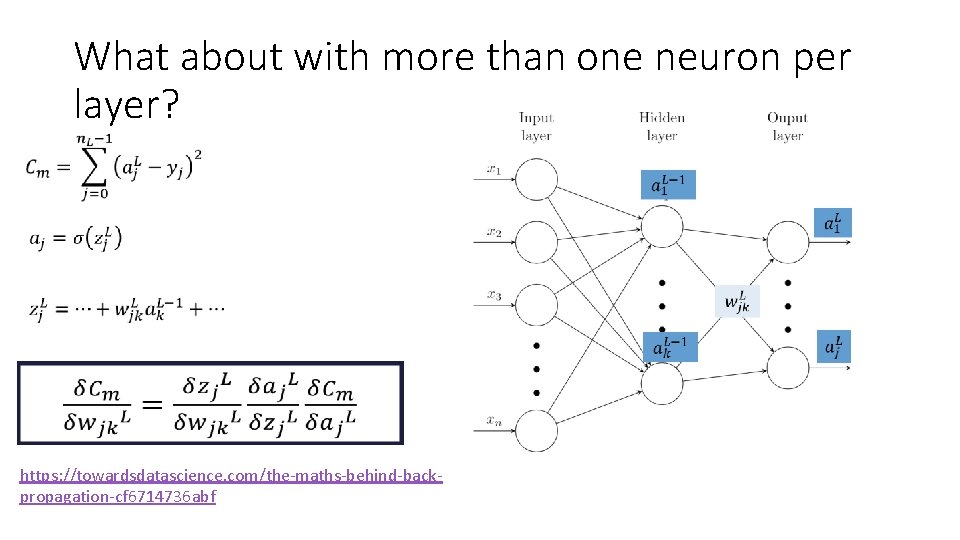
What about with more than one neuron per layer? • https: //towardsdatascience. com/the-maths-behind-backpropagation-cf 6714736 abf
Applications of Neural Networks trained with Backpropagation/ Automatic Differentiation Sonar Target Recognition Face Recognition Zipcode Recognition/ Text Recognition Network-controlled steering of cars Remote Sensing Newer Research: What problems does Backprop have?
- Slides: 21