
Neural Disorders Advances and Challenges Why Study Neural

- Slides: 19
Neural Disorders Advances and Challenges
Why Study Neural Diseases? Application of neuroscience Coming together of research and medical applications Cost: Alzheimer’s alone costs the U. S. 150 billion dollars a year
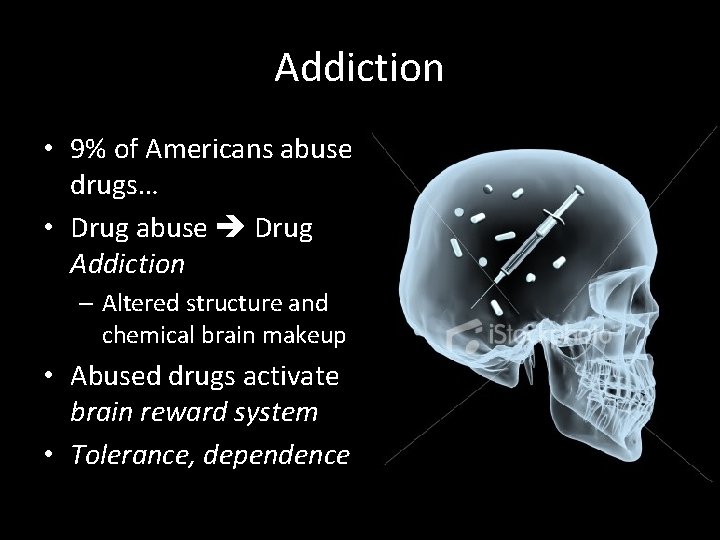
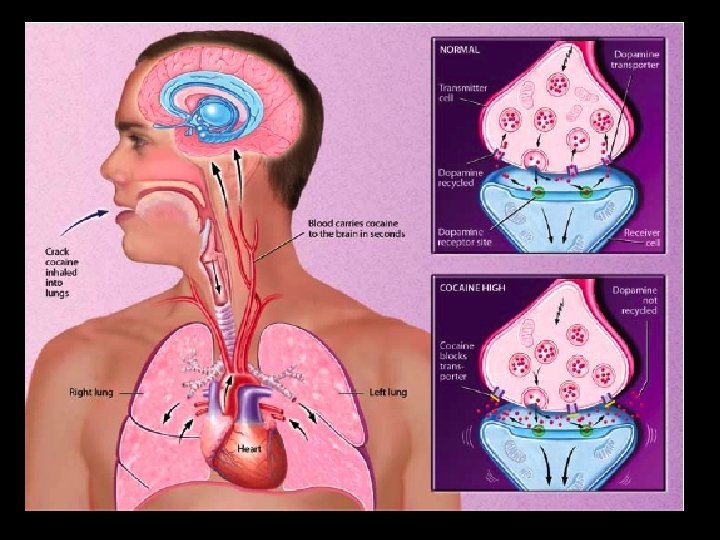
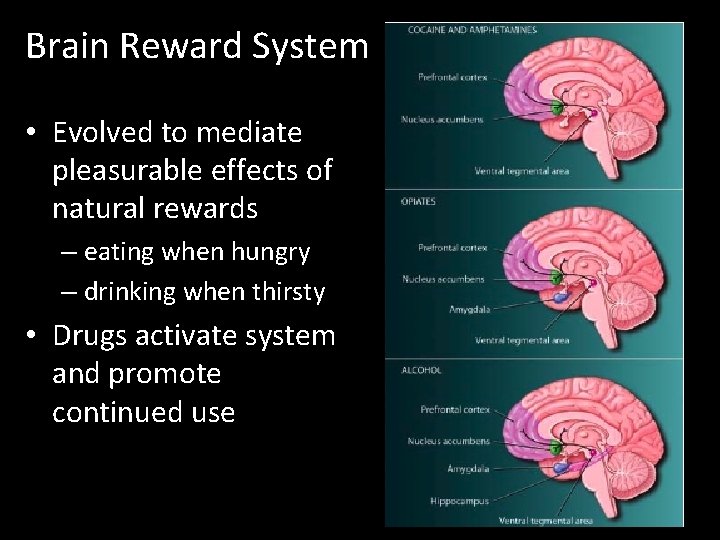
Addiction • 9% of Americans abuse drugs… • Drug abuse Drug Addiction – Altered structure and chemical brain makeup • Abused drugs activate brain reward system • Tolerance, dependence
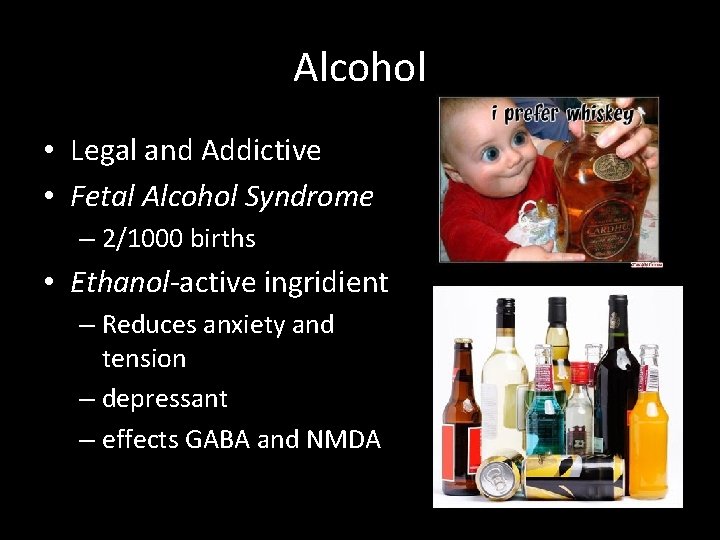
Alcohol • Legal and Addictive • Fetal Alcohol Syndrome – 2/1000 births • Ethanol-active ingridient – Reduces anxiety and tension – depressant – effects GABA and NMDA
Club Drugs • Ecstasy, Rohypnol, GHB, Ketamine • Ecstasy (MDMA) – synthetic psychoactive drug – hallucinogen – long term changes in memory, thought • Rohypnol, GHB, Ketamine – CNS depressants – “Special” K: anesthetic • http: //www. youtube. com/watch? v=QHG 8 cj. I 5 B-w
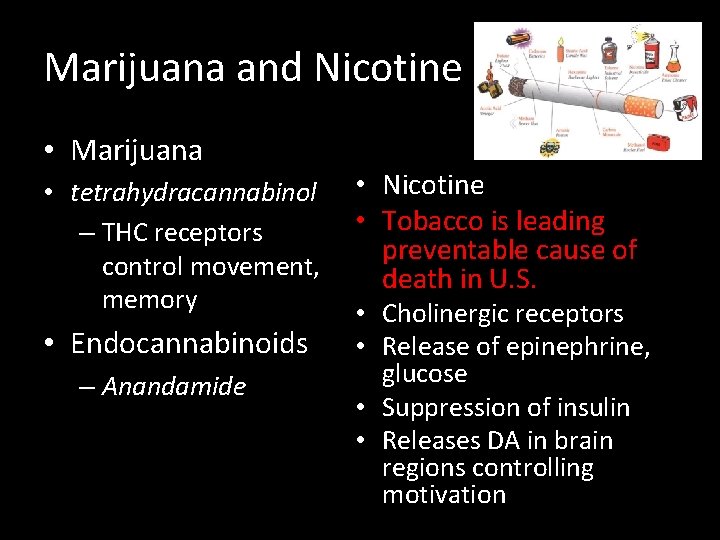
Marijuana and Nicotine • Marijuana • tetrahydracannabinol – THC receptors control movement, memory • Endocannabinoids – Anandamide • Nicotine • Tobacco is leading preventable cause of death in U. S. • Cholinergic receptors • Release of epinephrine, glucose • Suppression of insulin • Releases DA in brain regions controlling motivation
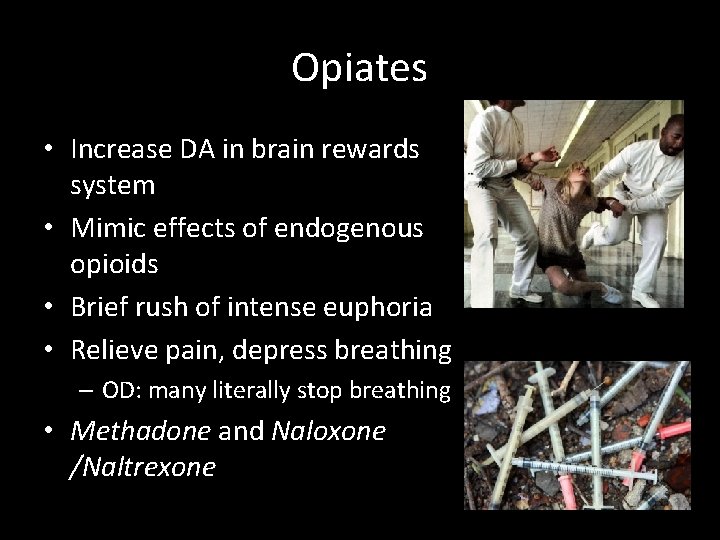
Opiates • Increase DA in brain rewards system • Mimic effects of endogenous opioids • Brief rush of intense euphoria • Relieve pain, depress breathing – OD: many literally stop breathing • Methadone and Naloxone /Naltrexone
Brain Reward System • Evolved to mediate pleasurable effects of natural rewards – eating when hungry – drinking when thirsty • Drugs activate system and promote continued use
Alzheimer’s Disease What do you know?
Alzheimer’s Disease • Forgetfulness, disorientation • Patients often die from pneumonia or illness related to immobility • Reductions in – acetylcholines, somatostasin, monoamines, glutamate • Cellular symptoms: • Beta amyloid plaques, Neurofibrillary (Tau) tangles • http: //www. youtube. com/watch? v=Njg. Bnx 1 j. VIU
Anxiety Disorders • OCD – Obsessive Compulsive Disorder – Repetitive thoughts, behaviors – Affects 5 -6 million Americans • PTSD: – Sever trauma – Dysregulation of hypothalmic-pituitary-adrenal axis, major depression – High norepineprine levels – PFC can no longer inhibit amygdala activation
Attention Deficit Hyperactvity Disorder • Diagnosis difficult and can mainly only be done by evaluation and behavioral observation: no objective test exists • Smaller volume and reduced activity in cortical -striatal-cerebellar circuits • Weakened prefrontal regulation of behavior • Stimulant drugs used for treatment despite negative side effects
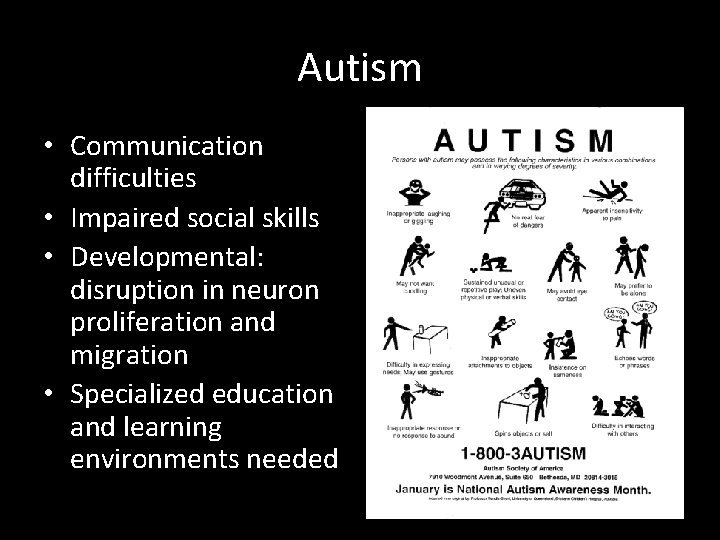
Autism • Communication difficulties • Impaired social skills • Developmental: disruption in neuron proliferation and migration • Specialized education and learning environments needed
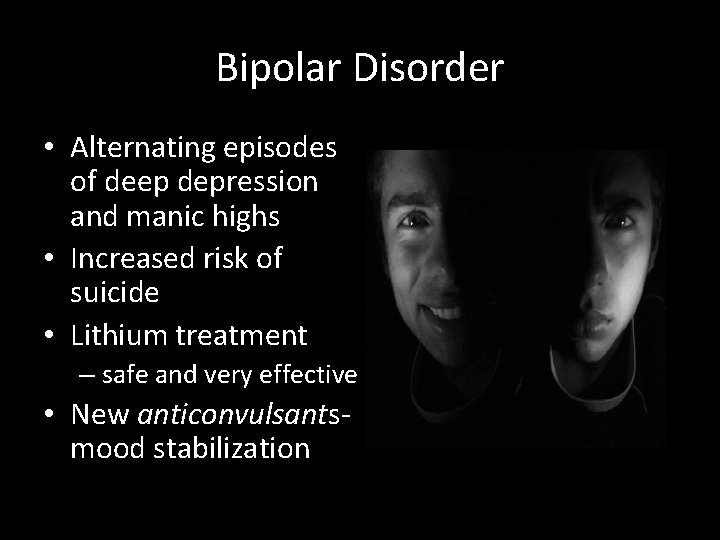
Bipolar Disorder • Alternating episodes of deep depression and manic highs • Increased risk of suicide • Lithium treatment – safe and very effective • New anticonvulsantsmood stabilization
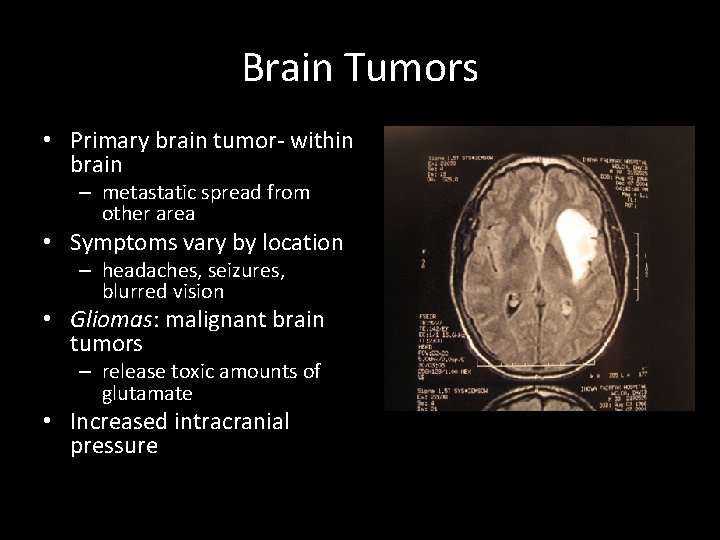
Brain Tumors • Primary brain tumor- within brain – metastatic spread from other area • Symptoms vary by location – headaches, seizures, blurred vision • Gliomas: malignant brain tumors – release toxic amounts of glutamate • Increased intracranial pressure
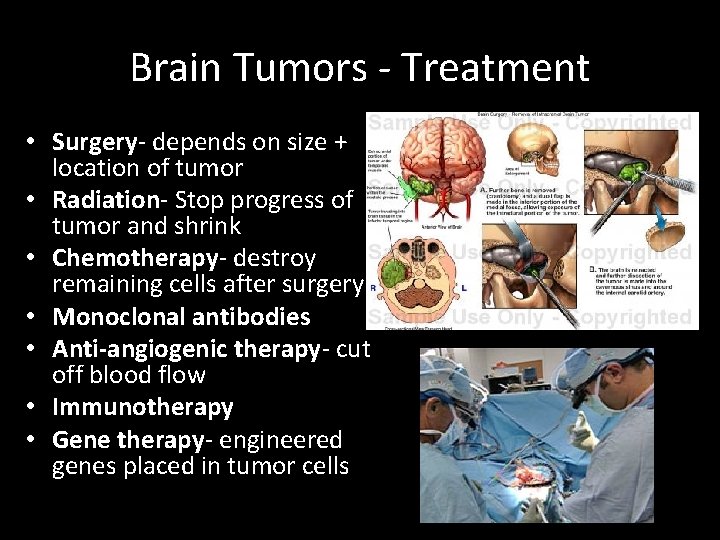
Brain Tumors - Treatment • Surgery- depends on size + location of tumor • Radiation- Stop progress of tumor and shrink • Chemotherapy- destroy remaining cells after surgery • Monoclonal antibodies • Anti-angiogenic therapy- cut off blood flow • Immunotherapy • Gene therapy- engineered genes placed in tumor cells
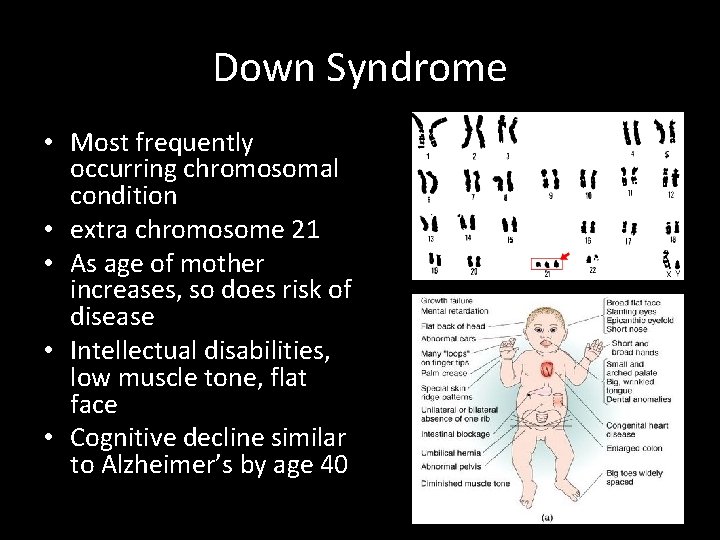
Down Syndrome • Most frequently occurring chromosomal condition • extra chromosome 21 • As age of mother increases, so does risk of disease • Intellectual disabilities, low muscle tone, flat face • Cognitive decline similar to Alzheimer’s by age 40