
Neural Crest Cells and Axonal Specificity Neural Crest
- Slides: 29
Neural Crest Cells and Axonal Specificity
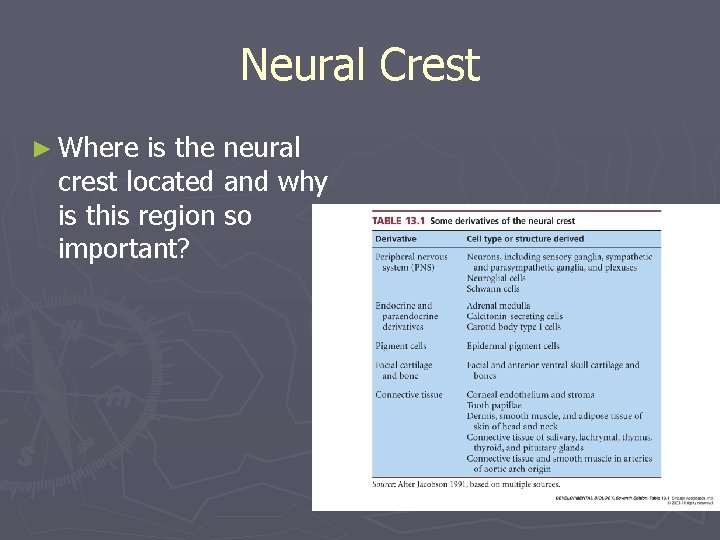
Neural Crest ► Where is the neural crest located and why is this region so important?
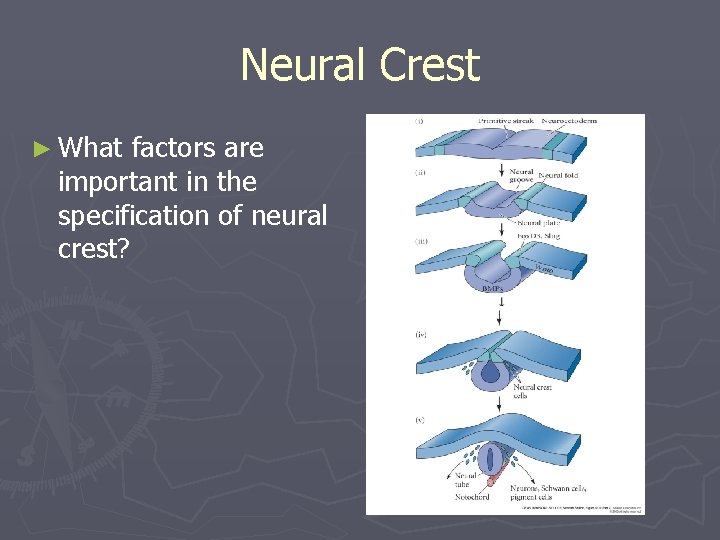
Neural Crest ► What factors are important in the specification of neural crest?
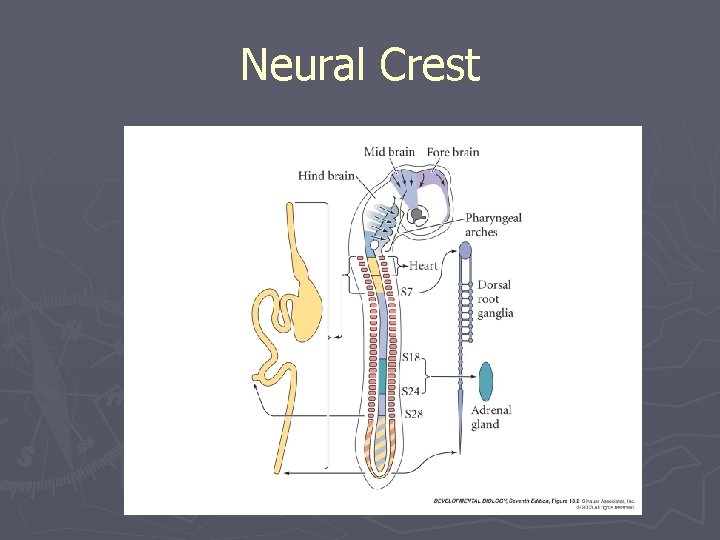
Neural Crest ► What are the four domains and their derivatives? § cranial ►cartilage, bone, cranial neurons, glia, connective tissue of face § trunk ►dorsal root ganglia – sensory neurons, sympathetic ganglia, adrenal medulla, nerves around aorta, melanocytes
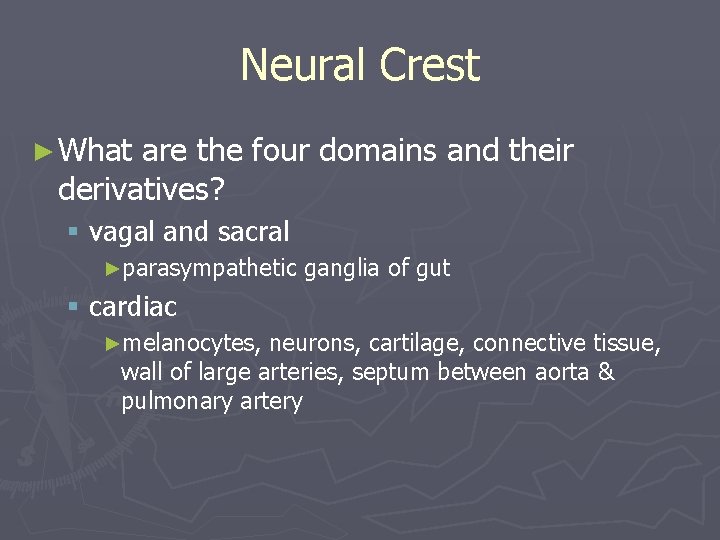
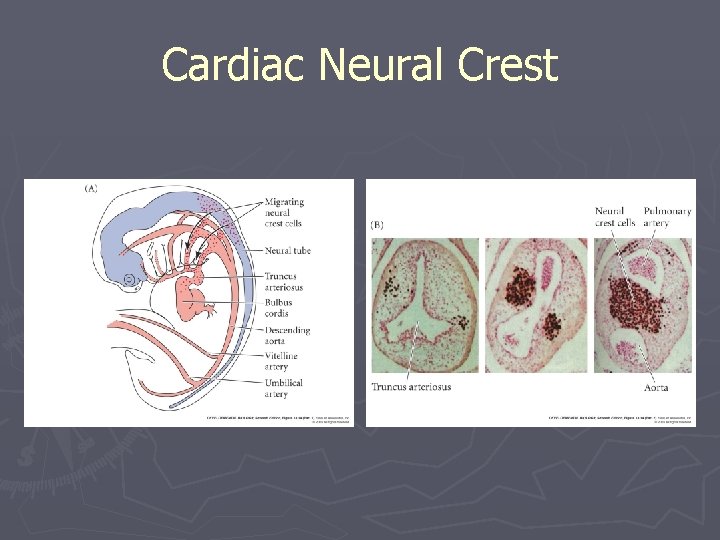
Neural Crest ► What are the four domains and their derivatives? § vagal and sacral ►parasympathetic ganglia of gut § cardiac ►melanocytes, neurons, cartilage, connective tissue, wall of large arteries, septum between aorta & pulmonary artery
Neural Crest
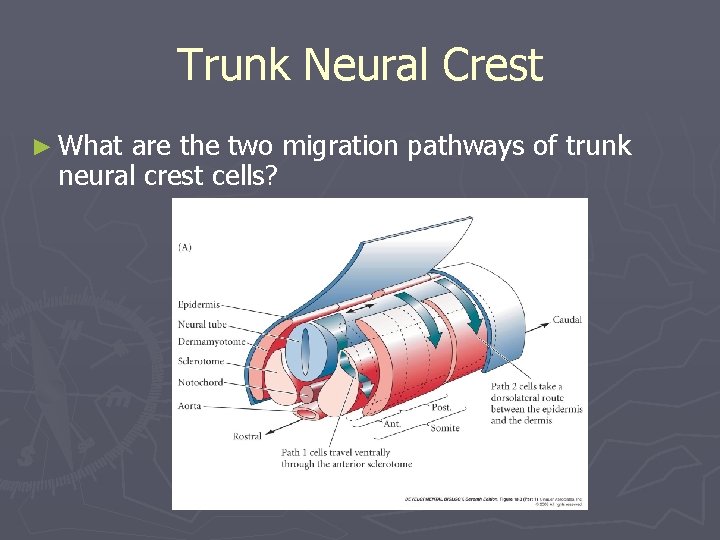
Trunk Neural Crest ► What are the two migration pathways of trunk neural crest cells?
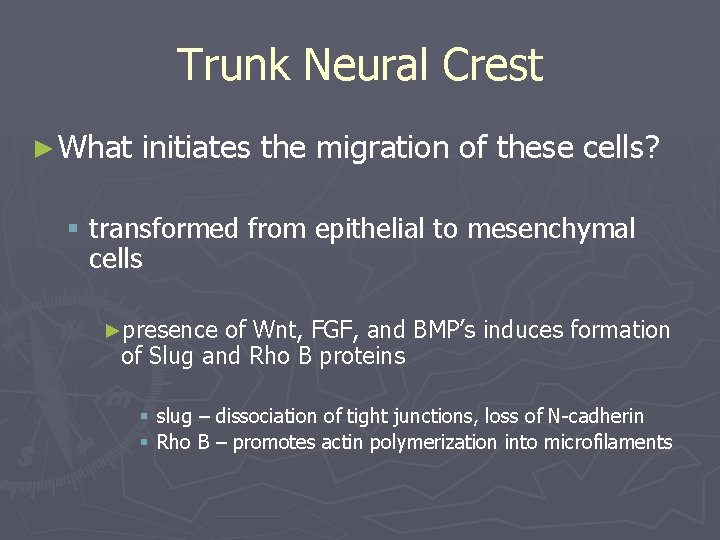
Trunk Neural Crest ► What initiates the migration of these cells? § transformed from epithelial to mesenchymal cells ►presence of Wnt, FGF, and BMP’s induces formation of Slug and Rho B proteins § slug – dissociation of tight junctions, loss of N-cadherin § Rho B – promotes actin polymerization into microfilaments
Trunk Neural Crest ► How do migratory cells know the route to travel? § proteins that promote or impede migration found in extracellular matrix ►promote – fibronectin, laminin, tenascin § thrombospondin – found in anterior part of sclerotome ►impede – ephrin proteins § found in posterior part of sclerotome § stem cell factor promotes proliferation of neural crest that enter skin
Trunk Neural Crest ► What cells? is meant by the pluripotency of these ► What determines how a specific cell will differentiate? ► Are all neural crest pluripotent?
Cranial Neural Crest ► What is a major distinction between cranial and trunk neural crest? § cranial can form bone and cartilage in addition to neurons, melanocytes and glial cells
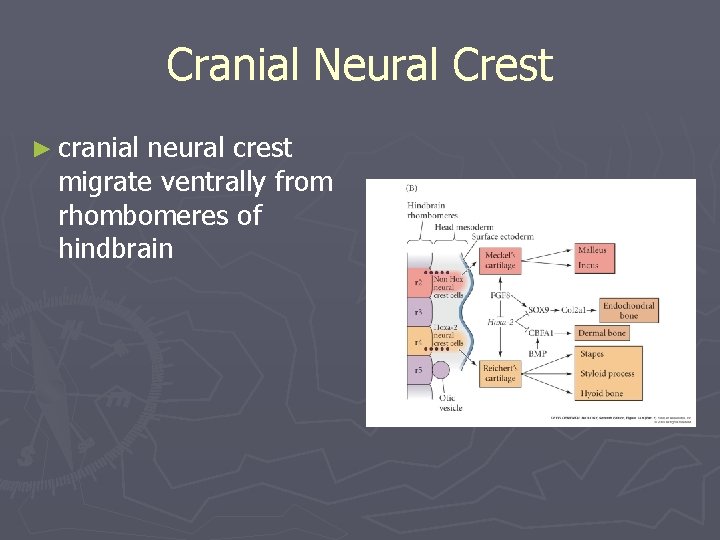
Cranial Neural Crest ► cranial neural crest migrate ventrally from rhombomeres of hindbrain
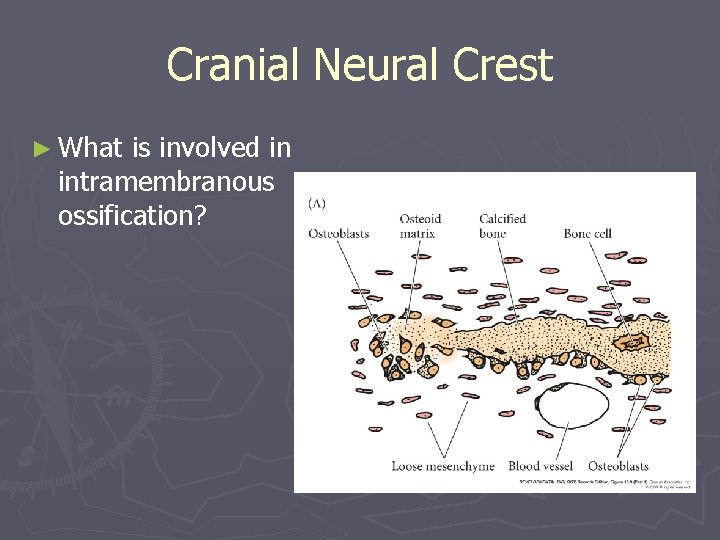
Cranial Neural Crest ► What is involved in intramembranous ossification?
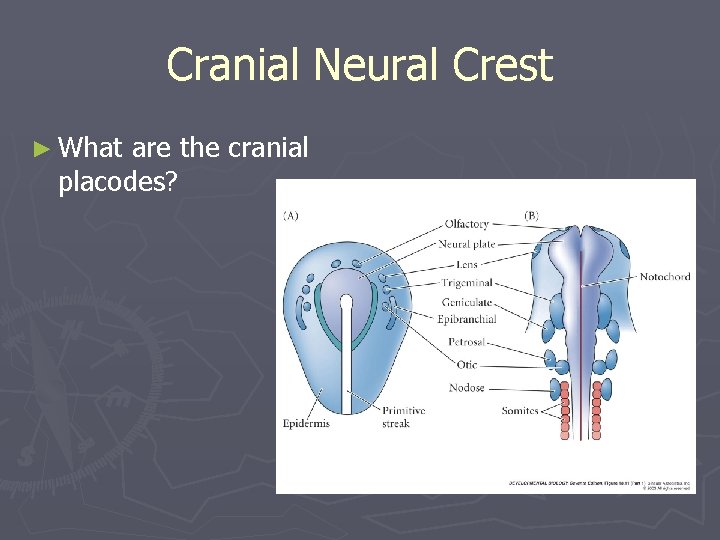
Cranial Neural Crest ► What are the cranial placodes?
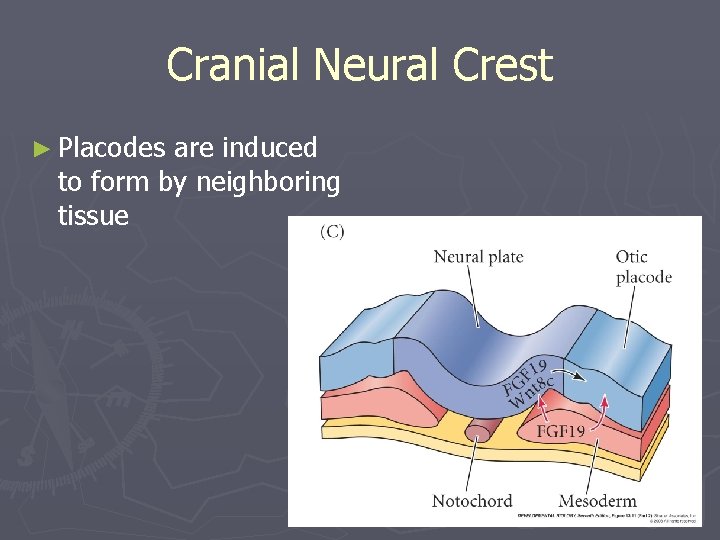
Cranial Neural Crest ► Placodes are induced to form by neighboring tissue
Cranial Neural Crest ► What happens during the “second wave” of migration? § crest cells migrate dorsally to form glial cells § glial cells provide tracks to guide neurons from placodes to hindbrain
Cardiac Neural Crest
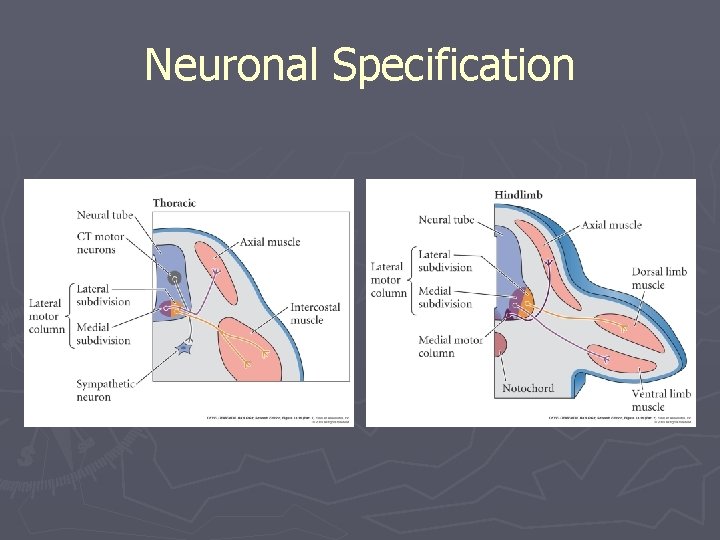
Neuronal Specification ► First decision § neuron or epidermis ► Second decision § type of neuron ►sensory ►motor ►interneurons ► Third decision § target of neuron
Neuronal Specification ► What determines the specification of the type of neuron? § position of neuronal precursor within neural tube § when it forms (birthday)
Neuronal Specification ► What determines target of motor neuron? § a-p specification ►hox genes from hindbrain through spinal cord and head genes (Otx) in brain regulate § in a given region – cell layer ►age of cell – last division ►Lim genes – transcription factors ► Targets are specified before axons extend into periphery
Neuronal Specification
Pattern Generation ► How does a neuronal axon “know” how to travel to a given area and make specific connections? ► Appears to involve three steps: § pathway selection § target selection § address selection
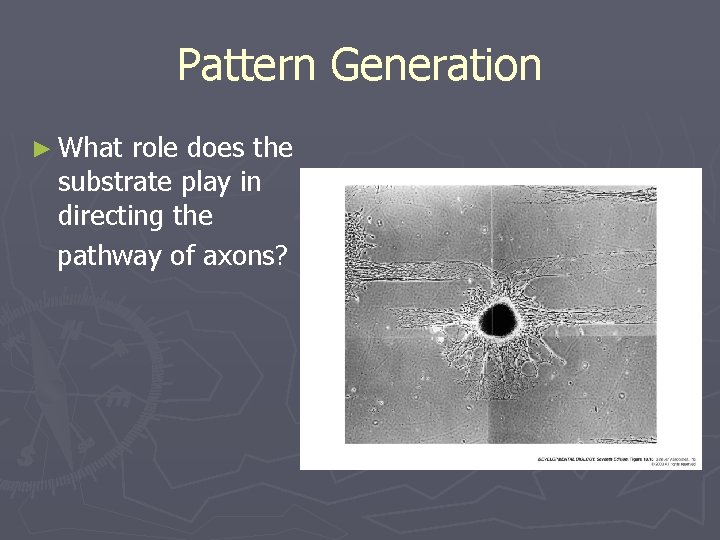
Pattern Generation ► What role does the substrate play in directing the pathway of axons?
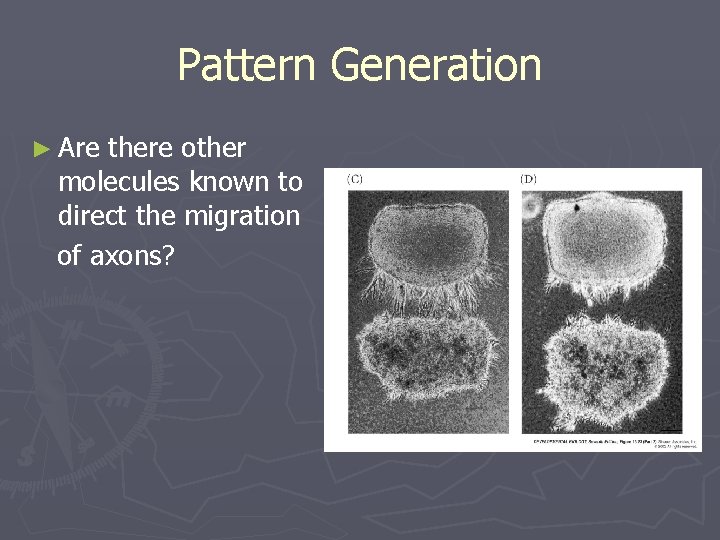
Pattern Generation ► Are there other molecules known to direct the migration of axons?
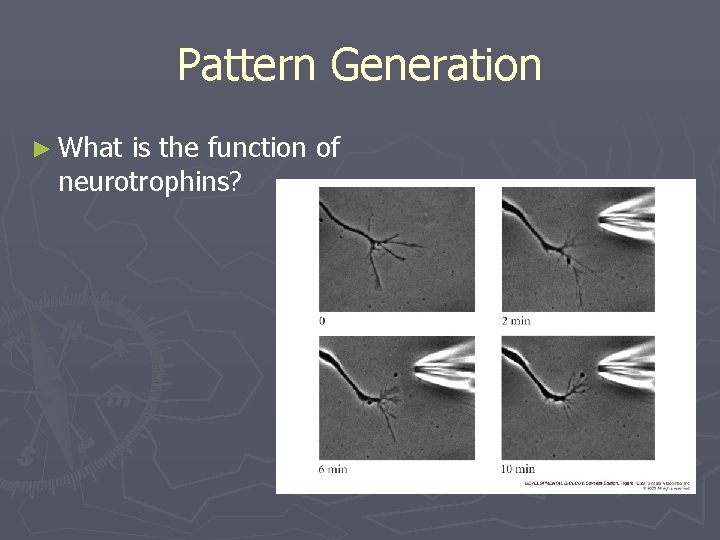
Pattern Generation ► What is the function of neurotrophins?
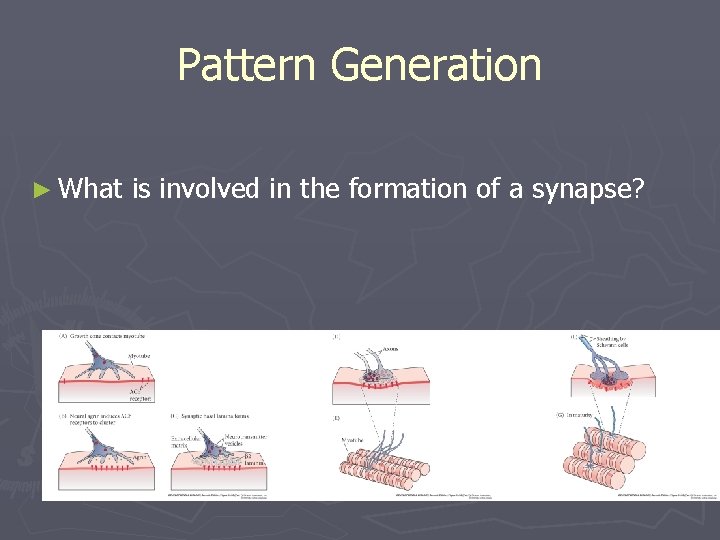
Pattern Generation ► What is involved in the formation of a synapse?
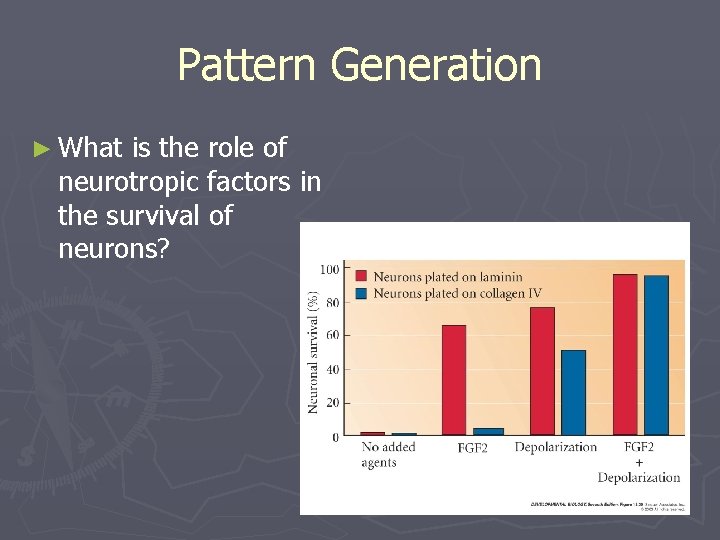
Pattern Generation ► What is the role of neurotropic factors in the survival of neurons?
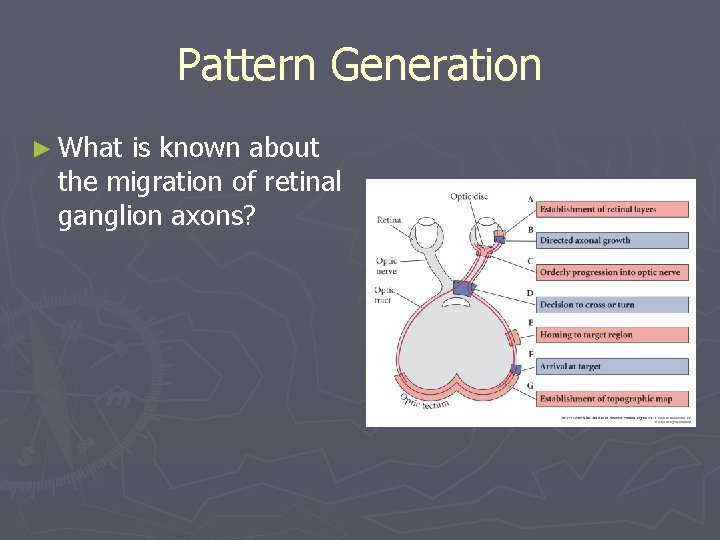
Pattern Generation ► What is known about the migration of retinal ganglion axons?
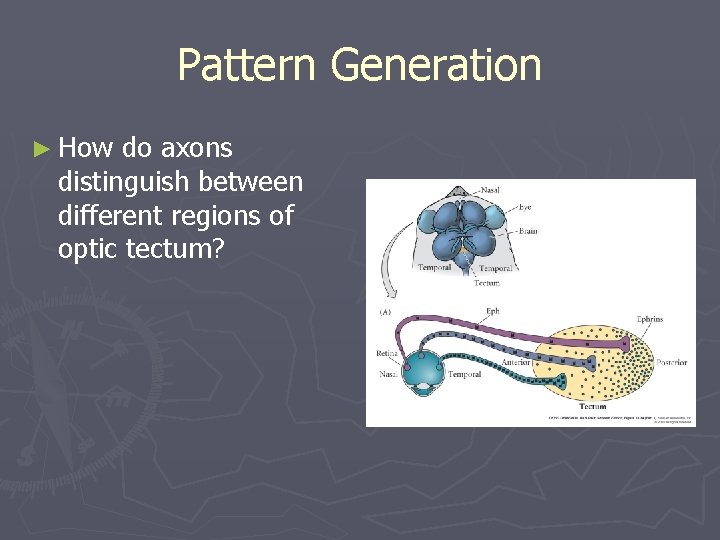
Pattern Generation ► How do axons distinguish between different regions of optic tectum?