
Networks Information Systems and Management Telecommunications Definition The
- Slides: 24
Networks Information Systems and Management
Telecommunications • Definition: The exchange of data in any form (voice, data, text, images) over computer-based networks.
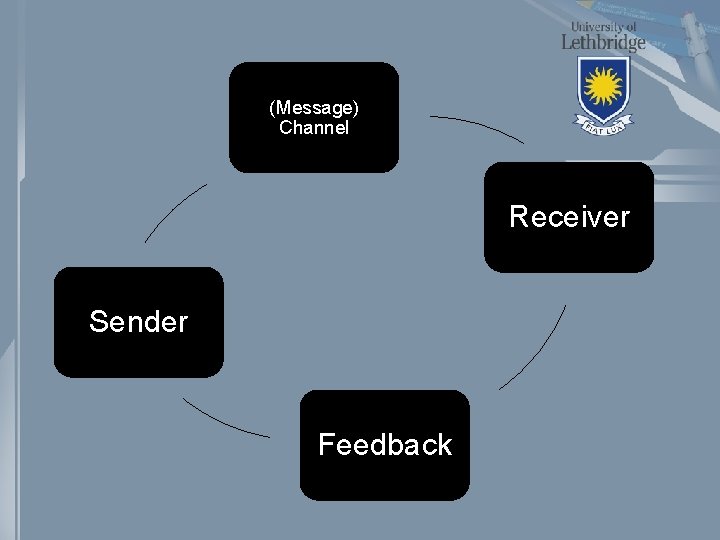
(Message) Channel Receiver Sender Feedback
Protocol • Definition: The rules and procedures that govern transmission between the components in a network.
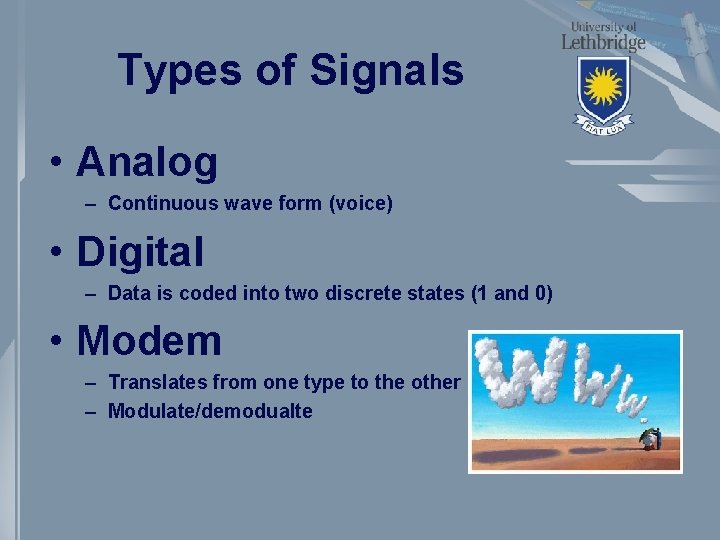
Types of Signals • Analog – Continuous wave form (voice) • Digital – Data is coded into two discrete states (1 and 0) • Modem – Translates from one type to the other – Modulate/demodualte
Communication Channels • Definition: The links by which data or voice are transmitted between sending and receiving devices in a network
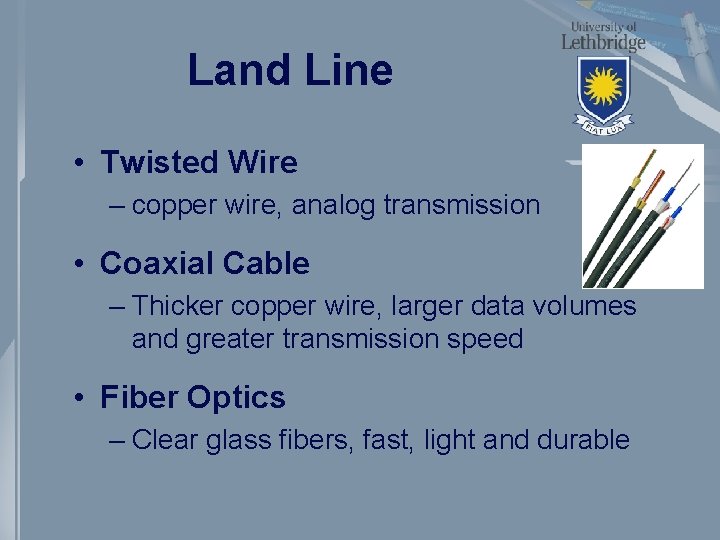
Land Line • Twisted Wire – copper wire, analog transmission • Coaxial Cable – Thicker copper wire, larger data volumes and greater transmission speed • Fiber Optics – Clear glass fibers, fast, light and durable
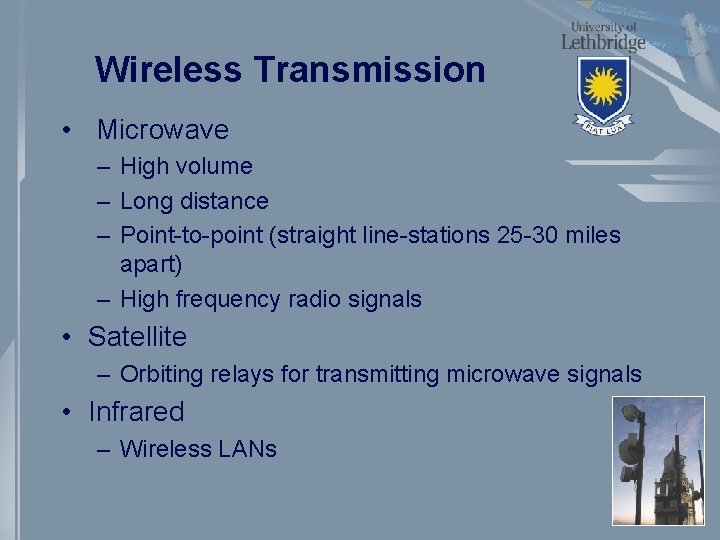
Wireless Transmission • Microwave – High volume – Long distance – Point-to-point (straight line-stations 25 -30 miles apart) – High frequency radio signals • Satellite – Orbiting relays for transmitting microwave signals • Infrared – Wireless LANs
Transmission Speed • Baud Rate – Change in signal from + to – or vice versa • Bandwidth – Capacity of a communication channel as measured by the difference between the highest and lowest frequencies that can be transmitted by that channel
Transmission Modes • Asynchronous – Low speed transmission of one character at a time (need start, stop, and parity bits) • Synchronous – High speed simultaneous transmissions of large blocks of data (clock at each end)
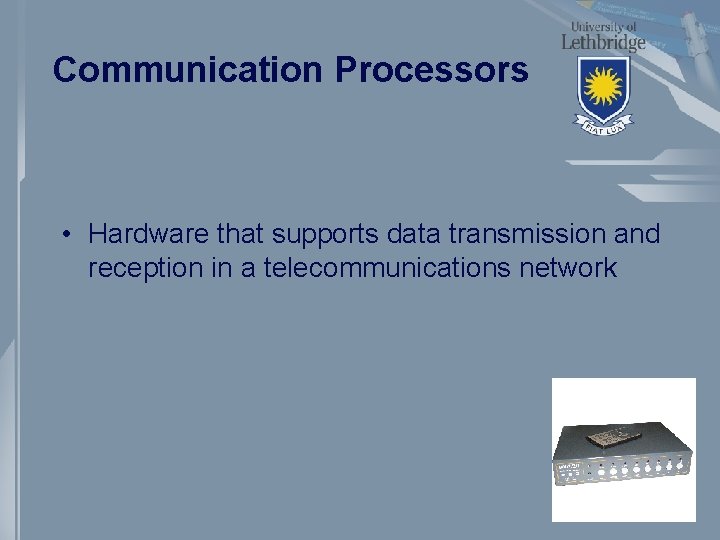
Communication Processors • Hardware that supports data transmission and reception in a telecommunications network
Communications Processors • Front-end Processor – Small computer managing the communications for the host computer in a network • Concentrator (open and close channel) – Computer that collects and temporarily stores messages for batch transmission • Multiplexer (channel always open) – Enables a single channel to carry data transmissions from multiple sources
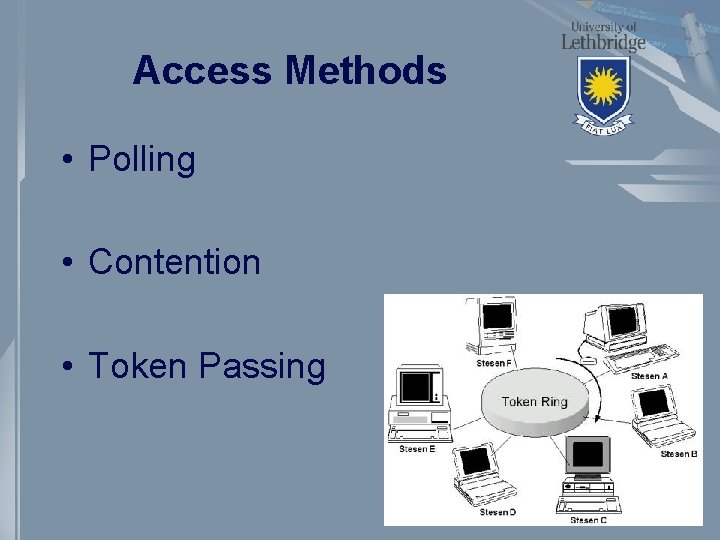
Access Methods • Polling • Contention • Token Passing
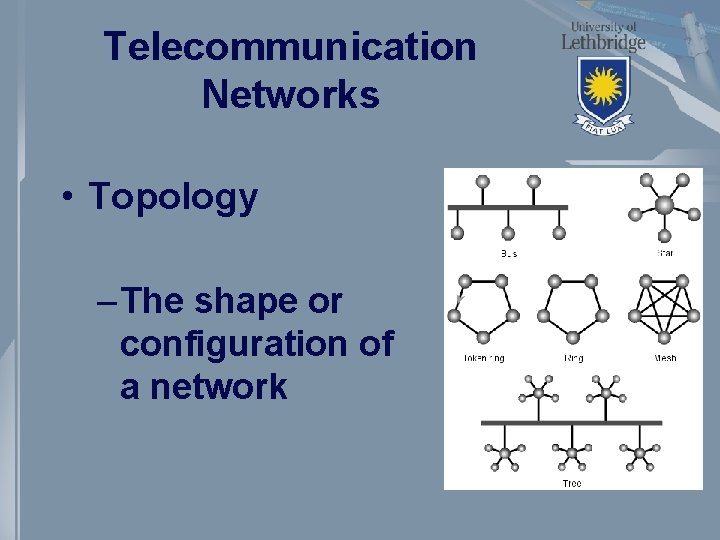
Telecommunication Networks • Topology – The shape or configuration of a network
Network Topologies 1. Star: all computers are connected to a central host 2. Ring: computers are linked by a closed loop 3. Bus: all messages are broadcast to the entire network and each device identifies messages sent to it
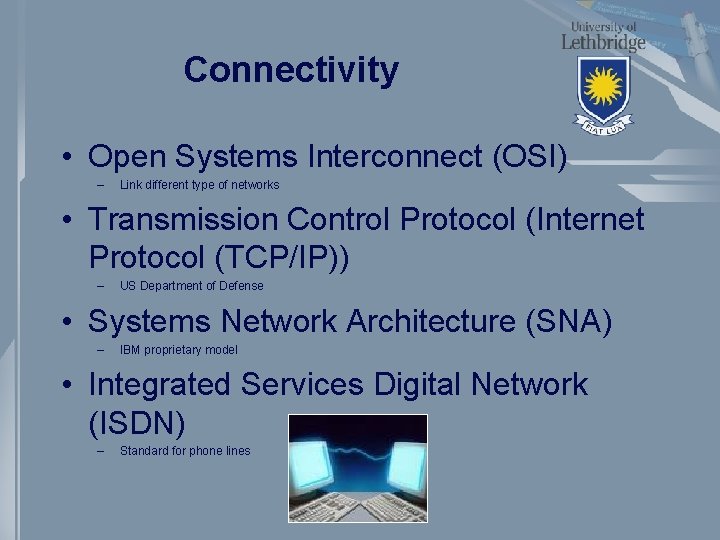
Connectivity • Open Systems Interconnect (OSI) – Link different type of networks • Transmission Control Protocol (Internet Protocol (TCP/IP)) – US Department of Defense • Systems Network Architecture (SNA) – IBM proprietary model • Integrated Services Digital Network (ISDN) – Standard for phone lines
Types of Telecommunication Networks • • WAN MAN LAN VAN • • Intranet Extranet VPN Client/Server Network
Trends • Open Systems • Connectivity • Interoperability • Digital • Wireless
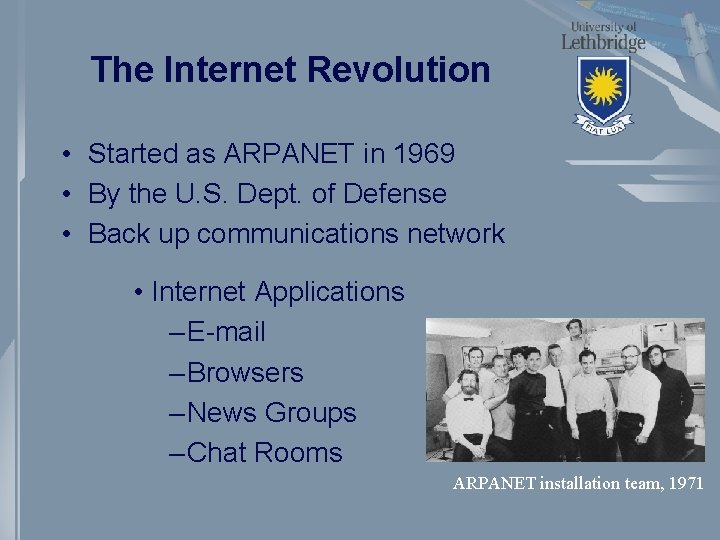
The Internet Revolution • Started as ARPANET in 1969 • By the U. S. Dept. of Defense • Back up communications network • Internet Applications – E-mail – Browsers – News Groups – Chat Rooms ARPANET installation team, 1971
The Information Super Highway • U. S. Interstate Highway system • The Internet * Both were formed for military purposes!
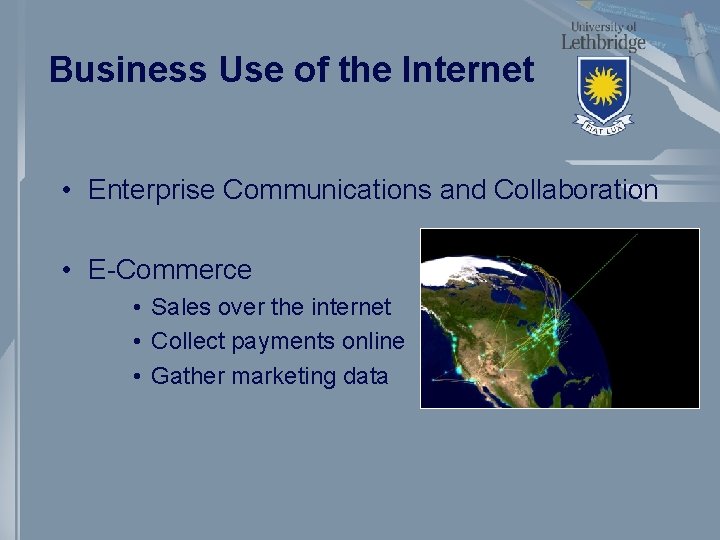
Business Use of the Internet • Enterprise Communications and Collaboration • E-Commerce • Sales over the internet • Collect payments online • Gather marketing data
Business Use of the Internet • Strategic Business Alliances • Through the distribution chain • Market sharing – Airlines • Virtual Companies – CIM – IE 3
My Uses of the Internet • • • Baseball Game Tickets Car Prices Listen to Robb broadcast hockey Distance Education (CIM, Capella) VOIP Skype
Networks Information Systems and Management