
Networking and the Internet Lecture 4 Todays lecture
- Slides: 32
Networking and the Internet Lecture 4
Today’s lecture History of the Internet How the Internet works Network protocols
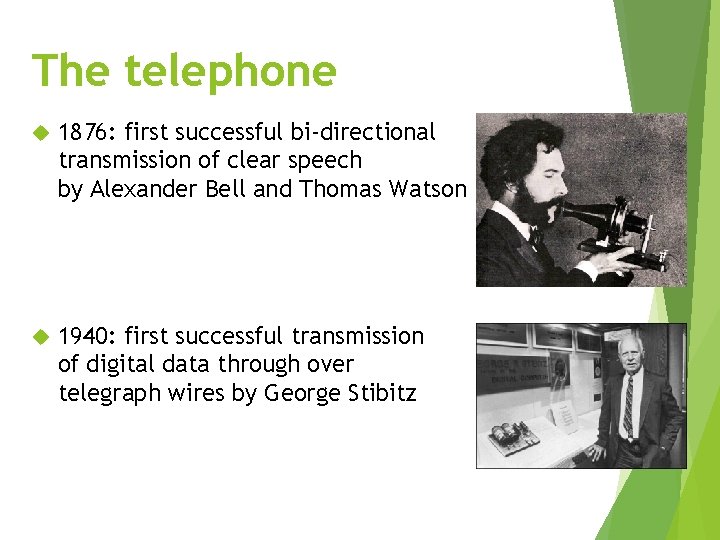
The telephone 1876: first successful bi-directional transmission of clear speech by Alexander Bell and Thomas Watson 1940: first successful transmission of digital data through over telegraph wires by George Stibitz
WWII and the Cold War Computer technology played an important role in code-breaking during WW 2 Cold War between US and USSR led to a technology and arms race Peaked with the launch of Sputnik in 1957 1958: Advanced Research Projects Agency (ARPA) established April 1969: construction of ARPANET begins, a packet-switching network
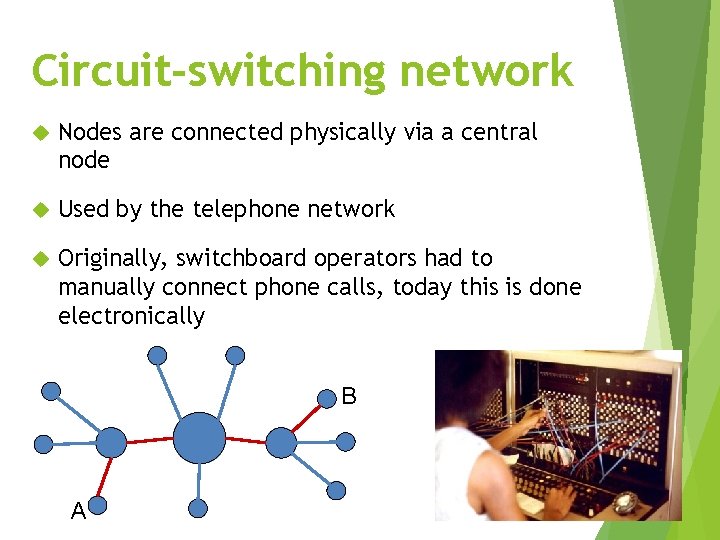
Circuit-switching network Nodes are connected physically via a central node Used by the telephone network Originally, switchboard operators had to manually connect phone calls, today this is done electronically B A
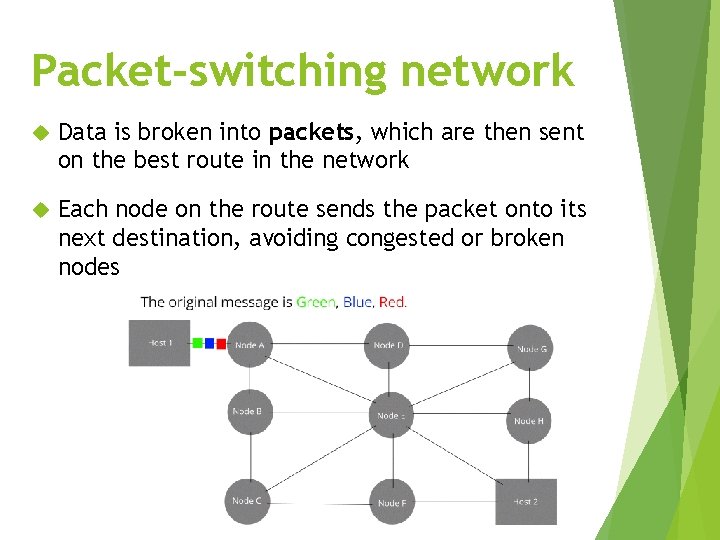
Packet-switching network Data is broken into packets, which are then sent on the best route in the network Each node on the route sends the packet onto its next destination, avoiding congested or broken nodes
ARPANET October 1969: ARPANET is completed with four nodes 1973: Norway connects to ARPANET via satellite, followed by London via a terrestrial link
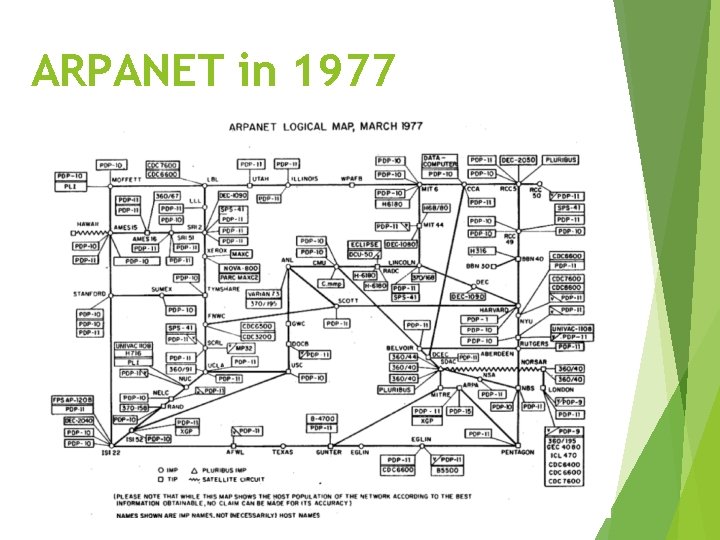
ARPANET in 1977
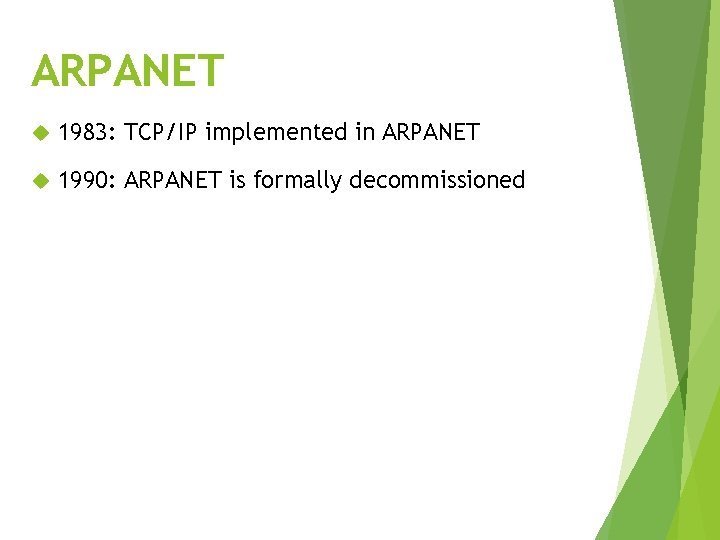
ARPANET 1983: TCP/IP implemented in ARPANET 1990: ARPANET is formally decommissioned
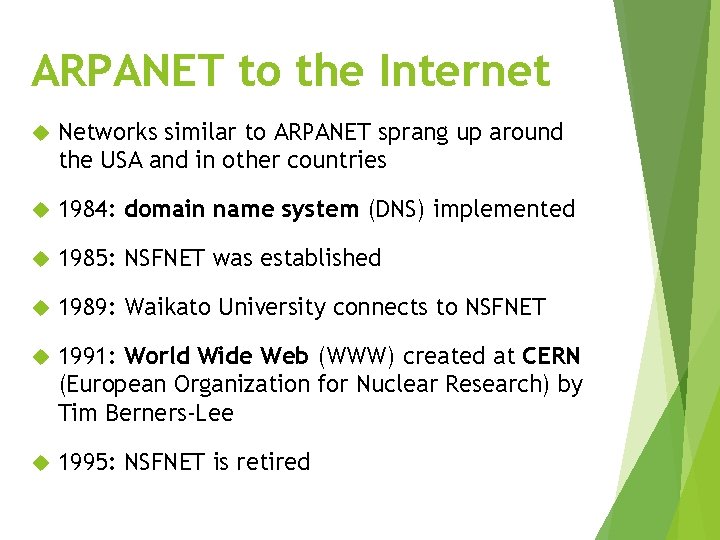
ARPANET to the Internet Networks similar to ARPANET sprang up around the USA and in other countries 1984: domain name system (DNS) implemented 1985: NSFNET was established 1989: Waikato University connects to NSFNET 1991: World Wide Web (WWW) created at CERN (European Organization for Nuclear Research) by Tim Berners-Lee 1995: NSFNET is retired
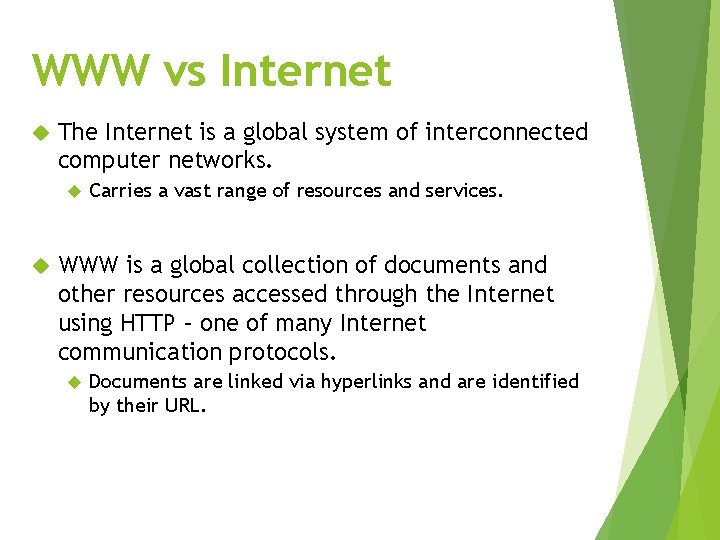
WWW vs Internet The Internet is a global system of interconnected computer networks. Carries a vast range of resources and services. WWW is a global collection of documents and other resources accessed through the Internet using HTTP – one of many Internet communication protocols. Documents are linked via hyperlinks and are identified by their URL.
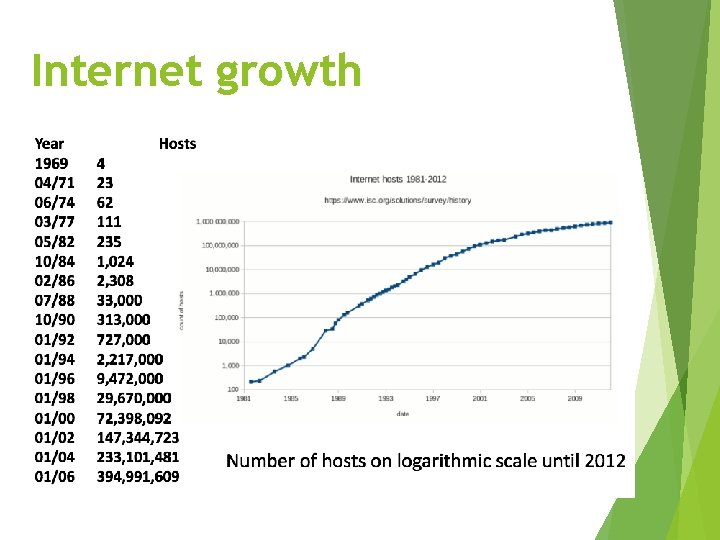
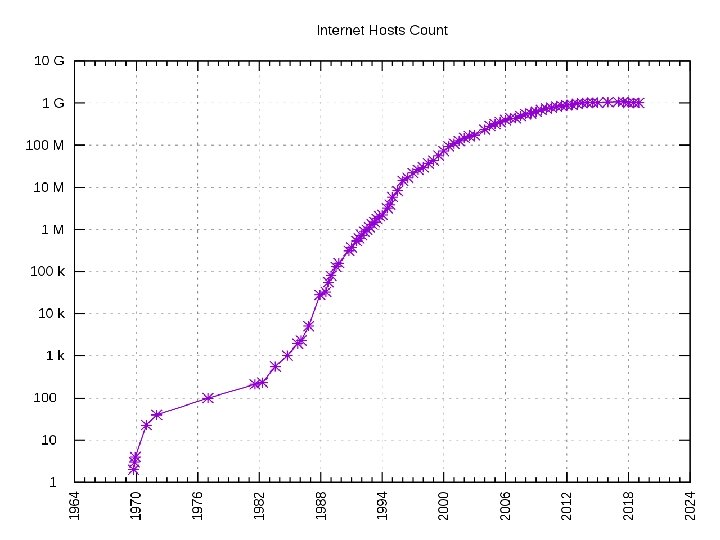
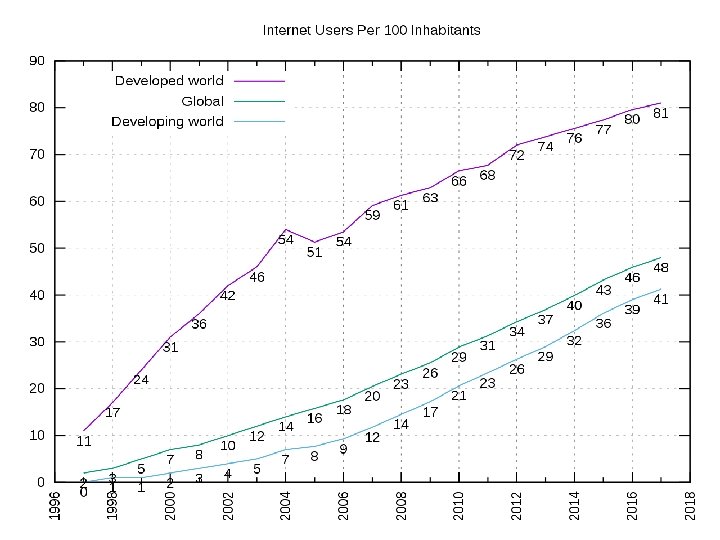
Internet growth
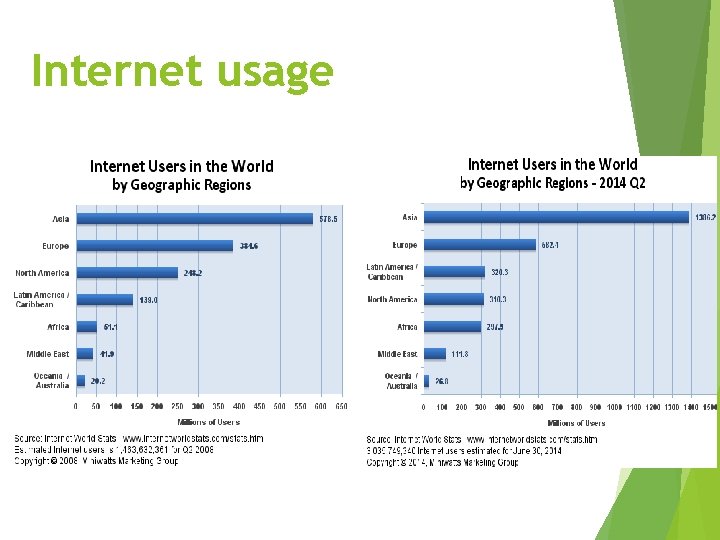
Internet usage
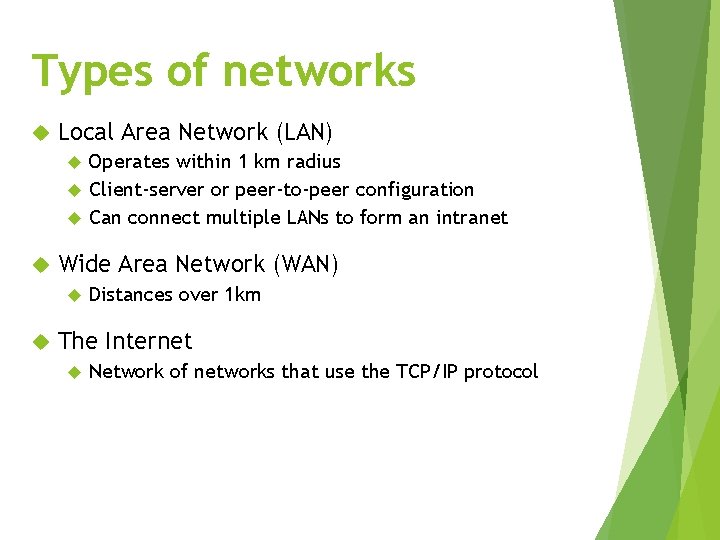
Types of networks Local Area Network (LAN) Operates within 1 km radius Client-server or peer-to-peer configuration Can connect multiple LANs to form an intranet Wide Area Network (WAN) Distances over 1 km The Internet Network of networks that use the TCP/IP protocol
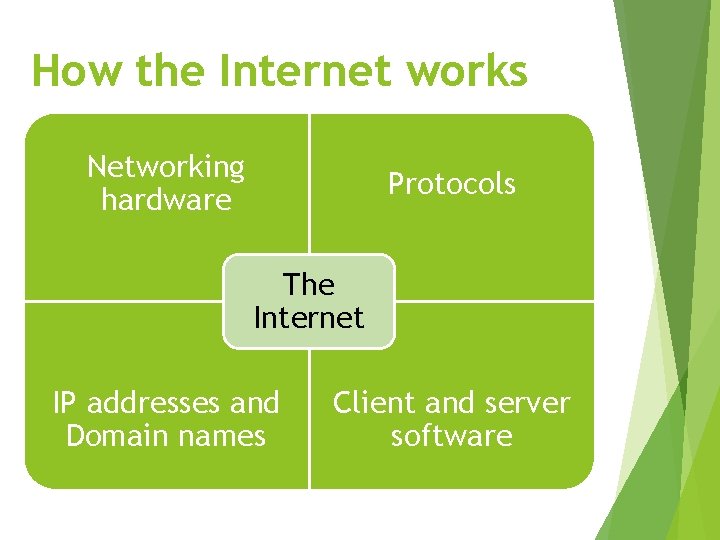
How the Internet works Networking hardware Protocols The Internet IP addresses and Domain names Client and server software
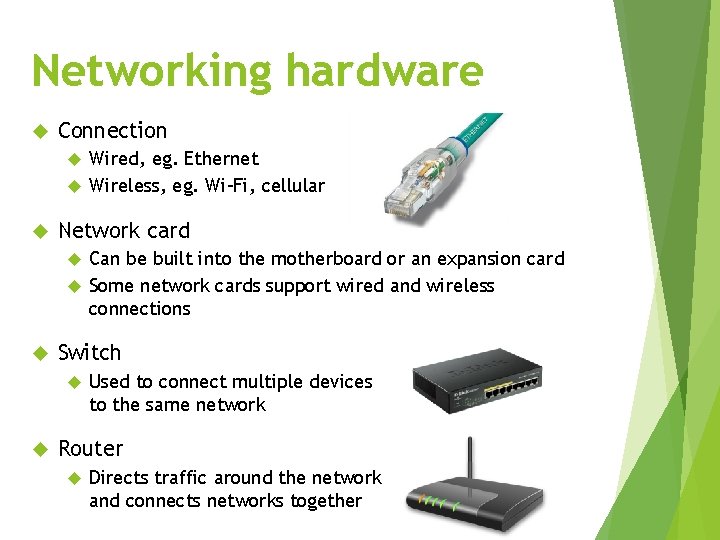
Networking hardware Connection Wired, eg. Ethernet Wireless, eg. Wi-Fi, cellular Network card Can be built into the motherboard or an expansion card Some network cards support wired and wireless connections Switch Used to connect multiple devices to the same network Router Directs traffic around the network and connects networks together
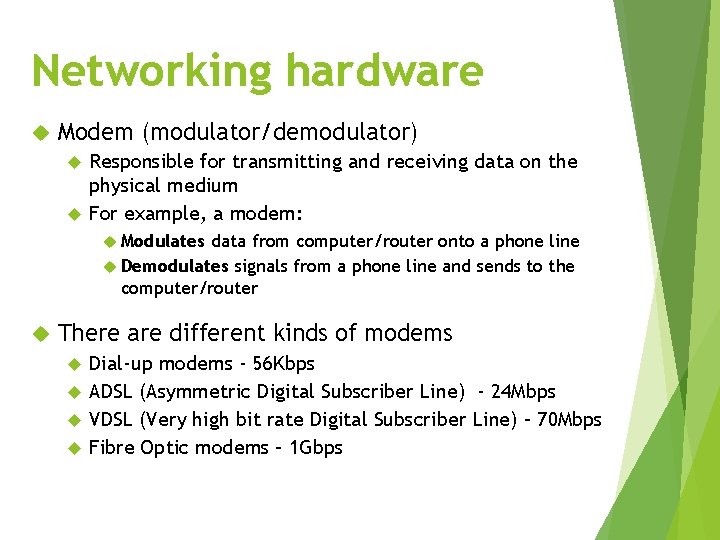
Networking hardware Modem (modulator/demodulator) Responsible for transmitting and receiving data on the physical medium For example, a modem: Modulates data from computer/router onto a phone line Demodulates signals from a phone line and sends to the computer/router There are different kinds of modems Dial-up modems - 56 Kbps ADSL (Asymmetric Digital Subscriber Line) - 24 Mbps VDSL (Very high bit rate Digital Subscriber Line) – 70 Mbps Fibre Optic modems – 1 Gbps
Protocol Protocol: a standardised method of communication Ensures that the sender and receiver can communicate properly Protocols include rules for: Opening and maintaining a connection Sending and receiving data Ending the connection
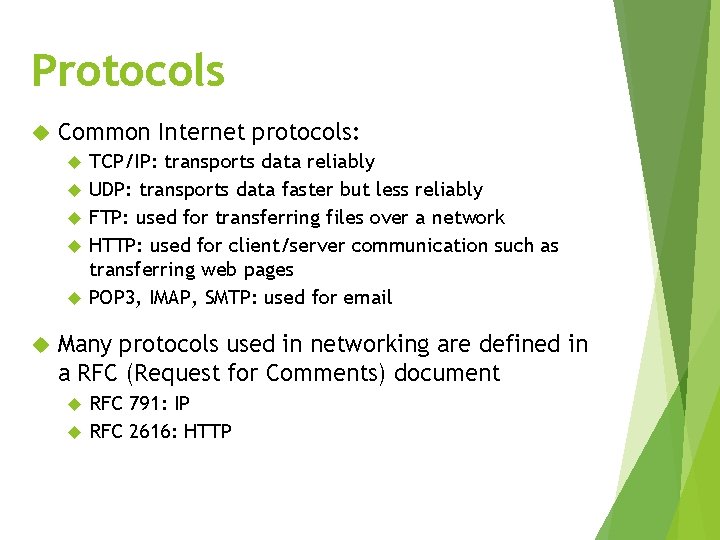
Protocols Common Internet protocols: TCP/IP: transports data reliably UDP: transports data faster but less reliably FTP: used for transferring files over a network HTTP: used for client/server communication such as transferring web pages POP 3, IMAP, SMTP: used for email Many protocols used in networking are defined in a RFC (Request for Comments) document RFC 791: IP RFC 2616: HTTP
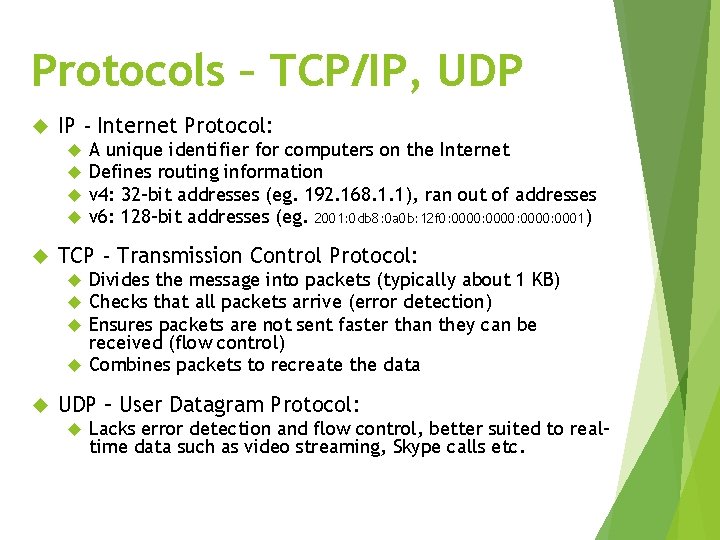
Protocols – TCP/IP, UDP IP - Internet Protocol: A unique identifier for computers on the Internet Defines routing information v 4: 32 -bit addresses (eg. 192. 168. 1. 1), ran out of addresses v 6: 128 -bit addresses (eg. 2001: 0 db 8: 0 a 0 b: 12 f 0: 0000: 0001) TCP - Transmission Control Protocol: Divides the message into packets (typically about 1 KB) Checks that all packets arrive (error detection) Ensures packets are not sent faster than they can be received (flow control) Combines packets to recreate the data UDP – User Datagram Protocol: Lacks error detection and flow control, better suited to realtime data such as video streaming, Skype calls etc.
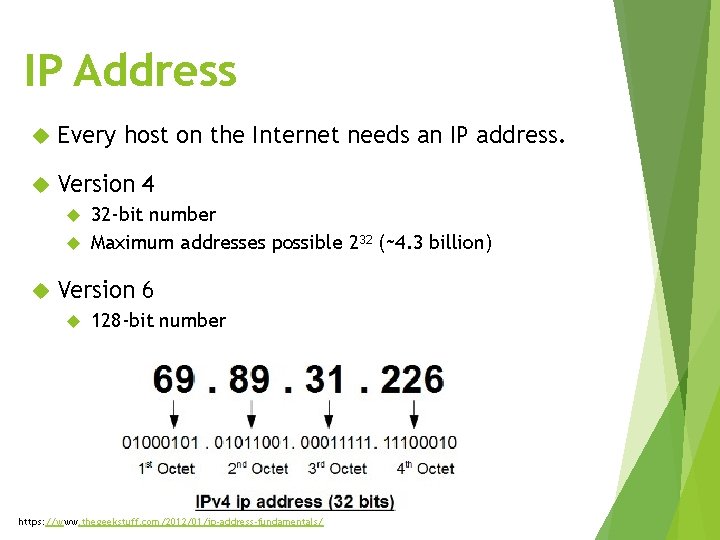
IP Address Every host on the Internet needs an IP address. Version 4 32 -bit number Maximum addresses possible 232 (~4. 3 billion) Version 6 128 -bit number https: //www. thegeekstuff. com/2012/01/ip-address-fundamentals/
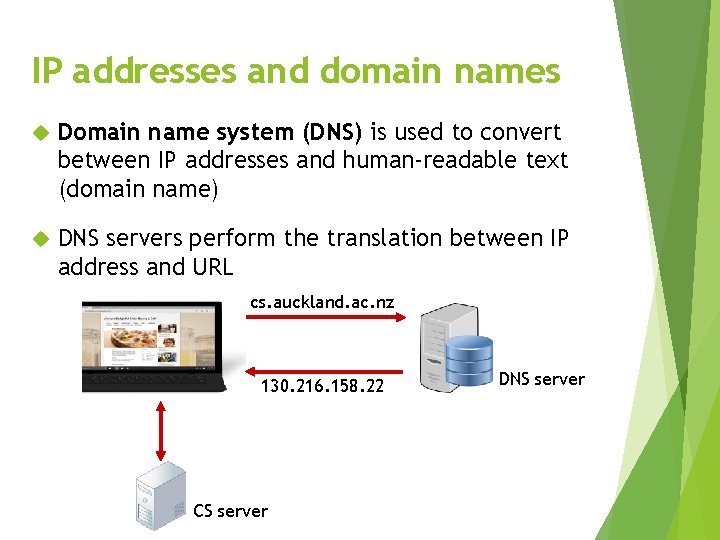
IP addresses and domain names Domain name system (DNS) is used to convert between IP addresses and human-readable text (domain name) DNS servers perform the translation between IP address and URL cs. auckland. ac. nz 130. 216. 158. 22 CS server DNS server
Client and server software Client software: Web browsers Email clients: Server software:
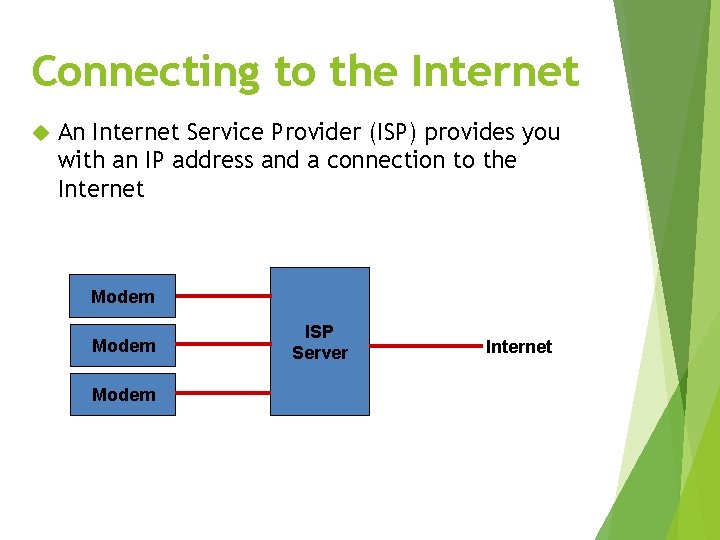
Connecting to the Internet An Internet Service Provider (ISP) provides you with an IP address and a connection to the Internet Modem ISP Server Internet
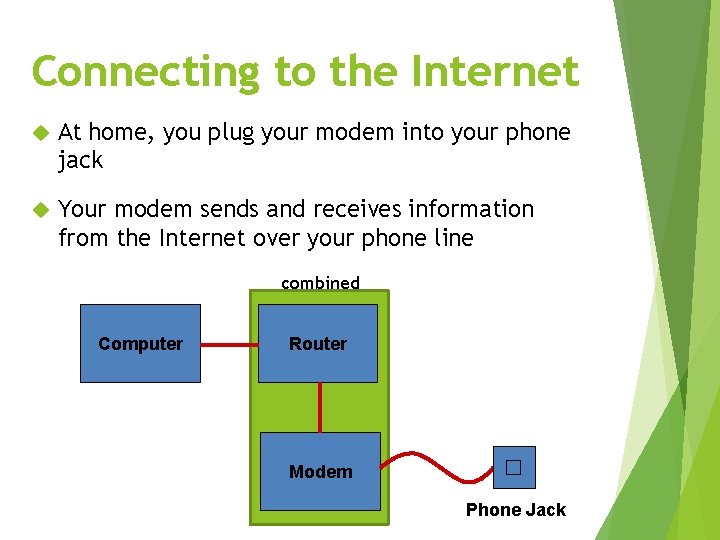
Connecting to the Internet At home, you plug your modem into your phone jack Your modem sends and receives information from the Internet over your phone line combined Computer Router Modem Phone Jack
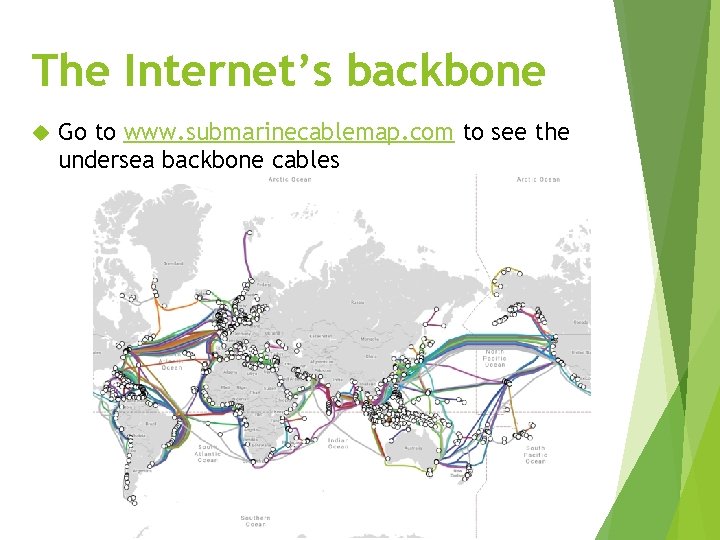
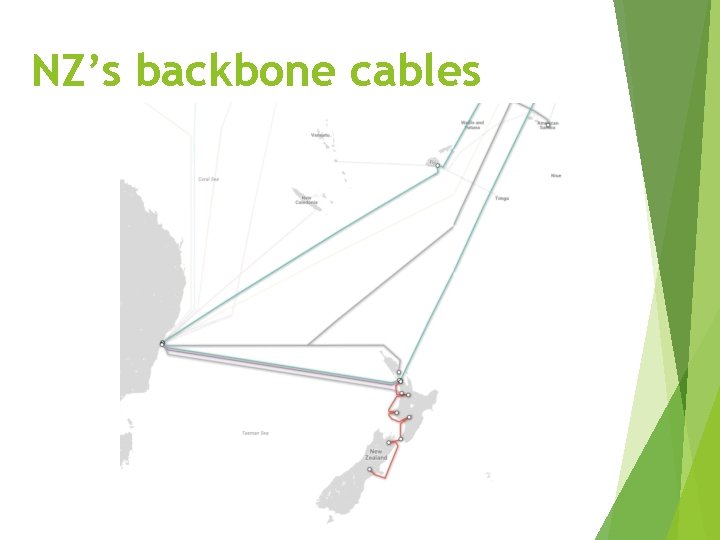
The Internet’s backbone High-capacity fibre optic cables laid on land under the sea Owned by companies who rent out capacity on the cables They connect countries together to form the global Internet so are extremely important Having multiple backbone cable connections provides extra capacity and redundancy
The Internet’s backbone Go to www. submarinecablemap. com to see the undersea backbone cables
NZ’s backbone cables
Answers What network model does the Internet use? What Internet protocol should your program use if it is time-sensitive? Packet-switched network UDP – user datagram protocol What is the name of the documents that describe the technical details of protocols? RFCs – request for comments
Summary The Internet is packet-switching network consisting of multiple networks joined together A number of protocols and technologies underpin the Internet As more people use the Internet, organisations tasked with maintaining it need to ensure the Internet can handle the increased demand (eg. moving from IPv 4 to IPv 6)