
Network Security Course Details By ASIM SHAHZAD Assistant
Network Security (Course Details) By ASIM SHAHZAD Assistant Professor University Of Engineering And Technology Taxila

¡ Name: Asim Shahzad ¡ ¡ ¡ MS Telecom Engineering (I. C. T) MS Computer Engineering (U. E. T Taxila) Currently started Ph. D in area of Solitons propagation in Fiber Optics Communication from U. E. T Taxila Email: asimshahzad@uettaxila. edu. pk ¡ Contact no. 0300 9755694 ¡
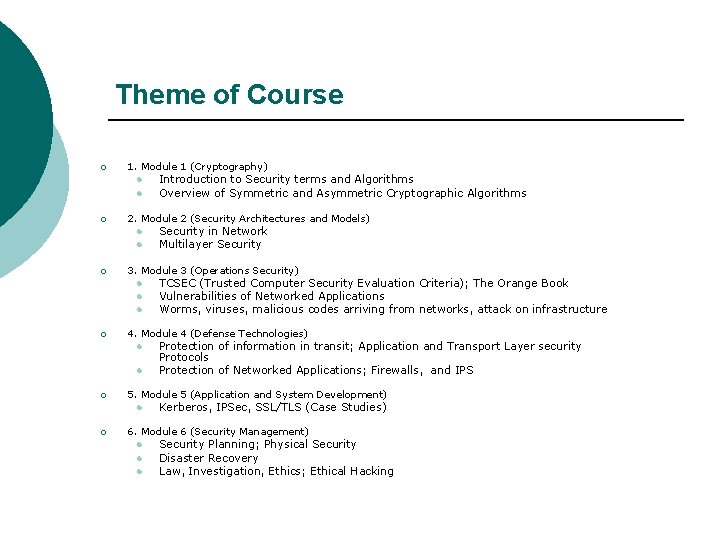
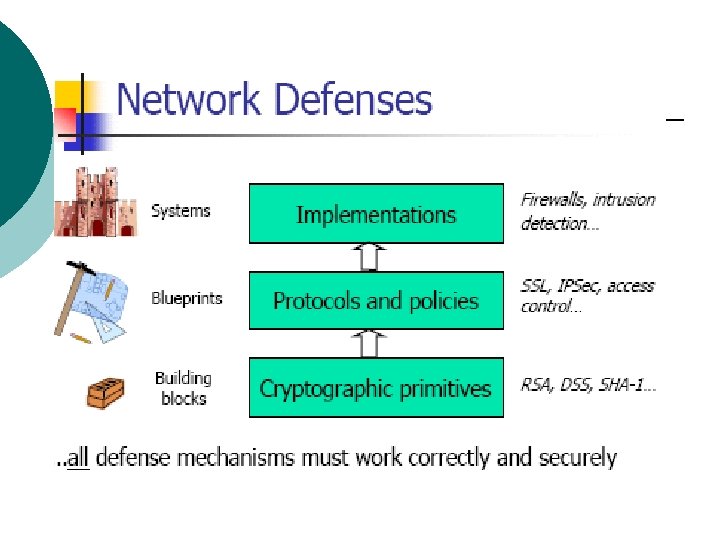
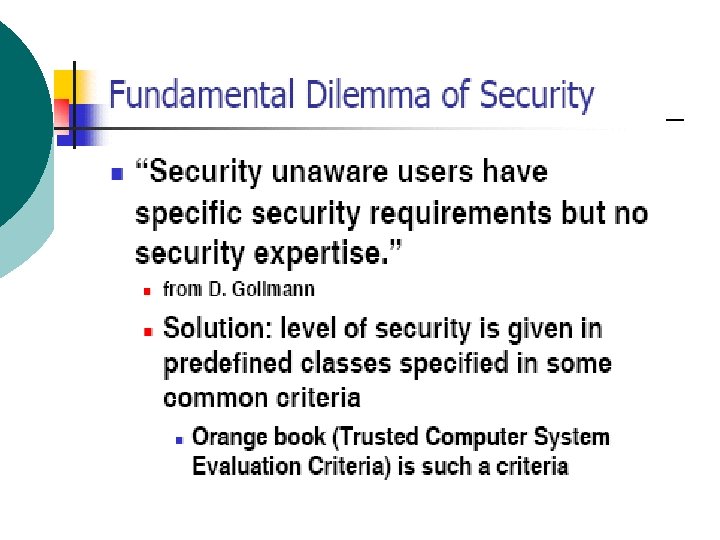
Theme of Course ¡ 1. Module 1 (Cryptography) l l ¡ 2. Module 2 (Security Architectures and Models) l l ¡ l l l Protection of information in transit; Application and Transport Layer security Protocols Protection of Networked Applications; Firewalls, and IPS 5. Module 5 (Application and System Development) l ¡ TCSEC (Trusted Computer Security Evaluation Criteria); The Orange Book Vulnerabilities of Networked Applications Worms, viruses, malicious codes arriving from networks, attack on infrastructure 4. Module 4 (Defense Technologies) l ¡ Security in Network Multilayer Security 3. Module 3 (Operations Security) l ¡ Introduction to Security terms and Algorithms Overview of Symmetric and Asymmetric Cryptographic Algorithms Kerberos, IPSec, SSL/TLS (Case Studies) 6. Module 6 (Security Management) l l l Security Planning; Physical Security Disaster Recovery Law, Investigation, Ethics; Ethical Hacking
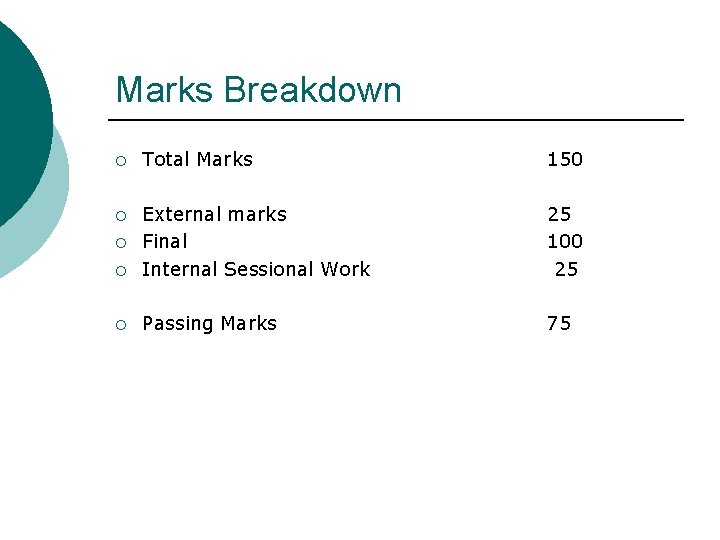
Marks Breakdown ¡ Total Marks 150 ¡ ¡ External marks Final Internal Sessional Work 25 100 25 ¡ Passing Marks 75 ¡
Two parts of your course. ¡ How to secure data (data security). ¡ How to secure your networks (network security) we start from data security talk about its various aspects. major concern will be ciphers designing. ¡
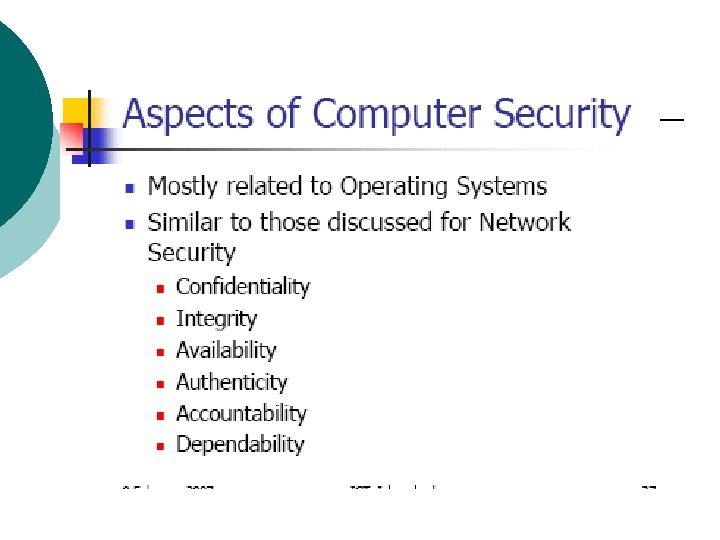
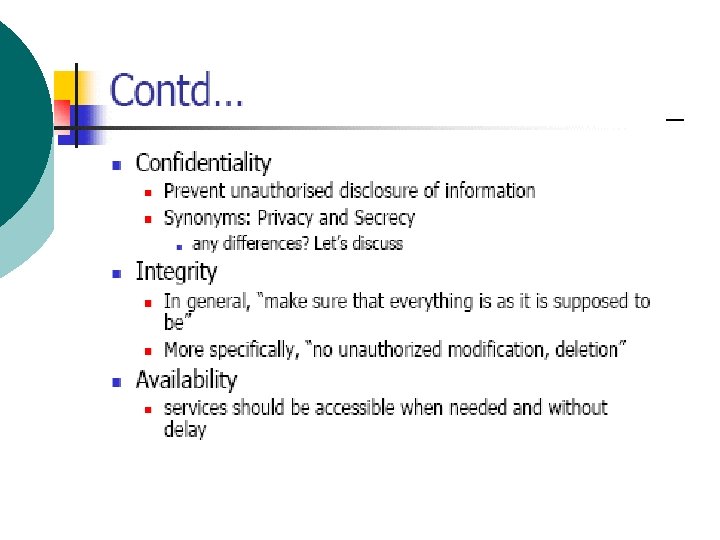
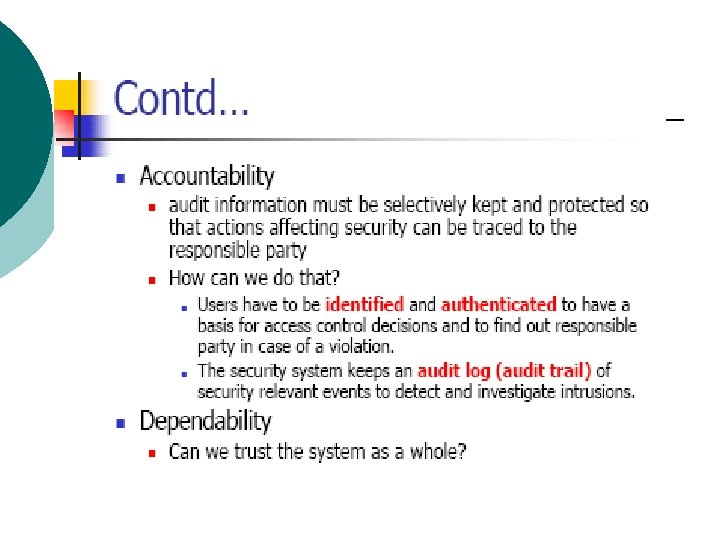
Desirable Security Properties ¡ ¡ ¡ ¡ Authenticity Confidentiality Integrity Availability Accountability and non-repudiation Freshness Access control Privacy of collected information
Cryptology ¡ ¡ ¡ ¡ �� Some Terminologies �� Plain text: The original message �� Cipher Text: The coded message �� Cipher: algorithm for transforming plaintext to cipher text �� Key: info used in cipher; known only to sender/receiver �� Encipher (encrypt): converting plaintext to cipher text �� Decipher (decrypt): recovering cipher text from plaintext
Contd… Cryptography: study of encryption principles/methods. Cryptanalysis (code breaking): the study of principles/ methods of deciphering cipher text without knowing key. Cryptology: the field of both cryptography and cryptanalysis.
Contd. . �� Unconditional security No matter how much computer power is available, the cipher cannot be broken since the cipher text provides insufficient information to uniquely determine the corresponding plaintext. ¡ Computational security Given limited computing resources (e. g. time needed for calculations is greater than age of universe), the cipher cannot be broken. ¡
Conventional Encryption Principles ¡ ¡ ¡ ¡ �� An encryption scheme has five ingredients: �� Plaintext �� Encryption algorithm �� Secret Key �� Cipher text �� Decryption algorithm �� Security depends on the secrecy of the key, not the secrecy of the algorithm
Cryptology Classified along three independent dimensions: 1)Type of encryption operations used for transforming plaintext to cipher text. substitution / transposition / product 2) Number of keys used symmetric - single-key or secret key encryption asymmetric - two-key or public key encryption 3)Way in which plaintext is processed �� Block �� stream
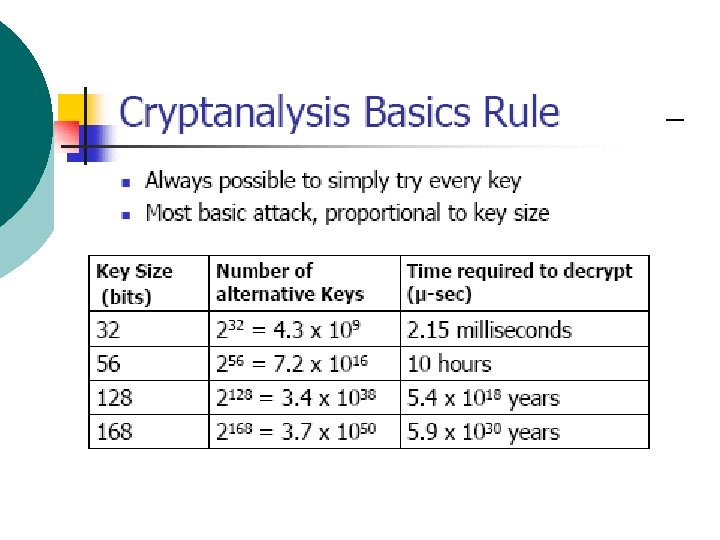
Cryptanalysis ¡ Two general approaches to attack an encryption scheme 1) Cryptanalysis. needs encryption algorithm plus some knowledge regarding the plaintext or some sample plain text cipher text pair. 2) Brute-Force attack �� attacker tries every possible key to decrypt. �� needs to check so many keys.
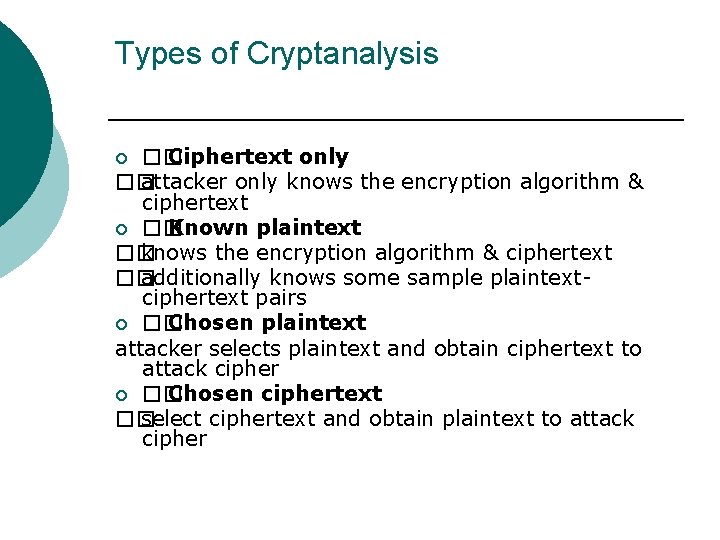
Types of Cryptanalysis �� Ciphertext only �� attacker only knows the encryption algorithm & ciphertext ¡ �� Known plaintext �� knows the encryption algorithm & ciphertext �� additionally knows some sample plaintextciphertext pairs ¡ �� Chosen plaintext attacker selects plaintext and obtain ciphertext to attack cipher ¡ �� Chosen ciphertext �� select ciphertext and obtain plaintext to attack cipher ¡
Classical Ciphers . Where letters of plaintext are replaced by other letters or by numbers or symbols. . Or if plaintext is viewed as a sequence of bits, then substitution involves replacing plaintext bit patterns with cipher text bit patterns.
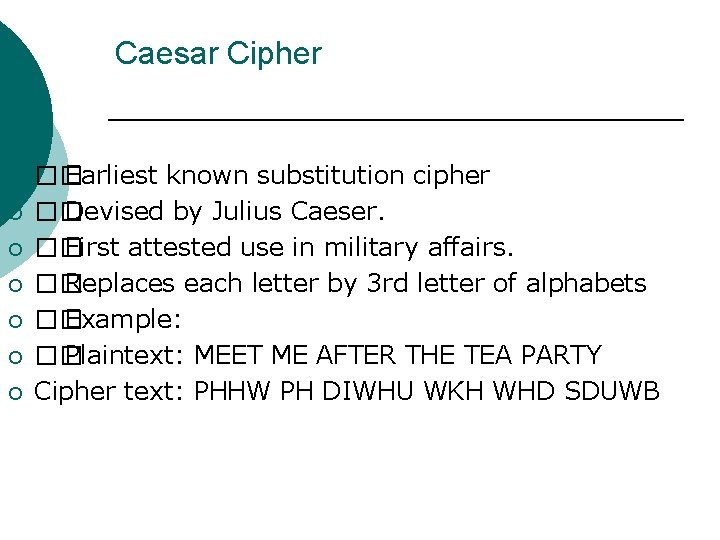
Caesar Cipher ¡ ¡ ¡ ¡ �� Earliest known substitution cipher �� Devised by Julius Caeser. �� First attested use in military affairs. �� Replaces each letter by 3 rd letter of alphabets �� Example: �� Plaintext: MEET ME AFTER THE TEA PARTY Cipher text: PHHW PH DIWHU WKH WHD SDUWB
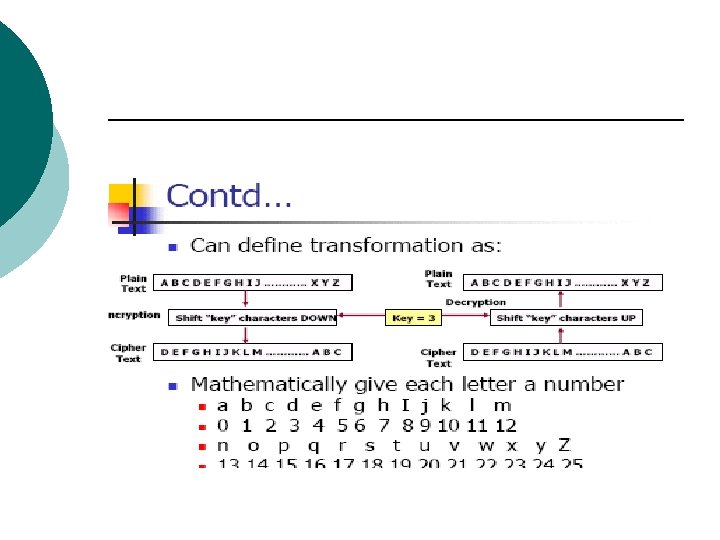
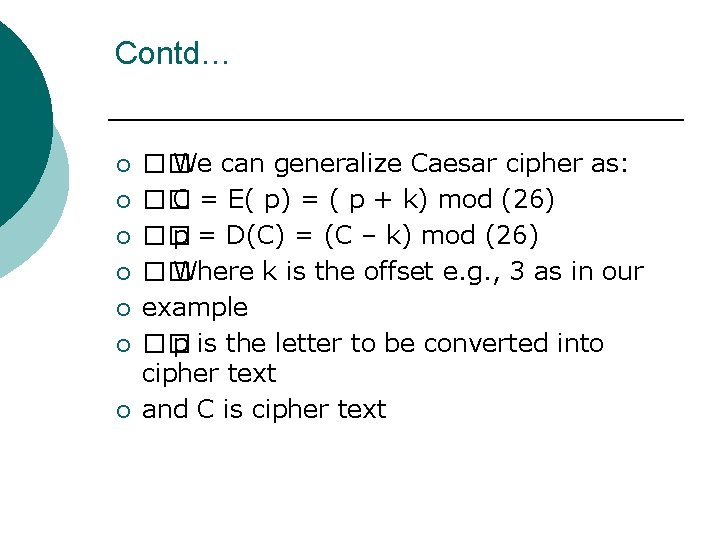
Contd… ¡ ¡ ¡ ¡ �� We can generalize Caesar cipher as: �� C = E( p) = ( p + k) mod (26) �� p = D(C) = (C – k) mod (26) �� Where k is the offset e. g. , 3 as in our example �� p is the letter to be converted into cipher text and C is cipher text
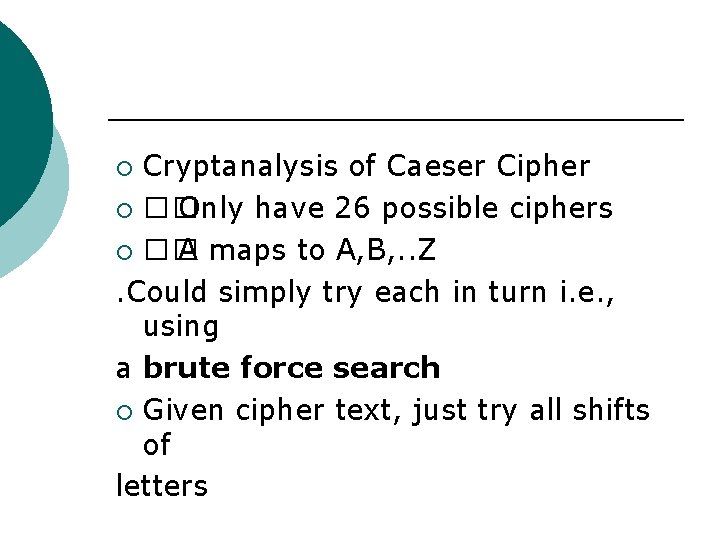
Cryptanalysis of Caeser Cipher ¡ �� Only have 26 possible ciphers ¡ �� A maps to A, B, . . Z. Could simply try each in turn i. e. , using a brute force search ¡ Given cipher text, just try all shifts of letters ¡
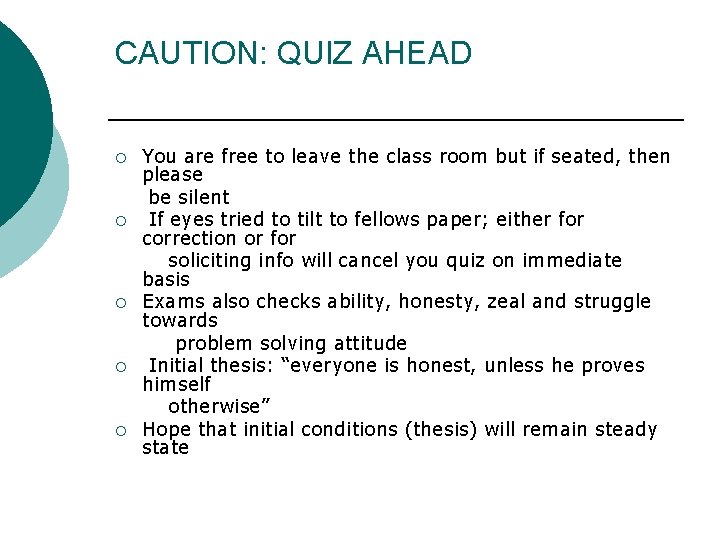
CAUTION: QUIZ AHEAD ¡ ¡ ¡ You are free to leave the class room but if seated, then please be silent If eyes tried to tilt to fellows paper; either for correction or for soliciting info will cancel you quiz on immediate basis Exams also checks ability, honesty, zeal and struggle towards problem solving attitude Initial thesis: “everyone is honest, unless he proves himself otherwise” Hope that initial conditions (thesis) will remain steady state
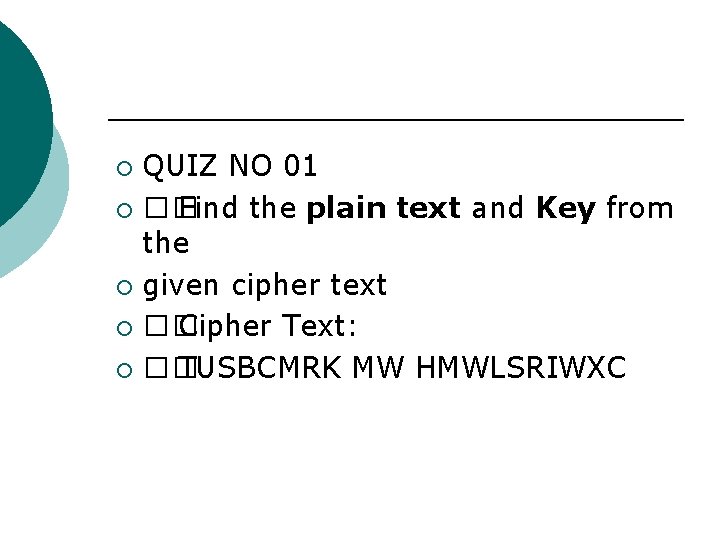
QUIZ NO 01 ¡ �� Find the plain text and Key from the ¡ given cipher text ¡ �� Cipher Text: ¡ �� TUSBCMRK MW HMWLSRIWXC ¡
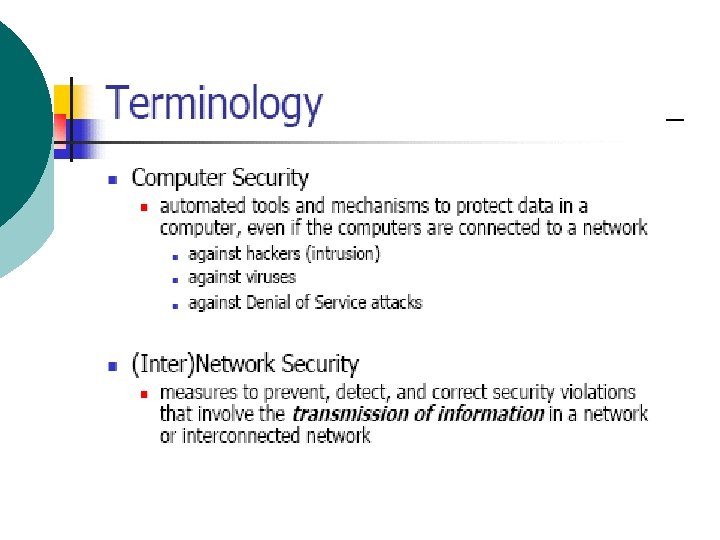
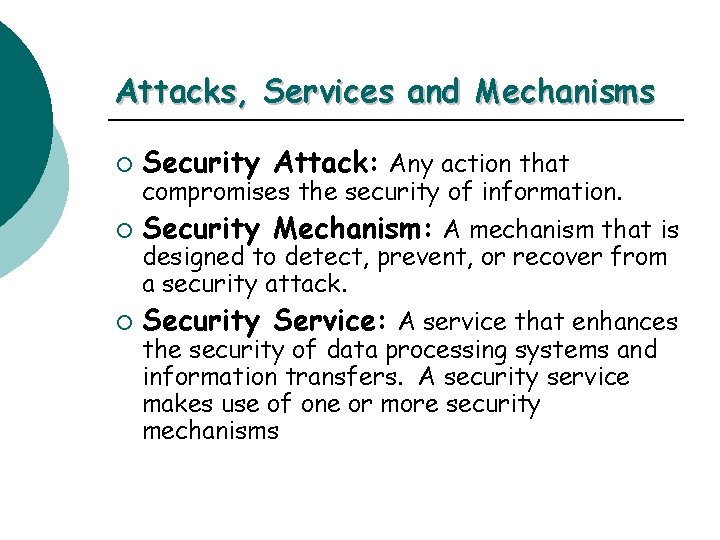
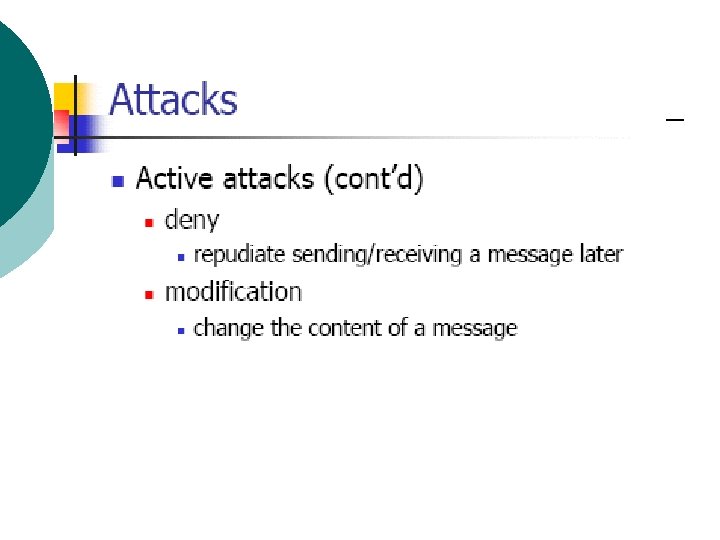
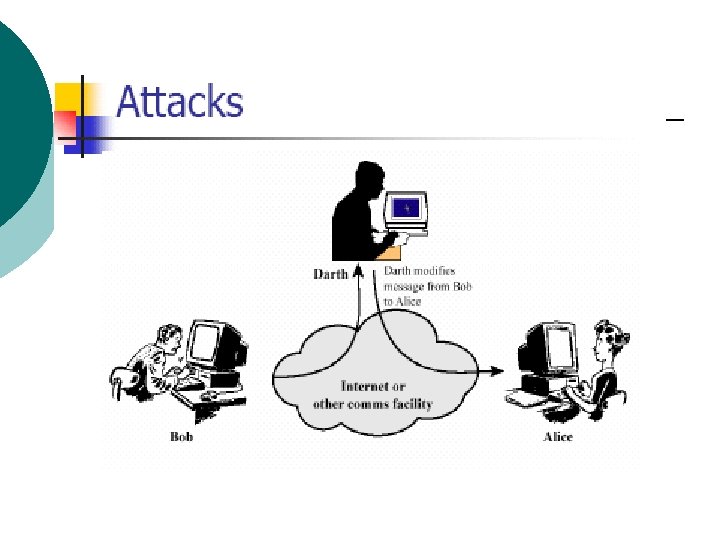
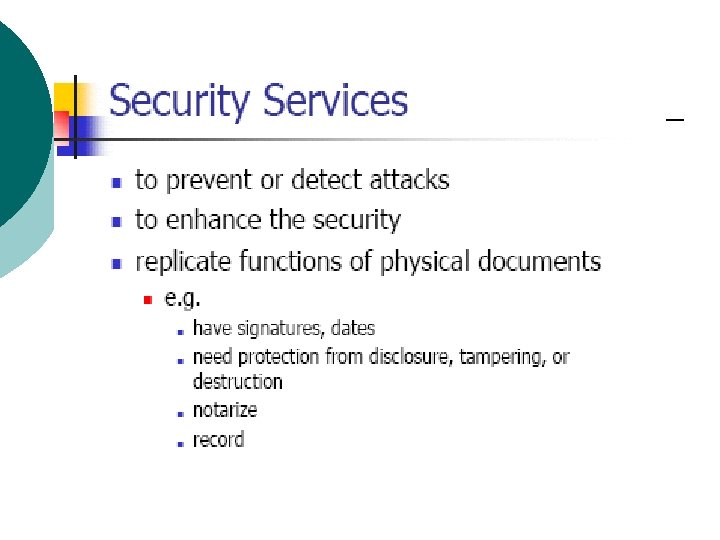
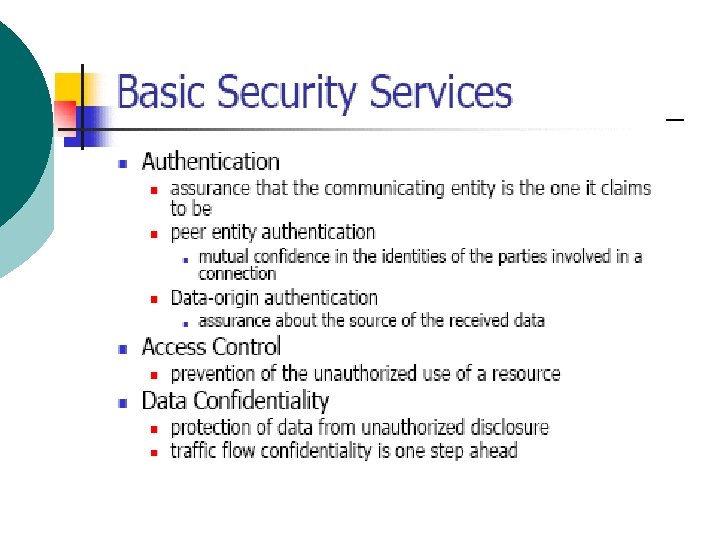
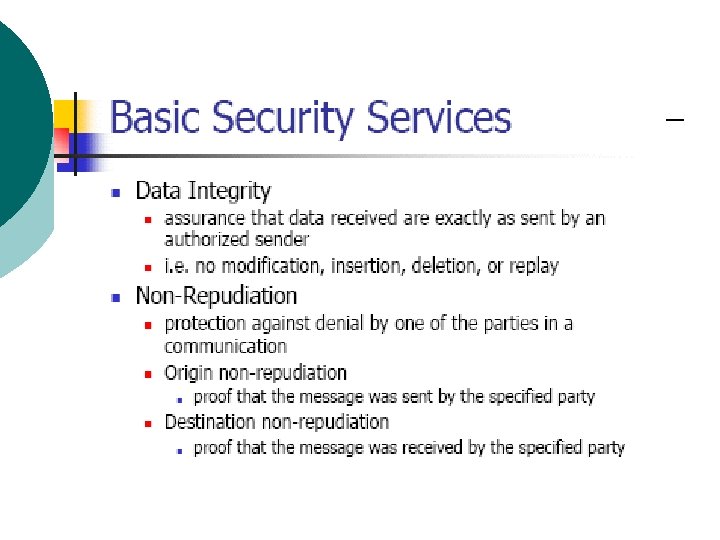
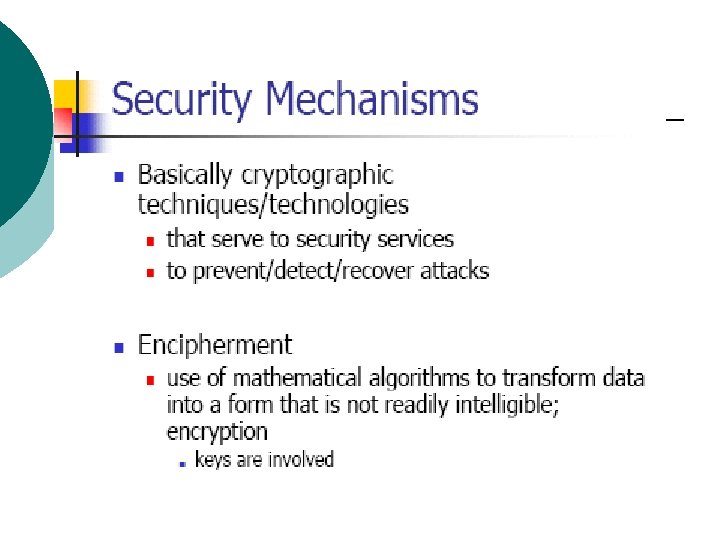
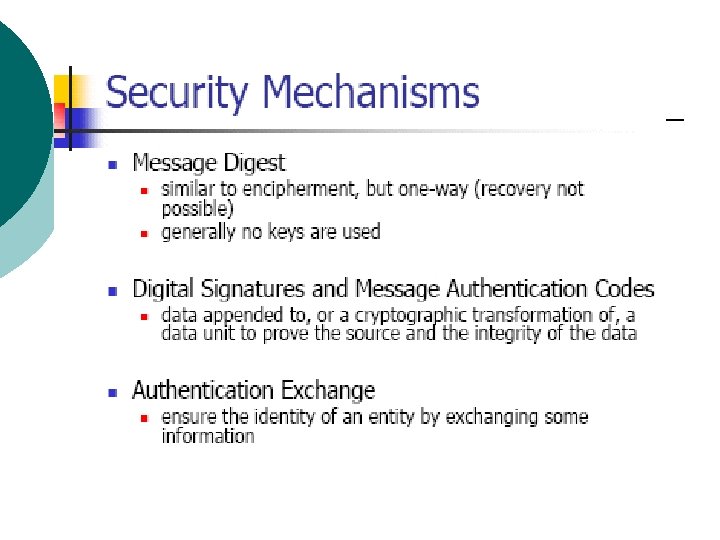
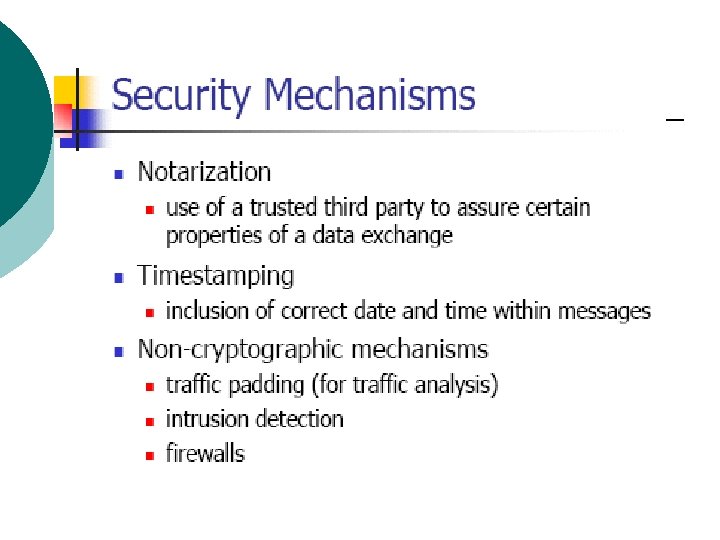
Attacks, Services and Mechanisms ¡ Security Attack: Any action that compromises the security of information. ¡ Security Mechanism: A mechanism that is designed to detect, prevent, or recover from a security attack. ¡ Security Service: A service that enhances the security of data processing systems and information transfers. A security service makes use of one or more security mechanisms
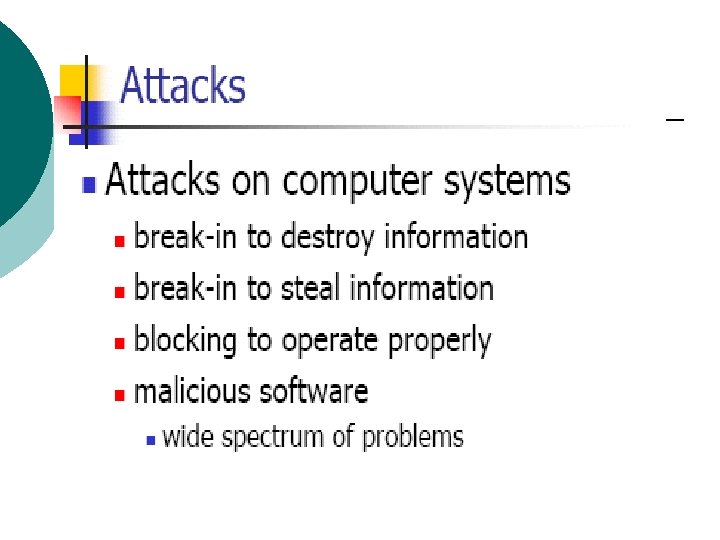
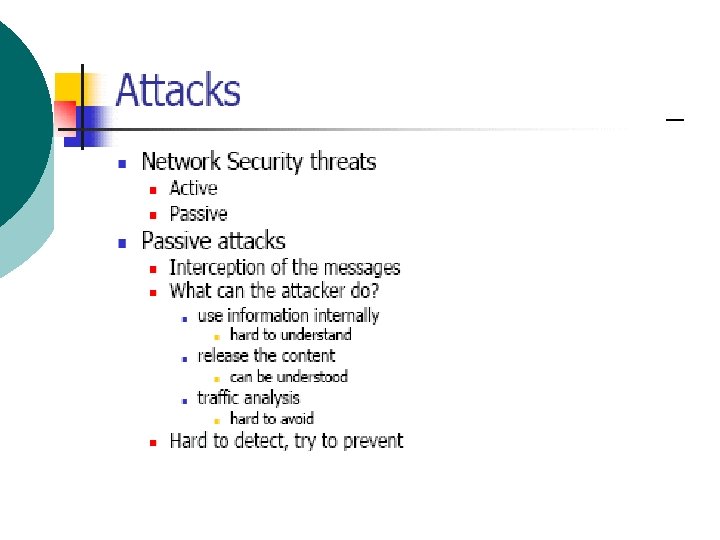

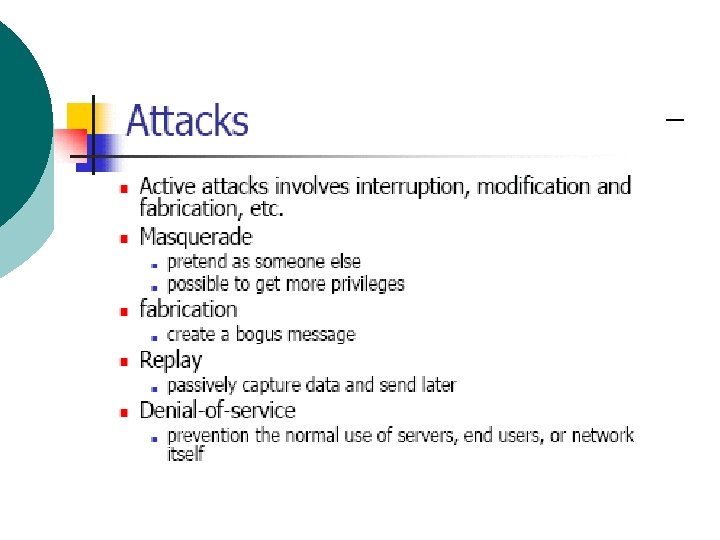
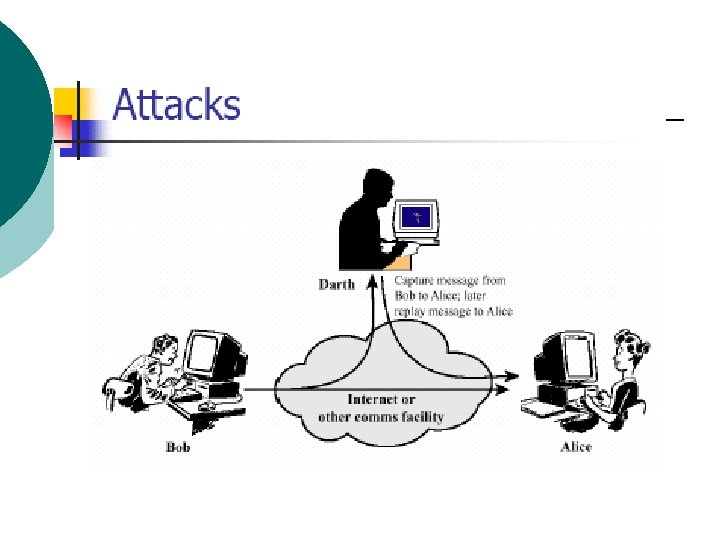
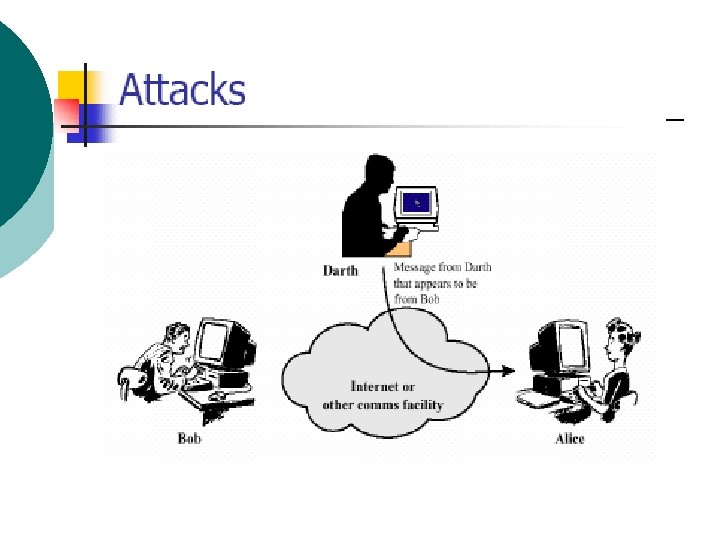
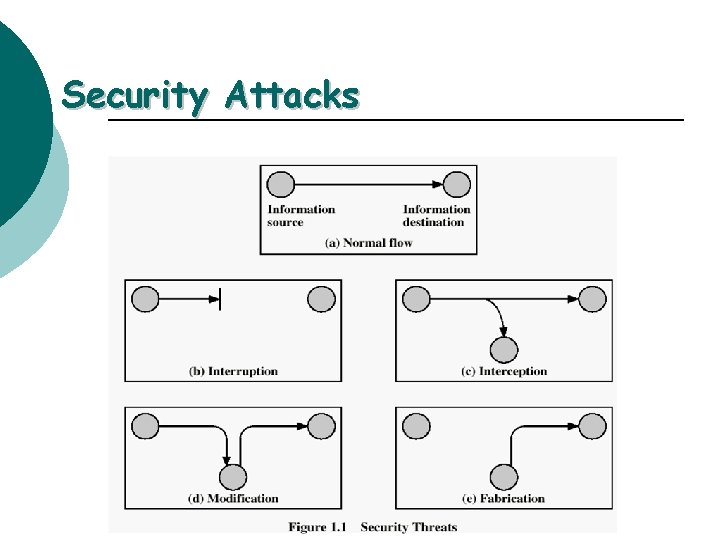
Security Attacks
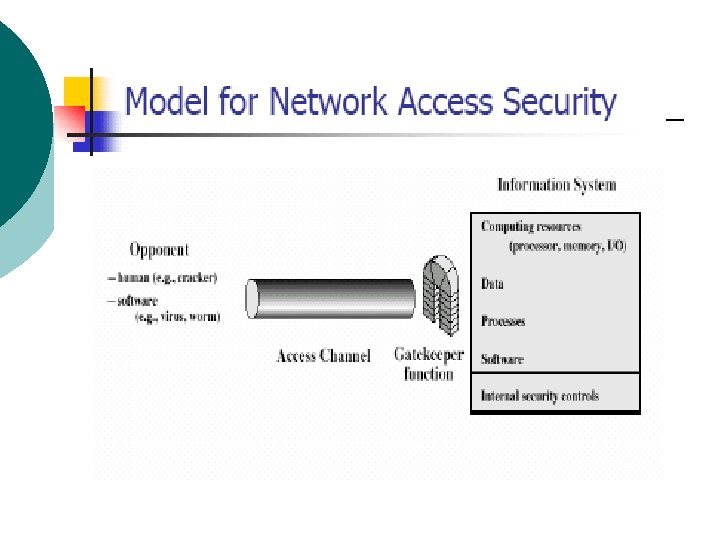
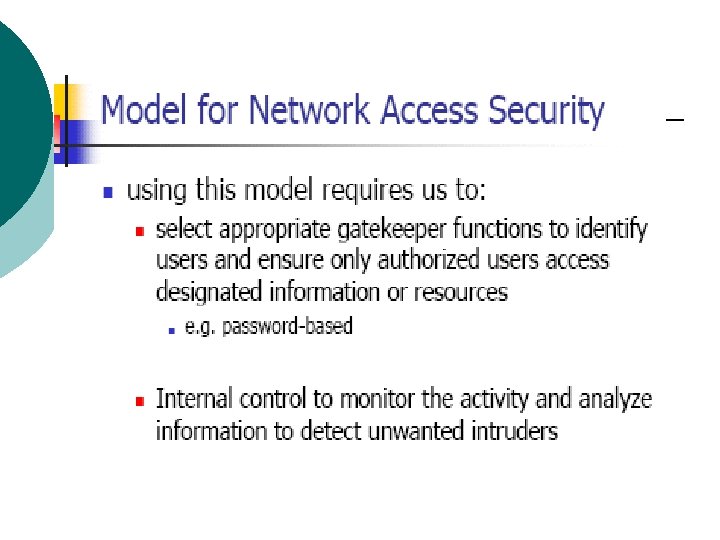
CIPHERS Now we will discuss various ciphers and their working. ¡ Cipher is an algorithm that provides encryption to your data. ¡
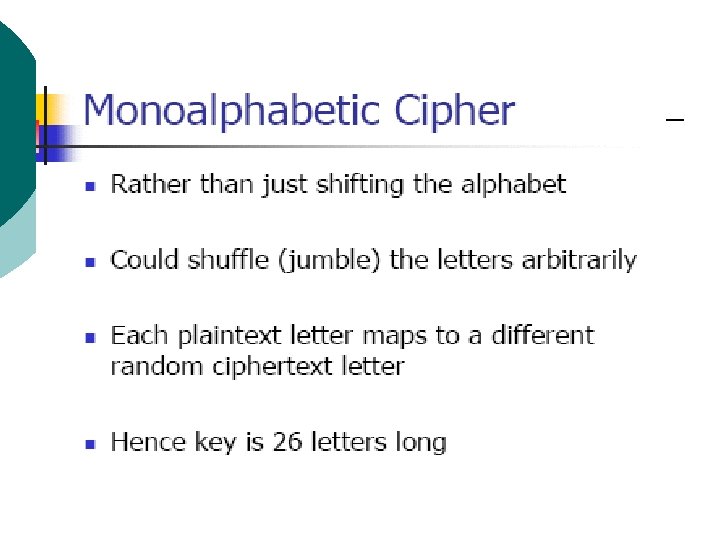
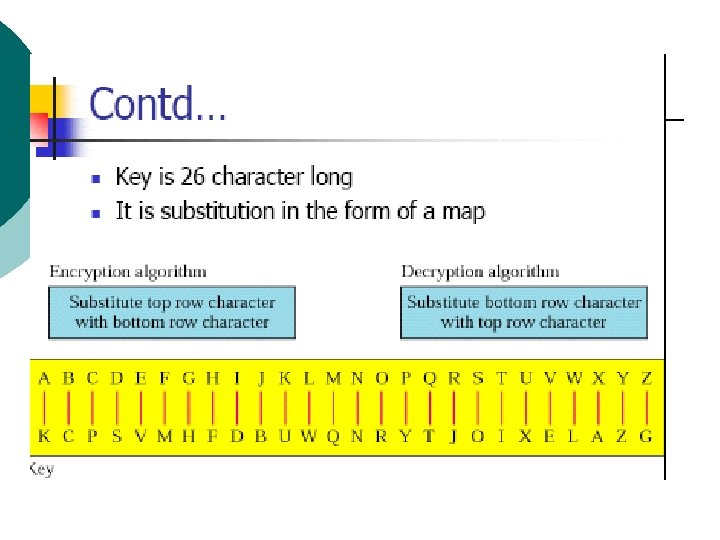
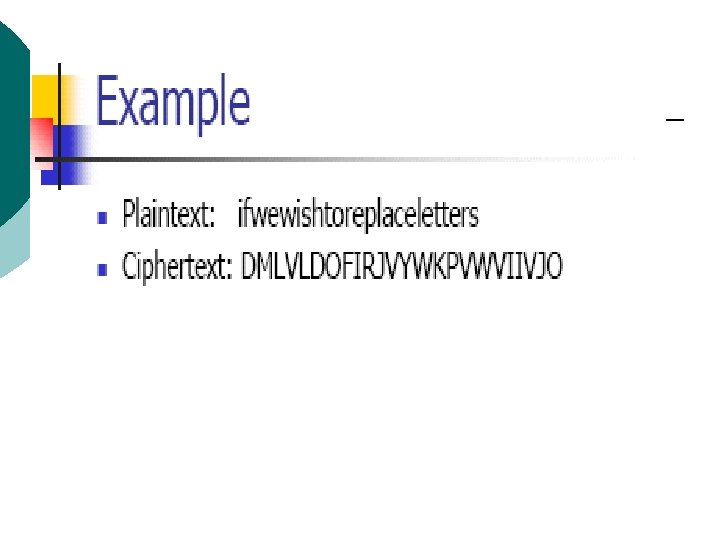
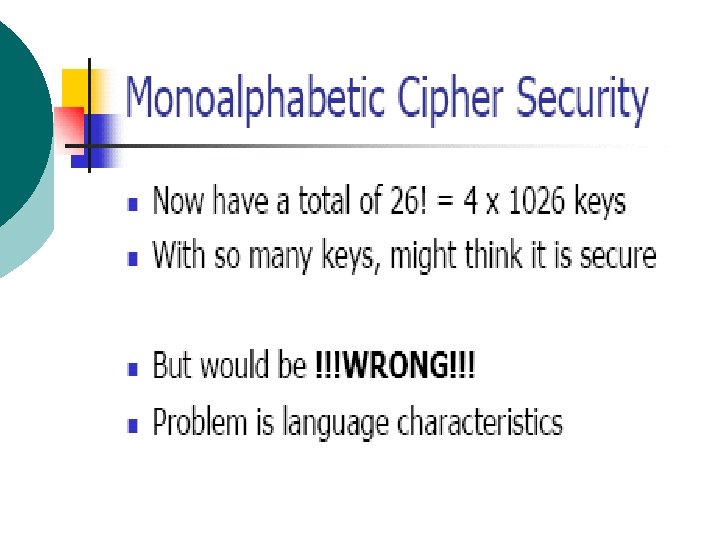
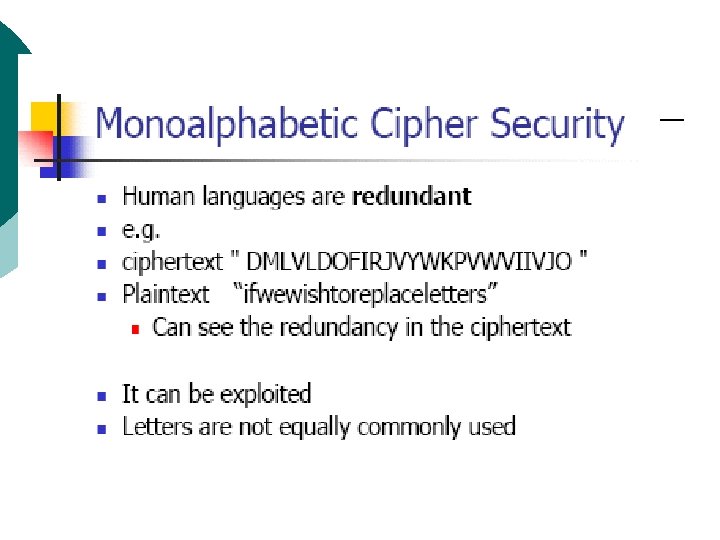
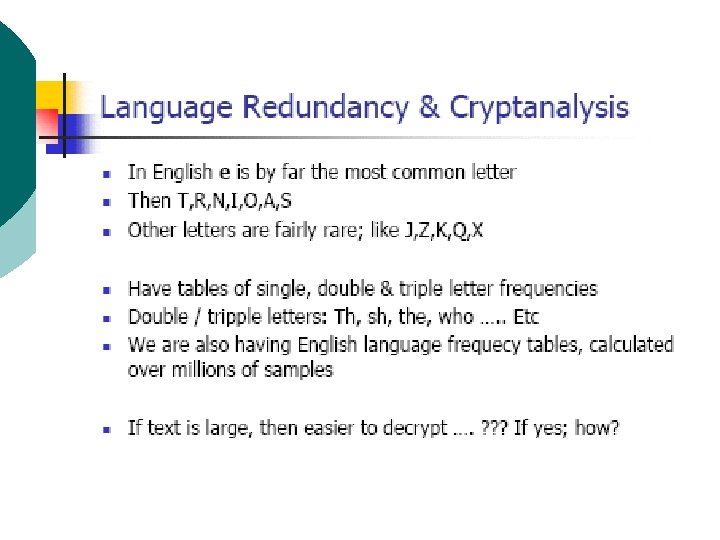
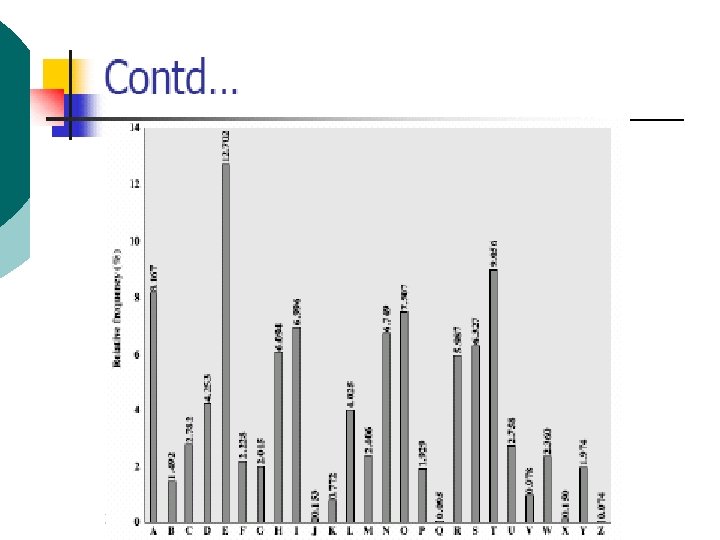
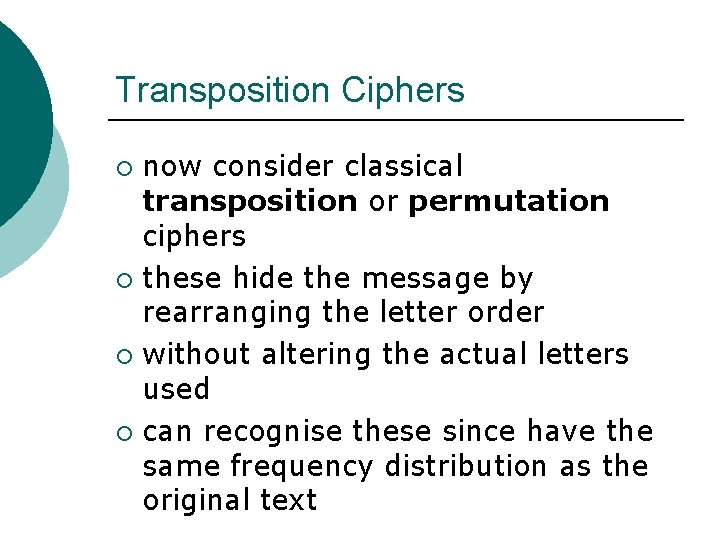
Transposition Ciphers now consider classical transposition or permutation ciphers ¡ these hide the message by rearranging the letter order ¡ without altering the actual letters used ¡ can recognise these since have the same frequency distribution as the original text ¡
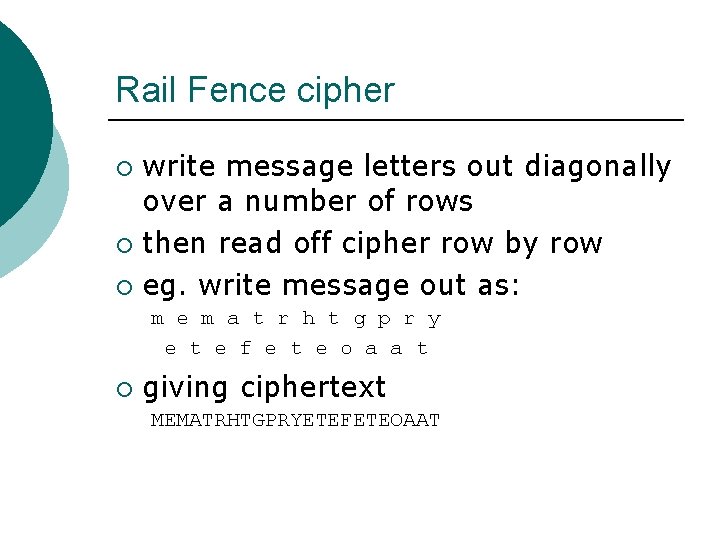
Rail Fence cipher write message letters out diagonally over a number of rows ¡ then read off cipher row by row ¡ eg. write message out as: ¡ m e m a t r h t g p r y e t e f e t e o a a t ¡ giving ciphertext MEMATRHTGPRYETEFETEOAAT
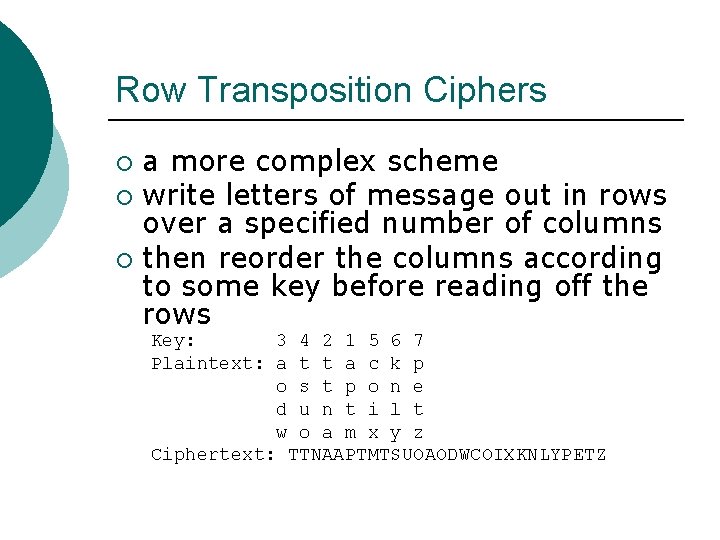
Row Transposition Ciphers a more complex scheme ¡ write letters of message out in rows over a specified number of columns ¡ then reorder the columns according to some key before reading off the rows ¡ Key: 3 4 2 1 5 6 7 Plaintext: a t t a c k p o s t p o n e d u n t i l t w o a m x y z Ciphertext: TTNAAPTMTSUOAODWCOIXKNLYPETZ
Product Ciphers ¡ ¡ ciphers using substitutions or transpositions are not secure because of language characteristics hence consider using several ciphers in succession to make harder, but: l l l ¡ two substitutions make a more complex substitution two transpositions make more complex transposition but a substitution followed by a transposition makes a new much harder cipher this is bridge from classical to modern ciphers
Rotor Machines ¡ ¡ before modern ciphers, rotor machines were most common product cipher were widely used in WW 2 l ¡ ¡ ¡ German Enigma, Allied Hagelin, Japanese Purple implemented a very complex, varying substitution cipher used a series of cylinders, each giving one substitution, which rotated and changed after each letter was encrypted with 3 cylinders have 263=17576 alphabets
Steganography an alternative to encryption ¡ hides existence of message ¡ l l l ¡ using only a subset of letters/words in a longer message marked in some way using invisible ink hiding in LSB in graphic image or sound file has drawbacks l high overhead to hide relatively few info bits
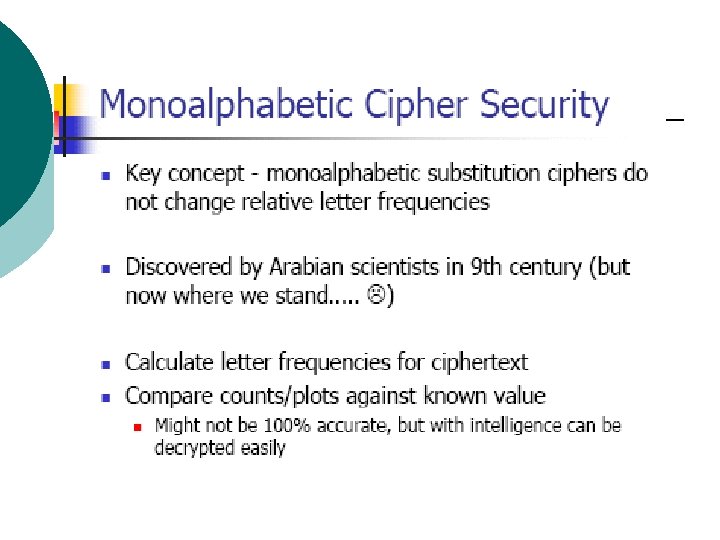
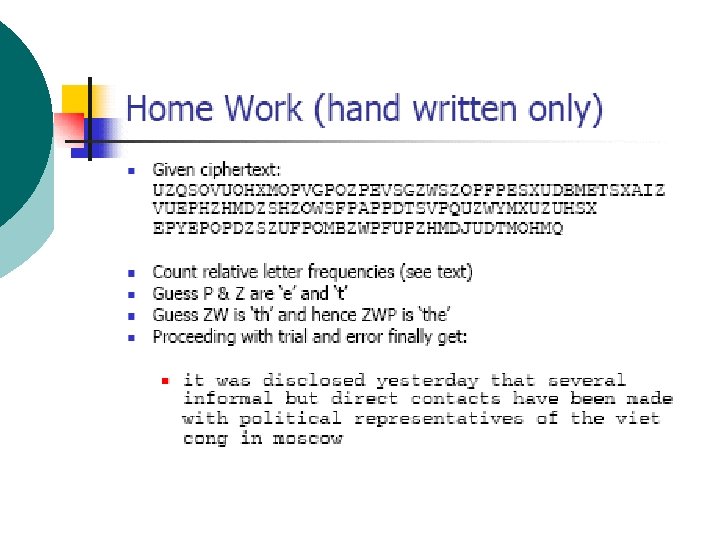
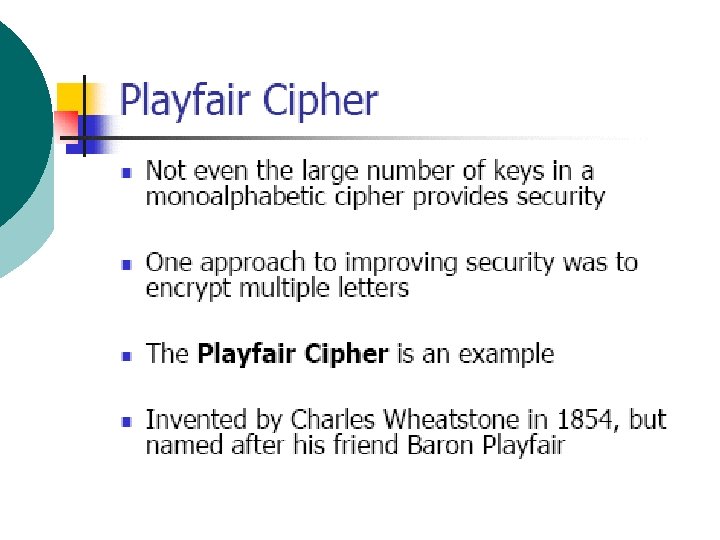
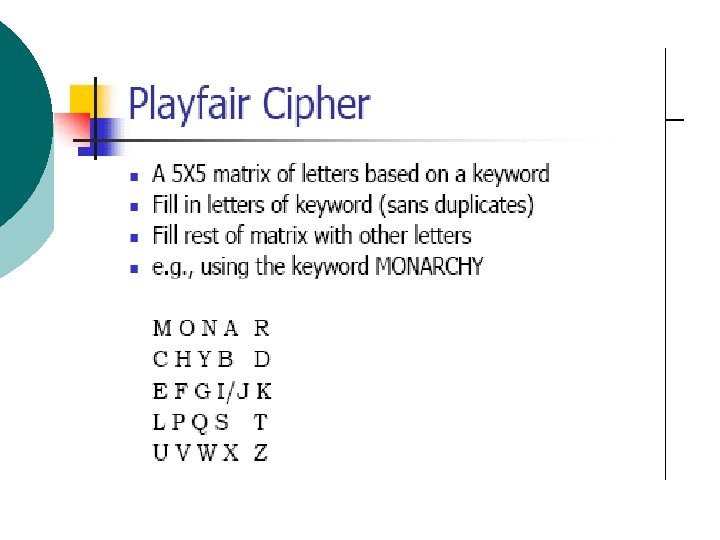
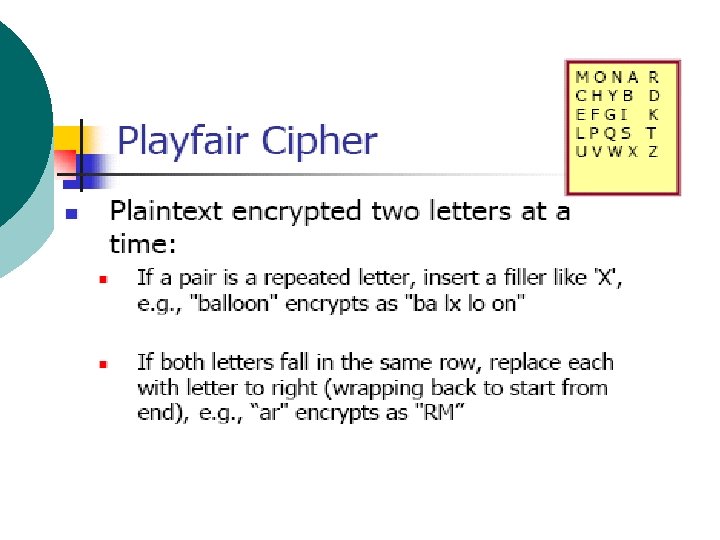
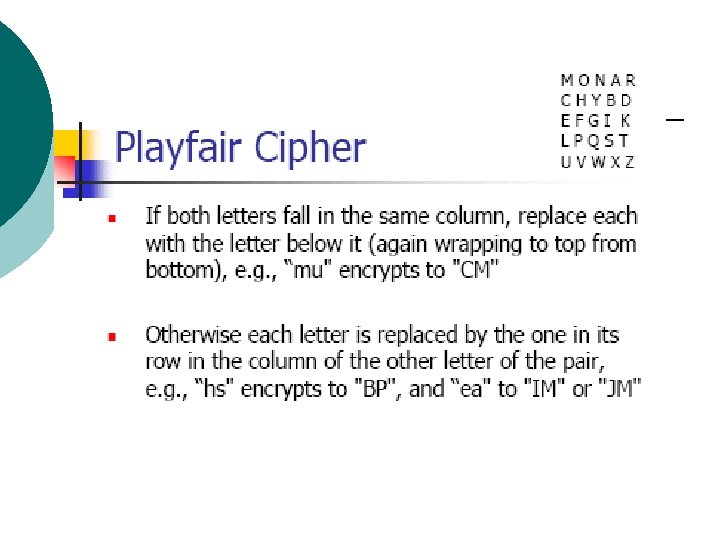
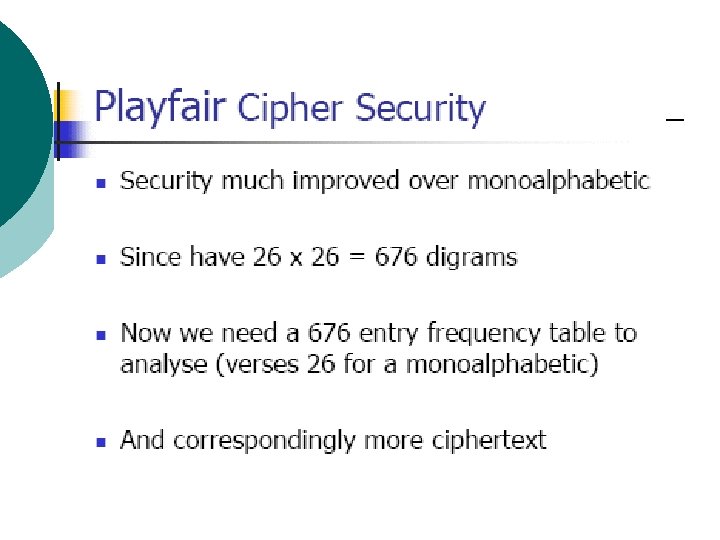
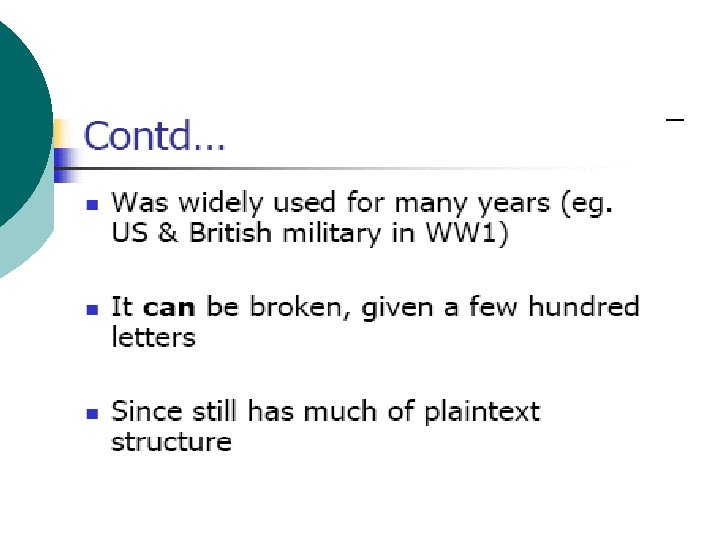
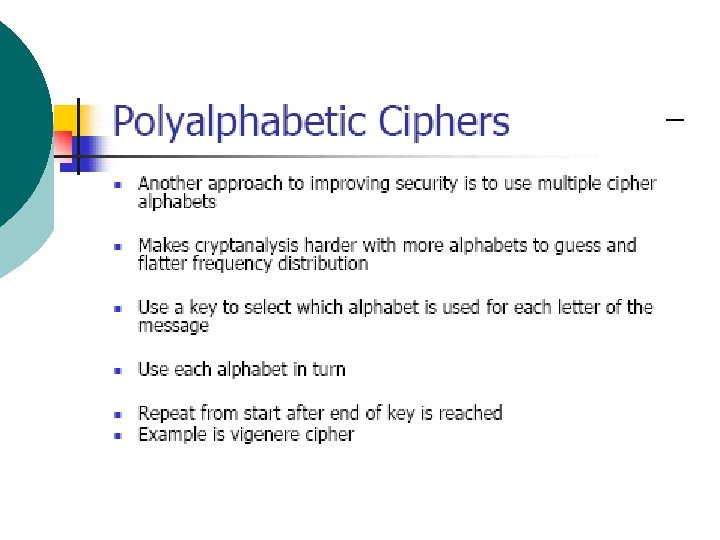
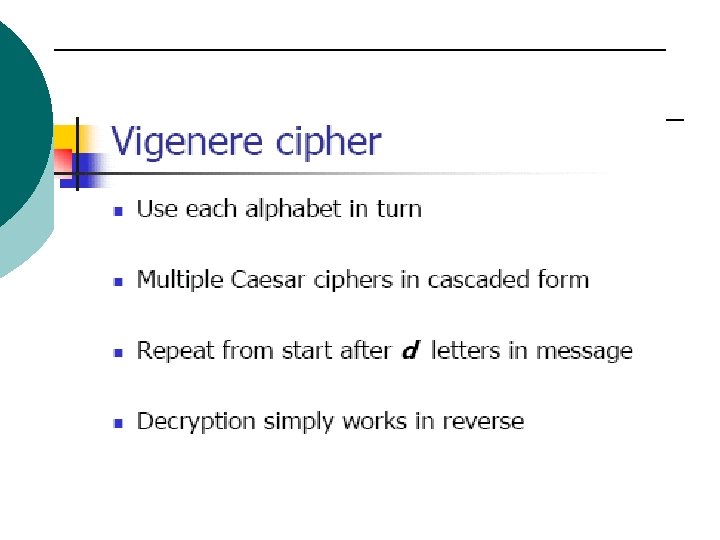
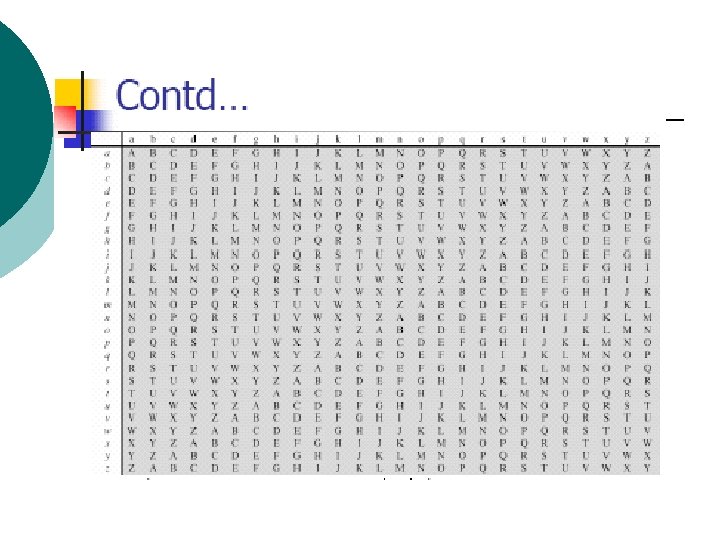
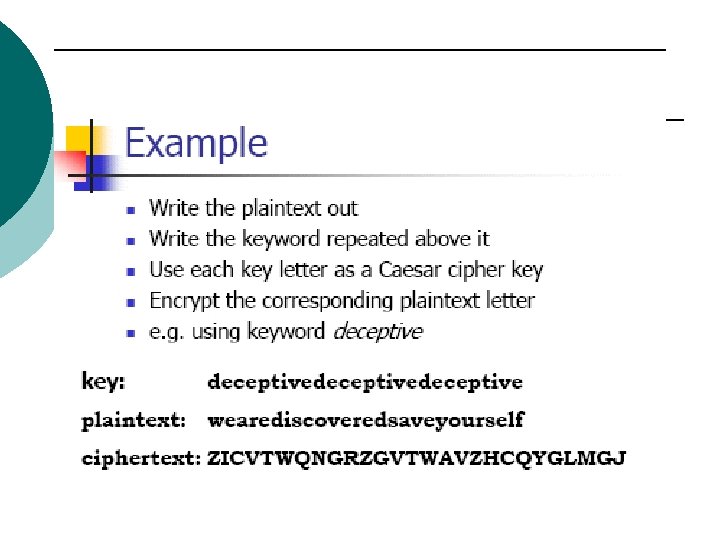
Summary ¡ have considered: l l l l classical cipher techniques and terminology monoalphabetic substitution ciphers cryptanalysis using letter frequencies Playfair ciphers polyalphabetic ciphers transposition ciphers product ciphers and rotor machines stenography


- Slides: 87